
The Adventures of a Gnome Named Gnorm
For millions of fans, the name ‘Stan Winston’ evoked images of creatures, monsters, aliens, and demons — and Winston was not inclined to disappoint. “If I were going to direct a movie, I wanted to give people what they would expect from a ‘Stan Winston’ film. So I made the decision that I would only direct projects that involved some elements of science fiction, horror, or fantasy, projects that would allow me to bring an extra something to the screen.”
That decision led Winston to turn down the next directing project offered to him — a murder mystery. “It was a very good script, but it didn’t have a creature in it. It wasn’t science fiction or fantasy or horror. I met with the producers anyway, at the urging of my agent, but at that meeting, I told them that I didn’t think I was the right guy for it.” Fans of Pumpkinhead, and still eager to work with Winston, the producers brought up another project they were trying to launch — and this one did have a creature. That project was Gnome, a fantasy adventure about a gnome who teams up with a cop to recover a stolen crystal that powers his underground world.
Jump To Section
- Peter Hyams Introduces Gnorm
- The Technology Behind a Gnome Named Gnorm
- Prototyping the Walking Rig
- How Gnorm's Upworld Went Back Underground
- Moving Forward from Directing to Producing
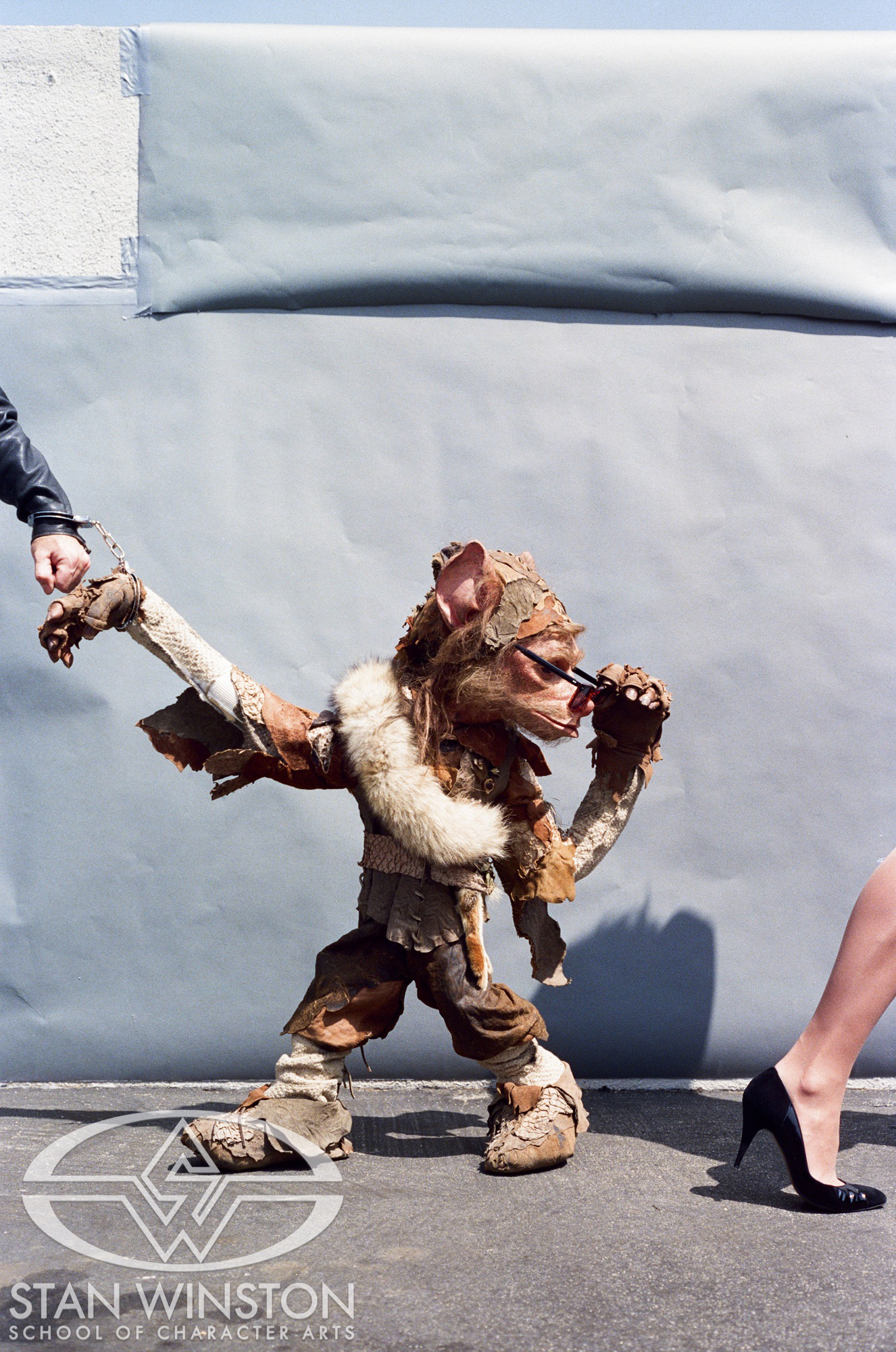 (One of the promo images for A Gnome Named Gnorm.)
Peter Hyams Introduces Gnorm
Coincidentally, Stan Winston had already heard of the project. “I remembered that while I was doing The Monster Squad, Peter Hyams, who was producing it, had mentioned a script he’d read, called Gnome. Peter asked me questions about how one would go about creating a little gnome character. These producers had never been able to get the project off the ground, because that same question always came up — how are you going to do the gnome? But with me as the director, figuring out how to do the gnome would be a given.”
While on location in Malta shooting Leviathan, Stan Winston drew several concepts for the star of this next project.
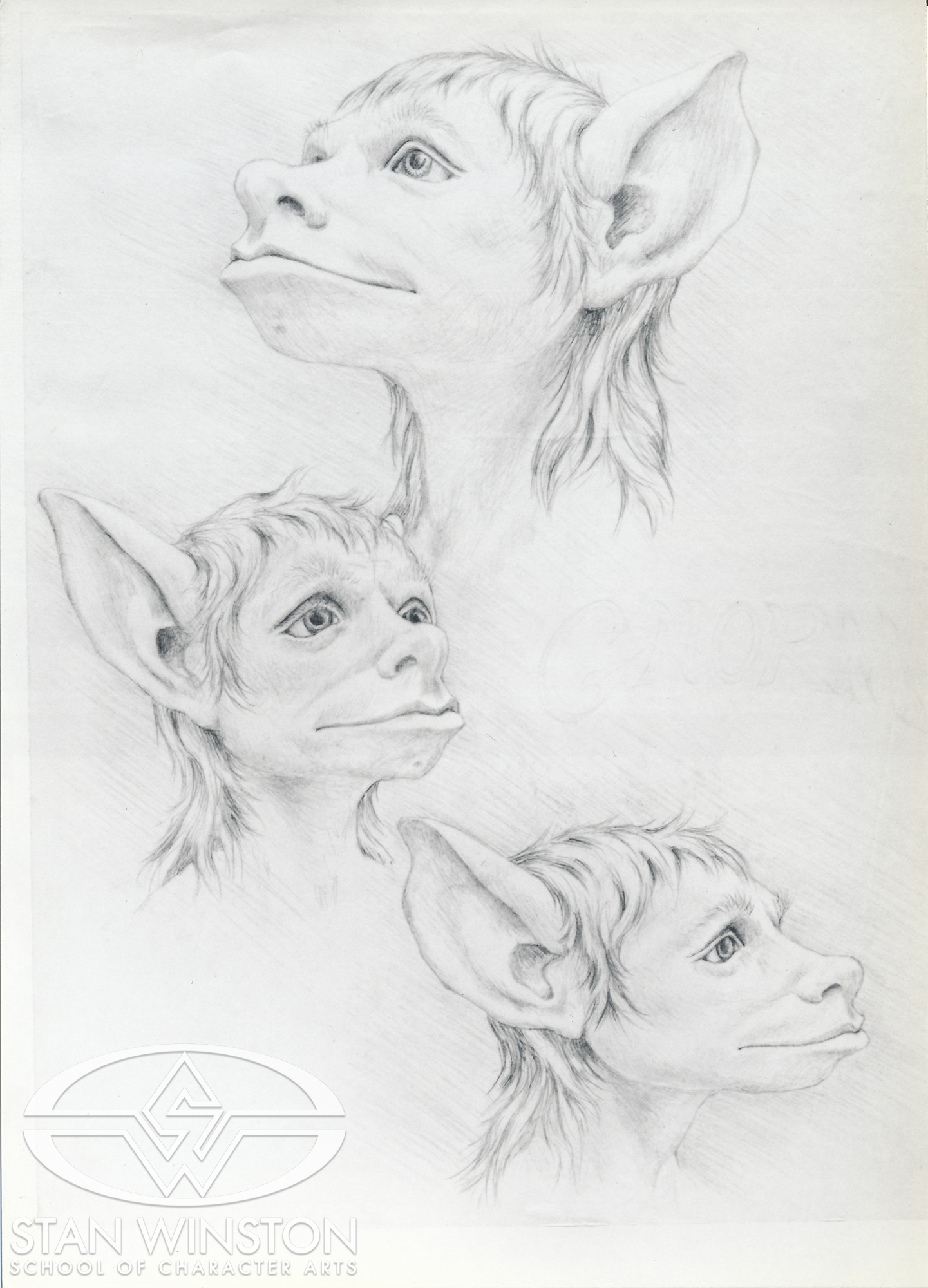 (Stan Winston's drawings of Gnorm for the film that would be called A Gnome Named Gnorm.)
The Technology Behind a Gnome Named Gnorm
Gnome eventually became A Gnome Named Gnorm — alternately titled Upworld and The Adventures of a Gnome Named Gnorm — the second feature film directed by Stan Winston. To realize the movie’s leading character, Shane Mahan, John Rosengrant, and Richard Landon oversaw the design and construction of a series of Gnorm puppets. “Gnorm was a lot more work than Pumpkinhead,” said Mahan, “because he was a much more complex character. Pumpkinhead was kind of a snarling monster, but Gnorm was a speaking character with a genuine personality. And he pretty much had to carry the whole movie.”
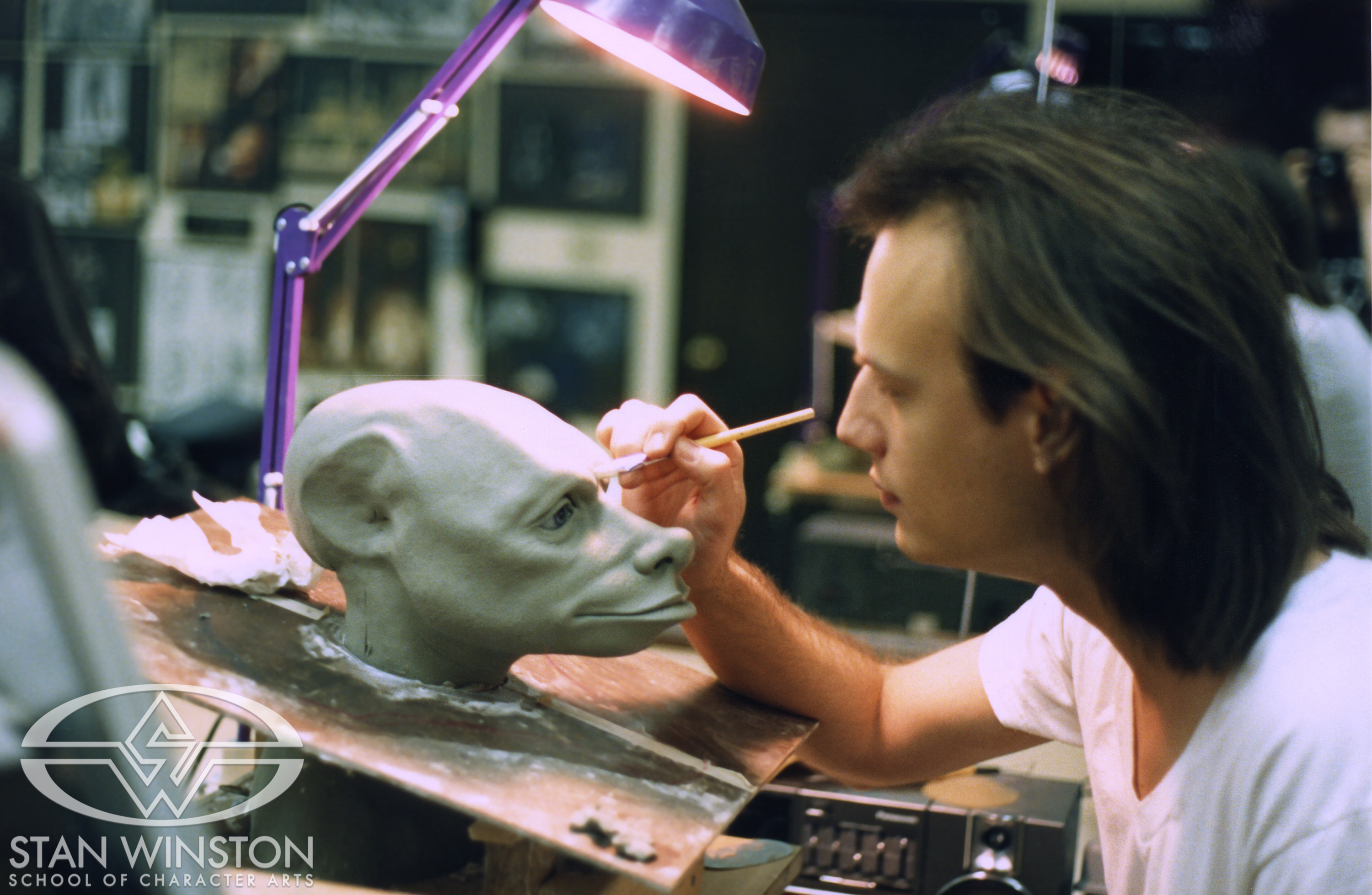 (Greg Figiel works on Gnorm's head sculpture at Stan Winston Studio.)
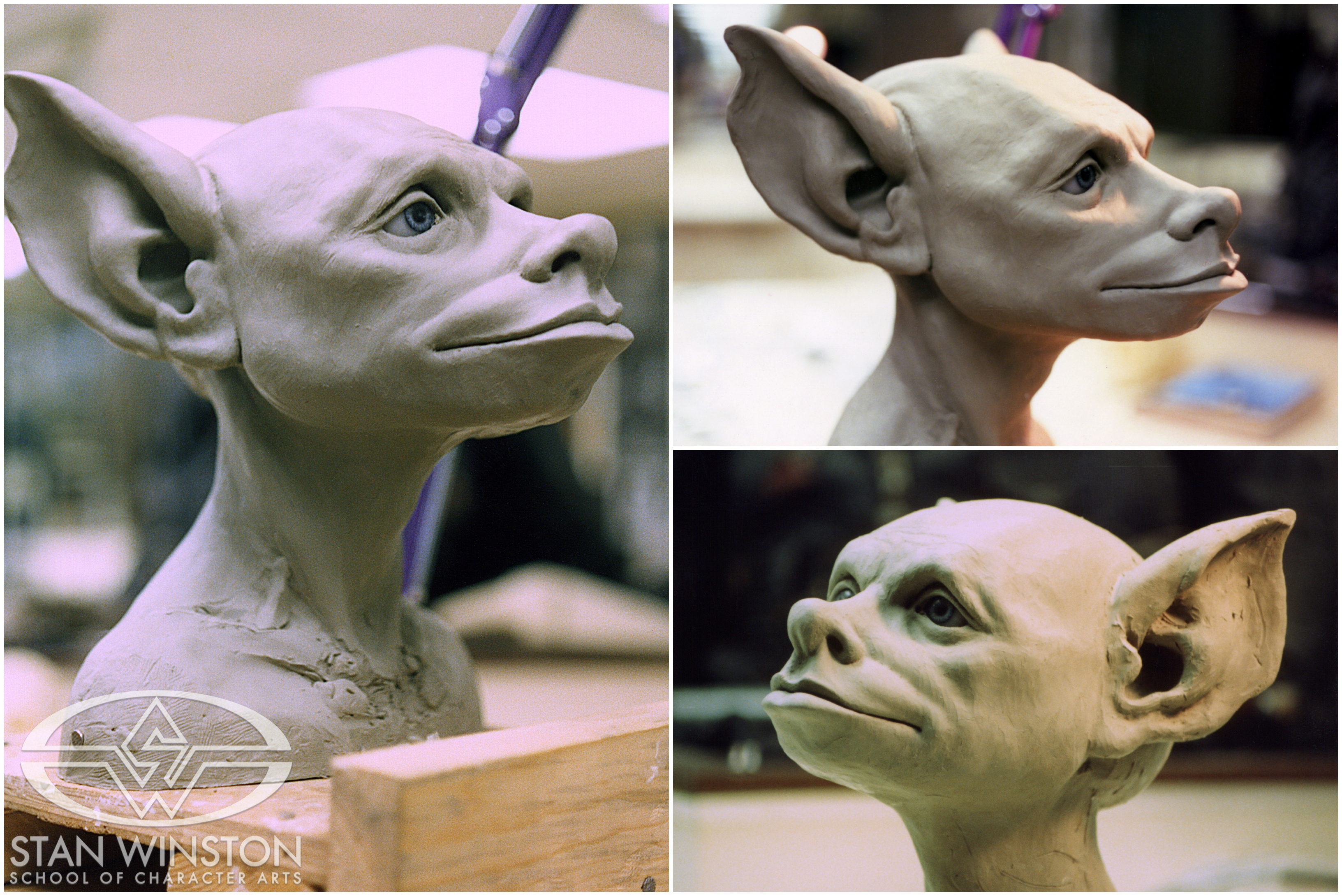 (WIP of Gnorm's head sculpture.)
Gnorm's puppet had a cable-controlled body and head with full facial movements. Five people operated the facial movements and expressions individually: one wore a head apparatus equipped with a sensor that detected jaw movement. Finger movements controlled the lips. Other operators were responsible for moving the brows, controlling the squints and cheeks, the eye movements, the eyelids, the two-axis ears, and the tongue movement to achieve the correct pronunciation.
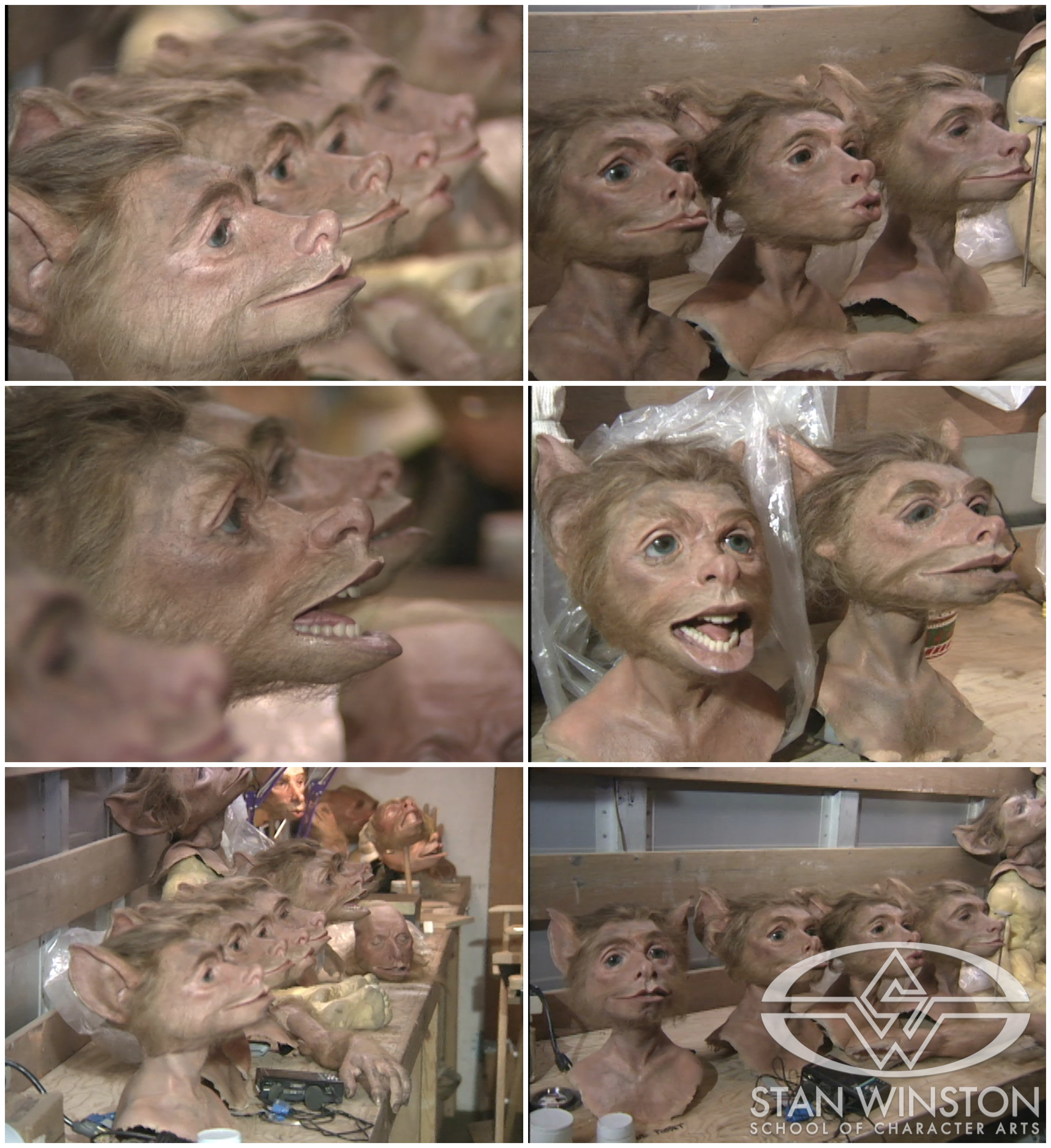 (Various interchangeable heads of Gnorm are ready to be used on set.)
The head and body movement were controlled by two joysticks: one for the head to turn right, left, and tilt, and one for the spine to perform body twists, lean overs, and back bends. For hand movements, the studio used a little gimmick: "We strapped in a person's arms to work in conjunction with the puppet. So we got all the compound movements of the hands, which were very hard to duplicate with mechanics," said Rosengrant.
VIDEO CLIP -- Behind the scenes at Stan Winston Studio with Meckie Heussen, Craig Caton Largent, Jon Curtis Price, Mike Trcic, Richard Landon, Eileen Kastner-Delago, and Shannon Shea puppeteering Gnorm's puppet:
For longer shots where a person's arms wouldn't work, the studio used cable-actuated arms with forearm and upper arm movements, and wrist, elbow, and shoulder twists. For distant shots and quick actions, children aged 3 to 5 years old worked as doubles.
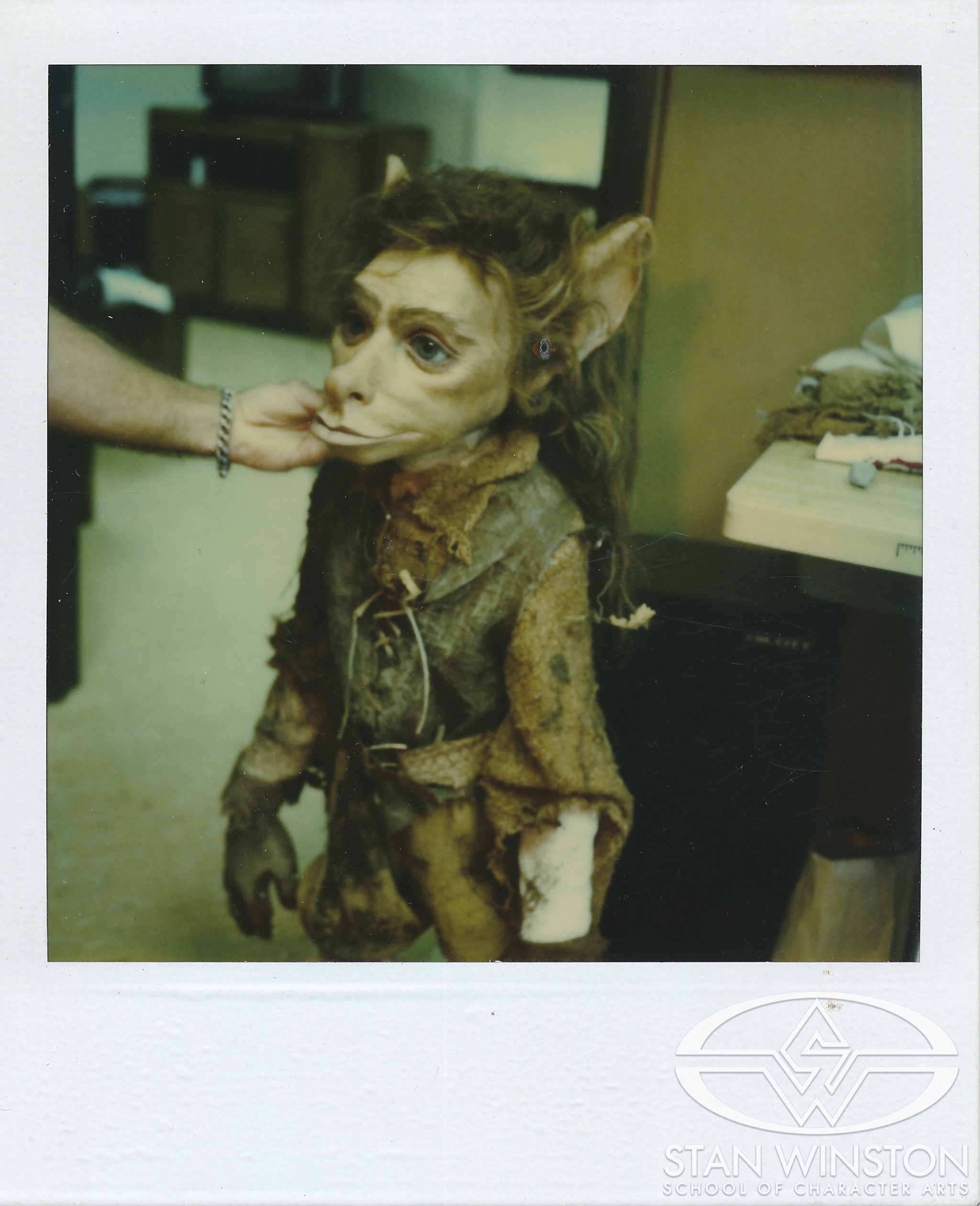 (One of the stunt kids testing a Gnorm suit at Stan Winston Studio.)
Prototyping the Walking Rig
Gnorm’s diminutive size was another challenging aspect of the character. Winston had to be clever in his camera work and how he blocked out action to keep his star in frame. In addition, Gnorm’s proximity to the ground required special puppeteering rigs.
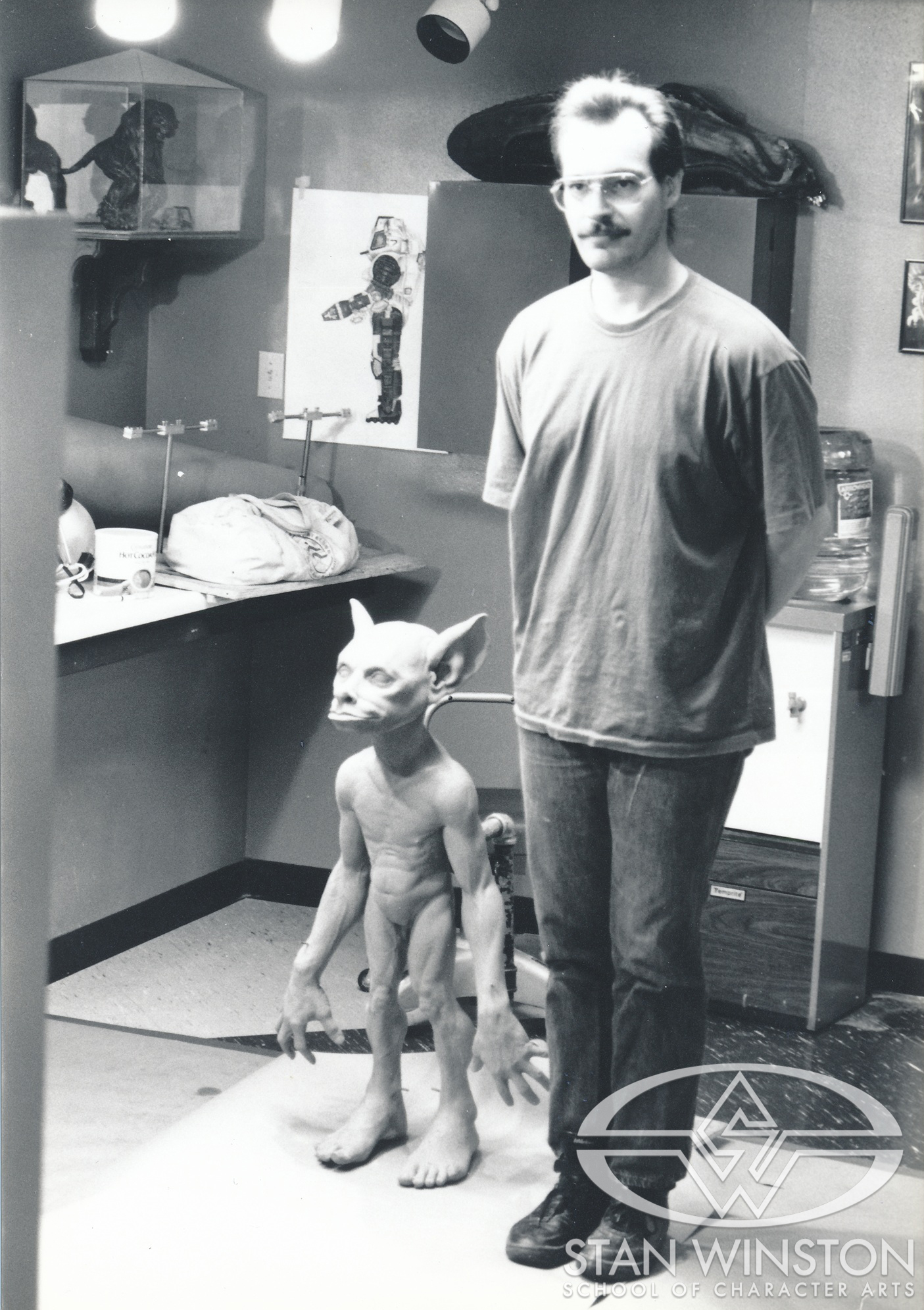 (Height comparison of Gnorm's lifesize sculpture and Mike Tricic, who sculpted Gnorm's body.)
To make the character walk, Winston’s crew members reconfigured the harness-and-rod construct they’d devised for the half-body endoskeleton puppet in The Terminator, creating a walking rig that positioned the puppet in front of the puppeteer, rather than on his shoulders. This Gnorm walking rig was a prototype for more sophisticated rigs that the crew would build later for Terminator 2: Judgment Day and A.I. Artificial Intelligence.
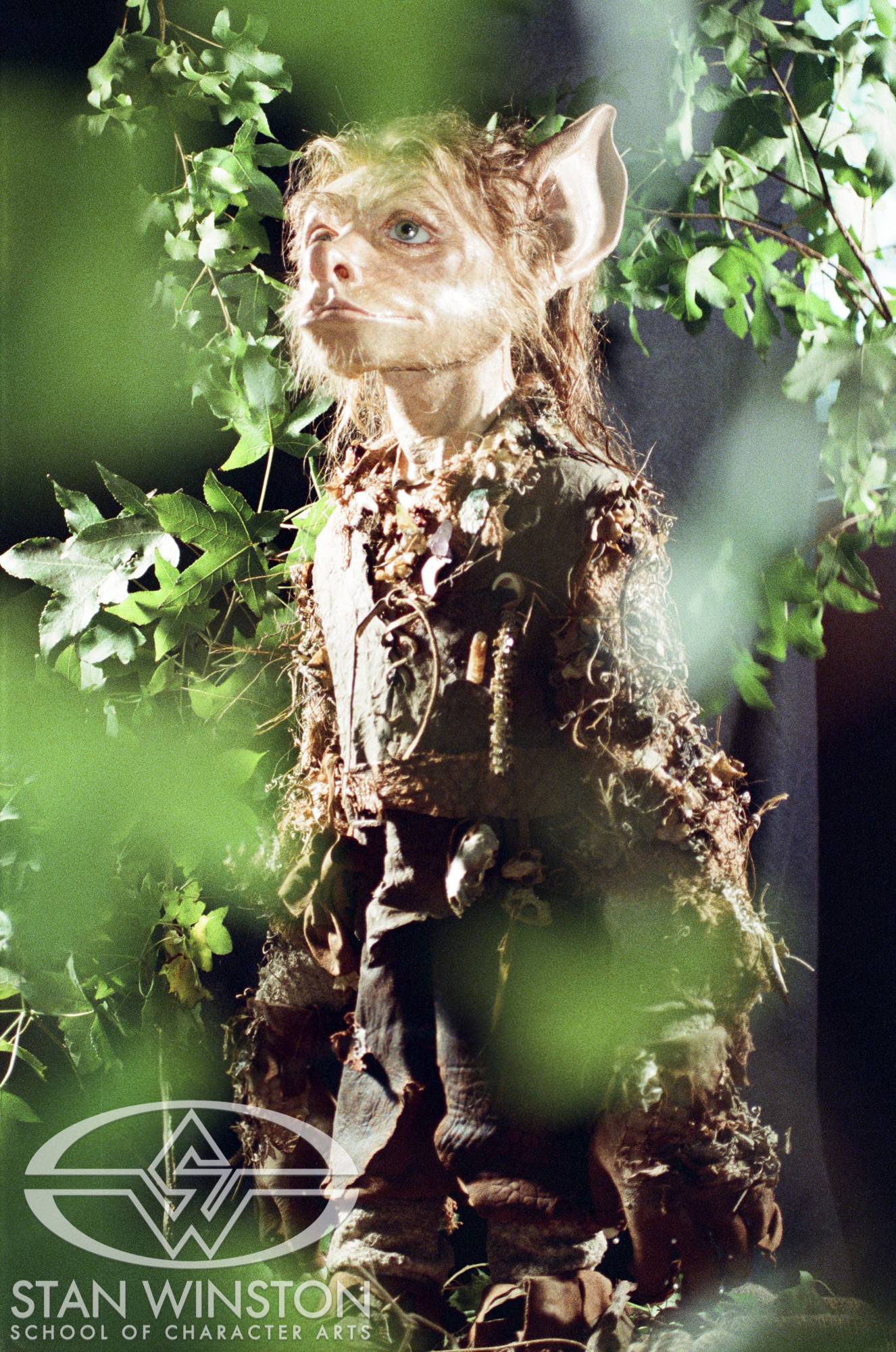 (The final Gnorm puppet on the set of A Gnome Named Gnorm.)
Due to the talents of Winston and his crew, Gnorm emerged as a funny, unique, and thoroughly dynamic character, both on screen and off. “Gnorm became a very real character to all of us,” Richard Landon commented. “In the beginning, Stan would come up to us and say: ‘Who’s controlling the eyes? You? Okay, I want the eyes to do this as the head moves this way.’ But as we got further into the shoot, Stan stopped talking to us and started talking to Gnorm directly! You always know you’re doing a great puppeteering job when the director starts talking to the puppet instead of you.”
VIDEO CLIP -- Compilation from Gnorm's puppet testing at Stan Winston Studio:
How Gnorm's Upworld Went Back Underground
Whereas Pumpkinhead had enjoyed a limited theatrical release, A Gnome Named Gnorm unfortunately never saw the inside of a movie theater.
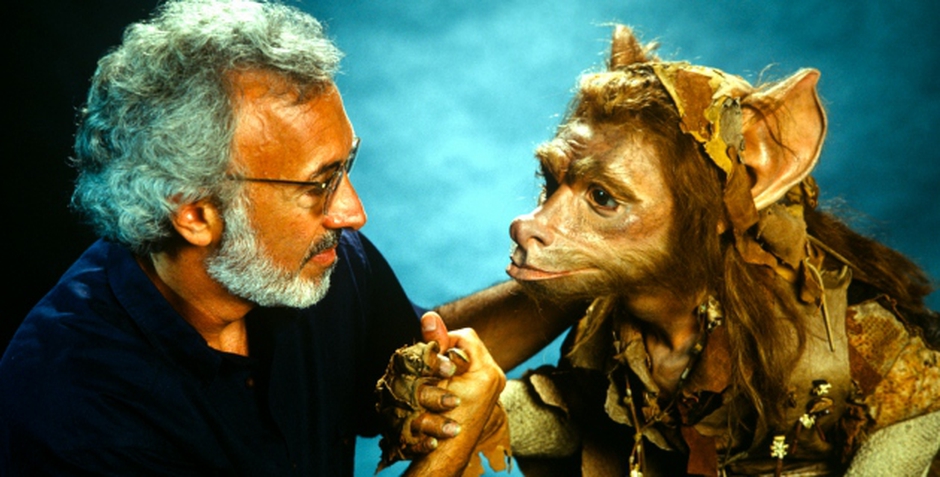
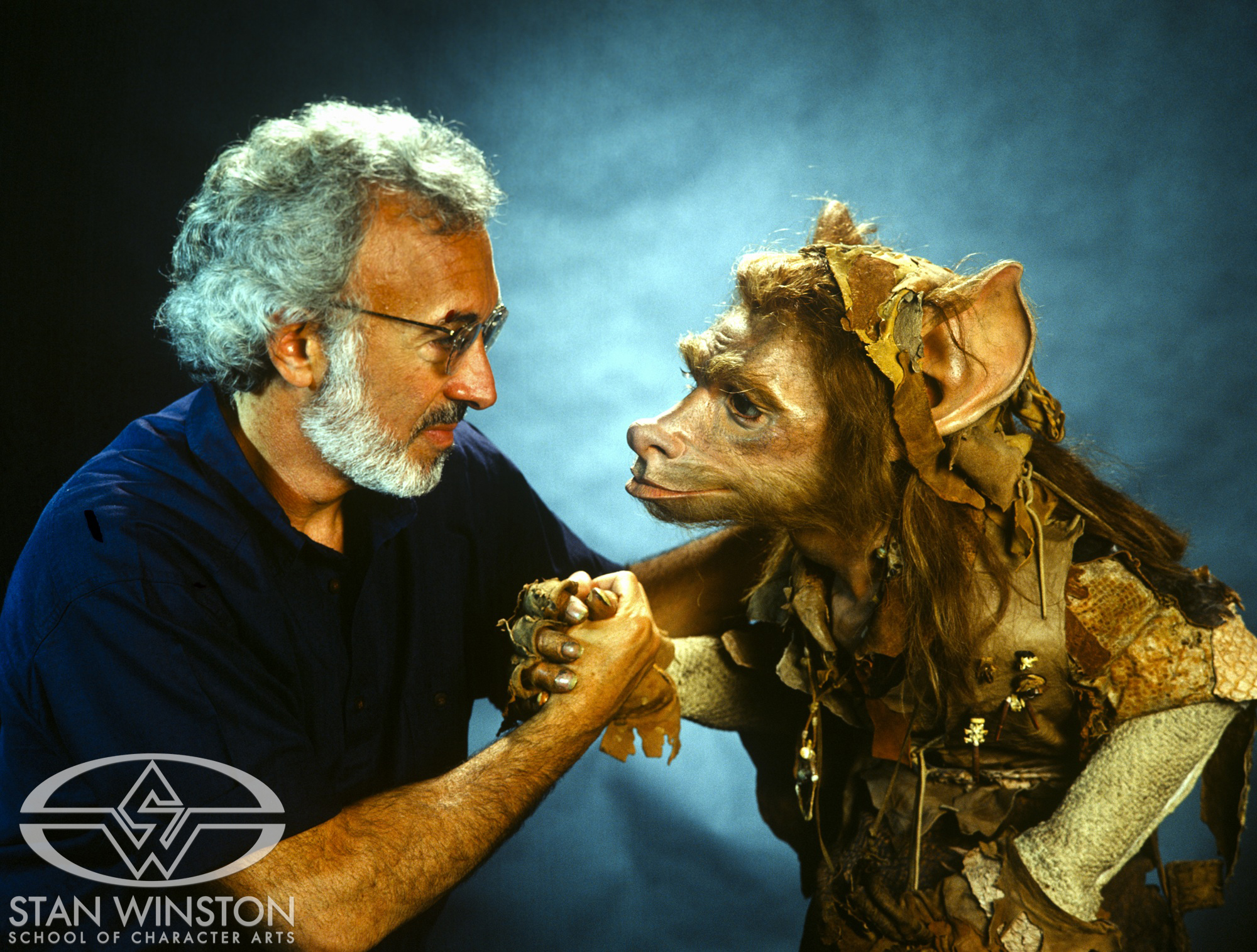 (Stan Winston with Gnorm.)
The film was briefly retitled Upworld, a reference to Gnorm's word for our surface world above ground, but the hoped-for theatrical release never happened. After being shelved for three years, due to the downward business turns of the production companies behind it, the film finally went to direct-to-video in 1992 with the title, A Gnome Named Gnorm. To Winston’s mind, Gnorm’s fate was just more evidence of what he refers to — only half-jokingly — as the ‘Winston Curse’. “The movies I direct have a tendency to take whole companies down. Just before Pumpkinhead was released, Dino DeLaurentiis’ company went into bankruptcy and closed. The company that made Gnorm was Vestron Pictures, and just before we figured out when that movie’s release would be, Vestron went belly-up.”
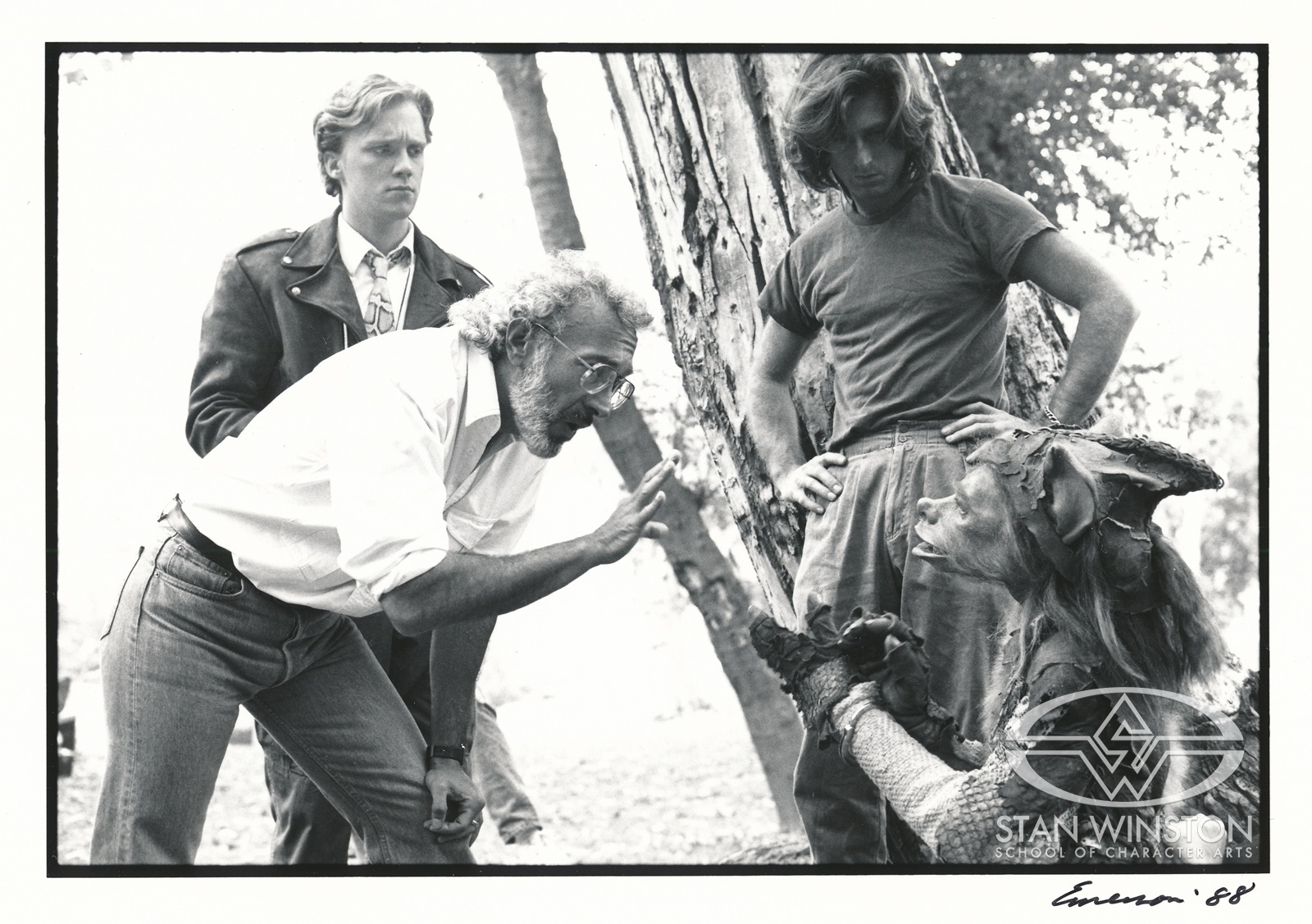 (Stan Winston directs Gnorm on the set of A Gnorm Named Gnorm.)
Carolco Pictures — which had produced The Terminator — purchased Vestron’s library of films, including A Gnome Named Gnorm. Shortly thereafter, Carolco, too, closed. “I’d made two feature films. One of them had taken down one company, and the second had taken down two. It was the ‘Stan Winston Directs a Movie and Your Company Closes’ curse. At that point, I was really tempted to see if I could destroy a major studio. I said to my agent: ‘Come on, let’s get me a movie to direct for Universal and see if I can take them down!’”
Moving Forward from Directing to Producing
Despite the curse, Winston dared to direct one more project: Ghosts (1997), a thirty-eight-minute-long horror musical starring Michael Jackson. And although opportunities continued to come his way, Winston ultimately abandoned his directing aspirations — not only to spare future companies and performers from certain ruin, but also to avoid overextending his energies. “To be a good director, you have to give it every bit of energy and creativity you have. I’m at a point in my life where I have too many other responsibilities to give a movie that kind of time and energy. I can’t run this studio, be an integral part of what goes on here, and direct a movie. As much as I’d like to, I can’t do it all.” Winston found a compromise position by becoming a very active movie producer. “Producing allows me to develop projects, to be part of the creative process of making movies, but in a way that isn’t all-consuming. I call producing, ‘directing — without the responsibility.’ And I like it that way.”
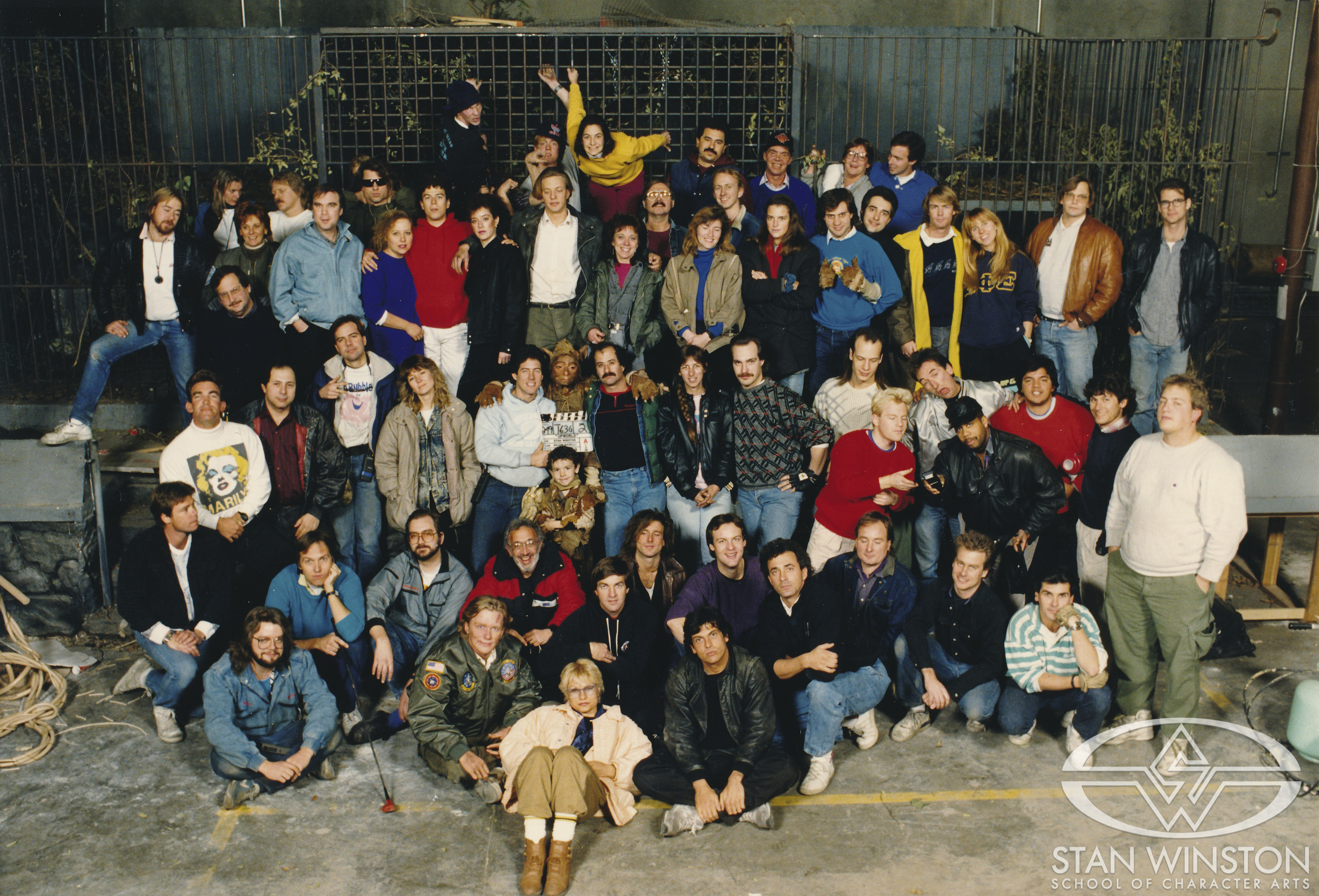 (The crew of A Gnome Named Gnorm on set.)
- Blog is excerpted from The Winston Effect: The Art and History of Stan Winston Studio by Jody Duncan
More Behind the Scenes of Stan Winston-Directed Movies:
- Pumkinhead (1988): Making the Iconic Vengeance Demon
- Creating the Haggis Witch Makeup for Stan Winston's Pumpkinhead (1988)
- Michael Jackson's Ghosts (1997)
Courses with the Creators of A Gnome Named Gnorm (1990)
- Special Effects Sequence Design with Shane Mahan
- Hybrid Characters: Blending Practical & Digital FX with John Rosengrant
- Garage Monsters - How to Make Creature FX on a Budget with Shannon Shea
- The Business of Making Monsters Series with Shannon Shea
- Remote Makeup Application Series with Andy Schoneberg
- Mastering Effects Disasters - Explode A Head with Andy Schoneberg
- Animatronics Design Basics with Richard Landon
- Cable Mechanism Basics - Tentacles with Richard Landon
- How to Build an Animatronic Head Series with Craig Caton-Largent
- Animation for Animatronics Series with Craig Caton-Largent