
The Making of the Haggis Makeup in Pumpkinhead (1988)
By Michael Martin
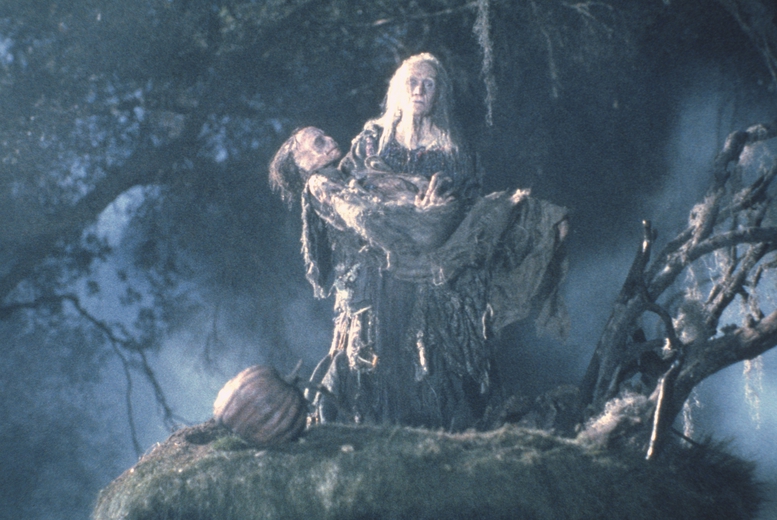
Pumpkinhead is a backwoods folk tale of revenge and retribution. Ed Harley (played by Lance Henriksen, from The Terminator and Aliens), seeking revenge for his dead son, begs a witch named Haggis for her help. Haggis orders him to bring her a withered corpse from a cursed pumpkin patch graveyard, which she then reanimates into the demon Pumpkinhead.
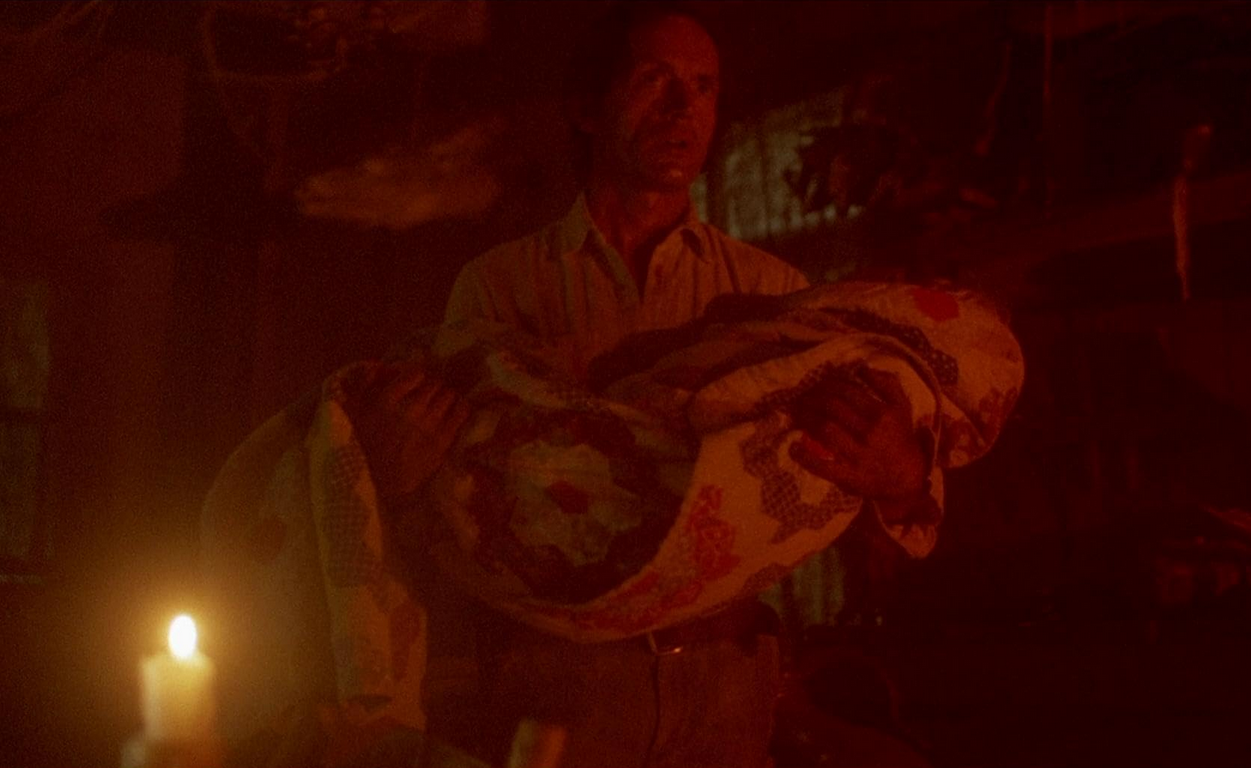 (Ed Harley begs the witch Haggis to help him get revenge for the death of his son. Image courtesy MGM.)
Pumpkinhead was makeup effects maestro Stan Winston's directorial debut. He had previously performed second-unit directing duties on the James Cameron films The Terminator and Aliens. After its release, Pumpkinhead became a cult phenomenon, spawning several sequels, a comic book, a video game, and even model kits!
The entire crew at Stan Winston Studio (SWS) worked on the film, producing gore effects, a Pumpkinhead child, and the Pumpkinhead creature itself. SWSCA co-founder Matt Winston talked with Legacy Effects co-founder and 25-year SWS supervisor Shane Mahan about his work on the project and how he designed and created the makeup for the witch called Haggis.
Jump To Section
- Taking On Pumpkinhead Witch Makeup
- Casting Florence Schauffler as Pumpkinhead's Haggis
- Designing Haggis' Witchy Look in Layers
- Getting the Haggis Design Approved and Sculpting the Makeup
- Making an Eye for Haggis the Witch
- Using Appliances and Acrylics for Haggis’ Hands
- Knowing When to Use Practical Effects
- Florence Schauffler's Transformation Into Haggis
- Revealing Haggis
- A Happy Accident Filming Pumpkinhead
- Working on Pumpkinhead at Stan Winston Studio
 (SWSCA co-founder Matt Winston and Haggis makeup designer Shane Mahan.)
Taking On Pumpkinhead's Witch Makeup
Even though it was almost forty years ago, Shane said he remembered working on Pumpkinhead like it was last weekend. During that time, Stan Winston "…was developing Pumpkinhead as we were getting ready to go to Mexico to shoot Predator," said Mahan.
When he returned from the Predator shoot, the studio's work on Pumpkinhead had advanced, and many of the assignments had gone to the other Stan Winston Studio members, such as Tom Woodruff, Jr., Alec Gillis, Richard Landon, and John Rosengrant. The studio had been so busy building the Pumpkinhead creature and other tasks like the first and second-stage baby Pumpkinhead that no one had even thought about the witch makeup. "I remember saying [to Stan], 'Listen, I'm really interested in doing the witch.' I thought her scenes were standout in the script in terms of atmosphere and mood."
Casting Florence Schauffler as Pumpkinhead's Haggis
The design process for the witch Haggis proceeded once Winston cast actress Florence Schauffler. Recalling that she was around six feet tall, Mahan added, "I think she was probably 67, 68 at the time and had great bone structure and naturally sunken-in eyes. She just had a presence about her that Stan really liked. She read with Lance Henriksen and killed it, so that sealed the whole thing."
 (Actress Florence Schauffler was cast to play Haggis, Pumpkinhead's powerful and pivotal witch character.)
Designing Haggis' Witchy Look in Layers
Once Schauffler was cast, Shane created the Haggis design in several layers. "I took photographs, and I did overlays to design her look. In those days, we overlaid transparency papers onto each other. So, you get the prosthetic makeup layer, then the wig layer, then the costume layer, and that's how it was done."
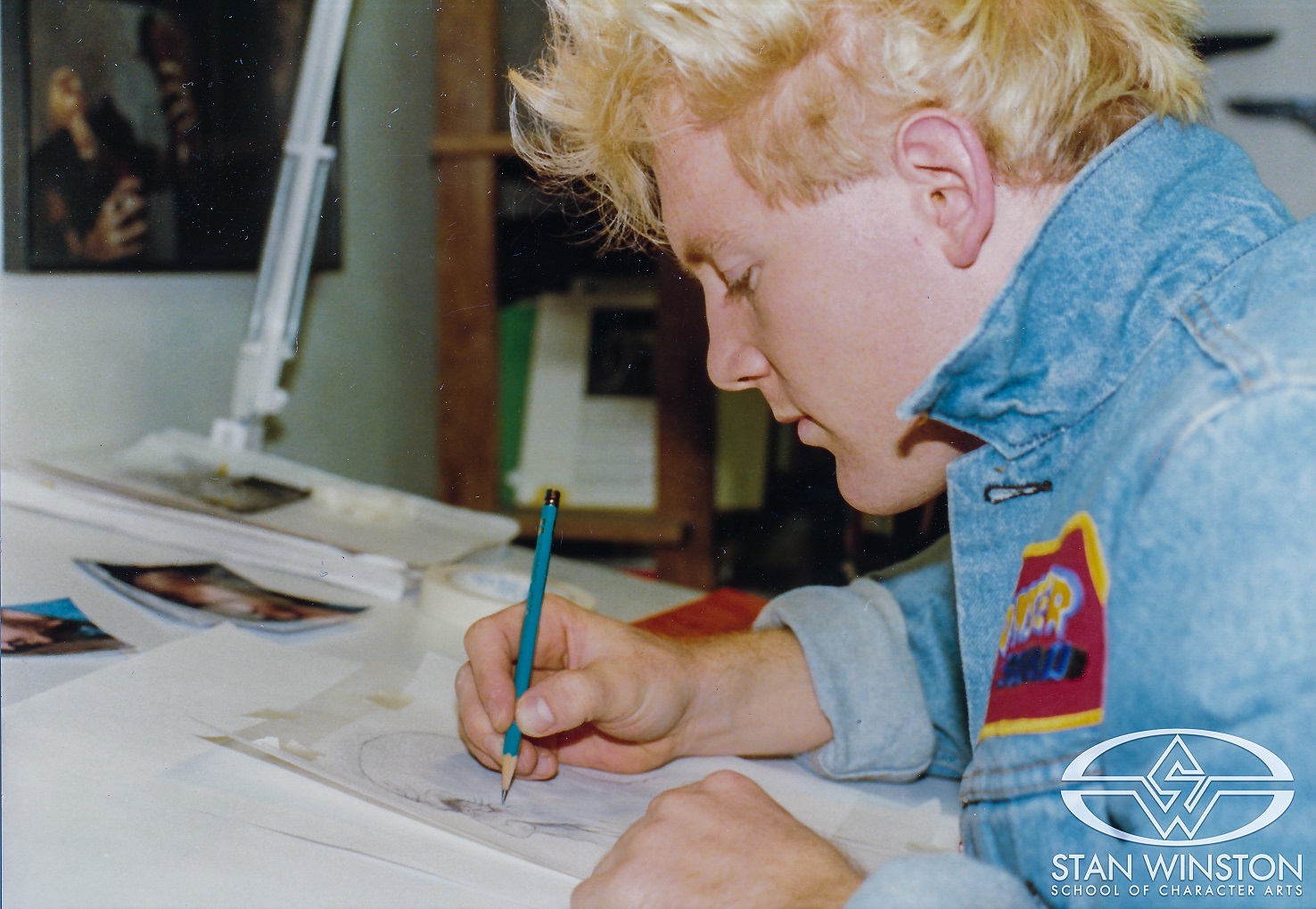 (Shane Mahan sketches a Haggis design at Stan Winston Studio.)
For design inspiration, Shane referred to old paintings, etchings, and fairytales. "The thing about a witch in a horror film is that it's a type of creature. It's like a zombie, a vampire, or a werewolf. The witch has a lot of history in terms of artwork from centuries ago," said Mahan, who also took inspiration from Roman Polanski's version of Macbeth. "The film starts with the three witches on the beach. There was one in particular, a blind woman. She has no eyes at all. But the overall feeling of it was very real. You also look at old people who have had really hard lives because their face is just marred with the telltale signs of all sorts of things. So, you kind of combine what is fantasy with what's reality, and then you make your own character. I didn't want it to be cartoony. I didn't want the big witch nose and the wart."
Getting the Haggis Design Approved and Sculpting the Makeup
Shane remembered that on a Sunday, Stan Winston called him and invited him over to discuss the design for Haggis. "I went to [Stan's] house with these sketches... we looked over everything, talked about it, and he was like, 'This is great. This is what we're doing.'"
Once he got the green light, Shane took Florence Schauffler's lifecast in alginate. "She was a very interesting woman and wasn't really afraid of much. And maybe that was part of her being in character even when she was visiting [Stan Winston Studio]. I think she took a lot of glee in sort of trying to shock us young boys, you know? And I don't think she was bothered by a second of it."
After the lifecasting process, Shane started to sculpt her pieces and make the hands. "It was a nine-piece makeup: headpiece, neck, cheeks, chin, ears, hands, claws, the whole thing," said Mahan, "and then the wig was made." The wig for Haggis was farmed out and hand-tied to match Mahan's design.
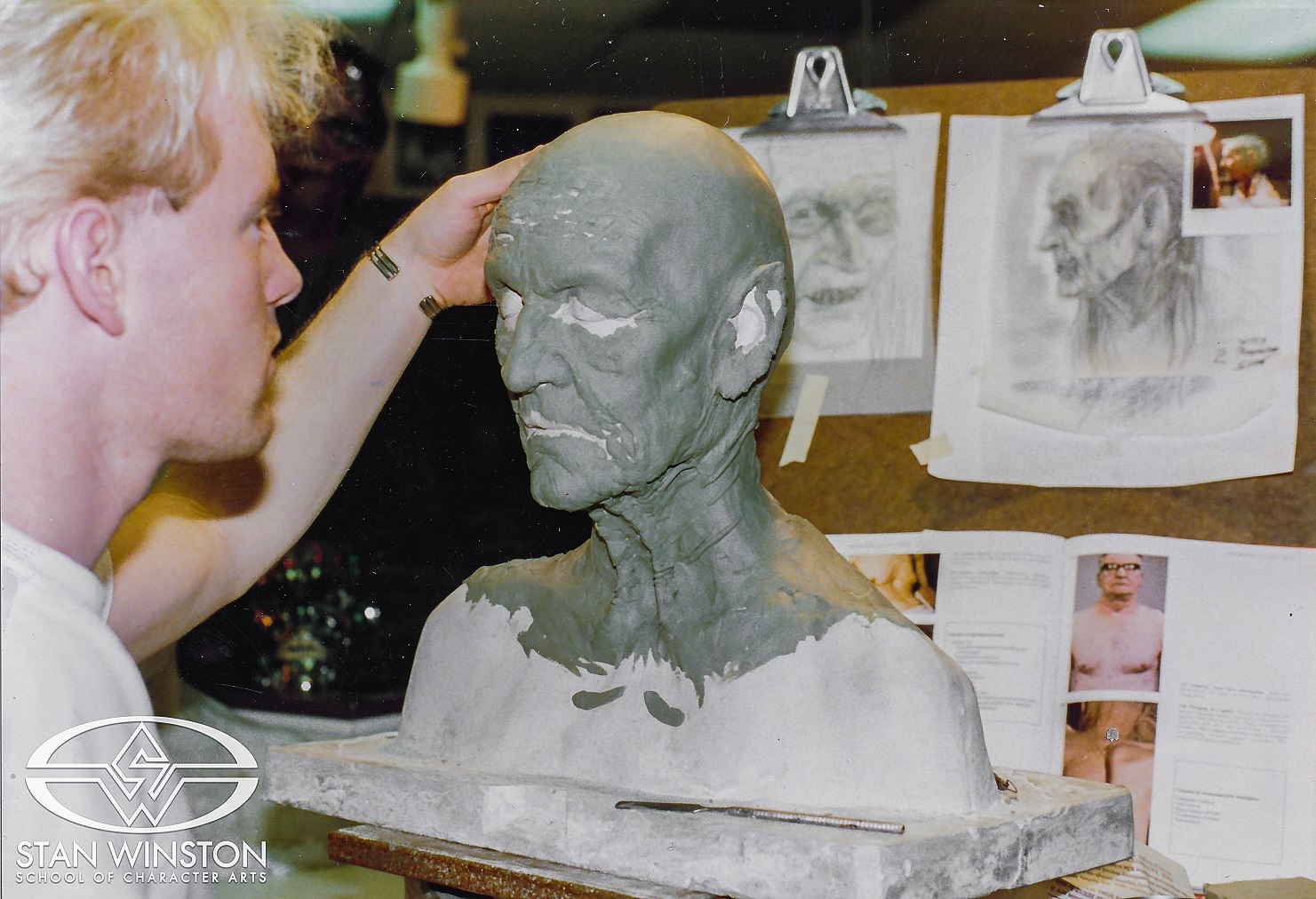 (Shane Mahan refers to his witch design sketches as he blocks out the Haggis sculpture.)
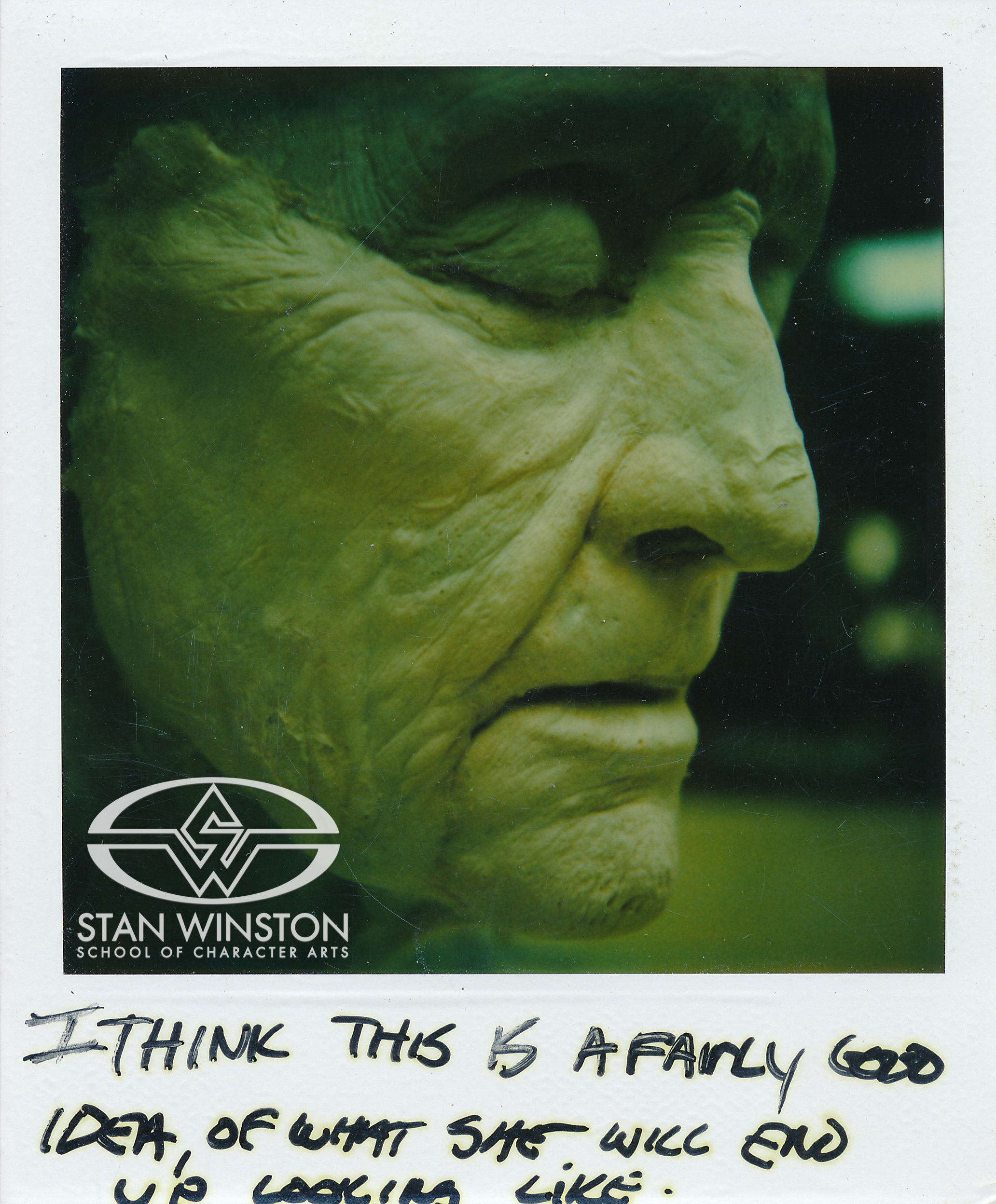 (A Polaroid picture of the nearly finished Haggis sculpture for Pumpkinhead with a note from Mahan to Winston.)
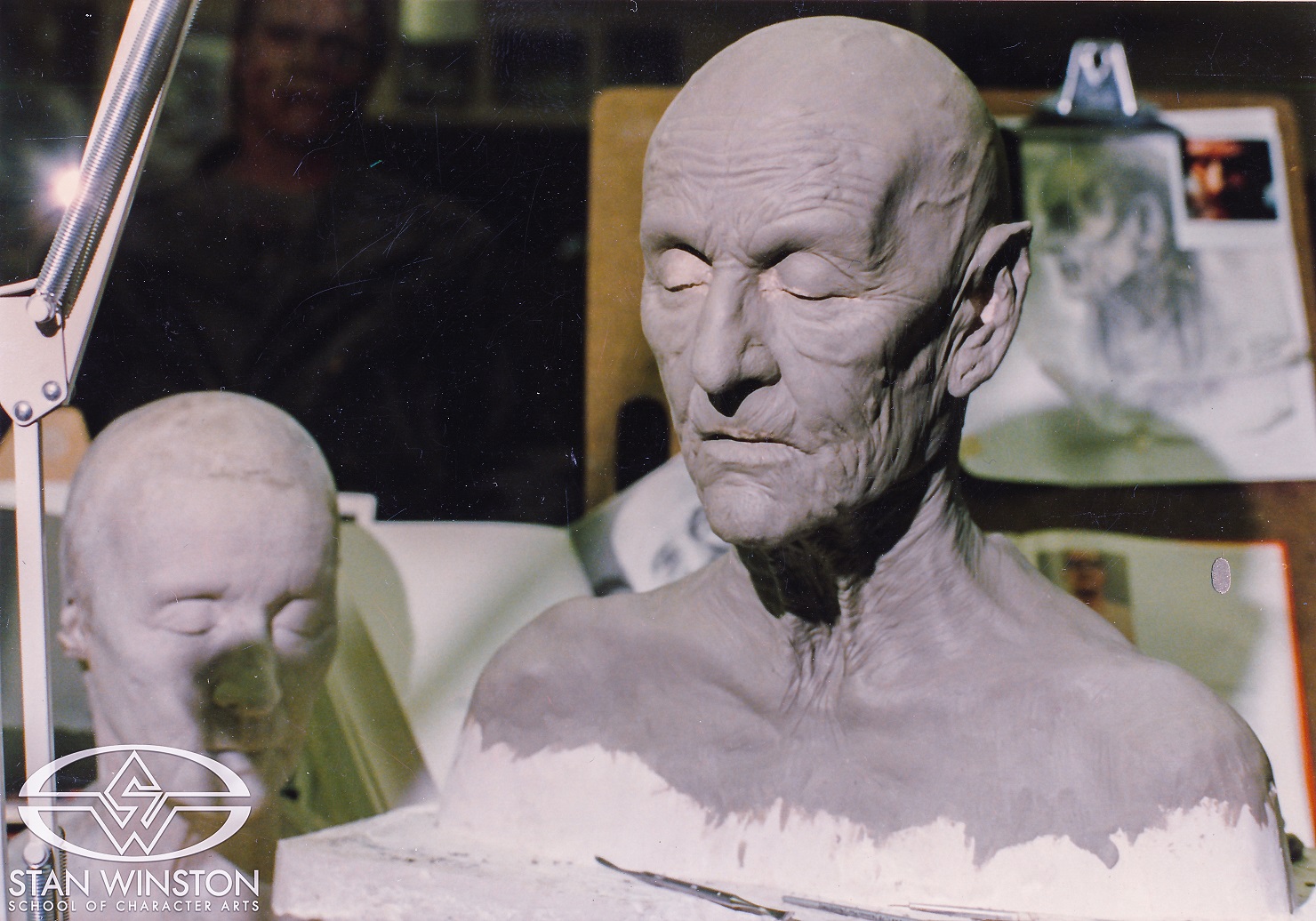 (The final Haggis sculpture.)
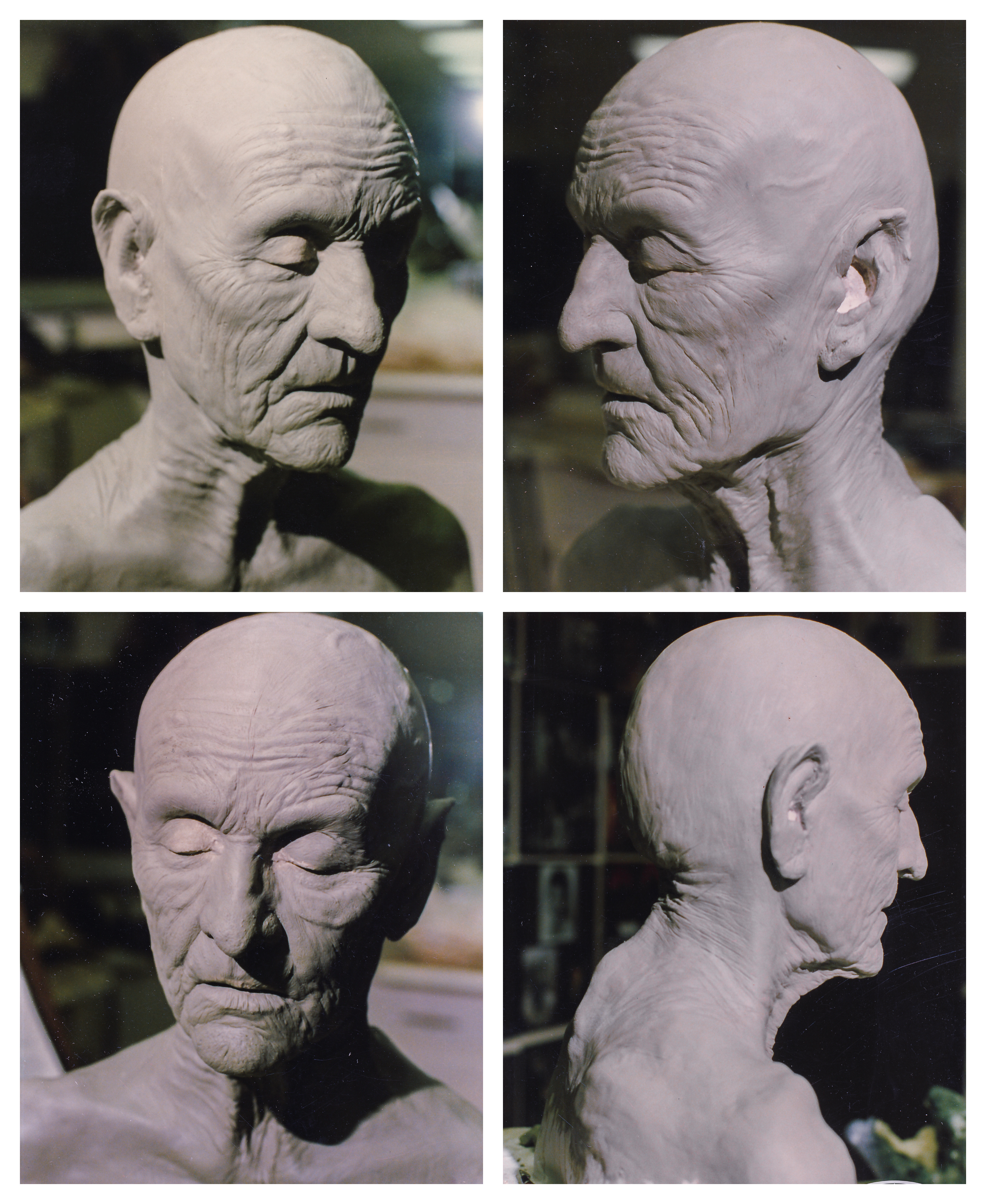 (Several angles on the final Haggis witch sculpture before it was broken down, floated off the lifecast, and placed onto new positives for molding.)
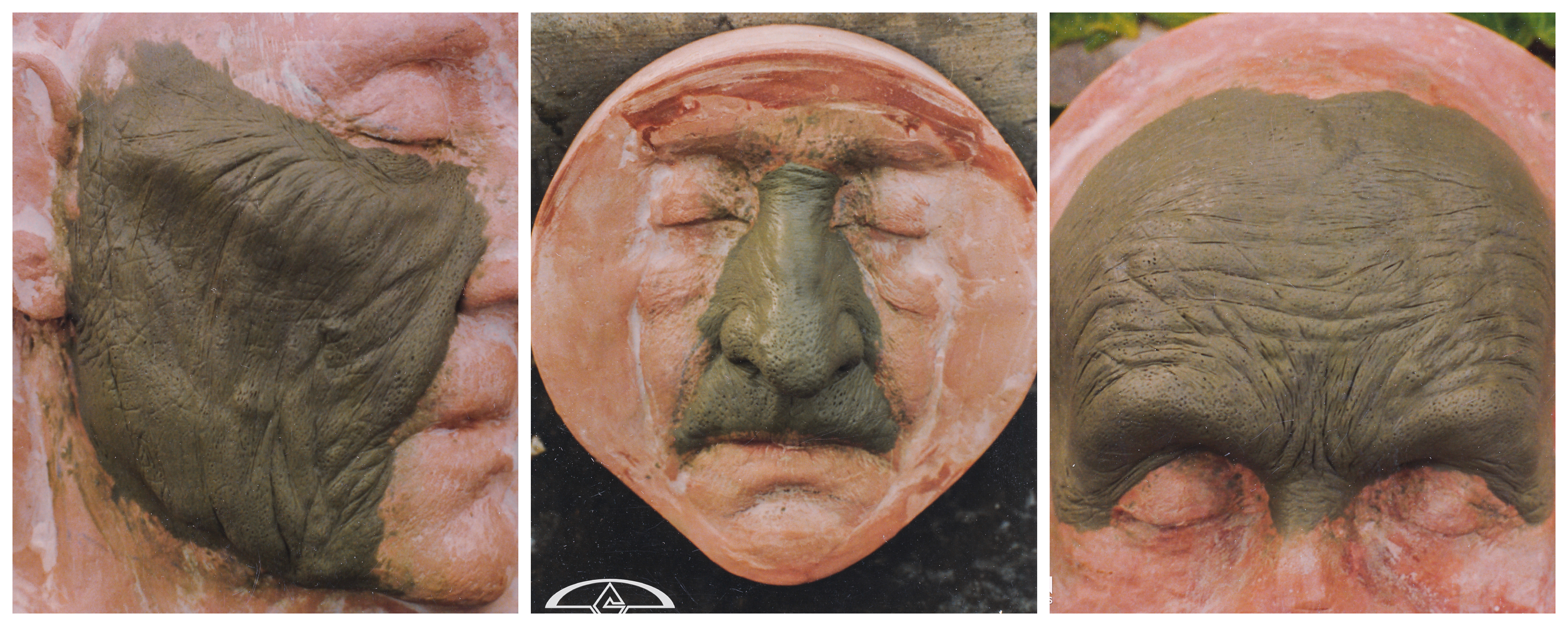 (A cheek sculpture, the nose/upper lip sculpture, and the forehead/brow sculptures on separate positives ready for molding.)
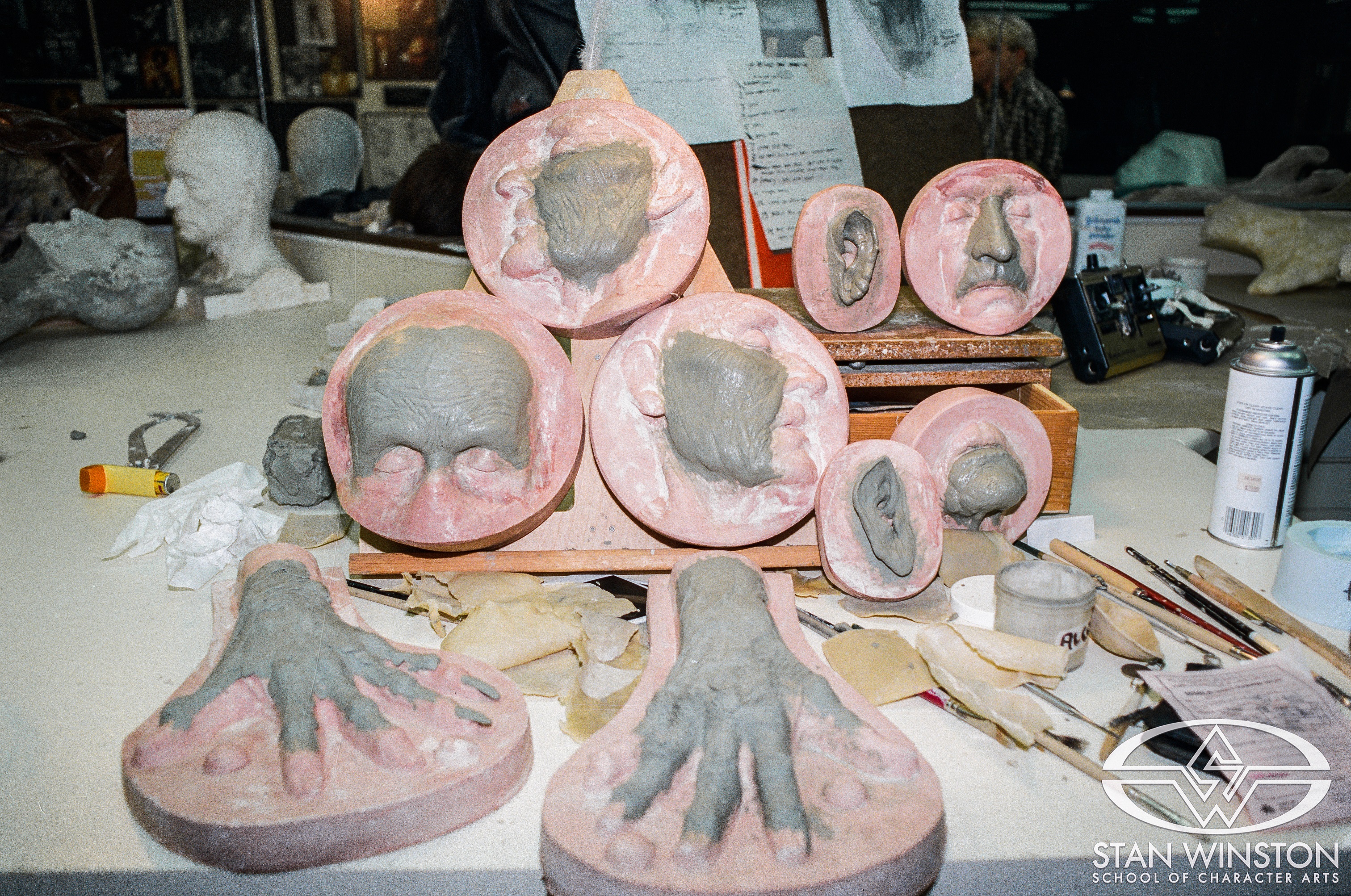 (The nine individual appliance sculpts that Shane Mahan created for the Haggis character.)
The foam prosthetic pieces completely covered Schauffler's face, head, and neck, down to the actress's sternum. "I wanted her ribs to protrude through a bit," said Mahan. "I had to make nine sets of partially painted and hair-punched pieces." The appliances blended underneath Schauffler's brows and around her deep eye sockets. "The structure of her was 80% of the success of that character because she was lanky and tall," added Mahan.
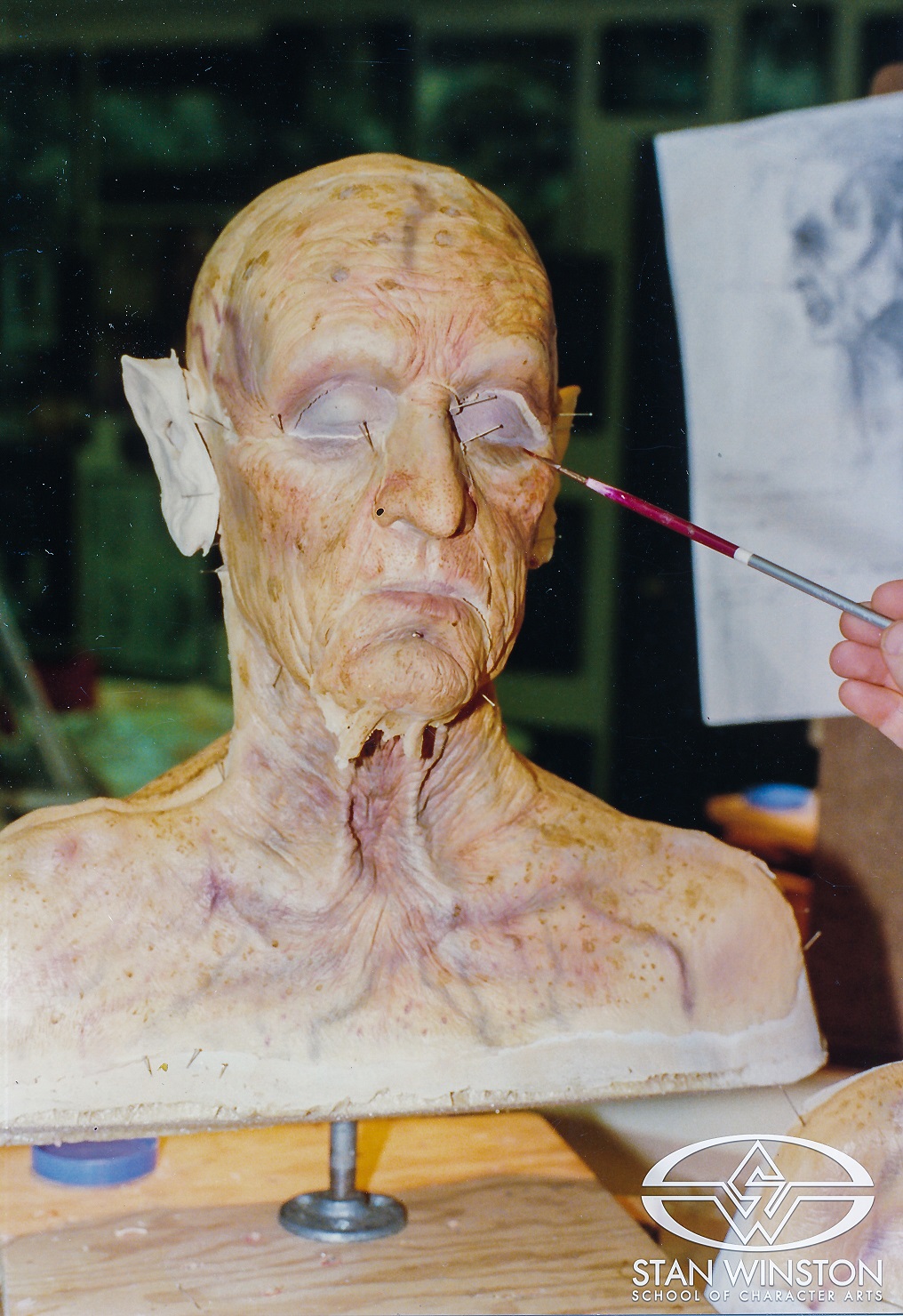
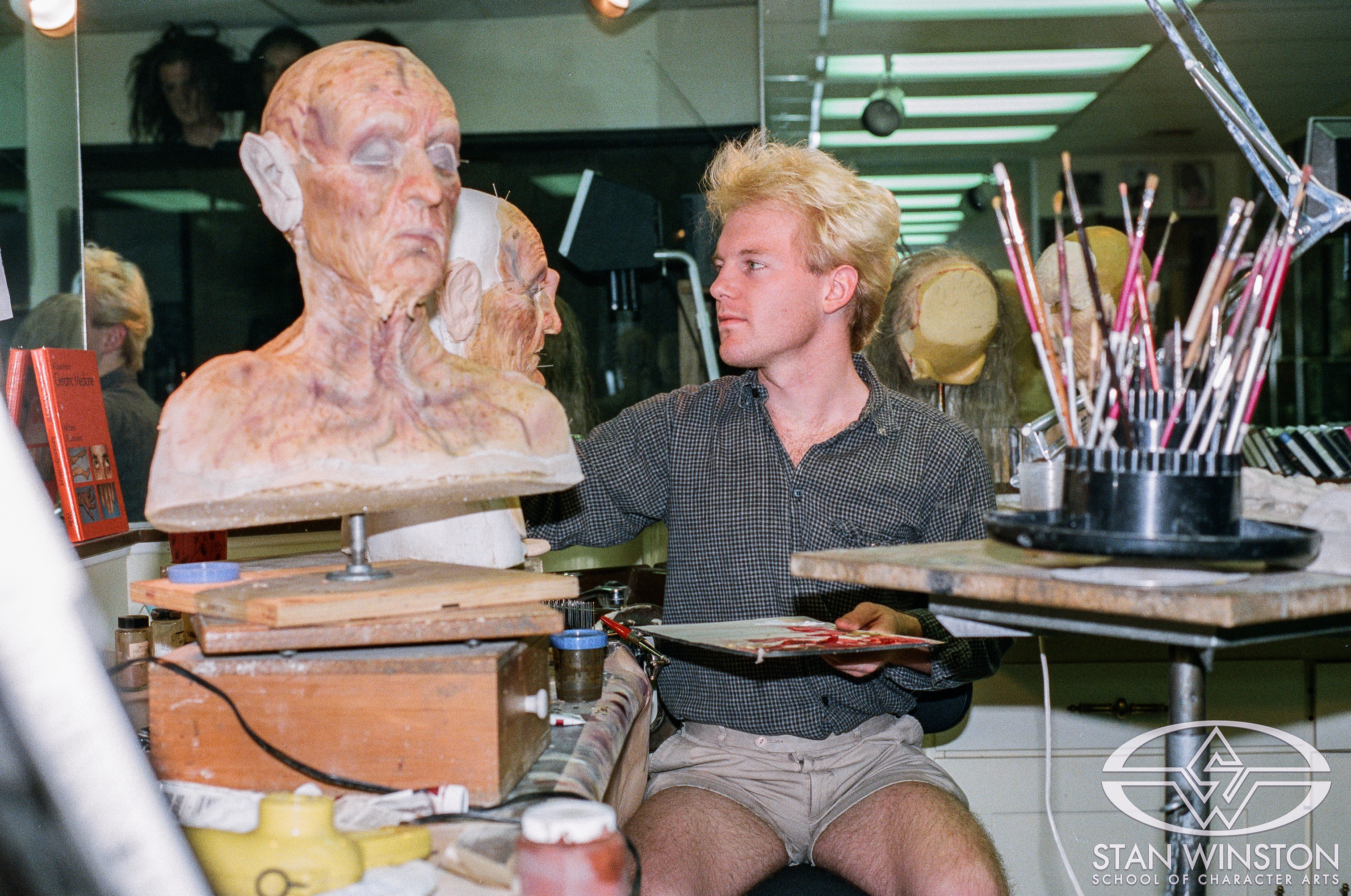
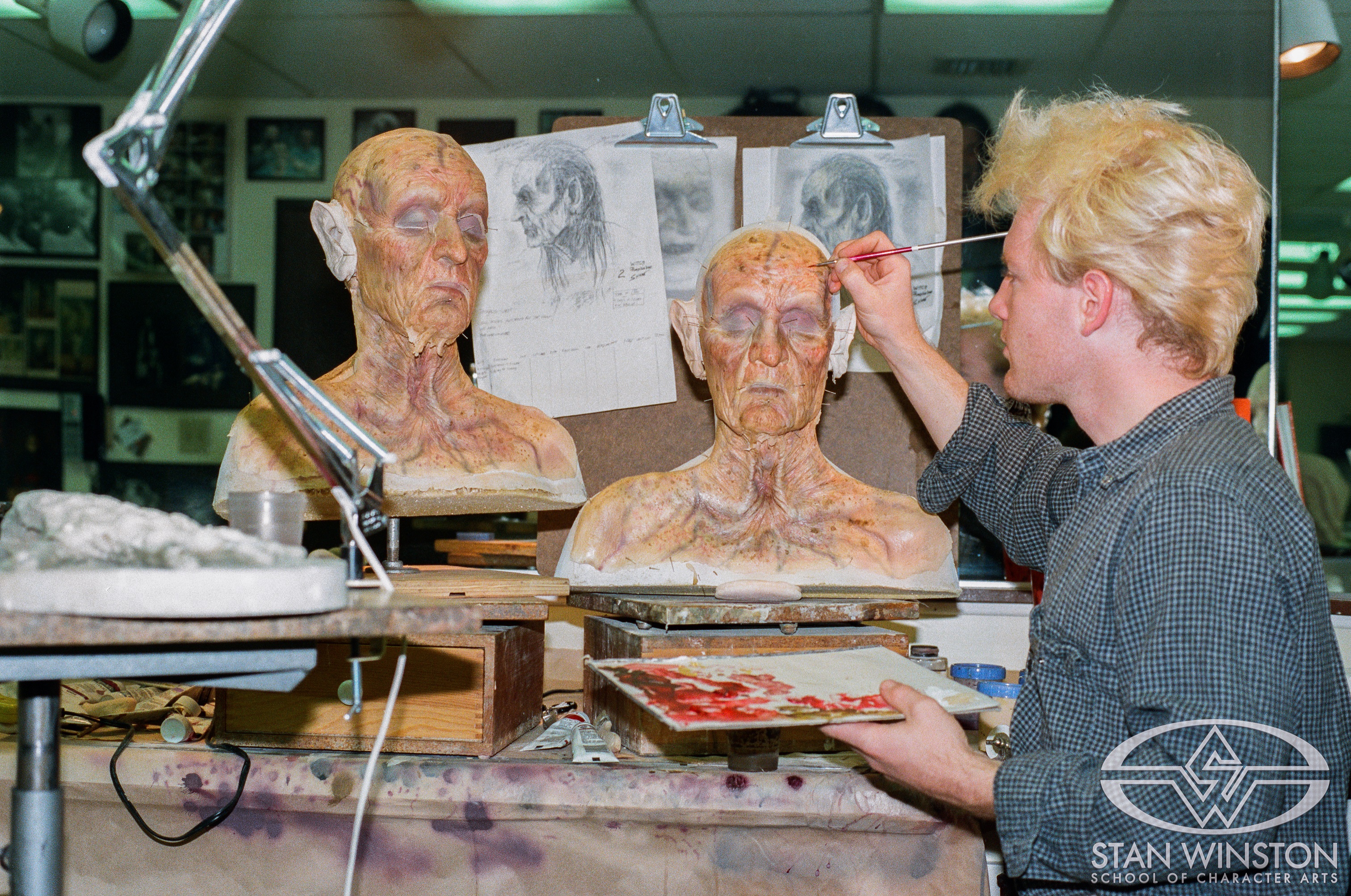 (Shane Mahan pre-paints multiple sets of foam latex Haggis appliances at Stan Winston Studio.)
Regarding his decision to run and pre-paint nine sets of prosthetic appliances for Haggis, Mahan said, "If she's gonna shoot six or seven days, you give yourself a couple of extras in case you make her up, and they don't get to it for some reason, or they extend a scene. I just wanted to have everything ready."
Making an Eye for Haggis the Witch
To create Haggis' deformed eye, "we had one contact lens made, which was a ceramic lens," revealed Mahan. "It was an oversized eye. What I mean is it protruded a little bit. That was an idea I had taken from the Christopher Lee Frankenstein lens because the lens he wears is larger than his real eye. So, it made his eye look bigger. And I thought that was a fun thing to do."
"It's almost cliche to have a bad eye, but it's cool. It's eerie. I did a lot of research into what kind of ailments could produce a blind eye or what makes it look strange," said Mahan. "And there was one that had an ocular star, which was to say the eye was cloudy, but there was another fluid over the cloudy iris that produced almost a haze of a star shape. And I thought that was sort of mystical and strange. Let's use that. So, she's got an oversized sclera with a milky blue eye with a hazy yellow sort of star pattern."
Using Appliances and Acrylics for Haggis’ Hands
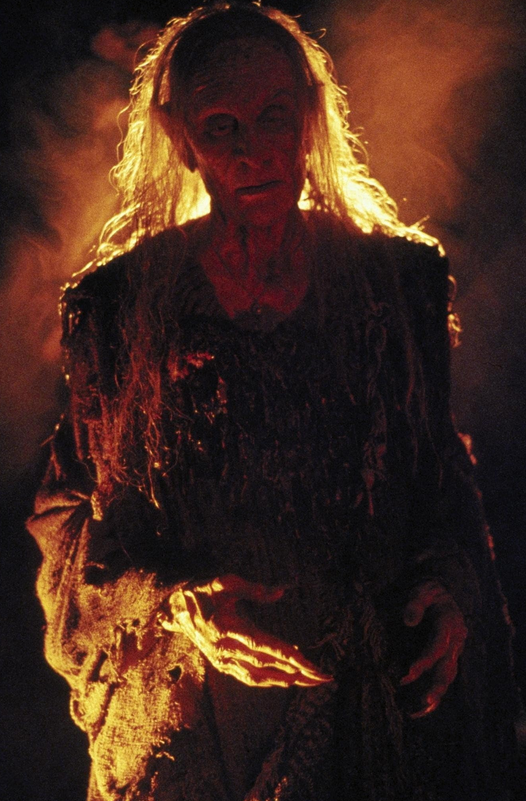 (This moody shot from Pumpkinhead provides a nice look at the detail that went into Haggis's hands and fingernails. Image courtesy MGM.)
Mahan transformed Schauffler's hands into the hands of a crone with foam latex appliances. The pieces covered "the back of her hand and the color wrapped around," said Mahan. To create the fingernails, Mahan "took a pair of really long artificial fingernails, and I dremeled them, cut them, and chopped them up. Then, I made little molds to cast up transparent acrylics. The appliance went around her nail, and then I would adhesive the claws right where her nail was."
Knowing When to Use Practical Effects
When Lance Henriksen's character Ed Harley goes to Haggis' cabin to beg for help in taking revenge, the witch explains what must be done. For this revelatory dialogue, Mahan decided not to use dental appliances for the character. "I just used color on [Schauffler's] teeth because the speech was very important. I remember even talking to Stan about it. 'Let's not make teeth so that she's slurring or hissing through this important dialogue. Because this is the whole story, the horror of what is about to happen," said Mahan, "and if that's not convincing, the rest of the movie just doesn't work."
Shane even contributed to some of the character'sjewelry and other accoutrements. "I went to an occult shop on Melrose, and I got earrings that were real crow's feet and found some interesting amulets for her necklaces. So she's adorned with a few odd things."
Florence Schauffler's Transformation Into Haggis
Shane described how he worked with Florence to get the best performance from the elaborate makeup glued to her face. "I was using examples for her like, 'It's like the Salieri makeup in Amadeus, it's like the F. Murray Abraham makeup. (Created by Oscar-winner Dick Smith). That makeup is foam rubber, wigs, and paint. But he's extraordinarily expressive. She was great about it. She wanted to be able to be very expressive."
Once in the makeup, Schauffler stayed in character, even between takes, and would only answer to the name Haggis. "She was never Florence. She was always the witch. I couldn't get any chuckles out of her at all. I gave up after a while," laughed Mahan. "But she was great."
Revealing Haggis
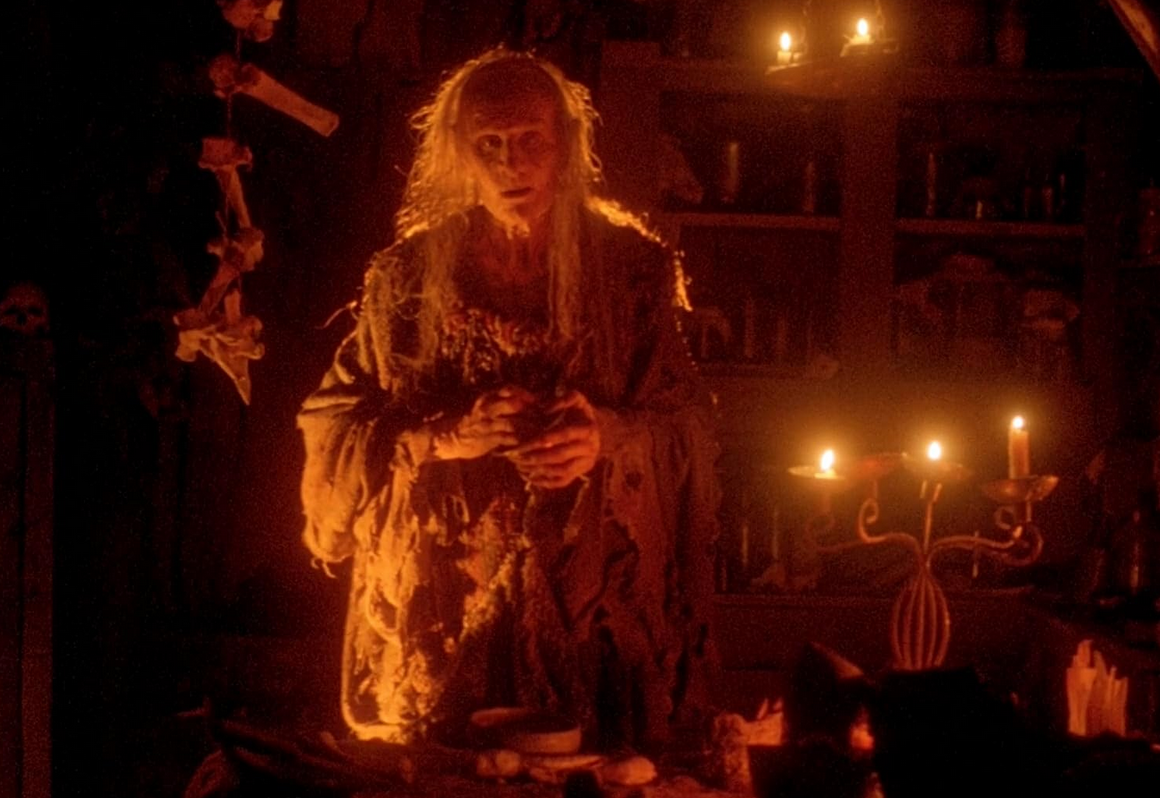 (Haggis welcomes Ed Harley to her spooky cabin. Image courtesy MGM.)
When he saw the final film, Mahan was impressed by the witch's reveal in her cabin. "In the first shot, she's faced away from the camera and facing the fire. It's backlighting her. She has a misshapen skull, misshapen ears, and wispy hair. That really sets the tone, and the lighting is quite stark. So, I thought that all of that was fun. And I was very pleased with it."
A Happy Accident Filming Pumpkinhead
One of the things Mahan remembered is that when Ed Harley brings Haggis the corpse for the ceremony, Florence had a bit of difficulty finding a particular prop. "You see her standing up, gesturing. Because she had a lens in her eye, she was looking for something on the table and trying to reach for it, but it looked like she was waving her hands, doing mystical things, evoking something. But it was because of that big contact lens in her eye."
Working on Pumpkinhead at Stan Winston Studio
During the six or seven nights of shooting, Shane was responsible for most of the work on Haggis' makeup. He recalled that things were different in the 1980's. At Stan Winston Studio back then, one artist would often be in charge of a character like Haggis from start to finish. "We pretty much did everything ourselves. Once the molds were made, we ran our own foam and painted our own pieces. We just did the whole process. And that was just common. Everybody would take an assignment."
"Like James Cameron said, 'There's a lot of movie in Pumpkinhead,'" said Mahan. "There's a lot going on for a very low-budget film. It's really well shot. There's interesting action. There's great scenery. I think it's a great film, especially for this time of year."
"The last thing I would say is, what was great was that was a film that [Stan Winston] was in control of. We didn't have to go through approval processes for designs; the studio didn't have to approve it, and marketing didn't have to approve it. [Stan] had a lot of faith that I could do it. That was what was great about working with Stan."
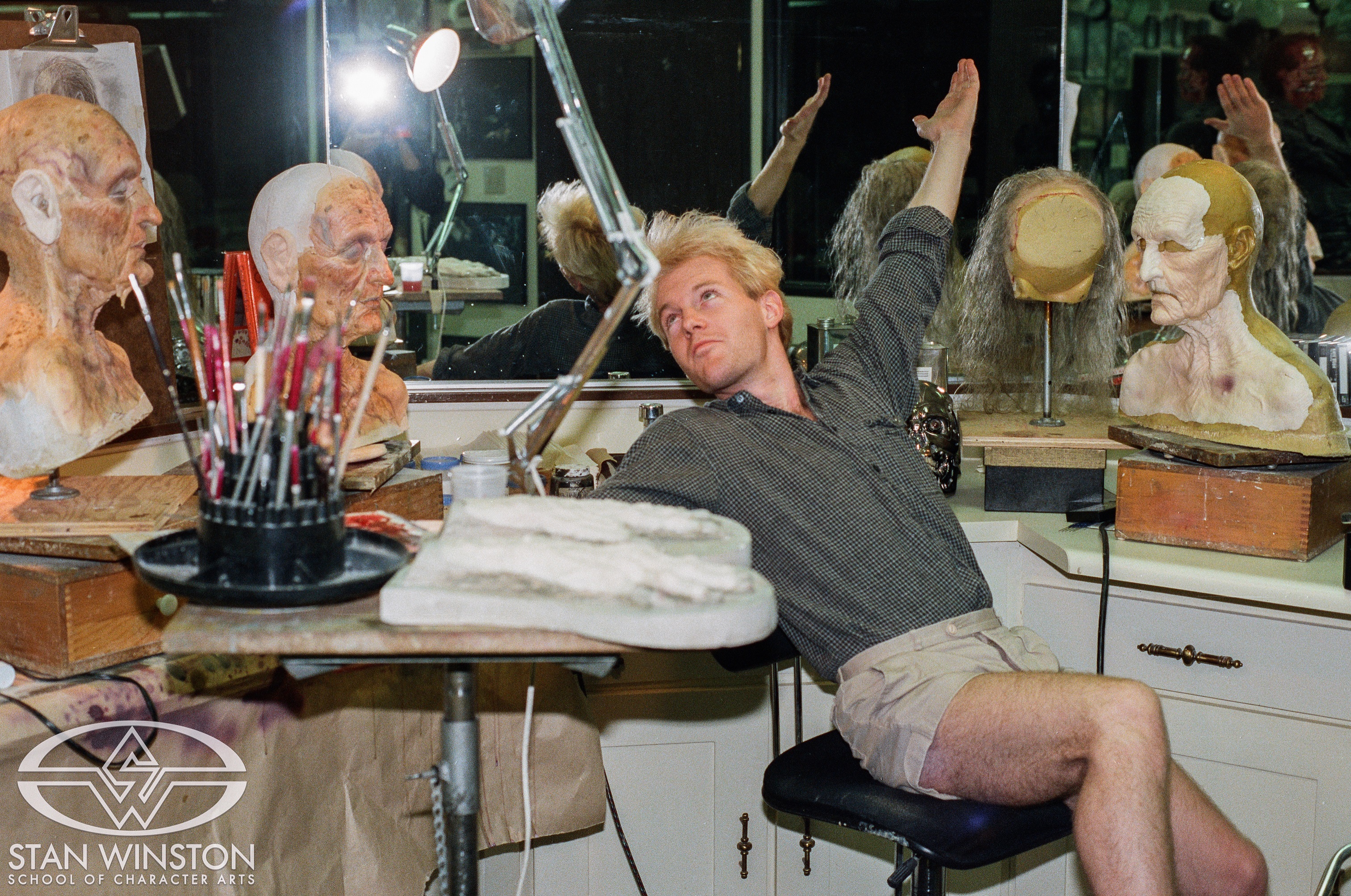 (Shane Mahan with the many elements of his Haggis witch makeup, including face/head/neck appliances, hand appliances, and a custom wig.)
Check out the rest of our in-depth coverage on Pumpkinhead, including how Pumpkinhead was created, at the link below!
Pumpkinhead - The Making of Stan Winston's Demon of Vengeance
Courses with the Creators of Pumpkinhead
- Special Effects Sequence Design with Shane Mahan
- Directing Creatures with Alec Gillis
- Make A Monster Suit - Part 1: Creature Sculpting with Alec Gillis
- Monster Suit Performance with Tom Woodruff Jr.
- Character Design Techniques with Tom Woodruff Jr.
- Animatronics Design Basics with Richard Landon
- Cable Mechanism Basics - Tentacles with Richard Landon
- Garage Monsters - How To Make Creature FX On A Budget with Shannon Shea
- The Business of Making Monsters with Shannon Shea
- Zombie Makeup - 3D Pros-Aide Transfer Application with Howard Berger
- Hybrid Characters: Blending Practical & Digital FX with John Rosengrant