

Behind the Practical Effects of Inspector Gadget
- Excerpted from Walt Disney Pictures' The Top Secret World of Inspector Gadget (1999)
In 1999, alongside films like Instinct, The Sixth Sense, Austin Powers: The Spy Who Shagged Me, Lake Placid, and Galaxy Quest, Stan Winston Studio was also involved in creating effects for Walt Disney Pictures' live-action comedy Inspector Gadget, directed by David Kellogg.
Jump To Section
- What is Inspector Gadget about?
- Making Gadgets for Inspector Gadget
- Gadget vs RoboGadget
- Creating Sanford Scolex's Claw
What is Inspector Gadget about?
The movie was based on the classic 1983 animated series and starred Matthew Broderick as Inspector Gadget.
John Brown (Matthew Broderick), a security guard for robotics expert Dr. Brenda Bradford (Joely Fisher), is injured in an accident. Being "the perfect candidate" for the Gadget Program, Dr. Bradford rebuilds John Brown using cybernetic parts, thereby transforming him into Inspector Gadget. Inspector Gadget later defeats the film's villain, Dr. Claw (Rupert Everett).
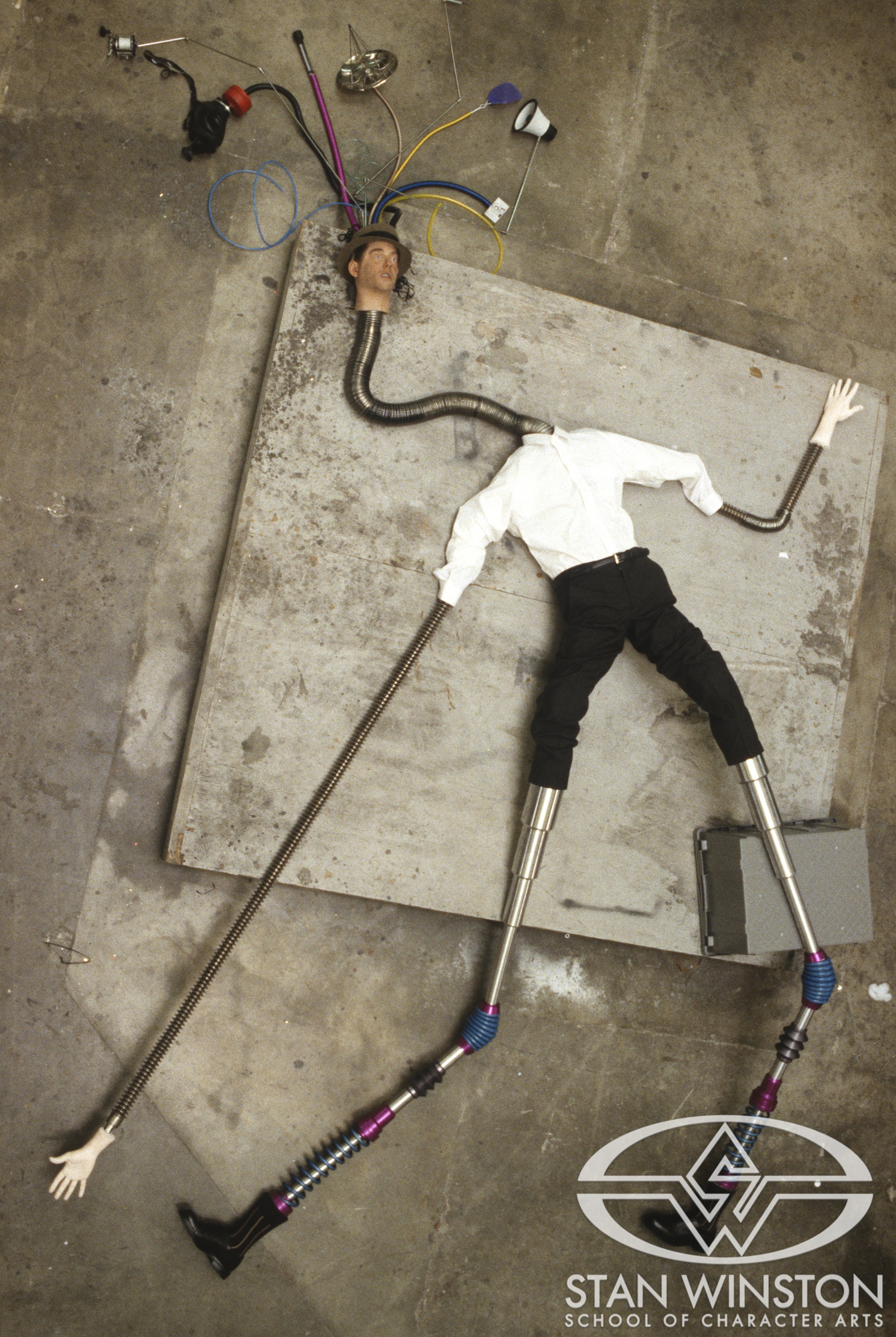 (A depiction of Inspector Gadget's extended arms, legs, and neck.)
The heart of Inspector Gadget is the title character's many gadgets--the complex hardware and software that comprise his entire body. Since the character is too impatient to study his own instruction manual, he struggles to control his gadgets, resulting in a series of comedic mishaps.
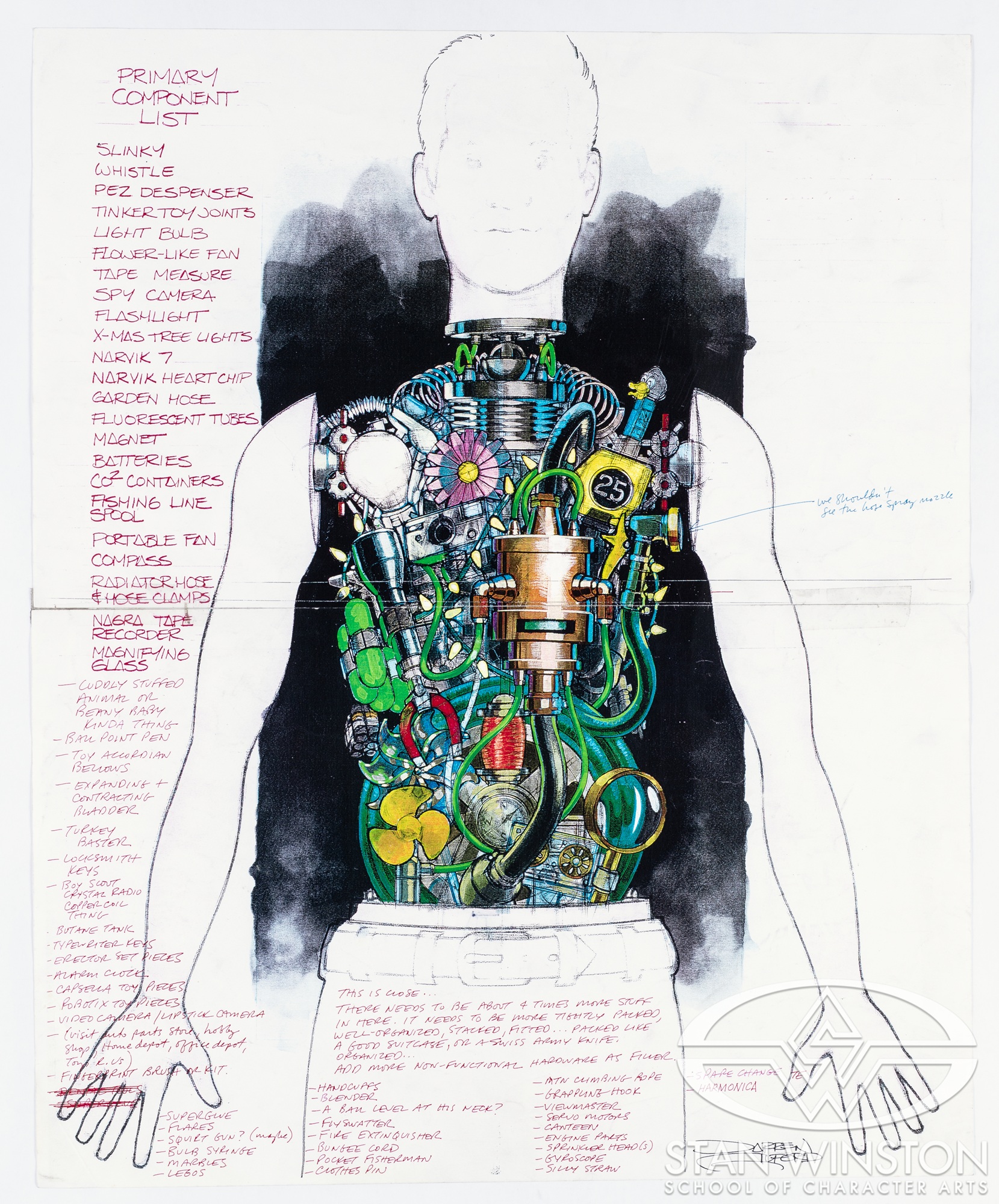 (Stan Winston Studio concept artwork with notes on the gadgets inside Inspector Gadget's body.)
From the initial concept art, the idea was that Inspector Gadget would be entirely comprised of familiar household items. Visible in the initial sketches by Stan Winston Studio were a whistle, a PEZ candy dispenser, a light bulb, a tape measure, a flashlight, Christmas tree lights, superglue, a garden hose, tubes, magnets, batteries, fishing lines, a pen, a turkey baster, a video camera, and a magnifying glass.
To bring Inspector Gadget to life, under the supervision of Stan Winston and Shane Mahan, Stan Winston Studio created real, practical versions of the gadgets for the film's over 100 effects shots, which were later seamlessly blended with computer graphics by Dream Quest Images (DQI) and BFTRE.
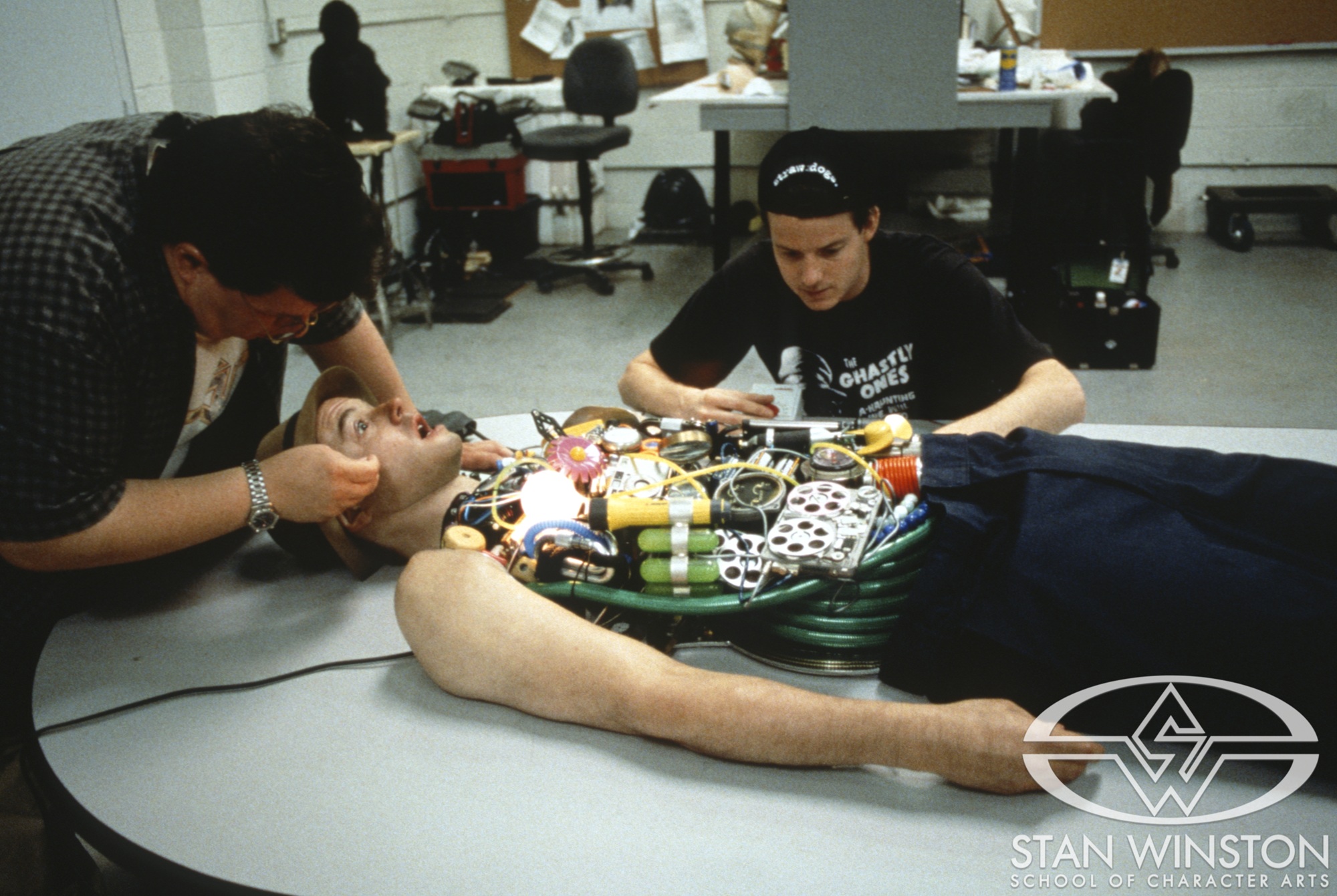 (Richie Alonso and Kevin McTurk work on Inspector Gadget's puppet at Stan Winston Studio.)
"There is a lot of blending and a lot of crossing over of the techniques in Inspector Gadget," said Stan Winston. "You know that there’s animatronics, there is active replication, there’s CG, but you don’t know exactly where and when.”
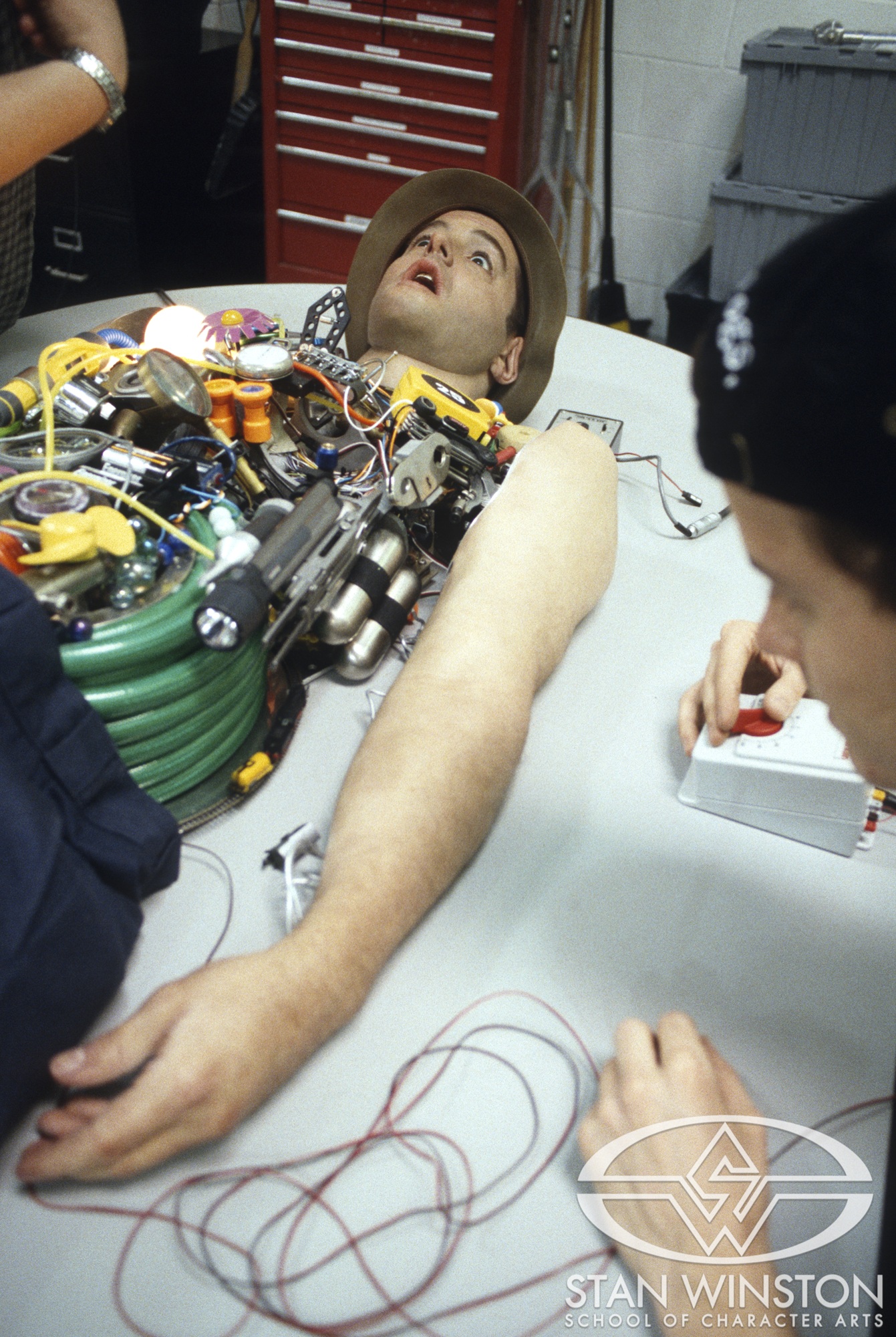 (Kevin McTurk tests some of the mechanical gadgets in Inspector Gadget's puppet at Stan Winston Studio.)
Making Gadgets for Inspector Gadget
Before the movie's production began, Matthew Broderick visited Stan Winston Studio for lifecasting of his body, arms, and hands in various positions, as well as cyberscanning his head with different facial expressions.
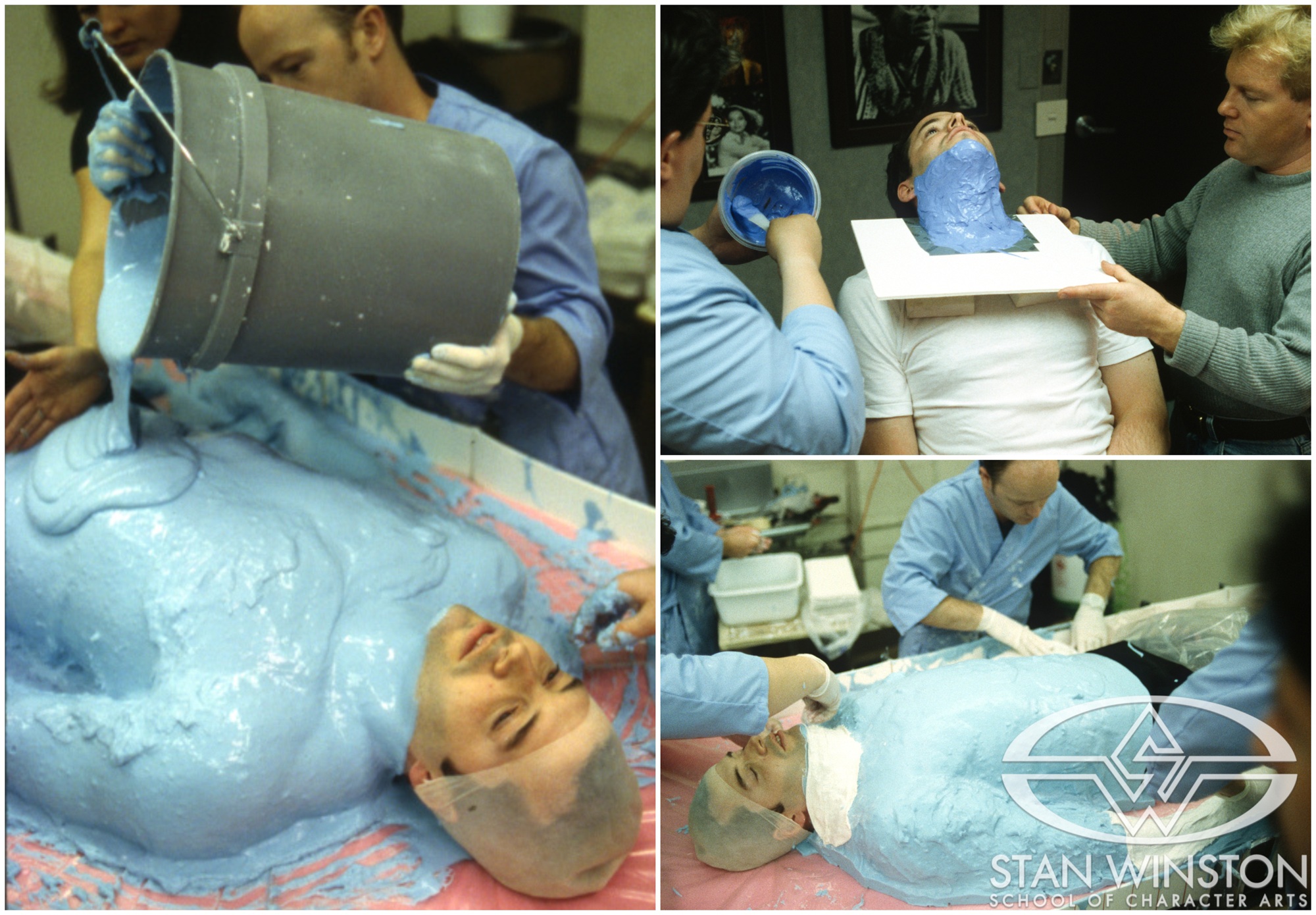 (Life-casting of Matthew Broderick for Inspector Gadget at Stan Winston Studio.)
"There are a lot of scenes where something comes out of my hand, so the way they do it is my whole arm will be artificial," said Matthew Broderick. "A lot of planning goes into it, like they took molds of my hands and all these different positions, and so it's all really me, but it's rubber or silicone."
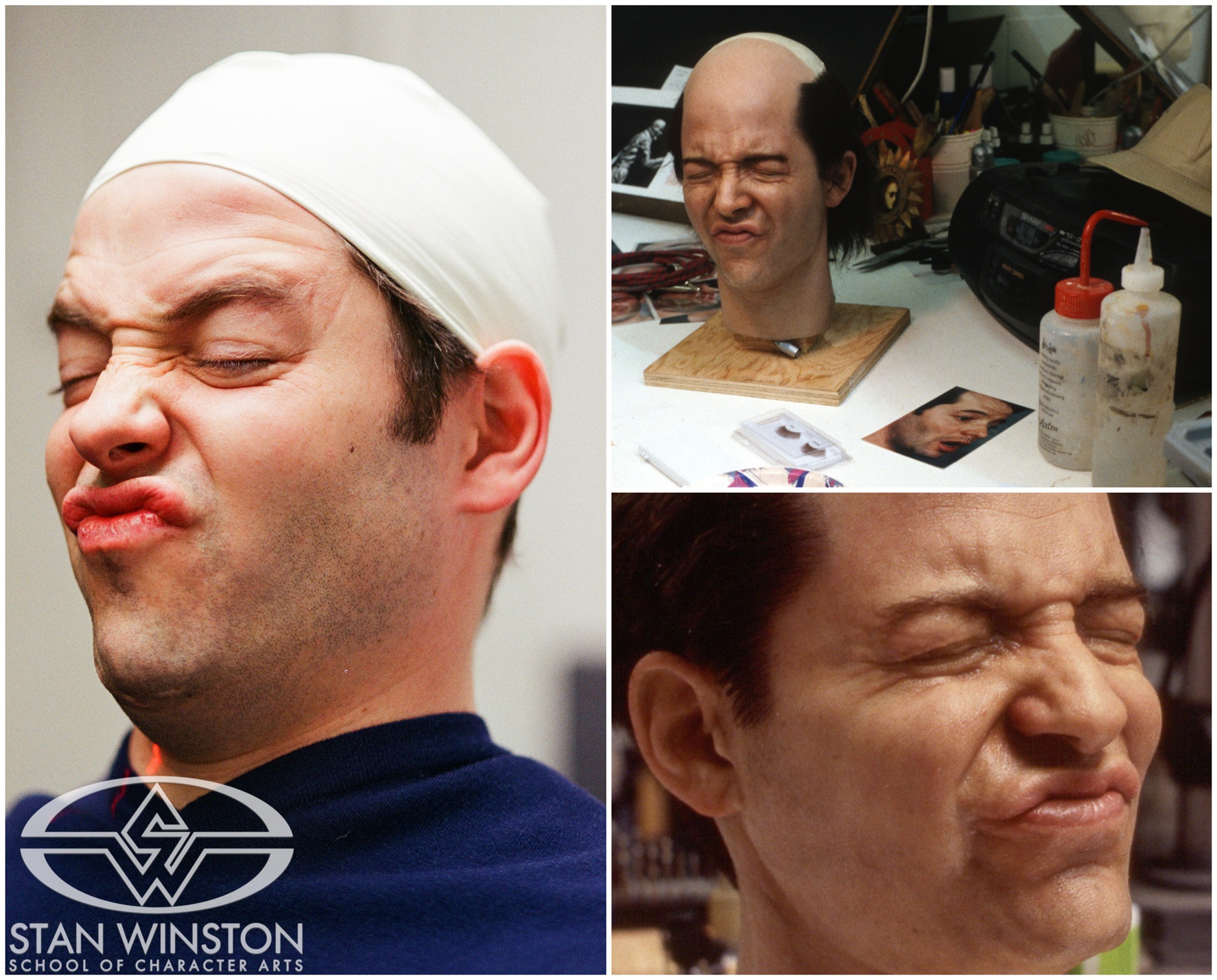 (L: Cyber-scanning Matthew Broderick's head with a requested facial expression. R - Top: WIP of hair punching the dummy head. R - Bottom: The finished dummy head.)
The Studio's main task with specific effects was to have the animatronics perform everything that Broderick couldn't do. "It's all about what the things are that Matthew can't do that Inspector Gadget can do," said Stan Winston. "So, a lot of these were insert pieces that we used in place of Matthew's hand or Matthew's head."
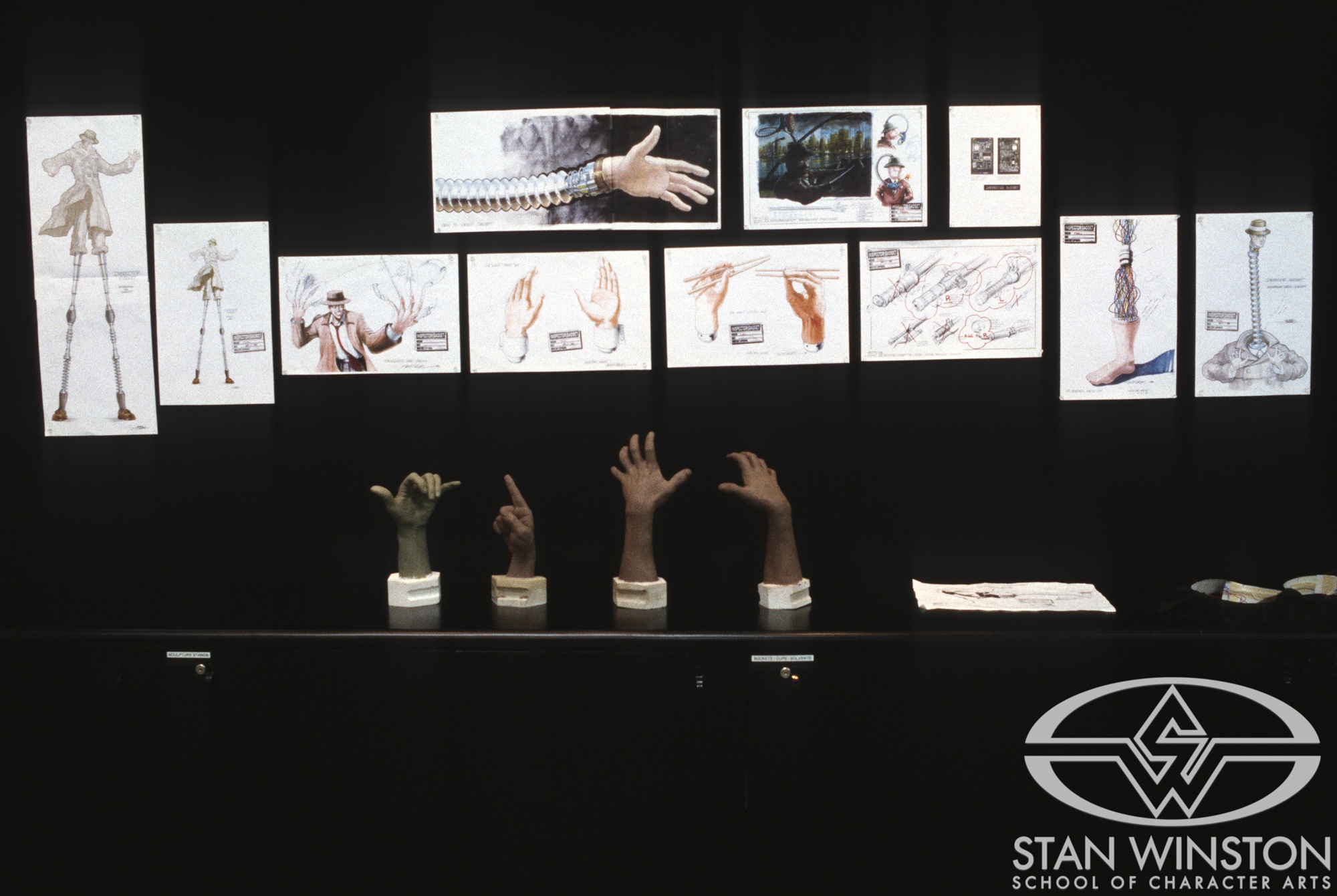 (Concept artworks of Inspector Gadget and hand sculptures of Matthew Broderick's hands in various positions.)
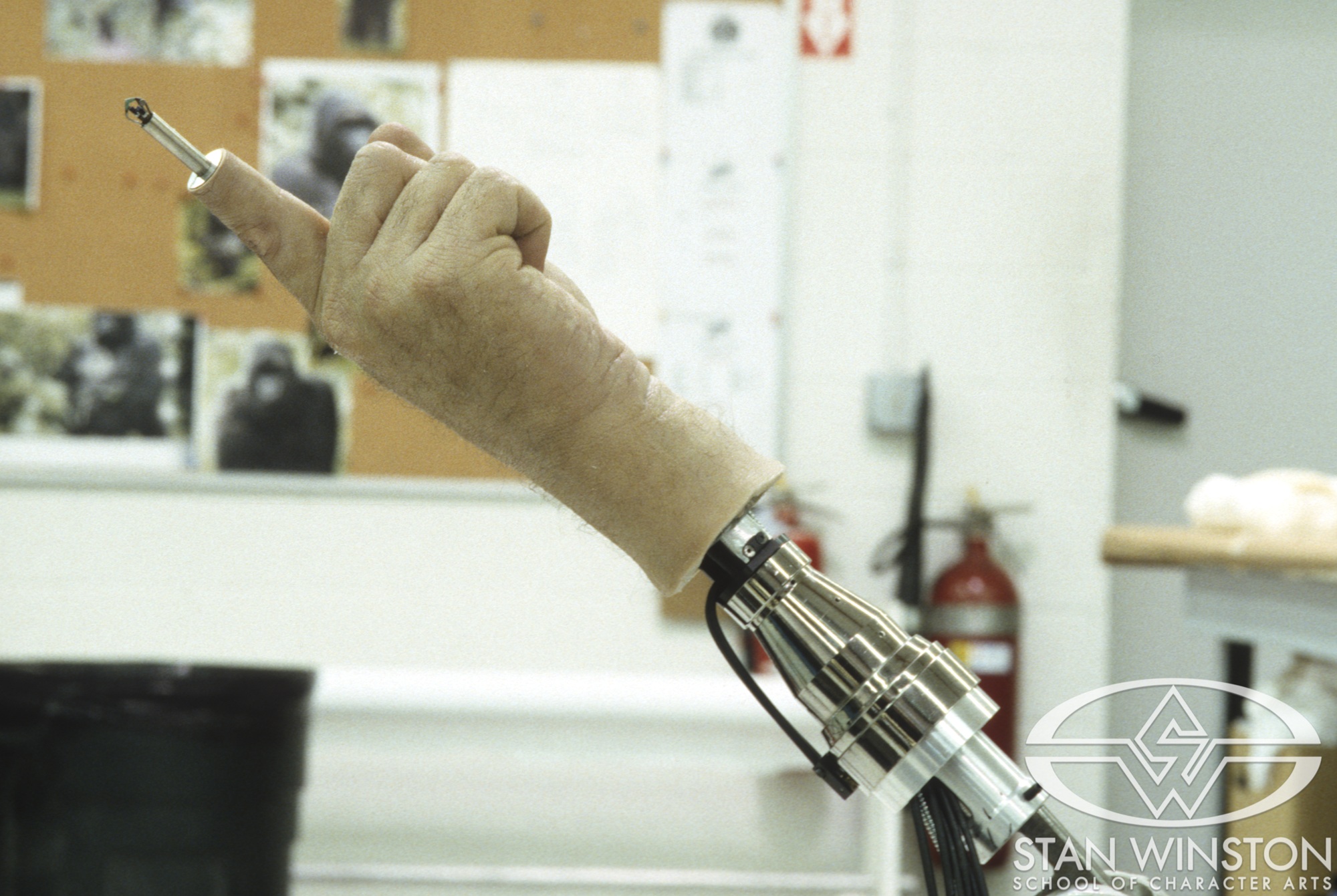 (One of the gadget mechanical hands with a built-in tool in its index finger.)
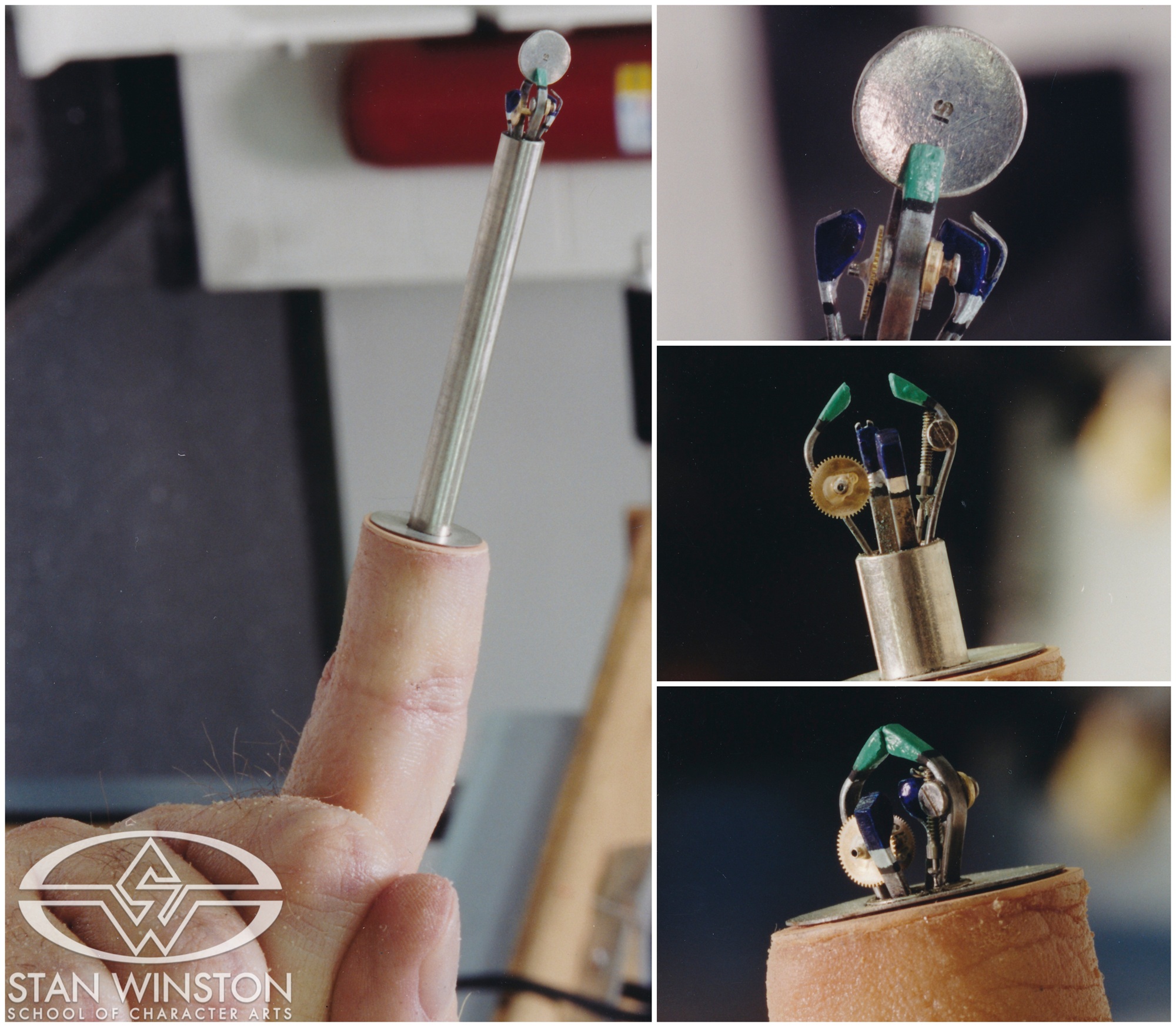 (Close-ups of testing the same mechanical hand with a 'micro-chip' at Stan Winston Studio.)
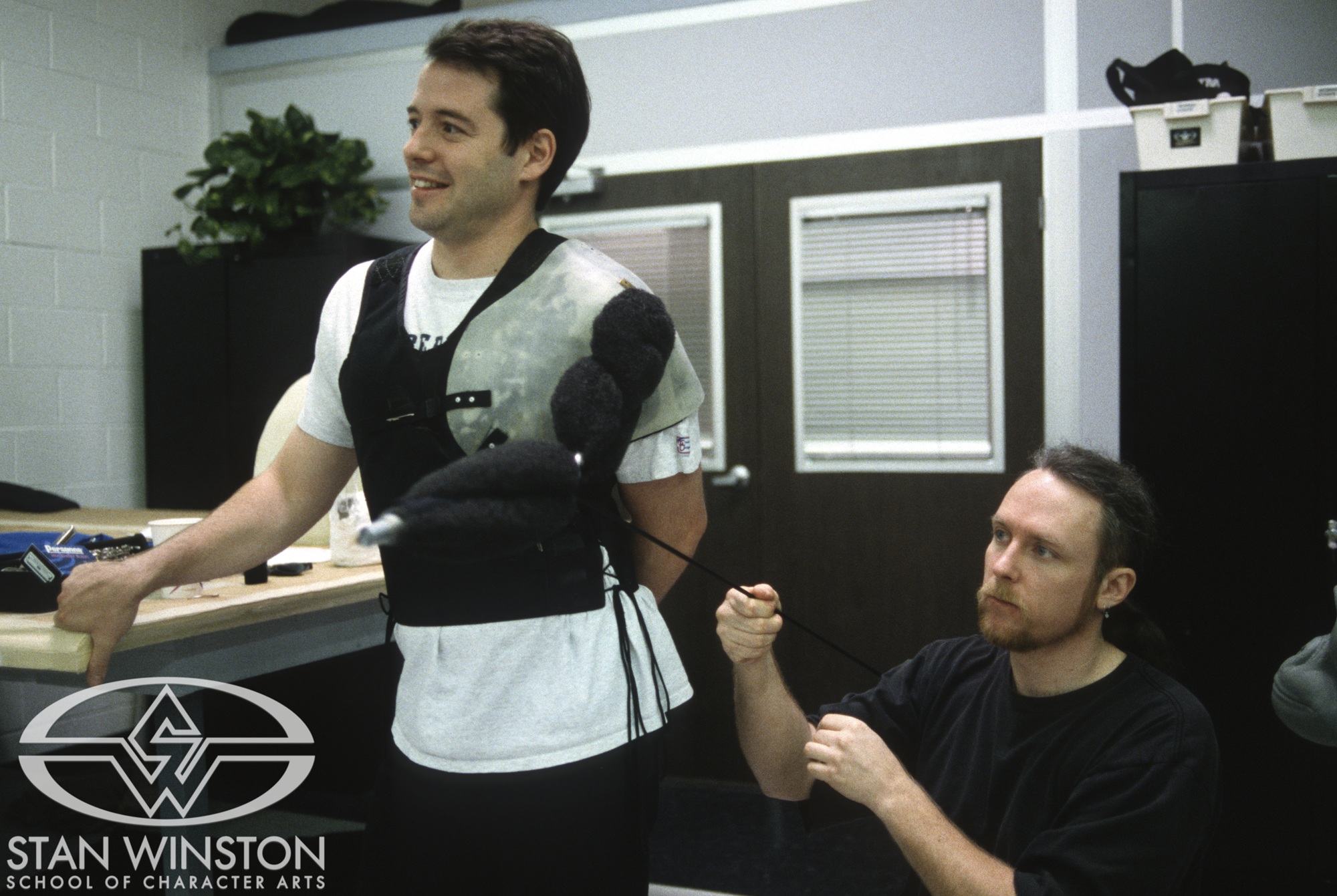 (Matthew Broderick tests the harness while Christian Colquhoun puppeteers the phony arm built for the interchangeable gadget hands.)
Inspector Gadget has a variety of gadgets that he uses, including his gadget arms, legs, and neck that extend, and a coil spring mechanism below his knees that increases his stride.
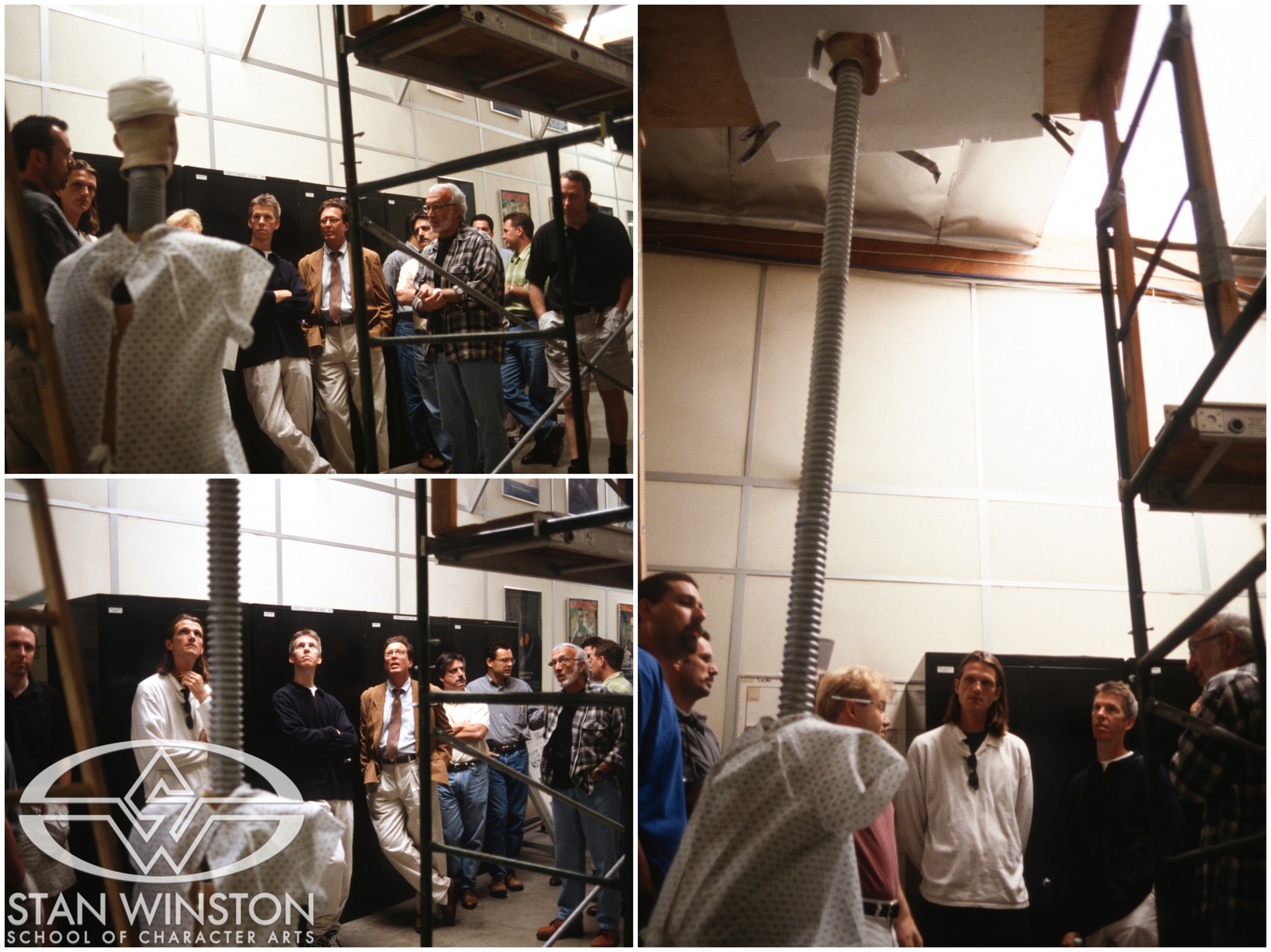 (The crew presents the practical version of the 'gadget neck' to director David Kellog at Stan Winston Studio.)
VIDEO CLIP -- Testing the spring neck mechanism at Stan Winston Studio:
The Practical Effects of Inspector Gadget23 years ago, Inspector Gadget premiered in the USA. Stan Winston Studio made all the incredible gadgets for David Kellogg's movie. #matthewbroderick #stanwinstonstudio #practicaleffects #inspectorgadget #davidkellogg
Posted by Stan Winston School of Character Arts on Monday, July 18, 2022
VIDEO CLIP -- Testing the punch-responsive neck mechanism at Stan Winston Studio:
Inspector Gadget test footageHere you can see another incredible Inspector Gadget test footage. Stan Winston Studio made all the incredible gadgets for David Kellogg's movie. #matthewbroderick #stanwinstonstudio #practicaleffects #inspectorgadget #davidkellogg
Posted by Stan Winston School of Character Arts on Wednesday, September 14, 2022
VIDEO CLIP -- Testing one of the hand and leg mechanisms of Inspector Gadget at Stan Winston Studio:
Inspector Gadget Practical EffectsHere you can see more practical effect tests for Inspector Gadget. Stan Winston Studio made all the incredible gadgets for David Kellogg's movie. #matthewbroderick #stanwinstonstudio #practicaleffects #inspectorgadget #davidkellogg
Posted by Stan Winston School of Character Arts on Saturday, July 23, 2022
Besides the extending limbs, there are moments when different items emerge from his fingers and hat; his ear pops off and attaches to various objects; he has blue-colored toothpaste that shoots out of his left sleeve, while water shoots from his right sleeve.
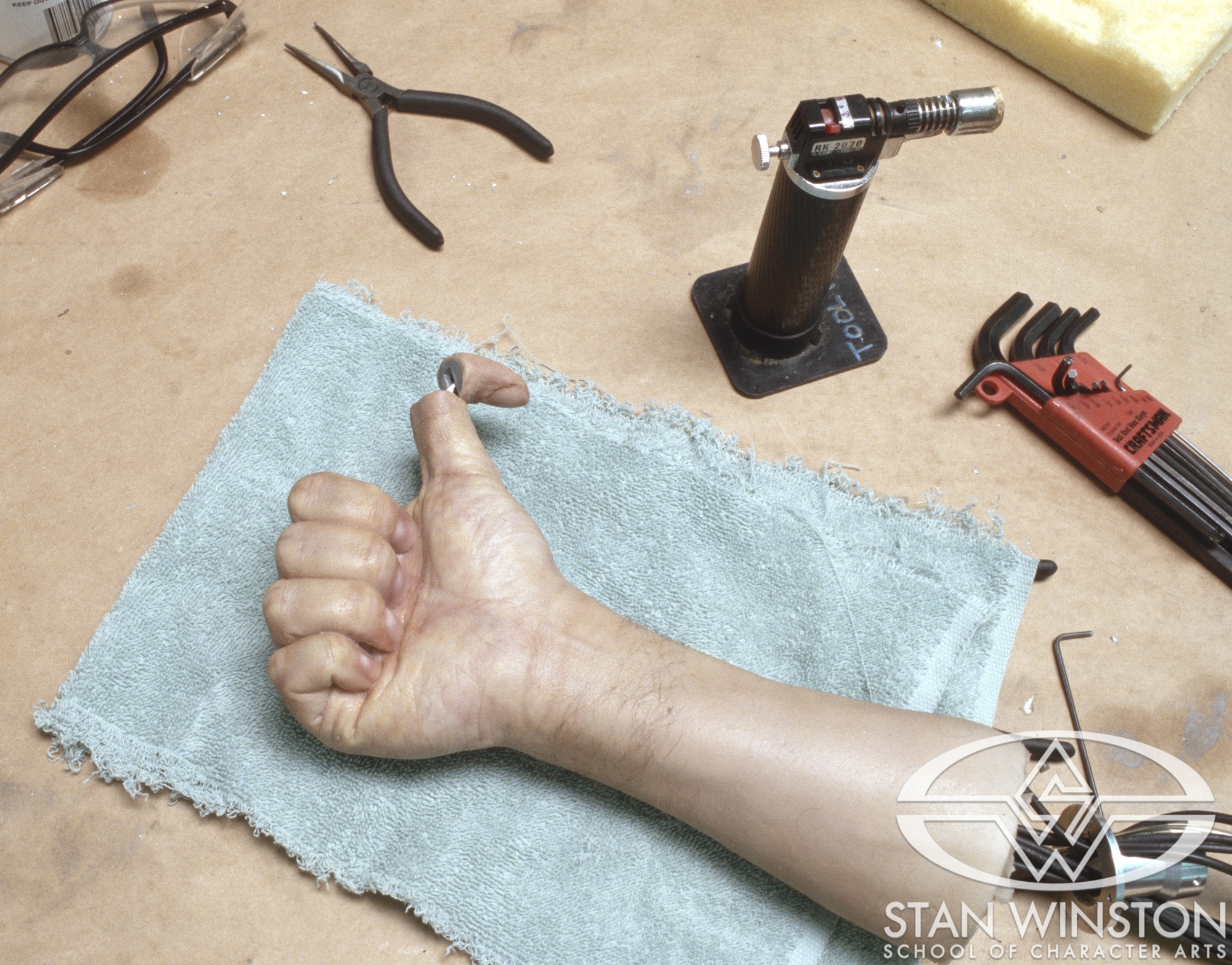 (Work in progress view of Gadget's prosthetic hand, with a practical thumb lighter.)
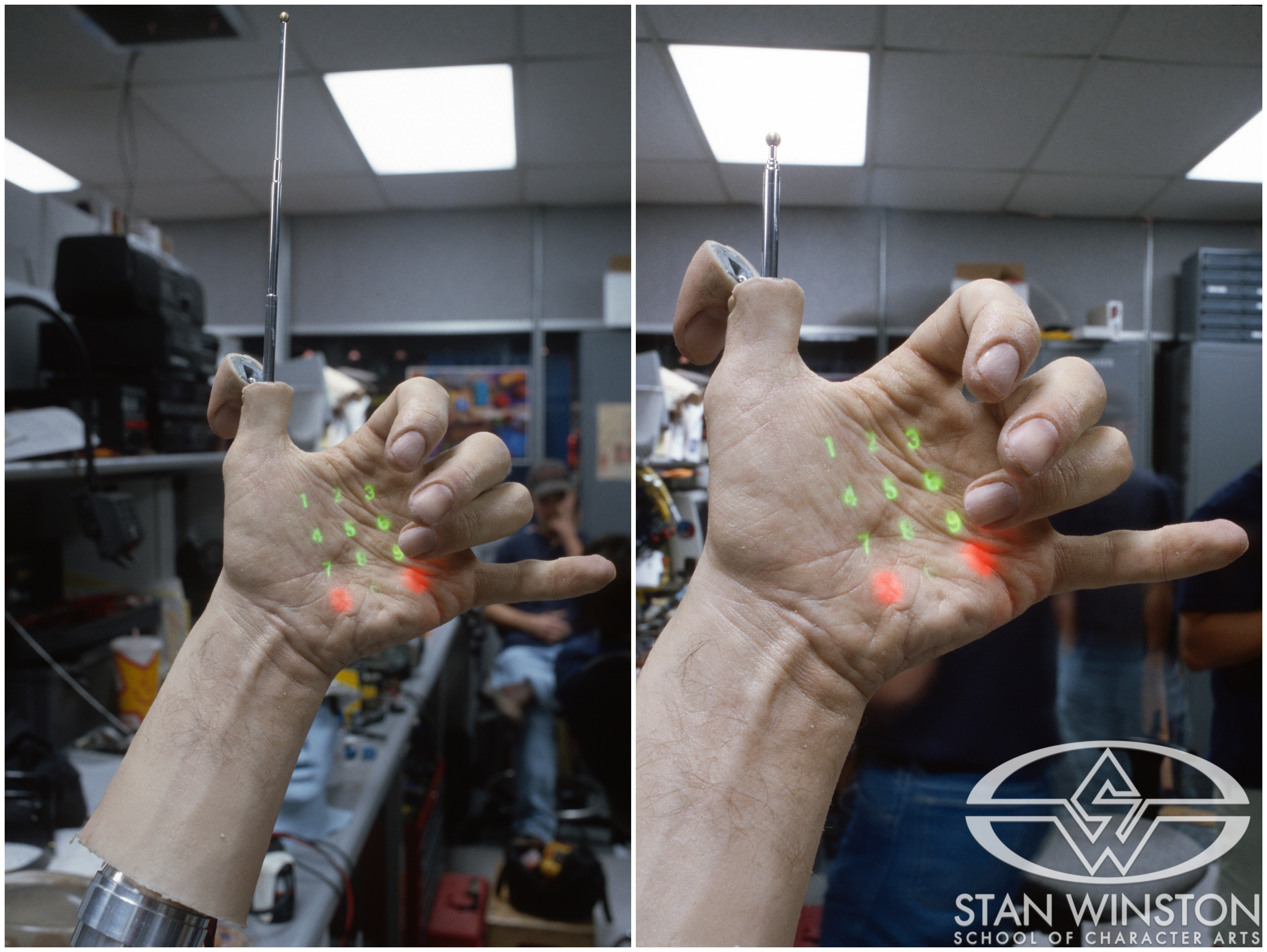 (A telephone hand, aka gadget phone, featuring a built-in dial, microphone, and antenna. When the pinky finger is pulled out, an antenna appears with a dial in the hand.)
In most films, the animatronics are hidden, but Inspector Gadget does the exact opposite. The helicopter hat is a great example of exposed mechanical design. "As you look at this helicopter that comes out of his hat, you're no longer just looking at it hidden under the skin, but you're looking at it on the outside," added Winston.
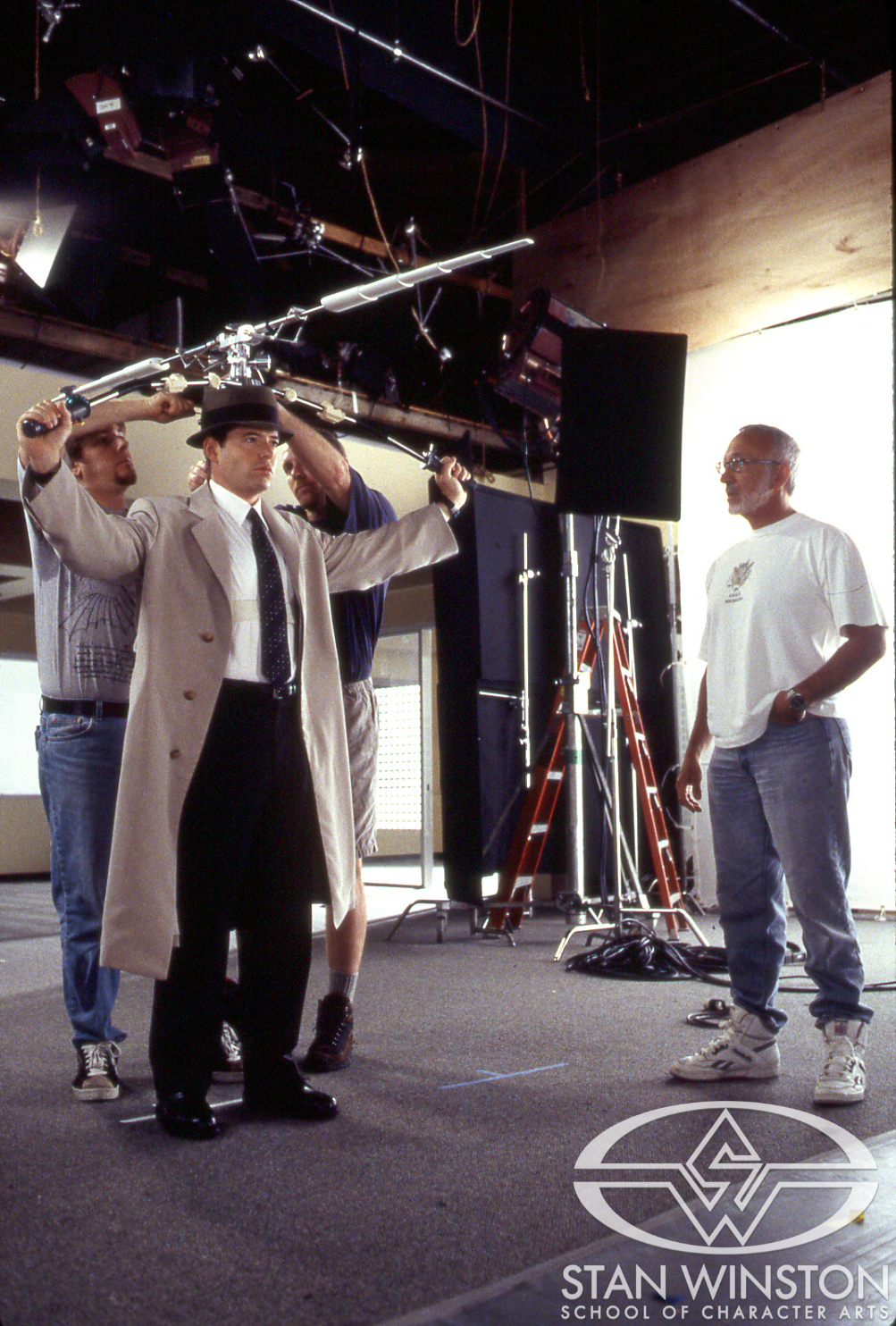 (Stan Winston Studio crew attaches the practical helicopter hat to Matthew Broderick's head for a rehearsal.)
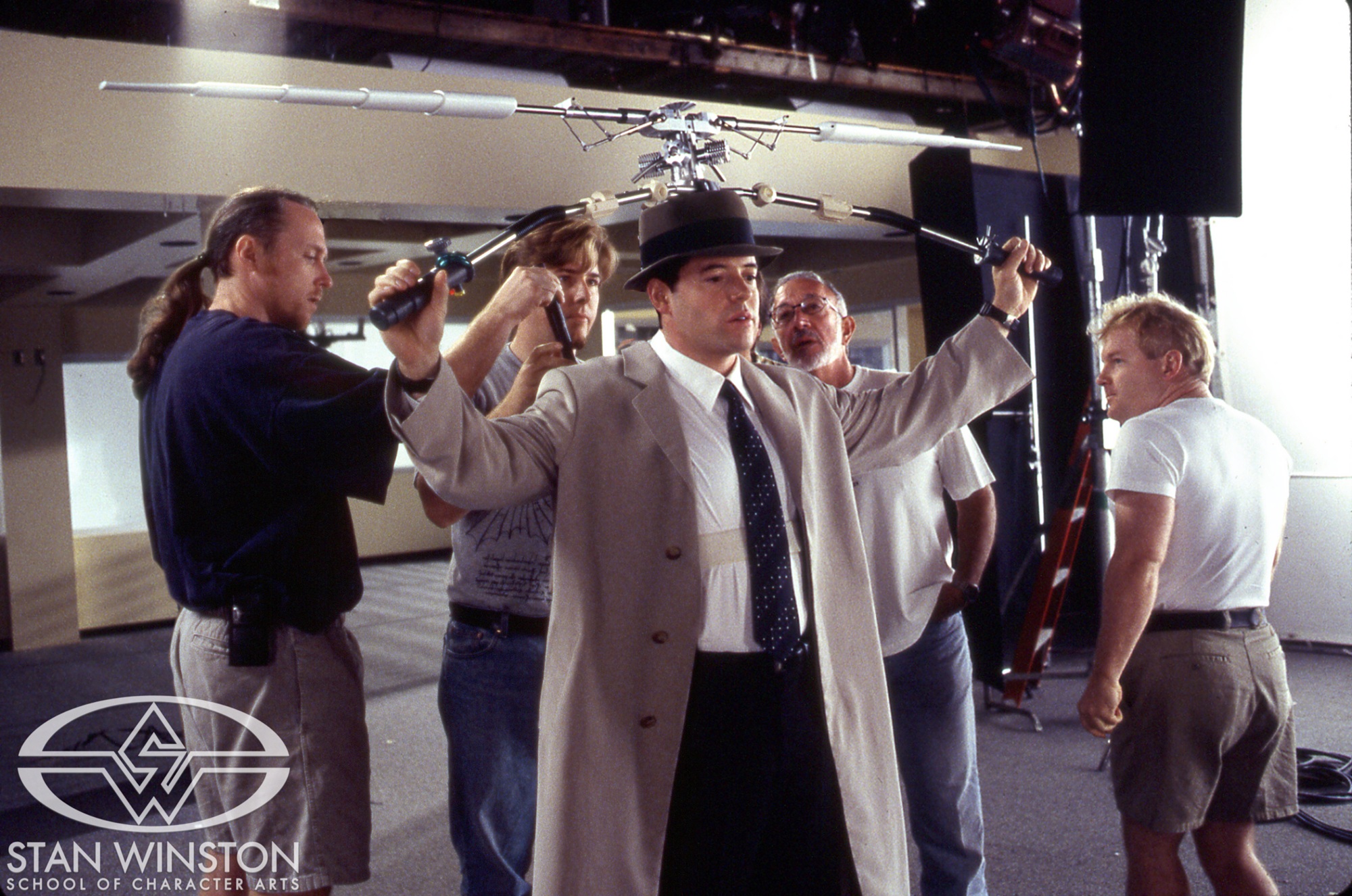 (Fine-tuning the practical helicopter hat for a rehearsal.)
When Broderick grabbed on to the handles, the blades started spinning. On camera, the effect was that the blades appeared to spin at a high rate of rotation, almost as though it was a practical helicopter blade.
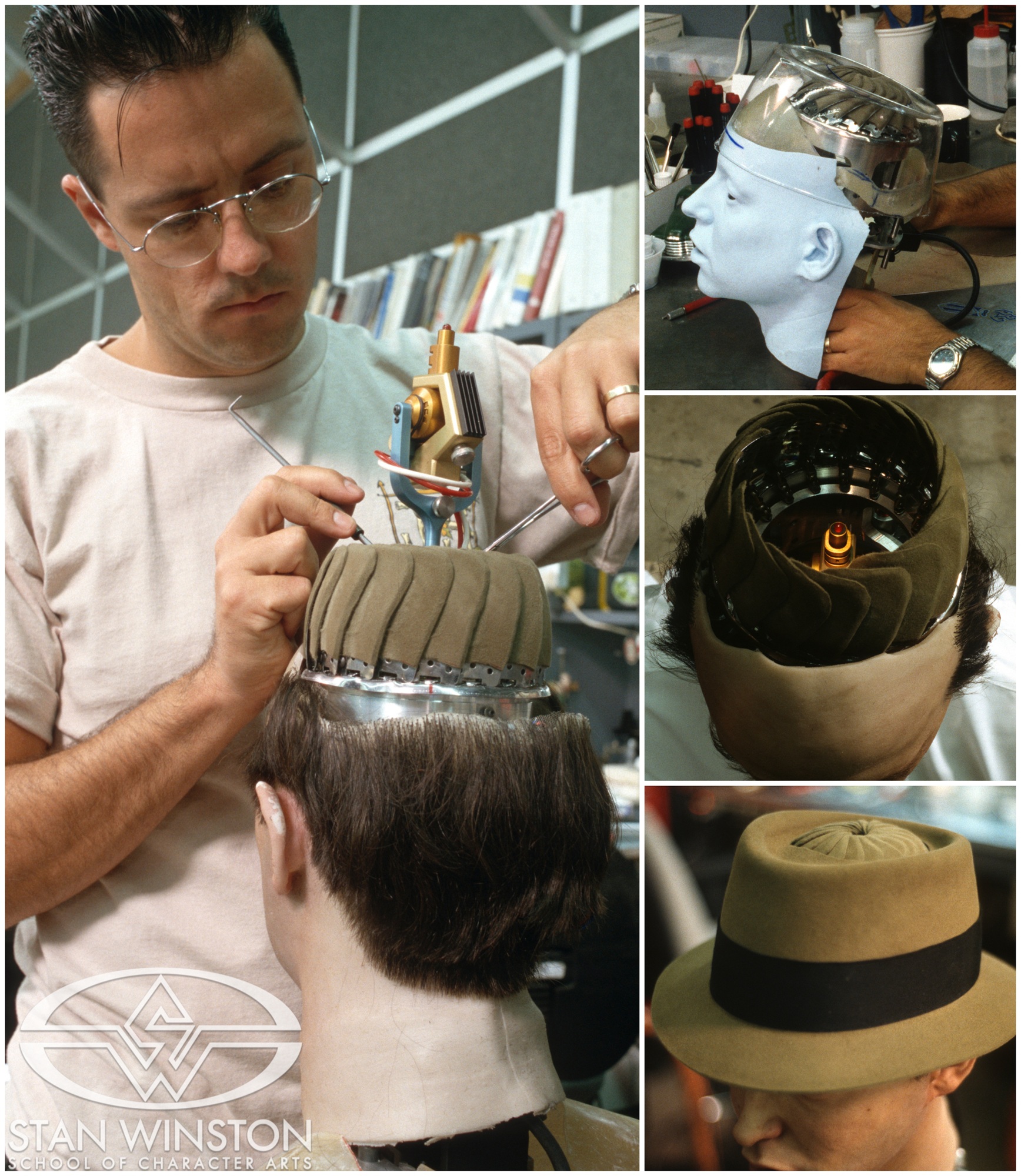 (L: Kirk Skodis works on the mechanics behind the mini rocket launcher built in the hat. R: A compilation showing how the mini rocket launcher was hidden in the hat.)
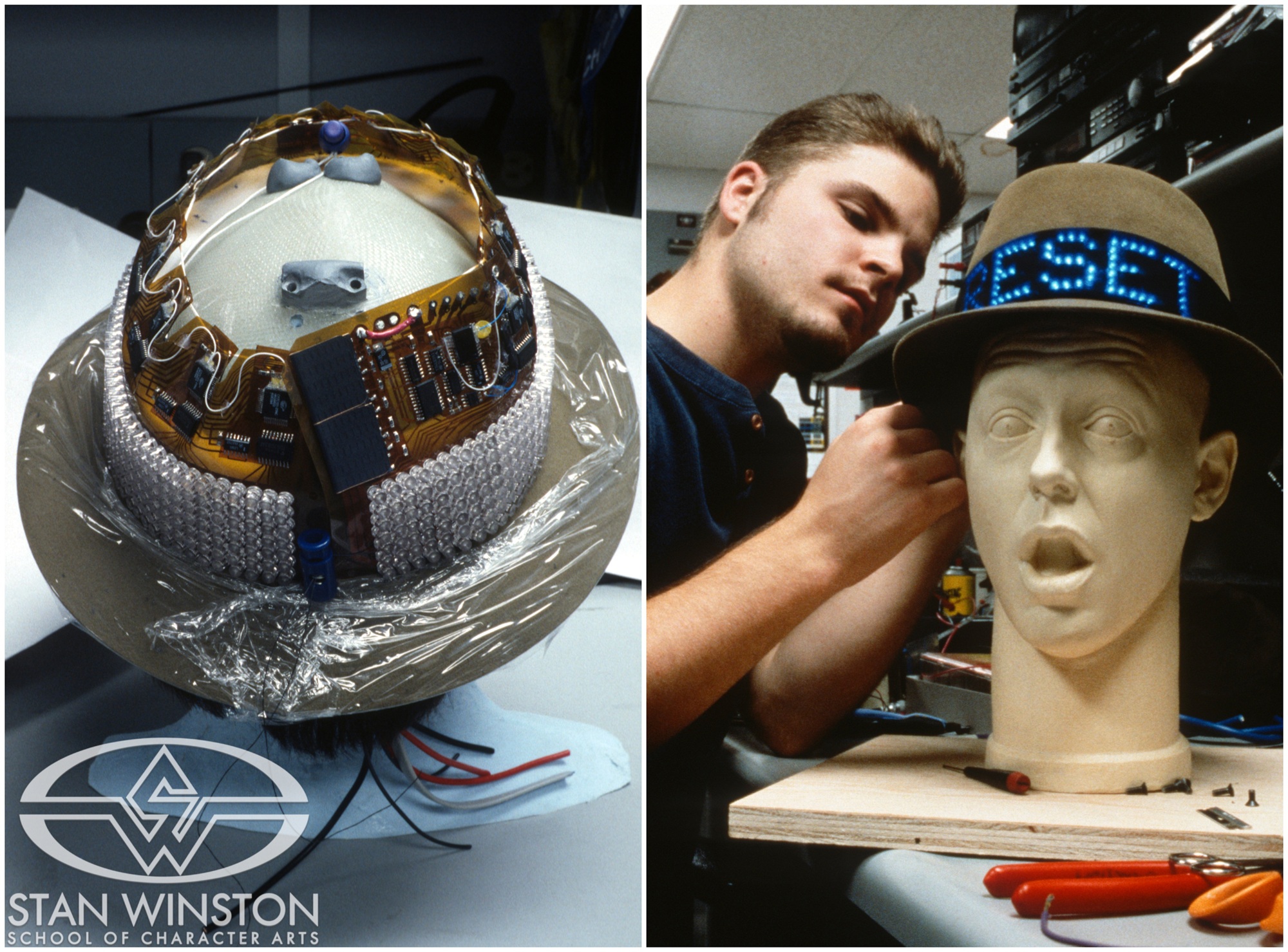 (Glenn Derry works on the black band of the gadget hat. The black band on Gadget’s hat displays Inspector Gadget's thoughts.)
Gadget vs RoboGadget
Besides Officer John Brown and Inspector Gadget, Matthew Broderick also played his android clone, RoboGadget, whose task was to destroy the city and blame Gadget for it. As Dr. Claw built him, this nemesis Gadget's gadgets involve various types of weapons, as opposed to Inspector Gadget’s more benign gadgets.
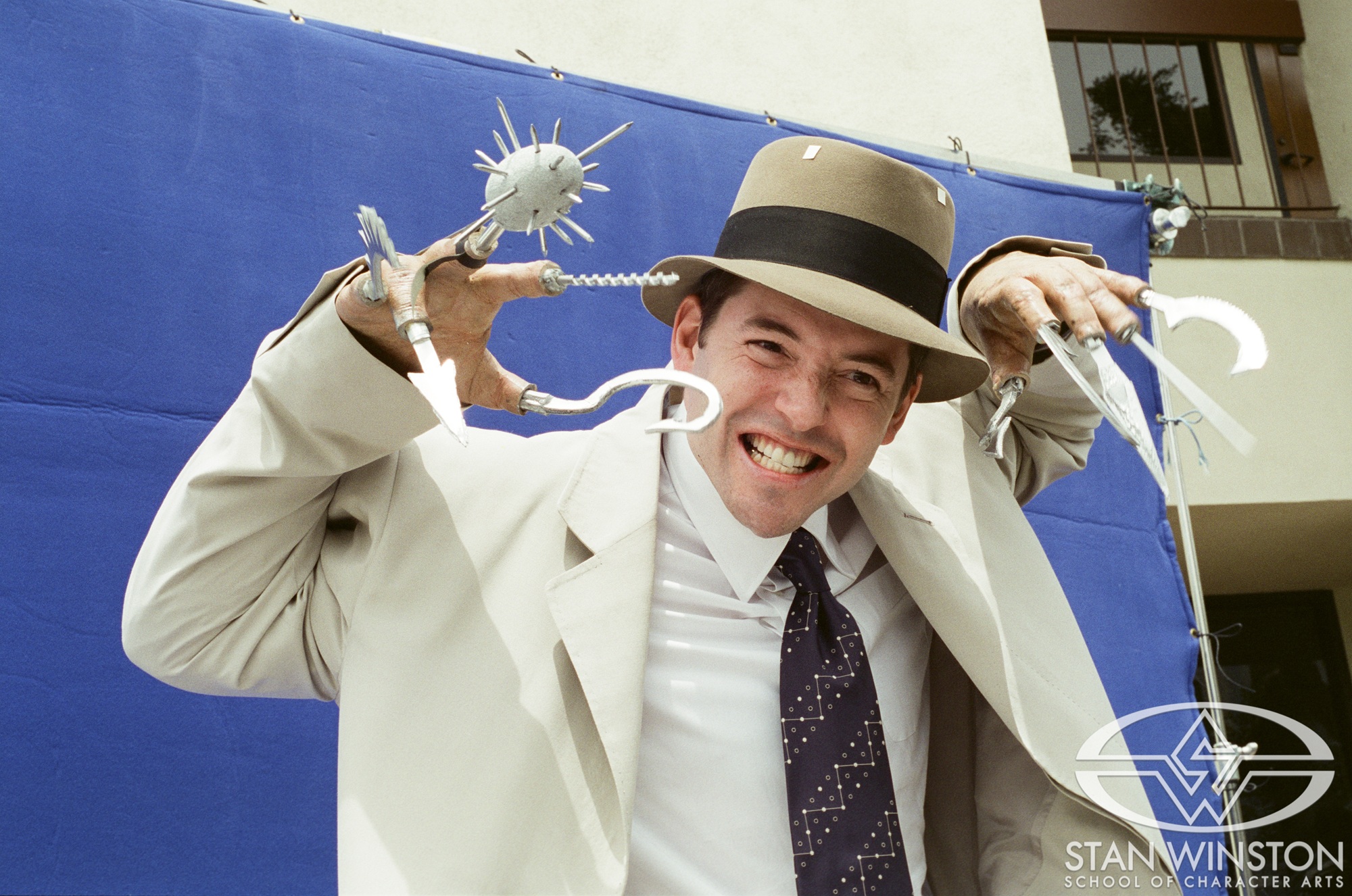 (Matthew Broderick tests the hands of his RoboGadget character.)
RoboGadget's appearance is shinier and more plastic-looking than the original Gadget. To appear less 'human', he was given a wider, artificial-looking smile and performed with more rigid movements.
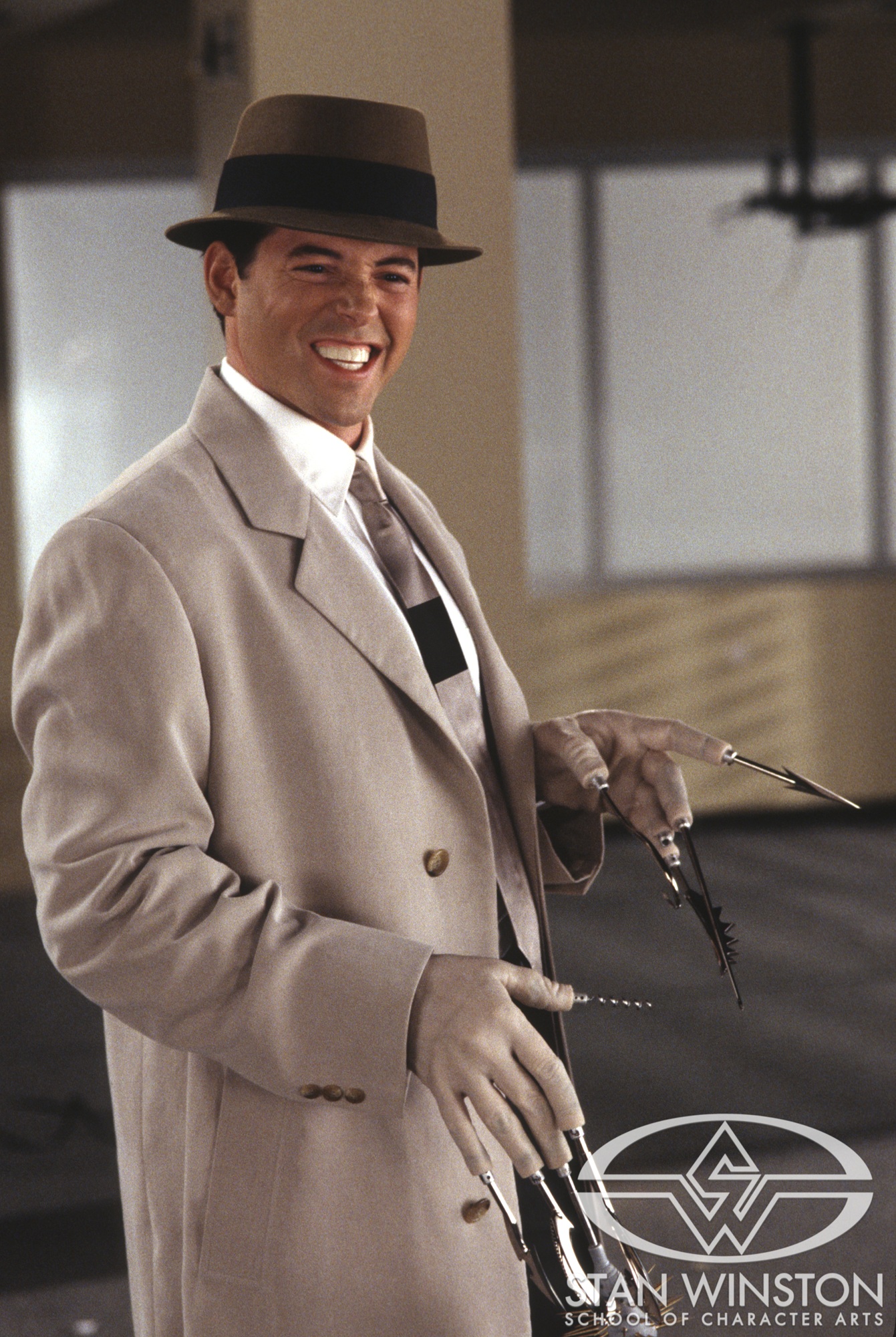 (Matthew Broderick as RoboGadget testing his prosthetic teeth, gadget-hands, and suit.)
Creating Sanford Scolex's Claw
Dr. Claw (Rupert Everett), the villain of the movie, has numerous interchangeable hands. Early in the film, one of his hands gets smashed off, so he creates a replacement.
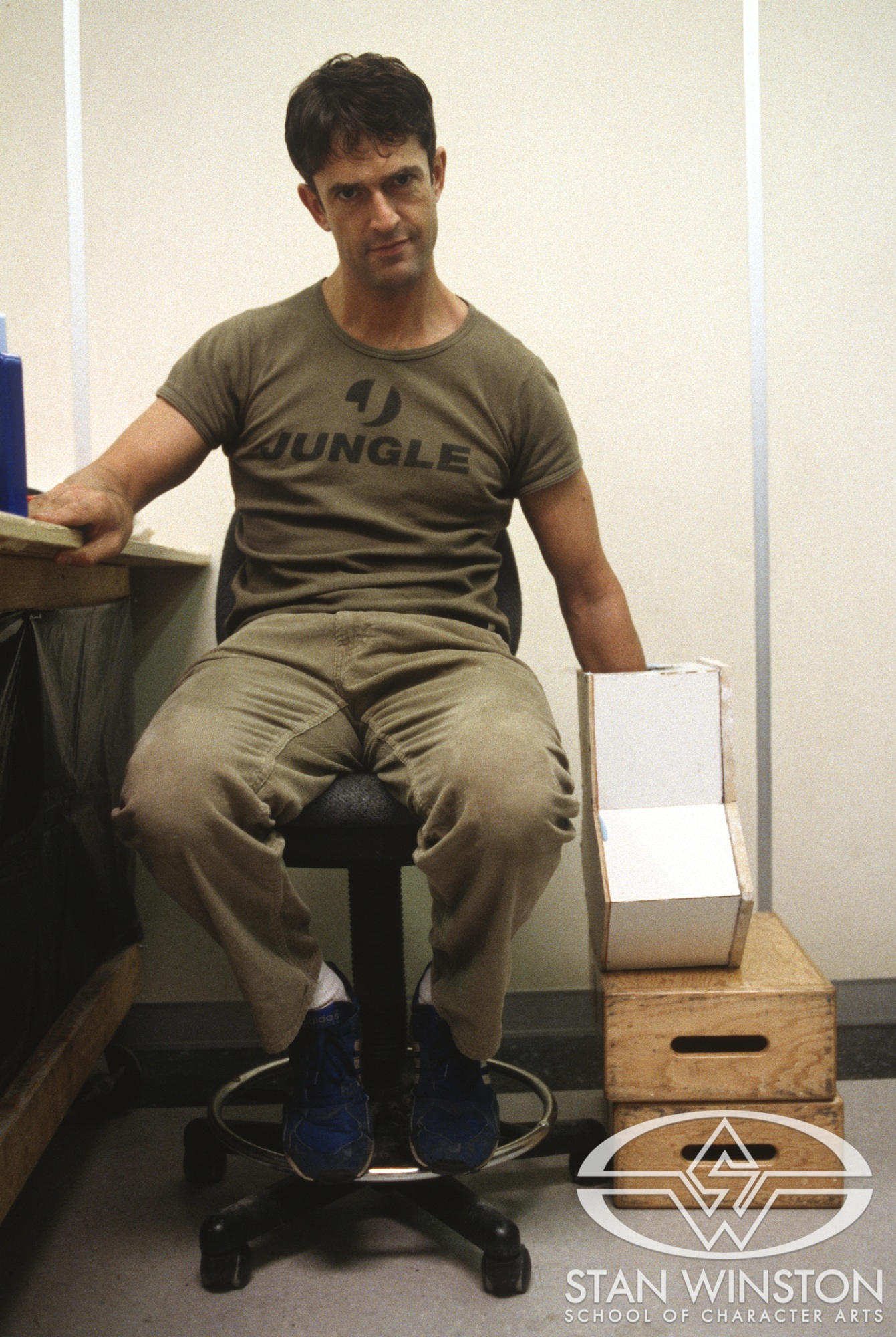 (Life-casting Rupert Everett's left hand at Stan Winston Studio.)
The Studio built a prosthetic arm with a bayonet mount, allowing him to click different attachments into place to puppeteer them or easily remove one and swap it out.
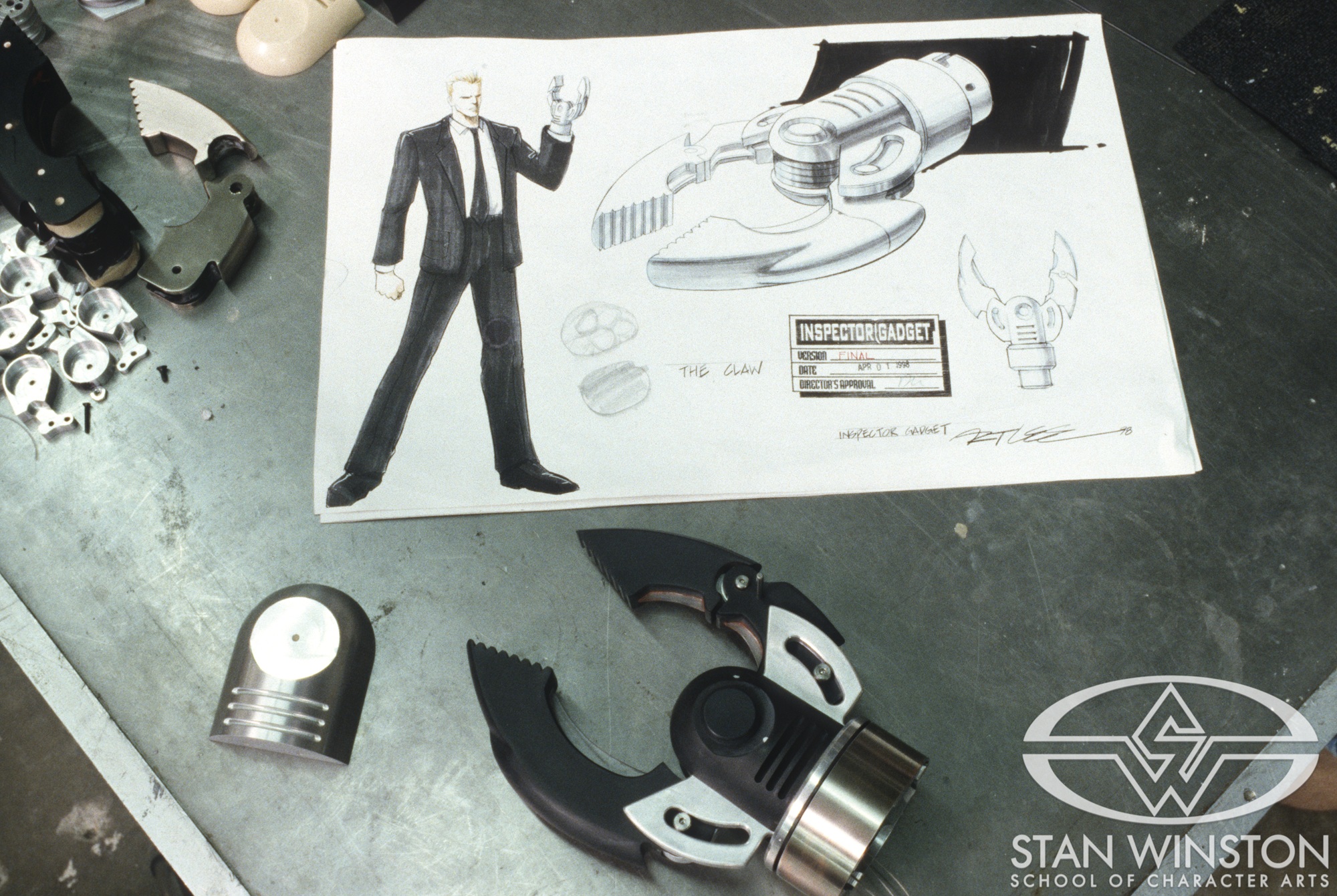 (Concept artwork and one of the claws' inner sections.)
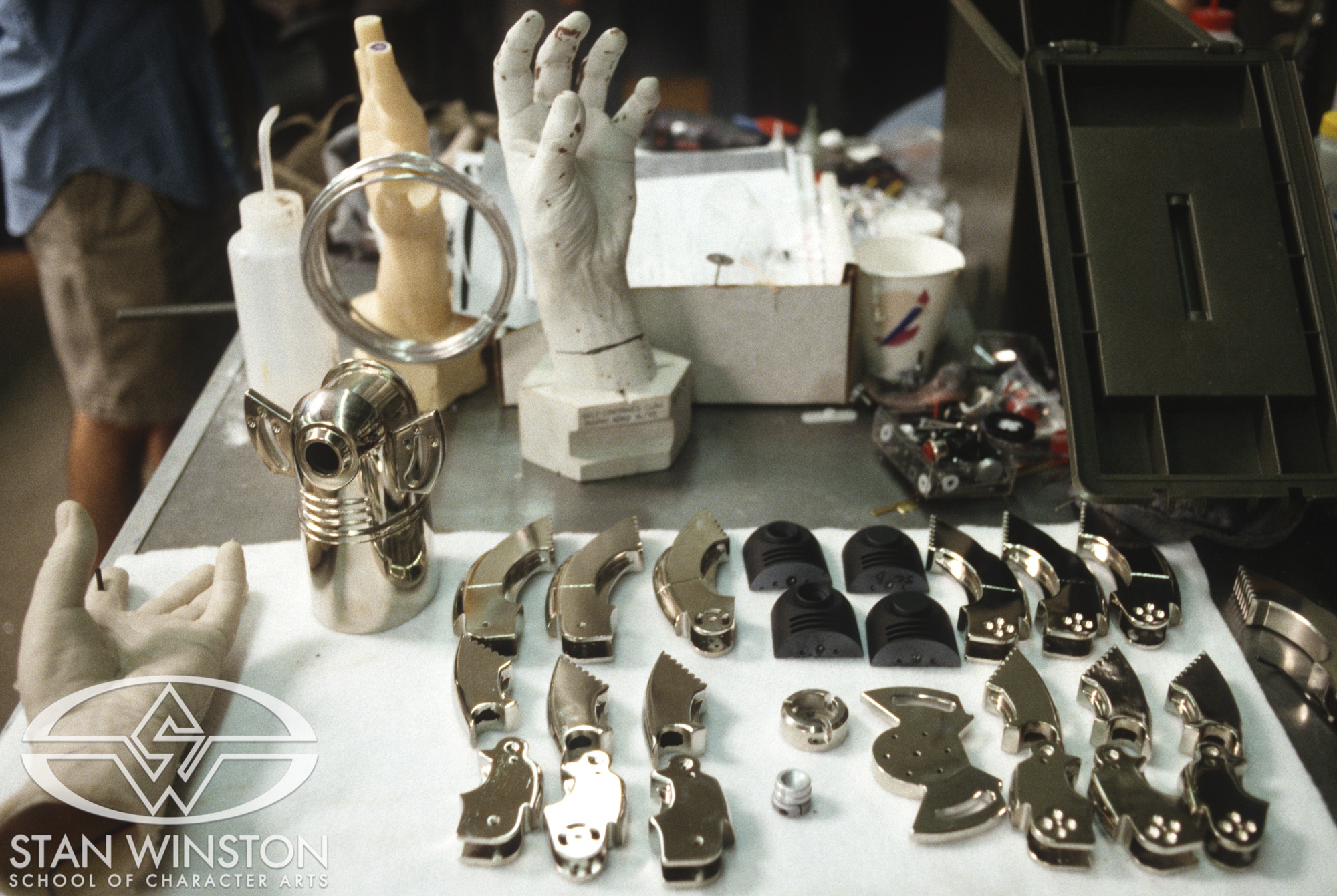 (Claws before assembly.)
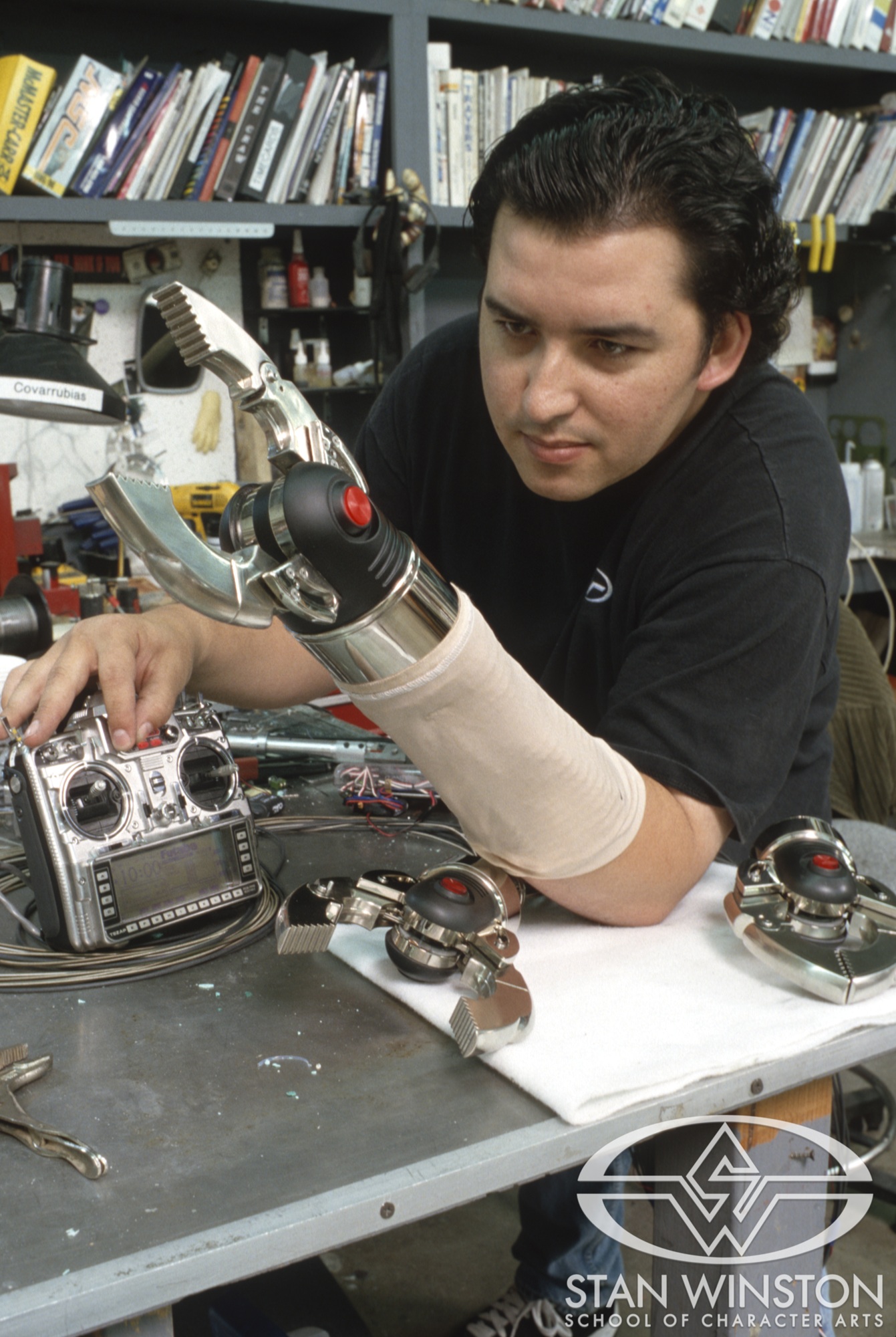 (David Covarrubias tests a claw at Stan Winston Studio.)
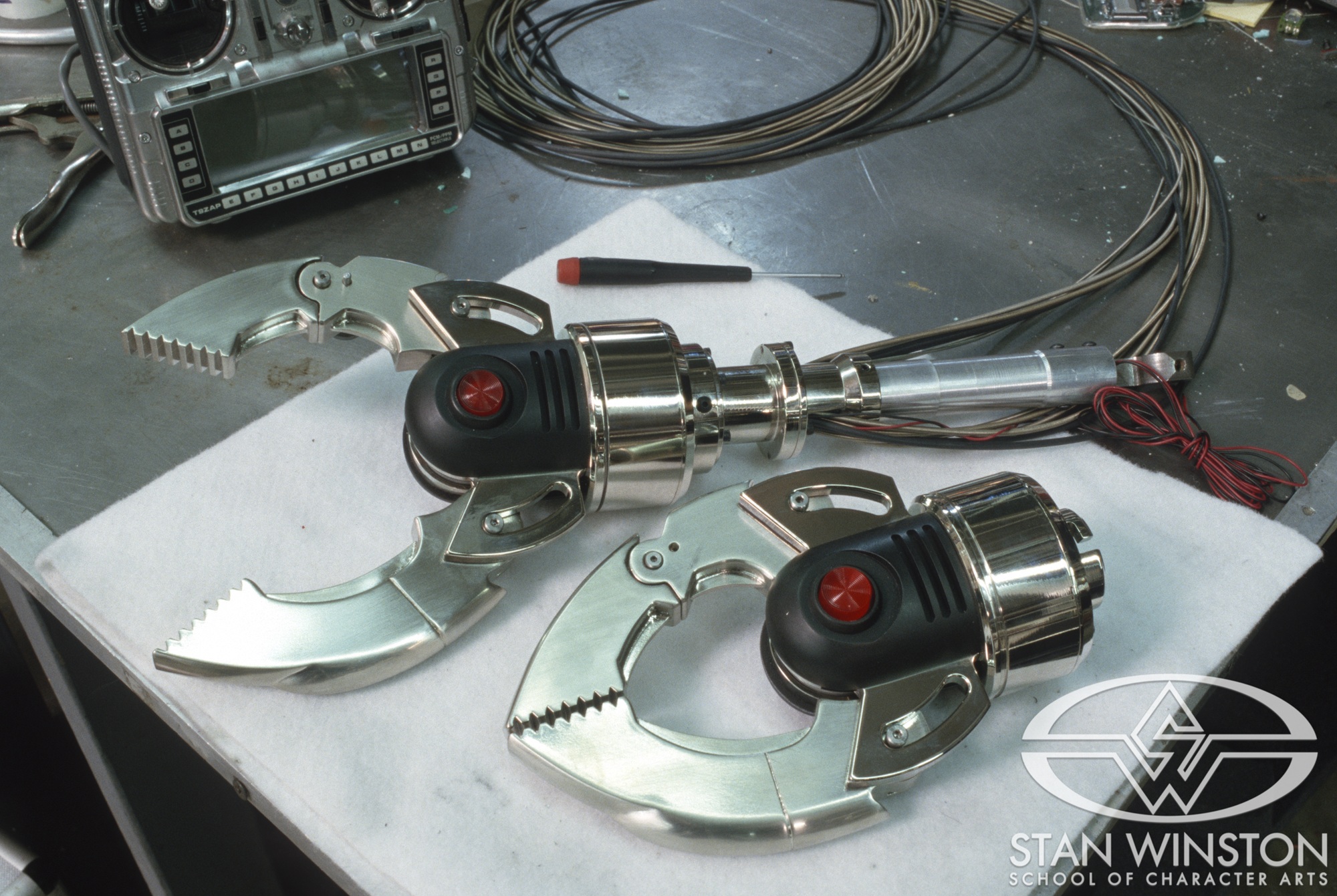 (Finished interchangeable claws, ready to be used on the set of Inspector Gadget.)
Inspector Gadget is probably one of the most under-appreciated jobs of Stan Winston Studio. Back in 1999, it received mixed, though mostly negative, reviews from critics and audiences, although over the years, it has gained a kind of cult following.
- Blog is excerpted from Walt Disney Pictures' The Top Secret World of Inspector Gadget (1999)
Courses with the Creators of Inspector Gadget (1999):
- Special Effects Sequence Design with Shane Mahan
- Creature Screenwriting: How to Write Memorable Monsters with Juliet Snowden & Stiles White
- How To Make An Eye Mechanism - Design, 3D Printing & Assembly with David Covarrubias
- Animatronic Control Systems - Arduino Programming Basics - Part 1 with David Covarrubias
- Maquette Painting Techniques with Trevor L. Hensley
- How to Make a Monster Puppet - Rods & Cables with David Monzingo
- Makeup Blood FX - Blow Your Brains Out with David Monzingo
- Hairy Creatures Series - Introduction to Hair Knotting with Michael Ornelaz