
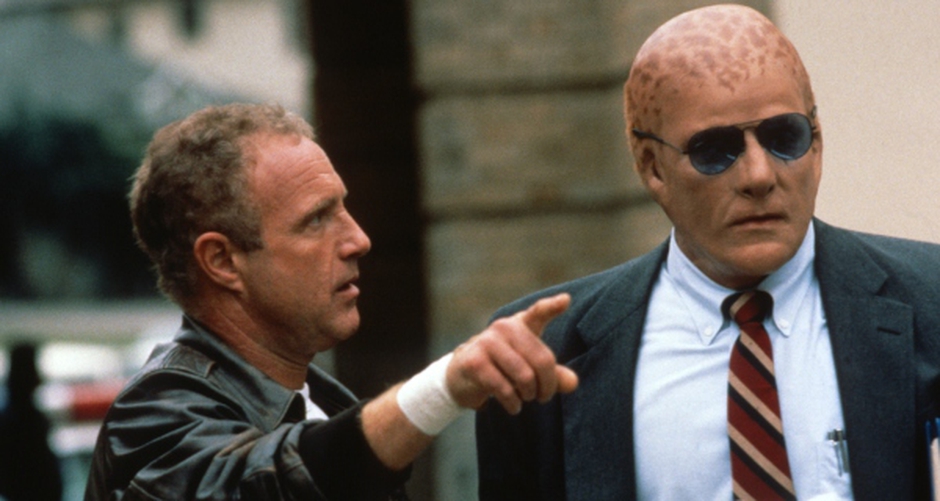
(James Caan as Matthew Sykes and Mandy Patinkin as the first newcomer police officer, Sam Francisco in Alien Nation (1988). Image courtesy of 20th Century Fox.)
Behind the Scenes of Alien Nation (1988)
Having done two shows with Gale Anne Hurd — The Terminator and Aliens — Stan Winston Studio was the logical choice of facility when the producer needed alien designs for Alien Nation, a 1988 film directed by Graham Baker. The film is set in 1991, a few years after an off-course alien spaceship has landed on Earth, depositing 300,000 bulbous-headed aliens, called 'newcomers', a specially bred slave race that attempts to integrate into human society. The film was an obvious metaphor for race relations and a plea for tolerance.
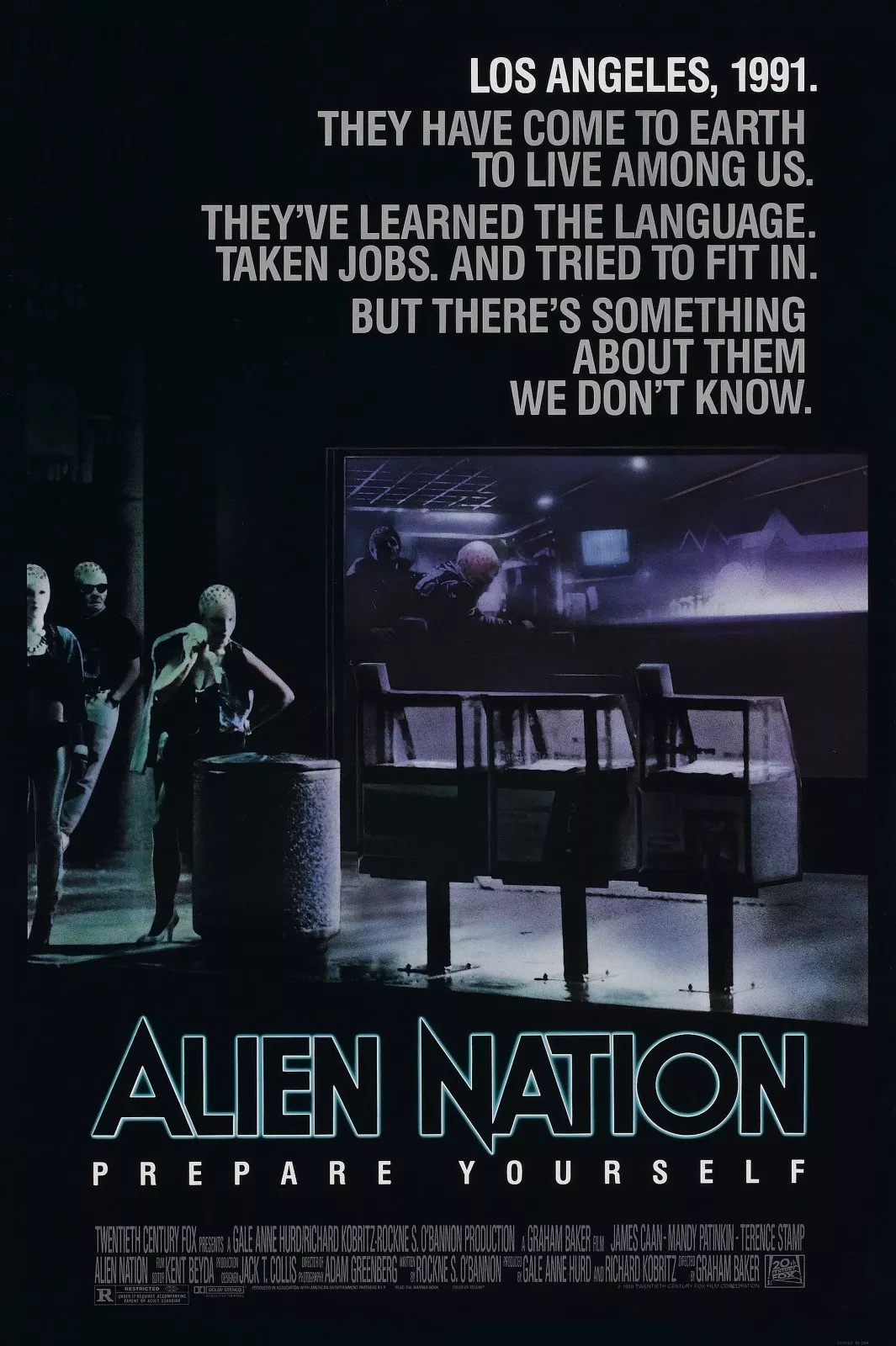 (An original poster of Alien Nation (1988). Image courtesy of 20th Century Fox.)
If Predator had been a challenge of time, Alien Nation was one of volume, since newcomers would comprise half the film's population, including a number of principal characters. Not since Planet of the Apes (1968), nearly twenty years earlier, had there been an occasion to create so many makeups; and it was certainly the first time that Stan Winston Studio had been called upon to do so. The difference was that, where John Chambers had been afforded a year, Stan Winston and his crew had only six months in which to design, build and deliver hundreds of makeup appliances.
Jump To Section
- Designing Newcomers for Alien Nation
- Working on Hundreds of Alien Masks
- Creating Newcomer Prosthetics With Actor Recognition
- Zoltan Elek Tones Down Alien Hues
- When Terence Stamp Walked Off the Set
Designing Newcomers for Alien Nation
With Stan Winston freshly off his directorial debut project, Pumpkinhead, and busy seeking new directing opportunities, he essentially turned over the huge Alien Nation assignment to his four leading artists and supervisors — Tom Woodruff Jr., Alec Gillis, John Rosengrant and Shane Mahan — who served as the show's alien effects coordinators, overseeing a crew of about thirty-five. As always, Winston would remain deeply involved as the final arbiter of the alien makeup designs, which were developed in dozens of preliminary design sketches. "At first," recalled Tom Woodruff Jr., "we went off and made our own sketches. Then we got together and compared drawings and traced certain parts to put together a composite character. Most of the design on paper fell to Alec Gillis, John Rosengrant, and me, while Shane Mahan worked out some problems in clay."
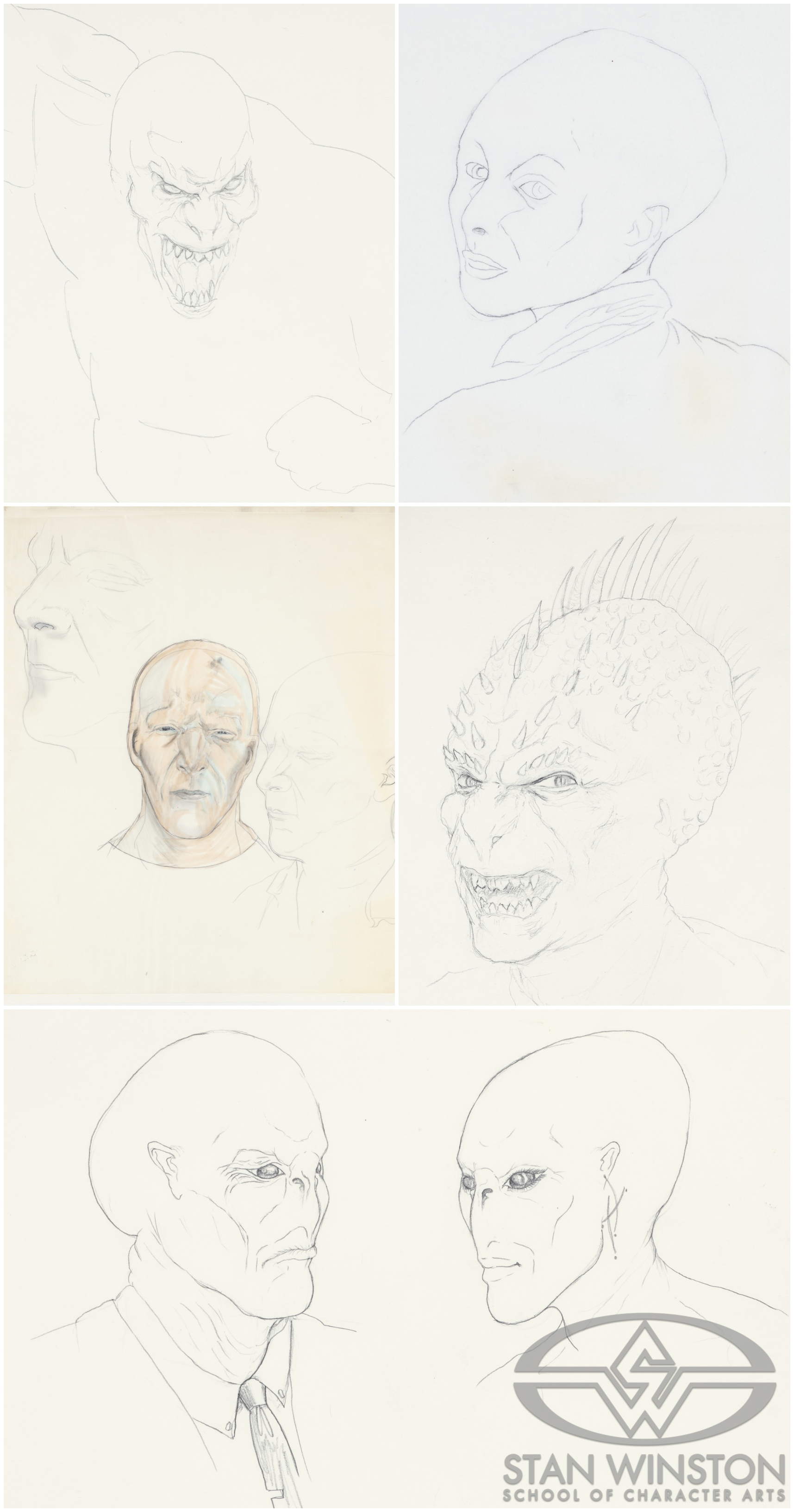 (Compilation of some preliminary design sketches made for Alien Nation (1988).)
Through this process, the group developed a dozen different designs, all based on the sketchy information in the script, which described the aliens as leathery-skinned, reptilian-looking characters. To some extent, the filmmakers and the makeup effects crews were working at cross purposes: the former were primarily concerned with having leading characters audiences would identify with, while the latter were enthusiastically embracing an opportunity to create an all-new, very alien race.
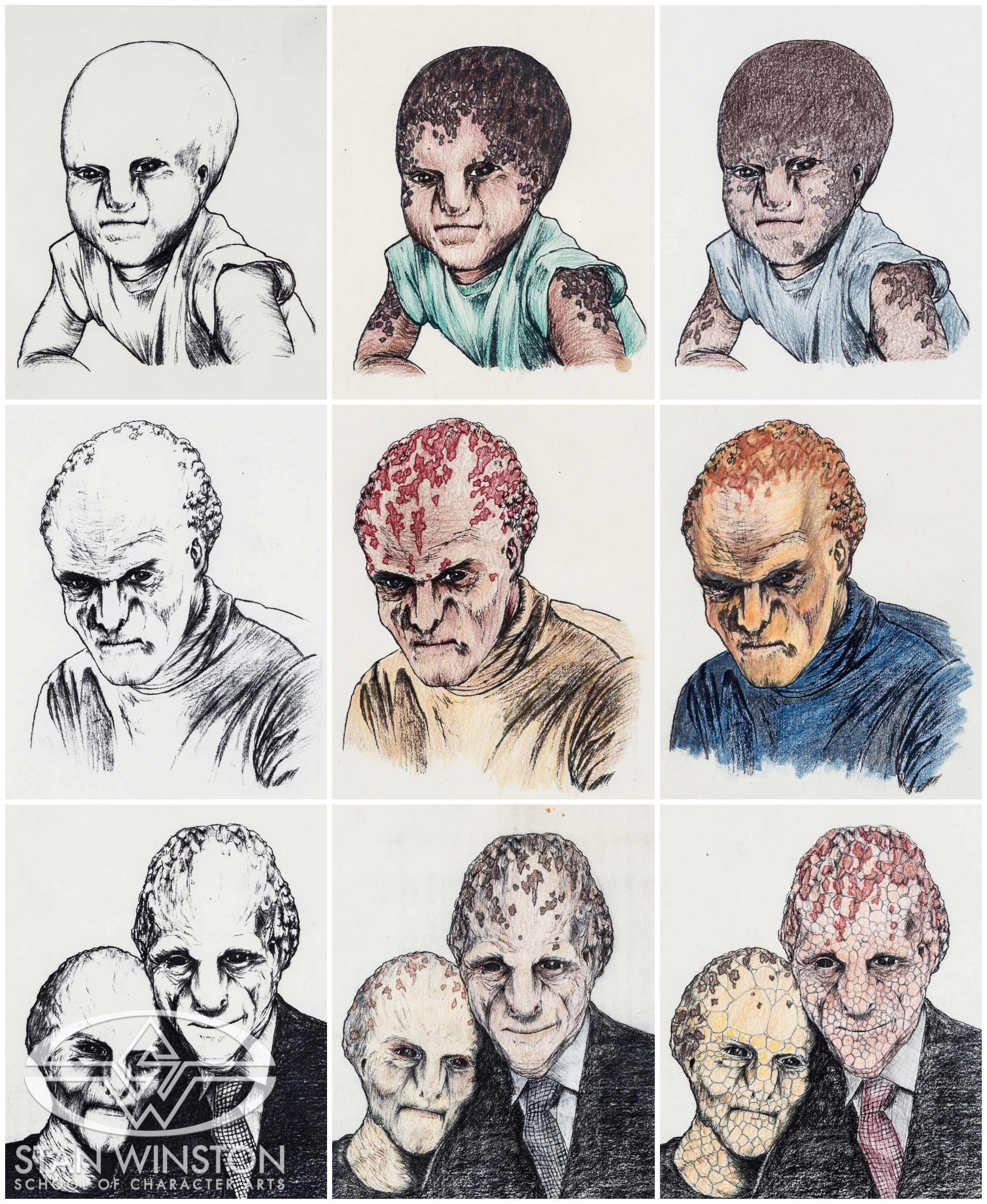 (Various alien "newcomers" concept artworks made by Stan Winston Studio for Alien Nation.)
"We'd been influenced by Enemy Mine (1985)," Shane Mahan commented, "and the really clever makeup that had been created for the Louis Gossett Jr. character. We wanted to do something equally interesting, with teeth and eyes and a different bone structure. So we designed these very craggy, brutish-looking characters, with interesting hands and arms."
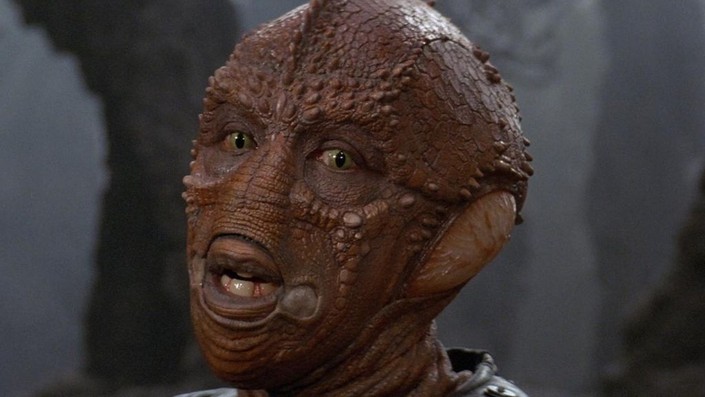 (Louis Gossett Jr. as Drack in Enemy Mine (1985). Image courtesy of 20th Century Fox.)
Subsequent designs became more human-looking in deference to the filmmakers' wishes. "We wanted the aliens to be more like a different ethnic race than like lizard people," Gale Anne Hurd explained. "That was a very conscious decision. We didn't want our audiences thinking, 'Gee, look how different these aliens are.' Rather, after about five minutes, we wanted the audience to accept them as different from us, but not so different that no one is buying the storyline. We wanted the aliens to be characters, not creatures."
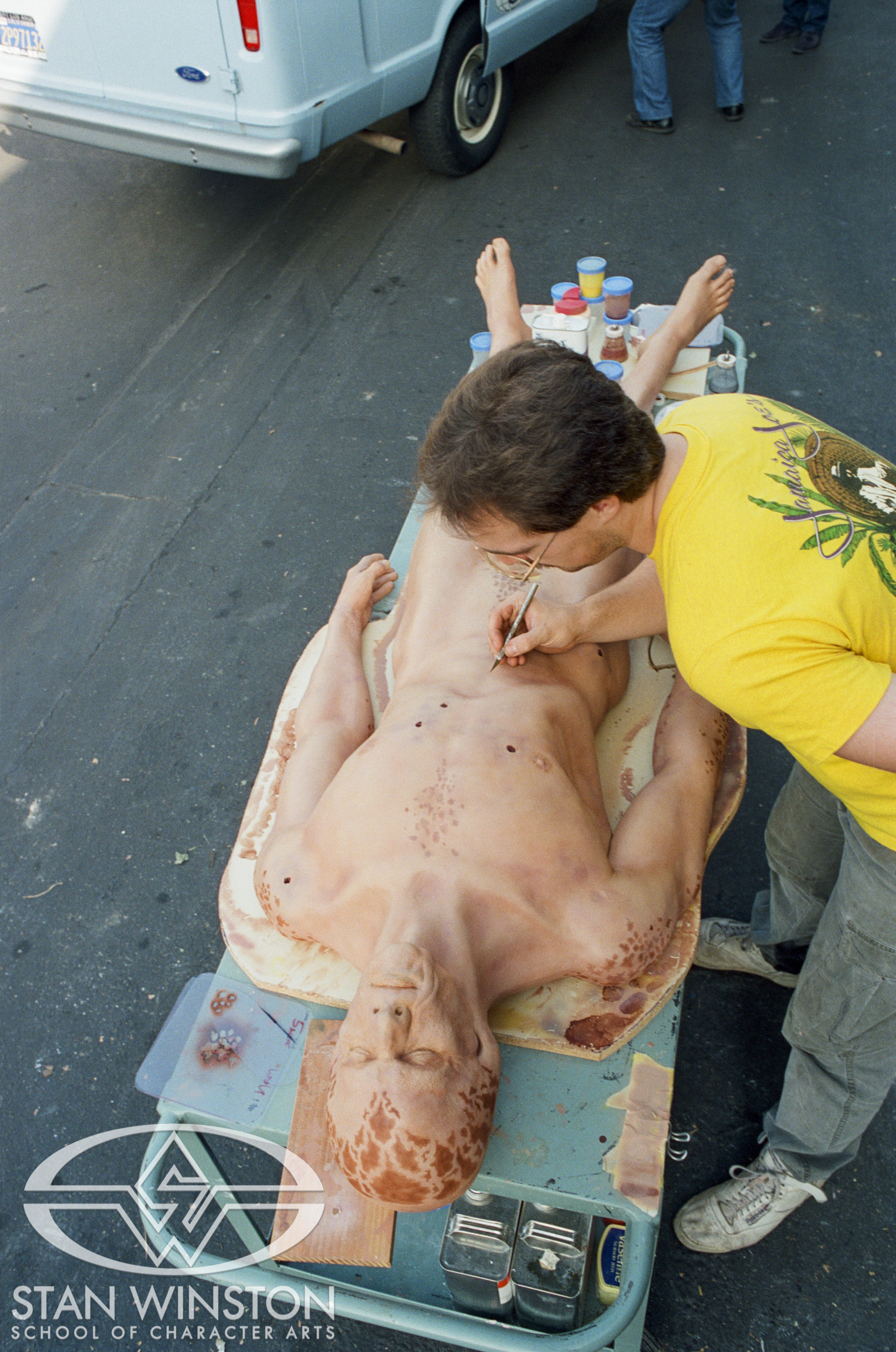 (Mike Trcic puts the final touches on an alien newcomer's dead body dummy for an autopsy scene.)
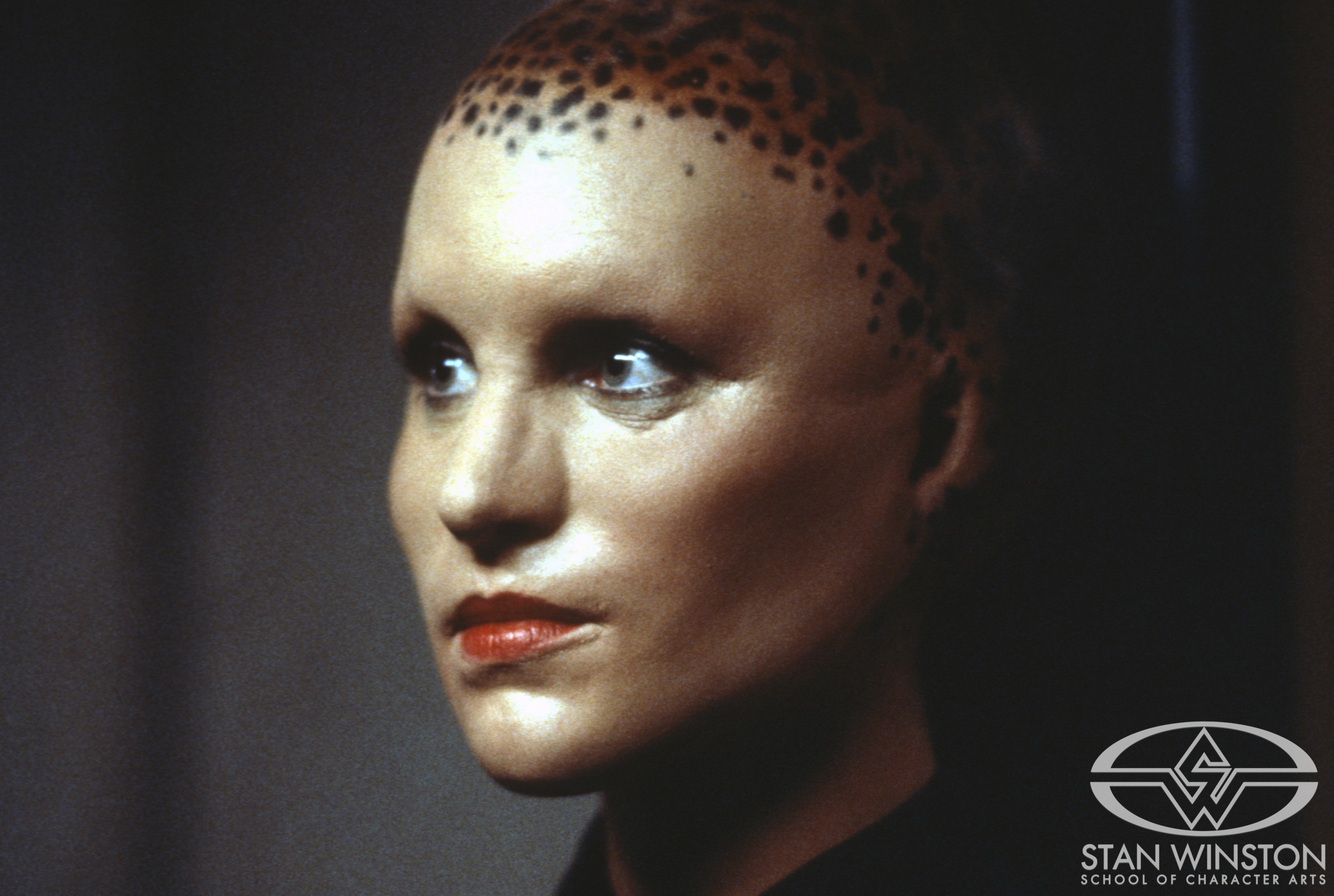 (Final Alien Nation makeup for Leslie Bevis as newcomer Cassandra, sculpted by John Rosengrant and applied by Zoltan Elek.)
Working on Hundreds of Alien Masks
When a compromise design was approved, Shane Mahan and Shannon Shea sculpted three male and three female alien masks, which would be reproduced in the hundreds and worn by background characters. Hero characters would be transformed through more intricate makeup and appliances. These initial background masks, which featured heavy brows, dense skin textures and a pronounced lump at the back of the head, were more alien looking, and more closely related to the original design than the principal newcomer characters would be since, by the time crews got to producing those hero makeups, the filmmakers had decided to deemphasize the 'alien-ness' of the characters even more.
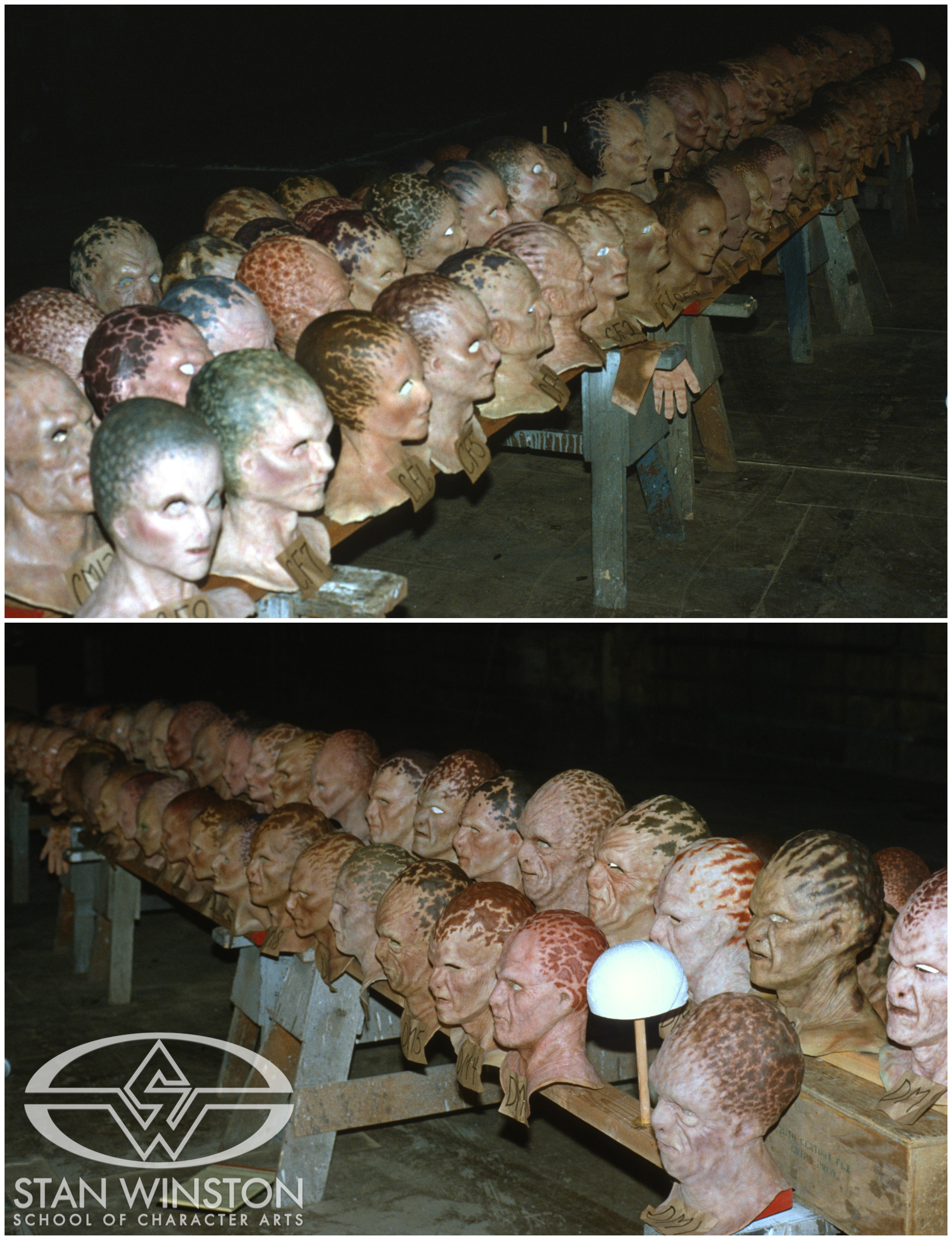 (An assortment of slip latex pullover masks created for background alien characters are ready to be shipped to the Alien Nation set.)
"After we went into production on these masks," recalled Tom Woodruff Jr., "Graham Baker decided that he wanted the aliens to look even more subtle. At that point, we had already made about a hundred background masks, but we decided to go ahead and use them since they were going to be far away in most of the shots, and then we just streamlined the design once we started doing the principal characters."
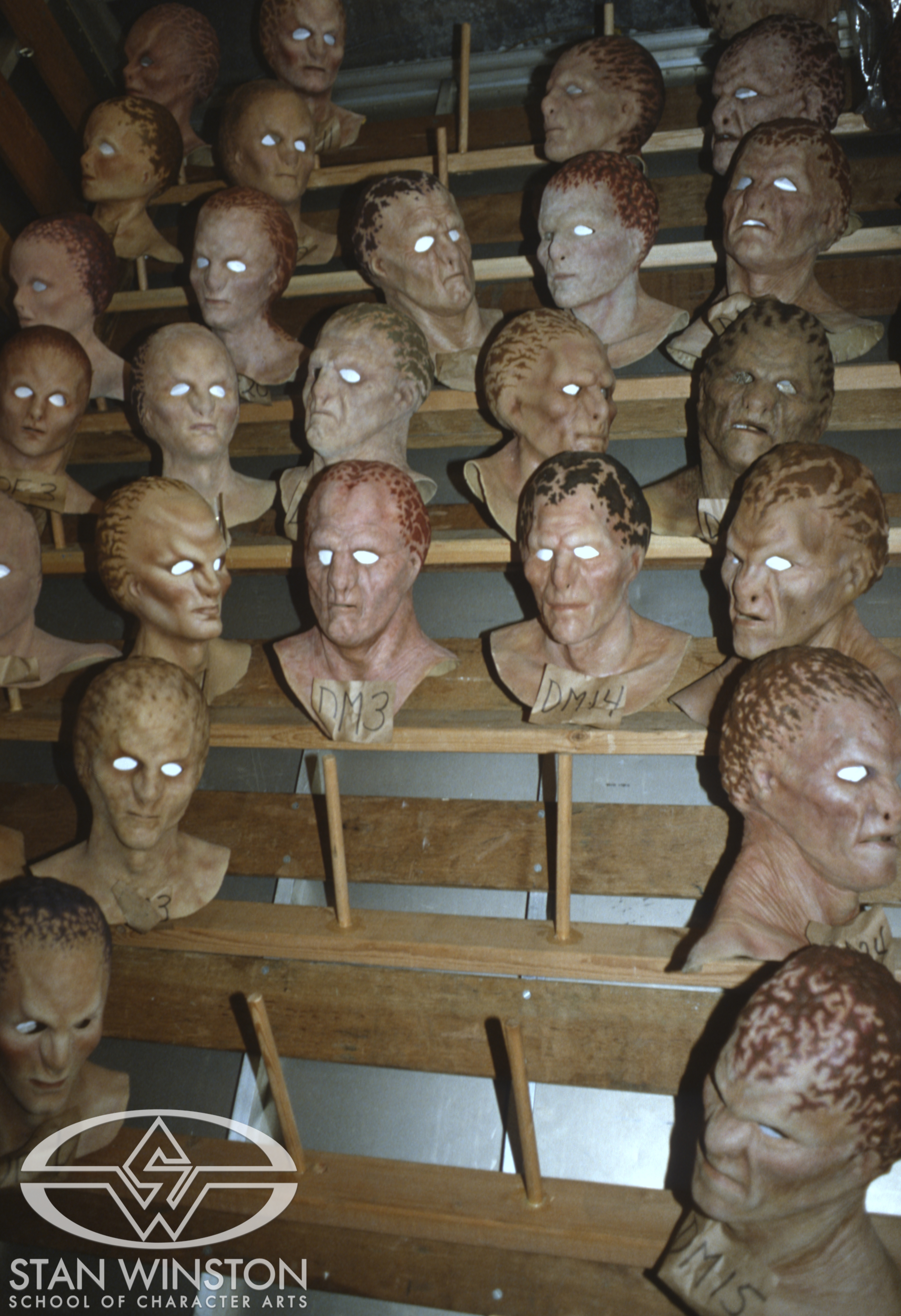
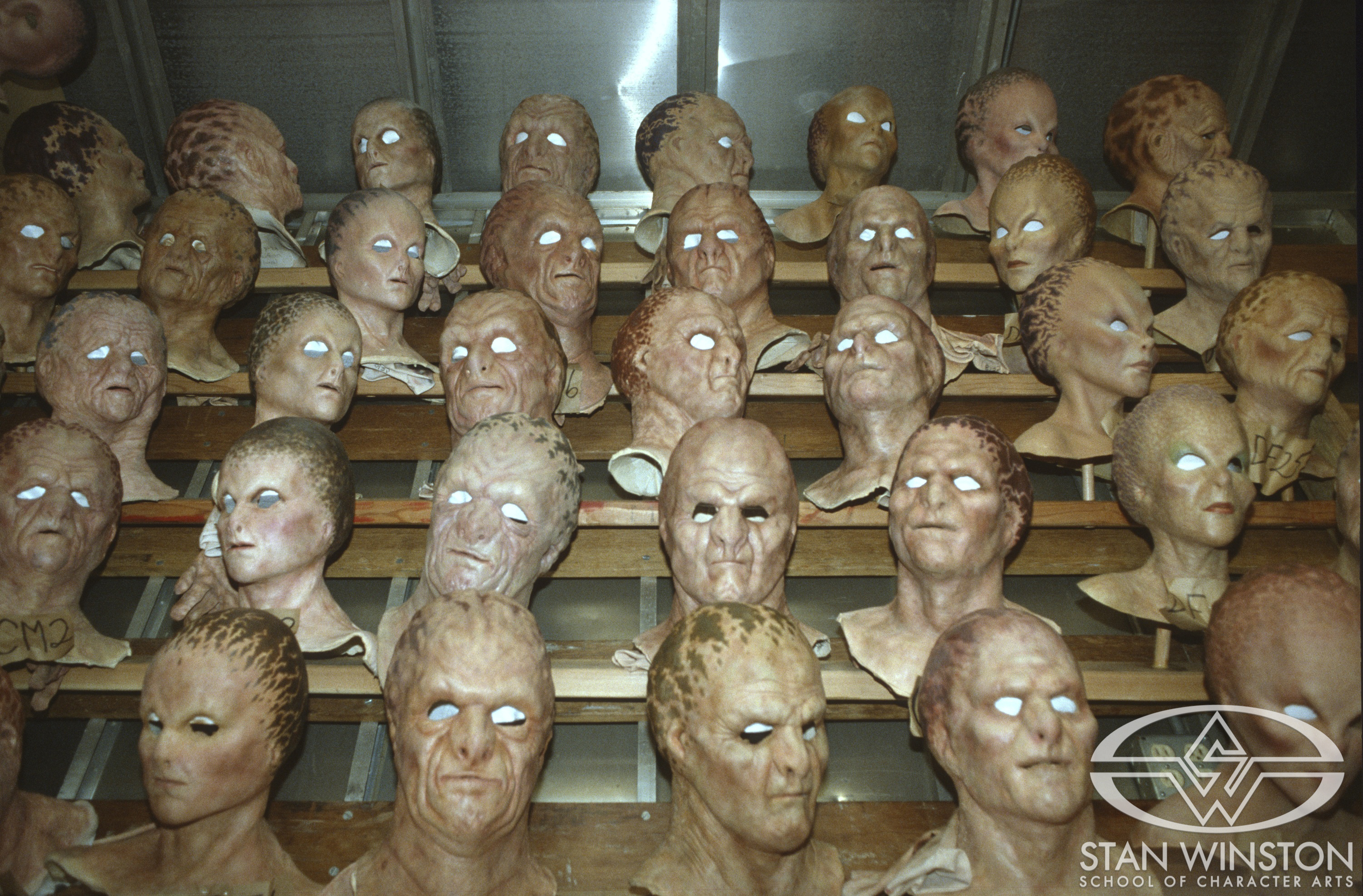 (Top and Bottom: Close-up images of the newcomer slip masks for the background actors and actresses.)
"The director had us pull way back," Shane Mahan added, "and the result, as far as we were concerned, was an alien that just looked like a hairless burn victim. None of us was happy with it. The original things we'd done were much more complete. But it ended up being much simpler, and, I think, less interesting."
In this video, you can see a behind-the-scenes compilation of creating a female alien newcomer character mask for Alien Nation (1988):
Creating Newcomer Prosthetics With Actor Recognition
To create the principal character appliance makeups, the Winston crew took full head lifecasts of each of the featured players, including lead Mandy Patinkin, and then sculpted the newcomer features in clay over that lifecast. From those sculptures, the crew created molds in which to make foam latex appliances. The crew made multiple sets of molds since no one set could withstand the running and re-running of foam latex required to make enough appliances for every shooting day of the three-month production schedule.
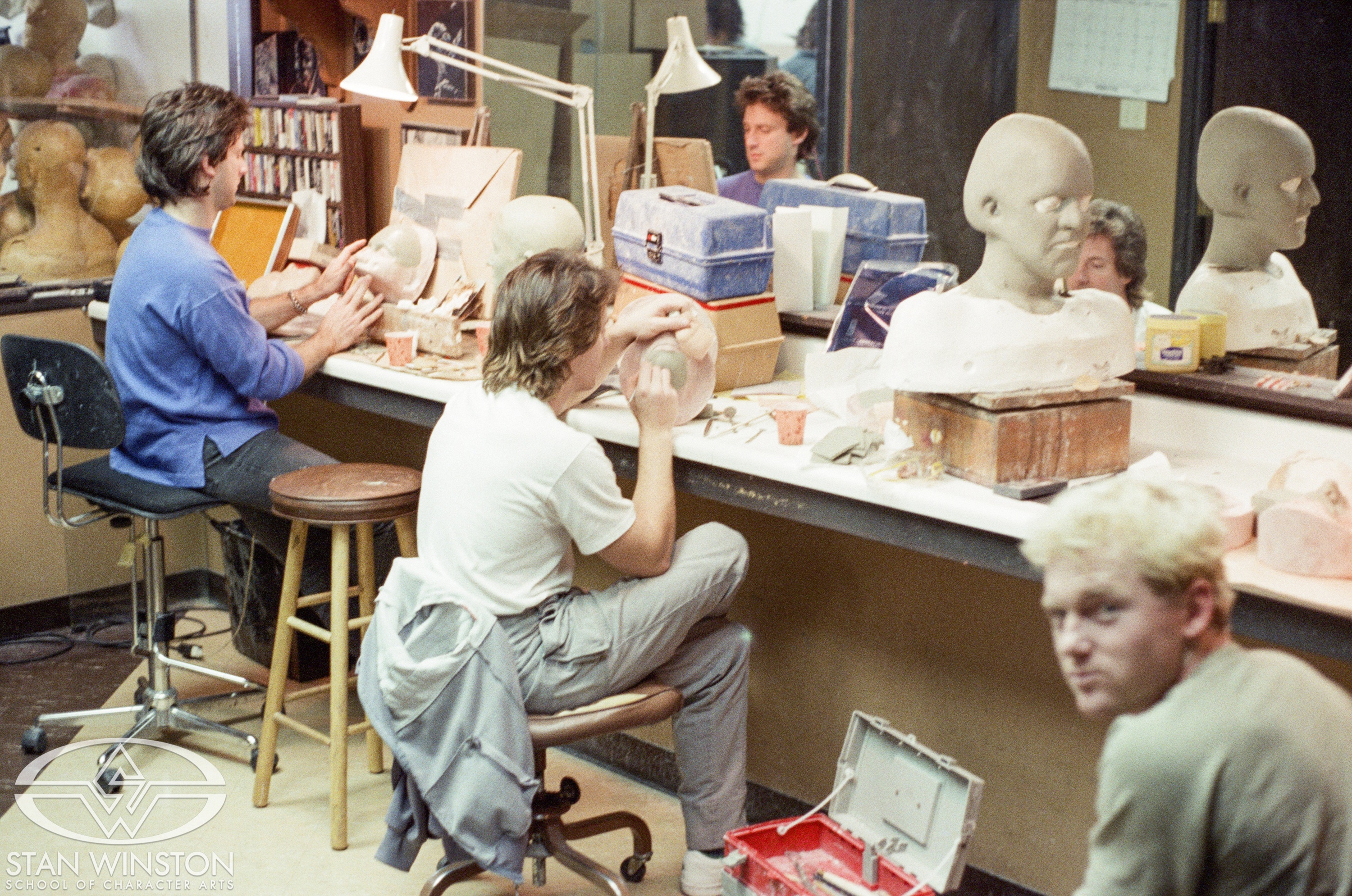 (John Rosengrant, John Blake, and Shane Mahan sculpt the main newcomer character makeups at Stan Winston Studio.)
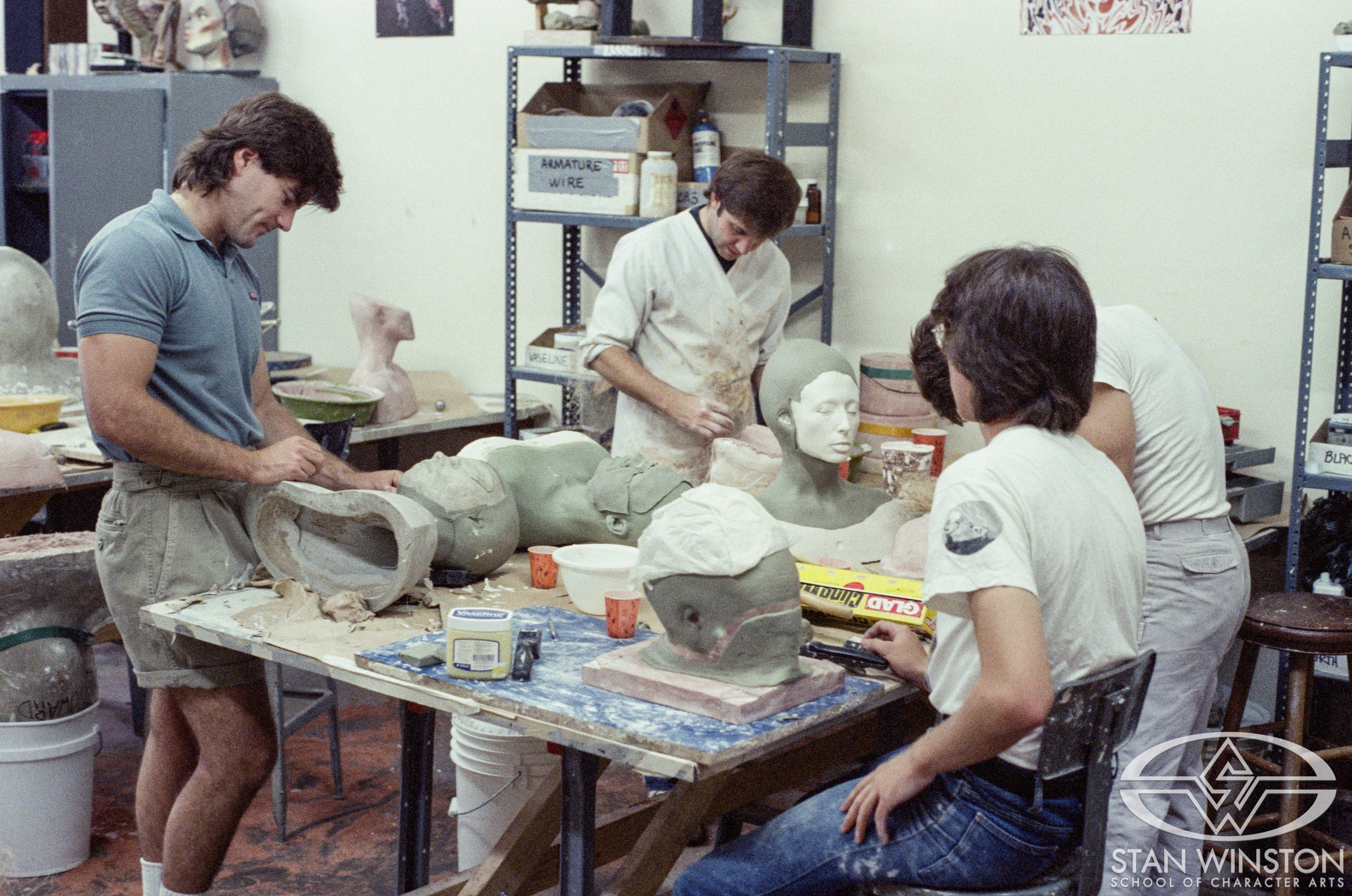 (Alec Gillis, Grant Arndt, John Blake, and Jon Curtis Price II work on the newcomers' features in clay over the lifecasts at SWS.)
Just duplicating a mold, ensuring that it was as true to the lifecast and sculpture as the original, was a painstaking process, but crewmembers got good at it as they fashioned up to seventy individual molds for a single character. "One of the best things we got out of doing Alien Nation," said John Rosengrant, "was that it taught us a lot about mold making techniques."
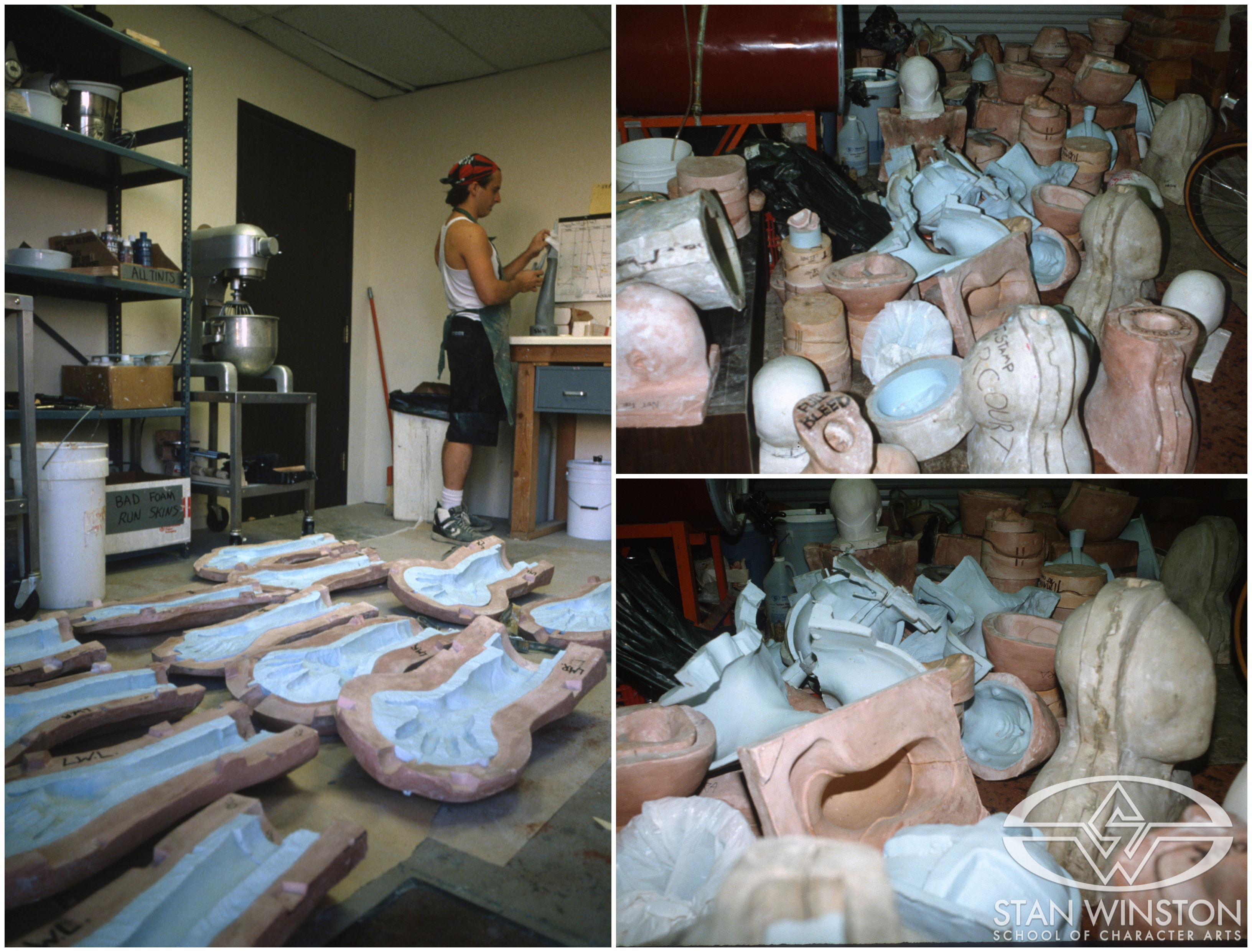 (A look at the enormous quantity of molds used to run the alien prosthetic makeups for Alien Nation at Stan Winston Studio.)
Most of the principal character makeups required seven individual appliances, which virtually covered the actors' faces, yet did not obliterate their features. "We wanted the audience to be able to recognize the actors immediately," said Mahan. "They were all so good, it would have been a shame to cover them up completely."
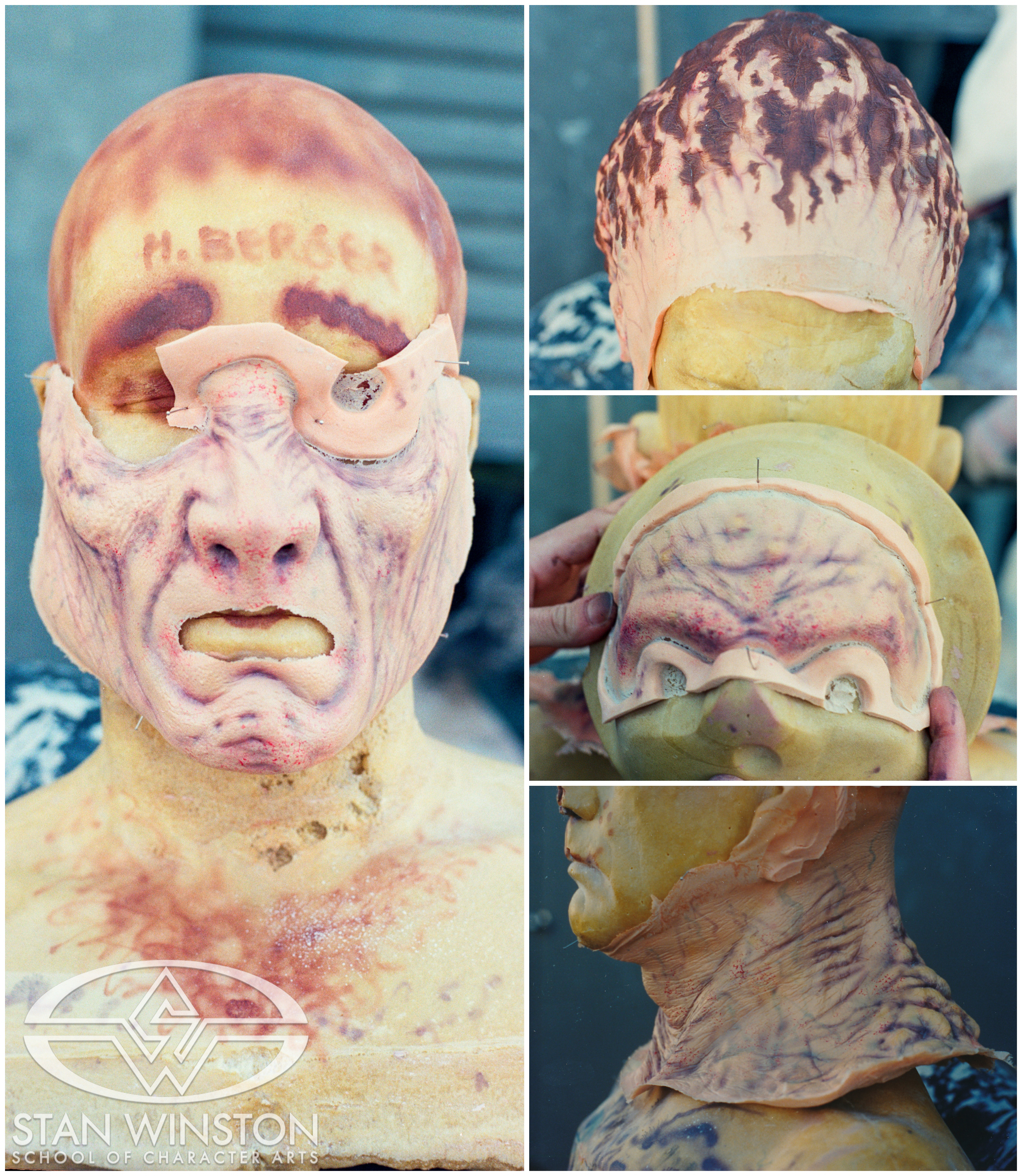 (WIP images of various alien makeup appliances at Stan Winston Studio.)
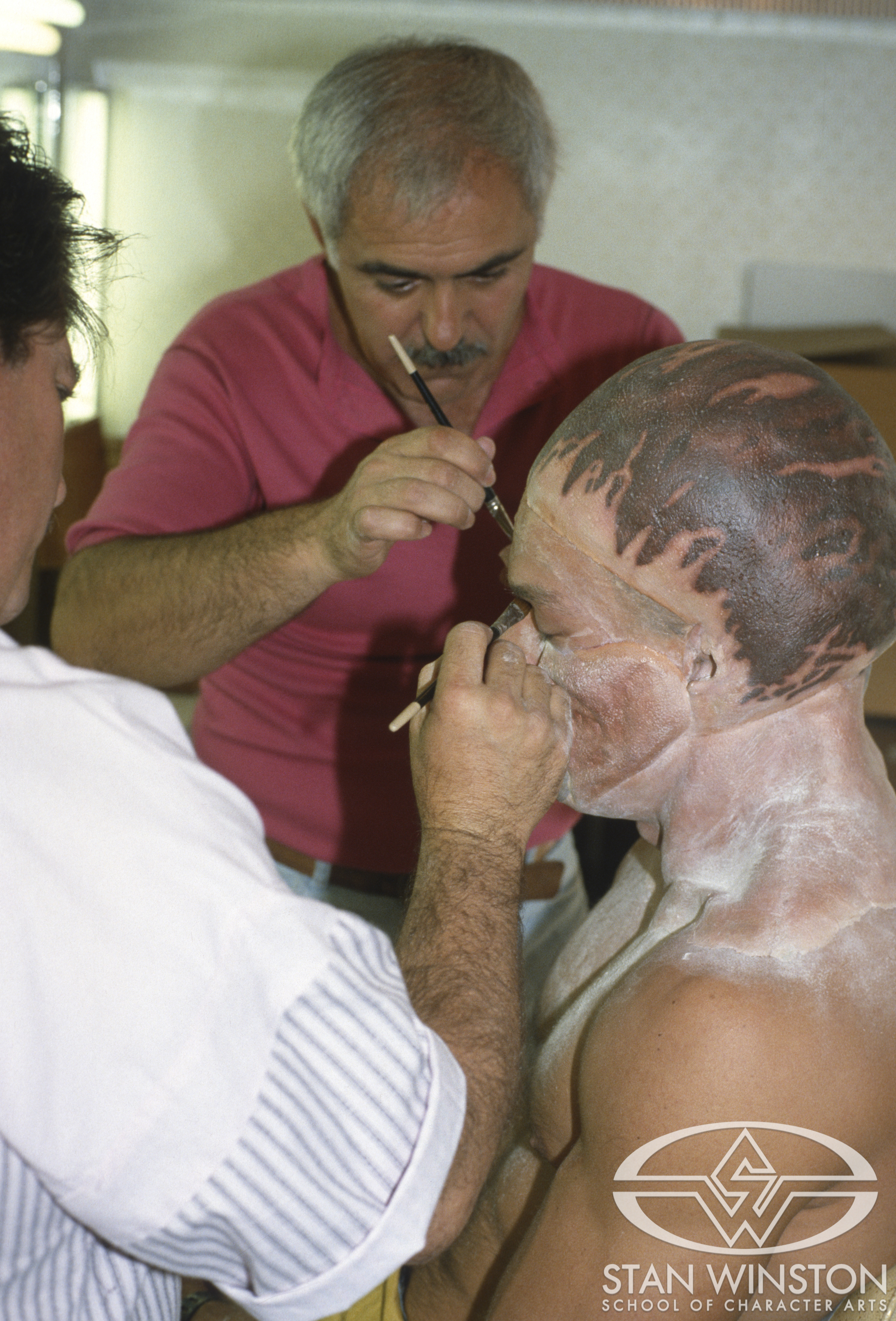 (Brian Thompson and Zoltan Elek apply individual alien makeup appliances.)
Zoltan Elek Tones Down Alien Hues
Due to the volume of makeups that would have to be applied on the set, Stan Winston brought in Oscar-winning makeup artist Zoltan Elek, with whom he had worked on previous projects, including Heartbeeps, to lead the daily application.
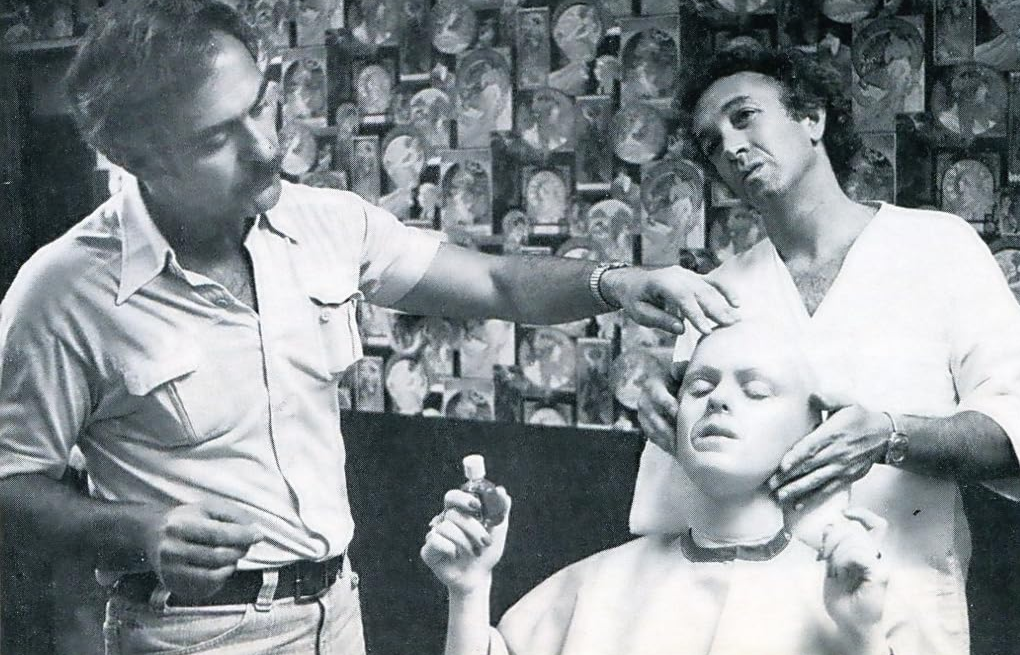 (Zoltan Elek and Stan Winston apply gelatin makeup appliances to actress Bernadette Peters who played Aqua in Heartbeeps (1981). Image source: IMDB.)
Upon doing his first test, Elek suggested that the strong yellow coloration of the newcomers' makeups be softened to a more human-looking flesh tone. "Stan didn't agree with me fully in the beginning," Elek recalled. "He felt the aliens should be a totally different color than the humans, with a lot of yellows, blues, and grays. But when I did the first makeup test — and this is one of the reasons I love Stan — I had a long talk with him and convinced him to give my ideas a chance. He said, 'Okay, you're doing the test, so this whole coloring thing is in your hands.'" In the end, the already-pigmented background masks remained a yellowish hue, while the principal makeups were flesh-colored.
In this video, you can see a sneak peek of newcomer Joshua Strader's prosthetic makeup application by Zoltan Elek and tested by actor Jeff Kober:
When Terence Stamp Walked Off the Set
If Alien Nation did not offer the Stan Winston Studio crew the opportunity to do what they considered to be a cutting-edge makeup, it did provide a valuable lesson in actor interaction. Among the movie's stars was Terence Stamp, a well-established British actor who portrayed a newcomer drug lord, William Harcourt. From the beginning, Stamp was unhappy about the amount of makeup he was required to wear for his role.
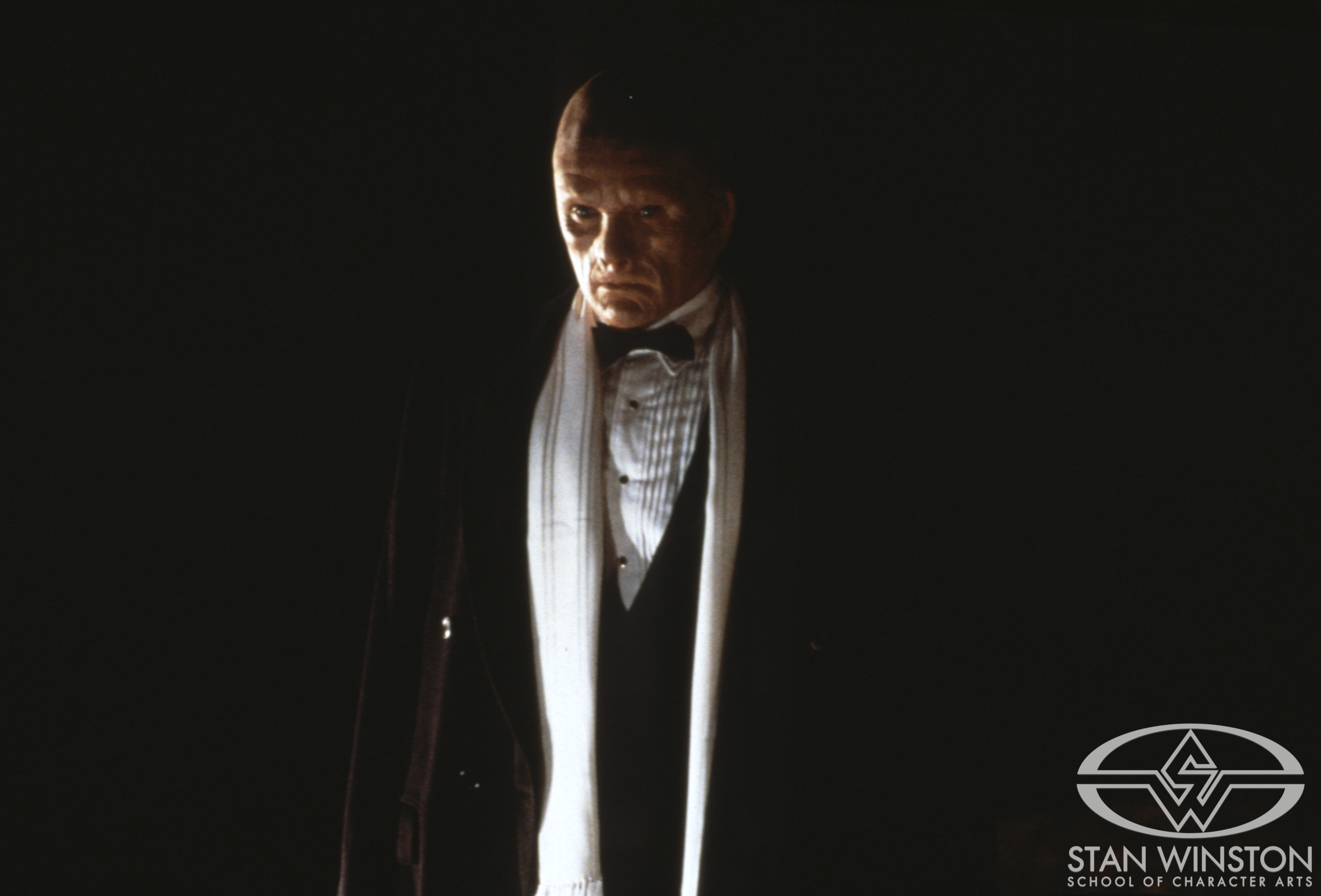 (Terence Stamp as newcomer alien William Harcourt on the set of Alien Nation.)
"Terence Stamp had seen sketches of his character's design," said Mahan, "but we hadn't actually met with him and tested it on him beforehand. So when we got to the set the first day he was going to film, and we had this nine-piece prosthetic makeup for him, he said, 'What's this?' 'Uh, it's your makeup.' And he looked around and saw all these other guys wearing all this makeup, with this huge thing on their heads, and he got steamed up. He blew a gasket, in fact."
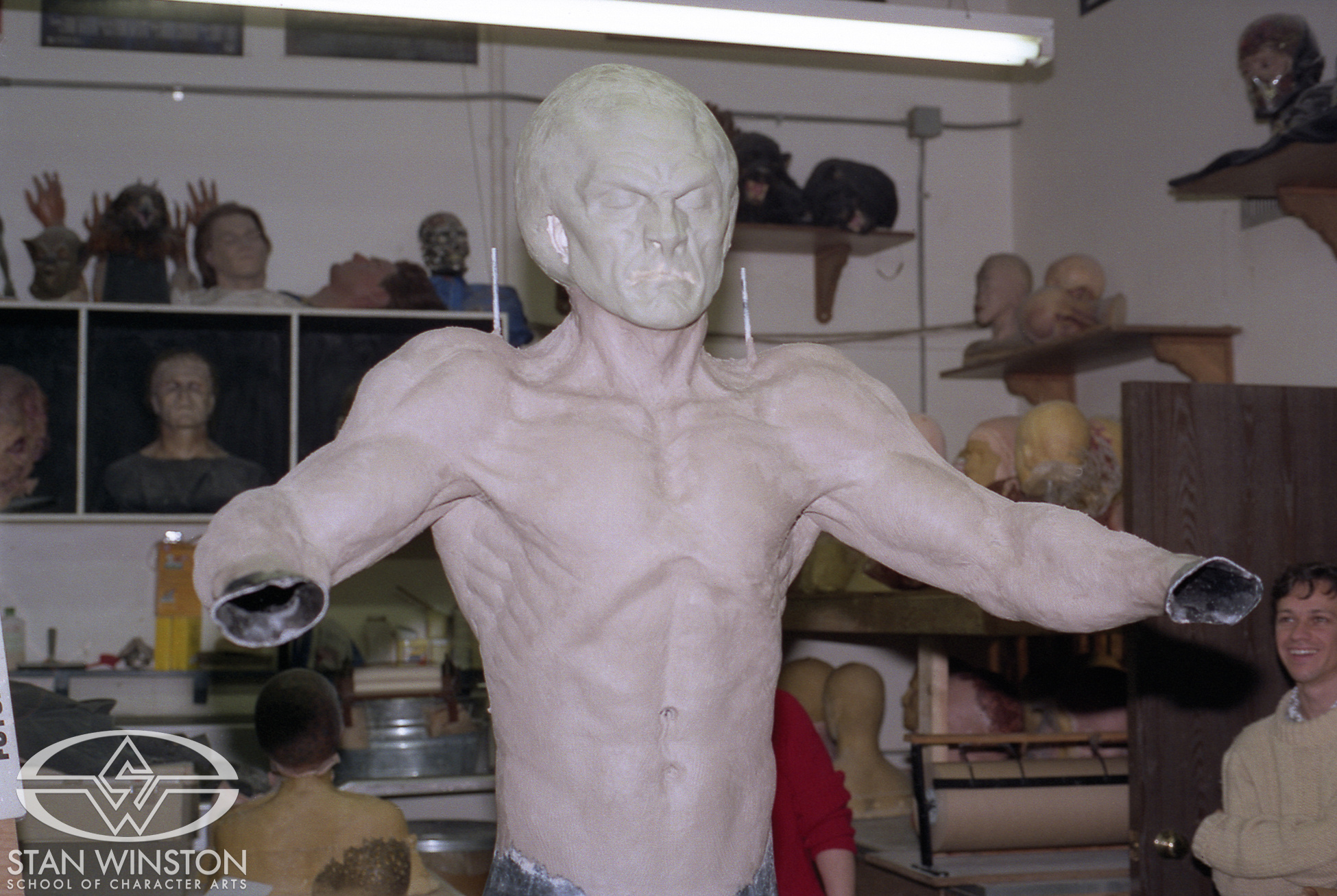 (An in-progress sculpture for the final stage transformation makeup of William Harcourt.)
Stamp grudgingly submitted to the daily makeup application, but he put his foot down when it came to a transformation sequence at the end of the film, for which the Winston crew had created bolder facial appliances, as well as a muscled suit for the actor to wear.
This video shows behind-the-scenes snippets of Zoltan Elek adding the finishing touches to William Harcourt's prosthetic makeup, showcasing the final stage of the transformation:
"His character was supposed to drink a body-altering drug that transforms him into a bigger alien, a 'Mr. Hyde' type of character," Mahan explained. "He said, 'I'm not doing it.' And he got on a plane and left! We had to get a stunt guy and put him in the makeup — so, of course, it never looked right. It looked like another guy entirely, not a transformed Terence Stamp. It was a disaster. But since then, we have never, ever gone to set without first making sure the actor has seen the makeup he will be wearing and what he will look like beforehand."
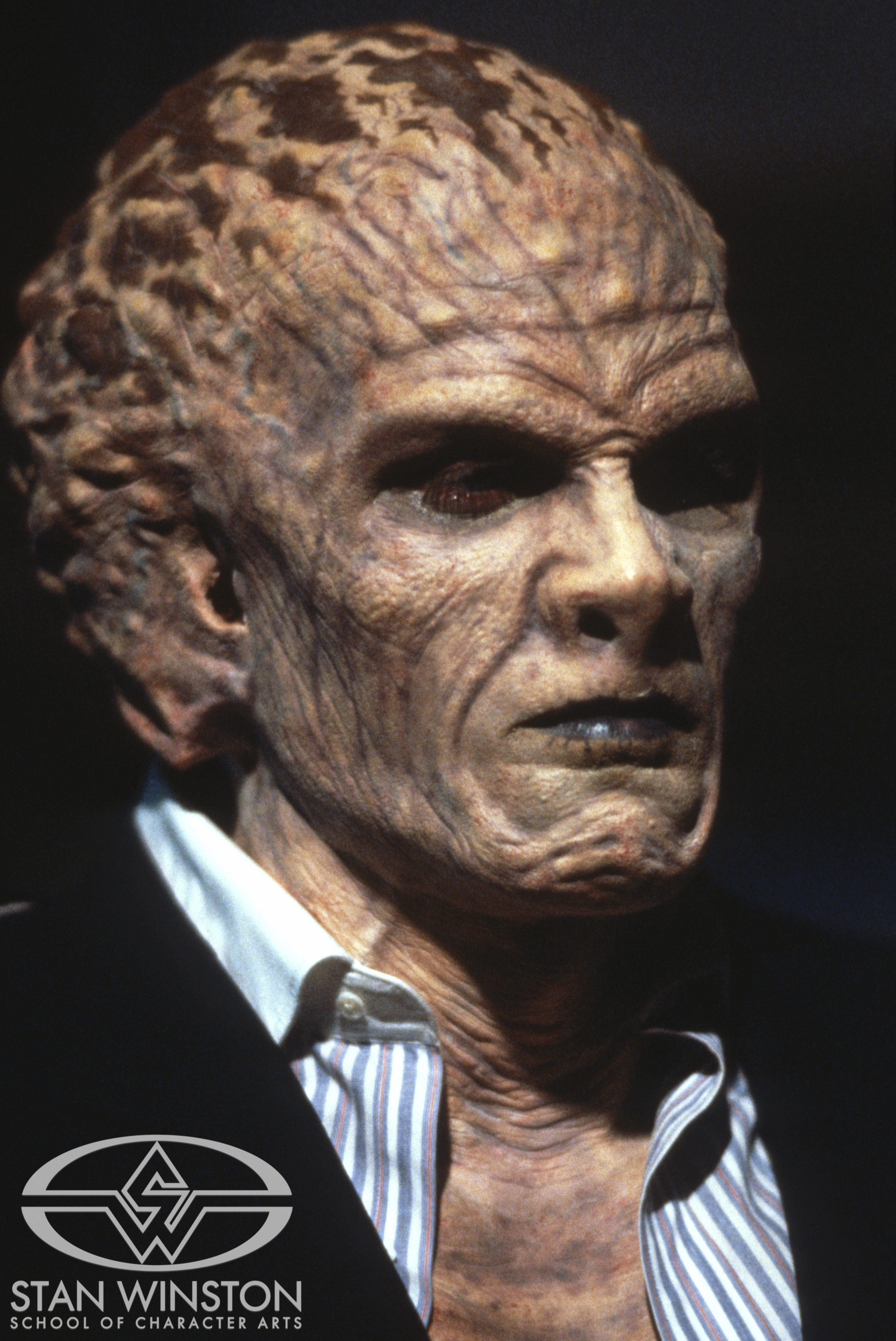 (A close-up image of William Harcourt's final stage of makeup as an 'uber-alien' on a stunt double in the set of Alien Nation.)
- Blog is excerpted from The Winston Effect: The Art and History of Stan Winston Studio by Jody Duncan
Courses with the creators of Alien Nation (1988):
- Special Effects Sequence Design with Shane Mahan
- Hybrid Characters: Blending Practical & Digital FX with John Rosengrant
- Directing Creatures with Alec Gillis
- Make a Monster Suit - Part One: Creature Sculpting with Alec Gillis
- Make a Monster Suit - Part Two: Mold Making, Foam Latex & Paint with Alec Gillis
- Monster Suit Performance with Tom Woodruff Jr.
- Character Design Techniques: Sketching, Photoshop, Sculpting & Prosthetic Makeup Testing with Tom Woodruff Jr.
- Garage Monsters - How to Make Creature FX on a Budget with Shannon Shea
- Garage Monsters - Shop Basics with Shannon Shea
- The Business of Making Monsters Series with Shannon Shea: Part 1, Part 2, Part 3
- Covid-Safe Makeup Application with Eryn Krueger Mekash
- Terminator Makeup FX Part 1: Cast, Rig & Prepaint with Steve LaPorte
- Terminator Makeup FX Part 2: Prep, Apply & Paint with Steve LaPorte
- Animatronics Design Basics with Richard Landon
- Cable Mechanism Basics - Tentacles with Richard Landon