
Jump to Section
- What Lies Beneath: Robert Zemeckis's thriller homage to Alfred Hitchcock
- Using Cyberscanning Technology in 2000
- Creating Ghost Puppets for What Lies Beneath
- Puppeteering Under Water
Video clip below: Original scene from What Lies Beneath (2000), featuring Stan Winston Studio-made 'Madison' ghost puppets as they appear in the film.
What Lies Beneath: Robert Zemeckis's thriller homage to Alfred Hitchcock
Stan Winston first worked with Robert Zemeckis on an episode of Amazing Stories — the television series produced by Steven Spielberg — titled Go to the Head of the Class, which aired in November 1986. Zemeckis again turned to Stan Winston Studio for What Lies Beneath (2000), his thriller homage to Alfred Hitchcock starring Harrison Ford as a college professor, Dr. Norman Spencer, and Michelle Pfeiffer as his wife, Claire, who begins to see visions of a murdered co-ed.
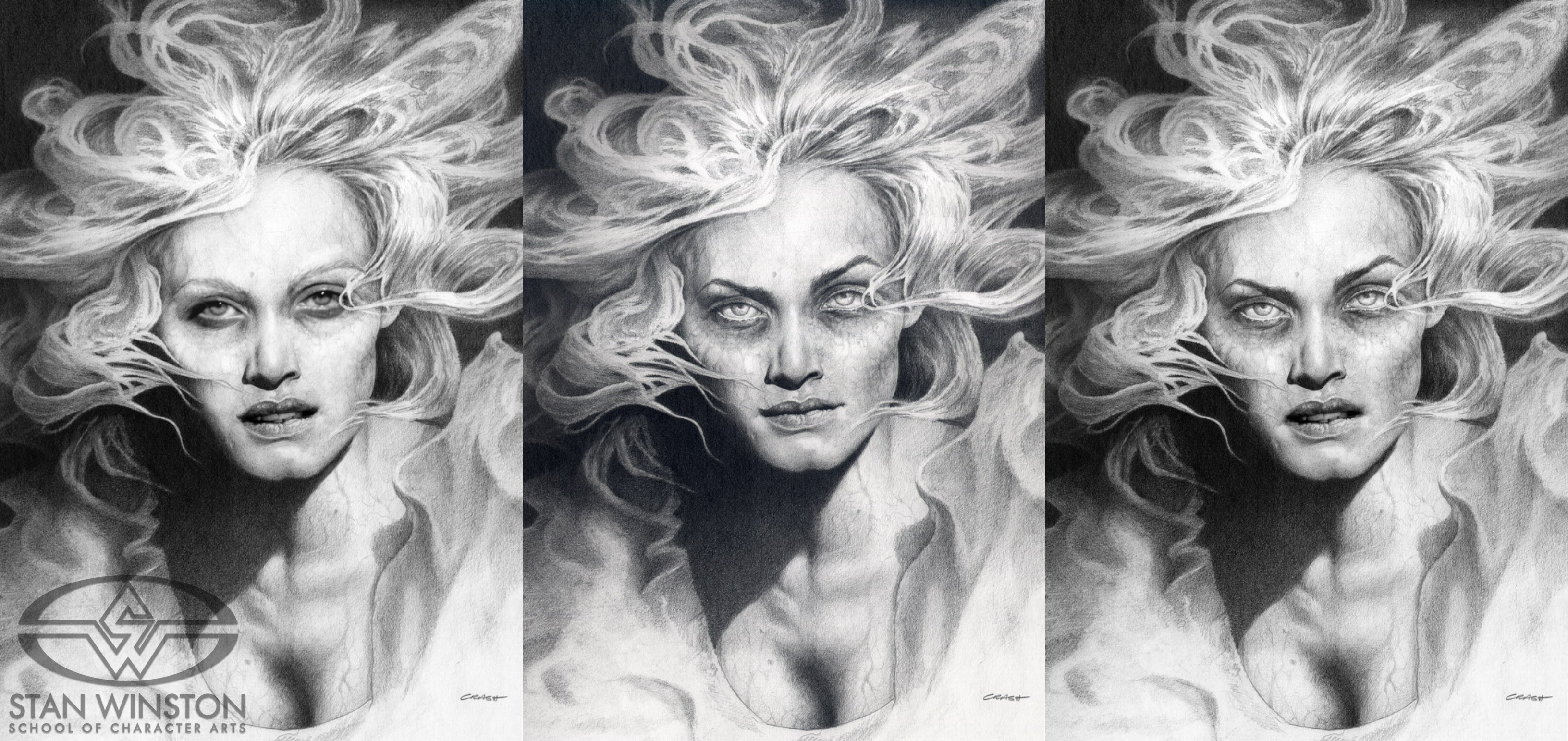 ('Beautiful Madison' transitional concept artworks by Mark 'Crash' McCreery.)
Stan Winston's studio produced two puppet versions of the murdered girl, 'Madison', portrayed by supermodel Amber Valletta. One non-articulated head-and-torso puppet, dubbed 'Beautiful Madison,' was a bluish, veiny corpse; while the second 'Horrible Madison' puppet was a far more decomposed, skeletal form.
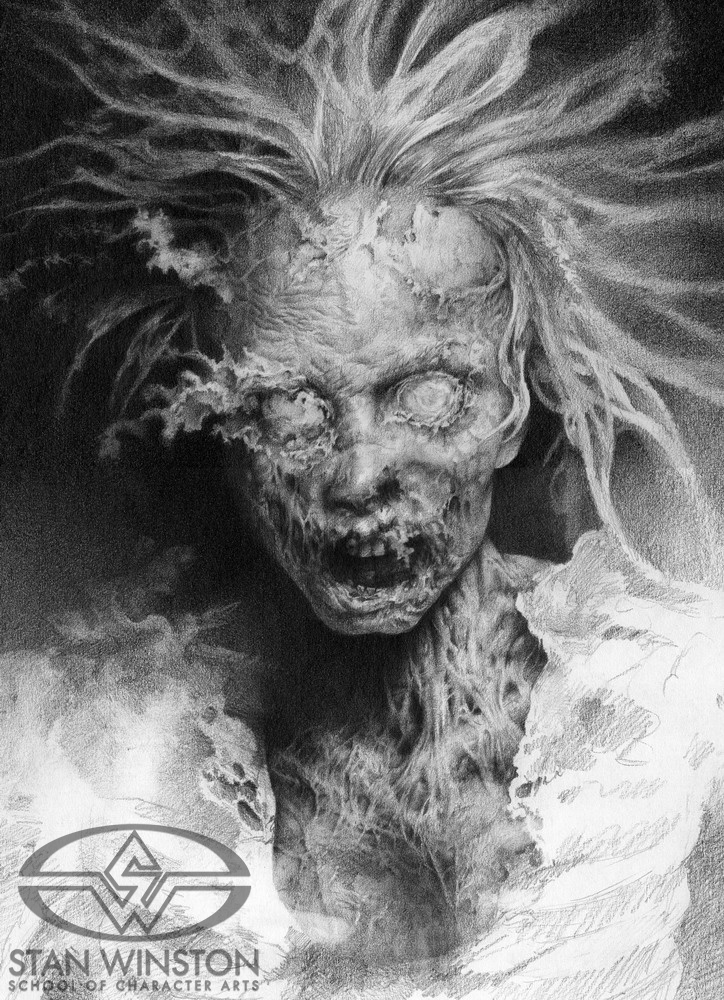 ('Horrible Madison' concept by Mark 'Crash' McCreery.)
Both puppets would be used for underwater shots set in the lake where the girl drowned.
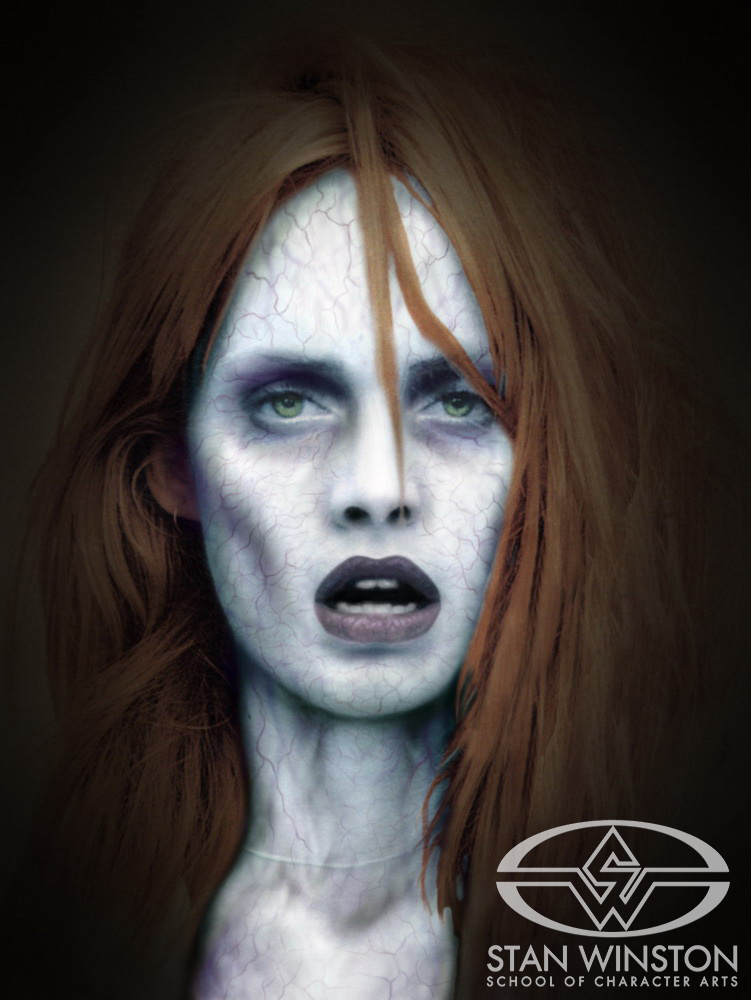 (The bluish 'Beautiful Madison' concept for What Lies Beneath.)
Using Cyberscanning Technology in 2000
Much-improved 3D scanning techniques, often called "cyberscans," enabled Winston's artists to create puppets for 'Madison' that were exact replicas of Valletta. "A lot of advances had been made in how we replicate people by then," said Shane Mahan. "Back when we'd done the Linda Hamilton puppets for Terminator 2, cyberscans were dreadful. They barely looked like the person. You'd look at it, and think, 'Well, I see some resemblance, I suppose…'"
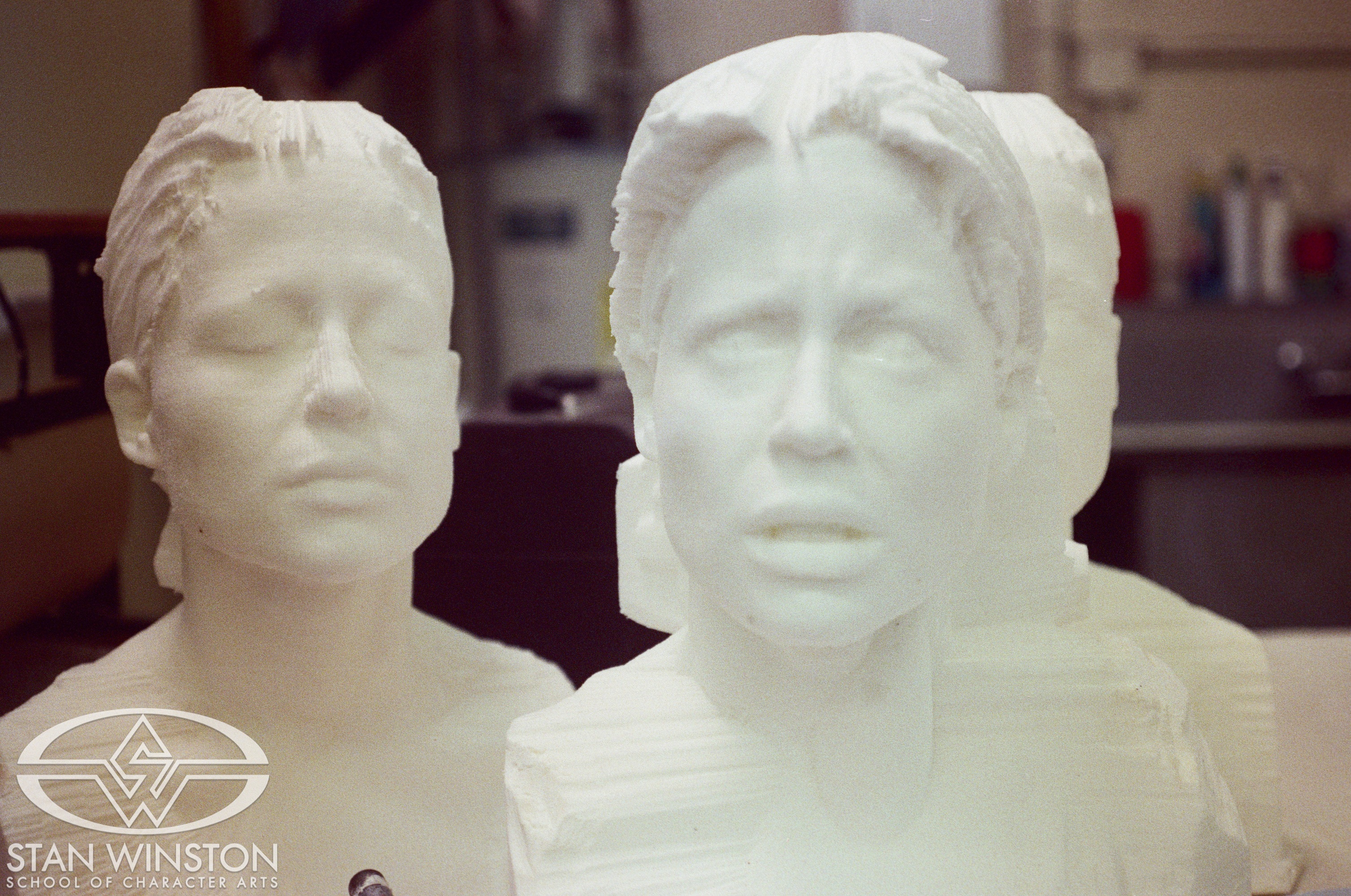 (Various computer-milled foam sculptures based on 3D scans of Linda Hamilton for Terminator 2: Judgment Day.)
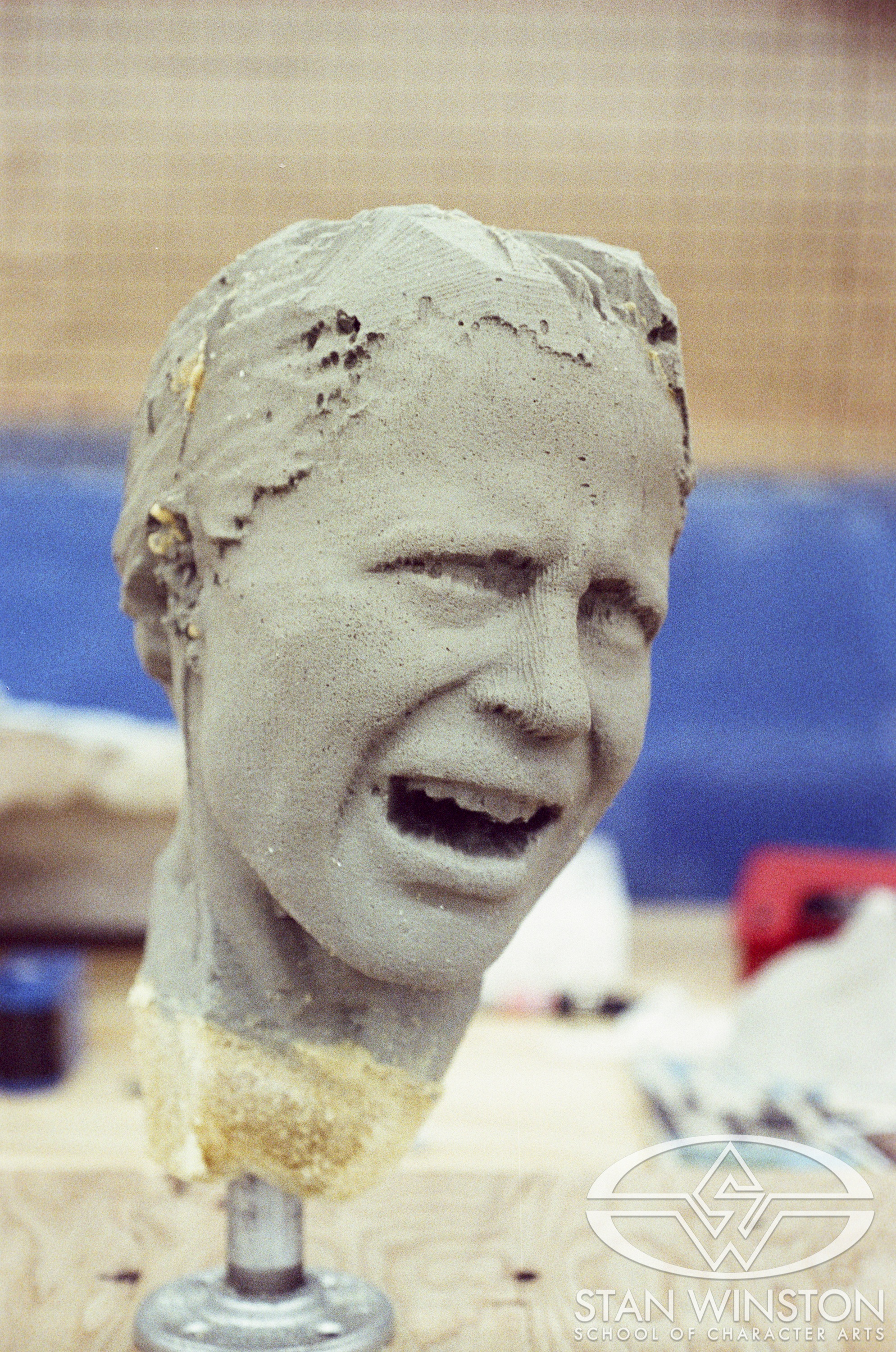 (One of the computer-milled foam sculptures in progress being refined with clay.)
"By the time we got to What Lies Beneath, the cyberscanning machinery was much more sophisticated," added Mahan. "The cyberscans weren't perfect — we still had to do a lot of resculpting of the computer-milled foam pieces we got from them — but they were much, much better."
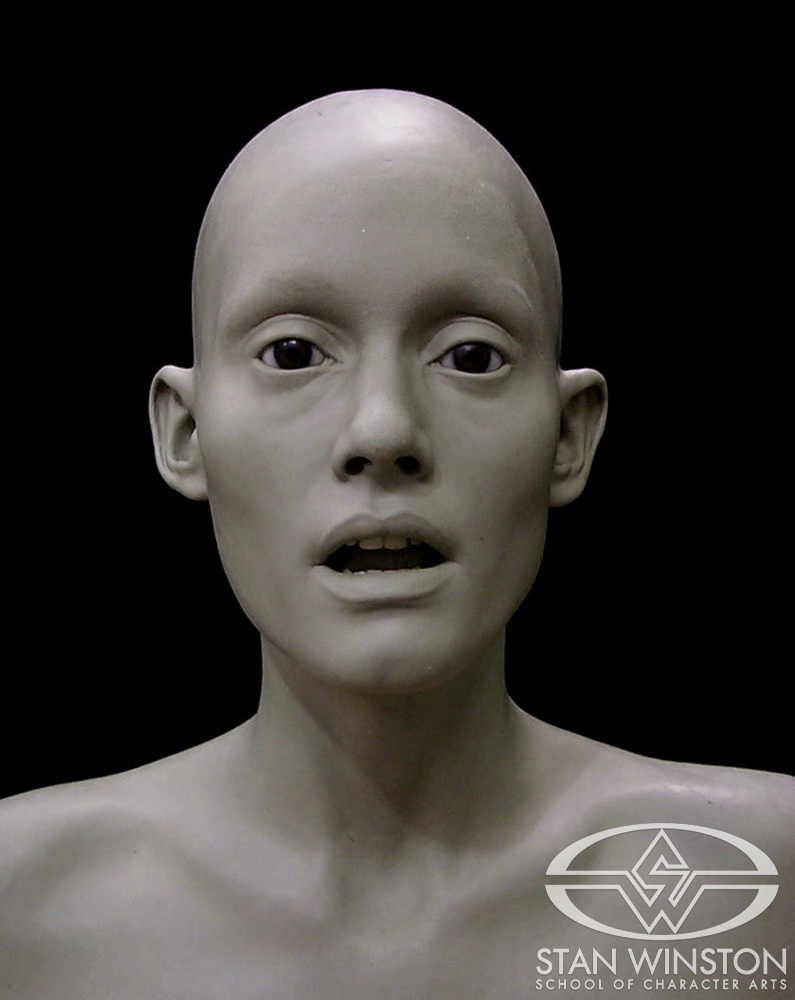 ('Beautiful Madison' bust of Amber Valletta based on Stan Winston Studio's 3D scan.)
Creating Ghost Puppets for What Lies Beneath
Winston's crew had originally done makeup tests on Valletta to determine if they could avoid building a puppet for the 'Beautiful Madison' corpse. "No matter what we did with the makeup," said Mahan, "there was still the look of life in her face. Also, some of these shots were going to be underwater, and no matter how much an actress tries not to move, underwater, she is going to flinch, bubbles are going to come out of her mouth, and the veins will pulse a bit. There is just that look of life there — and we couldn't have that for this dead girl."
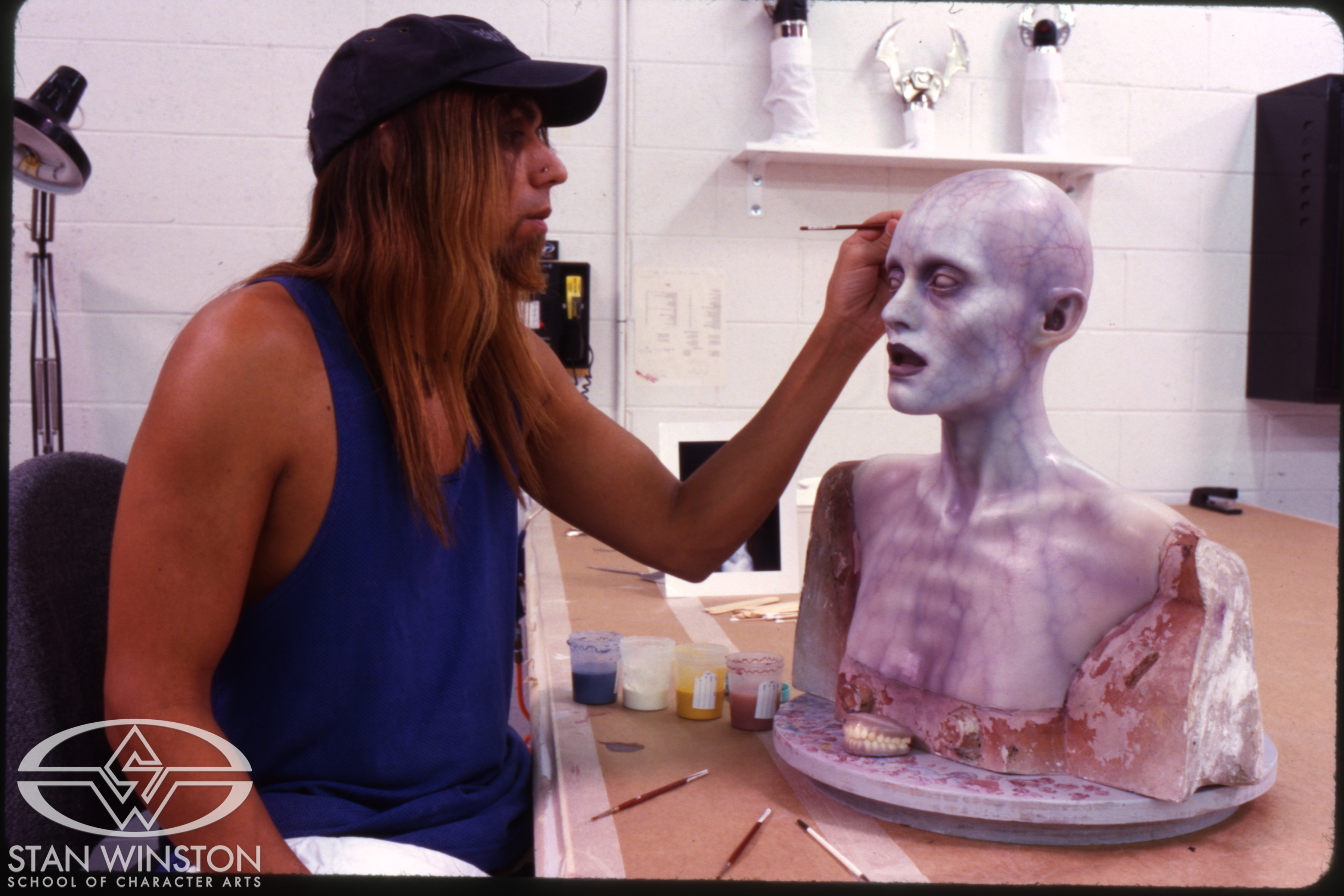 (Joey Orosco paints a 'Beautiful Madison' insert head.)
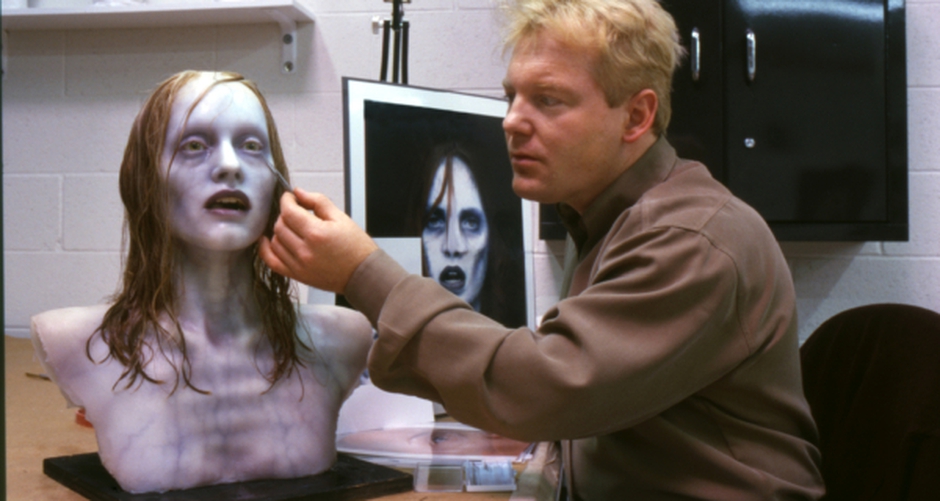
Joey Orosco sculpted the 'Beautiful Madison' face, while Jason B. Matthews sculpted the body. The final puppet was skinned in silicone, with veins painted on the inside to give it an organic, translucent look. "Shane and I came up with the concept of seeing veins underneath the skin," said Matthews. "We put a thin layer of silicone inside the mold, and I airbrushed veins inside of that. Then we put another layer of skin in it."
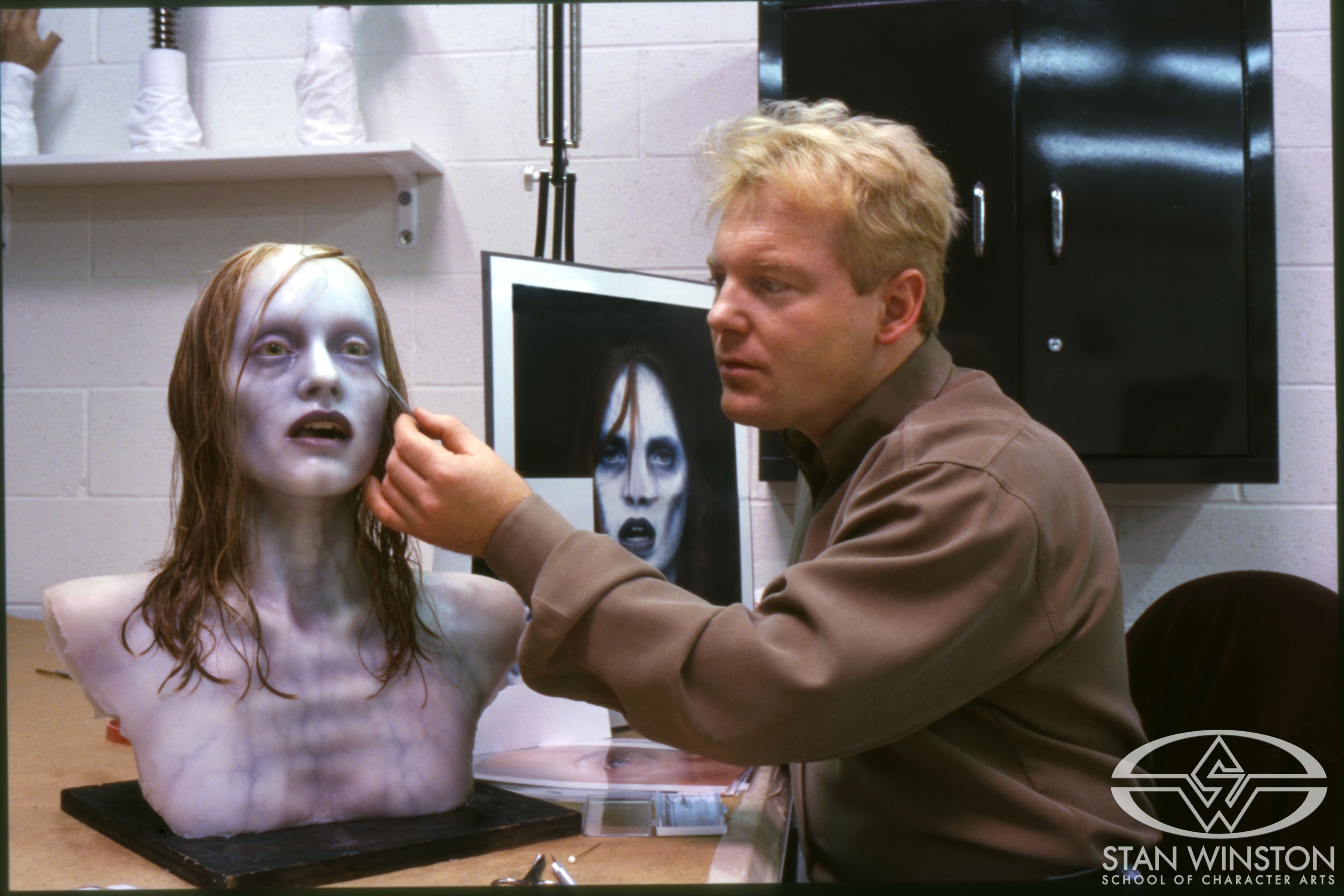 (Shane Mahan details a 'Beautiful Madison' insert head sculpted and painted by Joey Orosco.)
"By painting it this way," added Mahan, "you could see through her skin a little bit, to the veins underneath. It was a very interesting, eerie effect."
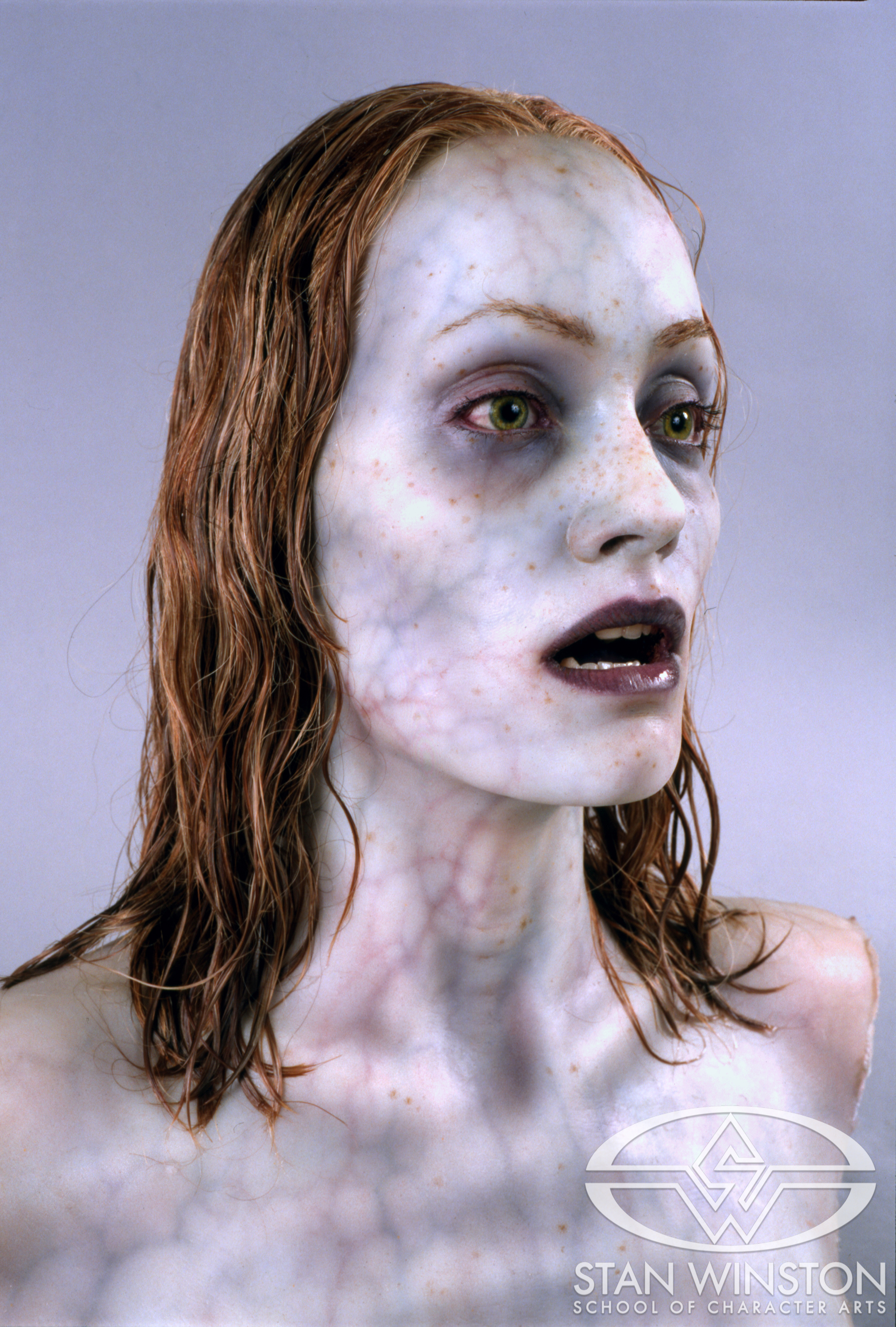 (The more fully decomposed 'Beautiful Madison' insert head.)
Mahan and Matthews carved into the foam sculpture of Valletta acquired from the 3D scan to create the more emaciated, decayed 'Horrible Madison' look.
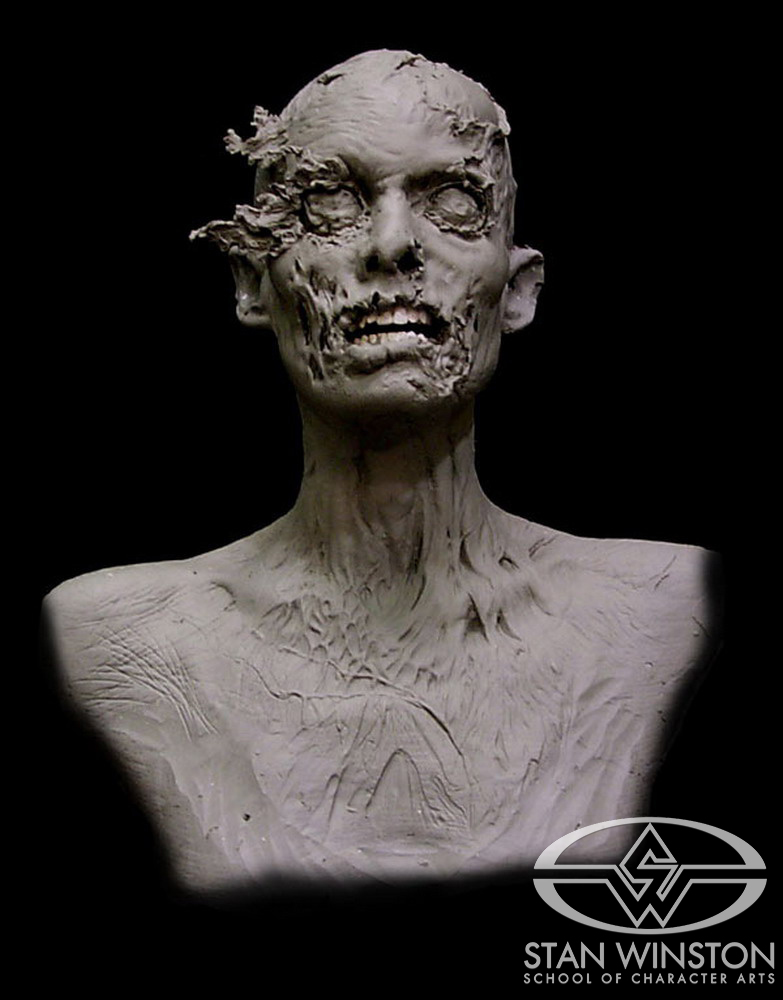 ('Horrible Madison' clay bust sculpted by Shane Mahan based on Amber Valletta's 3D scan at Stan Winston Studio.)
"I carved in all around her ribs and made her knees look ugly," Matthews said. "That was a fun sculpture to do because I got to take this supermodel with a beautiful body and face and make her look hideous."
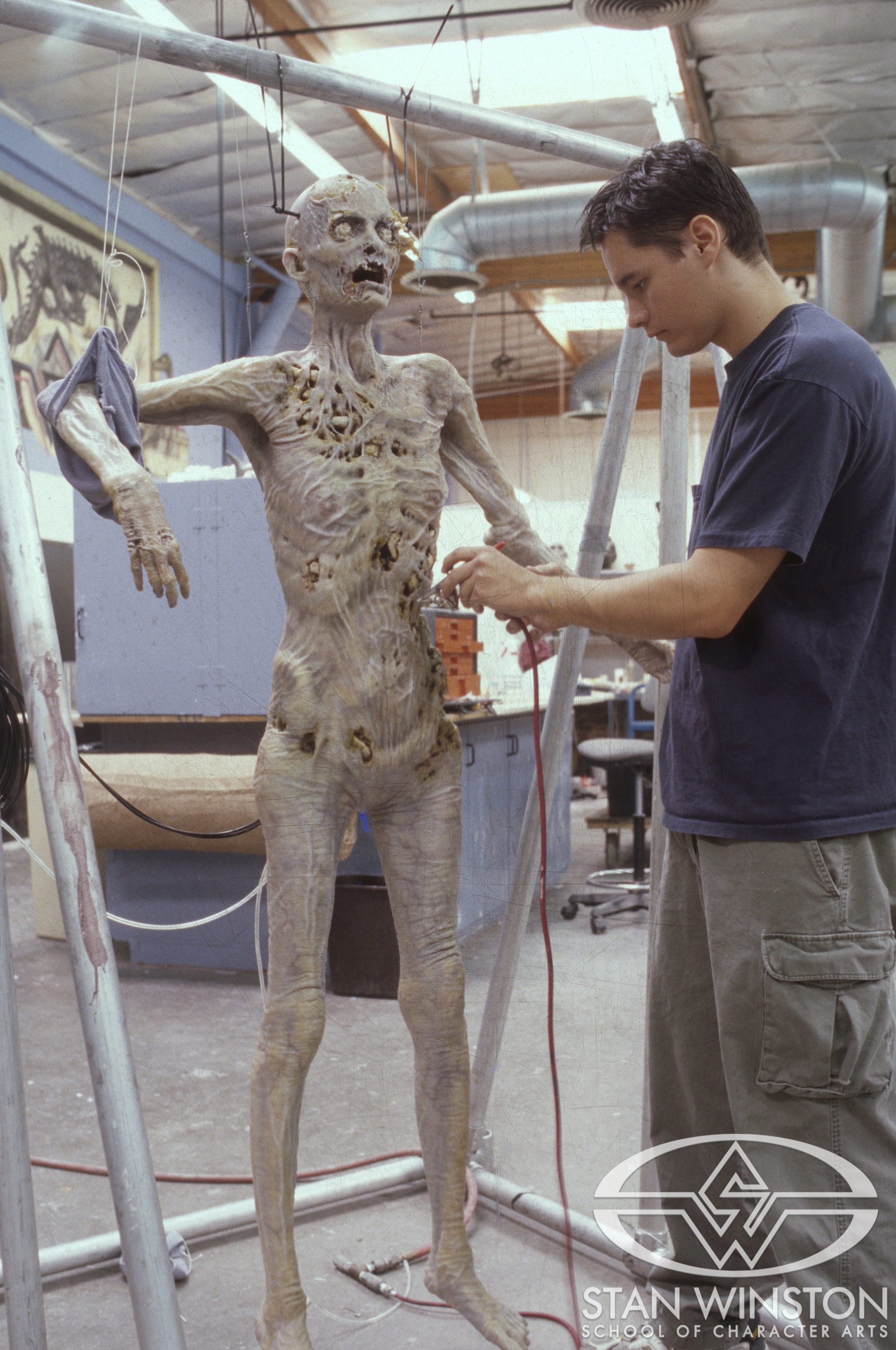 (Jason B. Matthews airbrushes the 'Horrible Madison' puppet at Stan Winston Studio.)
Puppeteering Under Water
Zemeckis shot both 'Madison' puppets in a twenty-five-foot-deep water tank. A team of four Winston puppeteers, in scuba gear, marionetted the puppets underwater, manipulating fishing line attached to the limbs.
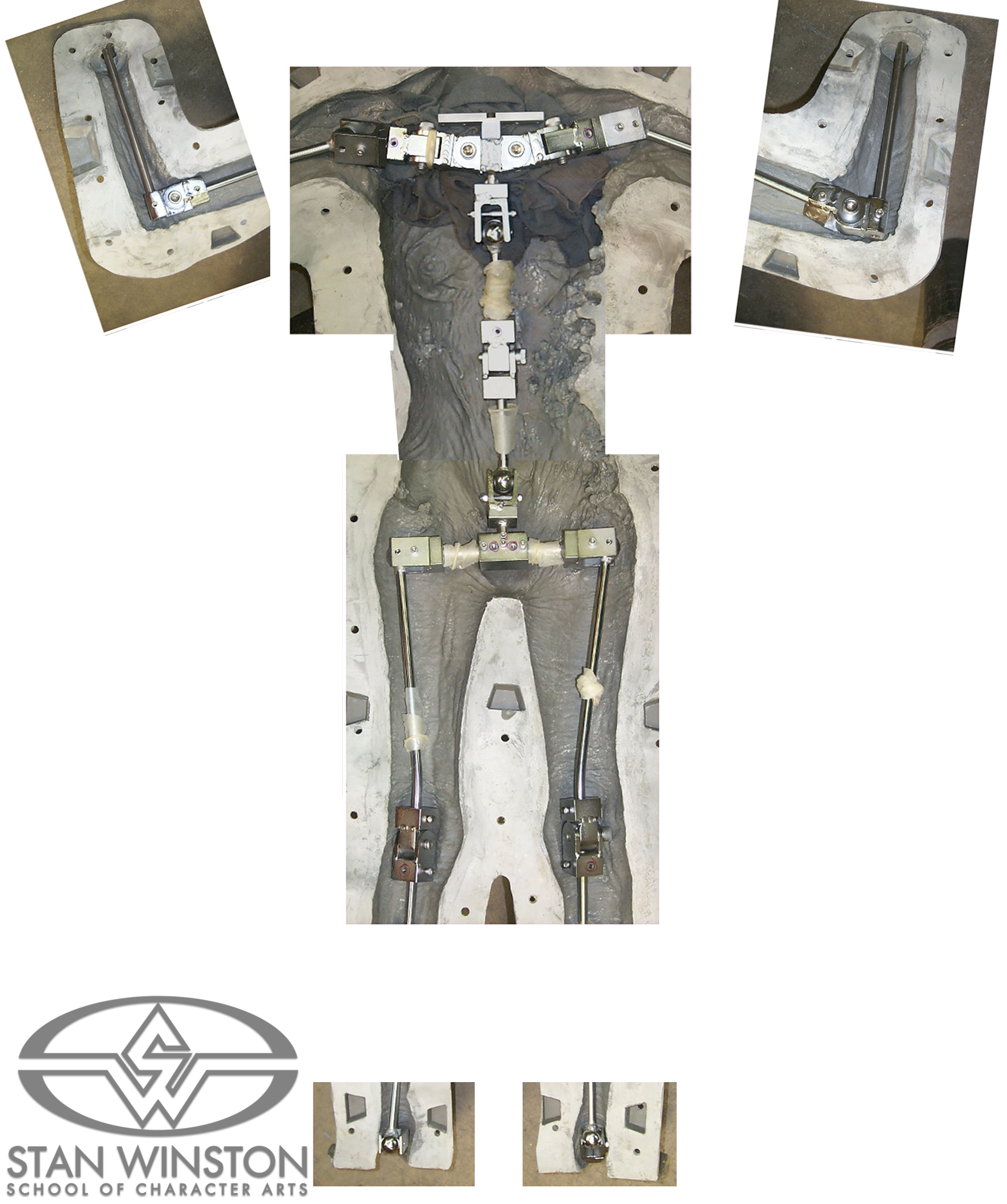 (The understructure of the 'Horrible Madison' ghost puppet.)
"Puppeteering these puppets underwater was definitely the most challenging thing about this show," Mahan commented. "Puppeteering is difficult enough on dry land!"
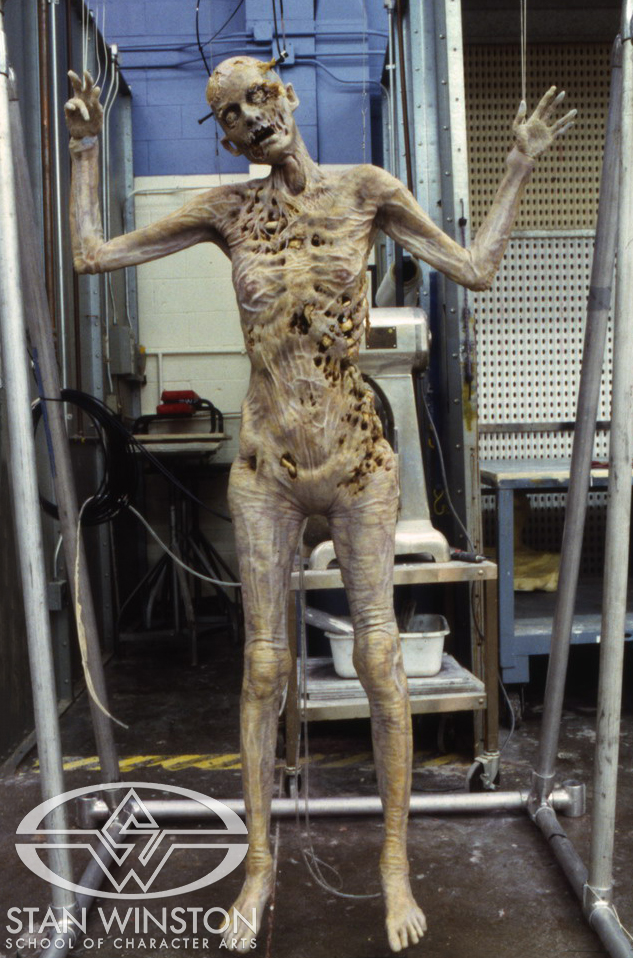 (The 'Horrible Madison' puppet before adding hair.)
The four puppeteers were reduced to three when, on a dive to the bottom of the tank, Mahan's eardrum blew out. That calamity, combined with Zemeckis's improvisational directing style, made the puppeteering assignment even more challenging.
Video clip below: Stan Winston Studio crew tests the 'Horrible Madison' puppet underwater.
"Robert Zemeckis is a genius," said Mahan, "but, even more than most directors, he seems to get his most genius ideas just as he is about to shoot something. So he'd come on the set, and say: 'Okay, here's what I want to do. She's going to float up, roll, turn, then look at the camera.' And that was nothing like what we had planned and rehearsed! But it was also, usually, much better than what had been planned originally. So we would just figure out a way to do it. In the end, we got all of our shots, and I think our work in the movie is very eerie and cool looking. That film was a great example of the more subtle types of effects we can do."
- Blog excerpted from The Winston Effect: The Art and History of Stan Winston Studio by Jody Duncan
Courses with the Creators of What Lies Beneath (2000):
- Special Effects Sequence Design with Shane Mahan
- Maquette Painting Techniques with Trevor L. Hensley
- Animatronics Design Basics with Richard Landon
- Cable Mechanism Basics - Tentacles with Richard Landon
- Introduction to Hair Knotting with Mike Ornelaz
Check Out These Pathways to Create Your Own Ghost Character
- Recommended for Designers: Design Basics
- Recommended for Monster Makers: Eye & Teeth Basics
- Recommended for Fabricators: Fabrication Basics
- Recommended for Filmmakers: Filmmaking
- Recommended for Hair Makers: Hair Work
- Recommended for Makeup Artists: Makeup Effects Basics
- Recommended for Mechanics: Mechanical & Animatronic FX Basics
- Recommended for Model Makers: Model Making
- Recommended for Mold Makers: Molding & Casting Basics
- Recommended for Painters: Painting Basics
- Recommended for Puppet Makers: Puppet Making Basics
- Recommended for Sculptors: Sculpture Basics