
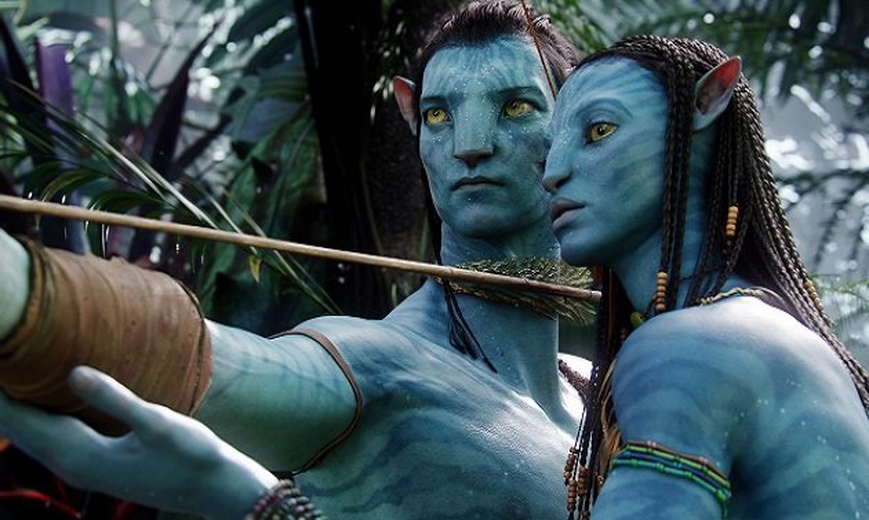
Behind the Scenes of Avatar (2005)
Avatar was James Cameron's first directorial feature film since Titanic (1997). In 2005, concept designs, technical research, and development began in earnest under the code name of "Project 880" which was a "retooled version" of the original 80-page treatment that Cameron wrote for Avatar over ten years previously.
The biggest challenge in prepping the film for production, besides developing the new 3D Fusion Camera System, was to establish a final design for the Na'vi. All of the digital work to bring the humanoid figures to life was accomplished at Weta Digital, but the designs and detail were based on the characters generated by the Stan Winston Studio.
Jump To Section
- Bringing the Na'vi Characters to Life
- Designing Neytiri
- Creating Dr. Grace Augustine’s Look
- Transforming Jake Sully From Human to Na’vi
 (For Avatar, Stan Winston Studio built human-size sculptures and busts of the main Na’vi characters.)
Bringing the Na'vi Characters to Life
“We have an indigenous population of humanoids called the Na'vi. They're fond of arrows dipped in a neurotoxin that will stop your heart in one minute - and they have bones reinforced with naturally occurring carbon fiber. They are very hard to kill.” - Col. Miles Quaritch (portrayed by Stephen Lang)
 (Young, male Na’vi character designs made by Joseph C. Pepe in Adobe Photoshop.)
Na'vi are an indigenous species on Pandora standing 9 to 10 feet tall. Each individual features unique characteristics, distinguishable from each other, so that each one has distinctive visible personality and character.
James Cameron himself made the first sketches for all the Pandoran creatures including the Na’vi. Those early sketches already featured the blue skin and feline characteristics such as cat-like eyes, broad leonine noses, large articulating ears, and tall, slender, muscular bodies. A team of artists, Wayne Barlowe, Yuri Bartoli, Jordu Schell and Neville Page, began producing hundreds of pencil-and-paper drawings based on the character sketches and in mid 2005, Stan Winston Studio also joined theAvatar project to help with the film's designs.
 (Joe Pepe’s Photoshop designs of a male and female Na'vi.)
Na'vi have four fingers on each hand and four toes on each foot, unlike the human-created avatars, which have five fingers on each hand and five toes on each foot due to the influence of human DNA during avatar genetic sequencing.
 (Joe Pepe and Christopher Swift’s Photoshop character designs of a crouching female Na’vi.)
James Cameron wanted elegant, slender, blue-skinned cat creatures that retained humanoid forms with human-facial characteristics. To capture the look, Jordu Schell created the first concept sculptures and James Cameron responded immediately to them. After approving a general Na’vi design, Stan Winston Studio artists, led by John Rosengrant, detailed them in Photoshop to develop the final color and skin texture, including stripes and a bioluminescence pattern. The crew created and presented many variations of the Na’vi look, making note, for example, that the color design should still believable as organic flesh rather than artifical body markings.
 (A female Na’vi design in Photoshop.)
Once Photoshop renderings were approved, the next step in the conceptual process involved the transference to 3D space. Stan Winston Studio took photographs of models in key poses with a variety of facial expressions. Scott Patton brought those to ZBrush to resculpt them as Na’vi characters. They were supposed to resemble their human counterparts to make it easier for audiences to recognize and relate to them. For example Sigourney Weaver’s Na'vi avatar retains the actress’ distinctive small nose.
 (Creating Norm's (Joel David Moore) avatar. The actor was photographed, conceived as a Z-Brush sculpture, finished in Photoshop, and finally sculpted as a life-size bust for lighting reference.)
For the avatars the similarity to the humans portraying them had to be evident, at least for the face. Plaster casts and 3D scans of the actors were made for this purpose.
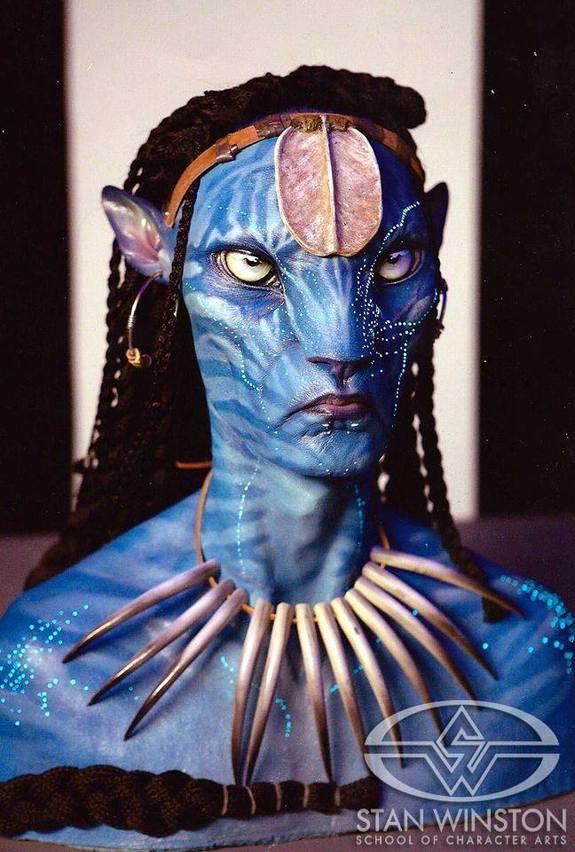 (Eytukan's (Wes Studi) life-size bust.)
The artists at Stan Winston Studio retained the mouth area and the area around the eyes of the subject actors and blended these features into their avatar faces. Na’vi eyes are cat-like, large and yellow, but the area around those eyes kept the shape and proportion of the actors who who played them.
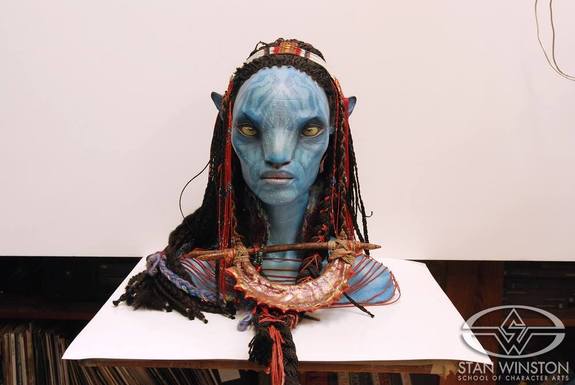 (Moat's (CCH Pounder) life-size bust.)
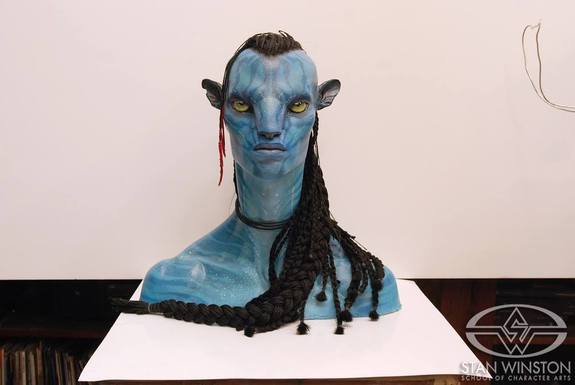 (Tsu'tey's (Laz Alonso) life-size bust.)
The Stan Winston Studio artists took lifecasts of the actors and actresses, then did a clay press-out and sculpted that into a Na’vi or avatar character. These full-size versions of the Na’vi were used on set for lighting references for CG and to provide useful eyelines for the actors.
Na’vi have only hints of eyebrows which made the facial animation a bit more difficult since eyebrow movements are often a critical part of human emotional expression.
 (John Cherevka paints the male, actual-size Na'vi sculpture.)
Designing Neytiri
Neytiri te Tskaha Mo'at’ite, in short Neytiri--who was originally named "Zuleika Te Kaha Polenoma" in James Cameron's Project 880--is the Na'vi princess of the Omaticaya clan, daughter of Eytukan and Mo'at.
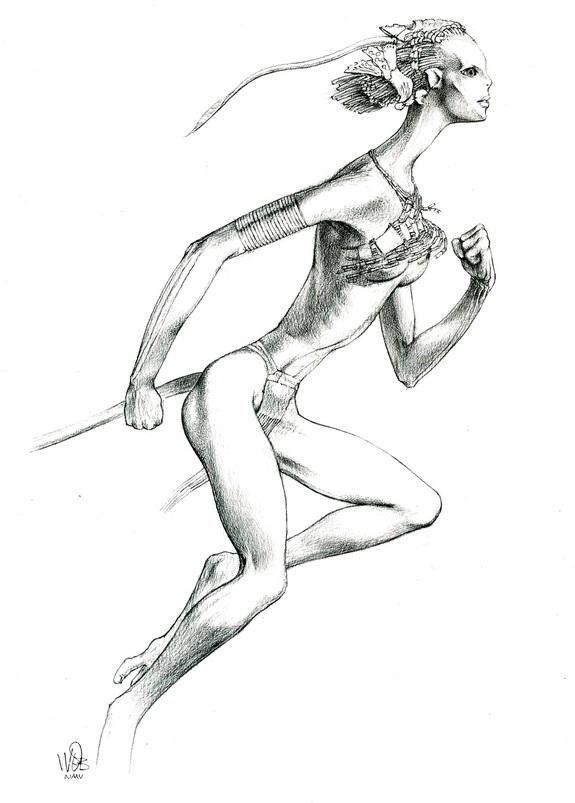 (A very early concept of Neytiri by Wayne Barlowe.)
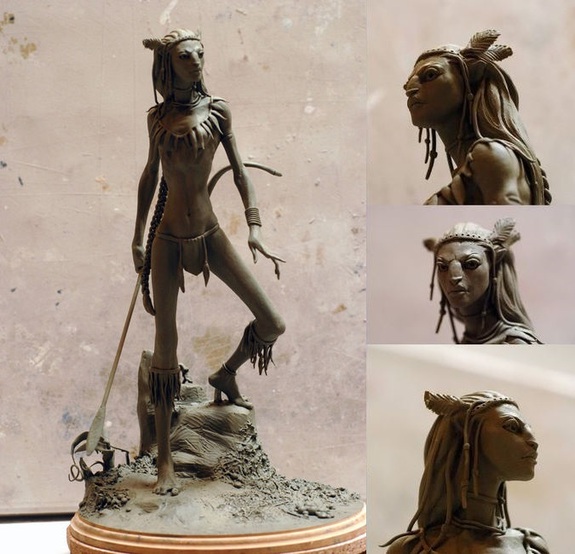 (Jordu Schell's full-body maquette for Neytiri was roughly 15 inches tall.)
 (Jordu Schell's sculpted bust of Neytiri from different views.)
In designing Neytiri, one of the challenges was making her look sufficiently alien but with enough familiar and appealing aspects to make Jake's attraction to her seem natural and convincing. Her lithe but powerful athleticism was central to her characterization.
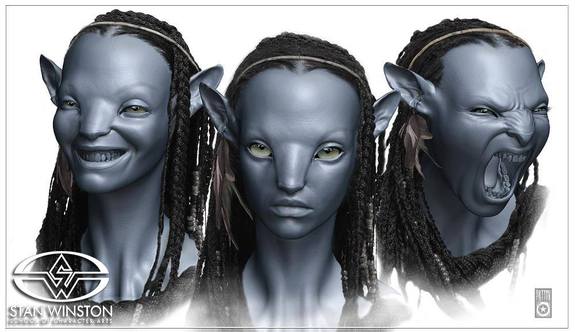 (Scott Patton’s digital design highlights Neytiri’s (Zoe Saldana) facial expressions.)
 (Progress image of the Neytiri's sculpture in process.)
Creating Dr. Grace Augustine’s Look
Grace’s avatar was the most difficult to realize. Sigourney Weaver’s face wasn't a natural mesh with the features of a Na’vi. Her narrow, patrician nose did not translate well to the distinctive leonine Na’vi nose. Moreover, Grace’s avatar was to have been created 18 years in the past, so her avatar had to appear as an 18-years-younger version of Grace/Sigourney.
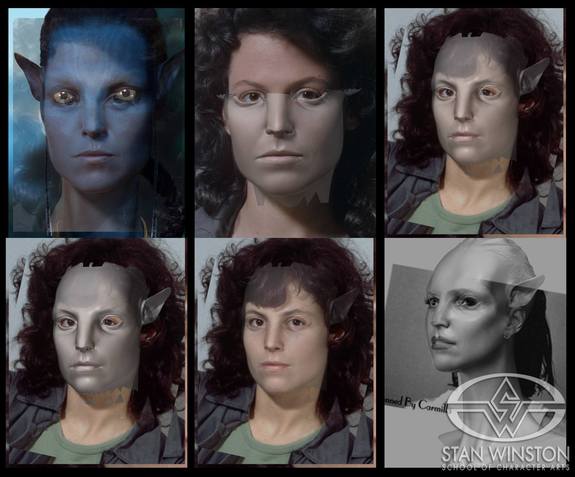 (Artists at Stan Winston Studio brought pictures of Sigourney Weaver from Alien into ZBrush and used them to sculpt her avatar.)
 (Finished Grace sculpture for lighting reference.)
Transforming Jake Sully From Human to Na’vi
Jake Sully, a paraplegic former marine, replaces his deceased twin brother in the Avatar program.
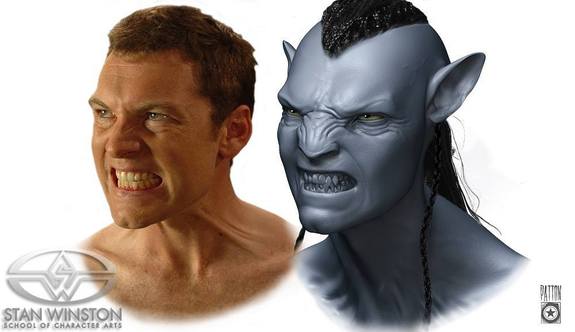 (Sam Worthington and his 3D avatar sculpture based on one of the photographs that Stan Winston Studio took for ZBrush sculpting.)
Jake's atrophied legs were prosthetics created by Stan Winston Studio. John Rosengrant took a mold from the legs of a paraplegic who was approximately Sam's skeletal size, and then created rubber legs.
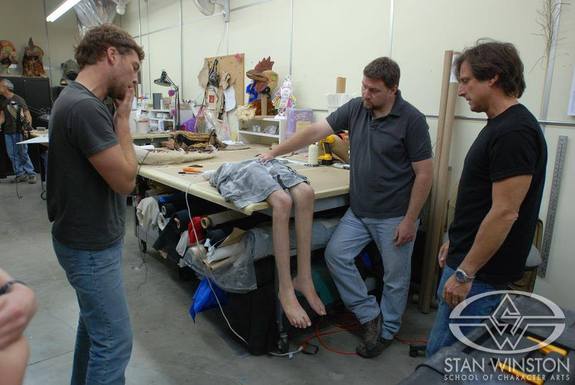 (Sam Worthington, Ted Haines, and John Rosengrant regard the prosthetic atrophied legs.)
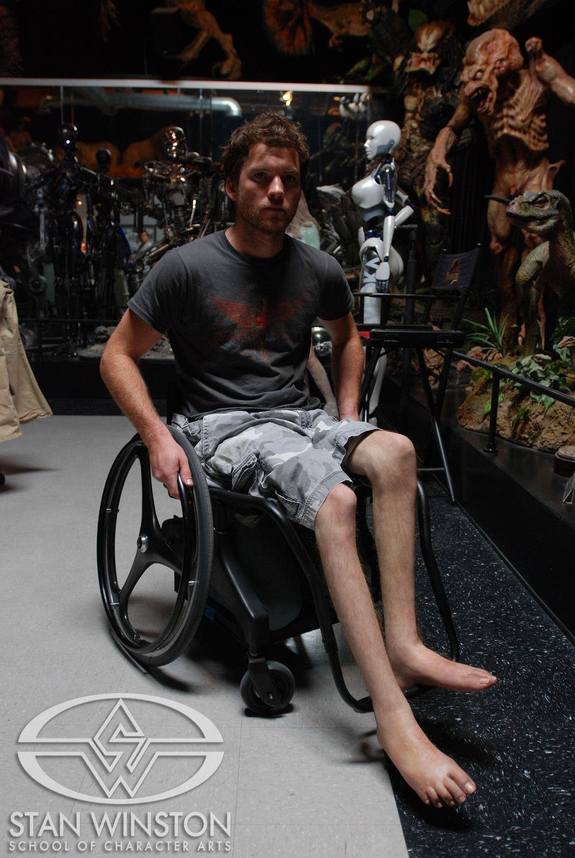 (Sam Worthington at the Stan Winston Studio during a test of the prosthetic legs.)
Sam's actual legs were tucked down through the chair and digitally removed in post-production.
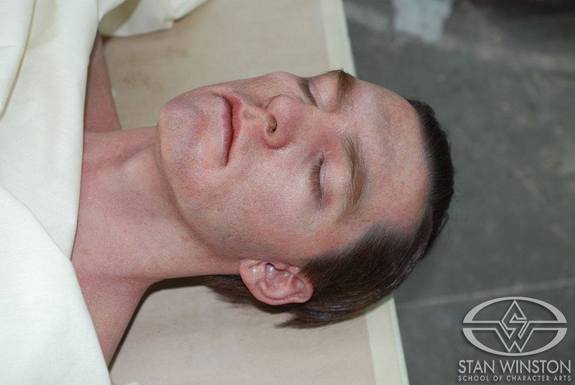 (For Tom Sully, a fake head also made by Stan Winston Studio based on the lifecast of Sam Worthington.)
“We always try to create iconic characters that will be remembered and stand out. We’re not so much creating effects but creating characters: That was Stan’s success and where we’re following up. Although the majority of work today may be accomplished digitally, as with Avatar, we feel we bring a lot to the table by designing the characters. They can be full-scale, interactive puppets; hybrids that are part puppet and part CG; special effects makeup; old-fashioned working props; and specialty props like the Amp Suit.” - John Rosengrant
More Avatar (2009) Behind-the-Scenes Content:
Avatar: Species of Pandora - Go Behind the Scenes at Stan Winston Studio - Part One
Making a Hybrid Character: Building Avatar's AMP Suit and Scorpion
Courses with the Creators of Avatar
- Hybrid Characters: Blending Practical & Digital FX with John Rosengrant
- Creature Design - How To Sculpt Character Maquettes with Jordu Schell
- Creature Design - Maquette Painting Techniques with Jordu Schell
- Making Creature Eyes with John Cherevka
- How To Make Eyes: Puppets, Masks & Makeups with John Cherevka
- Advanced Creature Teeth: Prosthetic Dental Appliances - Part 1 with John Cherevka
- How To Make An Eye Mechanism - Design, 3D Printing & Assembly with David Covarrubias
- Animatronic Control Systems - Arduino Programming Basics Part 1 with David Covarrubias
- Lab Work For Animatronic Characters Part 1: Making A Mechanical Core with Cory Czekaj
- Character Makeup - How To Run Foam Prosthetic Appliances with Cory Czekaj
- Character Makeup - How To Run Silicone Prosthetic Appliances with Cory Czekaj
- Silicone Sculpting & Patching Part 1: How To Seam & Patch A Silicone Mask with Chris Grossnickle
- Silicone Sculpting & Patching Part 2: How To Patch A Prop Body with Chris Grossnickle
- Silicone Sculpting & Patching Part 3: How To Seam & Patch A Silicone Makeup with Chris Grossnickle
- Metallic Painting Techniques - Robot Finishes (Terminator) with Rob Ramsdell
- Metallic Painting Techniques - Real Metal Effects (Predator) with Jamie Grove
- Platinum Silicone Painting Part 1 with Jamie Grove
- Silicone Painting: Realistic Flesh Tones with Jamie Grove
- How To Body Cast And Create A Custom Mannequin On A Budget with Ted Haines
- Foam Fabrication Texturing Techniques with Ted Haines
- Muscle Suit Fabrication Part 1 - Design, Pattern & Fabricate Muscles with Ted Haines
- Maquette Painting Techniques with Trevor L. Hensley
- Hybrid Character Design: Practical To Digital with Christopher Swift
- How To Make A Stone Mold with Gary Yee
- Character Hairwork: Hair Laying for Prosthetic Makeup with Aimee Macabeo
- Introduction to Hair Knotting with Mike Ornelaz