By Michael Martin
A Marvel-ous Decade
It’s been ten years since Tony Stark, charmingly played by Robert Downey, Jr., revealed that he, indeed, was Iron Man. Since then Marvel Studios has produced one crowd-pleasing superhero adventure after another; Captain America, Spider-Man: Homecoming, Thor, Doctor Strange, Black Panther, Guardians of the Galaxy, along with their sequels. And all of these storylines have now converged in one film: Avengers: Infinity War.
Jump To Section
- Clash of the Titans
- Bringing on Legacy Effects for Avengers: Infinity War
- Making Superhero Suits, Makeups, and Maquettes
- Building Iron Man’s Mark 50 Suit
- Facing a Muscular Challenge With Thor’s Arm Armor
- Making Improvements on The Winter Soldier
- Falcon Flies Again
- Modifying the Guardians of the Galaxy Makeups
- Adding Realism to CGI for Physical Maquettes
- A Super Team
- Getting Better All the Time
- Listen to the Audio Interview with Lindsay MacGowan & Shane Mahan
 (The Marvel Universe Superheroes take on Thanos in Avengers: Infinity War. Source: Marvel Studios.)
Clash of the Titans
With a Who’s Who of beloved Marvel characters, the Avengers (and others) would meet their greatest challenge in a twelve-foot-tall alien named Thanos. His goal? To eliminate half of the universe’s population, ostensibly to save it from itself. To achieve this, the homicidal alien is on a mission to acquire six Infinity Stones that will give him control over everything. Everything! Did I mention that Marvel has been building up to this moment for a decade?
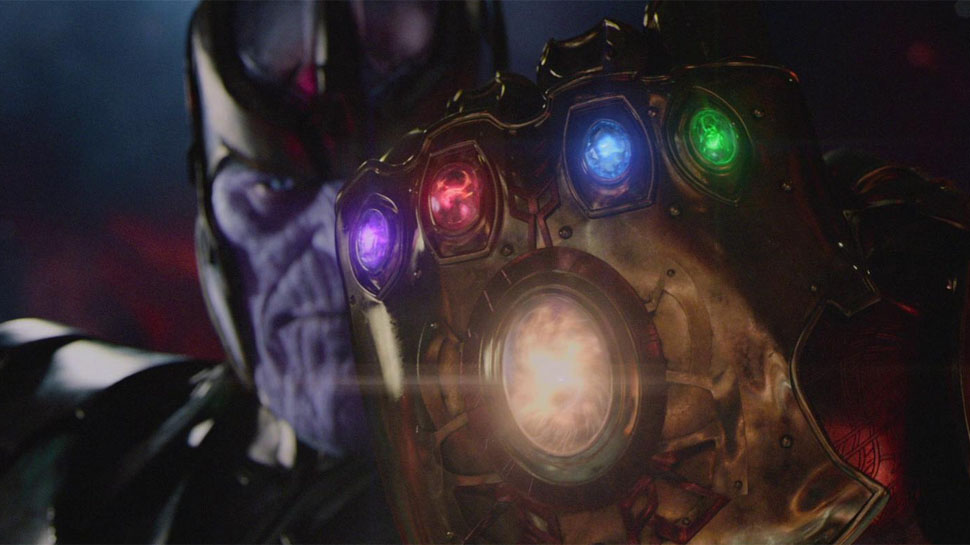 (Thanos wears the all-powerful Infinity Gauntlet. Source: Marvel Studios.)
Bringing on Legacy Effects for Avengers: Infinity War
On set, the pivotal Thanos character would be portrayed by Josh Brolin in a performance capture rig, and then realized on screen as a fully digital character. But not everything in this latest adventure in the Marvel Universe would be digital. Besides the legacy between Thanos and his adopted daughter Gamora, there would be another “legacy” at play in Avengers: Infinity War. That would be Legacy Effects, one of Hollywood's premier character creation studios.
Making Superhero Suits, Makeups, and Maquettes
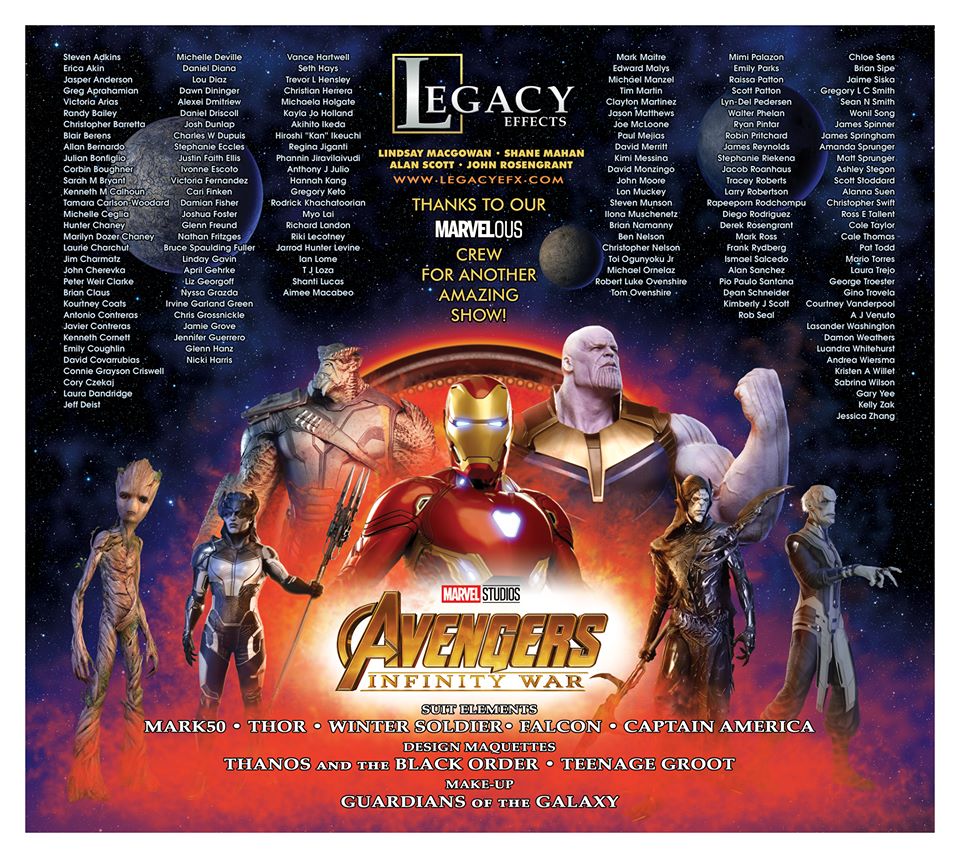
For Avengers: Infinity War, the team at Legacy Effects would provide suit elements for the Iron Man Mark 50, Thor, The Winter Soldier, Falcon, and Captain America. They would also be responsible for the makeups for the Guardians of the Galaxy characters and, finally, they would supply highly detailed scale maquettes of Thanos and other CG characters to be used as on-set lighting reference for the digital artists further along the pipeline.
Legacy Effects co-founders Shane Mahan and Lindsay MacGowan would speak with SWSCA about their decade-long involvement with the Marvel Cinematic Universe, and their latest project, Avengers: Infinity War.
Building Iron Man’s Mark 50 Suit
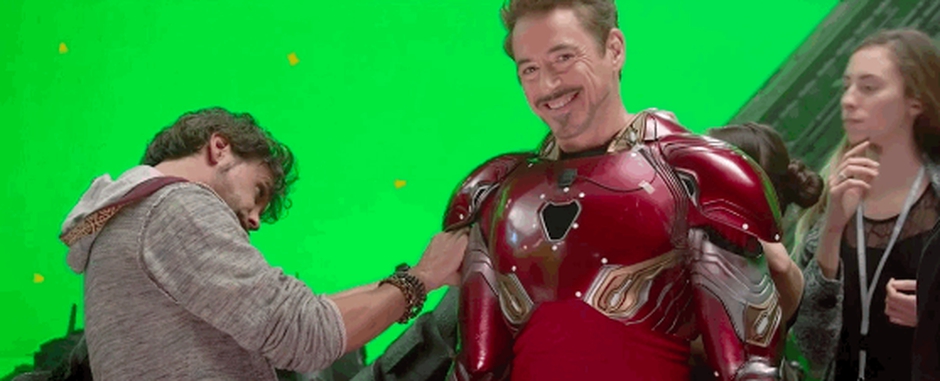
You can’t have an "Iron Man" without the suit; it’s inherent in the name. The iteration of the Iron Man suit featured in Avengers: Infinity War, the Mark 50, would be Stark’s most advanced yet, featuring liquid metal and nano-technology, and resulting in a more organic look than previous Iron Man suits. Despite the extensive digital artistry that went into bringing the suit to life for the film, as with all previous Iron Man suits, there was still a strong need for practical suit elements that Robert Downey Jr. could wear on-camera.
 (Left: Legacy Effects co-founder Shane Mahan touches up the paintwork on the Mark 50 suit. Right: Finished Mark 50 suit elements, including the chest, shoulders, and repulsor ray gauntlets. Images courtesy Legacy Effects.)
Shane Mahan says there’s no single formula that can be applied to every Iron Man suit. “Every suit has been built and dealt with differently,” starting with the original Mark 1, Mark 2, and Mark 3 suits Mahan & MacGowan worked on while still supervisors at Stan Winston Studio back in 2008. However, as the years have passed, one thing has remained consistent: the team at Legacy have, when possible, tried to replace heavier, rigid materials with light-weight, flexible materials. Lindsay MacGowan would add that it was cool to take the Mark 50 “a step further in the construction process.” Using the new semi-flexible materials, however, would require the team to figure out different painting techniques and materials to make sure that the suit's sleek paint job wouldn’t flake off.
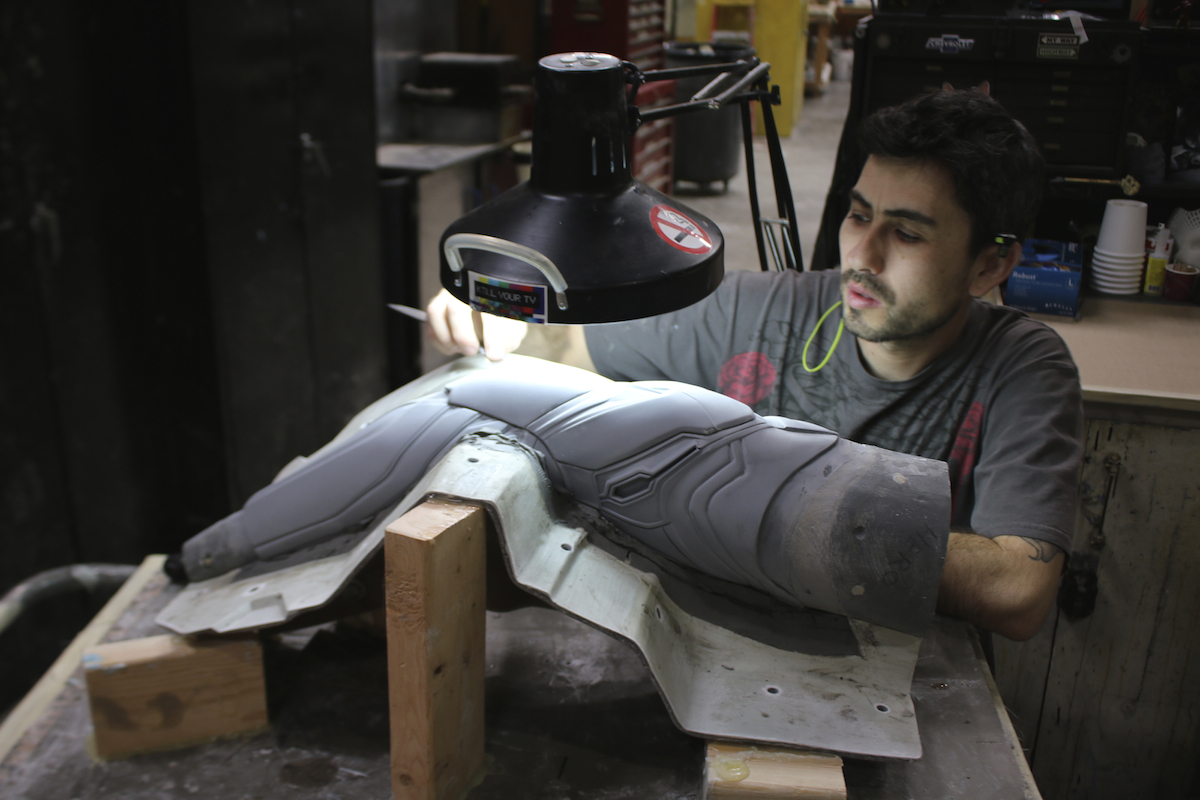 (Master moldmaker Tony Contreras works on one of the arms of the Mark 50 suit. Image courtesy Legacy Effects.)
In addition, with every new film featuring the character, Iron Man actor Robert Downey, Jr. would request changes he would like to have made to the suit and helmet.
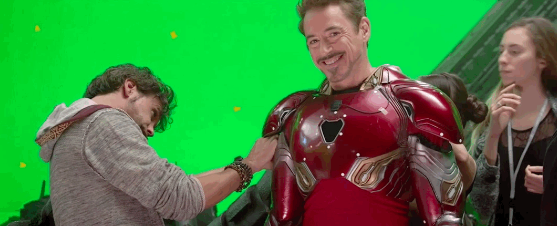 (Legacy Effects' On Set Suit Supervisor for Avengers: Infinity War, Christopher Swift, helps Robert Downey, Jr. into the Mark 50. Source: Marvel Studios.)
 (Dave Bautista, Tom Holland, Robert Downey Jr., and Chris Pratt on the set of Avengers: Infinity War. Source: Marvel Studios.)
Things like making the arms easier to remove and being able to take off the helmet’s neck piece. Shane says, “So we'll make those modifications based on Robert's requests. Which is fair because sometimes he has to be in the suit all day long.”
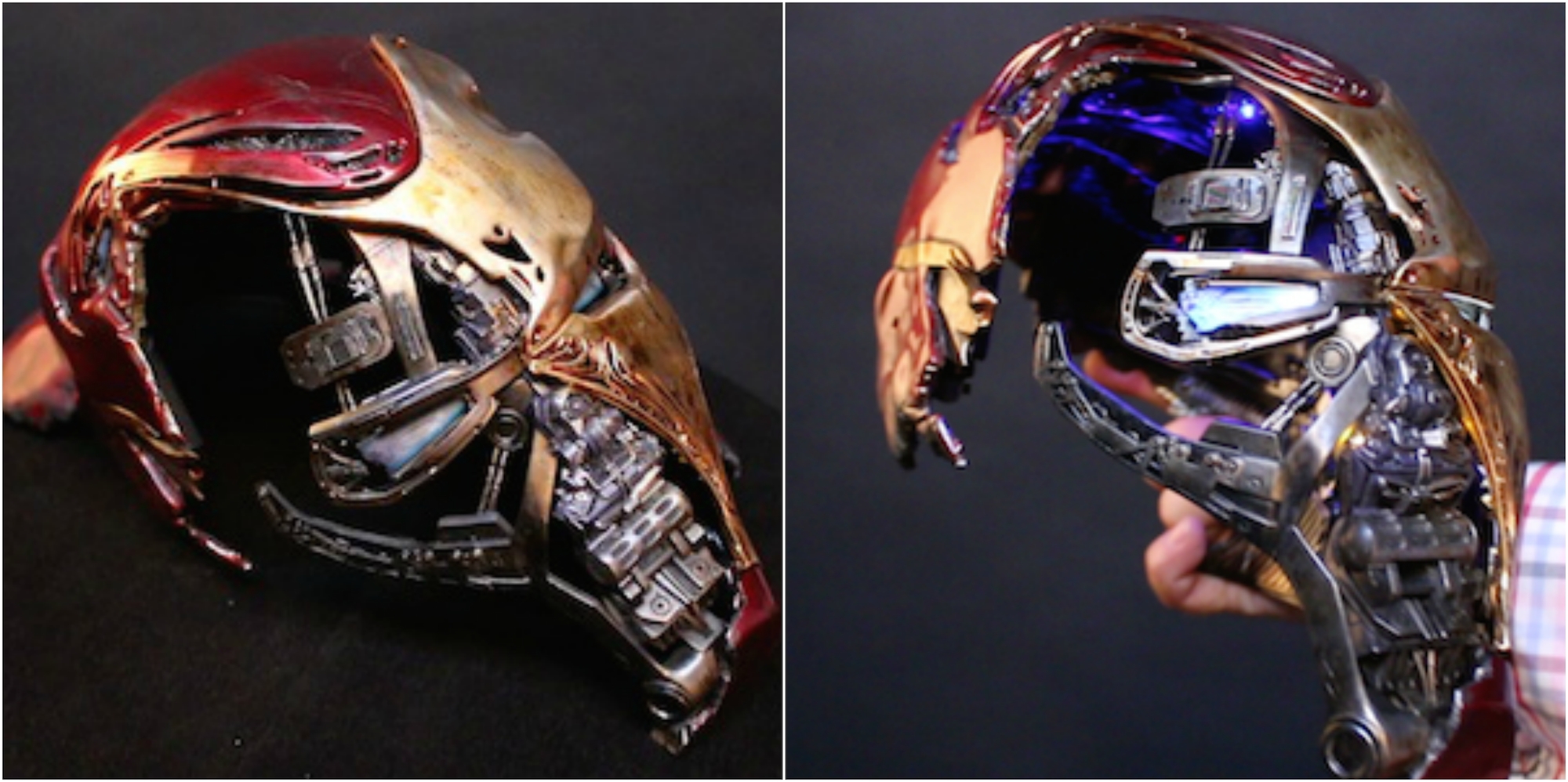 (Close-up shots of the damaged Mark 50 helmet seen in Avengers: Infinity War. Images courtesy Legacy Effects.)
Facing a Muscular Challenge With Thor’s Arm Armor
While it might seem like constructing Thor’s armor accoutrements would be a relatively straightforward process, Legacy would find them to be quite challenging. In fact, Mahan would say that building Thor’s arm armor would be, in some ways, harder than making Tony Stark’s suit due to the fact that the size of Chris Hemsworth's arms would change so drastically when he would flex his muscles.
 (Chris Hemsworth, as the Norse god Thor, in Avengers: Infinity War. Source: Marvel Studios.)
The Legacy team didn’t want to impede Hemsworth's movement or cut off his circulation, so extra effort went into building the arms. Lindsay says, “We spent a lot of time traveling back and forth, taking measurements and doing prototypes, and coming up with the right balance of muscle versus flexible material.”
Making Improvements on The Winter Soldier
Another returning character in Avengers: Infinity War would be Bucky Barnes AKA "The Winter Soldier" played once again by actor Sebastian Stan. Lindsay MacGowan would tell SWSCA that creating Bucky’s metallic arm was "really challenging" and was cast in a flexible urethane, then painted with a mirror-like flexible paint.
 (Artist Jamie Grove highlights metallic accents on The Winter Soldier's cybernetic left arm. Image courtesy Legacy Effects.)
MacGowan would also add, “We’re constantly improving what we do.” He revealed that the discoveries made on one build will ‘cross-pollinate’ to other assignments. As an example, he says work on The Winter Soldier's arm would inform the processes they would use on Nebula’s cybernetic arm.
Falcon Flies Again
Anthony Mackie would reprise his role as Falcon for Avengers: Infinity War. Lindsay would say that the Falcon costume was very similar to the prior films, albeit with a darker paint scheme. As with previous iterations, the suit would be a combination of hard pieces and fabric elements, some of which were provided by costume designer Judianna Makovsky and her crew.
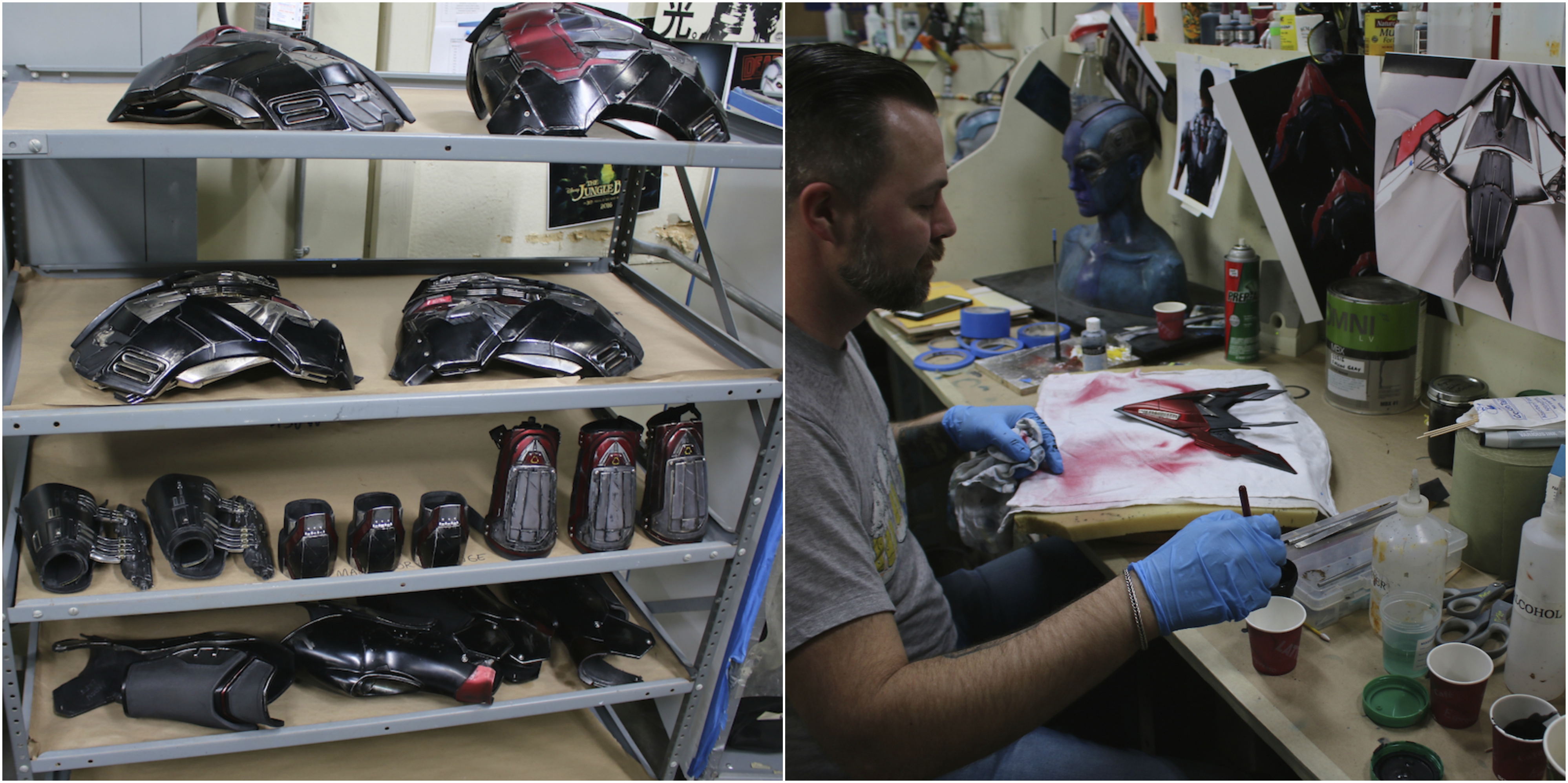 (Left: Shelves with Falcon armor and backpacks. Right: Ryan Pintar paints a lighting reference version of Falcon's drone. Images courtesy Legacy Effects.)
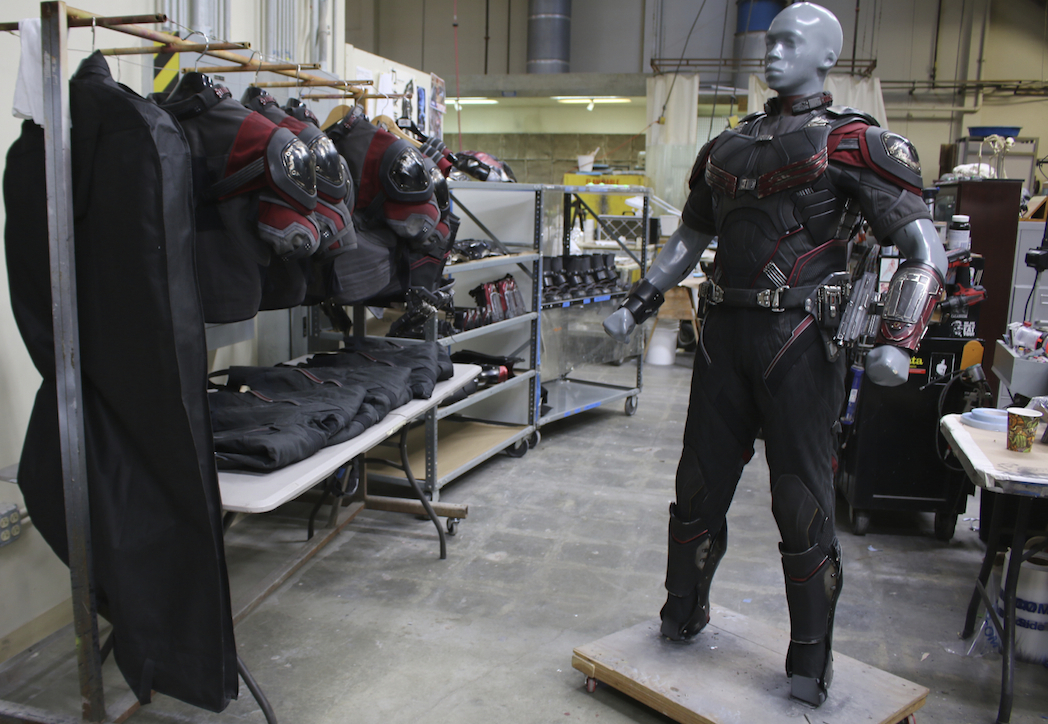 (Falcon suit elements ready to go to set. Image courtesy Legacy Effects.)
Modifying the Guardians of the Galaxy Makeups
Legacy Effects would also be responsible for the Guardians of the Galaxy makeups in Avengers: Infinity War. Having worked on the makeups for Guardians of The Galaxy 2, Mahan would say that the mandate was to maintain consistency, so the makeups didn’t change much from Guardians of the Galaxy 2 to this film, “The template had already been set."
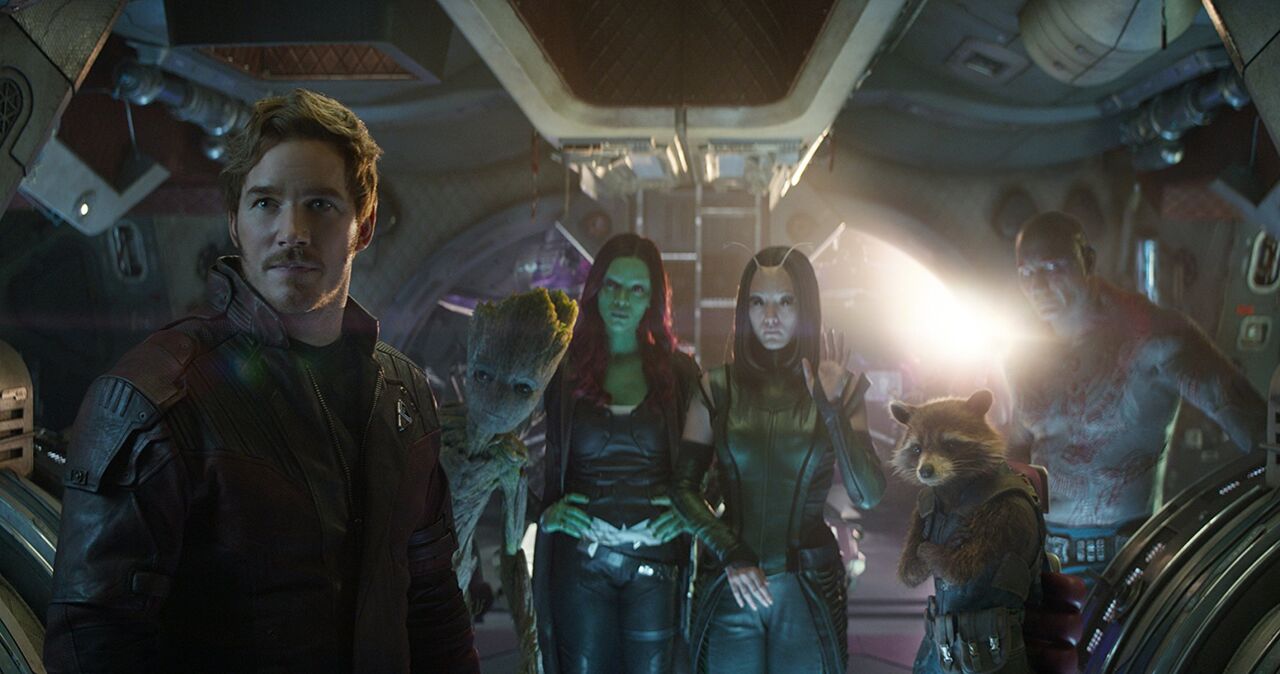 (Guardians of the Galaxy join the fray in Avengers: Infinity War. Source: Marvel Studios.)
For Guardians 2, Legacy Effects had built upon the work that David White and his team had done on the first film, and then made modifications to the makeups according to the input of the filmmaking team. A major part of that would involve reducing the application and removal times. As an extreme example, the Drax makeup on David Bautista would be cut from approximately three hours to just under two.
 (Scott Stoddard sculpts the Young Gamora makeup at Legacy Effects. Right: Actress Ariana Greenblatt as Young Gamora. Images courtesy Legacy Effects.)
The Legacy team would also provide the appliances for Zoe Saldana’s Gamora character (and for her younger self for a flashback sequence), and they would create a new arm for Nebula, played by Karen Gillan. The arm design would be tweaked a little bit and it would also be made more comfortable.
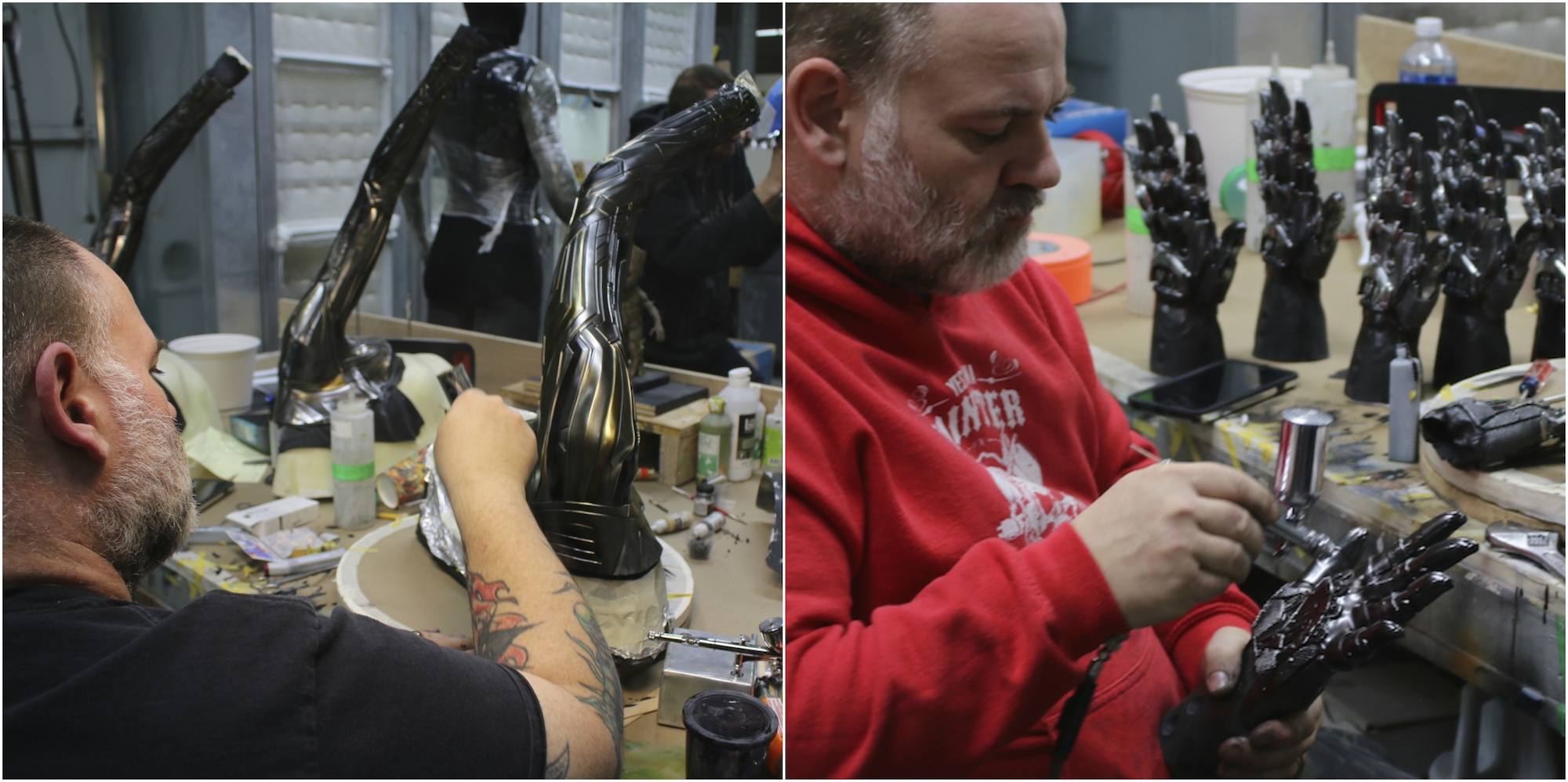 (Legacy Effects artist John Cherevka paints Nebula's cybernetic arms and hands. Images courtesy Legacy Effects.)
The biggest challenge with Nebula would be her bald head. In the original Guardians film, Gillan’s head had been shaved. This time, her red locks would remain, and the artists at Legacy would have the challenge of fitting all of her hair under a tight-fitting bald cap.
 (Left: Mario Torres Jr. sculpts the Nebula prosthetics on a lifecast of actress Karen Gillan. Right: Ryan Pintar paints Nebula's ultra form-fitting skull cap. Images courtesy Legacy Effects.)
Adding Realism to CGI for Physical Maquettes
Not only would Legacy Effects be responsible for the makeup effects and superhero suits for Avengers: Infinity War, they would also contribute an ultimately unseen, but extremely important tool for the Marvel filmmakers: maquettes. Legacy would build maquettes of Thanos, Cull Obsidian, Teenage Groot, and others.
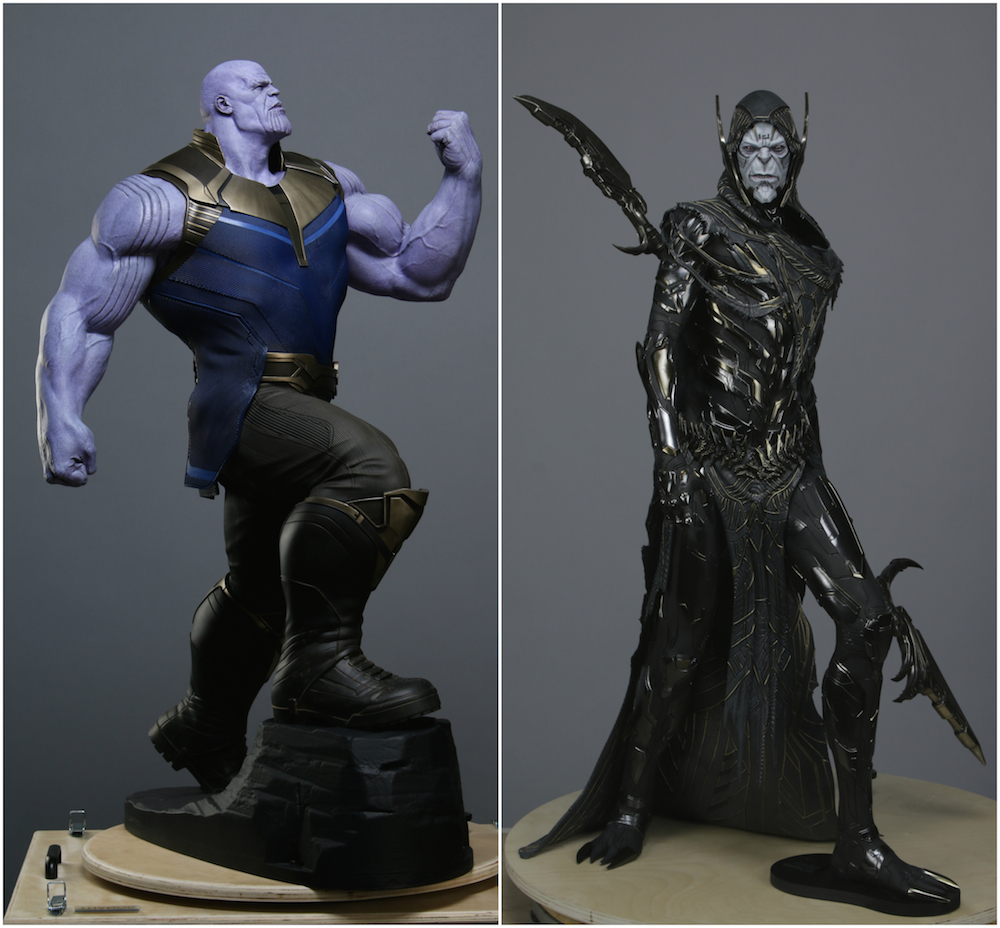 (Legacy Effects' half-scale Thanos and Corvus Glaive reference maquettes. Images courtesy Legacy Effects.)
These highly detailed figures would be used extensively on set to show the director, director of photography, and other key members of the team how the CG characters would look on film, and they would also help CGI artists to improve the realism of their digital characters, by showing them how light reflected off the character in the real world. Along with the maquettes, elaborate boxes were designed to transport the figures to and from the set while keeping them concealed from prying eyes.
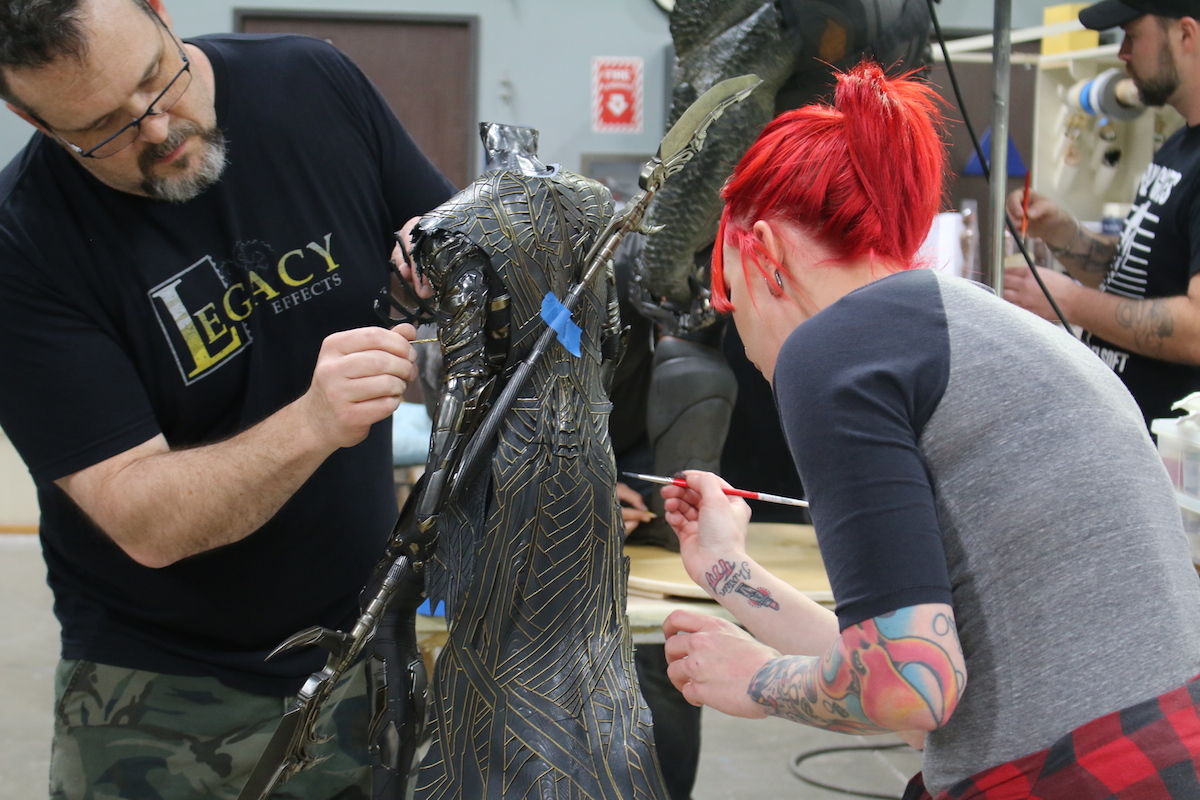 (Trevor Hensley and Chloe Sens paint the Corvus Glaive maquette. Images courtesy Legacy Effects.)
The large scale of the maquettes, three to four feet tall, or roughly half-scale, was deemed necessary because, unlike with smaller maquettes, half-scale maquettes refract light very similarly to full-scale figures. The larger-scale maquette approach also made it possible for the Legacy artists to include a greater level of detail and create more intricate paint jobs, which helped guide the visual effects artists down the line. “The amount of detail that goes into them is incredible,” said Lindsay. They were “stunning, gorgeous to see in real life.”
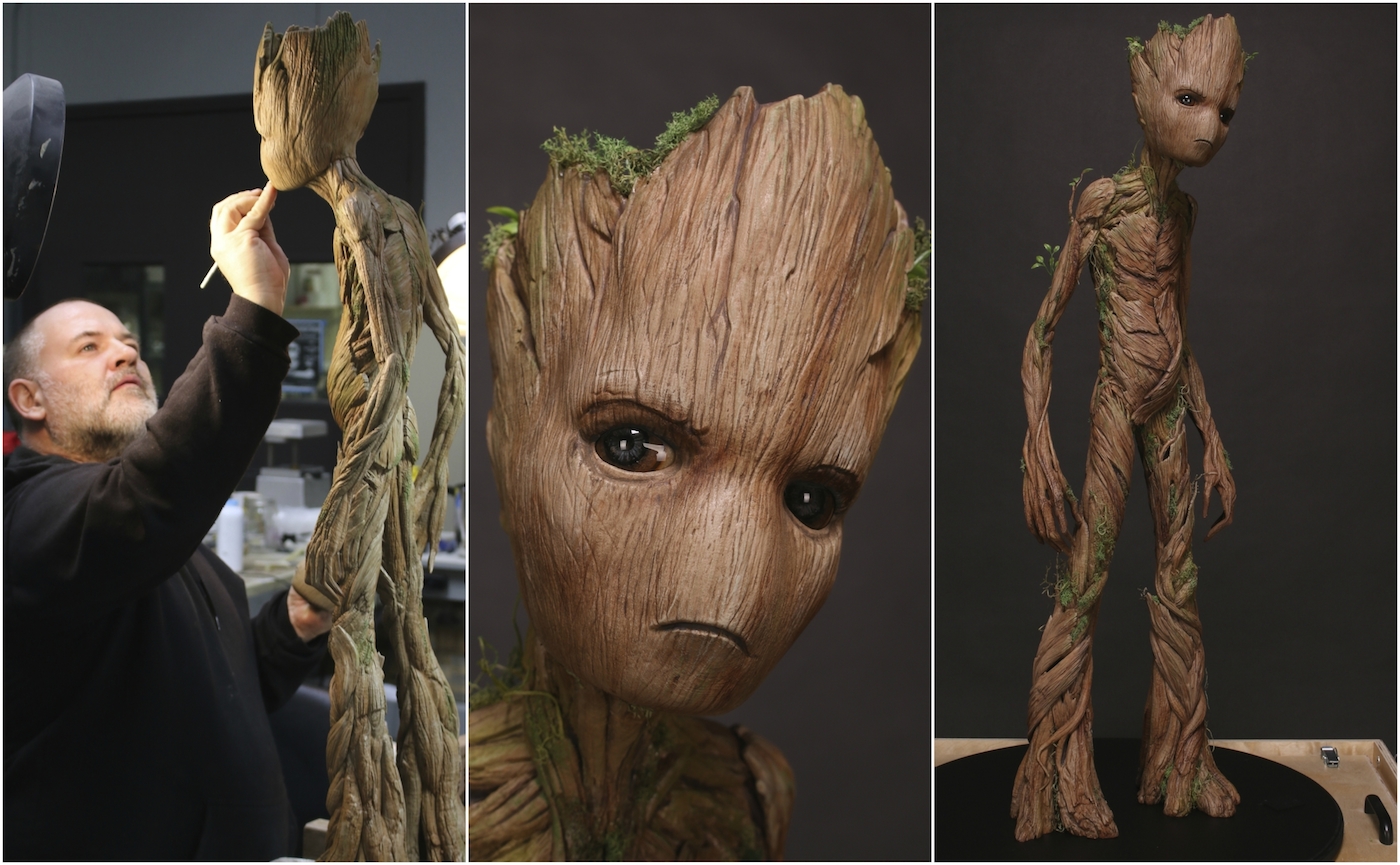 (Left: John Cherevka paints the Teenage Groot maquette. Center & Right: The completed maquette. Images courtesy Legacy Effects.)
A Super Team
Co-founder Shane Mahan describes what they do at Legacy Effects as the physical branch of visual effects. “It encompasses a lot of things, including costumes, props, makeups, and maquettes.” On Avengers: Infinity War he would say they, "got to do it all.” But with a project of this size, no department or team works alone. Shane says they have a really cohesive relationship with the Viz Dev team at Marvel Studios, led by Ryan Meinerding. Character designs would come from Ryan and his team, the artists at Legacy Effects would then modify those designs and bring them into the real world. And finally, Legacy Effects team members Brian Sipe and Christopher Swift would supervise the on-set makeup and superhero suit crews, respectively.
Getting Better All the Time
Shane Mahan would recall that one of the best compliments Legacy received about their work would come from Avengers: Infinity War Executive Producer and Marvel Studios president Kevin Feige. Once the Iron Man Mark 50 suit had been delivered and was lit on set, Feige would say that it was the best looking one so far. Shane smiles at the memory, “That was good to hear.” What a Legacy.
Listen to the Audio Interview with Lindsay MacGowan & Shane Mahan