
By Michael Martin
Monster Maker Interview With Practical and Digital Artist Gino Acevedo

From painting to digital effects, Gino Acevedo has done it all. Known for his detailed paint jobs on films such as The Lord of the Rings and the incredible digital texturing work on Avatar and War for the Planet of the Apes, the gregarious Gino Acevedo sat down with SWSCA for an in-depth look at his career in both practical makeup effects and the world of digital effects.
For more stories and secrets from the set, read on!
Jump To Section
- Gino Acevedo’s Lifelong Love for Monster Movies
- Making Masks and Opening Doors With Imagineering, Inc.
- Moving West and Working at NBC
- A Door Opens for Gino Acevedo at ADI
- Working on Alien 3
- Sculpting a Naked Stallone for Demolition Man
- Building Puppets for Death Becomes Her
- Creating Jack Nicholson’s Werewolf Transformation in Wolf
- Working With Steve Johnson on Species
- Painting Ed
- Spawn, KNB EFX, and Men in Black
- Painting Aliens for Patrick Tatopoulos
- Painting the King of the Monsters
- A Big Life Change for Gino Acevedo With The Lord of the Rings
- Working With Weta Workshop
- Sculpting The Fellowship of the Ring Orcs
- Making Gimli
- Blending the Practical and the Digital for LOTR
- Designing Looks for 30 Days of Night Vampires
- Creating Artwork for Contact Lenses
- Gino Acevedo’s Transition to Digital Artist
- Making Tintin
- Creating Skin Textures for Avatar
- Bringing Digital Characters to Life on War for the Planet of the Apes
- Chimps on Horseback
- Creating King Louie for The Jungle Book
- Where Practical Meets Digital
- Young Gino’s Nightmares
- More on Gino Acevedo
Gino Acevedo’s Lifelong Love for Monster Movies
“I always loved monster movies,” says makeup effects and digital artist Gino Acevedo. Born in Phoenix, Arizona, the young Gino used to watch his beloved monster movies every Saturday morning on television. There, he would be glued to the screen as Universal’s greatest paraded past; Frankenstein, The Wolf Man, and Creature from the Black Lagoon.
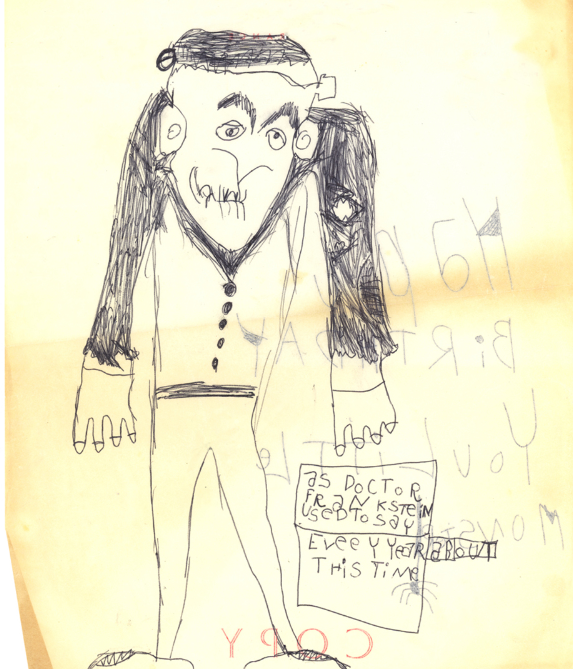 (The Frankenstein Monster as imagined by a young Gino at age 5!)
Even before starting school, Gino would draw his beloved monsters. His favorite was always the Frankenstein Monster, which he calls, “…the greatest monster ever.” He says he was always the kid in school that was drawing sick and twisted things while everyone else was drawing animals, mountains, and flowers. Who knew that making monsters could turn into a career?
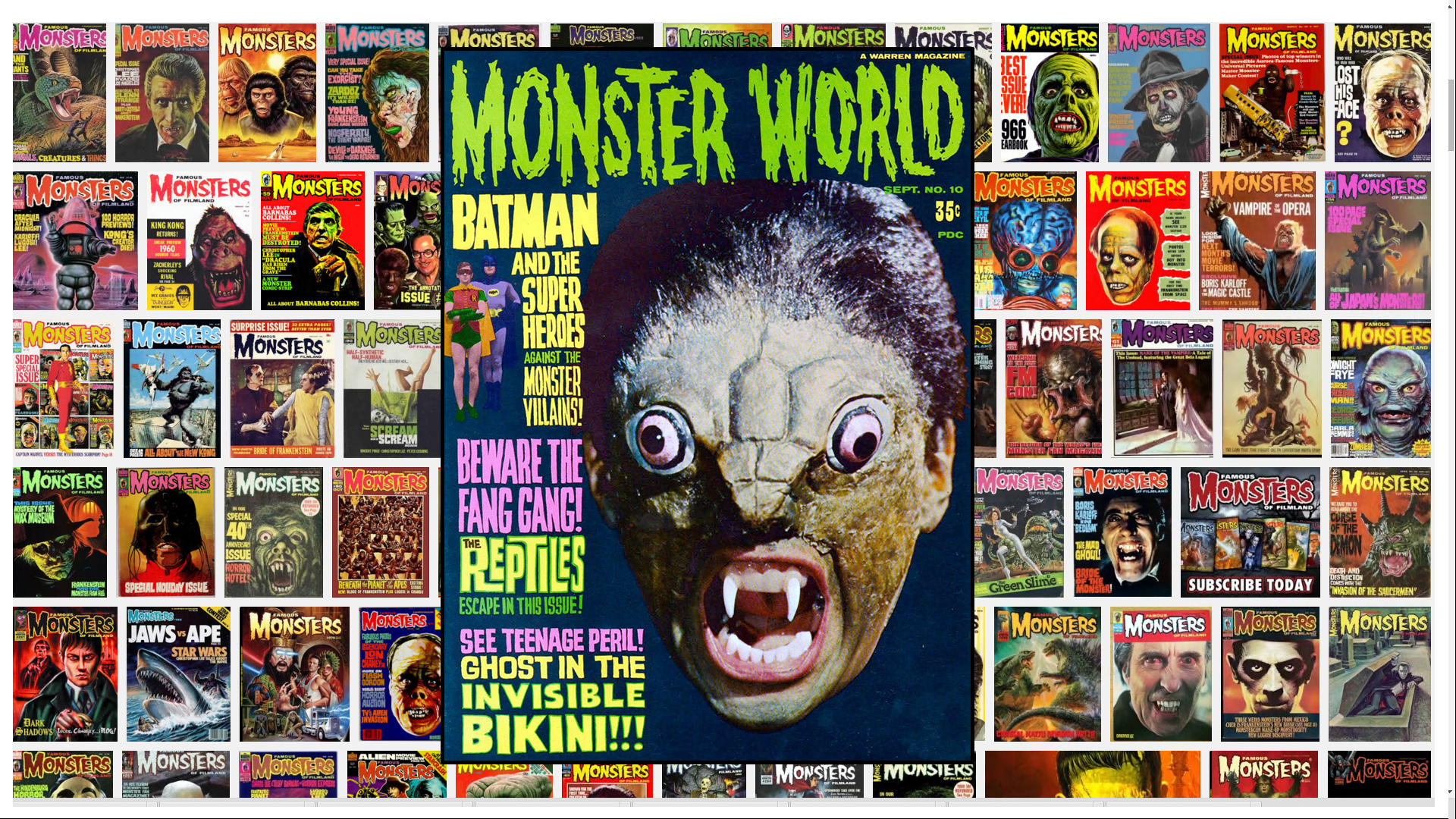 (Monster World magazine cover sporting The Reptile that so influenced a young Gino Acevedo.)
Another big influence on the young Gino was a magazine called Monster World. Specifically, an issue that had an image of a Hammer Films production called The Reptile. After seeing it in the supermarket, Gino remembers begging his mother to buy him the magazine, “Please, I'll clean my room. I'll do the dishes.” Finally, Gino’s mother caved. Inside the issue, Gino remembers the photos and stories as unbelievable. There were all kinds of images of how movie monsters were made. “It was just mind-blowing!”
Making Masks and Opening Doors With Imagineering, Inc.
When Gino was eighteen, his love of all things monstrous led him to interview for a job at Phoenix-based Halloween manufacturer called Imagineering, Inc. which produced fake noses, scar wax, tubes of vampire blood, and the ever-popular plastic vampire teeth. And also masks. Monster masks.
Wearing his graduation suit, Gino showed his monster drawings to the owner of the company, Larry Liff. According to Gino, that meeting really changed his life.
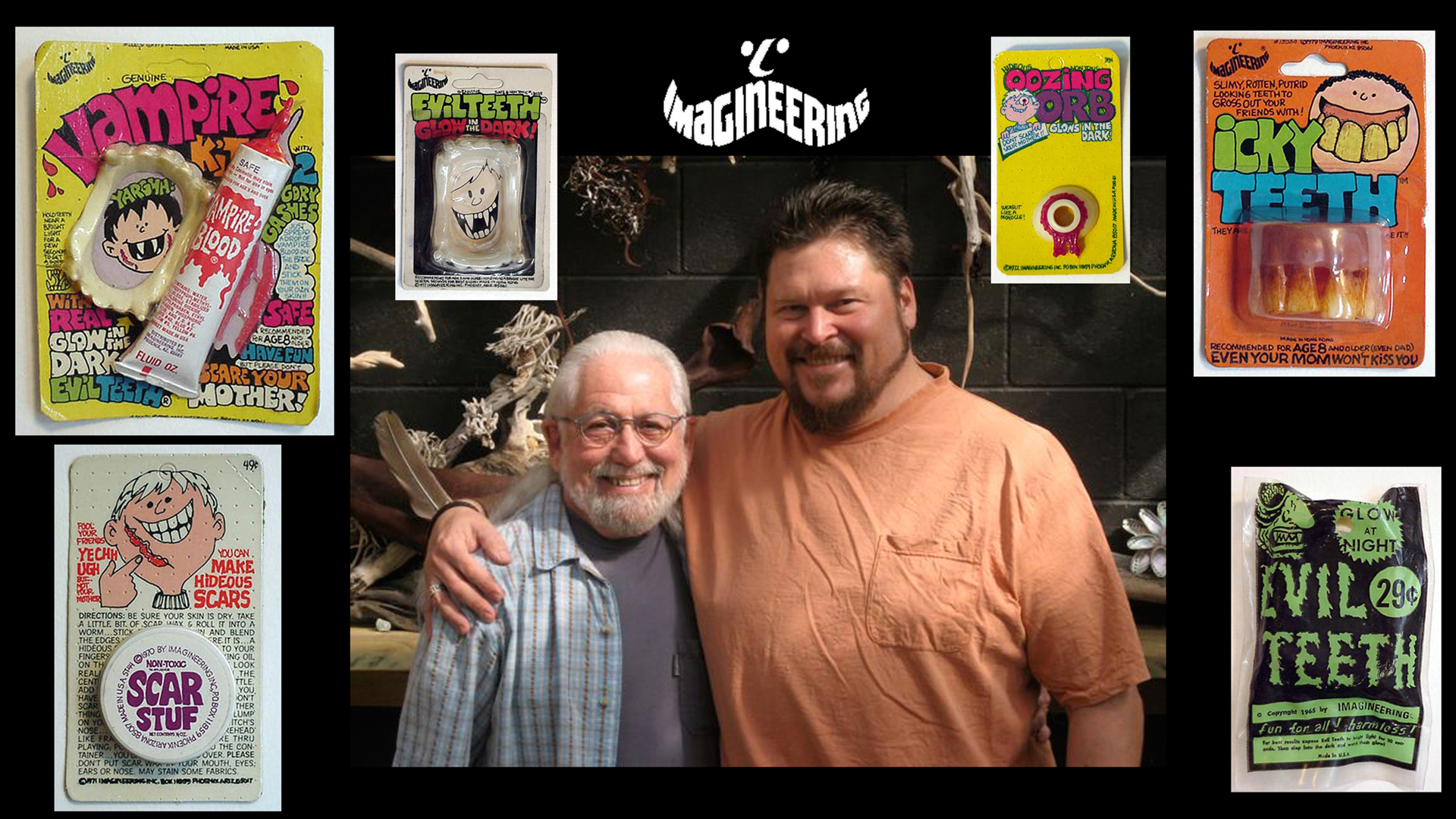 (Imagineering, Inc. owner Larry Liff with Gino Acevedo and an array of Halloween products created by Imagineering, Inc.)
Larry told Gino he did not have mask making jobs, but he offered Gino a job on the factory floor. Touring the facility, Gino remembers he, “…felt like Charlie and the Chocolate Factory!” The doors opened to reveal the production floor where one machine was making vampire blood, another the oozing orb eyes, and still another the plastic vampire teeth.
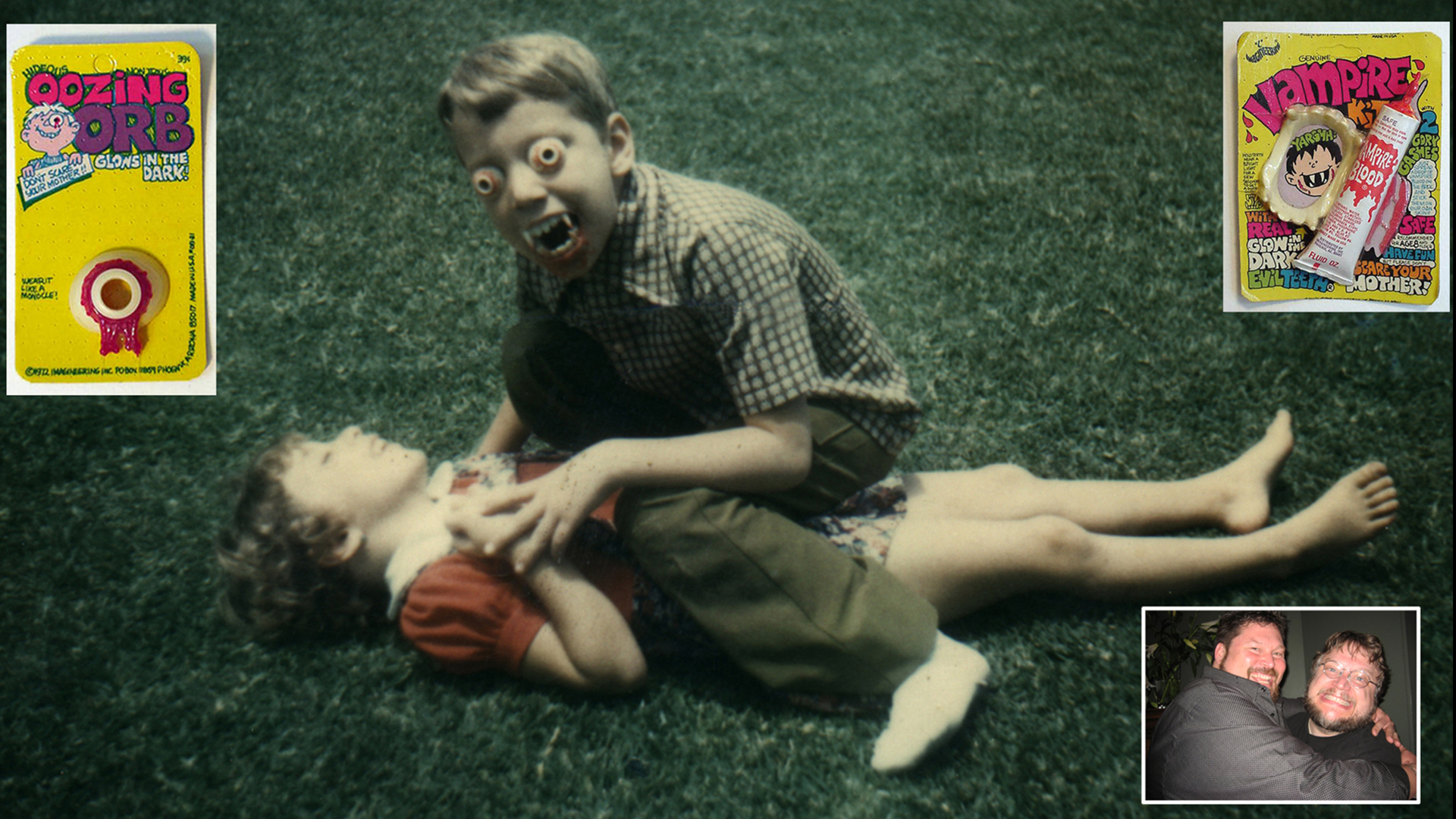 (An ad for Imagineering Inc. products: Oozing Orb Eyes, Vampire Teeth, and Blood! Inset: the products: an oozing orb; a set of teeth and a tube of blood; a more recent photo of Gino messing around with his friend director Guillermo del Toro.)
After six months of working on the production line, Gino was given his own little room in the R&D department. There, he was given clay, but didn't know how to sculpt it. He used the book, Techniques of Three-Dimensional Makeup by Lee Baygan as a guide to learn sculpting techniques. The masks he went on to create were primarily half-masks since those were easier for people to wear and more popular than full pullover masks.
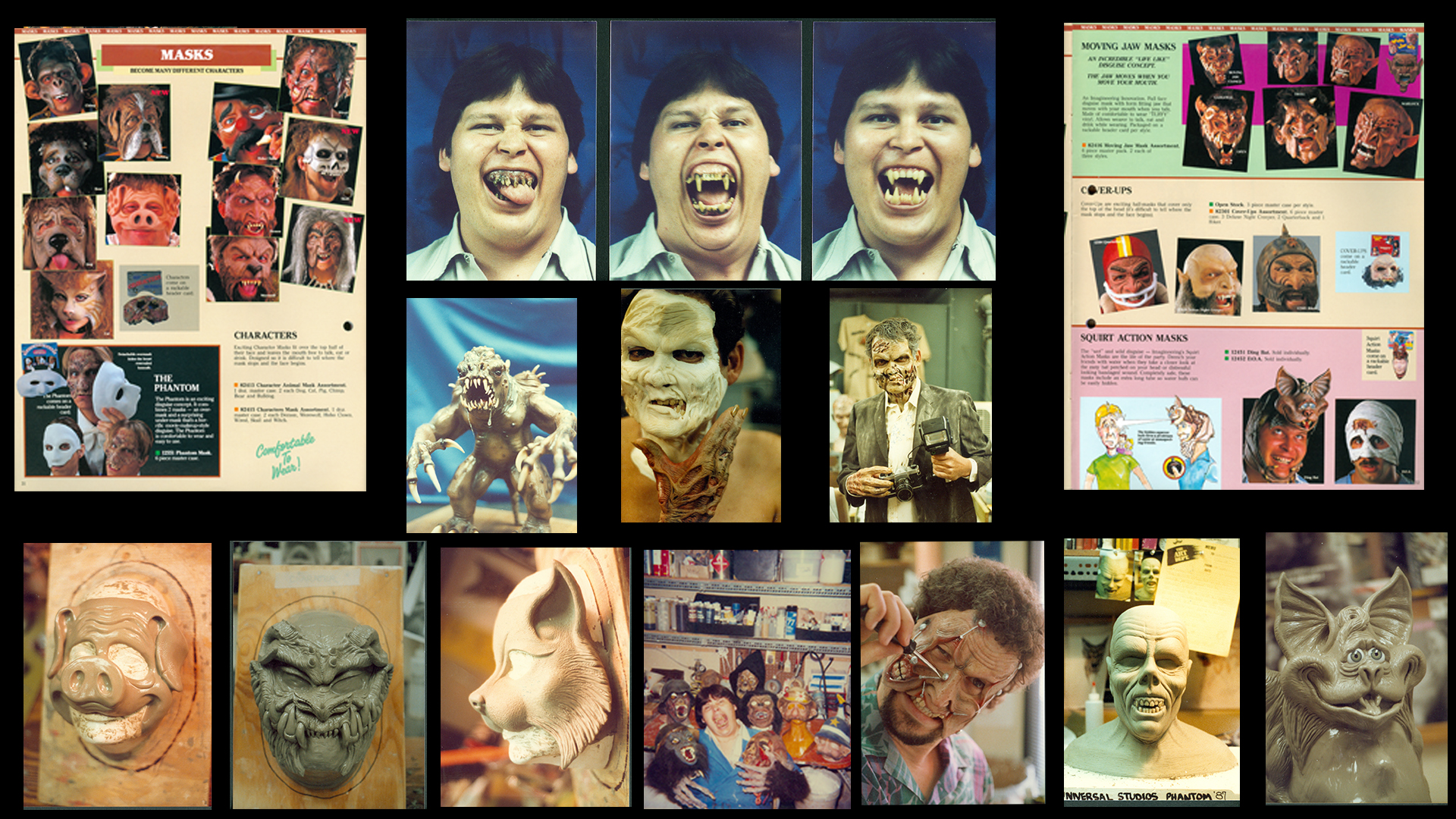 (Masks and more from Imagineering, Inc.)
At Imagineering Inc., Gino met Hollywood makeup artist Barry Koper, then head of makeup at CBS Studios. Koper would come to Phoenix to do makeup for Imagineering’s catalog shoot. To Gino’s luck and amazement, Koper was trained by John Chambers, the makeup artist that headed up the team that created the groundbreaking makeups on the original Planet of the Apes! From Barry Koper, Gino received invaluable tips on technique including the best sculpting tools to use. Eventually, Koper even introduced Gino to Chambers himself!
Moving West and Working at NBC
Barry Koper introduced Gino to other leaders in the makeup effects field as well, including Stan Winston, Rick Baker and Dave Miller. Though hesitant at first to move to Los Angeles, when Koper found him a job working with makeup artist Bob Scribner, head of the makeup department at NBC, Gino went West.
His first job at NBC was on a Dick Clark program called Friday Night Surprise. The idea was to make up stars to look like other famous actors and singers and then have the audience guess who they really were. Gino’s responsibility included making face casts of Alan Hale, Jr. and Bob Denver (Skipper and Gilligan from Gilligan's Island) and turning them into W.C. Fields and Mae West. The two sitcom actors then performed a routine from My Little Chickadee.
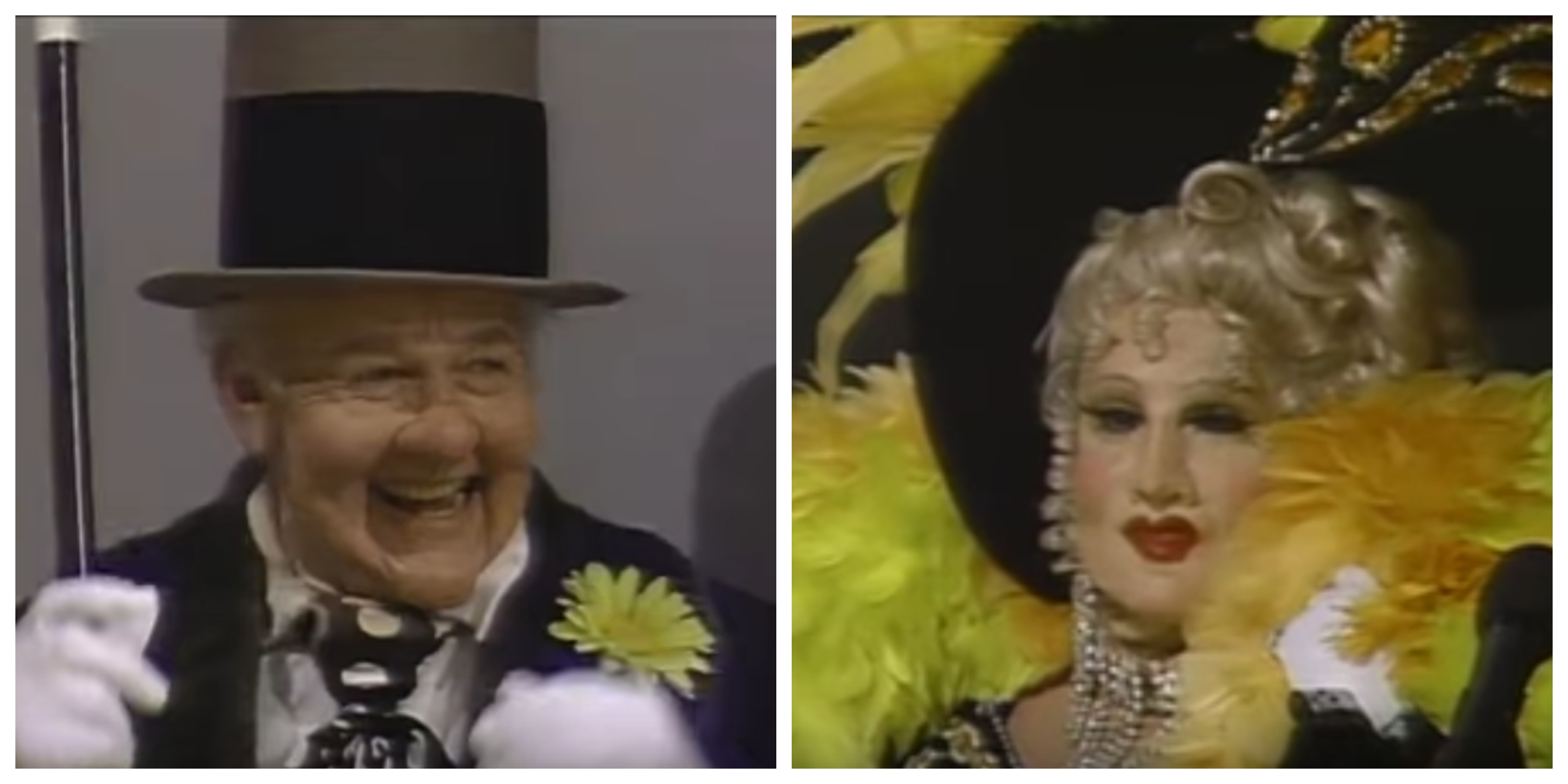 (Alan Hale, Jr. as W.C Fields and Bob Denver as Mae West made up for the Dick Clark program Friday Night Surprise. Images courtesy Dick Clark Productions)
Gino next worked with David Miller on A Nightmare on Elm Street 5: The Dream Child. While at David Miller Studio, Gino met a man who would become one of his greatest friends, Mitch Coughlin.
A Door Opens for Gino Acevedo at ADI
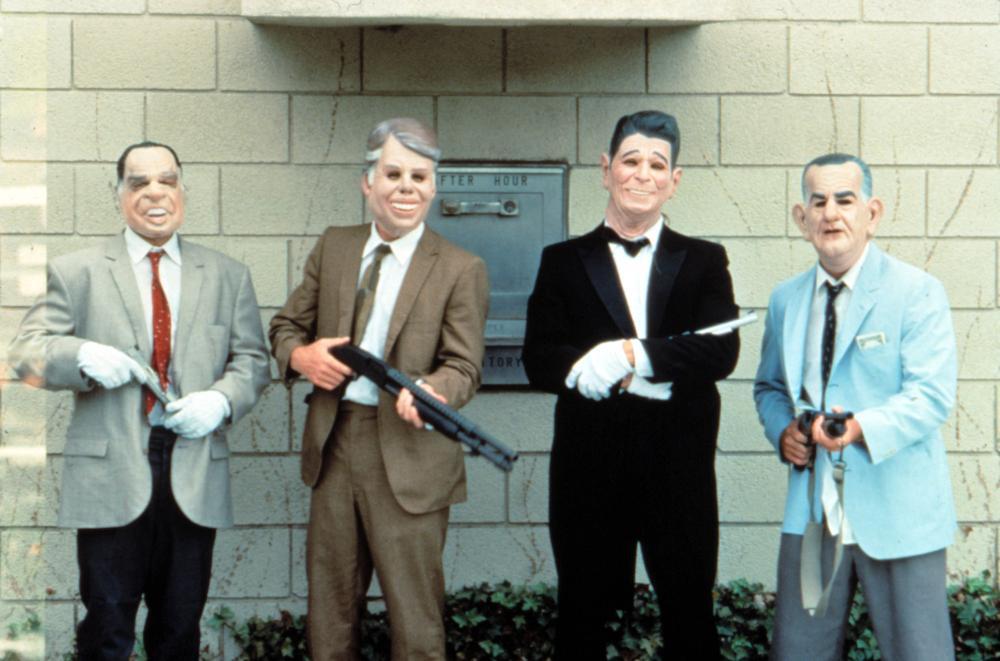 (The 'Ex-Presidents' from POINT BREAK. Both politicians and crooks. Image source 20th Century Fox)
Amalgamated Dynamics Inc. (ADI) was formed by former Stan Winston Studio supervisors Alec Gillis and Tom Woodruff, Jr.. The two supervising artists had been with SWS on Aliens, The Monster Squad and Pumpkinhead before starting their own company, with their first major project being the 1990 film, Tremors.
 (Images from Point Break. Gino sculpted the Jimmy Carter mask. Image source 20th Century Fox)
Gino’s first gig with ADI was working on the surfing bank robbers cult favorite Point Break starring Keanu Reeves and Patrick Swayze. Due to his experience in Halloween mask making at Imagineering Inc., Gino was assigned to work on the Jimmy Carter mask, one of several ex-president masks worn by the bank robbers.
Working on Alien 3
Gino’s next job at ADI was Alien 3. Originally, the assignment was expected to last just four months but that schedule would eventually extend to eight. While in London at Pinewood Studios, Gino was responsible for designing the paint scheme for the aliens as well as sculpting a tiny alien embryo with spikes and little tendrils for the scene where Ripley receives a chest X-ray. The alien embryo was attached to veins and can be seen in the film moving next to Ripley’s heart. “I had a blast sculpting this," said Gino.
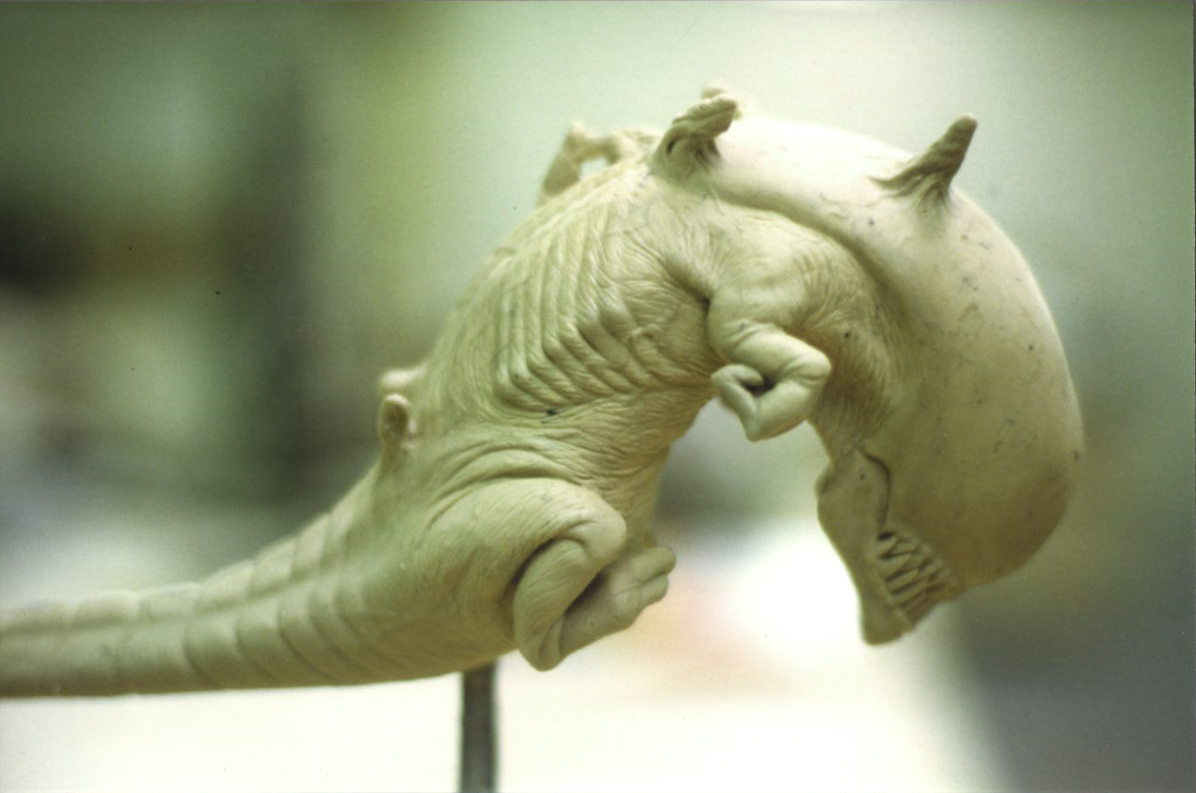 (Gino’s Acevedo’s sculpture of the xenomorph embryo seen inside Ellen Ripley’s chest during an X-ray scene from Alien 3. Image source ADI/20th Century Fox)
Gino shared images of a display alien that he and Yuri Everson built for the ADI shop. The display alien had parts cast from the original molds that were used to create the Xenomorph suit Tom Woodruff, Jr. wore during filming. Constructed of fiberglass with a vacuform dome, Gino applied a paint job with what he described as an "enormous amount of detail," because in his words, “Alec and Tom said go for it.”
Sculpting a Naked Stallone for Demolition Man
When Gino returned from his stint in London on Alien 3, he continued working at ADI on the Sylvester Stallone-starring action film Demolition Man. For this project, he helped create a replica of the nude Stallone to stand in for the actor while his character is imprisoned in cryogenic freeze.
Alec Gillis, Tom Woodruff Jr., Yuri Everson, and Gino used a head cast of Stallone in a grimacing position and a body cast of the actor’s body double. Artist Andy Shoneberg was responsible for sculpting the anatomically correct stand-in. Karin Hanson, who Gino calls, "an amazing hair person,” punched the eyebrows and hair. Gino reports that "as much as I love monsters, doing the human stuff is probably my favorite because it's the most challenging.”
 (The naked Stallone replica from Demolition Man at the ADI shop. The blend of realistic flesh tones, lifelike hair, and an anatomically correct sculpture really sell the illusion. Note the Alien 3 ‘eggs’ seen in the background. Images source ADI/Warner Bros.)
In spite of his sculpting experience, Gino always felt he was more talented as a painter. “I love doing the finishing work on stuff.”
Building Puppets for Death Becomes Her
The dark comedy Death Becomes Her starred Meryl Streep and Goldie Hawn as two women seeking eternal youth with Bruce Willis along for the ride. The film mixed live-action practical effects and CGI, providing ADI its first Oscar-winning project.
The challenge for the artists at ADI was to build realistic animatronic puppets of the lead actresses, allowing the simulation of various forms of deformation that would kill a normal human being. It was important to get the skin textures correct and to make the skin as realistic as possible. To mimic the elasticity of human skin, the artists at ADI experimented with silicone.
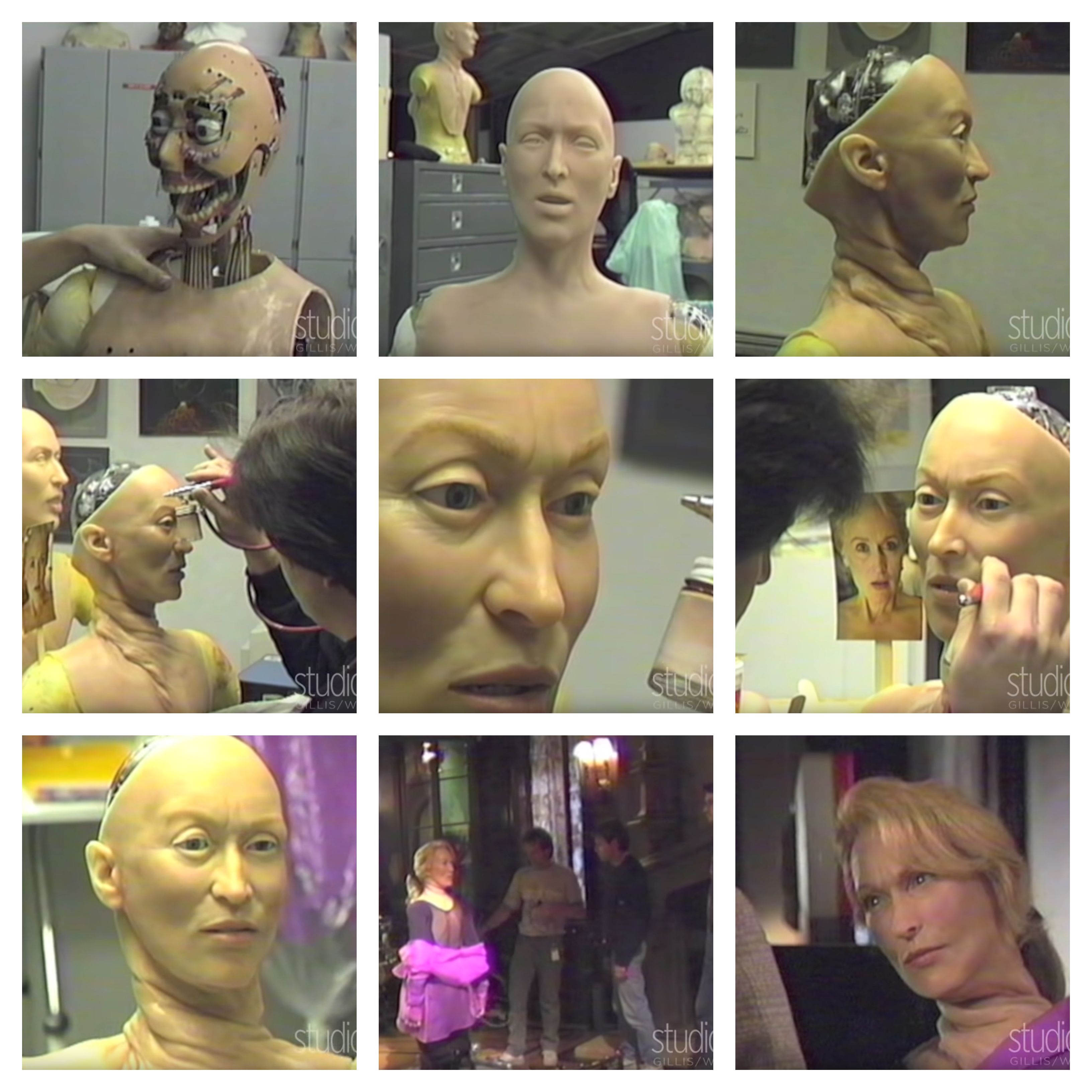 (Progress images from mechanical underskull, through painting the silicone skin, and all the way to the full Meryl Streep puppet used on set. Images courtesy ADI/Universal Pictures)
Dave Nelson mechanized the twisted animatronic puppets of actresses Meryl Streep and Goldie Hawn with skins cast from silicone. To paint the skins, Gino and the other ADI painters used a mix of acrylic paints and caulking silicone thinned with methylene chloride reduced to the consistency of thin milk.
Gino remembers the project as "a fantastic show to work on.”
Creating Jack Nicholson’s Werewolf Transformation in Wolf
In the Mike Nichols-directed Wolf, Jack Nicholson played a book publisher who finds himself slowly turning into a werewolf. The film also starred Michelle Pfeifer and James Spader. Unbeknownst to the Nicholson character, Spader's character was also a werewolf. Legendary makeup artist Rick Baker set the look for Jack Nicholson’s makeup while Amalgamated Dynamics, Inc. would handle a pair of Nicholson and Spader puppets.
For a fight scene between werewolves (Nicholson and Spader) at the end of the film, director Nichols wanted the characters to have distended jaws. Gino helped create the animatronic puppets for the scene.
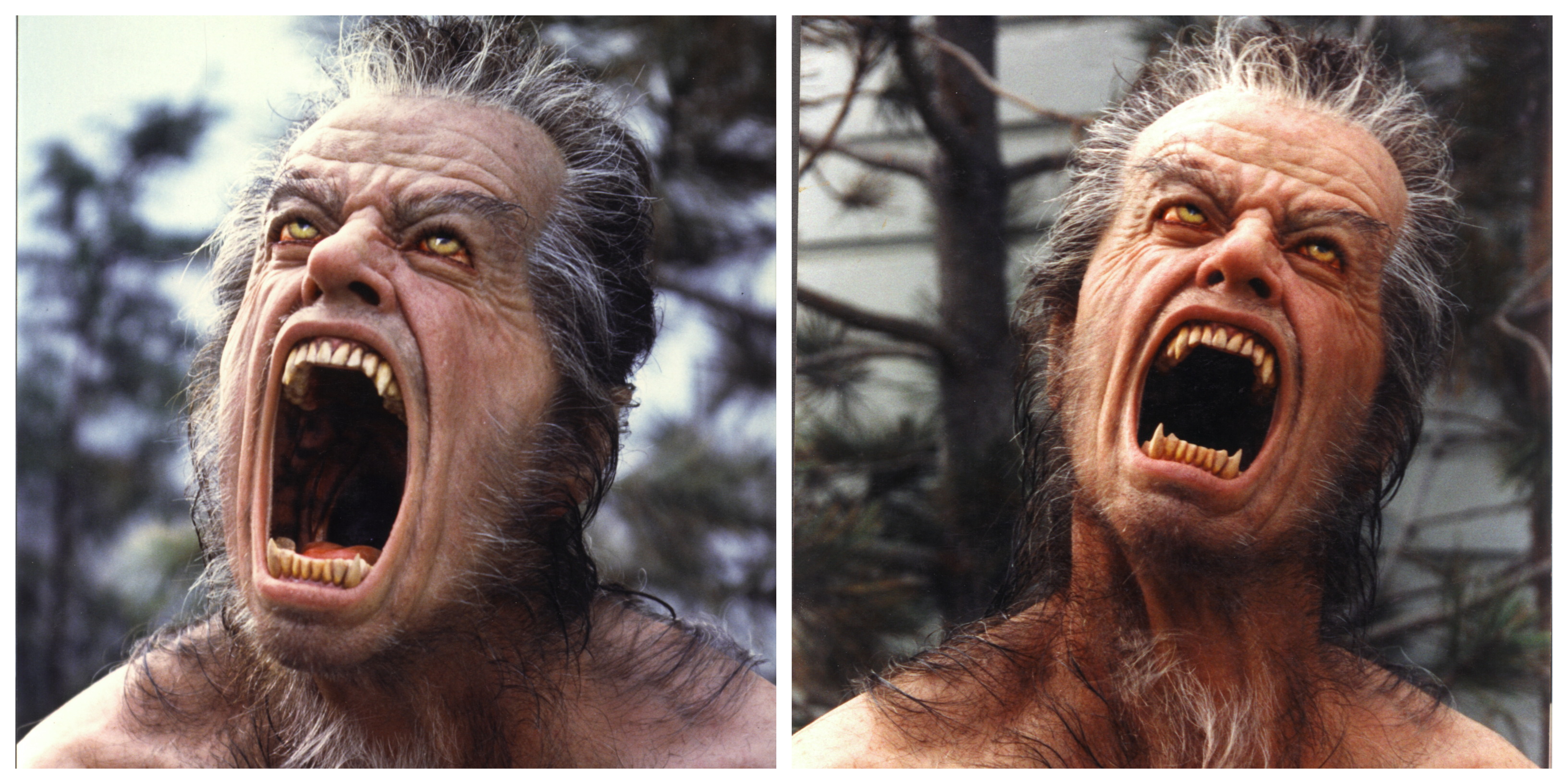 (The silicone Jack Nicholson werewolf puppet with the distended jaw from Wolf. Courtesy ADI/Columbia Pictures)
First, a lifecast of Jack Nicholson was taken of the actor in a neutral position. From there, artist Linda Frobos sculpted that neutral pose into a growling distended jaw expression. Once that was done, Gino painted all of the details and even punched the chest hair on the Jack puppet.
The silicone Jack puppet was built from the chest up. On set, Alec Gillis puppeteered the head with a mechanism to distend the jaw. For the hands, clawed werewolf gloves made by Rick Baker’s Cinovation crew would be worn by puppeteers that put their gloved hands up through holes cut into the costume. Referring to the Wolf puppet, Gino remarked, “I think this is one of my favorite pieces that I've painted.”
A similar James Spader-as-werewolf puppet was also created and puppeteered in the same way. The two werewolf puppets were filmed clawing, snarling, and roaring at each other.
Working With Steve Johnson on Species
Gino's talent and renown were developing. His next opportunity to put his skills to use came alongside the brilliant Steve Johnson (Fright Night, Big Trouble in Little China, The Abyss) at Steve's effects studio XFX. The project was Species, the story of an alien in search of a human to mate with while trying to evade its human pursuers.
 ( "Sil" an alien designed by H.R. Geiger and executed by Steve Johnson's XFX. Image source XFX/Metro-Goldwyn-Mayer)
The sleek and sexy alien, called Sil, was conceived by famed Alien illustrator and designer H.R. Giger. Sil was a, “really cool design,” according to Gino. He was brought on board by his good friend Norman Cabrera. Cabrera was responsible for sculpting Sil’s head and part of her body. Much of the alien head was vacuformed to include transparent elements that allowed mechanized moving shapes to be seen underneath the pieces.
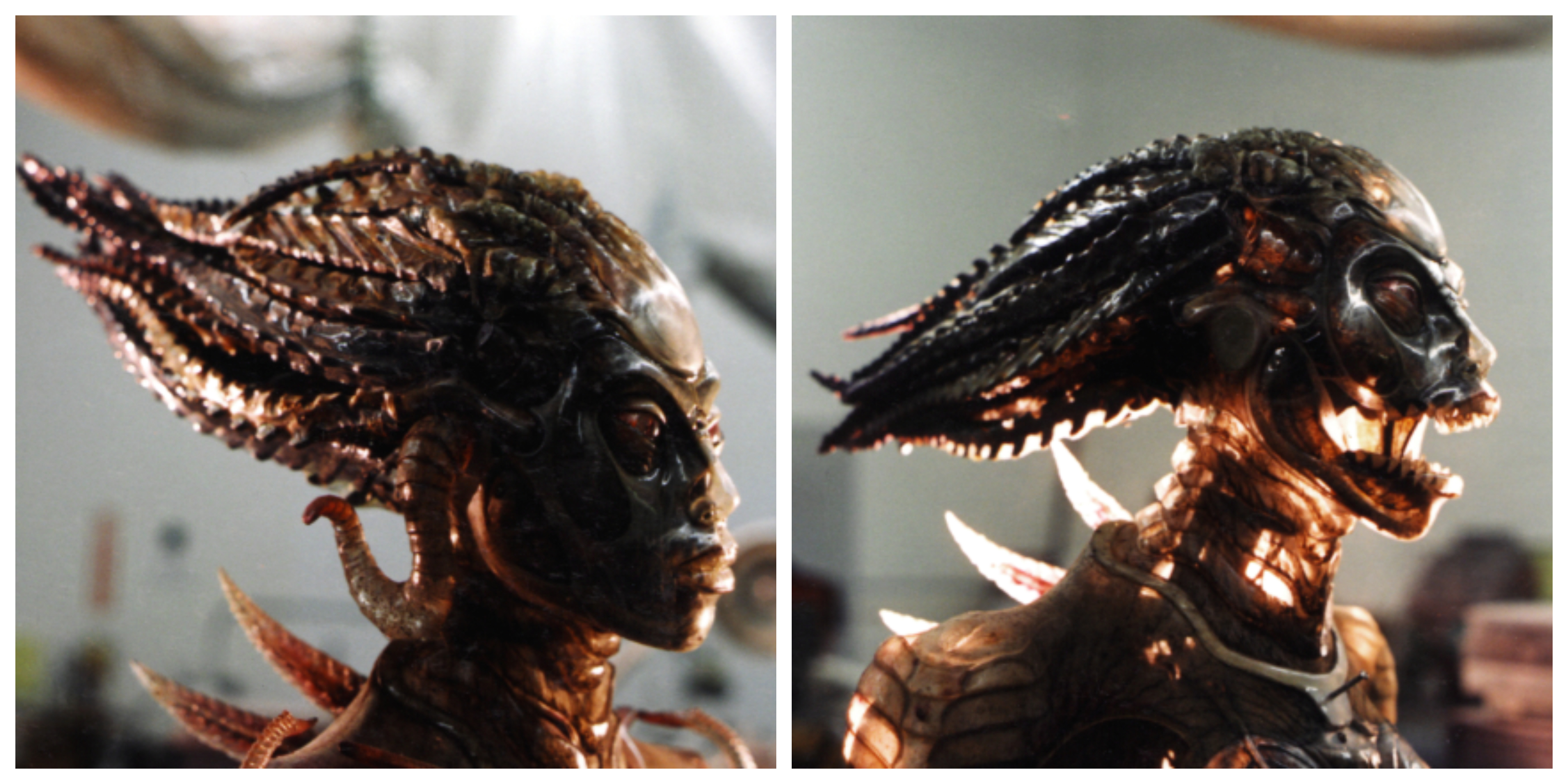 (Additional angles on the "Sil" puppet, accentuating the translucency the XFX team were able to achieve. Image source XFX/Metro-Goldwyn-Mayer)
Gino and Cabrera collaborated on the paint job for Sil. On the shoulders and other movable joints, they applied their work to a painted flexible fabric. The finishing touch on set was to cover the alien in a clear slime which enhanced the translucent look. The high point of the job for Gino was when designer H. R. Giger faxed a letter to Steve Johnson's team praising their work, making specific mention of the paint job!
Painting Ed
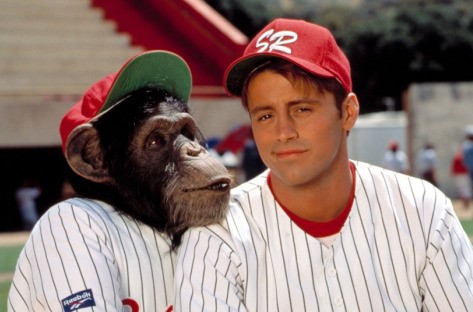 (Ed, the baseball playing chimp and Matt LeBlanc. Image courtesy Universal Pictures)
For the movie Ed, a film about a baseball-playing chimp, Gino painted the title character’s silicone face. Working at Animated Engineering for Dave Nelson, the ape called Ed was sculpted by Miles Teves and mechanized by Dave Nelson and Mecki Heussen. Gino has always loved apes and said, “to be able to paint one of these, of course, was fantastic.” Gino revealed that the Ed mask used the performer’s actual eyes fitted with contact lenses instead of mechanical eyes. To help cover the blend around the eyes where the silicone mask met the performer’s skin, Gino painted little freckles onto both the mask and the skin.
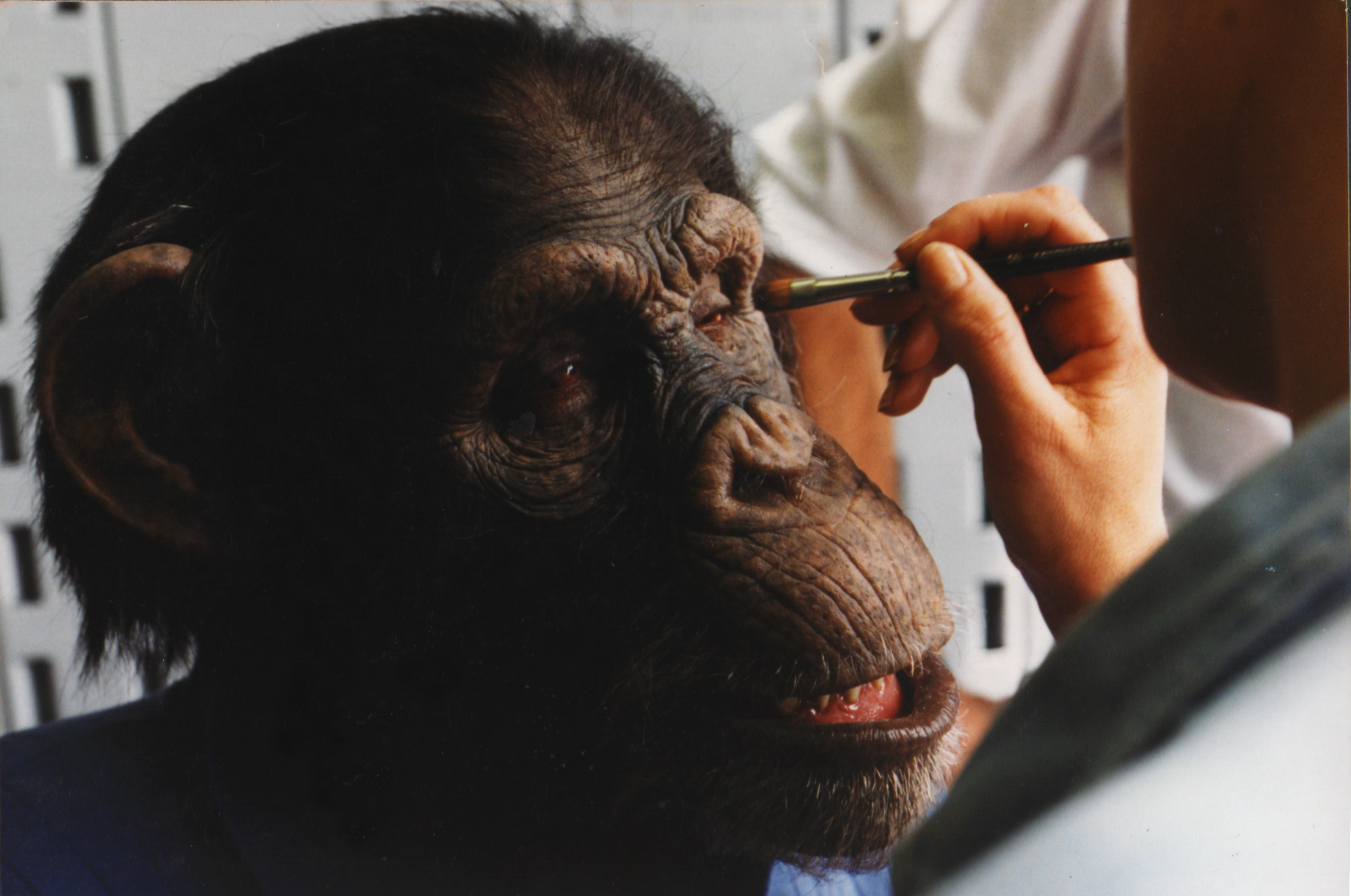 (Gino at work on the silicone animatronic Ed mask. Image source Animated Engineering/Universal Pictures)
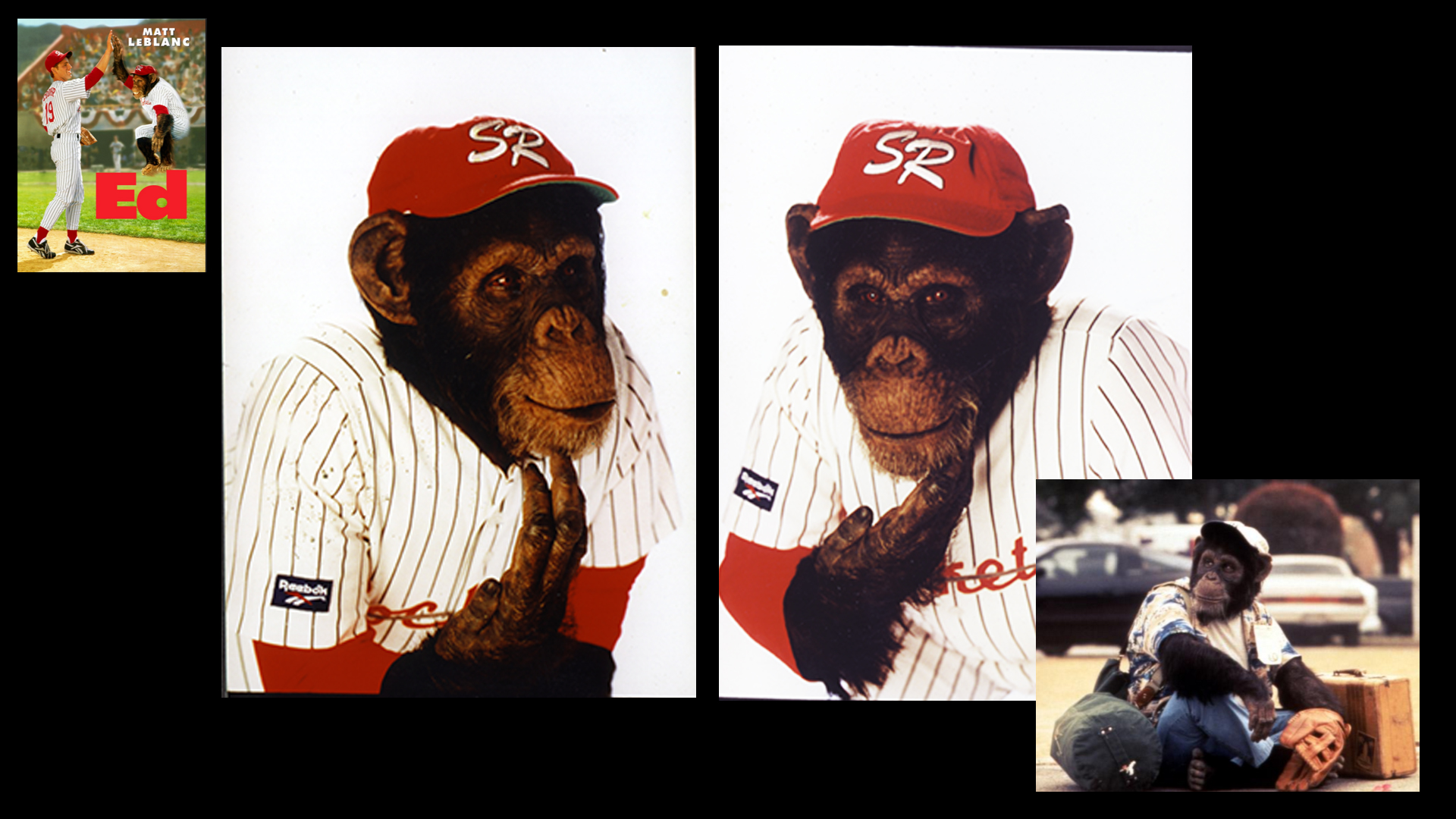 (Ed suited up and ready to play ball. Image source Animated Engineering/Universal Pictures)
Spawn, KNB EFX, and Men in Black
For the comic-book film Spawn, Gino joined KNB EFX Group, Inc., the studio formed by Robert Kurtzman, Greg Nicotero, and Howard Berger. There, Gino helped sculpt the title demon’s body as well as contributing test paintings. Finding himself in high demand, Acevedo also spent time working at Rick Baker’s Cinovation on Men in Black.
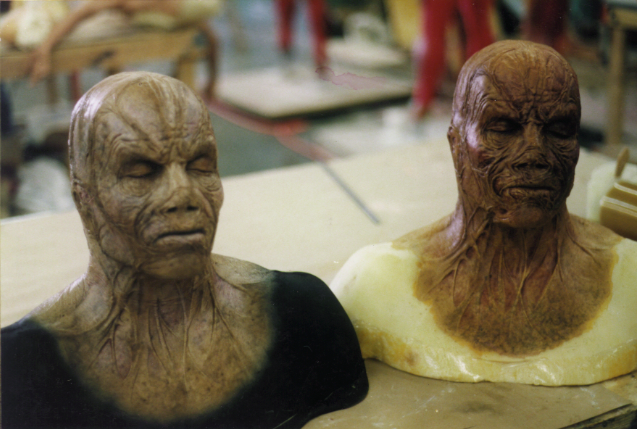
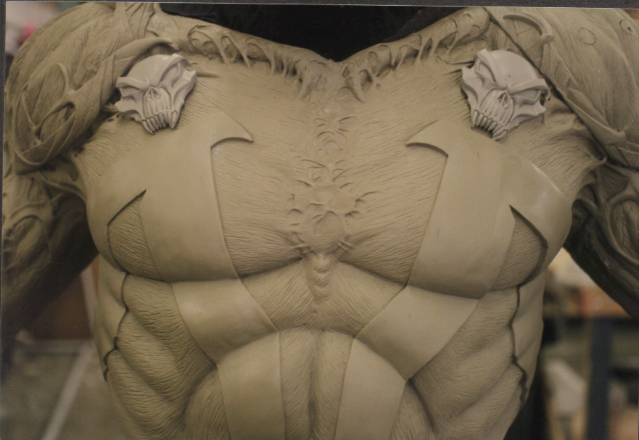
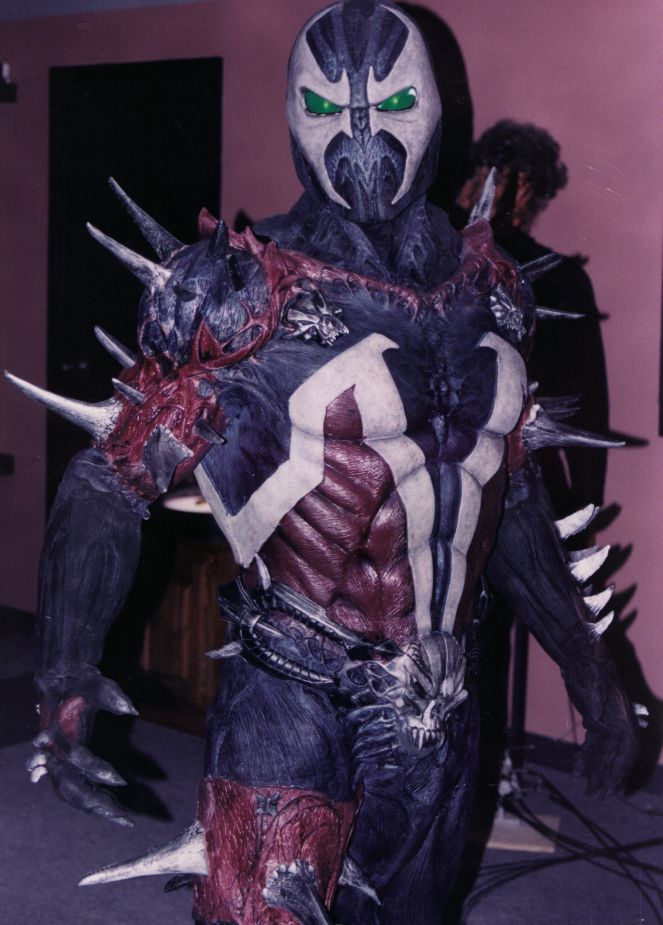 (Various images of KNB EFX's work on Spawn. Image source KNB EFX/New Line Cinema)
Painting Aliens for Patrick Tatopoulos
For his next movie, Gino worked with then-creature creator, now production designer Patrick Tatopoulos (Stargate, Underworld) on Independence Day. The alien invasion/disaster film sported a wide array of both practical and digital effects. Gino applied his painting skills to the silicone alien suit, along with assistance from Tom Kileen. For a smaller alien that appeared inside the larger alien form, Gino had to paint a polyurethane puppet with a visible underskeleton that required a translucent surface treatment. Lights were mounted inside the head and Gino used pearlescent colors to achieve the effect.
 (The larger alien shell that would open to reveal the smaller alien inside from Independence Day. Image source Tatopoulos Studios/TriStar Pictures)
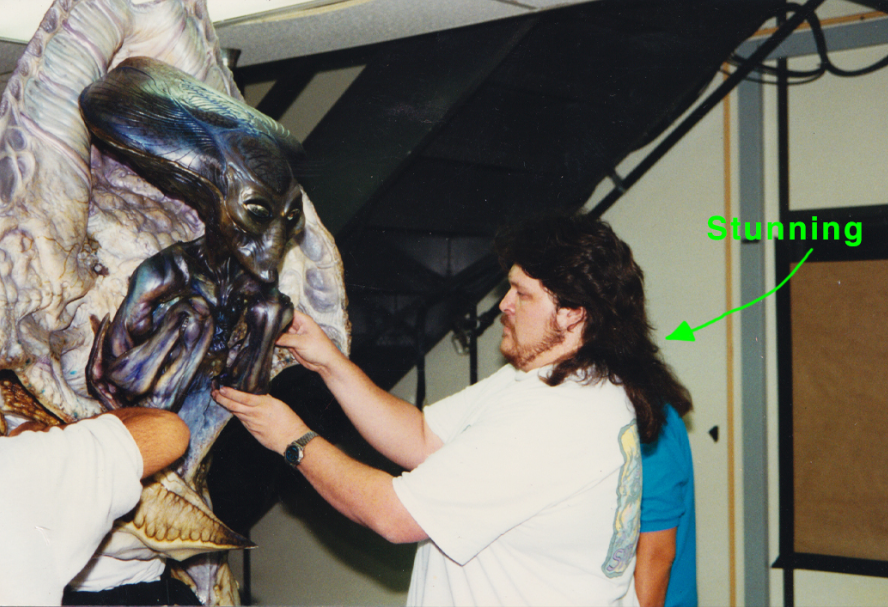 (Gino working with the smaller Independence Day alien painted with pearlescent colors. That's Gino's notation about his 'stunning' mullet! Image source Tatopoulos Studios/TriStar Pictures)
Painting the King of the Monsters
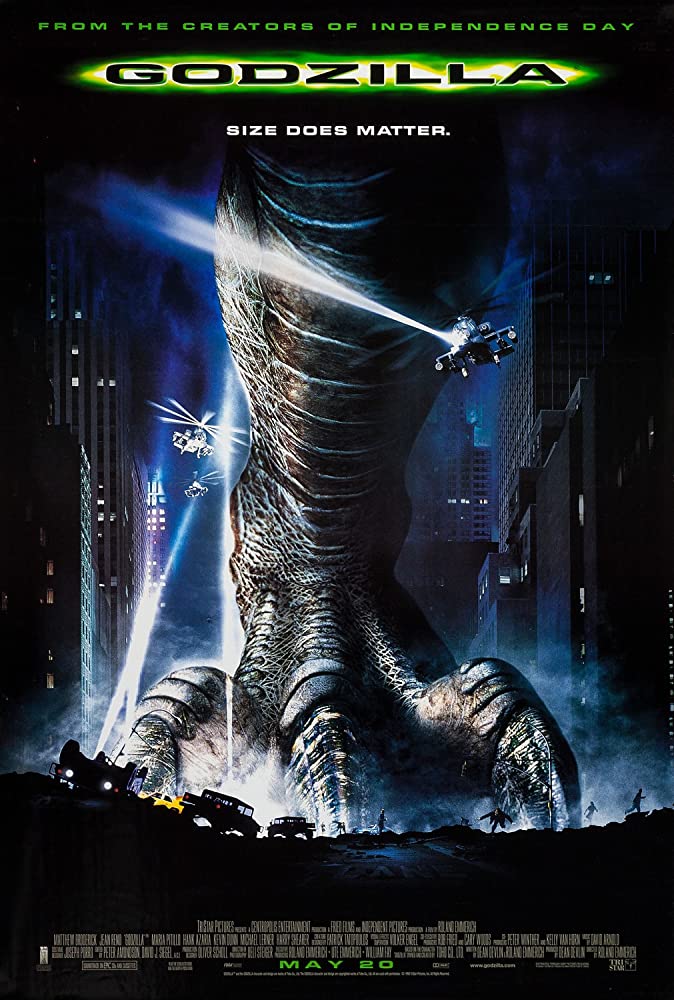
Working at Tatopoulos's studio allowed Gino to contribute to a literally massive project, the 1998 version of Godzilla. With a creature designed by Tatopoulos, the studio contributed a wide range of Godzilla pieces and raptor-like Baby Godzillas to the film.
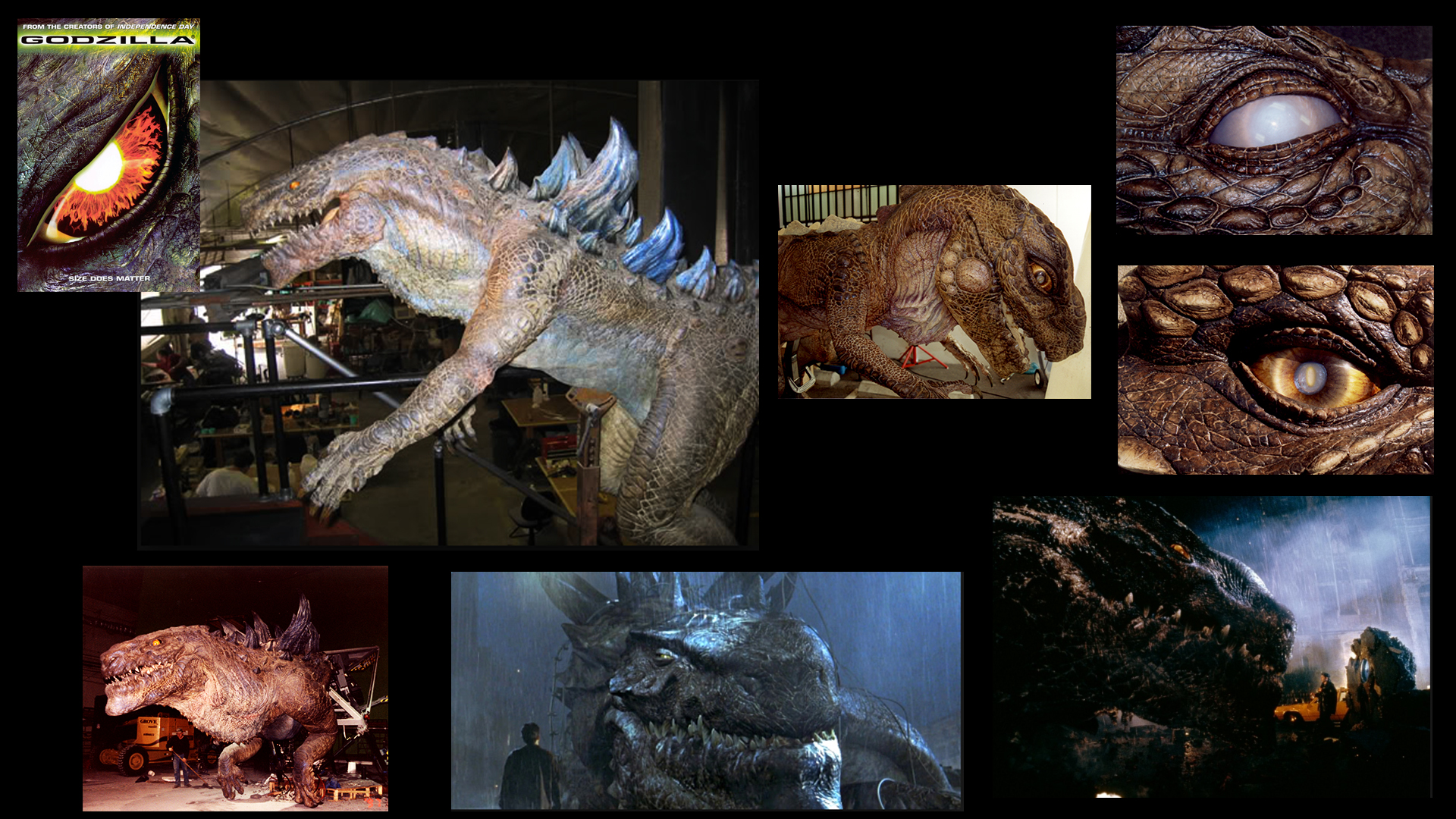 (Multiple views of the 1998 Godzilla. Image source Tatopoulos Studios/TriStar Pictures)
The Tatopoulos crew built a huge 1/6th-scale animatronic Godzilla for the film. Gino described the massive puppet, "it was the head, shoulders, arms, and part of the back. And that was all hydraulic, a masterpiece of machinery.” For the numerous Baby Godzillas, performers wore suits with leg extensions facilitating a special toe movement created by mechanical effects supervisor Guy Himber and mechanical effects technician Fred Folger. On Godzilla, Gino ended up supervising a crew of approximately twelve artists, including the great Steve Wang.
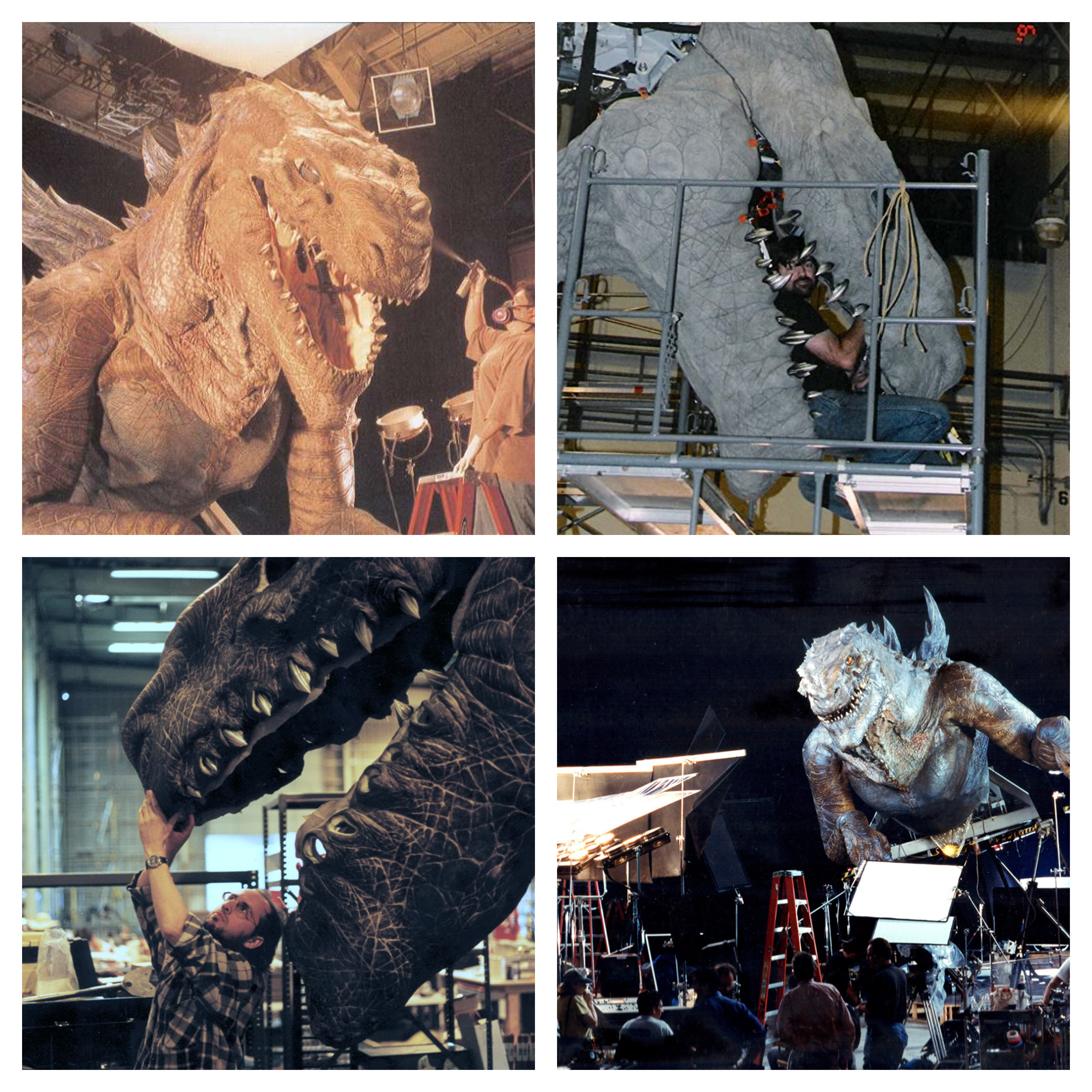 (Images of the large-scale Godzilla under construction; being painted; and on-set. Image source Tatopoulos Studios/TriStar Pictures)
Though some of the practical puppet was eventually replaced by CGI, a great deal of Tatopoulos and his team's amazing practical work remained in the finished film.
A Big Life Change for Gino Acevedo With The Lord of the Rings
Much the way Gino as a young man had once made a big move to Hollywood, he now chose to follow his dream even further and moved around the world to Wellington, New Zealand for a new epic adventure. The change of scenery signaled both a change in Gino’s career and in the visual effects industry itself.
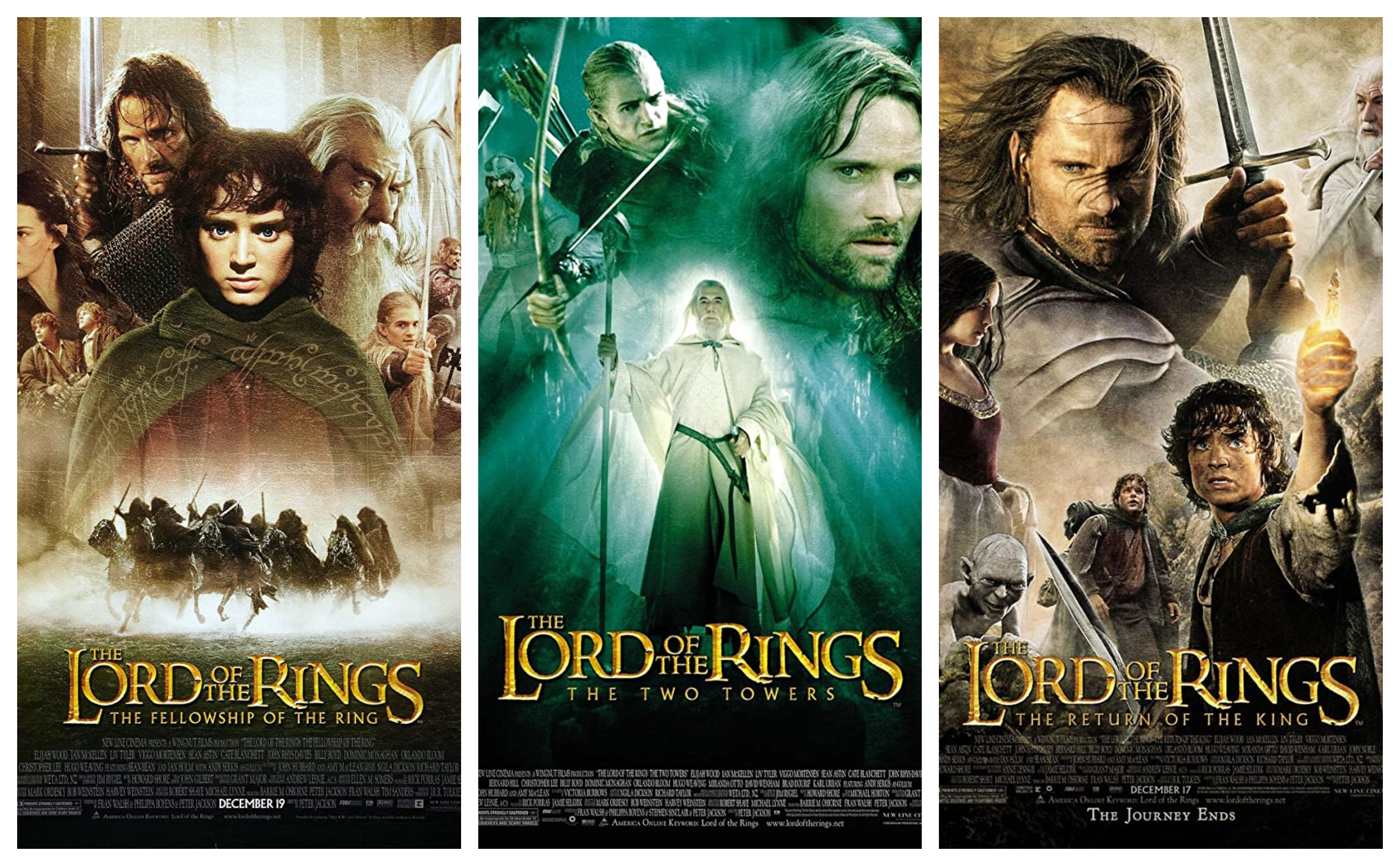
The Lord of the Rings trilogy (The Fellowship of the Ring, The Two Towers, The Return of the King) was based on J.R.R. Tolkien’s famous novel series. Director Peter Jackson’s epic vision featured an international cast and was filmed in New Zealand with special effects, props, and costumes provided by Weta Workshop.
Working With Weta Workshop
For The Lord of the Ring series, Weta Workshop, founded by Richard Taylor, provided makeups for an amazing array of fantasy characters, everything from hobbits and elves to orcs and even a practical Gollum for one scene. Gino said that The Lord of the Rings: The Fellowship of the Ring required "a phenomenal amount of makeups.” With seven out of nine leads wearing some kind of prosthetics, Gino stressed, “we needed to try to be as efficient as possible to try to figure out the shortcuts.”
Sculpting The Fellowship of the Ring Orcs
For the armies of orcs required to populate The Fellowship of the Ring, Richard Taylor and his team came up with a system of sculpting approximately a dozen orcs and then taking those multiple pieces of orc foreheads, chins, noses, etc. to mix-and-match a wide variety of different orcs. Adding different hair, teeth, and piercings to each created a myriad of different looks.
 (An assortment of orc makeups from The Lord of the Rings films. Image source Weta Workshop/New Line Cinema)
Making Gimli
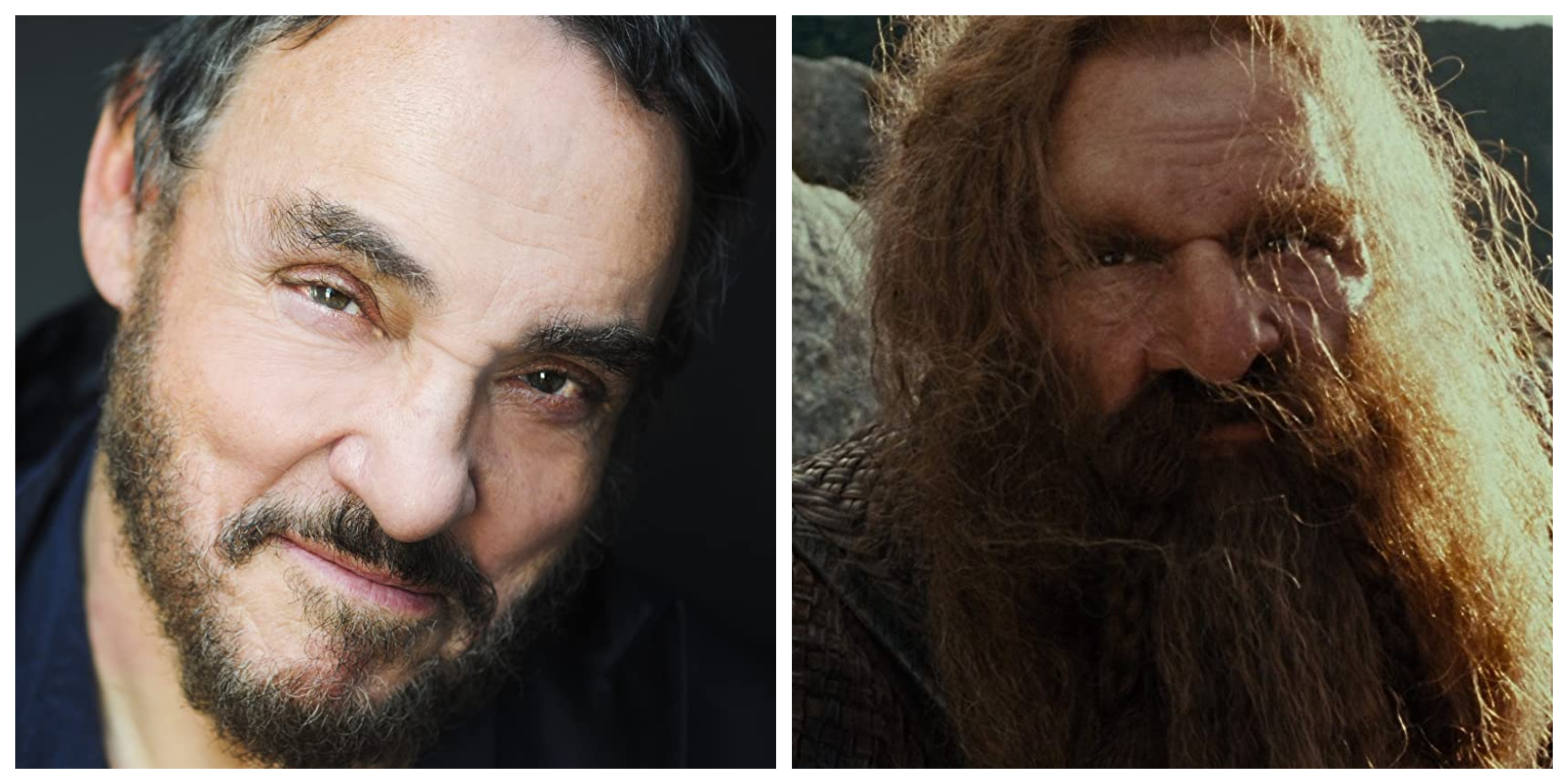 (Beloved character actor John Rhys-Davies who portrays the dwarf Gimli in The Lord of the Rings trilogy. Image source Weta Workshop/New Line Cinema)
One of the main character makeups that Gino was involved with was the dwarf character of Gimli. Gimli was played by John Rhys-Davies (Sallah of Raiders of the Lost Ark fame). The multiple-piece appliances that transformed Rhys-Davies into Gimli were sculpted by Jamie Beswarick. Gino pre-painted the appliances and Dominie Till was responsible for the hair work. During application, to speed up the application process, Gino would work on the right side of the actor’s face and Dominie would do his left side.
Originally, the Gimli appliances were to be created out of foam latex. Tests in the studio looked great, but once the makeup was seen outside in broad daylight, Gino said that the surface would go, “totally opaque.” Director Peter Jackson asked what could be done to make the character look a little more realistic, more flesh-like. At the time, silicone appliances were in their infancy and prosthetics made from silicone were very difficult to create. Gino recalls, “Nothing sticks to silicone!”
Weta Workshop artist Ben Hawker came up with the final ingenious solution. A layer of latex would be stippled onto the appliance’s core mold. Then, while the latex was still wet, cotton flocking was applied with a flocking gun. “So you can imagine that this core…just looked like this fluffy bunny.” Tinted silicone was then put into the Vaseline-coated mold which bonded with the flocked latex and gave Gino a beautiful surface to paint on. The pieces were painted with Gino’s acrylic paint/silicone caulking/methylene chloride mixture. To help hide the blending edges, little eye bags made of gelatin pieces were glued down with Pros-Aide. To complete the makeup, Dominie would punch in eyebrows and a beardline and then blend this over with lace wig pieces.
 (John-Rhys Davies fully transformed into Gimli for The Lord of the Rings film series. Image source Weta Workshop/New Line Cinema)
One of the benefits of this mixed-media process was that when the prosthetic appliances were removed at the end of the day, the pieces could actually be reused the next day! The Gimli pieces could be reused up to four or five times, replacing only the gelatin eye bags. This was a good thing, since according to Gino “we must've put him into that makeup probably close to 90 times.”
Blending the Practical and the Digital for LOTR
“One of my favorite things about The Lord of the Rings films," said Gino, "is how beautifully they blended digital with practical, I mean those films are chock full of real stuff, real locations, real makeups, real costumes.”
Even the Gollum character was originally conceived as an actor in makeup. Though Gollum would eventually and predominantly be realized in CGI, for an early human-to-Gollum transition scene, a prosthetic makeup was applied to actor/mo-cap performer Andy Serkis. The Gollum appliances were constructed the same way as the Gimli ones, a latex/flocking/silicone mix and then gelatin eye bags to create the blending edge.
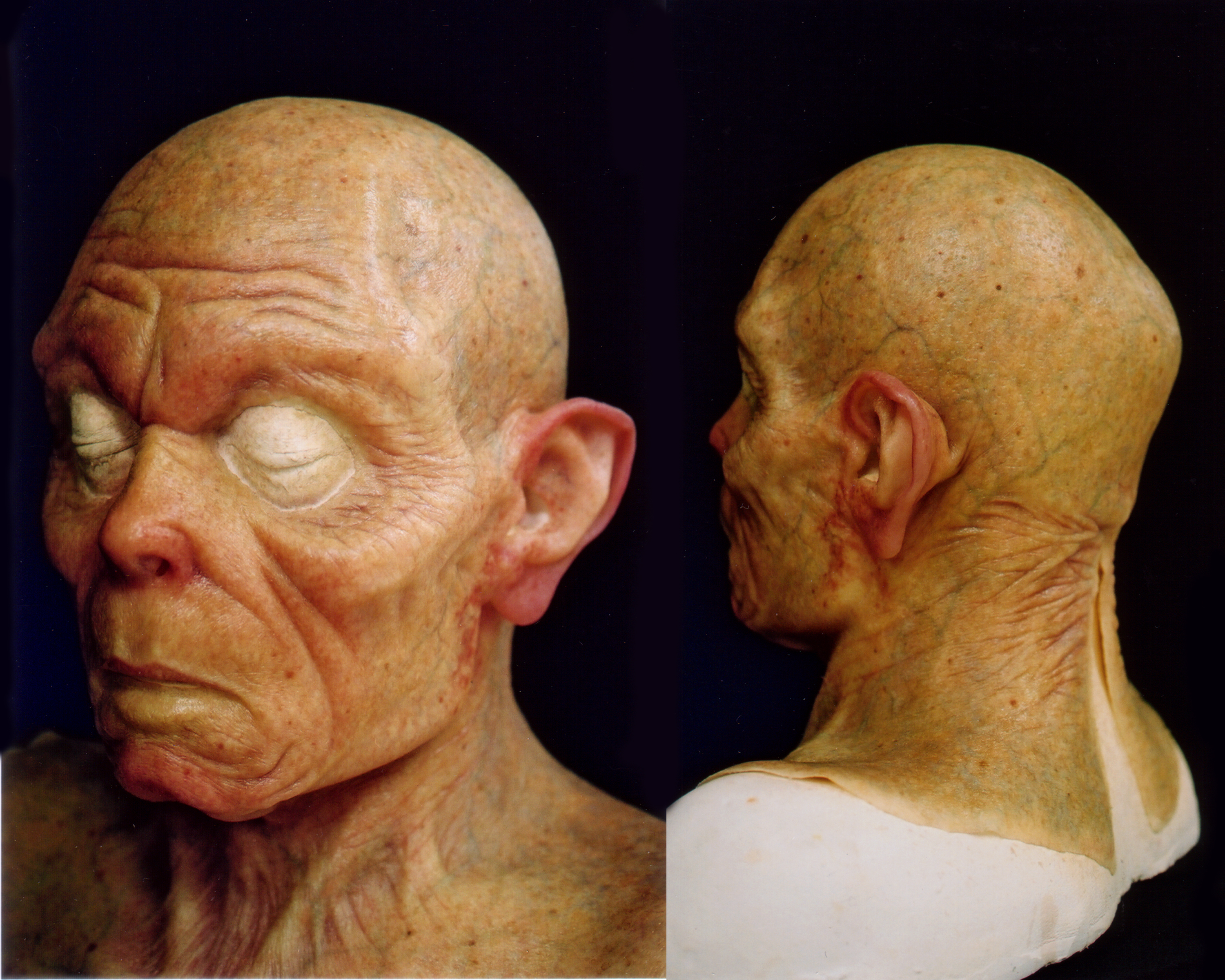 (The painted Gollum transition makeup appliance. Image source Weta Workshop/New Line Cinema)
Gino painted the pieces that Michael Asquith had sculpted. "What they did for the film," Gino explained, "is that they actually digitally enlarged his eyes and they did a morph into the digital Gollum.”
 (Andy Serkis as Gollum in The Lord of the Rings: Fellowship of the Ring. Image source Weta Workshop/New Line Cinema)
Gelatin would also be used for other LOTR appliances such as the elvish ear tips for Arwen (played by Liv Tyler) and the noses for Saruman (Christopher Lee) and Gandalf (Ian McKellen).
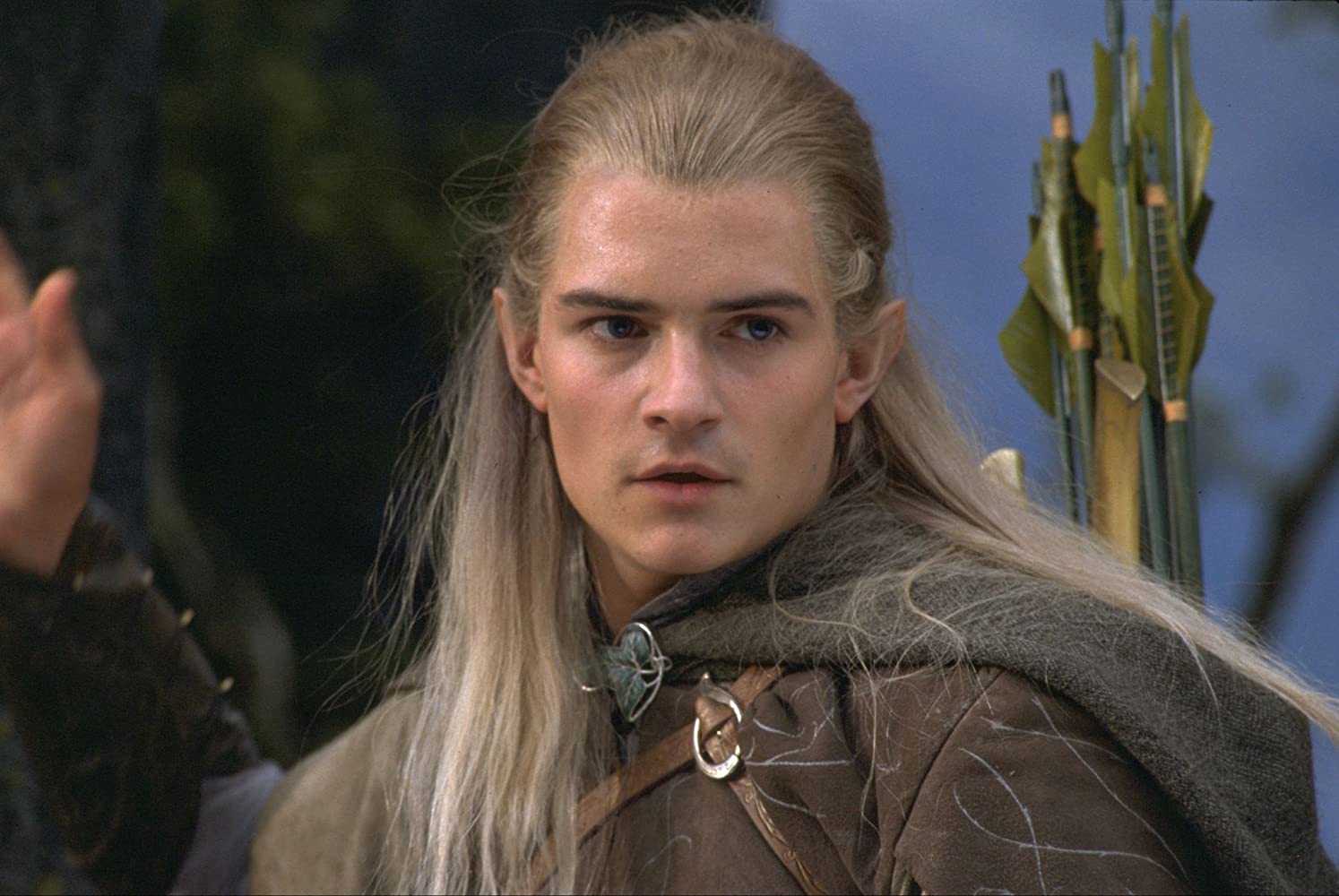 (Orlando Bloom, as Legolas, sporting gelatin ear tips. Image source New Line Cinema)
One of the problems with using gelatin for appliance work came to light on a dark (practical, special effects-supplied) rainy night while shooting on the Helm’s Deep location. All of a sudden Legolas’s (Orlando Bloom) ear tips began to melt because of the rain. The gelatin had not been sealed and the water was causing the gelatin to run. A droopy-eared Legolas was whisked to the makeup tent and the ear tips were re-applied.
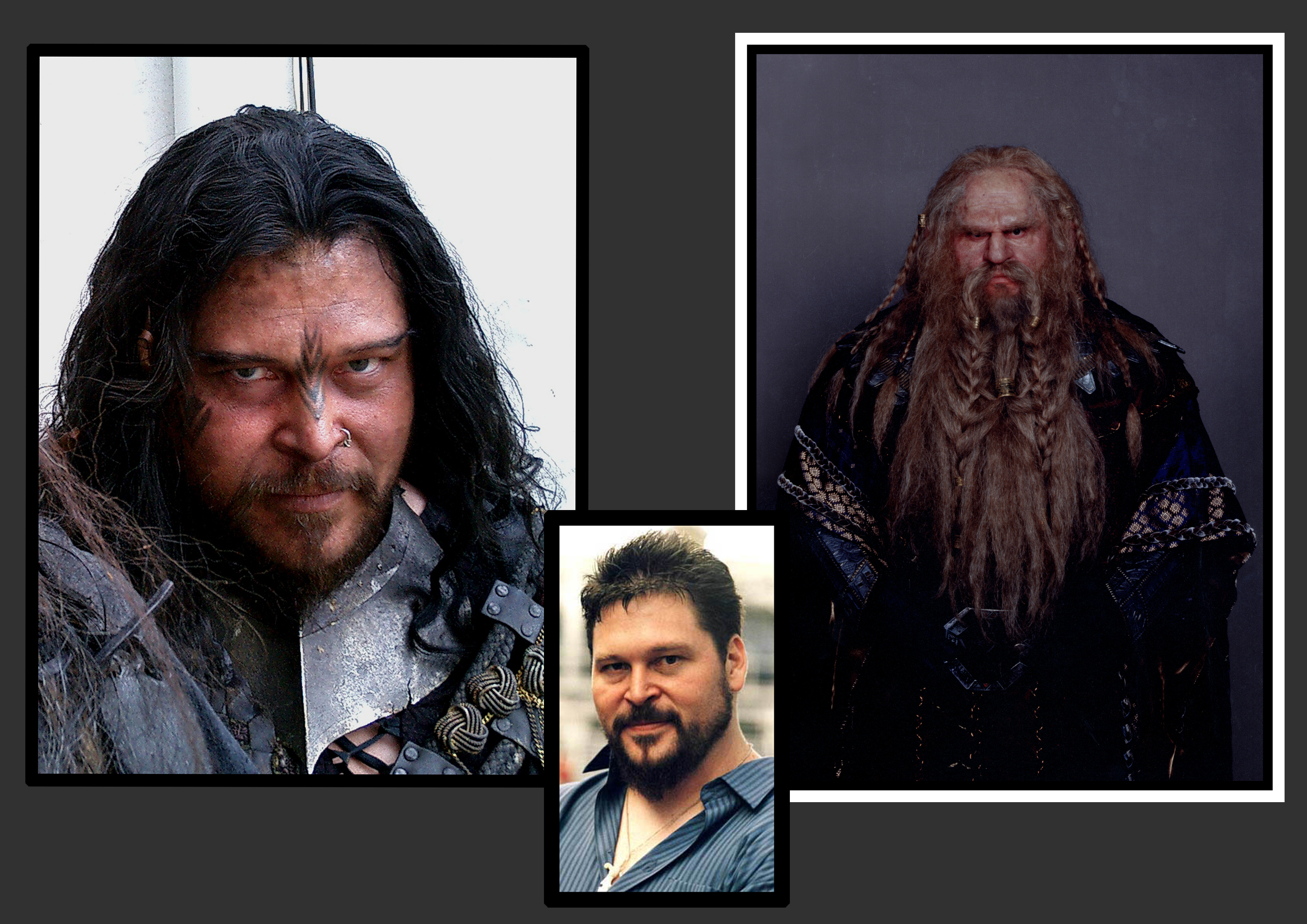 (Recognize that guy? Gino Acevedo made up as two different characters from The Lord of the Rings films. Image source Weta Workshop/New Line Cinema)
Designing Looks for 30 Days of Night Vampires
After Gino's unforgettable experience making up orcs, dwarves and elves came...vampires! Set in the small town of Barrow, Alaska where the midwinter sees an annually recurring thirty days of night, the film 30 Days of Night starred Josh Hartnett as the local sheriff and Danny Huston as the lead vampire. Weta Workshop would be responsible for providing the film with its family of vampires.
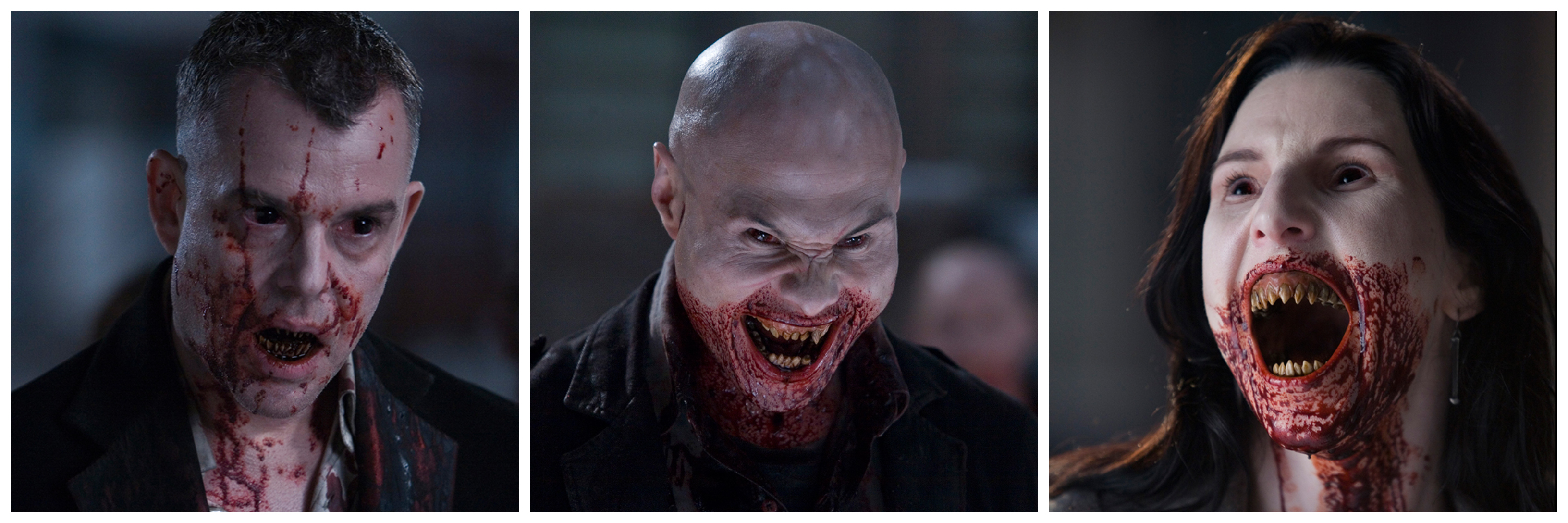 (Three of the blood-spattered vampires that invade the small town of Barrow, Alaska in 30 Days of Night. Images courtesy Columbia Pictures.)
According to Gino, 30 Days of Night director David Slade wanted the vampires to have skin that looked almost like ice and little jagged shark-like teeth. “We had to come up with all these different kinds of looks for the vampires.” Gino gives credit to many of his fellow Weta teammates, including Davina Lamont, Bill Hunt, Samantha Lyttle, Sarah Rubano, Jane O’Kane, Gareth Jensen, Natasha Lees, Michele Barber, Jeff Flitton, and Louise Harris who worked to come up with all kinds of different looks for the vampires.
The lead vampire Marlow was played by Danny Huston. His makeup was applied on-set by Bill Hunt. Gino says Hunt spent a lot of time getting the blood splatter just right and worked hard to keep the blood trails around the vampire’s mouth in the same places from day to day. Gino praises Danny’s performance, describing it as, “creepy, man.”
Creating Artwork for Contact Lenses
The vampires wore contact lenses that were hand-painted by Christina Patterson based on Gino's artwork. “She could really match what I painted,” he remarked, impressed, even though he admits that he gave her some really hard things to do with a lot of fine details.
 (Contact lens eye concepts for 30 Days of Night. Image source Weta Workshop/Columbia Pictures)
The eyes of the vampires would also benefit from little CGI tweaks that would shrink them down 12-15% and move them a bit closer together, for an unsettling not-quite-human look.
Gino Acevedo’s Transition to Digital Artist
Gino's transition to the digital side of effects began on the second film in The Lord of the Rings trilogy, The Two Towers. Weta Digital Visual Effects Supervisor Joe Letteri (King Kong) was walking through the Weta Workshop one day and saw a dead body of Boromir (Sean Bean) that Gino had painted. Letteri was impressed by the realistic translucent look of the body and asked how Gino had achieved the effect. Gino explained his technique of tinting the silicone and how he painted the veins to appear deeper down inside of the flesh. Letteri indicated that the digital texture artists were having trouble matching the details and veins on the Gollum busts used for color guidance that director Peter Jackson had signed off on, so he asked Gino, “how would you like to learn some texture painting?”
At first, Gino was hesitant. He asked, “Does that involve a computer? He [Letteri] says, 'yes.' And I said, 'No, not so much.' I struggle with my email.” But Richard Taylor urged Gino to give digital paint a try and a computer was set up in his office. Using a digital model of Gollum’s head, a texture artist, Sergei Nevshupov, showed Gino how to use the various digital tools to push and move things around. Once he got the basics down, he started to enjoy it, “I thought, well, this is pretty cool.” Gino learned how to use a digital palette to create his colors and shaders to make things translucent. “I painted it just pretending that it was just like a latex mask.”
Over time, Gino became more involved in the digital side of things, moving back and forth between Weta Workshop and Weta Digital, making sure that the designs that came out of the practical side were followed through on the digital side. If there was an effect that didn't translate, Gino could explain why. Eventually, Gino would become HOD (Head of Department) for the Digital Texture Department, overseeing 30-50 texture artists. The Texture Department worked closely with the Model Department, first supplying the practical effects artists with the digital model of a character to indicate its basic shapes and forms. Following photography, the Texture Department would then add all of the fine details and textures to the character.
Making Tintin
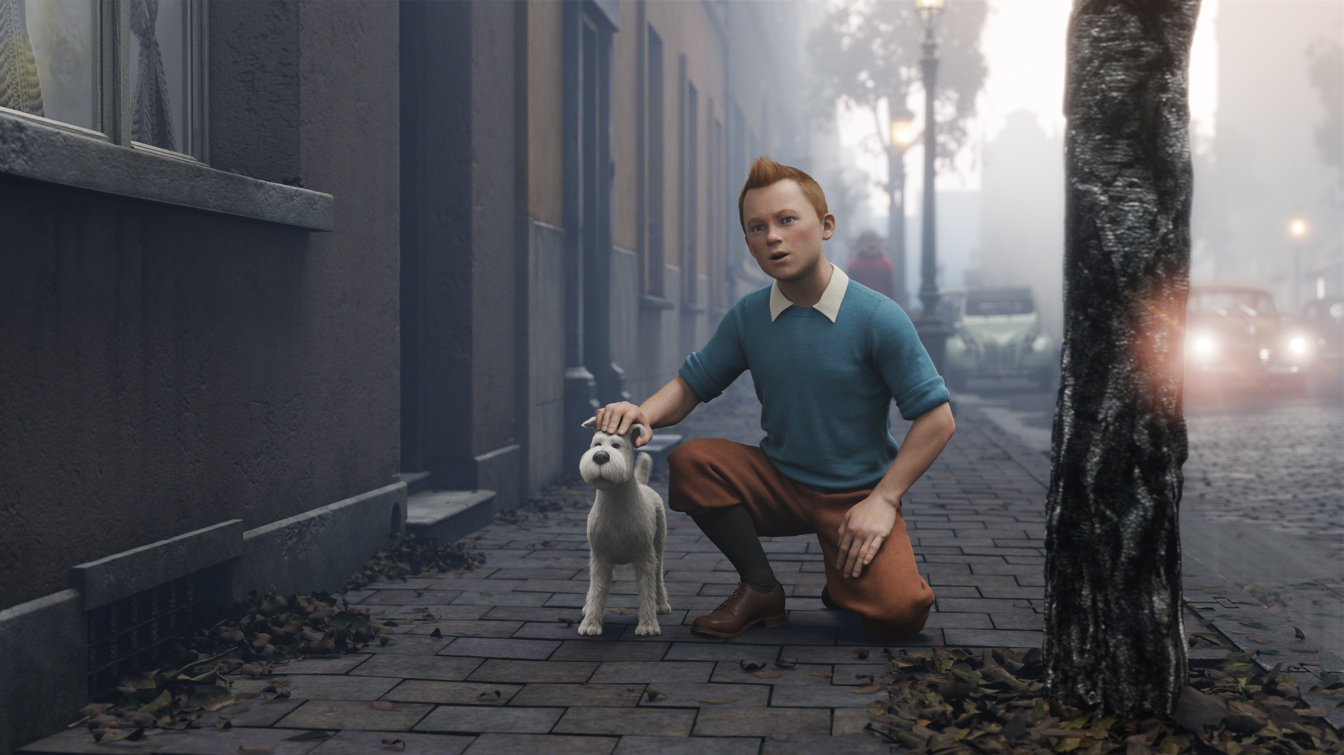 (Tintin and his dog Snowy. Image source Paramount Pictures)
The Adventures of Tintin was the animated film adaptation of the internationally popular comic book series from Belgian cartoonist Hergé about a young journalist named Tintin, his dog Snowy and their adventures. The film was directed by Steven Spielberg and produced by Peter Jackson and Kathleen Kennedy.
Gino described the title character of Tintin in the comic as looking like, “…a bowling ball with two…black dots and just a little nose.” The most difficult thing about creating the film version of the character was translating his simple 2-D likeness into three dimensions. The challenge was, as Gino put it, "to make him into a living, realistic-looking character.” Realistic but not lifelike, and at the same time, not too cartoony. Director Spielberg was adamant that the characters be kept out of the ‘uncanny valley.’
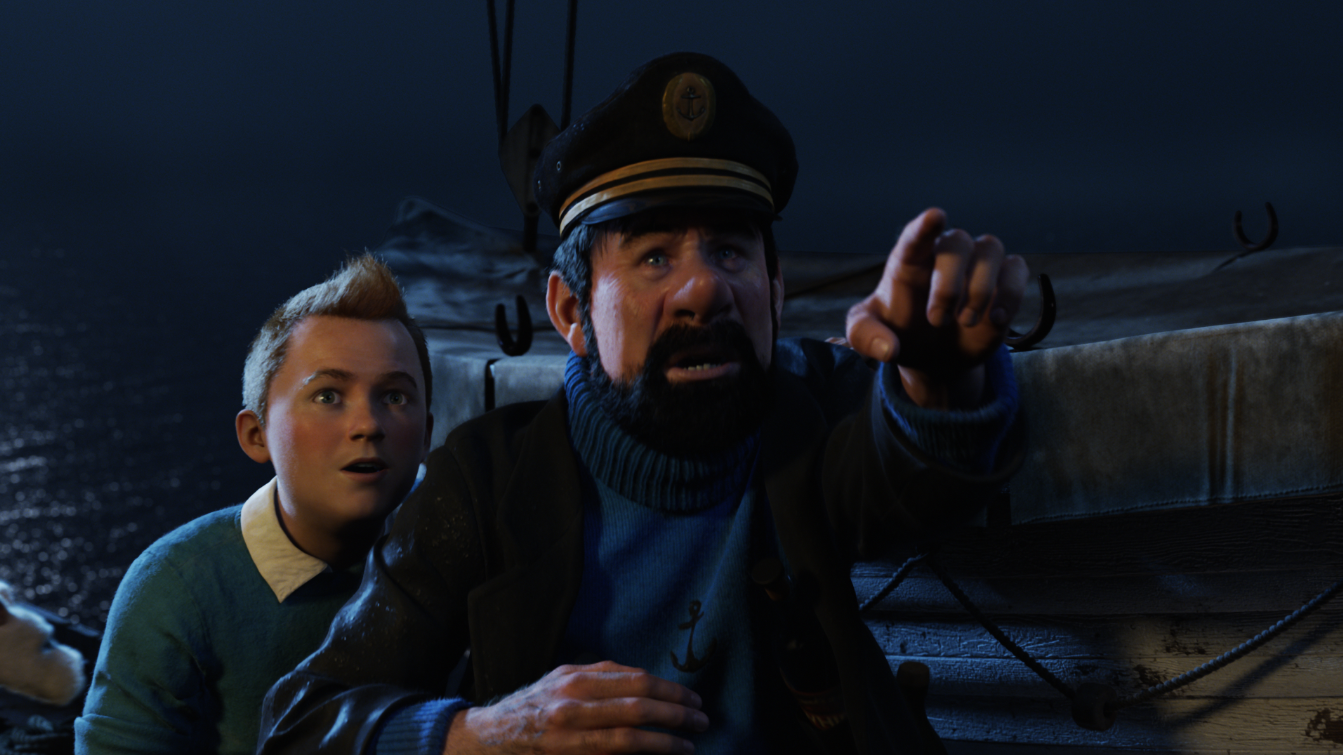 (Tintin and with Captain Haddock. Image source Paramount Pictures)
Andy Serkis played the ship captain that Tintin meets during his adventure. The curmudgeonly character was voiced and performed by Andy Serkis in mo-cap. While his performance was captured, to help him with character, the actor wore prosthetics to match the captain’s design.

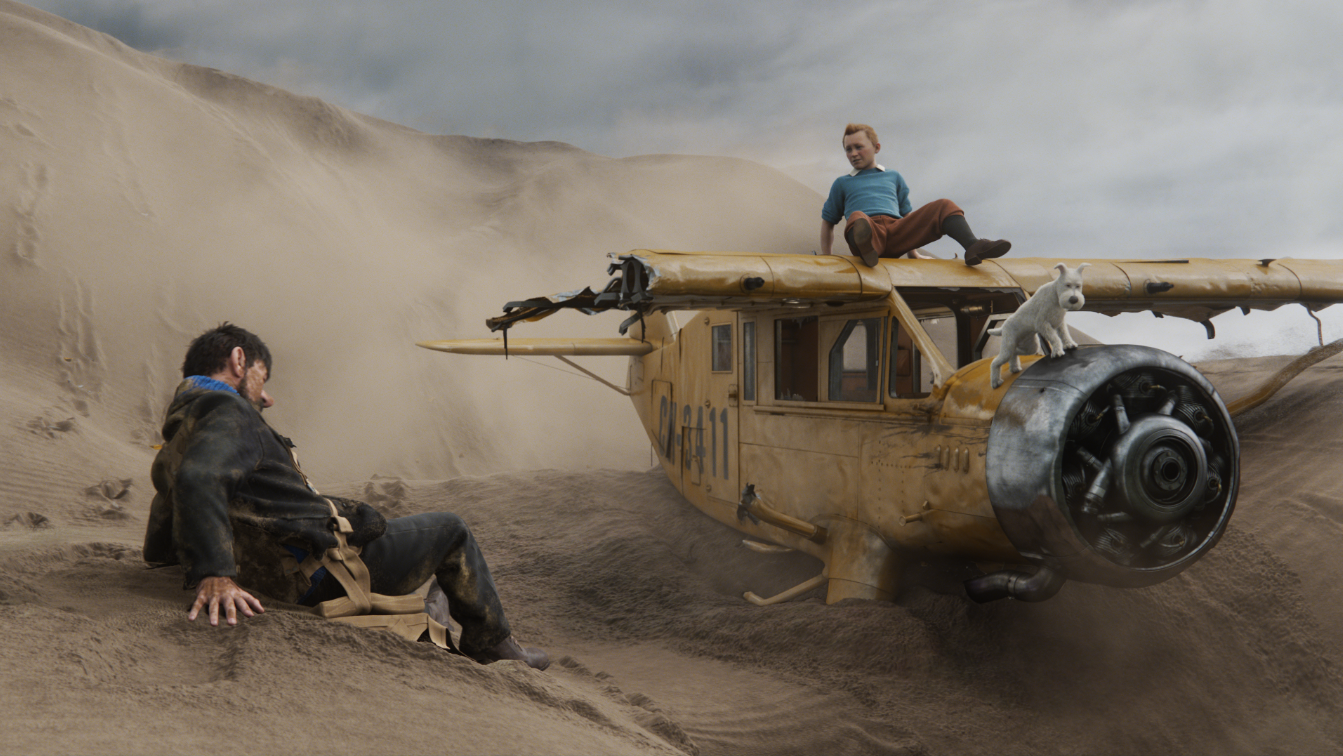
 (Images from The Adventures of Tintin. All images courtesy Paramount Pictures.)
Every frame of the film was digitally rendered, from the ocean and desert locations to the city streets, ships, and airplanes. The sheer quantity and variation of different textures was a huge challenge but also, for Gino, lots of fun, because of so many, “different kinds of cool looking characters.”
Creating Skin Textures for Avatar
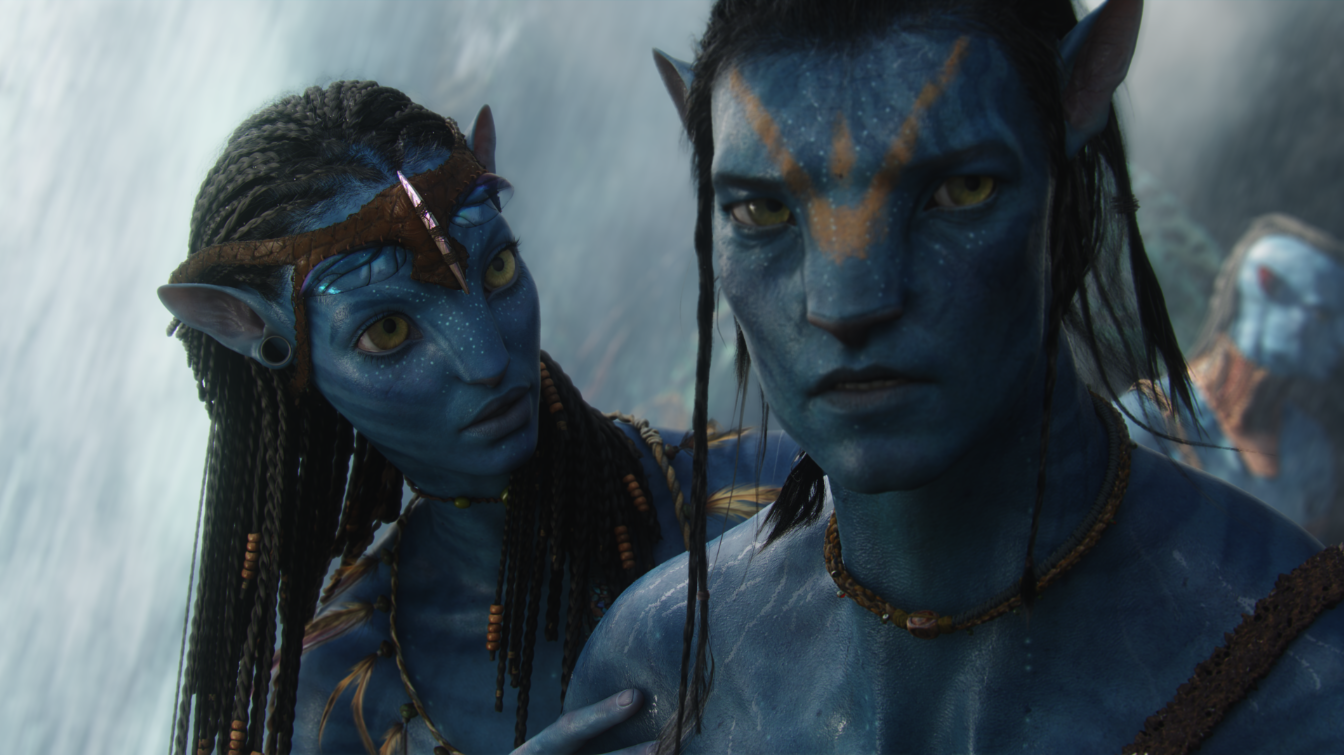 (Neytiri played by Zoe Saldana with Jake Sulley performed by Sam Worthington in Avatar. Image source 20th Century Fox/Lightstorm Entertainment)
After Tintin, Weta Digital and Gino worked with legendary director James Cameron (The Terminator, Aliens) on Avatar. The epic science fiction movie told the story of human colonizers stripping the moon Pandora of its resources and decimating its local inhabitants, the Na’vi. Sent in to communicate with the Na’vi via a mental link with an alien Na’vi body, physically challenged protagonist Jake Sully, played by Sam Worthington, ends up siding with the aliens and helping to lead the rebellion against the human aggressors.
Stan Winston Studio created heavily detailed reference figures for the Na’vi and many of the creatures found on Pandora. Weta Digital then built digital models of the characters. At that time, the normal procedure for texture mapping was to use details derived from photographs that would be turned into gray scales which would then have the contrast brought up in the computer to see the pores and other flesh details.
In order to get more detailed skin textures, Gino consulted with CG colleagues, Sergei Nevshupov, Jess Cowley, Keven Norris and Daniel Bennett. "Together we put our heads together and were able to combine the practical with the digital. So in order to get some 'interesting skin' we put out a casting call to people with interesting skin. I can remember my email saying, 'If you think you have interesting looking skin, please come and see me, but please don’t be offended if we pick you, and then again don’t be offended if we don’t pick you!'" From employees at Weta to local actors, (contacted through Gino’s casting agent wife Liz Mullane) Gino assembled an impressive accumulation of skin reference. Photographs were taken for color reference and the models were also lifecast. Gino cast all manner of body parts; faces, feet, hands, backs, and butts. These textures were then cast in silicone to capture all of the fine skin details like pores, moles, and very fine wrinkles. “We made this incredible library of all these different textures.”
The silicone castings would then be cut apart in a fashion similar to a dressmaker’s darts, little triangles that allowed the castings to be placed flat on a scanner. Once the library of skin textures was built up--what Gino would call ‘skin scans’--he could then sit down with the texture artists and point out which features to use for each individual character. The ‘skin scans’ could then be projected onto the digital models creating a very detailed skin texture.
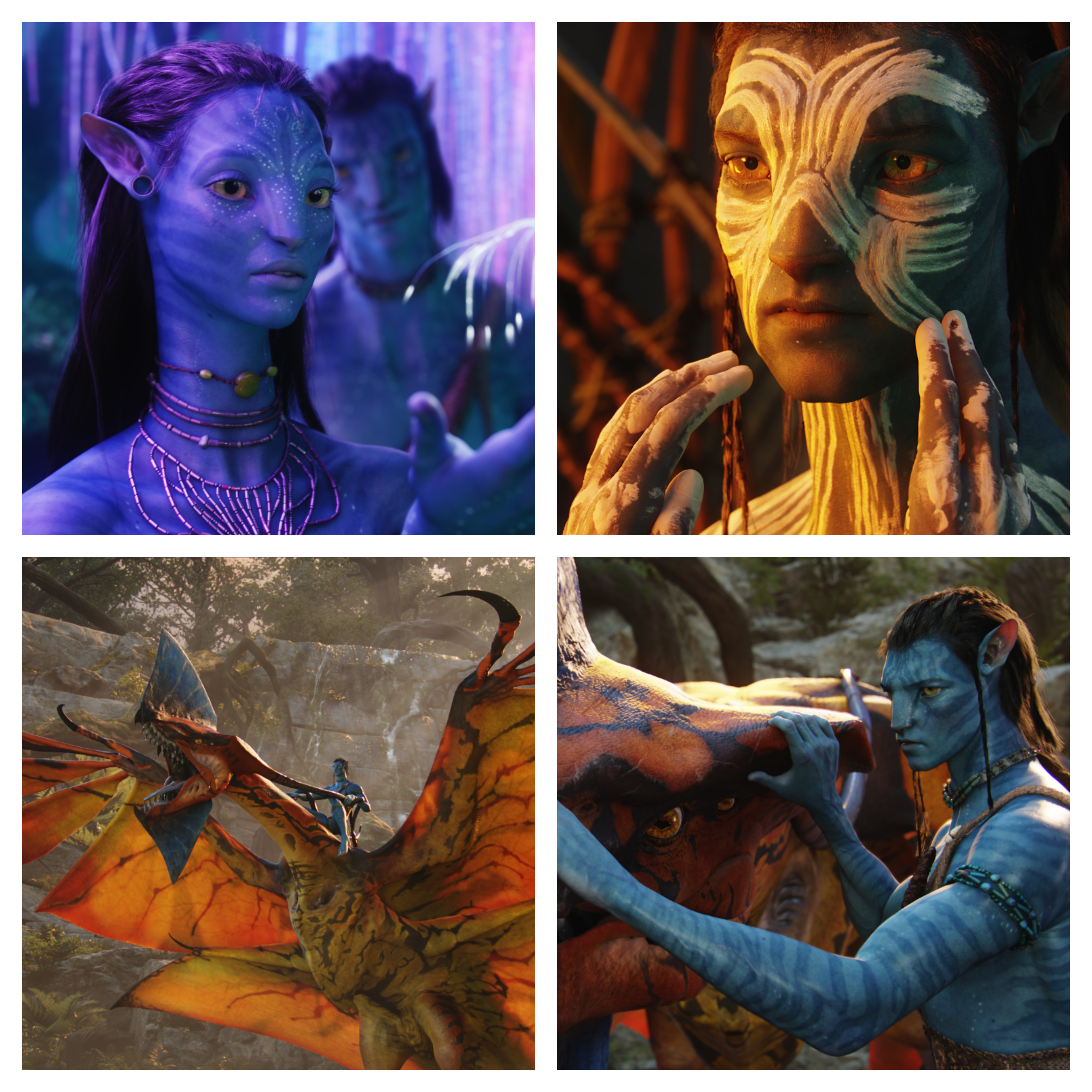
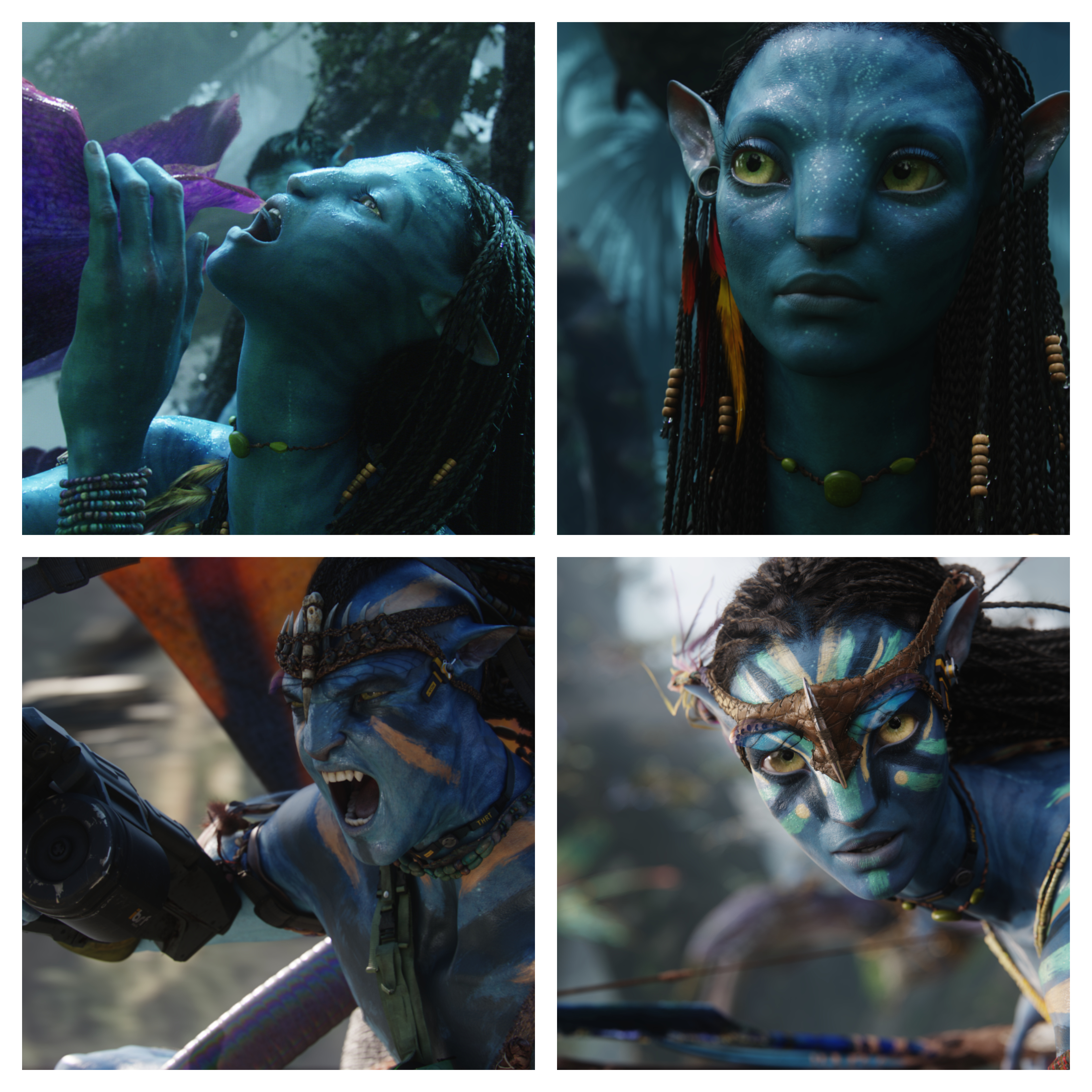 (The many faces of the Na'vi from Avatar which featured Gino's 'skin scans' for their textures. Image source 20th Century Fox/Lightstorm Entertainment)
Bringing Digital Characters to Life on War for the Planet of the Apes
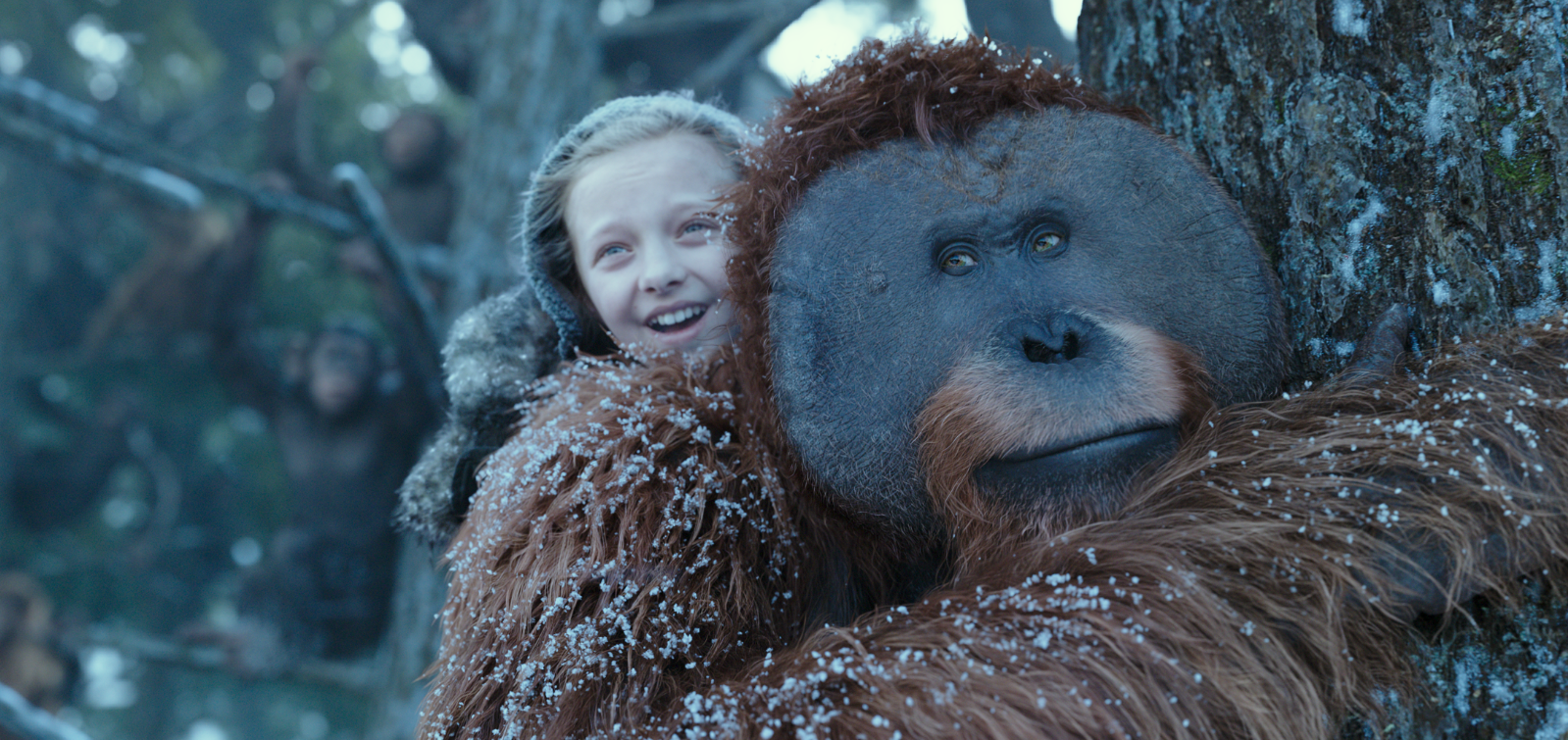 (Nova played by Amiah Miller and Maurice performed by Karin Konoval in War for the Planet of the Apes. Image source 20th Century Fox.)
War for the Planet of the Apes was the third in a series of ‘reboots’ based on the original Planet of the Apes films from the late sixties and early seventies. This third Apes film again starred mo-cap superstar Andy Serkis as the lead chimpanzee, Caesar, and also introduced Woody Harrelson to the series as Caesar's human nemesis. Weta Digital provided the effects and the genetically enhanced apes were, as in the previous installments of the series, performed using motion-capture or 'mo-cap'.
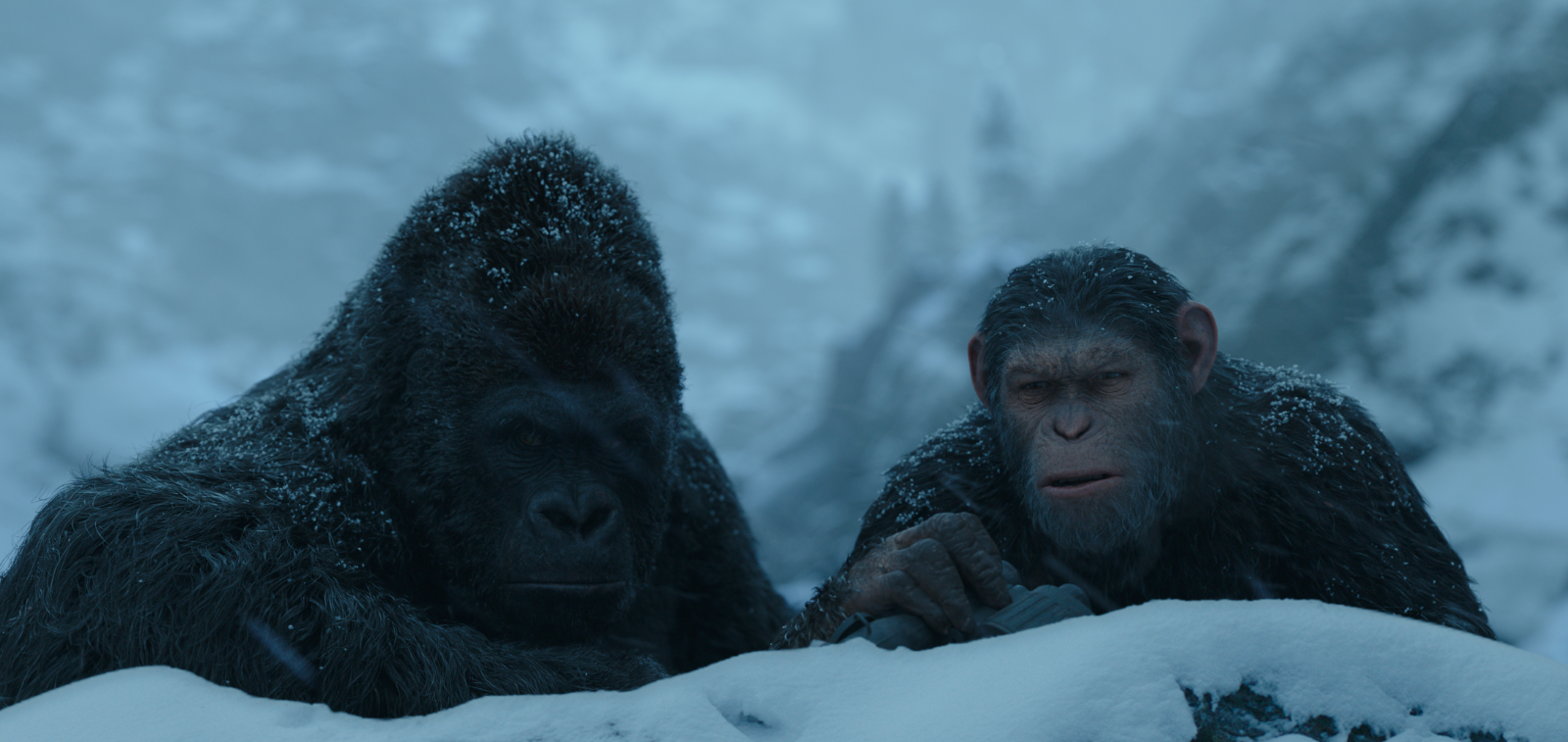
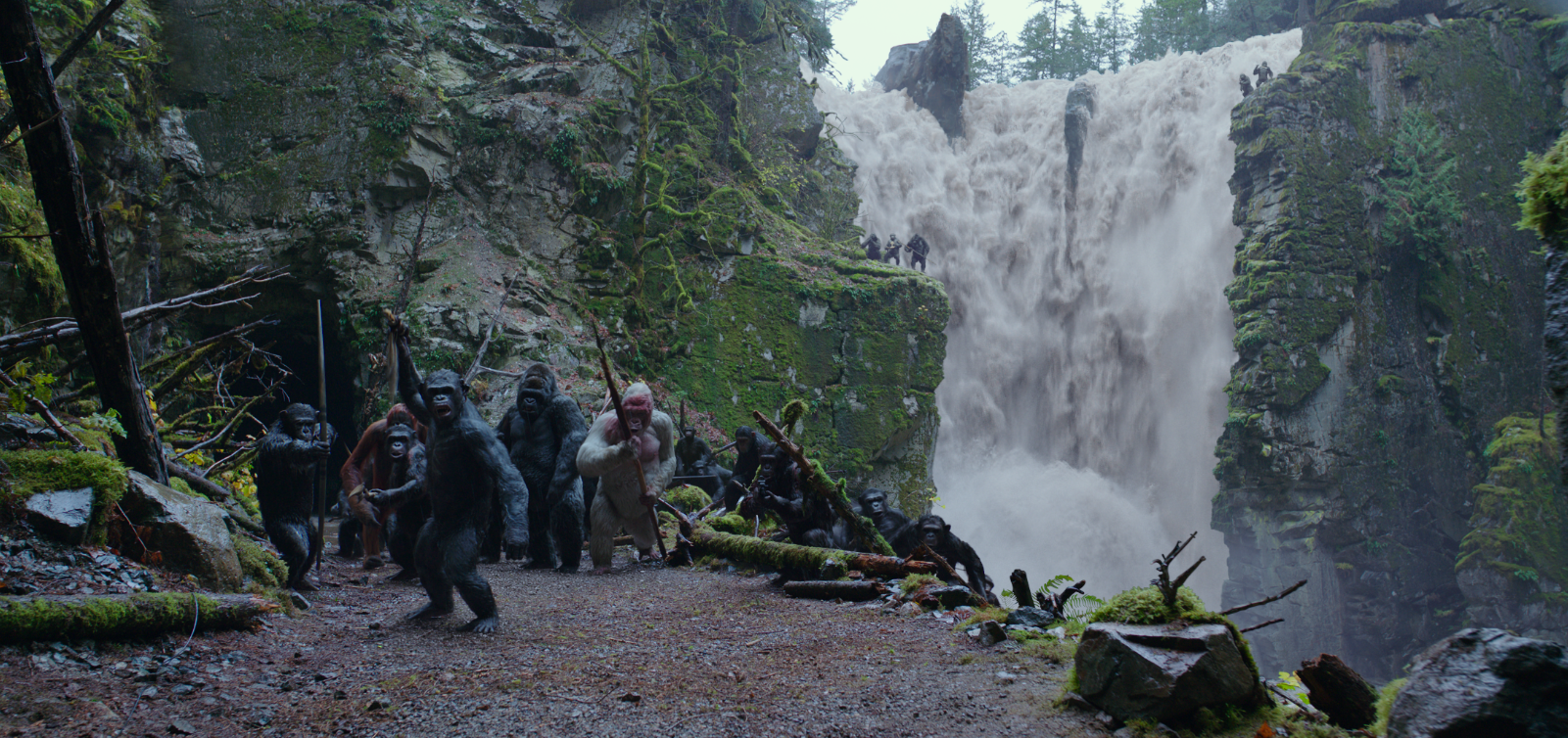 (Stills from War for the Planet of the Apes. Image source 20th Century Fox.)
Gino spoke of the advancements the digital texture team at Weta had made through the course of the three films in shading and hair work. One of the most significant things he brought to the table for these challenging projects was his collection of images and casts of apes and chimps. For years, dating back to Ed and even earlier, Gino had been collecting wonderful simian reference material. Sometimes when real chimps and orangutans in captivity would need to be knocked out for dental and veterinary work, Gino had even gotten permission to cast their hands, feet, and even a few faces. Just like in Avatar, textures from these ‘skin scans’, taken of the hand and feet castings, were used to replicate all of the tiny details, the little imperfections and nuances, that make a digital character “come to life.”
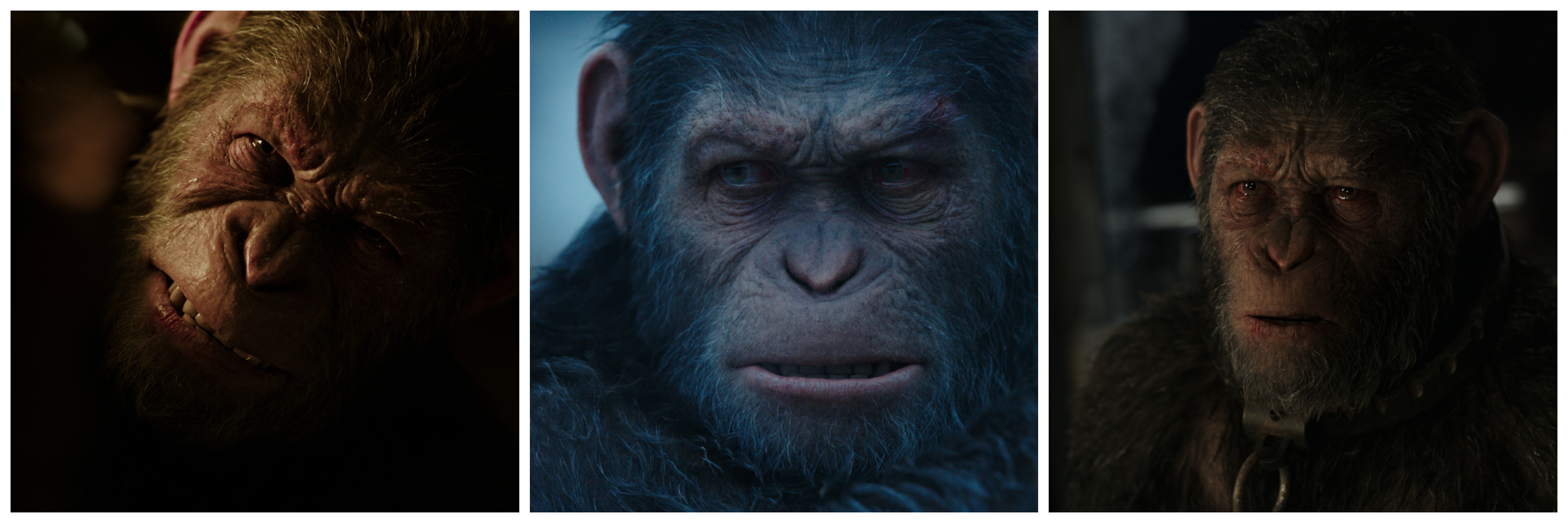
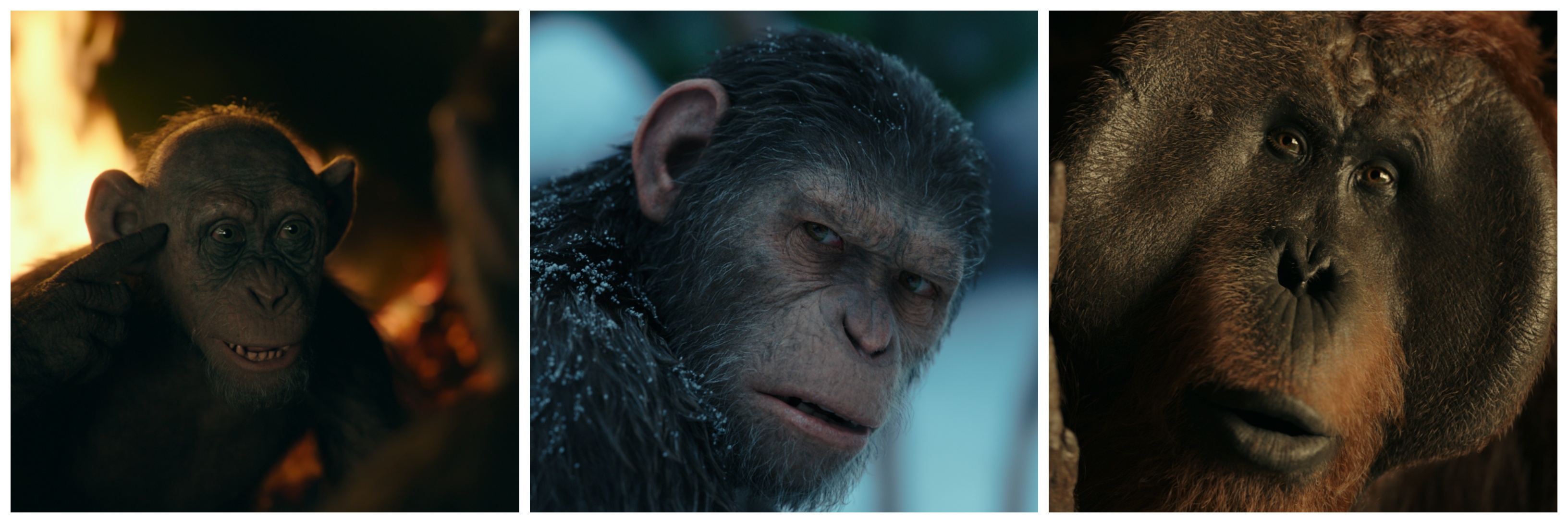 (Simian close-ups, the digital faces of the apes from War for the Planet of the Apes. All images courtesy 20th Century Fox.)
Chimps on Horseback
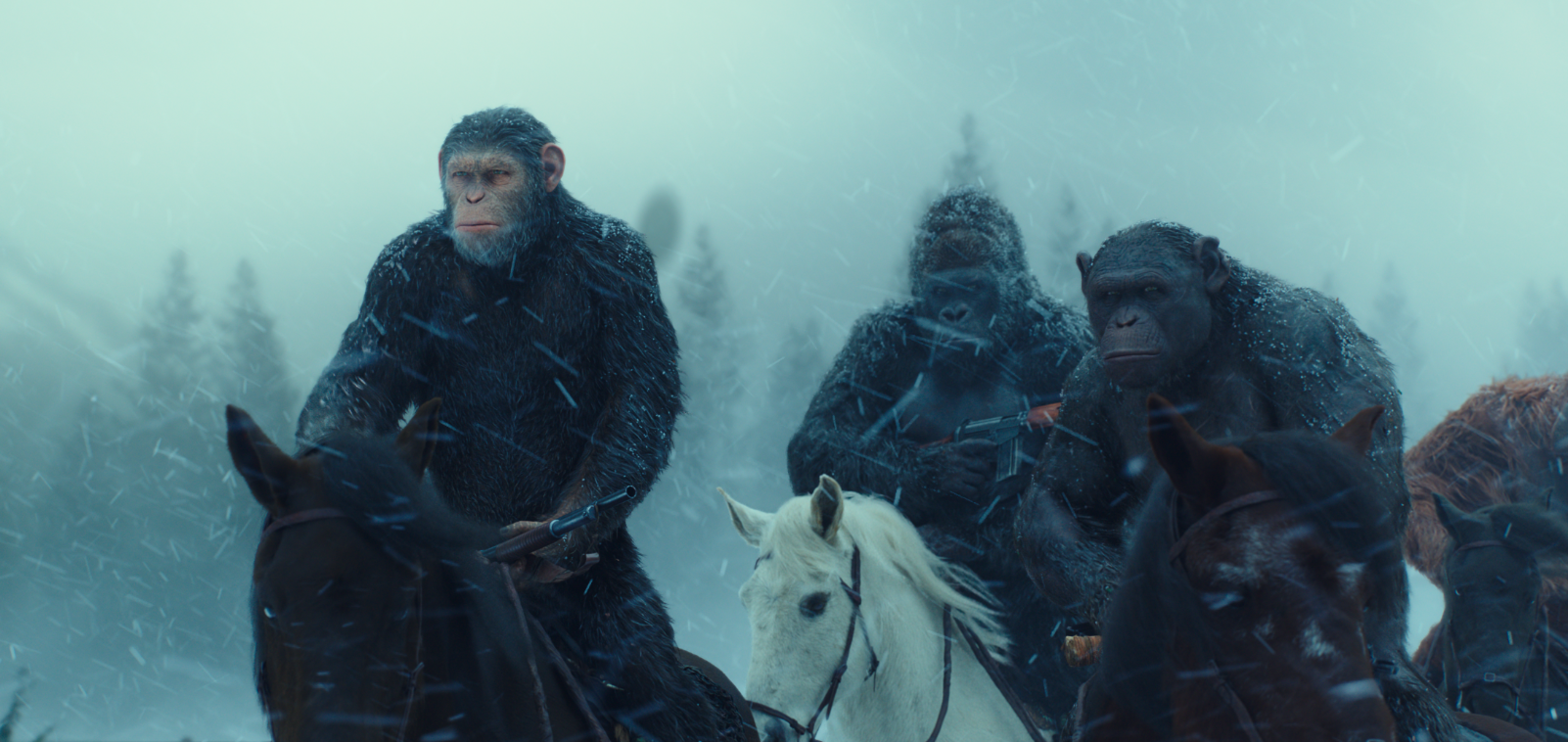 (Depicting simians on horseback presented a technical challenge for the mo-cap performers in War for the Planet of the Apes. All images courtesy 20th Century Fox.)
For shots of the digital chimps riding on horseback, human mo-cap performers were shot riding on actual horses. Gino says shots like these presented a particular challenge since human proportions, especially in the legs, don’t match. Chimp legs are much shorter.
Creating King Louie for The Jungle Book
For the Jon Favreau-directed The Jungle Book, Gino and his teammates at Weta Digital applied techniques developed for the Apes movies to create the giant orangutan King Louie, voiced by Christopher Walken.
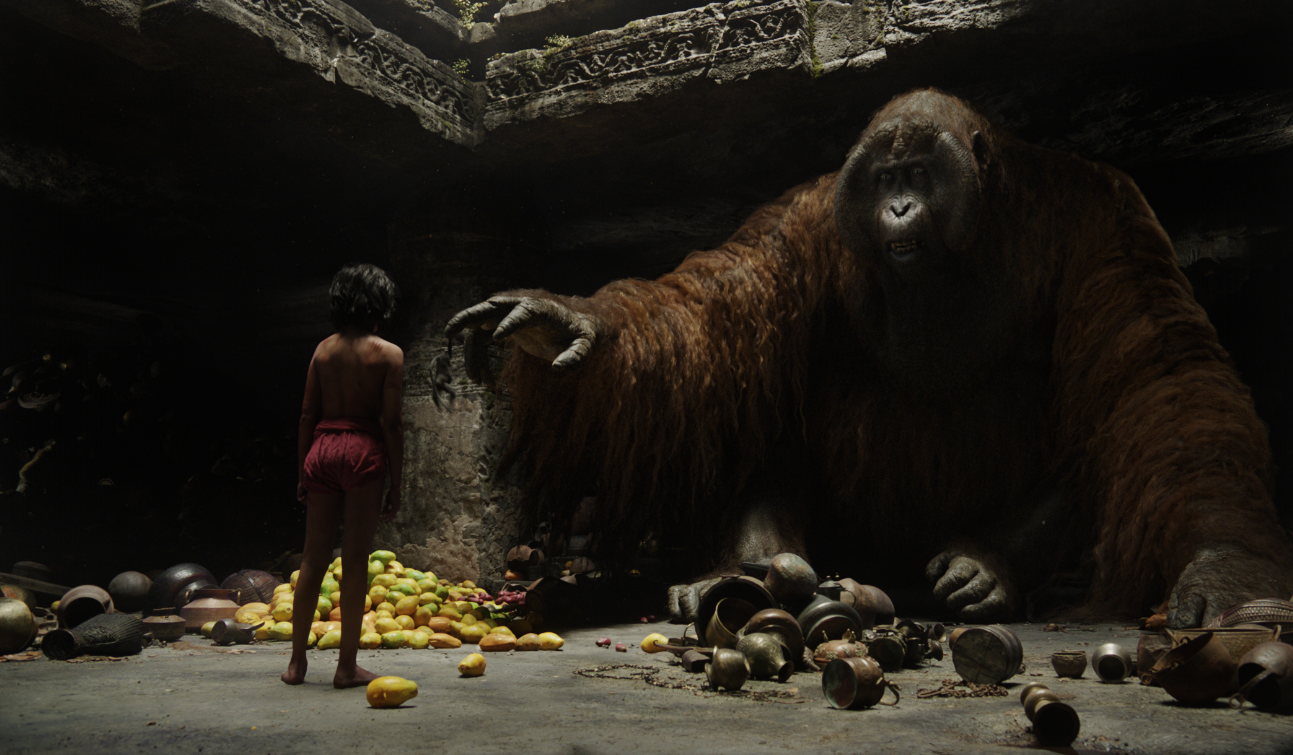 (Mowgli comes face to face with the digital King Louie in The Jungle Book. Image courtesy Walt Disney Pictures.)
Where Practical Meets Digital
Gino says what people don’t realize is how much practical artistry goes into making digital effects look great. From the layered painting techniques that caught Joe Letteri’s attention to his ‘skin scans’ taken from lifecasts, Gino says, “if the goal is to really mimic real life, lean on real life as much as you possibly can.”
Young Gino’s Nightmares

When Gino was a young boy, his father would often ask if his son had nightmares. Gino responded, “No, I don't have nightmares because I get them all out in my daily work. I put the monsters out in my real life and then I go to bed and I have sweet dreams.”
Thank you, Gino, for sharing your dreams with us!
More on Gino Acevedo
For more information and to hear the answers to questions asked by Stan Winston School of Character Arts students, watch our extended interview with Gino Acevedo at the top of the article. There you’ll find out some of Gino’s favorite movie monsters (the ones he didn’t work on), discover Gino’s favorite airbrush, and more!
The Stan Winston School of Character Arts would like to thank our friends David and Gita Cronin at Bone Clones for hosting our interview with Gino.