

Jump To Section
- The Birth of Stan Winston Digital
- Making of Skinwalkers (2006) at Stan Winston Studio
- Building Werewolf Suits for the "Skin-Walkers"
- Using Hybrid Character Effects: Digital Manipulation on Traditional Prosthetic Makeup
To watch the complete video, click the player above!
The Birth of Stan Winston Digital
As far back as 1993, after visiting Industrial Light & Magic to see the miraculous computer-animated dinosaurs the company created for Jurassic Park, Stan Winston had recognized the potential value of adding digital technologies to his character effects toolbox. Shortly after that visit, he invested in hardware and software to establish a small digital unit within Stan Winston Studio; subsequently, he incorporated that investment into Digital Domain, the visual effects company he co-founded with Scott Ross and James Cameron.
 (The weeping angel statue that Digital Domain brought to life for Interview with the Vampire (1994). Gif courtesy of Geffen Pictures and Warner Bros.)
When Digital Domain grew too large, Stan Winston again considered forming a digital unit under his own roof — but due to a five-year non-competition clause with Digital Domain, he had to wait. The wait period turned out to be fortuitous because, by the time the five years had expired, hardware and software had become less expensive and more accessible, due to the increased power and capabilities of desktop computers. “The technology had changed so much,” Winston said, “and had come down so much in price, my investment didn’t have to be nearly as exorbitant as it was when I first started my digital unit. On top of that, I now had the experience of having co-founded a large digital company, and so I understood the limitations, capabilities, and what worked, as well as what didn’t. I was much better informed.”
Aaron Sims worked as a one-man digital department at Stan Winston Studio for nearly a year, doing small projects such as creating an introductory logo and digital effects for Winston’s Creature Features movies that aired on HBO and Cinemax. In 2001, Randall Rosa and André Bustanoby — who had worked at Digital Domain as an animation supervisor and visual effects supervisor, respectively — joined Sims, and Stan Winston Digital was born.
 (The official logo of Stan Winston Studio’s new division, Stan Winston Digital.)
Stan Winston Digital explored a more innovative use of the technology, developing digital effects that work in tandem with the studio’s live-action puppets and makeups to create hybrid characters that are part digital, part live-action. Although another digital effects company did the final work for Skinwalkers, Stan Winston Digital tested a hybrid approach for the werewolves by digitally manipulating the eyes on the werewolf makeups to achieve a more dynamic effect than what could be realized with makeup alone.
 (John Rosengrant, Jason Behr in Varek’s werewolf makeup, and Stan Winston growl at the camera in the makeup room at Stan Winston Studio.)
Making of Skinwalkers (2006) at Stan Winston Studio
In December 2006, Lions Gate Films released Skinwalkers, a film about a young boy, Timothy (Matthew Knight), whose identity as a ‘half-blood’ werewolf is revealed as he approaches his thirteenth birthday. The momentous occasion stirs conflict between the werewolf pack that has protected Timothy from birth and those werewolves who would do him harm.
 (Three of the main antagonist werewolves: Natassia Malthe as Sonja, Jason Behr as Varek, and Kim Coates as Zo in werewolf makeups on the set of Skinwalkers.)
Rather than a straight horror film, Skinwalkers represented Stan Winston’s commitment to story and character-driven films, whether they be in the family fantasy, science fiction, or horror genres. “Even though Skinwalkers is about werewolves,” said Stan Winston, “it isn’t really a horror movie. The werewolves are actual characters, and the movie is about the relationships between those characters.”
 (Kim Coates in Zo's transformation makeup has a chat with Stan Winston on the set of Skinwalkers.)
Skinwalkers was shot entirely on location in Canada by director James Isaac on a 40-day schedule.
 (Some of the Skinwalkers' crew members, together with Sonja, Varek, and Zo, on the set of Skinwalkers.)
The prospect of creating werewolves was irresistibly appealing to Stan Winston, who had been a lover of the mythical characters since childhood.
 (Thirteen-year-old Stan Winston in his self-styled werewolf makeup.)
“I have always wanted to do the consummate werewolf,” Winston admitted. “My werewolf. I haven’t seen my werewolf in the movies yet. I’ve seen werewolves that were really good — the werewolves in The Howling [1981] that Rob Bottin did, the werewolf in An American Werewolf in London [1981] that Rick Baker did. But I haven’t seen any good werewolves since. What I have seen is a lot of misuse of technology. I’ve seen big animatronic wolf heads on people’s bodies. I’ve seen CG werewolves that were generic creatures, that didn’t have personality, performance, or character. I wanted to go back to the kinds of werewolves — like those played by Lon Chaney and Oliver Reed — where there was actually a character there, where you could see the people inside the werewolves. They weren’t just beasts. I wanted the werewolves in Skinwalkers to still be recognizable human characters. And I wanted to do them in a way that would allow the actors to act.”
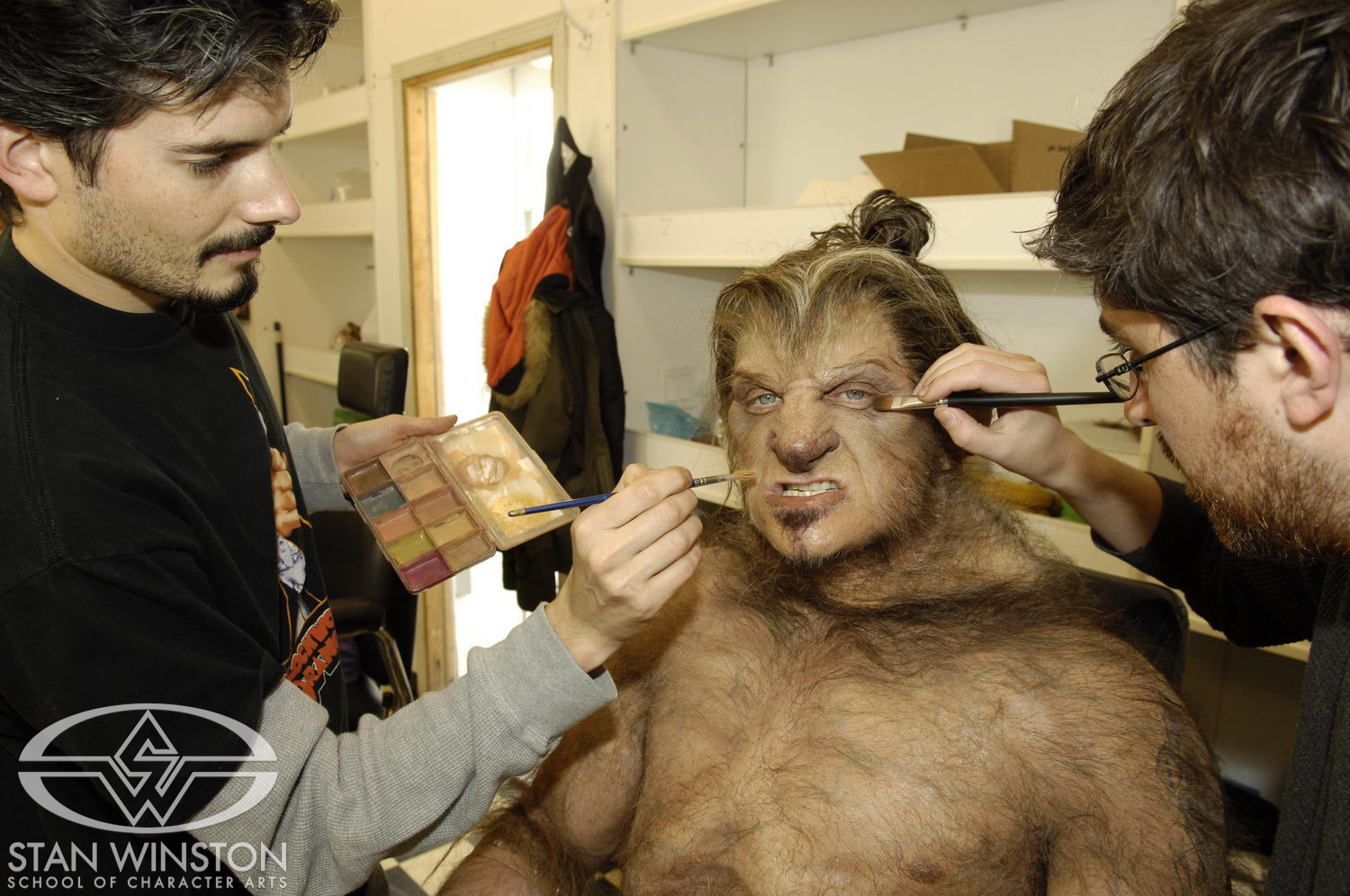 (Sean Sansom and Neil Morrill apply the werewolf makeup to Kim Coates.)
Building Werewolf Suits for the "Skin-Walkers"
To do that, the studio designed and built the werewolves as suits and silicone makeups, rather than actor-encasing mechanical heads.
 (L: Rogue Johnston posing for his character, Grenier. R: Stage 4 concept work of Grenier's werewolf transformation.)
 (L: Elias Koteas posing for his character, Jonas Talbot. R: Stage 4 concept work of Talbot's werewolf transformation.)
After the crew had done makeup tests on John Rosengrant, Joey Orosco, and Chris Swift, they sculpted designs for the five main werewolf characters over life casts of the actors portraying them.
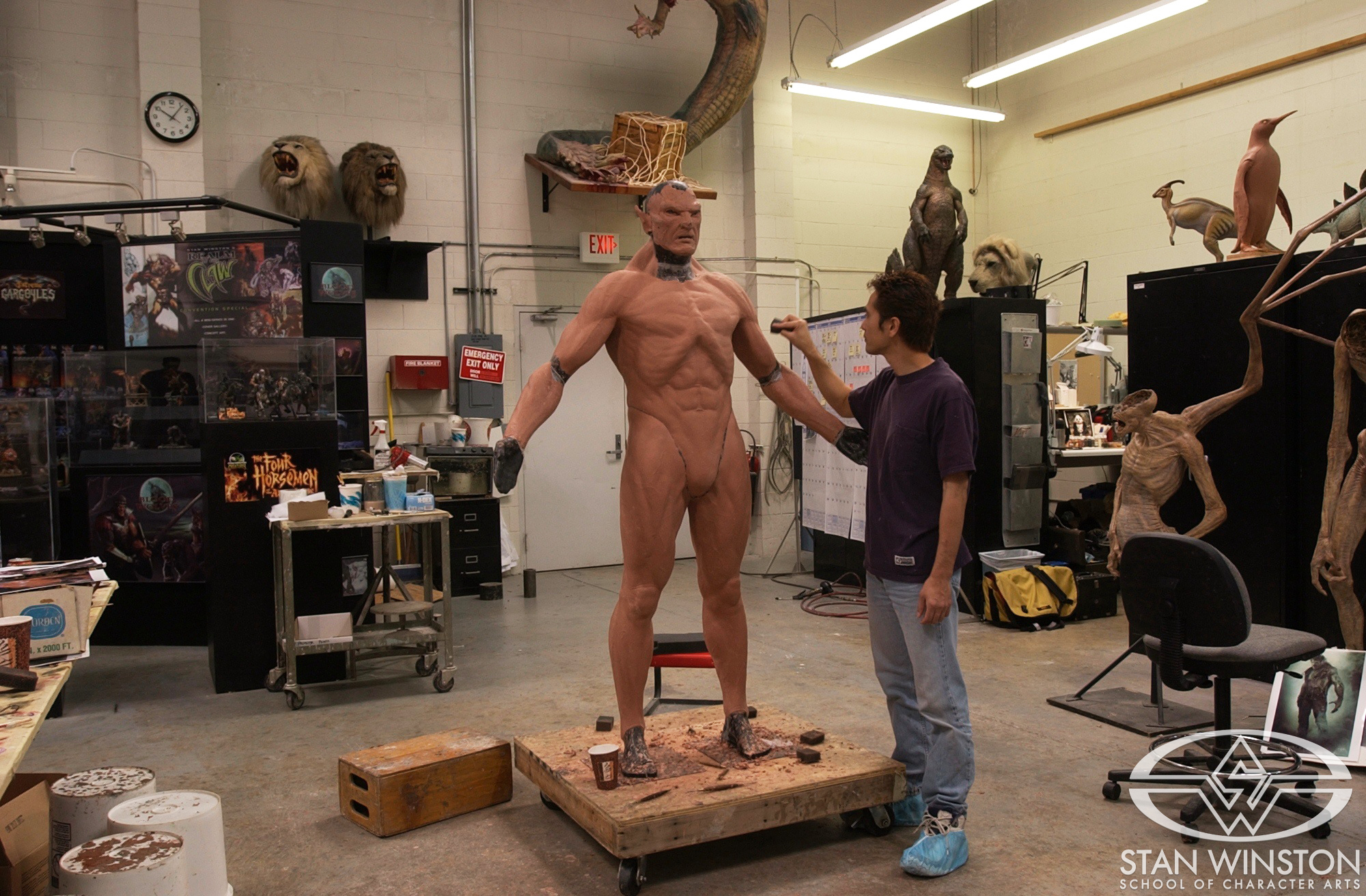 (Hiroshi Katagiri works on Zo's full body werewolf sculpture at Stan Winston Studio.)
 (Hair punching Zo's life-size torso at Stan Winston Studio.)
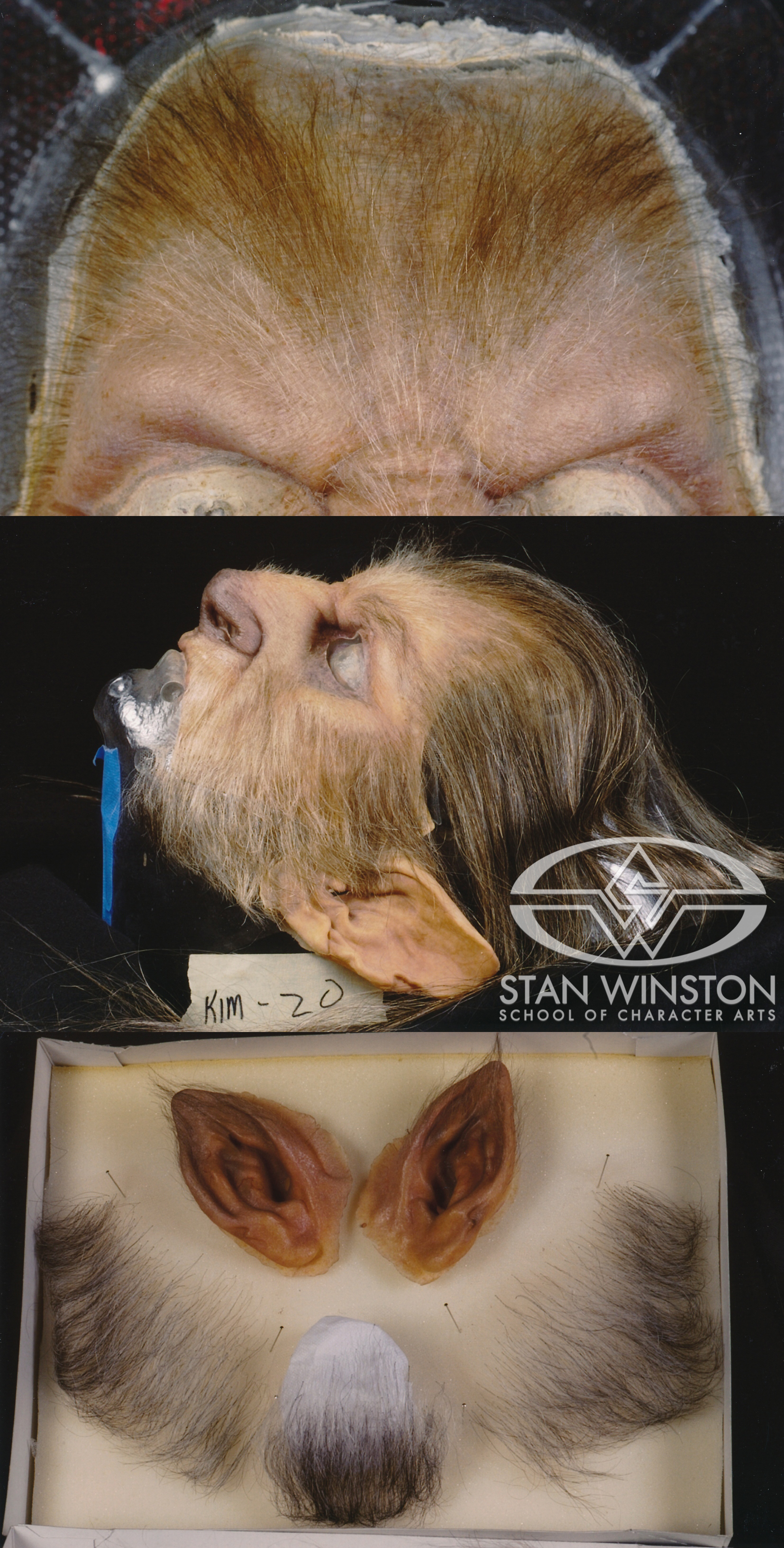 (Various werewolf prosthetic appliances for Kim Coates' character, ready for application.)
“We made five suits,” said Trevor Hensley, “and for each of those suits, we made multiple full-face makeup appliances. Fortunately, we didn’t have to do werewolf legs and feet, because — to save some money — they’d decided to have the main werewolves half-clothed.”
 (Rogue Johnston as Grenier in the final werewolf makeup on the set of Skinwalkers.)
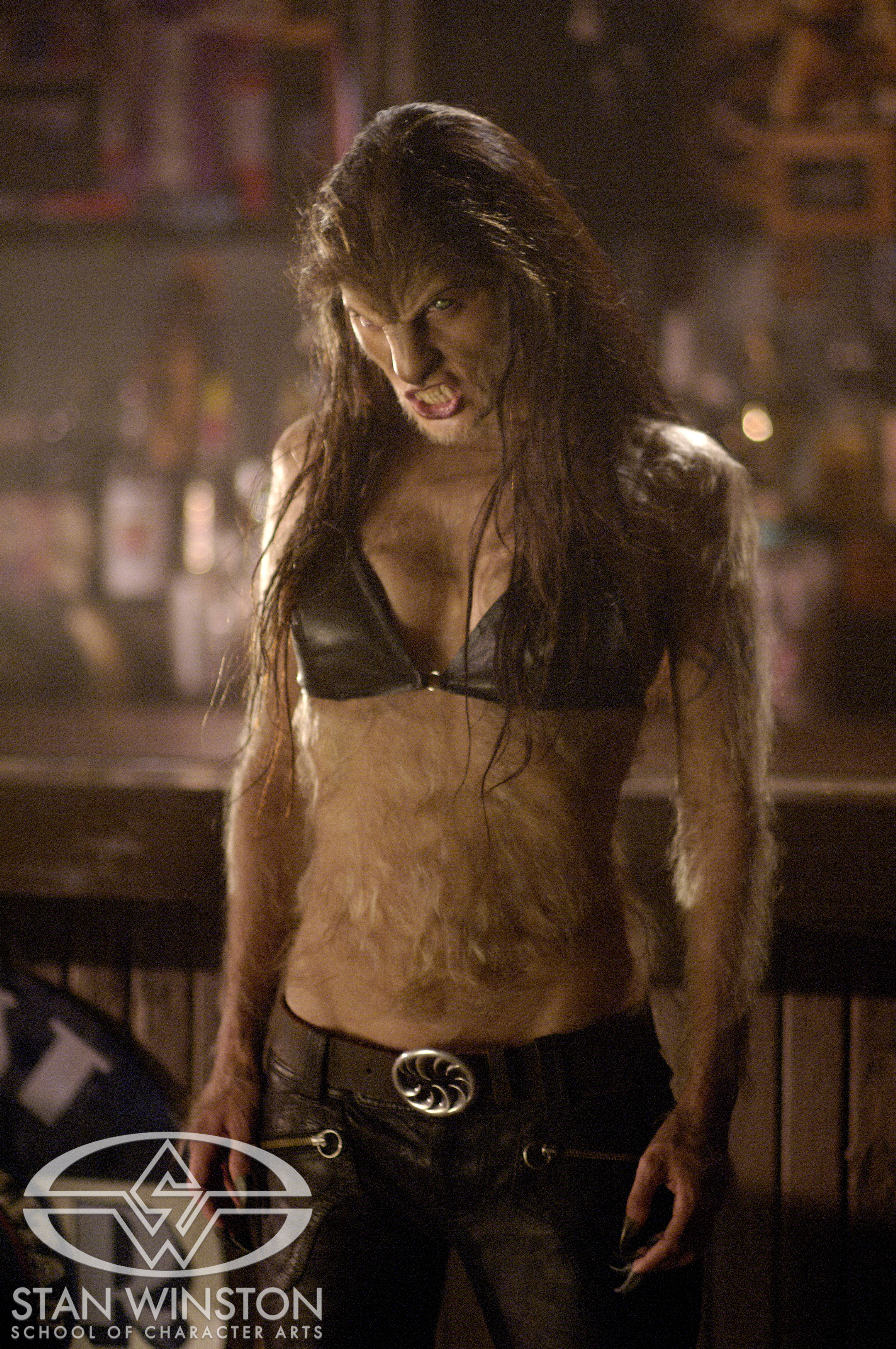 (Natassia Malthe as Sonja on the set of Skinwalkers.)
Using Hybrid Character Effects: Digital Manipulation on Traditional Prosthetic Makeup
Just as the studio had combined live-action effects with computer graphics to create more dynamic characters for Zathura and Eight Below, Winston and his team used digital manipulation on the traditional prosthetic makeups to create more interesting werewolves for Skinwalkers.
 (From L to R: Natassia Malthe poses as a werewolf for a transformation concept artwork.)
“We used CG,” explained Winston, “but we did it in a way that was magical and undetectable, to create an illusion in which the technique that was used wasn’t readily apparent to an audience. The werewolves appeared to be makeups on actors, because you could still see the actor beneath the makeup, and yet, it looked like more than a makeup because the features didn’t adhere to human facial structure. The eyes were spread apart and slanted upwards slightly — very eerie, very animal — which is an effect we did digitally. Again, we were hiding the guy-in-a-suit technique using digital technology. We had this actor in makeup, but we tweaked it in the computer just enough to make you go, ‘Whoa — that’s not just a makeup.’ People may not even notice it consciously, but they’ll know there is something very unusual about these characters. With Skinwalkers, we were able to create something more in the style of the classic Wolf Man, in terms of character, but take it a step further through techniques that weren’t available back when the 1940s Wolf Man movies were done.”
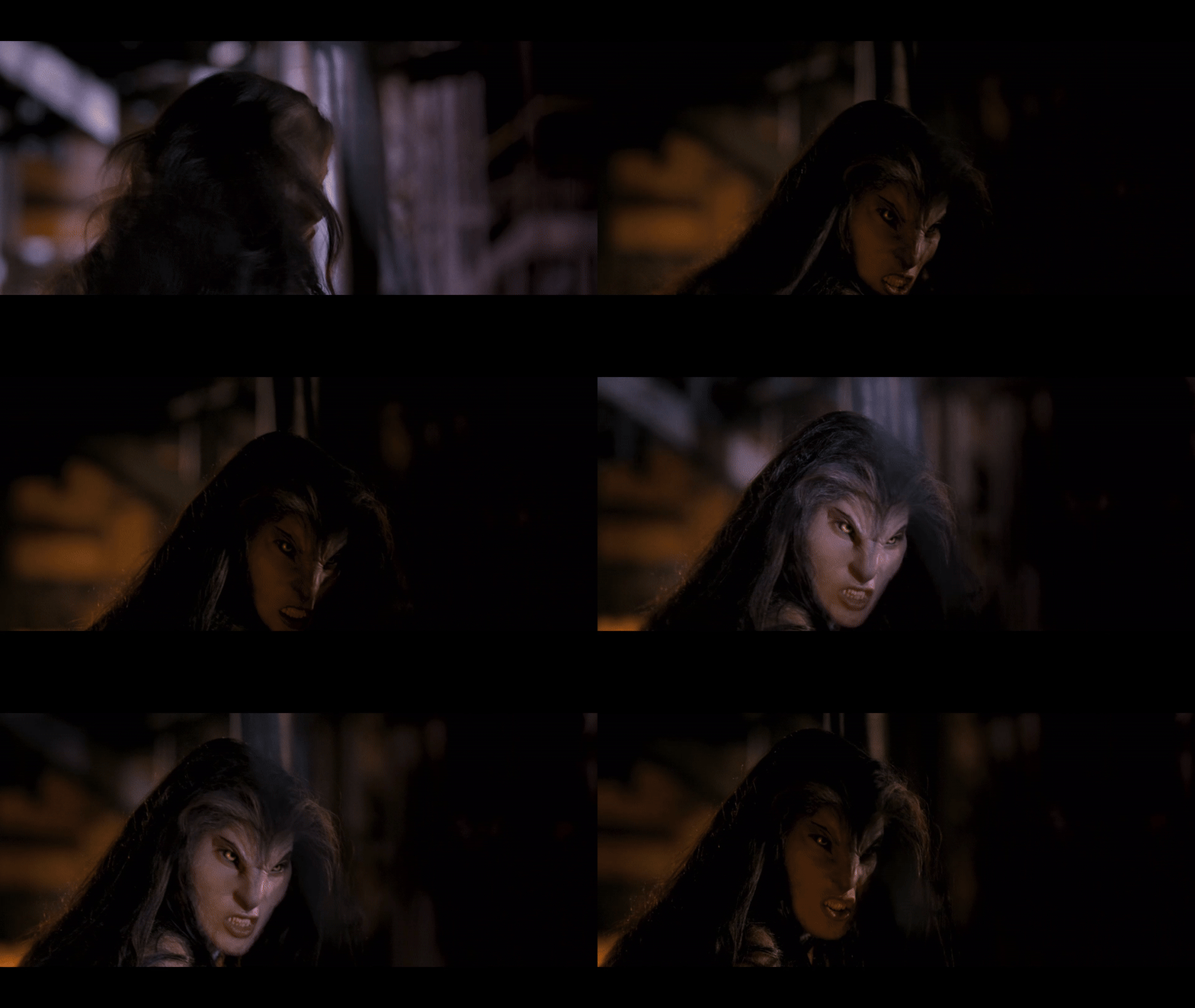 (Sonja with the digitally manipulated eyes in the movie Skinwalkers. Gif courtesy of Lionsgate, Constantin Film, and Red Moon Films.)
The Stan Winston Studio devised a hybrid digital/practical makeup technique to achieve the animalistic look of the werewolves while maintaining the actors' facial characteristics. Having to anticipate and accommodate eventual digital manipulation made the makeup sculpting much more challenging. “That was one of the toughest sculptures I’ve ever done,” Joey Orosco commented, “because that sculpture wasn’t going to be the final look. The final look wouldn’t be achieved until the tweaking had been done on the computer. My sculpture was only fifty percent of the final look. As a result, when it was still in maquette form, or when you saw a test makeup in photos, it looked strange. I was sculpting somewhat blind, creating these weird shapes and forms that were going to be moved around in the computer.”
 (Joey Orosco working on Varek's sculpture at Stan Winston Studio.)
 (John Rosengrant testing Varek's makeups at Stan Winston Studio. The makeups would later be enhanced by digital effects.)
 (John Rosengrant tests werewolf contact lenses and teeth for the werewolf transformations.)
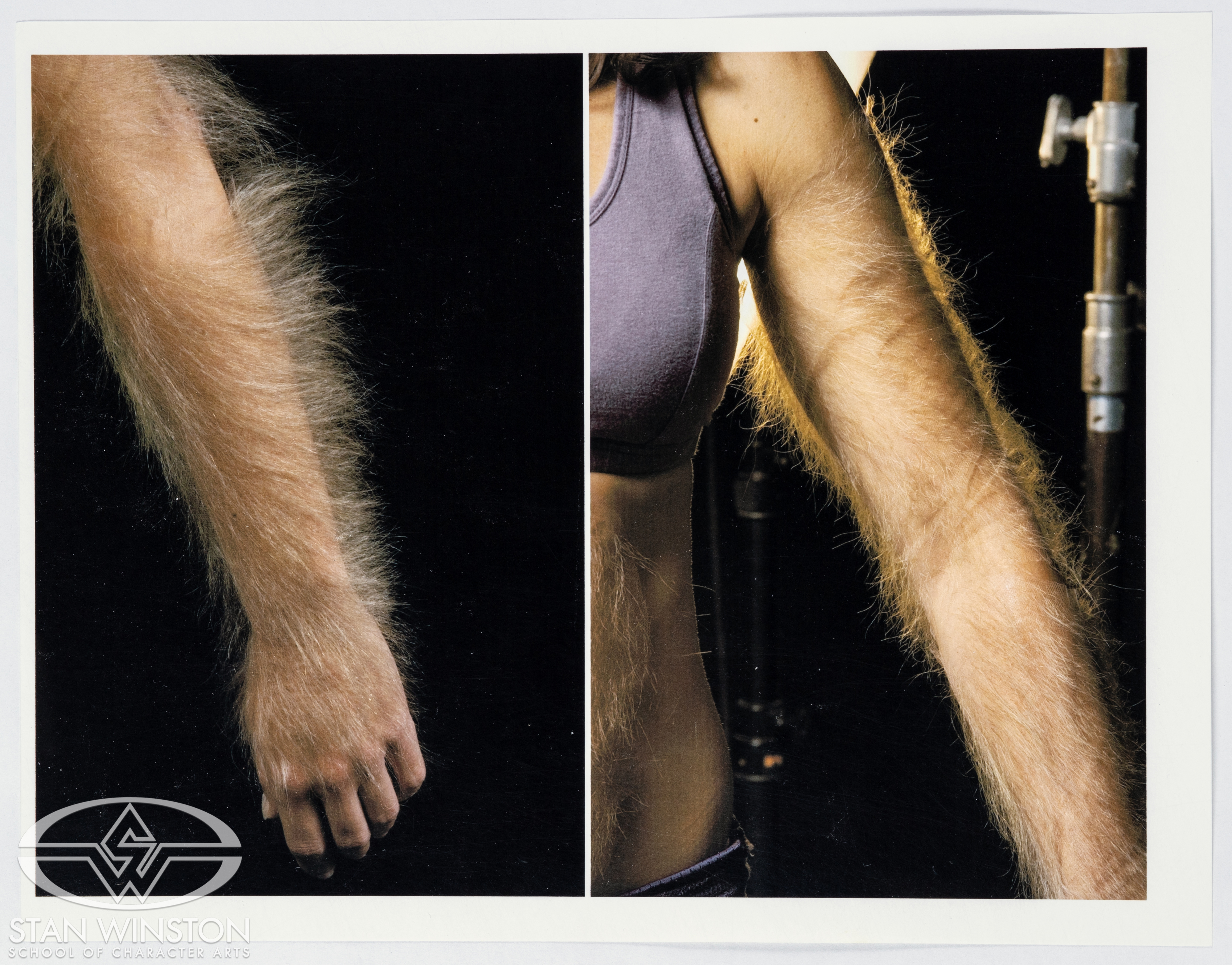 (Natassia Malthe tests angora fur on her arm and body at Stan Winston Studio.)
The technique of digitally manipulating a practical makeup or puppet to create a character that is greater than what could be achieved with either CG or live creature effects alone — a technique showcased brilliantly in Skinwalkers — represented a new and exciting direction for Stan Winston Studio. “It’s a niche we’re creating for ourselves,” said Shane Mahan, “and it’s the next important step for us. This hybrid approach gives filmmakers the immediacy and interactivity of having something physically on the set, but also gives them the advantages of digital, in that they are not limited as to the look and behavior of their characters. It is great for us as designers, as well, because it means that we can be much more free and creative in what kinds of characters we produce. And, when the digital work is under the same roof as the live-action work, we can supervise it and maintain control of it. It’s not like it goes off to some other company. Some people who work in the digital field can be fantastic technical animators or compositors, but they may not have the best artistic eye. That’s what Stan and this studio have to offer. It still comes down to the art. That’s what we’re about.”
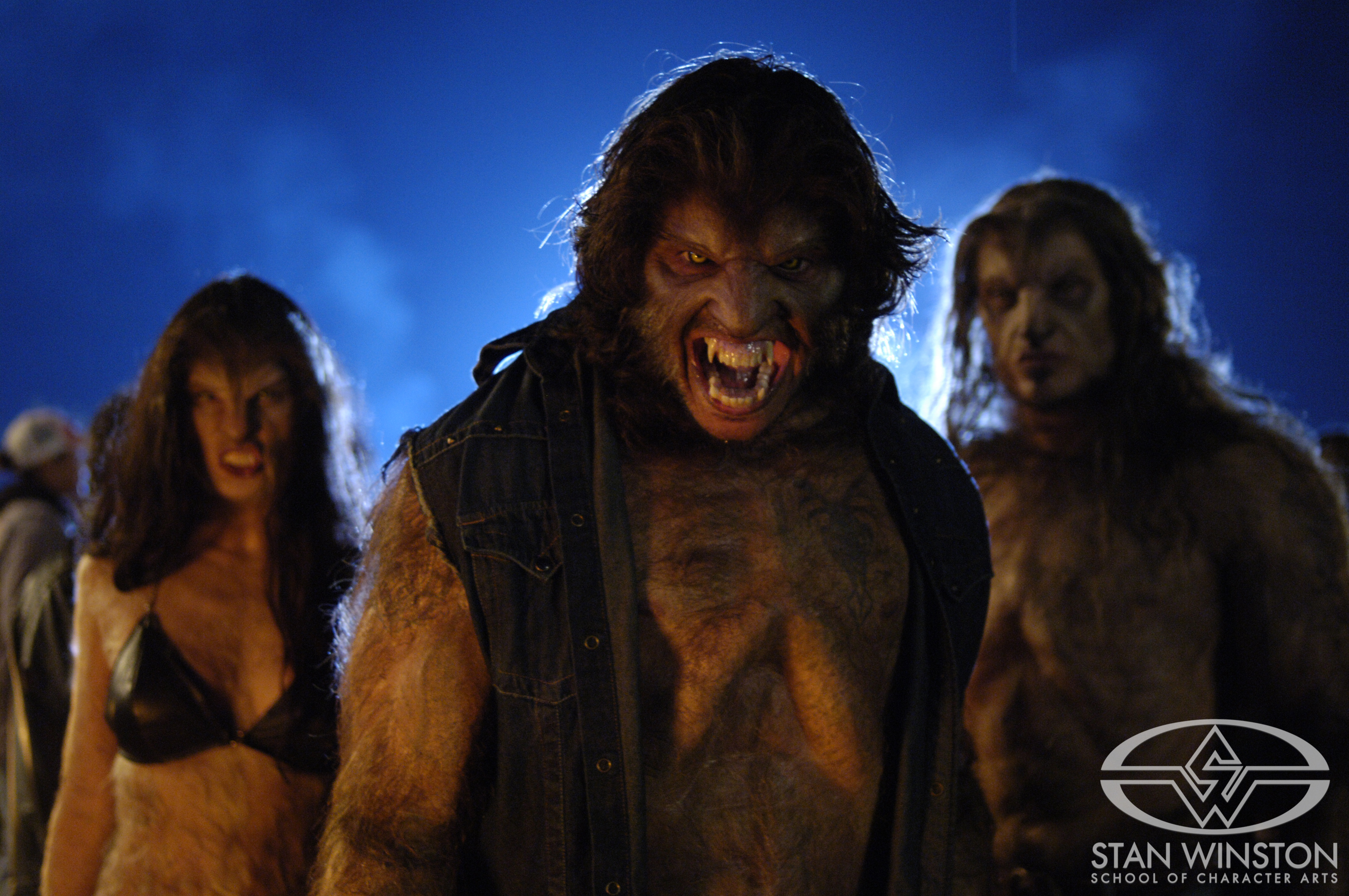 (Natassia Malthe as Sonja, Jason Behr as Varek, and Kim Coates as Zo on the set of Skinwalkers (2006).)
- Blog is excerpted from The Winston Effect: The Art and History of Stan Winston Studio by Jody Duncan
To create your own Hybrid Character Effects, check out these courses by the creators of Skinwalker (2006):
- Hybrid Characters: Blending Practical & Digital FX with John Rosengrant
- Hybrid Character Design: Practical to Digital with Christopher Swift
More courses with the creators of Skinwalkers (2006):
- Special Effects Sequence Design with Shane Mahan
- How To Make A Fat Suit with Dawn Dininger
- Creature Costume Basics with Amy Whetsel & Dawn Dininger
- Character Hairwork: Hair Laying for Prosthetic Makeup with Aimee Macabeo
- Making Creature Eyes with John Cherevka
- How to Make Eyes: Puppets, Masks & Makeups with John Cherevka
- Advanced Creature Teeth: Prosthetic Dental Appliances - Part 1 with John Cherevka
- Maquette Painting Techniques with Trevor Hensley