
By Lexi Stewart
Let's be honest: last year was a turbulent time for film and television. Despite that, the industry was back in fine form in 2024 with great releases to coax audiences to visit the cinema and renew their streaming subscriptions. This year has been a wild ride for movies and TV shows!
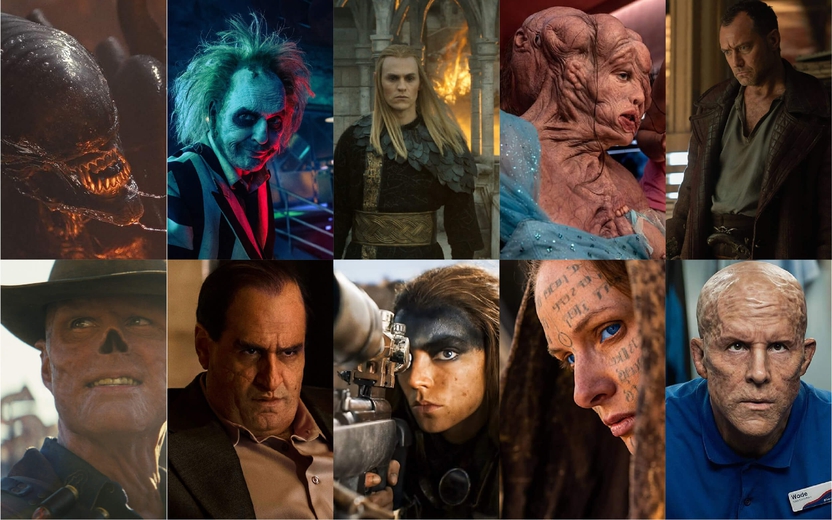
AI trends and heavy CGI have dominated the last few years, but audiences are still increasingly drawn to the tangible magic of practical effects. From the grotesque to the glamorous, these effects offer a unique sense of realism and wonder that digital effects cannot always effectively replicate. As we wind down the year, it's time to celebrate the most groundbreaking and awe-inspiring practical and makeup effects that have captivated audiences worldwide. Read on to see which ten finalists our community voted for this year!
(Images via Prime Video)
10. Rings of Power: Season 2
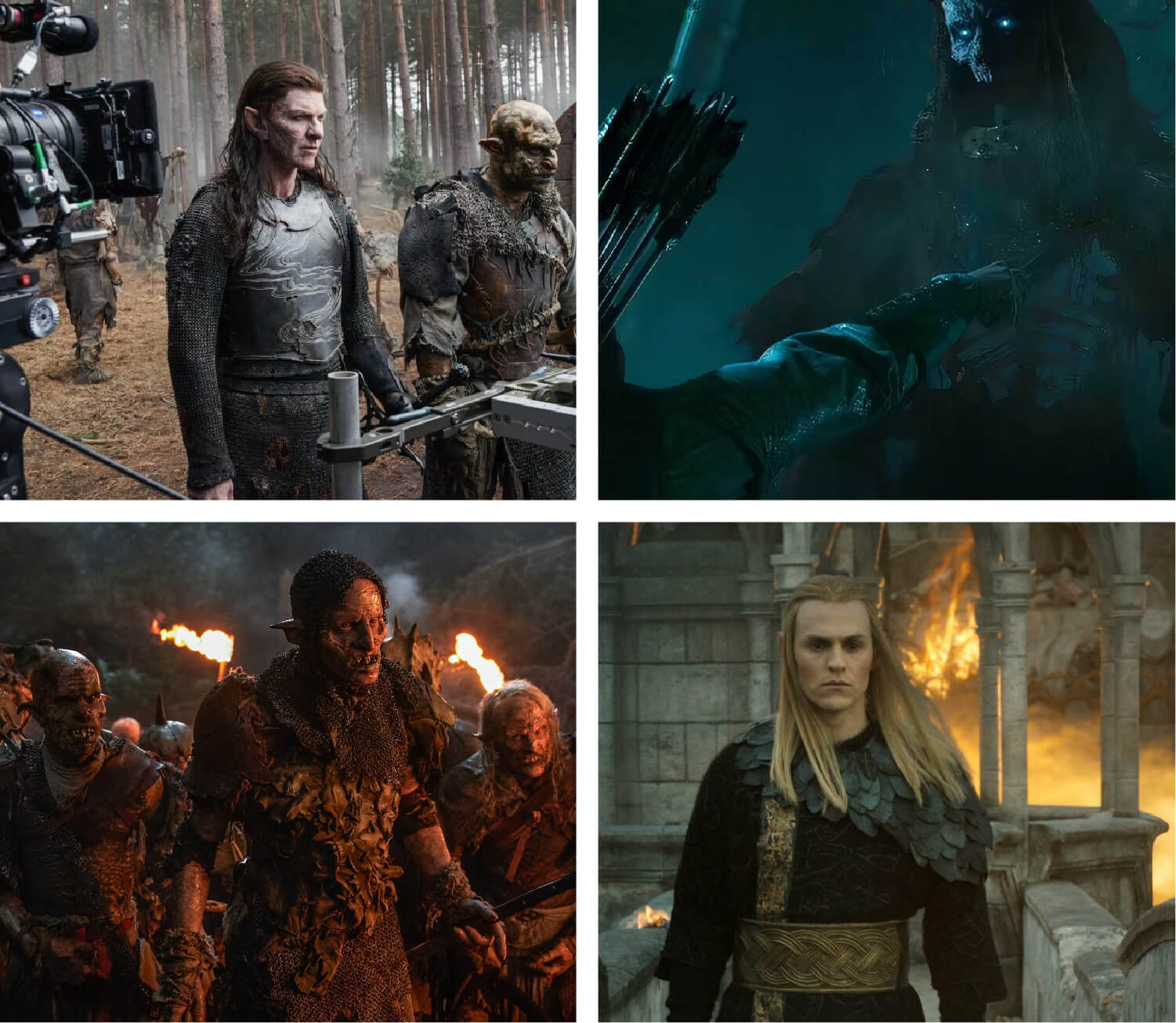
Starting our list, we have the latest installment of Prime Video's The Lord of the Rings prequel, The Rings of Power. Season 2 delves deeper into the Second Age of Middle-earth, the forging of the Rings of Power, and the rise of the Dark Lord Sauron. Compared to last season, which spent time building the Tolkien world, this season finally starts to raise the stakes and bring us closer to the penultimate battle between good and evil.
The Rings of Power continues to captivate audiences with its stunning visual effects, and Season 2 was no exception. A key factor in the show's success was the exceptional work of prosthetic makeup designer Barrie Gower and his team. While Gower had a minor role in Season 1, he took the lead in Season 2, overseeing the creation of a wide range of creatures and characters.
According to Gower, there was no shortage of creatures and characters to create throughout the production. "We had our Elves and our Dwarves and our Harfoots and our Barrow-wights. It was fascinating working on a production where we had somebody in some form of prosthetics every single day of the shoot. We've never worked on a show where we had two main prosthetic buses on different units, and we usually had 6-8 principal cast in some form of prosthetics every single day. So, it's been unprecedented for us."
One of the most ambitious undertakings of the season was the opening flashback sequence featuring the orcs and Sauron. This scene required a staggering 20-60 performers to be transformed daily, wearing a mix and match of intricate prosthetic makeups. The scale and complexity of this task were immense, and Gower had a team of over 100 artists on their busiest days. He explained to Screenrant, "We started devising a technique, which is similar to what we've done before for big crowd days, where we sculpted about 10, 15, 20 different orcs, different shapes and sizes over different human head casts, and we split all the makeups up into a jigsaw puzzle of pieces, but they all had foreheads, face with nose, chin, a balaclava with ears."
Another highlight was the Barrow-wights, a terrifying race of undead beings. It was agreed that the team would create the creatures practically as much as possible so they looked authentic on-set. Gower assumed most of the final shots would be CGI-heavy, but was pleasantly surprised at the final result. Gower remarked, "It wasn't until I watched the episode a few weeks ago that I was thinking, 'I imagine there'll be predominantly CGI,' but I could see the makeups and see the performances in there as well. It's a great example of that perfect marriage between practical and digital, I think. The whole season's just been a joy to work with visual effects, actually."
(Images via Lucasfilm)
9. Star Wars: Skeleton Crew
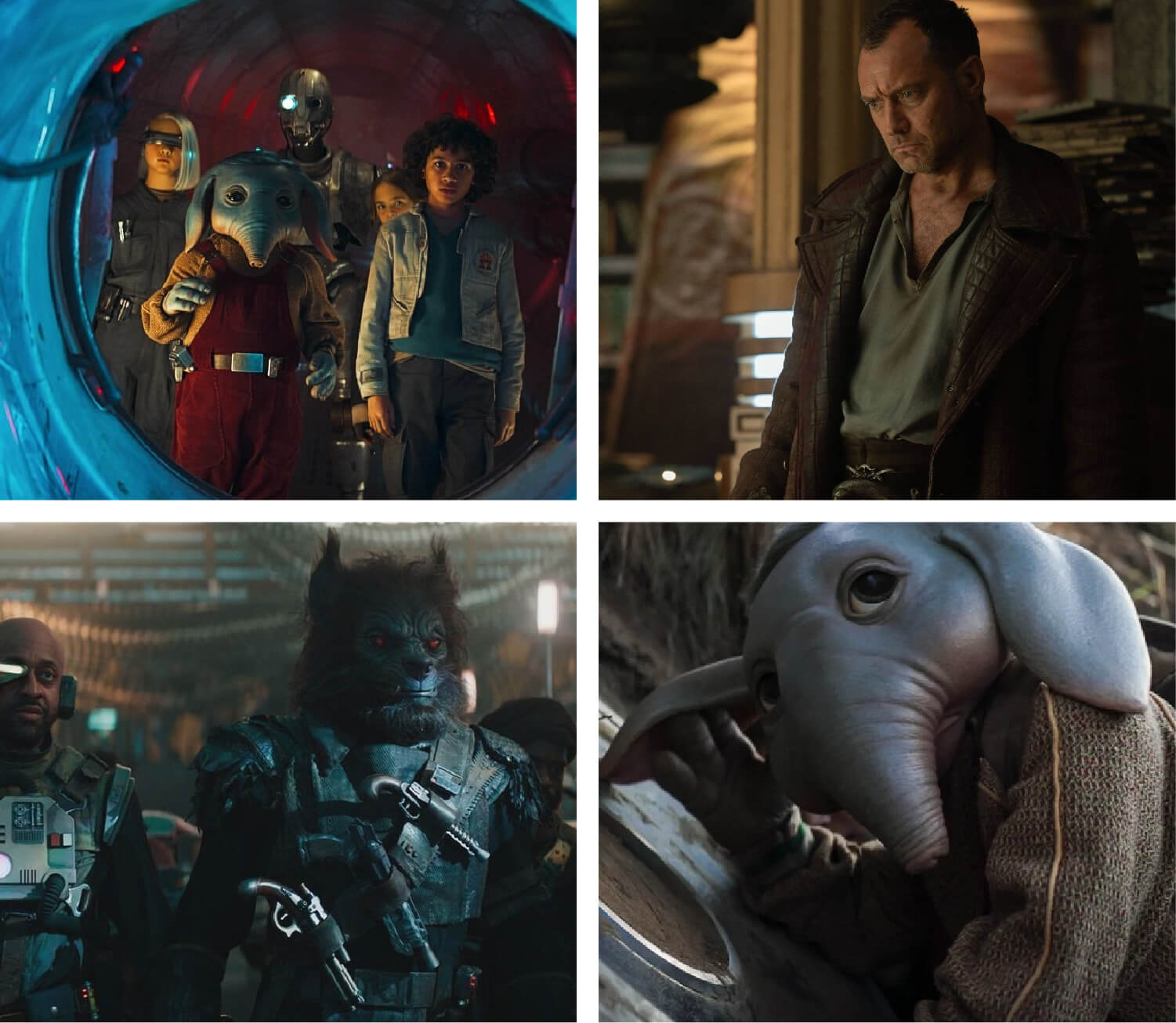
This next pick offers a fresh perspective on the Star Wars universe, focusing on a new generation of heroes. Star Wars: Skeleton Crew follows a group of lost kids navigating a perilous journey, encountering iconic characters, and facing dangerous threats while searching for a way home.
Creator and director Jon Watts embraced a hybrid approach, combining motion capture technology (The Volume), puppetry, stop-motion animation, and even matte painting to bring the fantastical world to life alongside veterans from Legacy Effects, ILM, and Lucasfilm.
The Star Wars universe has a rich history of puppetry and animatronics, and Skeleton Crew continues this tradition. The series features a captivating array of droid character puppets, including the memorable SM-33 (voiced by Nick Frost). Legendary stop-motion animator Phil Tippett also came on board to craft a stunning stop-motion sequence featuring a Harryhausen-esque alien creature. Watts told Indiewire, "It's fun because the puppeteers are such artists, making something so alive. Ironically, the thing that makes it special is erasing the puppeteer from the shot. Leaving what was really there practically just makes it feel so much more real. It just made David so happy."
Embracing both high and low-tech methods helped retain the familiar authenticity audiences seek. Watts explains, "It almost became a bucket list of every old-school VFX technique. We did a lot of physical models, and the one for the kids' ship had amazing detail with moving engines. John [Knoll] built his own motion control rig from scratch. There were people working in their garages because that's where these things happen now." By leveraging digital and practical tools, the production team achieved a stunning visual aesthetic that pays homage to the classic Star Wars films while embracing the latest technology.
(Images via Warner Bros/Jasin Boland)
8. Furiosa: A Mad Max Saga
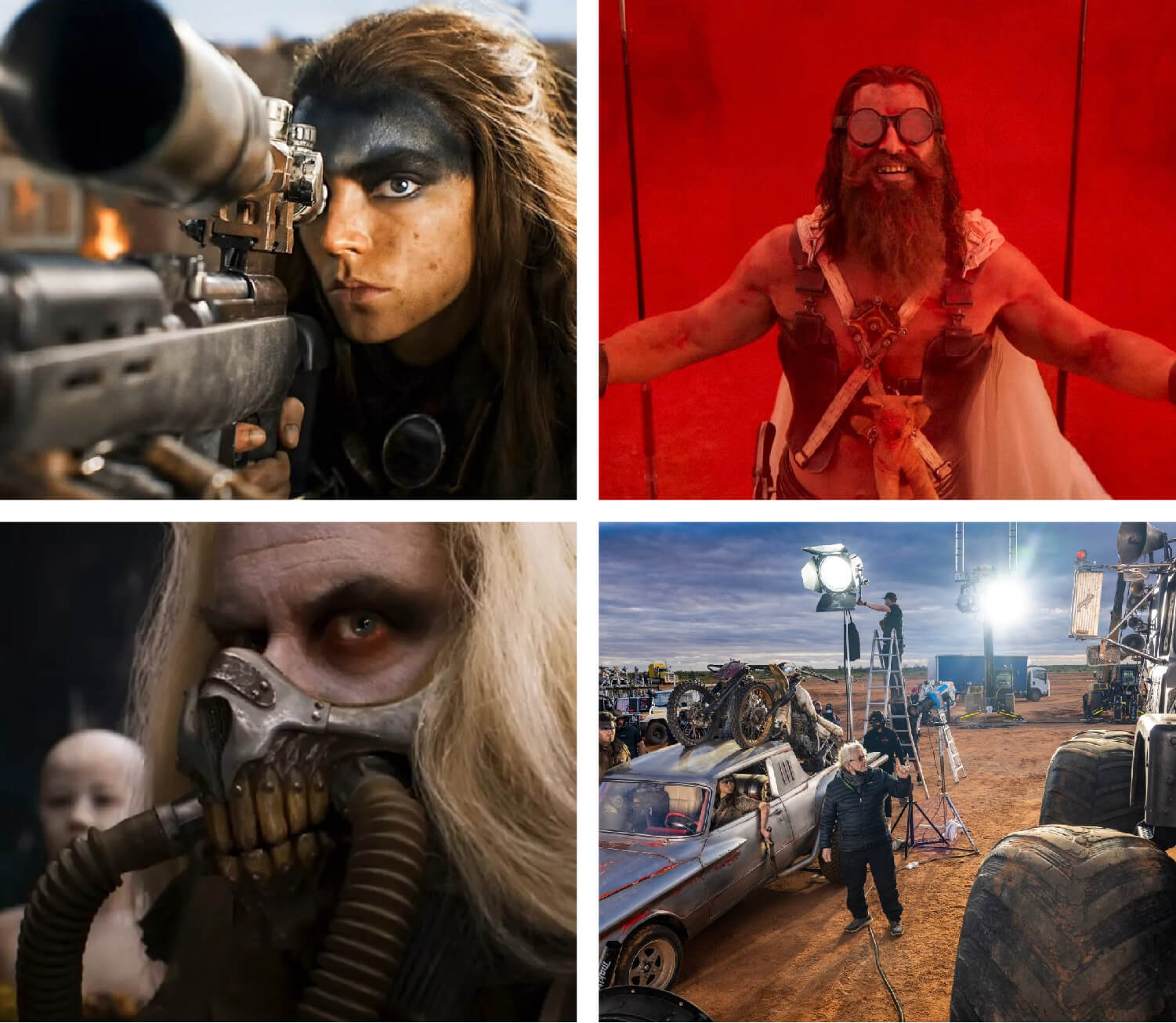
Almost a decade later, we are returning to the Mad Max world! Furiosa: A Mad Max Saga, a prequel to Mad Max: Fury Road, follows the young Imperator Furiosa as she escapes the Citadel and joins forces with a group of rebels. The film explores the origins of her character, her tumultuous past, and her unwavering determination to liberate the oppressed.
Just like the 2015 film, The Mad Max Universe relies heavily on authentic stunt sequences and meticulously crafted vehicle rigs for its gritty, realistic atmosphere. Although this film looks to use more visual enhancements than its predecessor, director George Miller focused on capturing authentic action and creating a tangible, in-camera experience.
The makeup and prosthetic departments also worked hard to innovate and curate realistic in-camera visuals. Led by designer Lesley Vanderwalt, who took home the Academy Award for Mad Max: Fury Road, an array of prosthetic makeups were created for Furiosa's colorful characters. Gruesome elements like stitched human scalps, prosthetic eyes, bald caps, and scars added to the Post-apocalyptic vibe of the world.
Special Effects & Prosthetics Artist Larry Van Duynhoven joined Vanderwalt's team to design the prosthetics alongside a large team of talented artists and special effects studios from all over Australia. He wrote of his experience, "Furiosa had some amazing artists in the makeup and prosthetic departments. The film had some crazy challenges and it was through a pandemic which created a higher hurdle to jump."
(Images via HBO)
7. The Penguin: Season 1
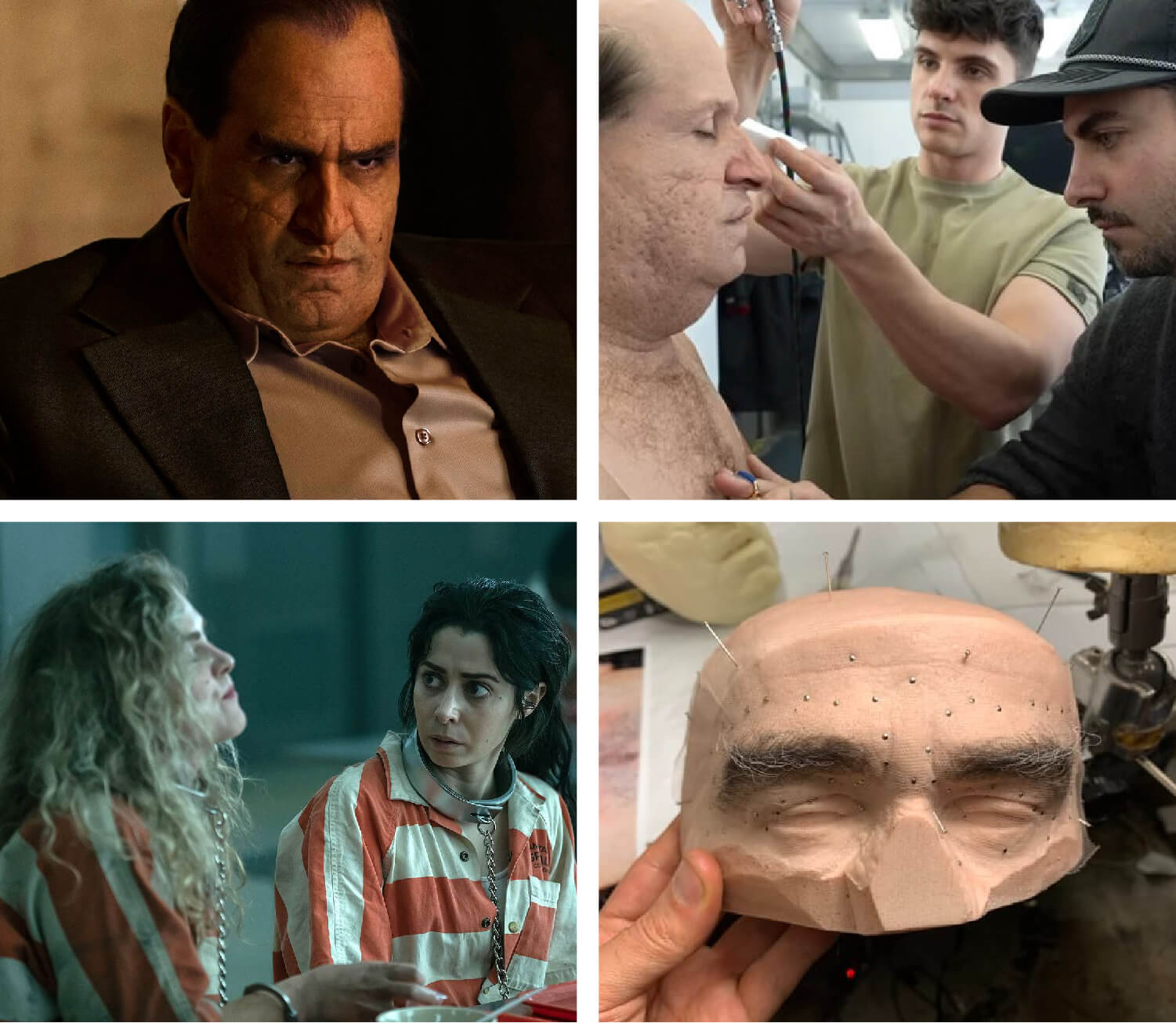
Presenting a masterclass in character transformation, The Penguin is a spin-off series from The Batman that focuses on the iconic villain Oswald Cobblepot. The series delves into the character's origins and rise to power in Gotham City, exploring his complex motivations and criminal endeavors.
Colin Farrell's portrayal can be credited in part to the fantastic work of prosthetic makeup designer Mike Marino and his team. Marino, who previously collaborated with Farrell on The Batman, once again brought his expertise to the table, crafting a stunning transformation. He told Screenrant, "A lot of the time, at the beginning of any film or any series, you start off experimenting, and you're doing all these things and trying to figure it out. So it's a constant exploration of how long something's taking. You try something different one day, okay, make it better. And then you're like, oh, s---, I messed it up, or whatever. It's always longer in the beginning until you get into the flow."
The process of applying the prosthetics for The Penguin was primarily similar to that of The Batman. However, the demands of a television series presented unique challenges. Farrell had to endure hours of makeup application for over 80 days, a significant increase compared to the film. To streamline the process, Marino and his team worked tirelessly to reduce the application time to 2.5 hours. "The series is much more difficult maintaining the look and maintaining it from falling apart throughout the day and all of those things. So, it was an extreme challenge. Probably the most challenging thing I've done yet in my career," Marino explained.
Matt Reeves, the series' director, was impressed by the advancements in prosthetic makeup technology. He observed that modern prosthetics allow actors to maintain their soul and performance, even when heavily transformed. Marino elaborates, "Every year goes by, we invent something different. A silicone rubber that's different, a mold-making process, a technical thing that's different, or we change a hairline, or we make it better. Something is always constantly trying to improve."
(Images via Prime Video)
6. Fallout: Season 1
Our yearly list always features videogame adaptations, and this year was no different. The number six spot goes to the highly anticipated franchise Fallout, which enjoyed massive success for being faithful to the source material. The series is set in a post-apocalyptic wasteland and follows a group of survivors navigating the dangerous and irradiated landscape, encountering iconic characters and factions from the games.
Throughout the production, the emphasis was on utilizing practical effects whenever possible. Co-showrunner Graham Wagner told Polygon, "So much of the show is practical. And had we been more one-for-one about every little detail, the show would have had to be 80% CG. At that point, why not just make a cartoon? You don't really connect with things in the same way when it's CG. You want to be pretty surgical with that stuff when you can." This commitment to real elements enhanced the immersive quality of the show.
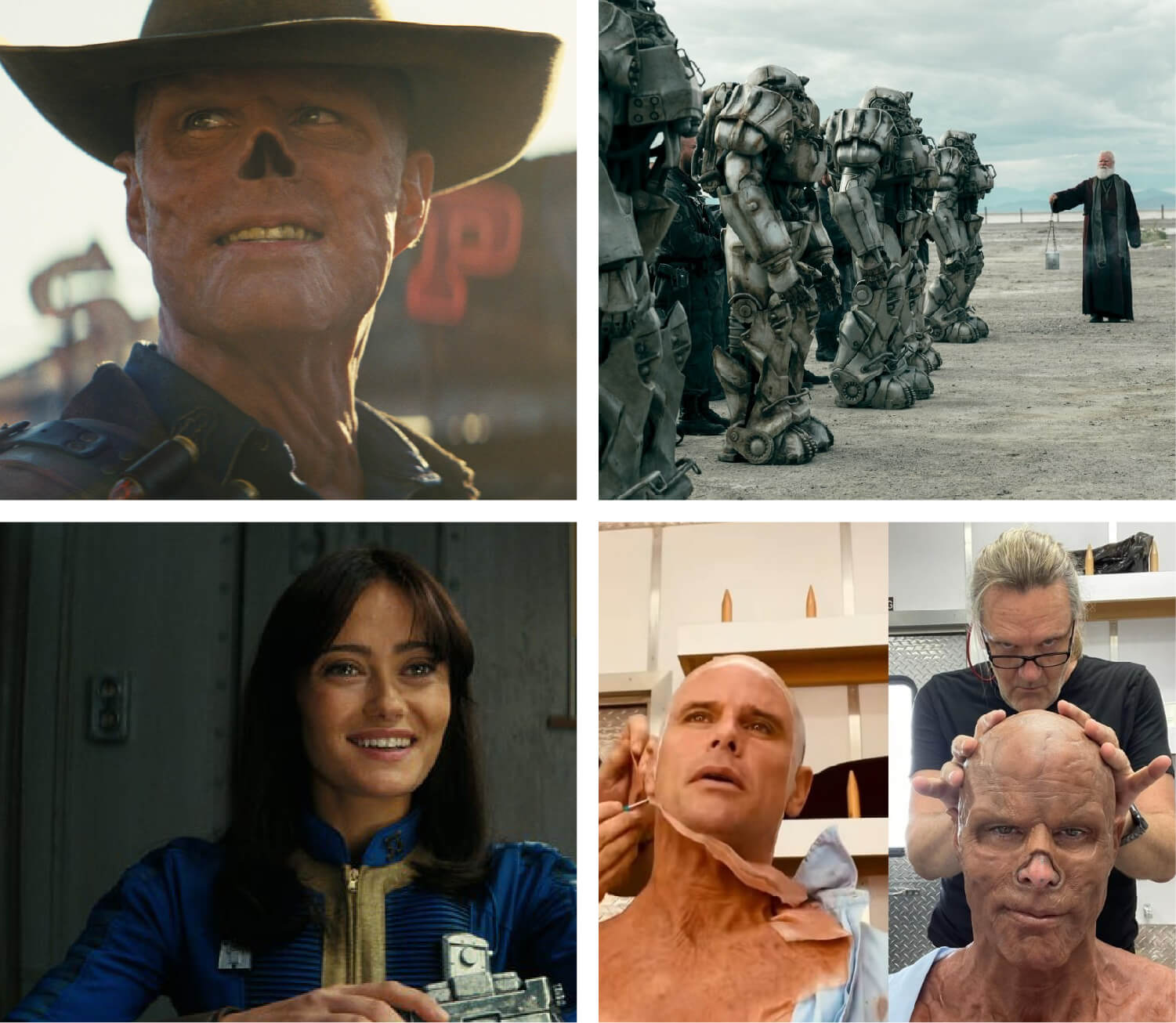
The prop team, led by production designer Howard Cummings, embraced a hands-on approach, creating numerous original props, including bringing on Legacy Effects to build the iconic T-60 Power Armor worn by the Brotherhood of Steel. They used the tried-and-true method of finding a fantastic creature performer and then creating the suit around them, ensuring organic movement and a sense of life within the armor. Executive producer Jonathan Nolan explained, "Adam Shippey was our stunt performer. We brought him on for four months before we started shooting, built the power armor around him, and rehearsed with him. And we're very proud of the fact that there is virtually no CG use in that — including the jetpack sequence."
One of the most striking makeup transformations involved Walton Goggins, who portrays both The Ghoul and his past self, Cooper Howard. A long-time friend of Goggins and makeup effects veteran Jake Garber took on the job of applying the intricate makeup for The Ghoul, with prosthetics designed and run by Vincent Van Dyke and his team. There were also initial discussions about contact lenses, which Goggins reveals were soon dismissed. "At one point, we talked about using contact lenses. I went to the doctor, and we had them made and put in. The very first time we did the first application, we all looked at it and said, 'This isn't right. All of a sudden, you become non-human. We have to see your eyes.' And so that was a big part of it right out of the gate."
Through meticulous refinement, Garber reduced the makeup time from five hours to two, allowing Goggins to maintain his energy and focus throughout the demanding shoot. Nolan added, "The makeup was still thin enough that you can see all the expressiveness of Walton Goggins' performance but also textured real enough to capture the look and feel of The Ghoul."
(Images via Marvel Studios)
5. Deadpool & Wolverine
Although the superhero train has slowed down this year, we were luckily treated to another romp with Deadpool, this time tagging along with Wolverine. Deadpool & Wolverine squeezes so many crass jokes, cameos, and ridiculous situations into its two-hour runtime that it is worthy of becoming a meme. The film explores the dynamic duo's unique partnership, filled with action, humor, and plenty of fourth-wall-breaking antics.
Wētā FX Supervisor Dan Macarin reunited with Ryan Reynolds for their third Deadpool collaboration. Bringing back the same specialized artists & technicians for each film has proved beneficial in helping the iconic character retain a sense of flow and consistency. Macarin talked to Screenrant about the process of working alongside Reynolds again. "Even though there was a new team on this film with director Shawn Levy, [...] Ryan really fought to bring us back for this. We have such a good relationship back and forth. He knew that this would just be the most fluid way to continue this character."
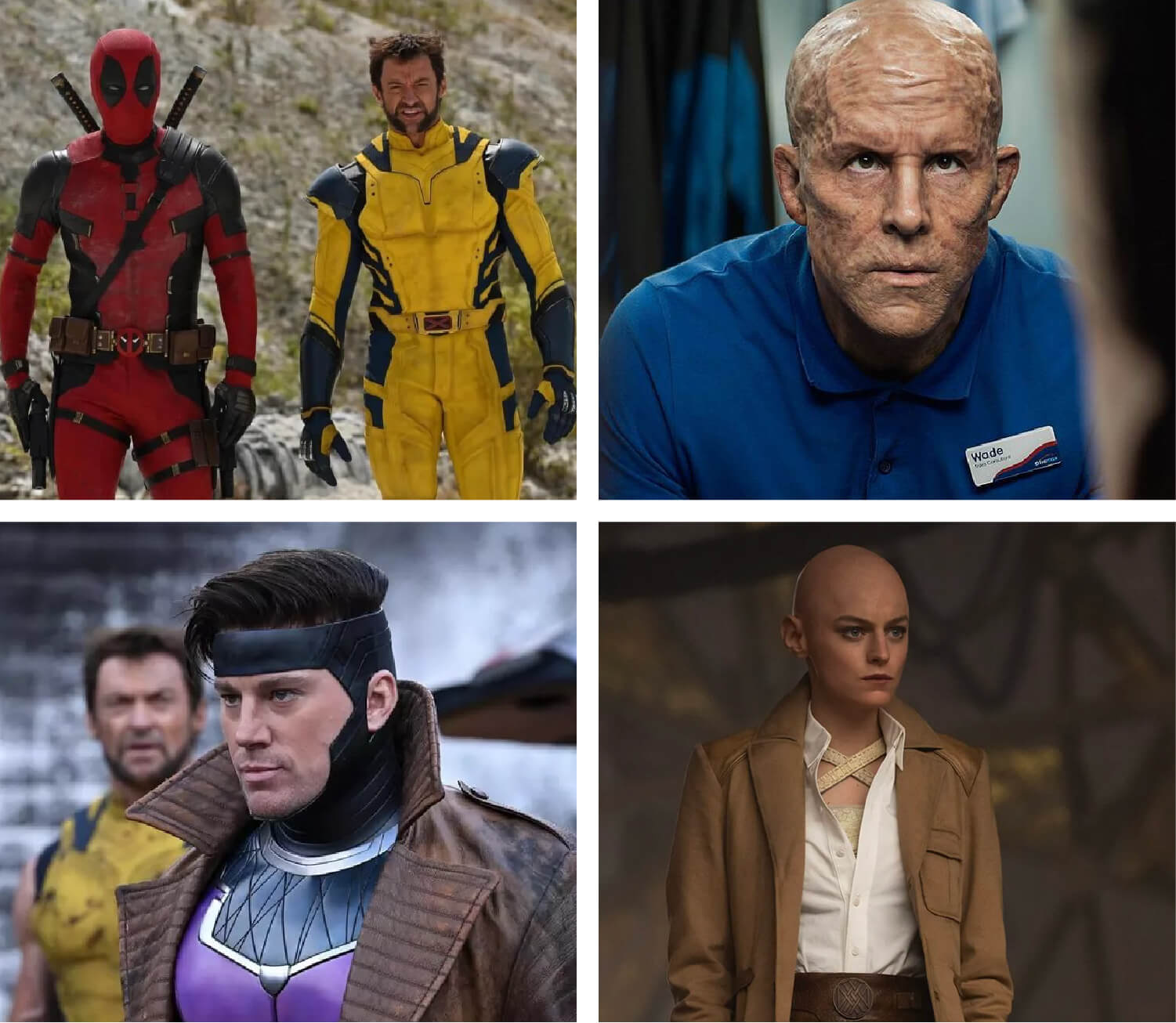
Alongside the Deadpool mask, Wētā FX also assisted with adapting Wolverine's mask for the film. The filmmakers were highly focused on keeping the masks from looking too animated. Macarin elaborated to Screenrant, "It was like, 'Okay, anything that we do to this mask has to be kept in the realm of believability. It has to still feel real.' So we kept that metal almost entirely locked. It had a very small amount of movement, but the more movement came a little bit more [of] like a traditional superhero mask. As we focused on that, we found the best way to connect it to Hugh's performance and give you the emotion in the eyes as far as we felt we could take it without turning it into a kind of animated character that would distract people."
As in the previous Deadpool films, Wade Wilson's scarred skin remains a real prosthetic makeup, co-designed by Bill Corso and Andrew Clement, and applied by Corso alongside Monica Huppert and Geoff Redknap with pieces run by Clement's company, Creative Character Engineering. Creative Character Engineering also sculpted and provided all the appliances and tattoos for the other mutants in the film, as well as creating the practical Headpool, two very nice decapitated heads, and Channing’s headgear as Gambit. Reynolds acknowledged the collaborative effort shaping Wade Wilson's iconic look and emphasized the conscious decision to prioritize practical makeup effects over CGI. He spoke about it on his personal Instagram, stating, "There's always a temptation about doing the scar makeup with CGI, but I'm grateful we've never given into that. The Wade Wilson look was designed by renowned VFX makeup artist Bill Corso [and Andrew Clement] back in 2015. Artists who make these practical effects looks have a highly specialised craft that CGI will never replicate."
(Images via Warner Bros)
4. Dune: Part II
Unsurprisingly, a sci-fi story of unparalleled quality makes it high on our list. The anticipated sequel to Dune, Dune: Part Two, examines the complex world of Arrakis further alongside Paul Atreides's inevitable spiritual awakening. As Paul embraces his destiny as the Kwisatz Haderach, he must confront the powerful forces that seek to control the desert planet and its valuable spices. Denis Villeneuve, in usual fashion, wanted to ensure the foundations of his shots were as authentic as possible. This meant that a lot of the sets, makeup, creatures, and fictional vehicles were built practically. While CG was undoubtedly employed, the filmmakers prioritized practical solutions whenever possible.
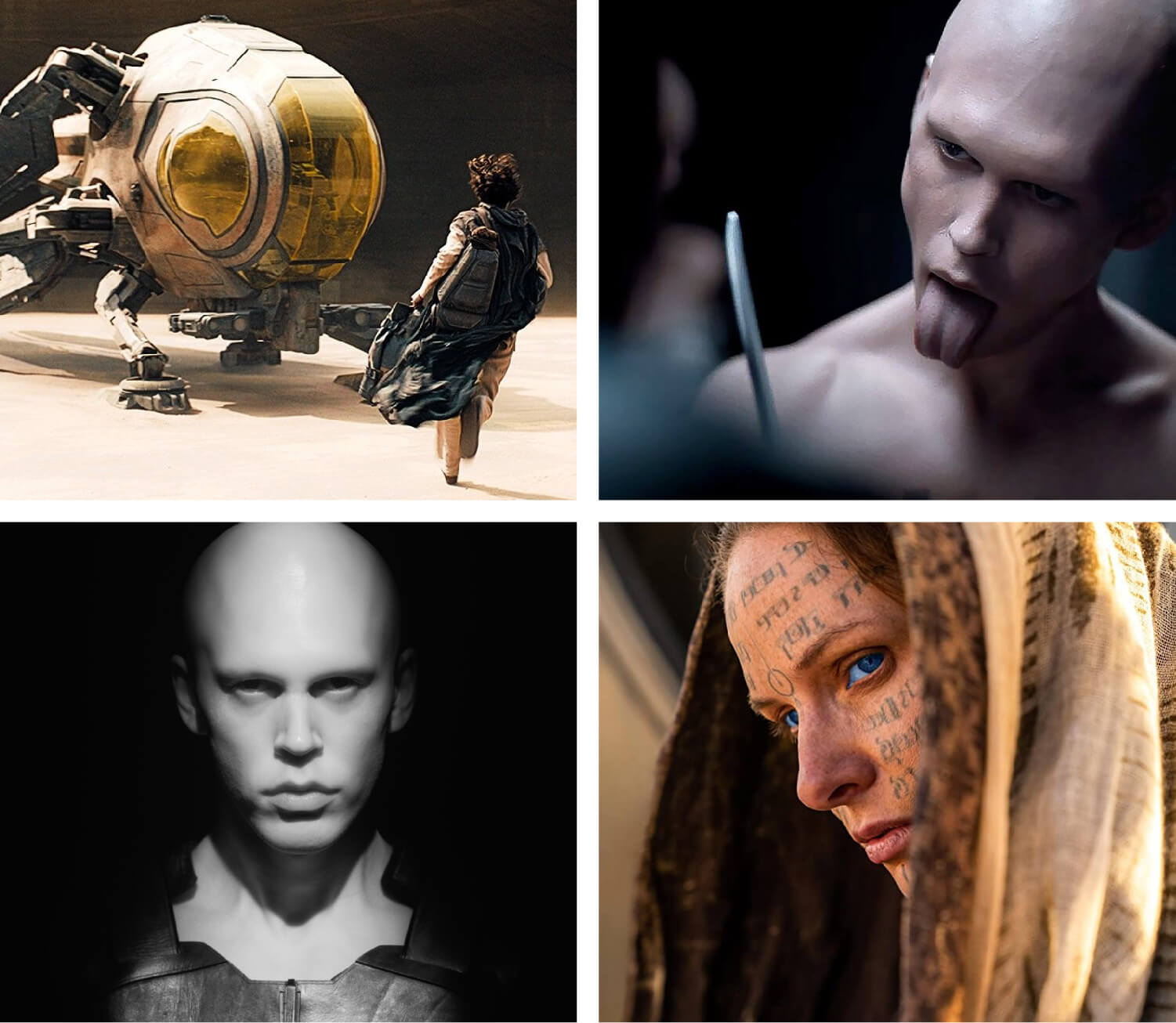
A prime example is the iconic ornithopters. The production team constructed two twelve-ton ornithopters, providing tangible references for the visual effects artists and immersing the cast and crew in the world of Dune. VFX supervisor Paul Lambert explained to Screenrant, "We tried to use as much as possible in camera and then add CG wings. Even though there are parts where it's all CG, it's always bookended by real shots. The idea was to try and keep everything as real as possible."
The iconic sandworm-riding scene was a huge undertaking that required an entirely separate unit and complex creature rig. Lead actor Timothee Chalamet described his experience of the sequence. "It was like a separate movie going on where the massive resources of this film in that unit were dedicated to getting what's ultimately a three-minute or four-minute sequence in a movie shot over the course of three to four months with a shot list that covered a giant wall. It was just extraordinary, and it couldn't have been done on a green screen. It would have been such a shame if it had."
For Austin Butler, the transformative process of becoming Feyd-Rautha, which included three hours in the hair and makeup chair, led by makeup department head Donald Mowat, was an integral part of his performance. His physical embodiment of the character allowed him to inhabit the role with greater conviction.
Most of the cast remarked on the profound impact of working within such a practical environment. The tangible sets, costumes, and props fostered a heightened sense of reality. Dave Bautista (who plays Rabban) told IGN, "Everything you use, everything you see, and your immediate surroundings with this film, is practical. It allows you to just be completely immersed and you don't have to depend on your imagination because everything is just there for you. It just allows you to actually be in that moment and get lost in those scenes."
(Images via MUBI)
3. The Substance
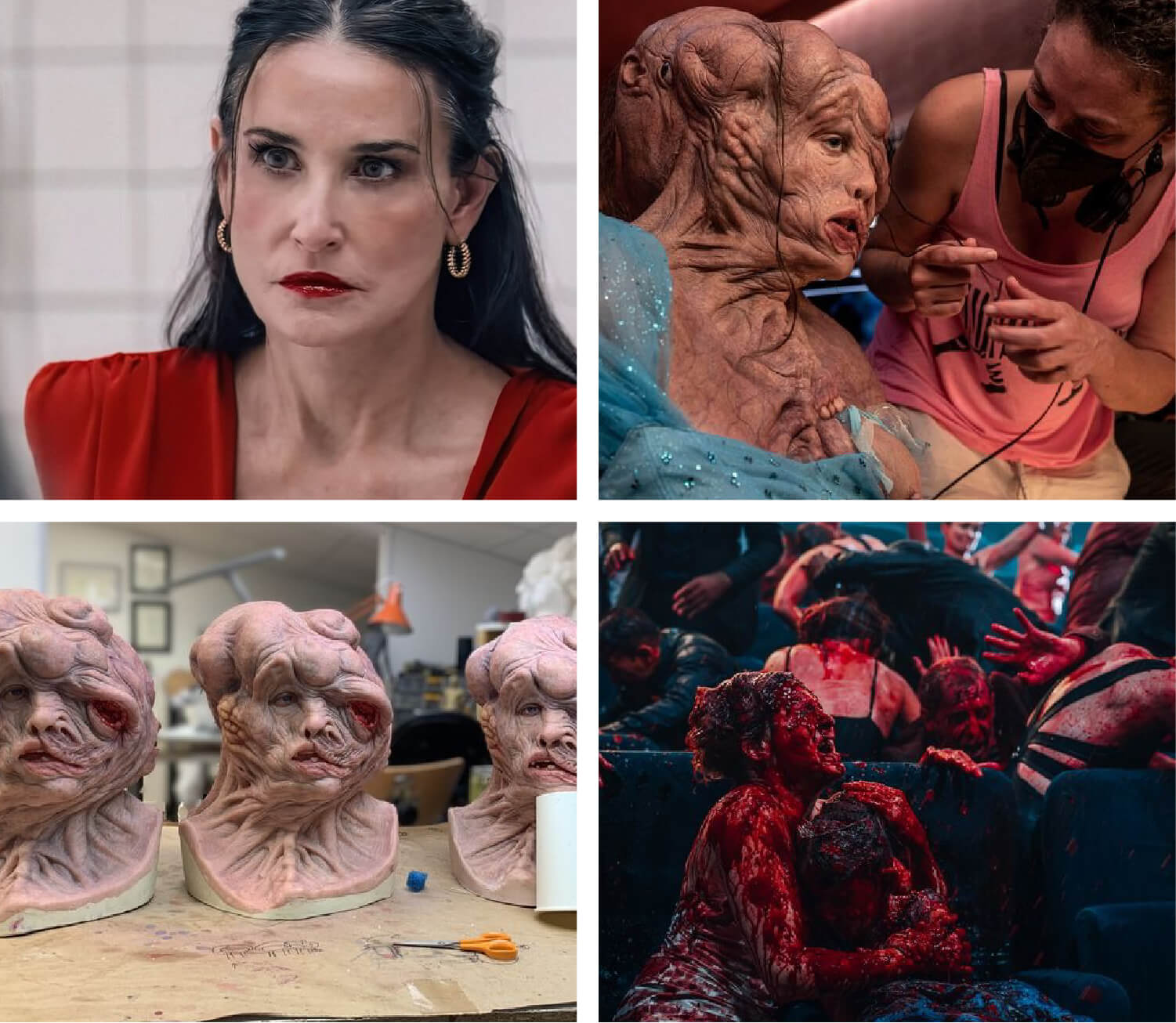
Beauty certainly goes beyond skin-deep in our third spot pick, a body horror that has undoubtedly earned the name. The Substance is a sci-fi thriller that explores the ethical implications of a groundbreaking new drug that can drastically enhance human intelligence. As the drug's potential for good and evil becomes apparent, scientists and government officials must grapple with its consequences.
Director Coralie Fargeat, a staunch advocate for practical effects, sought to minimize the use of VFX throughout the film. Her vision demanded a visceral, hands-on approach that would bring the grotesque and disturbing elements of the story to life. Prosthetics and makeup effects designer Pierre-Olivier Persin embarked on a multi-stage transformation, beginning with Demi Moore. For almost seven hours, Moore sat for the application, transforming into a grotesque creature that the team affectionately nicknamed "Gollum" due to its uncanny resemblance.
This was just the beginning. Actress Margaret Qualley then took the reins, completing the horrifying metamorphosis. She was adorned in a full-body suit, with extra body parts that culminated in the entity known as "Monstro." Persin told GQ, "The original designs were very masculine, and Coralie wanted something more feminine than just a rubber monster. She wanted to have an Elephant Man sensibility, a tragic quality."
In the climax of the film, audiences are witness to a horrific scene where blood shoots out of the mutated final form from every orifice. The special FX team employed an actual fire hose alongside 30,000 gallons of fake blood to achieve this, creating a truly unforgettable spectacle of gore. "Because it was hard to move with the suit, the stunt performer was on a little trolley. As soon as they switched the blood rig on for the first time, she went rolling backward down that long Shining-like hallway," Persin explains. The full-body foam latex suit proved challenging to maintain after being drenched in fake blood. The Substance showcases the artistry and technical skill that underpin truly unforgettable and disturbing cinematic experiences.
(Images via Warner Bros)
2. Beetlejuice Beetlejuice
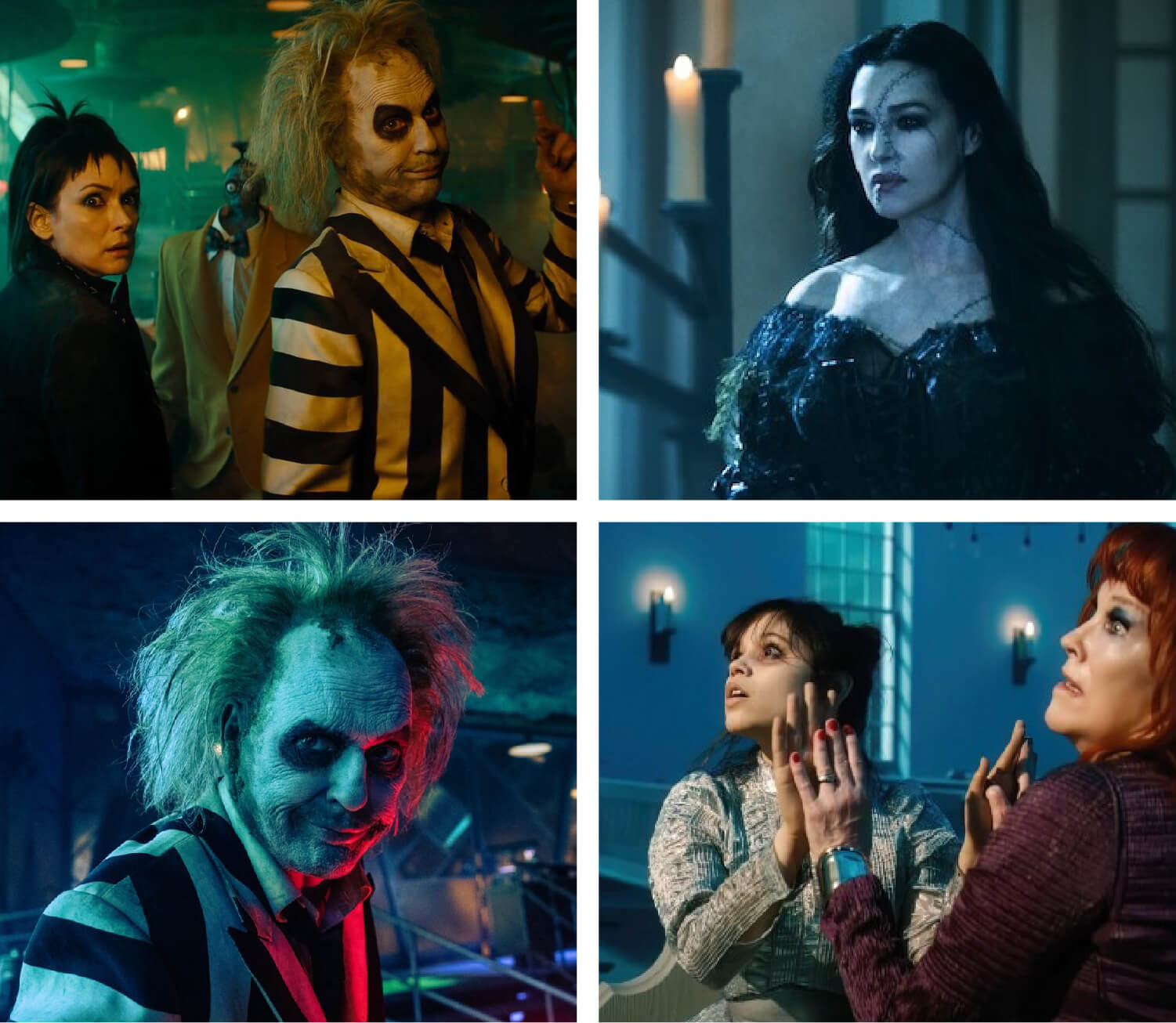
Our runner-up for this year takes us back to basics in the best way possible. Beetlejuice Beetlejuice reunites original cast members Winona Ryder, Catherine O'Hara, and Michael Keaton as they reprise their iconic roles. In this sequel, Lydia Deetz's teenage daughter, Astrid, accidentally opens a portal to the afterlife, unleashing a wave of ghostly chaos. Beetlejuice, the mischievous and chaotic ghost we all know and love, returns to wreak havoc and help the Deetz family navigate the supernatural world.
Beetlejuice Beetlejuice embraces Burton's 'handmade' philosophy, returning to the practical techniques that made the original film so enduring. The 1988 classic, with its blend of gothic humor and imaginative visual effects, still holds up remarkably well by today's standards. Therefore, the sequel needed to maintain this handcrafted feel, capturing that unique quirky gothic essence.
The film extensively uses puppetry, prosthetics, and stop-motion animation, bringing the fantastical world of the Netherworld to life. Christine Blundell, at the helm of the hair and makeup department, oversaw the creation of a wide array of makeup effects and nostalgic designs. She told LA Times, "When a director says that sort of thing to you, you're just like, 'Wow, this is great. I can literally go back to when I didn't have to rely on CGI mopping out wig laces and things like that,'" she said. "This was just stripped back to the bone, and it was just like, 'OK, what we're seeing here is what's going to end up in the film.'"
One example was Blundell working with creature effects creative supervisor Neal Scanlan to craft a quick mask for Beetlejuice's googly eye gag. Danny DeVito's cameo involved a lot of playful elements like contact lenses, face paint, and edible green goo. These touches evoke the spirit of classic makeup effects.
Burton has always favored practical effects, believing that a purely digital approach can sometimes diminish the darkly seductive edge of his unique vision. Blundell added, "If we'd remade it and relied on CGI, I think we'd all be ripped apart for it, especially Tim," Blundell said. "I just honestly think that people wanted to see the nostalgia of the original Beetlejuice, and they wanted to see the sandworm, and they wanted to see sort of crude makeup effects."
(Images via 20th Century Studios/Legacy Effects)
1. Alien: Romulus
Our winner of 2024 comes from a franchise interconnected with the legacy of practical effects since the seventies. Alien: Romulus, directed by Fede Álvarez, is probably the one film from the franchise's newest crop most reminiscent of the original. Consequently, the gritty horror vibe appealed to viewers much better than the large-scale factor of Ridley Scott's prequels. Set between the events of Alien (1979) and Aliens (1986), we follow a group of survivors who must fight for their lives against a deadly alien threat while navigating the treacherous challenge of a spacecraft on a course for destruction.
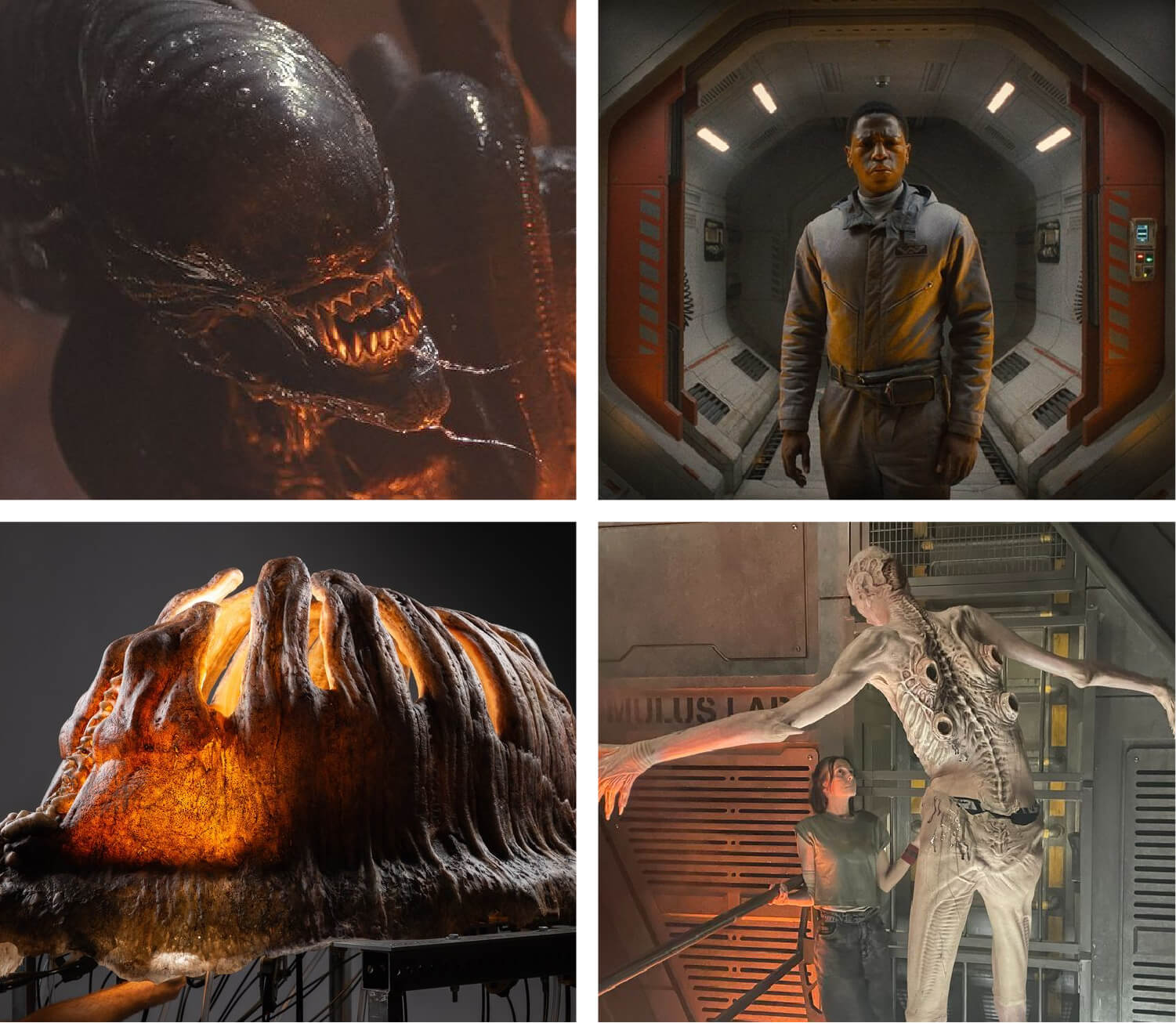
Álvarez paid homage to the heritage of the original films by enlisting the expertise of several practical effects shops, including Wētā Workshop, Pro Machina, Studio Gillis, and Legacy Effects, and within the latter two shops, several of the original Aliens crew. "They were in their early twenties when they made Aliens, and they were a part of Stan Winston's team. And now we had them at the top of their game. They have their own shops, and so we brought them all together to work on all the creatures, because we went with all animatronics and puppets at every level. I even got the chance to be under the table with them, puppeteering all these animatronics," he told The Hollywood Reporter. The practical effects teams played a pivotal role in bringing the terrifying xenomorphs, chestburster, and an army of facehuggers to life and crafting intricate weapons and spacecraft.
Perhaps the most disturbing creature in Alien: Romulus is the "Offspring," a xenomorph hybrid born from a human host. This nightmarish entity, exhibiting human and xenomorph features, was primarily realized through a full-body prosthetic makeup and minimal CGI enhancements. The filmmakers cast Romanian basketball player Robert Bobroczkyi, one of the tallest men in the world, to bring the creature to life, showcasing the importance of physical presence when creating genuinely terrifying creatures.
Álvarez explained, "I have this obsession with no green screens, so we built every creature and set. Everything had to be built so we were really living and breathing in these spaces. But I'm not an anti-CG guy. I still do VFX shots in my movies to this day [...] it's just whatever is best for the shot, and when it comes to face-to-face encounters and moments with creatures, nothing beats the real thing."
Looking Ahead
2024 has been a great rebirth for entertainment after a tough previous year for working crew and performers. These top 10 selections highlight the incredible talent and dedication of the artists in our field who push the boundaries of cinematic possibilities. As we continue to embrace technological advancements, it's clear that practical effects remain a cornerstone of filmmaking.
Let's hope 2025 brings even more innovative and inspiring practical and makeup effects to the screen. Wishing the community a fantastic New Year filled with creativity and joy!