
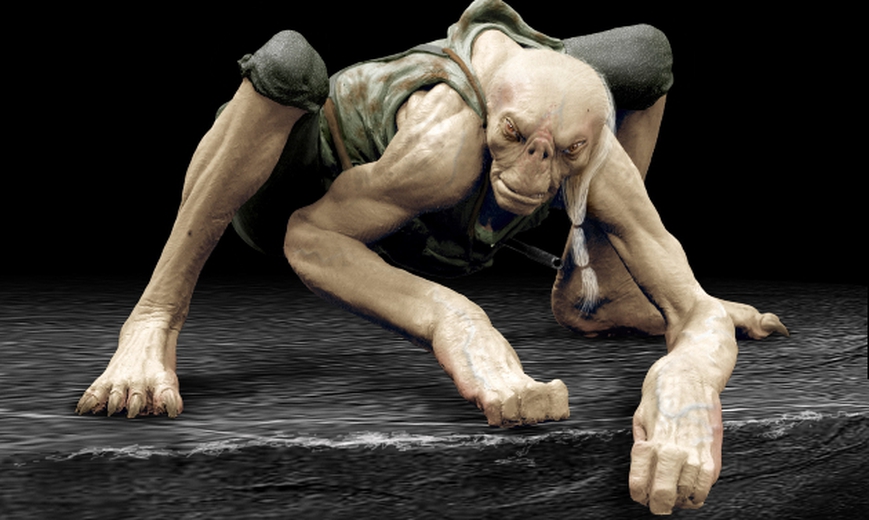
Oscar-winning special effects had distinguished director George Pal’s 1960 film, The Time Machine, based on H.G. Wells’ classic tale about a time traveler who ventures far into the future. Over forty years later, Simon Wells, H.G. Wells’ great-grandson, directed a new version of The Time Machine (2002). Stan Winston Studio, under the supervision of Greg Figiel, created the film’s Morlocks, a savage subterranean race of human mutants encountered by the nineteenth-century time-traveler.
Jump To Section
- Creating Morlocks for The Time Machine (2002)
- Making Animatronic Morlock Heads
- A Lesson of Maintaining Stan Winston Studio’s Artistic Standards
 (Different Morlock designs by Mark Crash McCreery for the 2002 remake of The Time Machine.)
Creating Morlocks for The Time Machine (2002)
Stan Winston jump-started the project by engaging Mark 'Crash' McCreery and other artists at the studio to render Morlock designs. “Working with Simon Wells was interesting,” said McCreery, “not only because of who he is but because he has an animation background. Animators know every bone and muscle in the body; and so, he had very specific things that he wanted, anatomically. That was a new experience because I don’t come from that school. I come from the school of, ‘If you don’t know it, fake it.’”
 (Hiroshi Katagiri details a Morlock maquette at the Stan Winston Studio.)
 (A hunter Morlock maquette, originally blocked out by Joey Orosco, then finished and detailed by Hiroshi Katagiri.)
 (A Photoshop composite created by Jim Charmatz, from the digitized sculpture, illustrates the color scheme and hair design.)
From the original sketches, artists sculpted clay maquettes, which were subsequently cast as fourteen-inch-tall silicone figures. Initial designs were less humanoid and more ape-like; but those looks were ultimately modified to better accommodate human performers in foam rubber muscle suits, outer hair suits, and radio-controlled heads.
 (Hiroshi Katagiri works on one of the life-size Morlock sculptures at the Stan Winston Studio.)
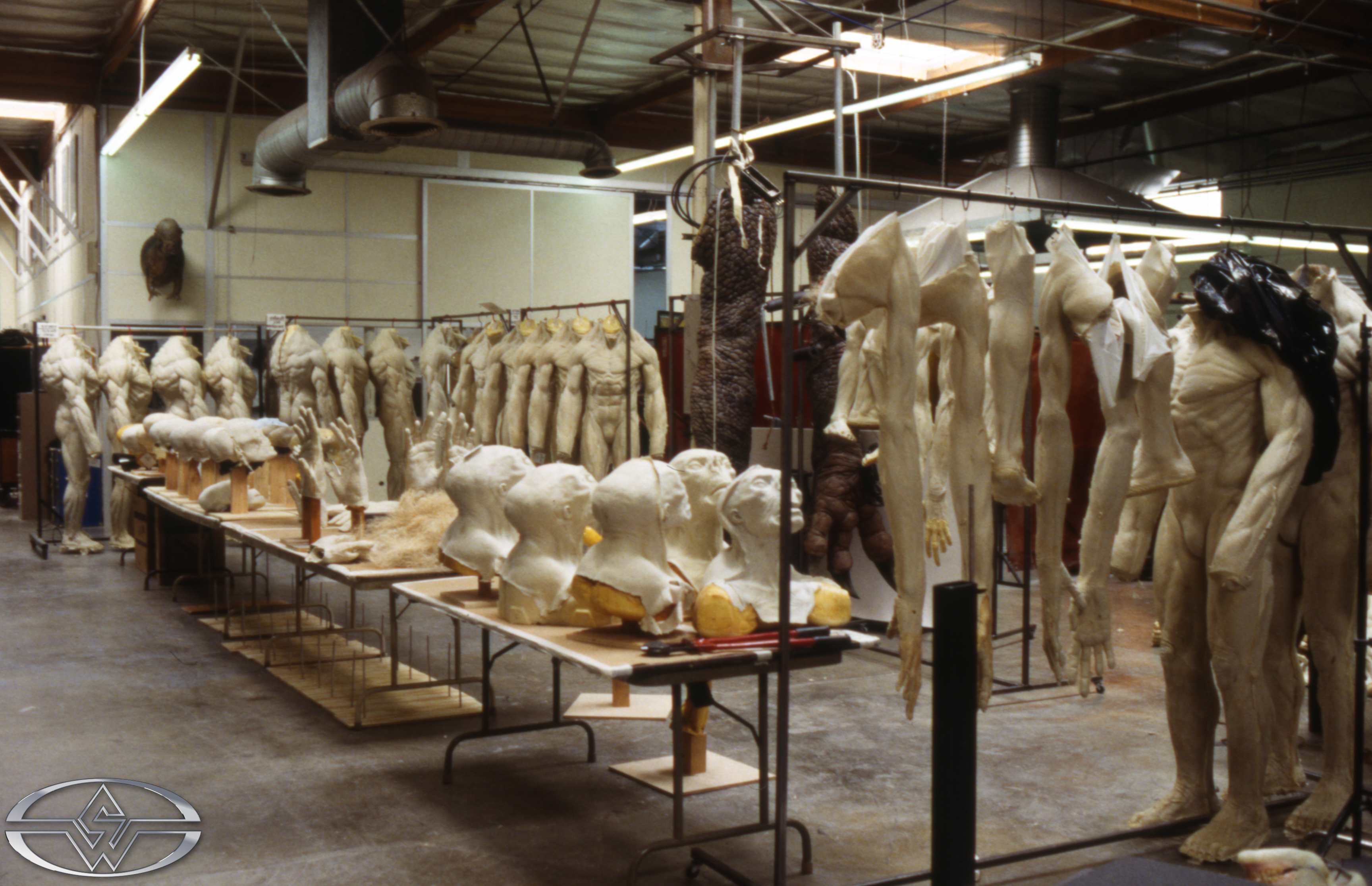 (A rack of Morlock suits are ready to be painted at the Stan Winston Studio.)
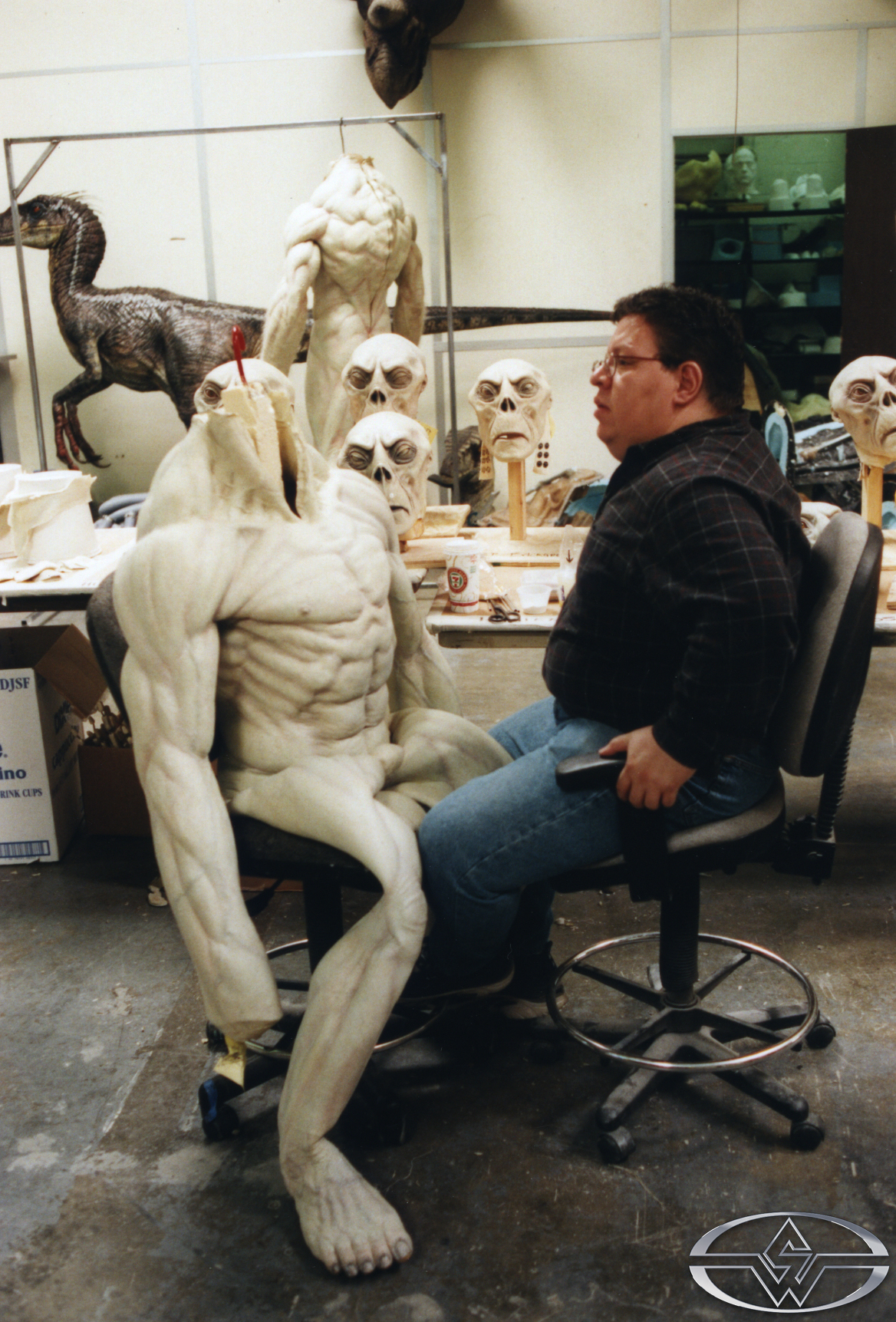 (Richard Alonzo is ready to continue work on one of the Morlock suits.)
Making Animatronic Morlock Heads
Each Morlock head was tightly packed with thirty-two servomotors, which allowed for a wide range of expression but also obstructed the performer’s vision. “In order for the performer to see,” said Greg Figiel, “small monitors were mounted into the Morlock helmet. That monitor received a video signal from a tiny camera concealed in one of the nostrils of the Morlock face.” For more active scenes, performers wore lighter stunt heads without servomotors, which allowed for better visibility.
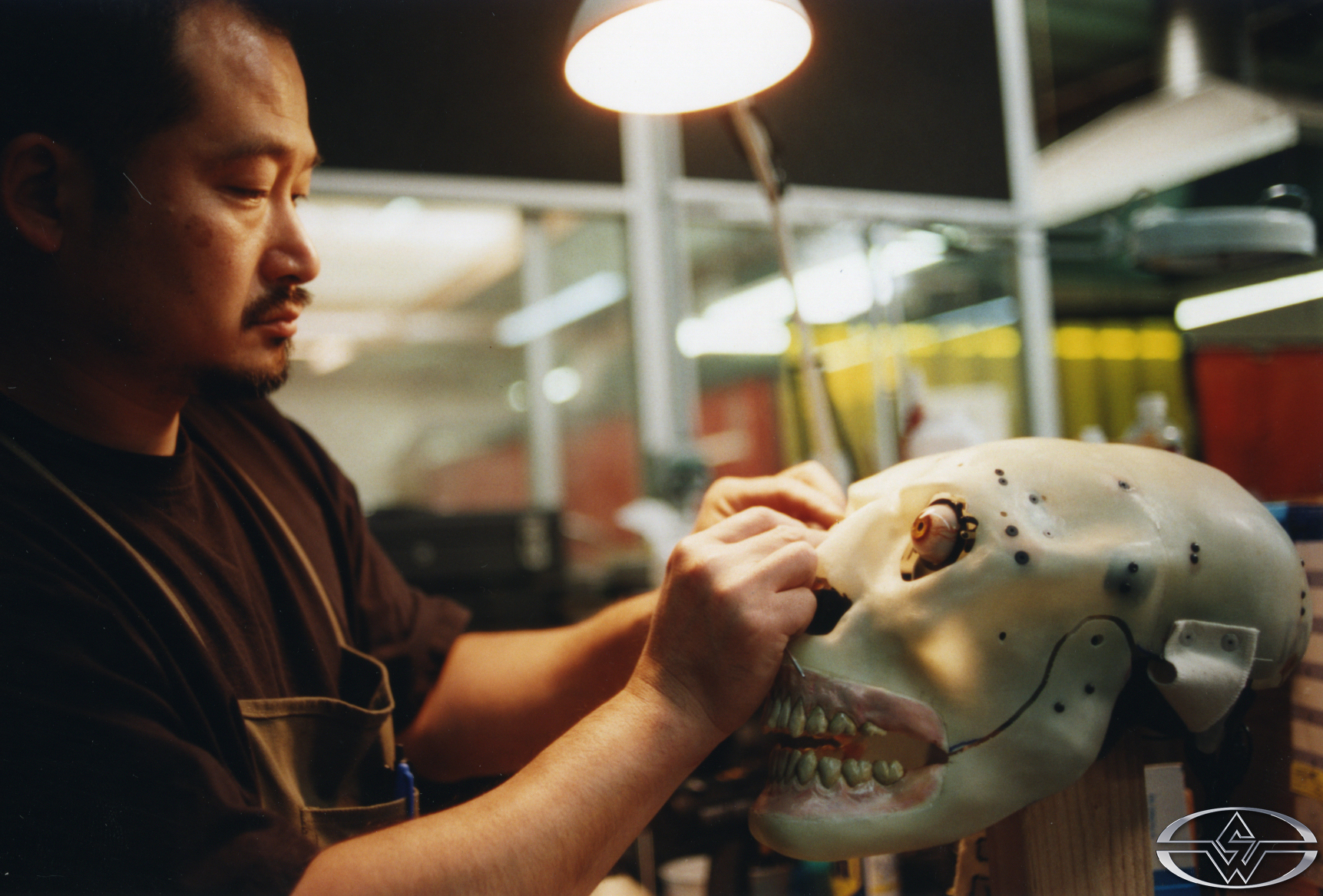 (Hiroshi 'Kan' Ikeuchi works on one of the radio-controlled background Morlock heads at the Stan Winston Studio.)
 (A ready-to-use Spy Morlock radio-controlled head made for actor Dorian Kingi.)
 (Supervisor, Greg Figiel test-paints a Morlock at the Stan Winston Studio.)
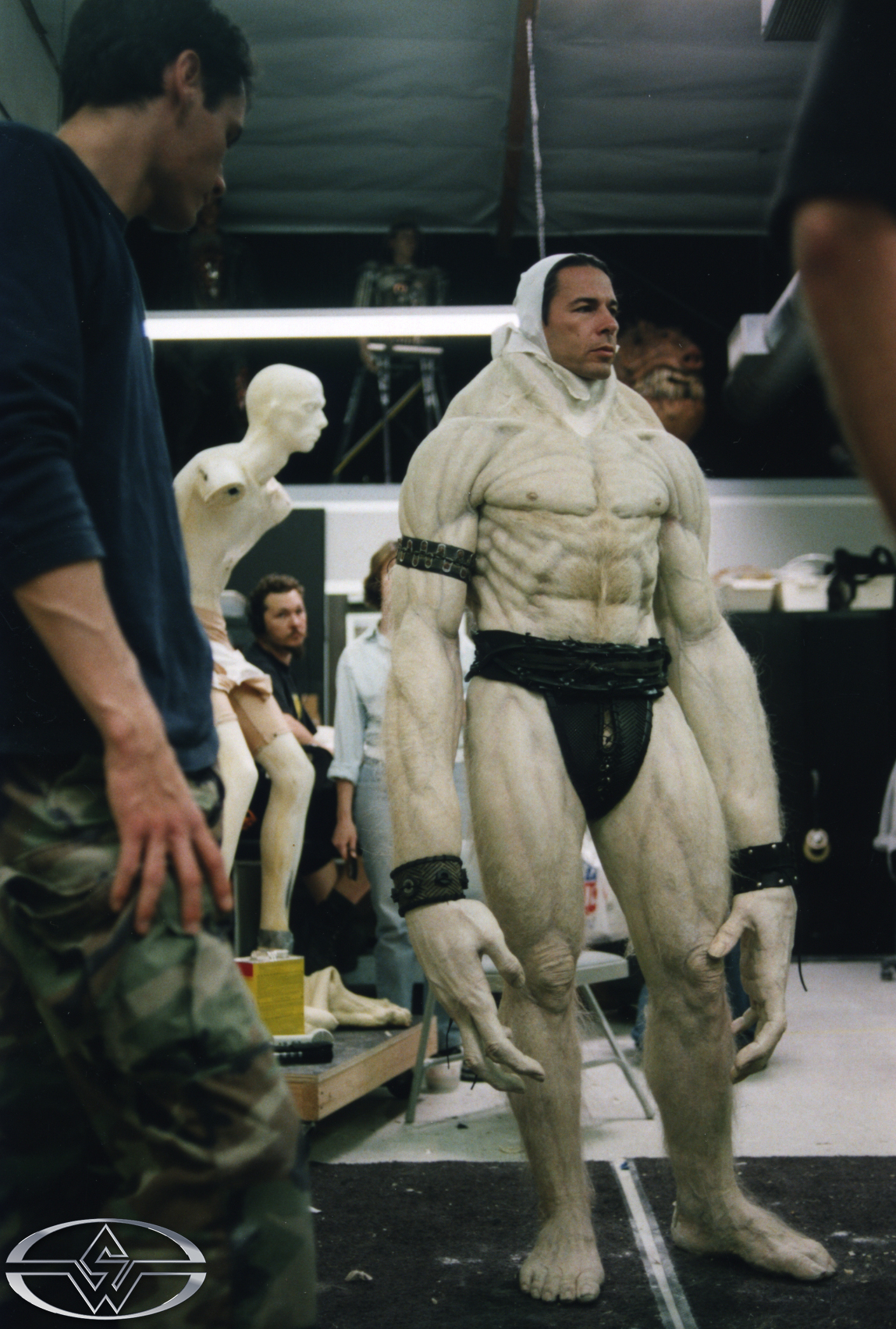 (Richard Cetrone wears a Hunter Morlock suit during a test fitting at Stan Winston Studio.)
Richard Cetrone as a Hunter Morlock at SWSRead how the Stan Winston Studio created Morlocks for The Time Machine (2002) and the valuable lesson Stan Winston and his supervisors learned: bit.ly/TimeMachineBtsFBVD Video: Stan Winston Studio crew members suiting up Richard Cetrone as a Hunter Morlock during a test fitting at the studio.
Posted by Stan Winston School of Character Arts on Saturday, September 4, 2021
Video above: Stan Winston Studio crew members suiting up Richard Cetrone as a Hunter Morlock during a test fitting at the studio.
A Lesson of Maintaining Stan Winston Studio’s Artistic Standards
Ultimately, Winston’s artists were unhappy with the way that the Morlock characters appeared in the final movie, believing that the integrity of their studio’s original design had been compromised due to over-tinkering by the filmmakers. In addition — as had happened with The Island of Dr. Moreau — the characters had been designed for one setting and then filmed in an entirely different one. “They decided to shoot the Morlocks in the daytime, rather than at night,” said Shane Mahan, “which was a mistake. The end result was that the Morlocks looked awful; and, of course, we took the heat for that. We got flogged for those designs, in fact, even though we would never have designed and shot the Morlocks like that.”
 (A clay maquette sculpture based on an early concept for the Über-Morlock that was later rejected.)
 (Jim Charmatz' Photoshop composite of the early Über-Morlock showing the color scheme and hair design.)
If The Time Machine was not a high point for the studio, artistically, it did serve to teach Stan Winston and his supervisors a valuable lesson. Throughout his career, Winston had placed a very high premium on collaboration, on serving the director’s vision, even if that vision didn’t coincide with his own. But Winston was beginning to recognize that if he was to maintain his artistic standards and the reputation of his studio, he had to put limits on that collaborative spirit.
 (Greg Figiel details a new Über-Morlock maquette based on Mark 'Crash' McCreery's concept artworks.)
 (A back-view of the sculpted Über-Morlock maquette, later used for the character, played by Jeremy Irons.)
 (Jim Charmatz conceived different hair designs in Photoshop for the Über-Morlock.)
 (Angle on the back of the life-size Über-Morlock as would be used for the film.)
“In this business,” noted Mahan, “we’re trained to please people. Our natural inclination is to give directors and producers what they want. But we’ve learned to put our foot down if we think something is a really bad idea because if we go forward with that bad idea, we’ll be the ones to take the blame. We’ve learned to say, ‘That’s a dumb idea — and if that’s what you want to do, you’re going to have to get somebody else to do it.’ It shocks people when we do that, but we’ve got a reputation to protect. If people meddle with our designs to the point where they no longer work, where they destroy the integrity of those designs, we have to take a stand.”
- Blog assembled by Adrienn Lingurár with selections from The Winston Effect: The Art and History of Stan Winston Studio by Jody Duncan
Courses with the Creators of The Time Machine
- Making Creature Eyes with John Cherevka
- Advanced Creature Teeth: Prosthetic Dental Appliances - Part 1 with John Cherevka
- Advanced Creature Teeth: Prosthetic Dental Appliances - Part 2 with John Cherevka
- Art of the Fat Suit with Dawn Dininger
- Creature Costume Basics with Dawn Dininger & Amy Whetsel
- Fur Transfer, Electrostatic Flocking And Hair Punching with Deborah Galvez
- Feather Work Part 1: Realistic Bird Feathering Techniques with Deborah Galvez
- Feather Work Part 2: Birds, Costumes, Makeup, & Masks with Deborah Galvez
- Working with Wigs - Wig & Hair Basics with Connie Grayson Criswell
- Introduction to Hair Knotting with Michael Ornelaz
- How To Sculpt A Mask: Sculpting Monsters In Clay Part 1 with Norman Cabrera
- How To Sculpt A Mask: Sculpting Monsters In Clay Part 2 with Norman Cabrera
- How To Sculpt A Mask: Sculpting Monsters In Clay Part 3 with Norman Cabrera
- Silicone Sculpting & Patching Part 1: How To Seam & Patch A Silicone Mask with Chris Grossnickle
- Silicone Sculpting & Patching Part 2: How To Patch A Prop Body with Chris Grossnickle
- Silicone Sculpting & Patching Part 3: How To Seam & Patch A Silicone Makeup with Chris Grossnickle
- Animatronics Design Basics with Richard Landon
- Cable Mechanism Basics - Tentacles with Richard Landon
- Metallic Painting Techniques - Robot Finishes (Terminator) with Robert Ramsdell