
By Michael Martin
The newly released Prey echoes the original Predator by pitting an alien hunter against a seemingly-outmatched human who must defend herself with primitive weapons. Amber Midthunder stars as Naru, a Comanche woman who yearns to become a warrior.
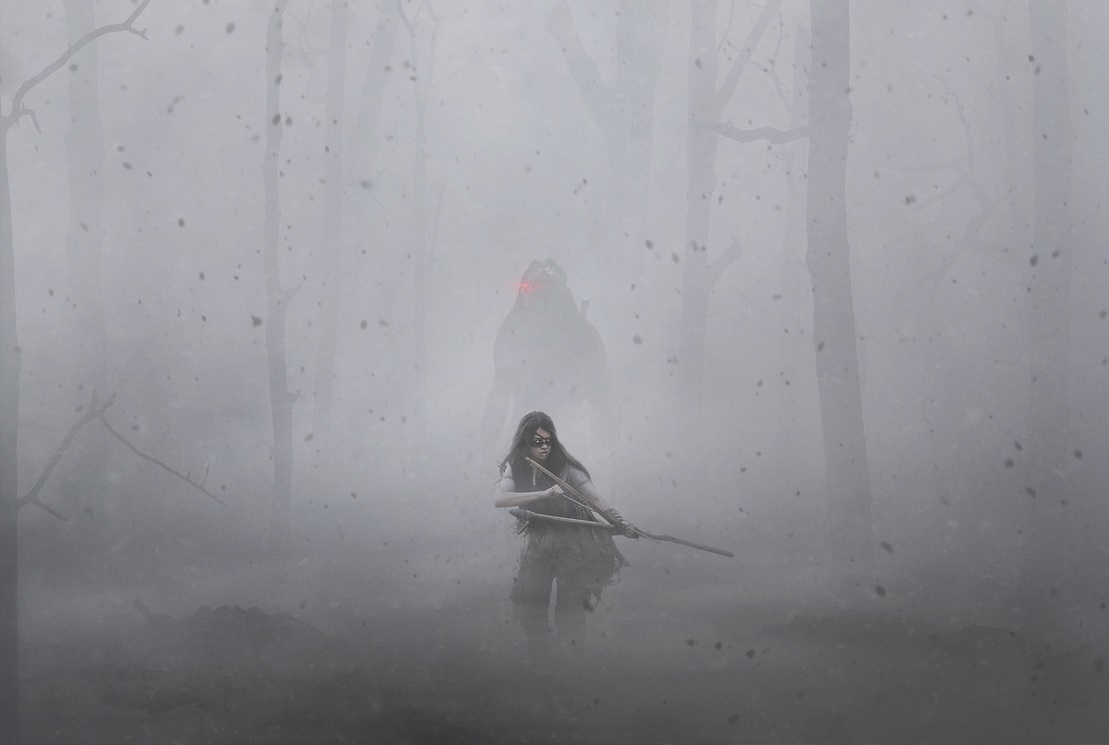
Hailed as one of the best Predator movies since the original, Prey is directed by Dan Trachtenberg (10 Cloverfield Lane), written by Patrick Aison (Tom Clancy’s Jack Ryan), and produced by, among others, original Predator producer John Davis (I, Robot, Chronicle, Jungle Cruise).
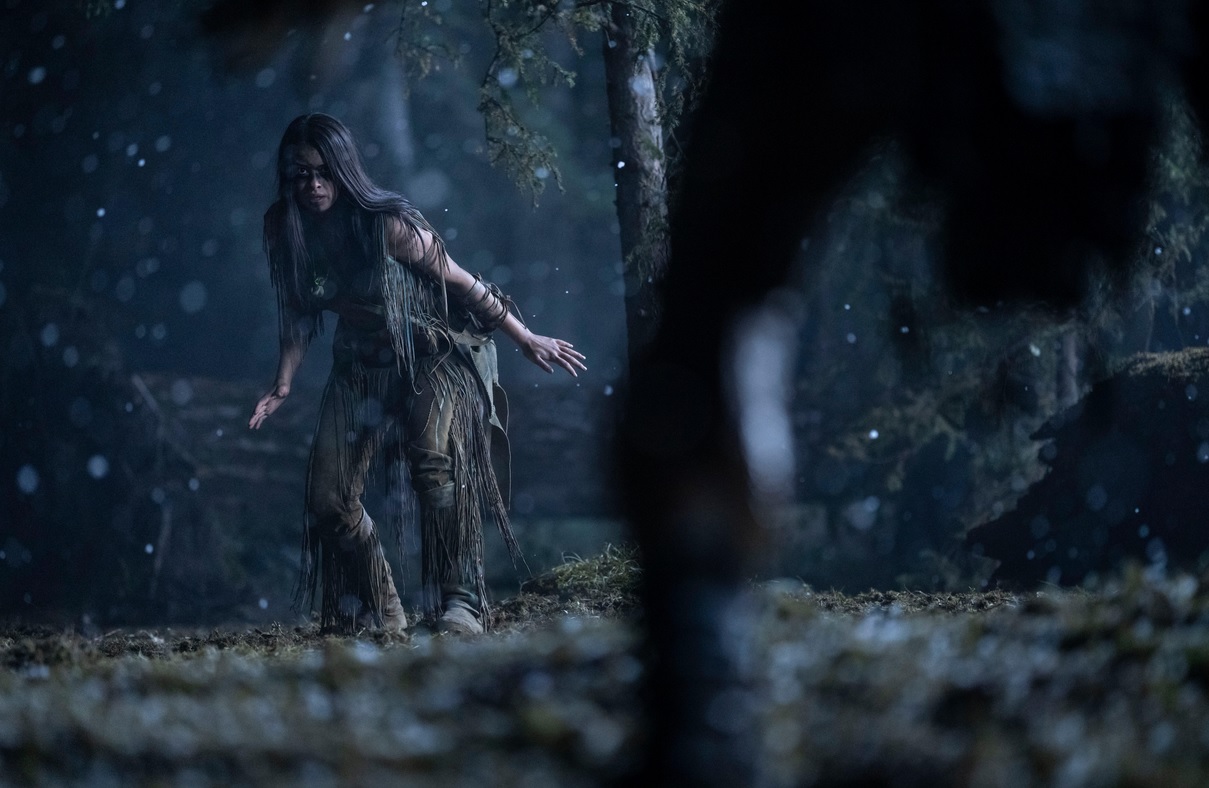 (Naru, played by Amber Midthunder, faces off against the Feral Predator. Image courtesy 20th Century Studios.)
Major Spoiler Alert!
Prey is set more than 300 years ago in the misty forests and plains of North America. When an alien “Feral Predator” arrives, a group of Comanche warriors is faced with an enemy they never dreamt of. In the end, one fierce female member of their tribe will not only fight wild animals and ruthless fur traders, but she will also battle a creature from beyond the stars. This is the world of Prey.
 (L-R - Alec Gillis, Matt Winston, and Tom Woodruff, Jr.)
The practical Feral Predator effects for Prey were created by Alec Gillis and Tom Woodruff, Jr. of Academy Award-winning Amalgamated Dynamics, Inc. (Tremors, Starship Troopers, Jurassic World: Fallen Kingdom). Tom and Alec spoke in-depth with Stan Winston School co-founder Matt Winston about their team’s contributions to the film.
Jump To Section
- Designing a New “Feral” Predator for Prey
- Using 3D Sculpting Technology in the Build Process for the Predator Suit
- Mechanizing Feral Predator’s Head
- Equipping the Feral Predator With Ancient Alien Weapons and Armor
- Coming Up With a New Take on Predator’s Iconic Helmet
- Combining Technology and Bone for Feral Predator
- Designing the Feral Predator’s Net Ball
- Constructing Feral Predator’s Shield
- Casting Actor Dane DiLiegro as the Feral Predator
- The Challenges of the Predator Suit
- Blending the Feral Predator in With the Ancient Environment
- The Hunter Becomes the Hunted
- A Special Thanks to the Prey Crew
A Predator Prequel
Alec Gillis and Tom Woodruff, Jr. are no strangers to the Predator world. Both were working at Stan Winston Studio during the original Predator build and their company Amalgamated Dynamics, Inc. (ADI) would eventually create the practical Predator effects for AVP: Alien vs. Predator, Aliens vs. Predator: Requiem, and The Predator.
When Alec and Tom first read Prey, they immediately knew that its focus on the alien hunter fighting members of the Comanche tribe in the distant past would be a refreshing departure for the Predator franchise.
Designing a New “Feral” Predator for Prey
At the outset, director Dan Trachtenberg gave Alec and Tom a measure of freedom during the design process. “We had a fair amount of wiggle room,” said Gillis, “more so than we've ever had before. There's usually an understandable tendency on the part of the studio to want to deliver to the fans what they know and love. And that's okay. If you have multiple Predators, you can always have one that looks like the original guy and then you can play around and make one a little different.”
In this case, although very respectful of the original Predator design, Trachtenberg “said to us, sort of sheepishly, ‘You're not gonna make this look like all the other Predators?’” said Gillis. “What he meant was he had a very specific set of parameters in his mind that he wanted us to work within. He wanted it to look more like a horror character.”
 (The original Predator alien designed by Stan Winston and created by Stan Winston Studio. Image courtesy 20th Century Fox.)
In coming up with a new look, the design team at ADI had to contend with the fact that the startling alien visage of the Predator, in the thirty-plus years since the original premiered, had become a bit too familiar. Speaking to Matt Winston about the creature, Alec said, “That was a scary face that your dad designed, right? That was a terrifying-looking creature, but now we've become comfortable and familiar with it. And there've been a lot of design iterations. So [the challenge was] can we get the feeling back that we had when we first saw that face without necessarily saying this is a brother or sister to one of those creatures, but a cousin? That was one of the things that we really appreciated when Dan said he wanted it to be more of a horror character. We wanted the feeling that we had when we saw the first Predator take off his helmet.”

Because the Feral Predator featured in Prey existed 300 years prior to events in 1987’s Predator, the filmmakers and ADI team felt justified that it could look different than the one in the original film and other iterations audiences had seen before. “We moved back towards the body being very [tall], lean and mobile… and the face having a little less of a human quality to it,” said Gillis. “We looked at potato bugs, Jerusalem crickets, and things like that. Because the mandibles are rather insect-like, we thought, maybe there's a head we can do that looks like it's related. It’s an offshoot, but not quite exactly what you've seen from a Predator. So he’s sort of like a side variant of the Predators, but he is also from 300 years ago.”

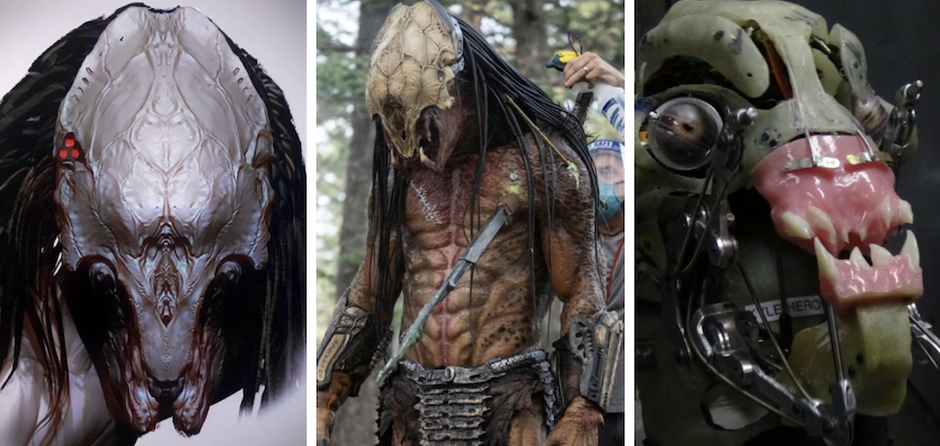
To get the ball rolling on the Feral Predator redesign, ADI concept artist Michael Eppinette created a 3D digital sculpture over a scan of suit performer Dane DiLiegro’s head. “We worked over the top of [Dane’s scan] so we could get it all very accurate,” explained Gillis. Director Trachtenberg made it clear that he didn’t want a giant head on the Feral Predator. “Dan was very emphatic that he wanted the head to be smaller once unmasked… with an elongated, muscular neck,” said Gillis.
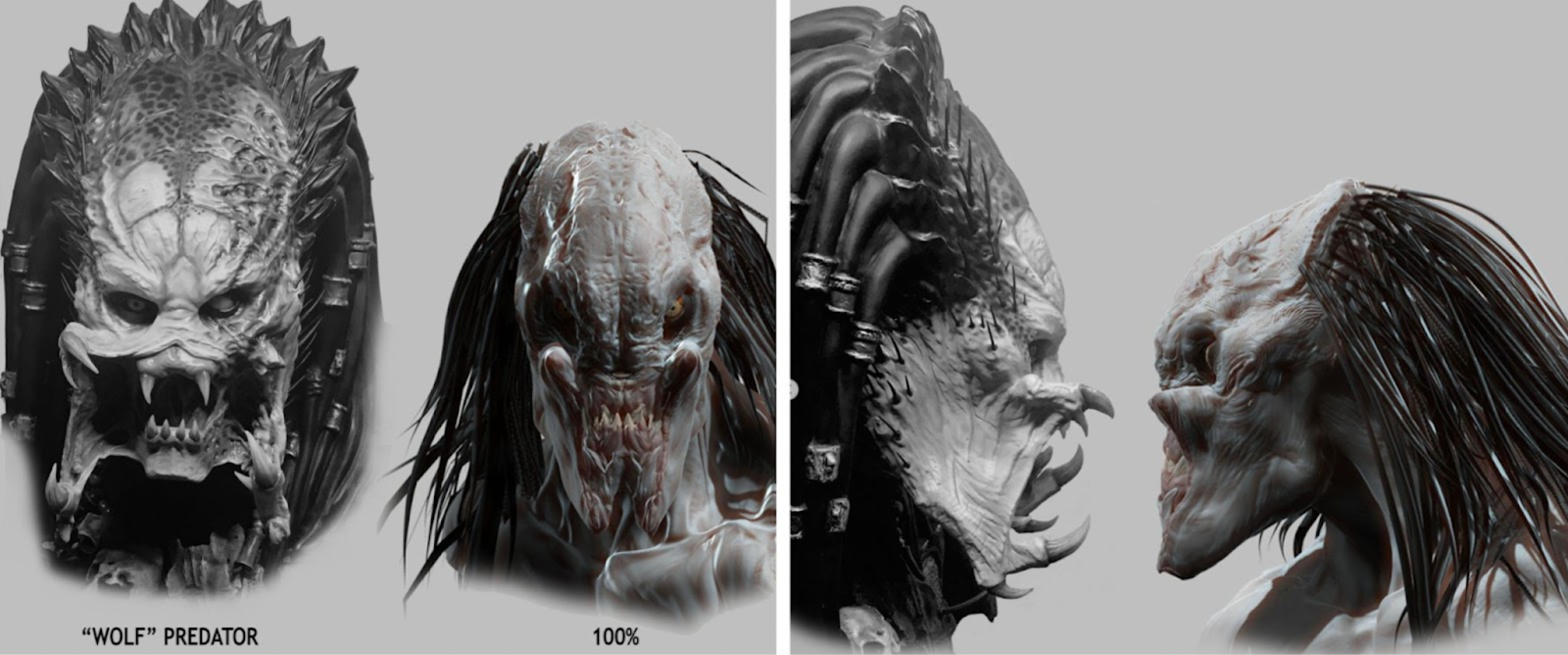
“We worked on how to disguise Dane's head, which was in the neck of the character… [which is where] the 3D scanning and design comes in.”

Using 3D Sculpting Technology in the Build Process for the Predator Suit
Compared with their previous Predator suit builds, advancements in 3D sculpting and printing technology helped make the process more efficient for the ADI team. It helped “to get us there kind of quickly and figure out the look as well as proportions,” said Gillis. “You can print a head a little larger, a little smaller. Dave Penikas, our brilliant animatronics engineer, could take a 3D scan of the sculpture with the core in it and [determine the placement of] all of his servos around Dane DiLiegro’s head. Once we were ready to pull the trigger and actually start the physical build, you had a certain amount that was already established.” However, “it's never a hundred percent perfect,” said Gillis, “You have to go ahead and make changes” using traditional techniques.

After the filmmakers approved the designs in 3D, Michael Eppinette’s 3D sculptures were printed, molded, and sculptable versions were cast out of clay. From there, ADI sculptors, including lead sculptor Joey Orosco, who had previously sculpted the Wolf Predator for AVP: Alien vs. Predator for ADI, went to work on detailing and refining.
Once the clay head sculpture was complete and ready for molding, Orosco dove into sculpting the body alongside fellow ADI artist Andy Bergholtz. “One of the things we impressed upon [Orosco, at the beginning of the sculpture process], was we want this very symmetrical,” said Gillis. “We don't want like a thickness of clay over here that isn't over there, because it would affect the movement. So he rolled out and cut specific layers of clay and laid the anatomy out. Then he worked it and smoothed it.”

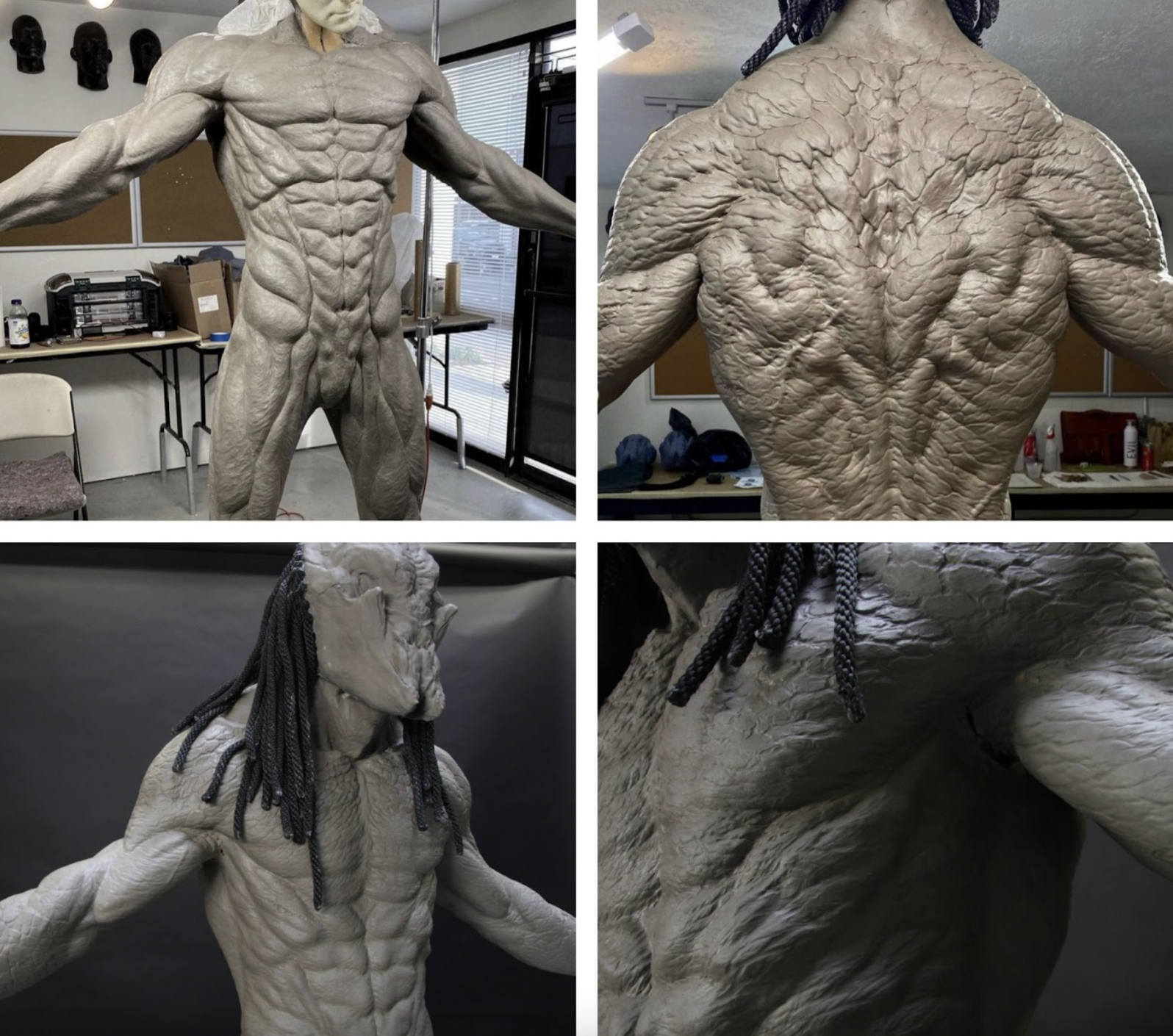


Technical advancements like 3D sculpting and printing aside, the new Feral Predator suit was cast in much the same way as Stan Winston’s original Predator suit, using the tried-and-true industry standard foam latex. “You can't beat foam latex for weight and durability, said Gillis. “It's fantastic.”
The changes to the familiar Predator design didn’t stop at the face. “[Trachtenberg gave] us the option of changing the pattern and the color,” said Tom Woodruff, Jr. “There are so many reds mixed into this Feral Predator. I think it makes it stand out from the other Predators, even [beyond the] different shape, head, and look of the creature.”


Adding Finishing Touches to the Predator Head
While the majority of the paintwork was complete by the time Alec, Tom, and crew traveled to Alberta for the shoot, final paint touches on the head were executed by the talented Canadian makeup artist and monster maker, Mike Fields, who previously had brought his artistic skills to almost every Canadian shoot ADI had been a part of, along with Prosthetic Makeup Department Head, Maiko ‘Mo’ Gomyo.
Mechanizing Feral Predator’s Head
Long gone are the days of heavy cables dragging behind a creature costume, creating safety issues by snagging and tripping performers. The Feral Predator head for Prey was packed with tiny radio controlled servos to manipulate the facial expressions. “We have advantages now that we have smaller servo motors,” said Gillis. Each of the two animatronic ‘hero’ heads had 27 servo motors because there were more points of movement in the mandibles than there had been in previous Predators. And “the mandibles were always visible. Dane could occasionally wear a stunt head, but pretty much [we] were always puppeteering.”


Equipping the Feral Predator With Ancient Alien Weapons and Armor
The Feral Predator in Prey is equipped with both familiar and new armor and weapons, from the tried-and-true wrist gauntlet and blades, to killing devices audiences have never seen before. As with the face, everybody knows what Predator’s armor and weapons look like, so the ADI team had to think outside the box when designing for Prey.
A major issue the designers faced was pitting a futuristically armed alien against humans that are essentially in the Stone Age as far as their weapons go. 300 years ago, “Comanches had their sophisticated tactics but they were dealing with bows and spears and stuff,” said Gillis “So you want to make sure that the Feral Predator’s weaponry matches a little more equally to that. At first, the ADI team explored an extremely primitive look for the Feral Predator. “We actually played around with the idea of a caveman Predator and Neanderthal Predator,” said Gillis. “But they were a little too far afield and a little too inelegant. So we were able to sort of devolve this Feral Predator and it started with the weapons.”


“The first weapon I was involved with in designing was the Crossbolt,” said Woodruff, Jr. “Very early on I had the [ADI design team] try to make it look a little more primitive, a little bit more tribal, but then as it moved into more of an existing definition of a Predator weapon, some of those little things were left by the wayside. We didn't want it to look like the Feral Predator was on Gilligan's Island and building things out of bamboo and ferns.”

Coming Up With a New Take on Predator’s Iconic Helmet
Regarding updating Predator’s iconic helmet, “The trick is there had been so many Predator movies, comic books, and toys. Everybody knows what Predator’s helmet looks like, right? So we came up with a bone-type helmet… that speaks to the fact that he hasn't yet really built a helmet, but he has found a creature skull that allows him to protect his face,” said Woodruff, Jr.

Though primitive in appearance in comparison with a classic Predator helmet, “You can see these touches of technology that are added to it, giving him his heat vision, etc.,” said Woodruff, Jr. “I like that the tri-laser sight is embedded into the actual skull itself. We wanted to bring those natural accents into the costume. We've seen the metal helmet, but once again, maybe this guy 300 years ago didn't have access to that same technology.”


Combining Technology and Bone for Feral Predator
Overall, the choice was made not to go with so many “bone necklaces and things, little trophies and tchotchkes hanging off of him, so we took the bone and mated it to the technology,” said Gillis.

Designing the Feral Predator’s Net Ball
One of the weapon designs for the new Predator would be similar to one seen before, the Predator Wire Net. “Those nets have been in some of the Predator movies. And then at some point in the round robin conversation, it was more like, ‘well, what if it's more like a grenade?’” said Gillis. “It's a little more unexpected. There was engineering involved and this was a fun one to work on with Justin Goby Fields, because he's a really great designer and he thinks in mechanical terms. So we came up with this little net ball… with little lights on it and stuff to make it look cool.”

When fired, via digital animation, the net unspools from the center while remaining connected to the ball itself. And then it would contract and there's nothing [the victim] can do to stop that contraction. “I love that they made the ball sound like a lawnmower, it really has power to it,” said Gillis. “I just laughed out loud at how gleeful and outrageous the execution of that thing was. It was much less elegant than I imagined and therefore much, much better than I imagined.”
A Pre-Cursor to the Self-Destruct Device
While the original Predator sported a self-destruct device with a massive blast radius, “[Trachtenberg] wanted something that was not going to be, ‘push a button and wipe out the world,’” said Woodruff, Jr. “but could inflict enough damage to keep people’s minds working.” Within one of the gauntlets there were three little round ports. The ADI team created three small Fléchette Discs that the VFX team then animated to pop out of the gauntlet, at which point the movie cuts to a distant shot and the audience sees a ball of fire erupt through the trees. “[Trachtenberg] wanted this to be the precursor of the nuclear wrist bomb,” said Gillis.

Constructing Feral Predator’s Shield
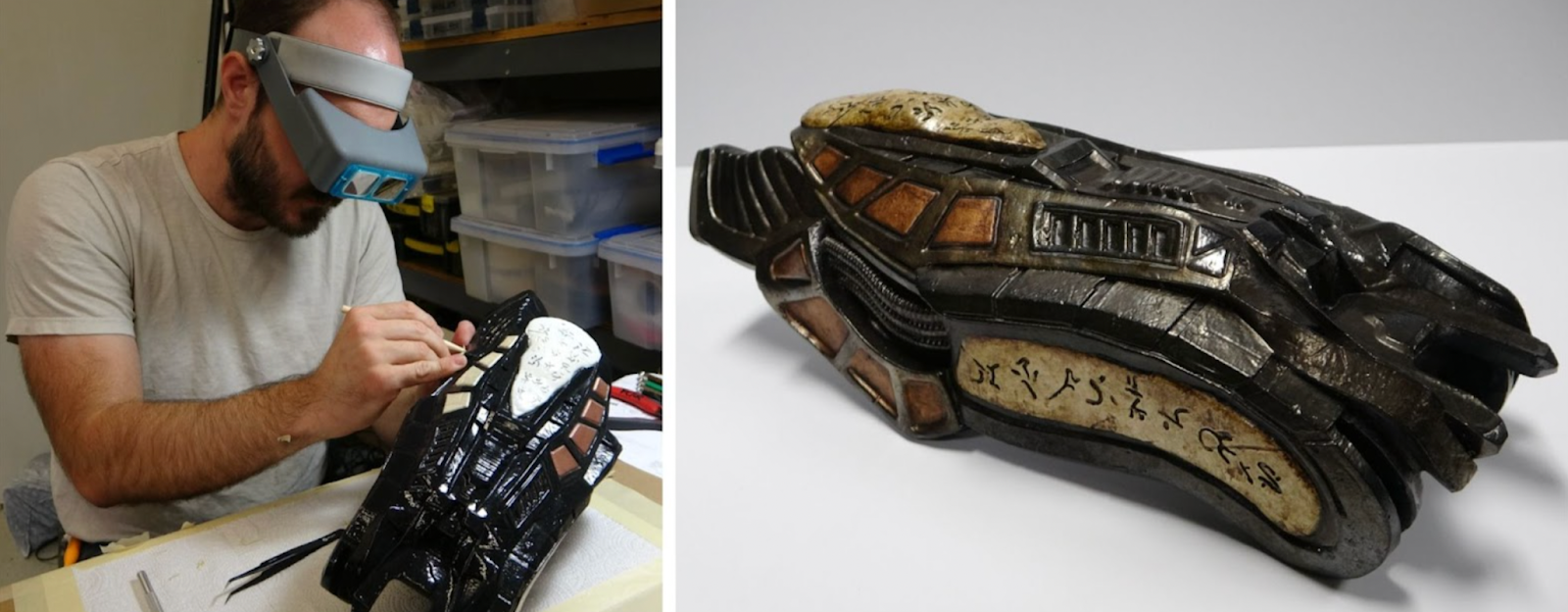
Perhaps the most versatile device used by the Feral Predator is its shield, which serves both an offensive and defensive purpose, and is comprised of a multitude of wedge-shaped segments that open and close like a fan. One of the things that guided the decision to give Feral Predator a thin collapsible shield was that “it's always a challenge to pack everything into a Predator's wrist [gauntlet],” said Gillis. “There's always some cheating involved. So we kept the shield very thin… like it's some sort of metal alloy that's just super thin and mechanical. The device was executed by Jon Miller, who builds all this mind-numbing stuff, he's so good at metal surfaces.”

One of the great things about the digital world, said Gillis, is that “you can have really photoreal deployment of weapons that end up as a physical thing, the in-between moments where you can get all of these things to move and shift and it's really brilliant.” Both Alec and Tom had nothing but praise for the show’s digital team. “Ryan Cook, the VFX supervisor, and his folks did a fantastic job bringing the physical reality of what we did into the CGI world,” said Gillis.
Casting Actor Dane DiLiegro as the Feral Predator

An important consideration throughout the Feral Predator suit build for Prey was that director Dan Trachtenberg wanted the alien hunter to move differently than had been previously seen. “He just wanted it to be able to move fluidly, to have some kind of grace,” said Woodruff, Jr., who praised Dane DiLiegro’s performance inside the suit, “He really captured what Dan wanted to see in a performance.” Gillis added, “Dane is such a bulletproof guy. Not only is he an excellent actor, but his physical training, his pro athletic career, prepared him for the kind of grueling preparations that he needed to do to make this thing work.”

Dane DiLiegro’s “Beast Mode” Posture in the Predator Suit
With Dane DiLiegro’s head inside the neck of the Feral Predator, the ADI team had to come up with strategies to avoid the character looking too long-necked on camera. “There was a little bit of a learning curve, you can't stand upright,” said Gillis. DiLiegro had to “go into, we were calling it ‘Beast Mode,’ so he was throwing his shoulders forward. We had sculpted the shoulders forward to sort of bring the length of the neck down, disguise it with those thinner dreads – which goes back to the horror character, kind of almost like a Japanese ghost or something from The Ring – that would help hide the length of that neck. But it was really on Dane to shrug his shoulders forward so that it didn't look misproportioned.”

The Challenges of the Predator Suit
Adding to the challenge of maintaining his ‘Beast Mode’ posture to hide the length of the neck, DiLiegro also had to withstand hot weather and the weight of the Feral Prey suit. As foggy and overcast as certain scenes in the film appear, it could be blazing hot at times. DiLiegro “would flex his arm and sweat would just drip right out of the foam latex,” said Gillis. “We did the math, and between his body weight and the creature [suit], he was about 300 pounds. Dane weighs about 240, so we had about 60 pounds of wet rubber on this guy.”

Blending the Feral Predator in With the Ancient Environment
To capture the look and feel of the North American continent with its pristine forests and waterways that existed before extensive colonization, Prey was shot in Calgary, in the western Canadian province of Alberta. The Prey crew added atmospheric touches to emphasize the primeval look of the location. “What I love so much about the environment was that Dan had something happening in it almost all the time,” said Woodruff, Jr. “There was always some kind of a filter of either snow, or ash in the burnt glade, things that integrated [the Feral Predator] into the environment instead of putting him right up front… I thought that was really a brilliant move.”


Making Digital Tweaks in Prey

Although the majority of shots of the Feral Predator in Prey were achieved via practical effects, the VFX team, led by Ryan Cook, did provide some digital augmentation. “There was a plan that was set in pre-production and it was executed pretty much exactly,” said Gillis. “We do see touches on the face at times, like on a big roar, there's a little shake inside the mouth. That is something that we just can't do. There's also some hand replacement when there's an extreme closeup [of the Feral Predator] feeling the ash in his hand and it's kinda turning to dust. There's a lot of digital work in that. One of the tells is that all the points of movement of the finger are moving. When we do a finger cup with an extension, we lose the last joint. People notice that. So that was always a plan, we're gonna do a digital hand.”
The Hunter Becomes the Hunted
Eventually Naru and her brother Taabe, played by Dakota Beavers, turn the tables on Feral Predator in a thrilling sequence. They manage to weaken the alien, even spearing it with its own weapon, before it kills Taabe. Naru eventually lures Feral Predator into a mud-filled bog pit for the film’s final showdown between two great warriors, Comanche and Yautja.


A Special Thanks to the Prey Crew
Throughout the conversation, Gillis and Woodruff, Jr. kept returning to the subject of how great their Prey crew was. “It was really like all of the people we've had for many, many years coming together and a lot of new people just kicking butt on this.” A complete crew list is included at the end of this article.
A Tribute to Lead Feral Predator Painter, Rich Mayberry
A big man with a big heart and a bigger personality, Rich was as unique as he was authentic. His down-home Tennessee drawl made his life stories all the more enjoyable to listen to. With the same glint in his eye, he'd tell you about his bouncer days or a delicious peach cobbler he'd had. He was a proud craftsman and an excellent artist who had no reservations when it came to mentoring younger creature painters. One of his last films with ADI was Prey where he served as Lead Painter. As always his art was terrific and as colorful as the man himself. Safe journeys, big man.
- Alec Gillis & Tom Woodruff, Jr.
Future Predators and a Nod to Stan Winston
Will there be more Predator movies in the future? After the success of Prey, Alec Gillis and Tom Woodruff, Jr. hope so. They also remember where it all started. “The spirit of [Stan Winston] was in this movie, all through it. That's what we were trying to do,” said Gillis “We were trying to bring what [he and his team] did so masterfully… we are here years later doing it because of his design. We don't take that lightly and we don't make changes lightly, either. We try to elicit the same feeling without it being exactly the same.”

ALEC GILLIS & TOM WOODRUFF, JR. WISH TO THANK THEIR ENTIRE CREW
