
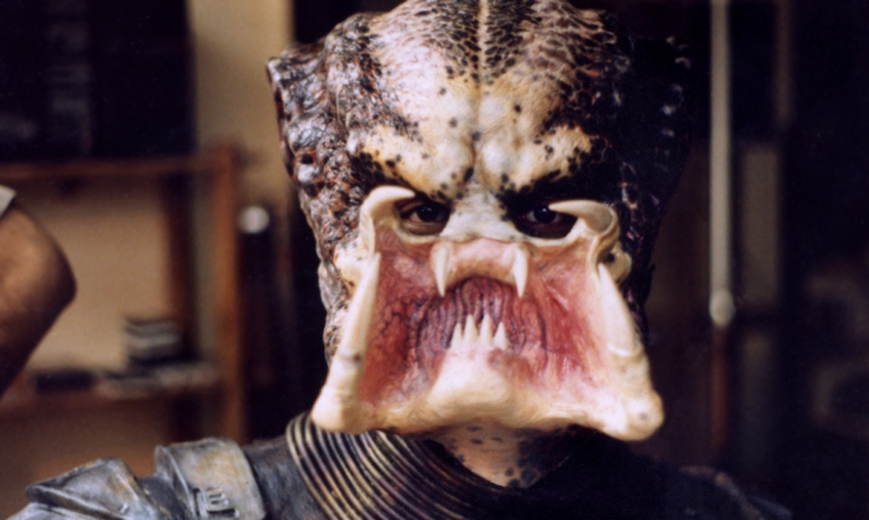
Creating the Mechanical Head for the Jungle Hunter
In 1987, Stan Winston Studio had just completed a werewolf transformation for a scene in Monster Squad when Stan Winston showed the crew a picture of an alien creature called a "predator" and said, "This is the next thing you guys are going to be working on."
The design of the Jungle Hunter for Predator featured an insectoid head and tusks extending from the mandibles, but was otherwise basically humanoid in physiology, enabling it to be portrayed by a performer in a suit who could walk unassisted by wires or harnesses. It was a low-tech approach, but, for the project, the best solution to a specific set of problems.
Jump To Section
- Mechanizing the Predator Head
- Making the Predator Face Move
- Creating the Iconic Predator Mouth: Spreading Mandibles
- Mouth Servo on the Jungle Hunter's Back
 (One of the original sketches Stan Winston drew for Predator.)
Stan Winston's design for the Jungle Hunter in Predator was inspired by an otherworldly Rastafarian warrior painting that he'd seen in producer Joel Silver's office.
Kevin Peter Hall, the seven-foot-four-inch actor who had portrayed the Big Foot character of Harry in Harry and the Hendersons (1987), was chosen to perform in the Predator suit. Topping off the humanoid monster suit was a mechanical head with moving tusks and mandibles and a fully animatronic face.
 (Early test fitting of the Predator head and suit on Kevin Peter Hall.)
Mechanizing the Predator Head
Richard Landon was just one of several technicians in the mechanical department on Monster Squad when Stan Winston asked him to mechanize the Predator's face. "My reaction was, 'I'm going to what?' because I had never done a radio-controlled mechanism before," said Landon. "I had only done cable-controlled mechanisms, so I had to learn a whole new technology, and I stepped up and did, and it was an amazing thing."
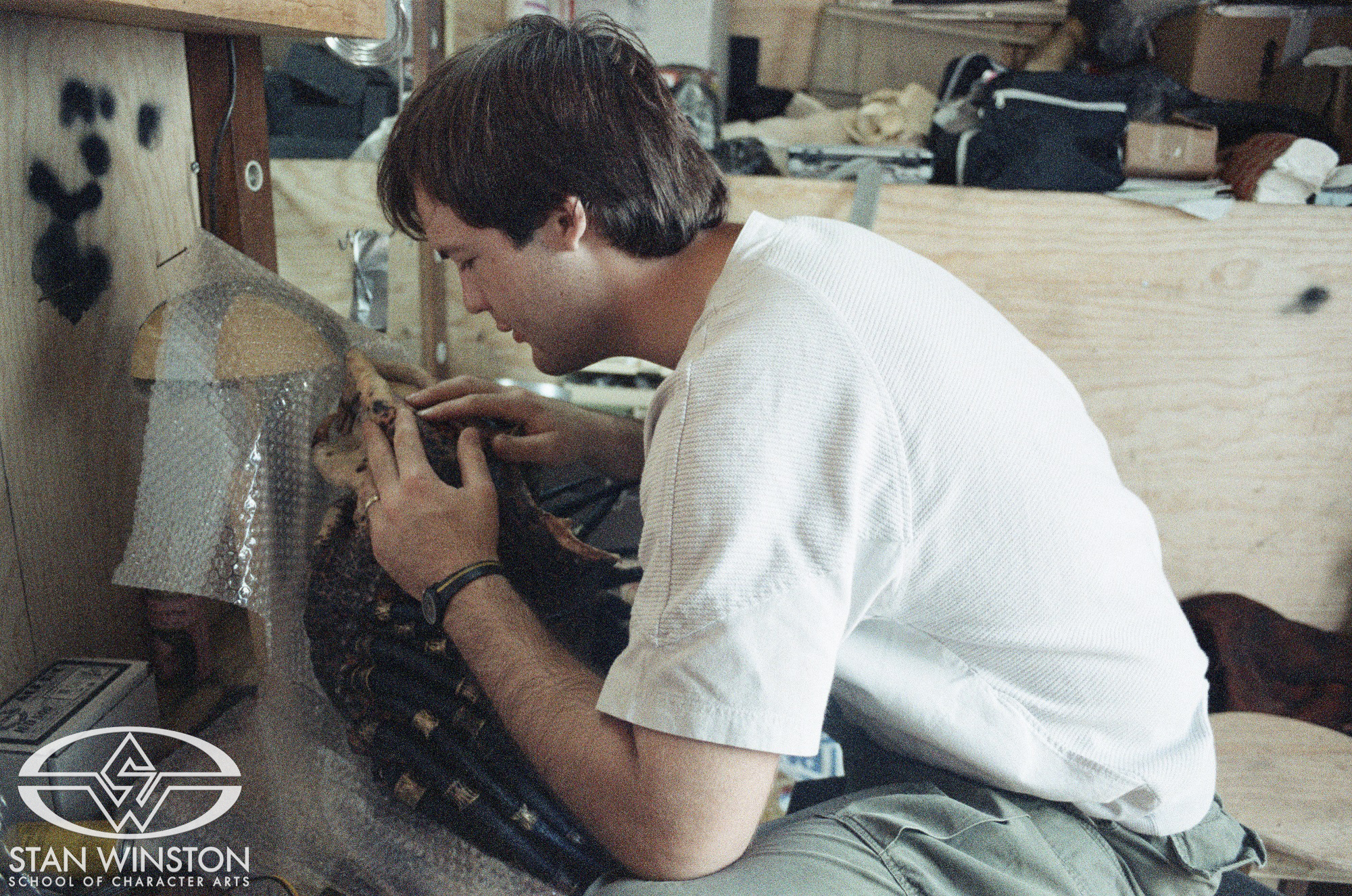 (Richard Landon working on the Predator's head in the truck that was used as a Studio in the Mexican jungle.)
Stan Winston Studio had only six weeks to deliver the Predator. The film was already in production but the filmmakers weren't happy with their initial approach involving a different take on the character with a Predator suit built by another studio (and Jean Claude Van Damme as the Predator.) The high day-cost of keeping the production waiting while a new character and approach was designed from scratch made the effort especially daunting and stressful.
 (Completed Predator heads, with and without masks on the set of Predator.)
When the head sculpture was done, a negative of the mechanical core was generated, and Richard Landon mechanized it. The mechanical core sat on top of Matt Rose's sculpture via the fiberglass lab work steps to ensure that the whole head fit together perfectly, like puzzle pieces.
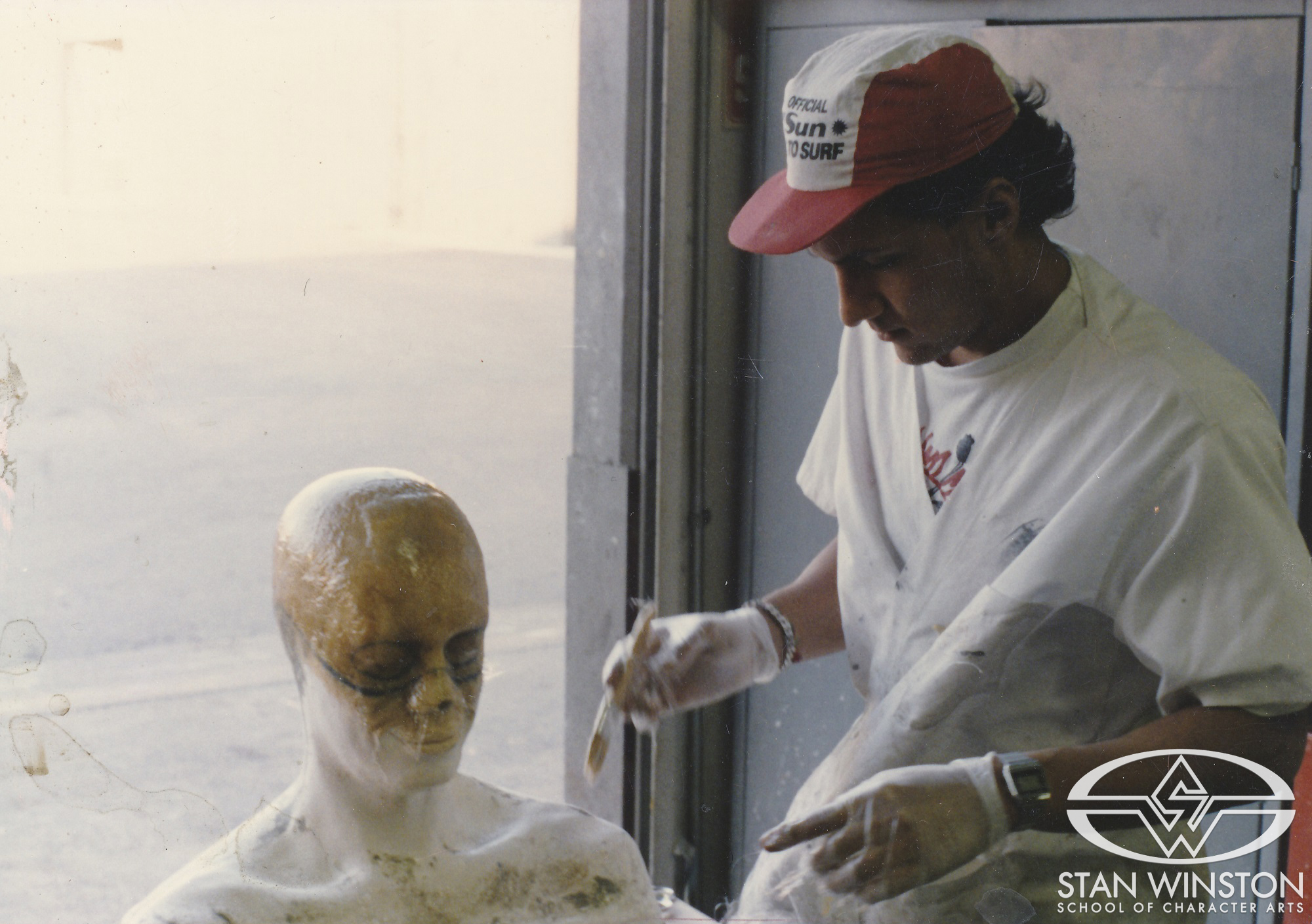 (The fiberglass-creation process on Kevin Peter Hall's bust for the mechanical Predator head.)
"I had finished the whole mechanism. The tusks moved," noted Landon. "He had little constricting muscles in the corner of the eye, which you can't even see because it's black on black moving, but I put it in, and I had outer and inner brow tabs sliding through the actual fiberglass. We put a test skin on it, and Steve Wang saw it and said, 'There is a way that it was done on Harry that looks more organic and natural.'" Landon calls Steve's technique with the brow tabs, the 'floating peanut,' which he says is pretty much the standard technique for realistic brow movement.
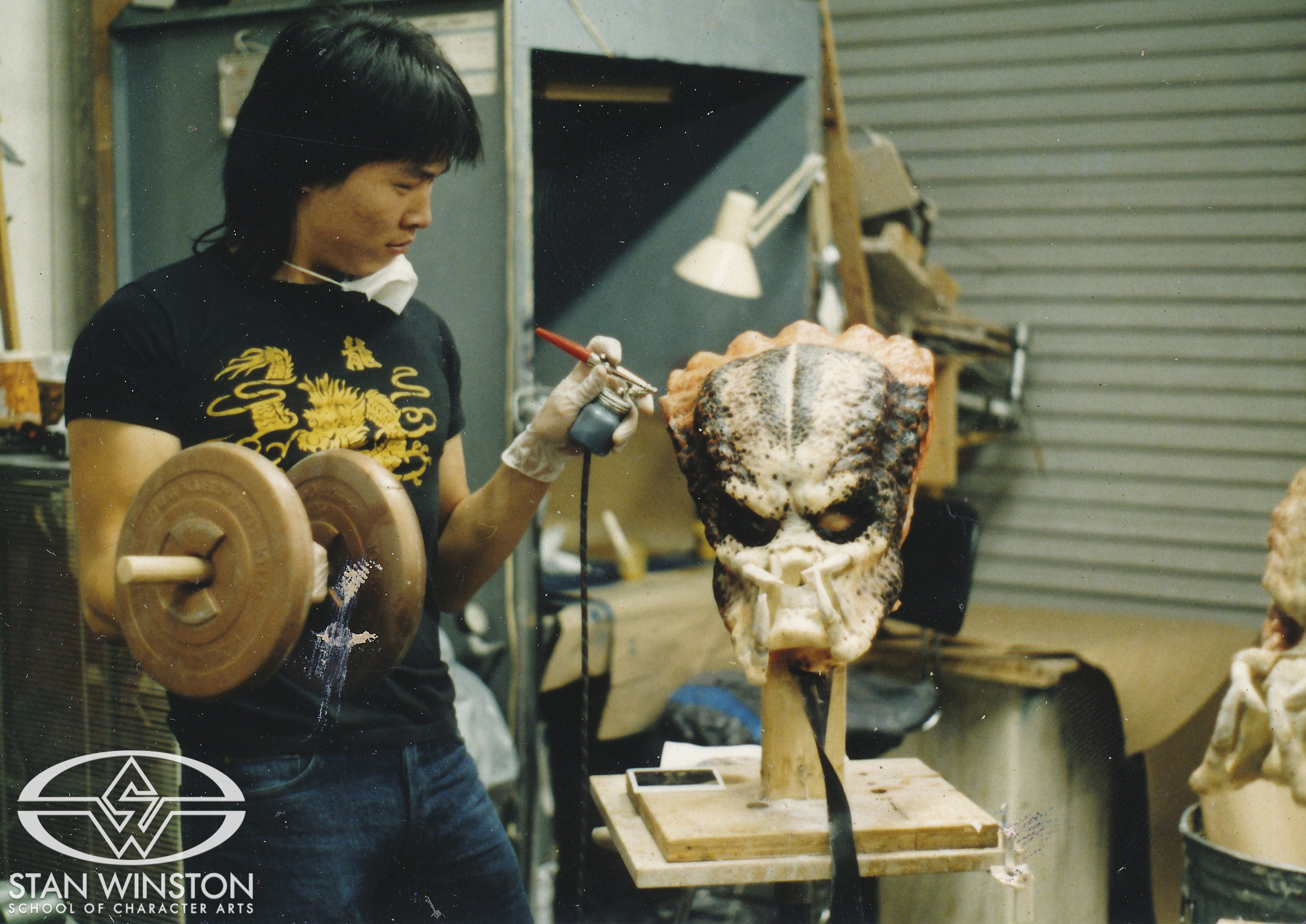 (Steve Wang airbrushing the Predator's head.)
Making the Predator Face Move
From the set in Mexico, Landon asked his effects compatriot David Nelson, who was in New York, for help with one of the corners. "One side worked perfectly. Another side was sticking. It wasn't moving correctly. So we spent an hour on the phone with Dave describing how to drive a hole and drill a hole through the side of a screw so that I could push and pull that screw on the threaded portion of the floating peanut. And I don't know what Stan's phone bill was like."
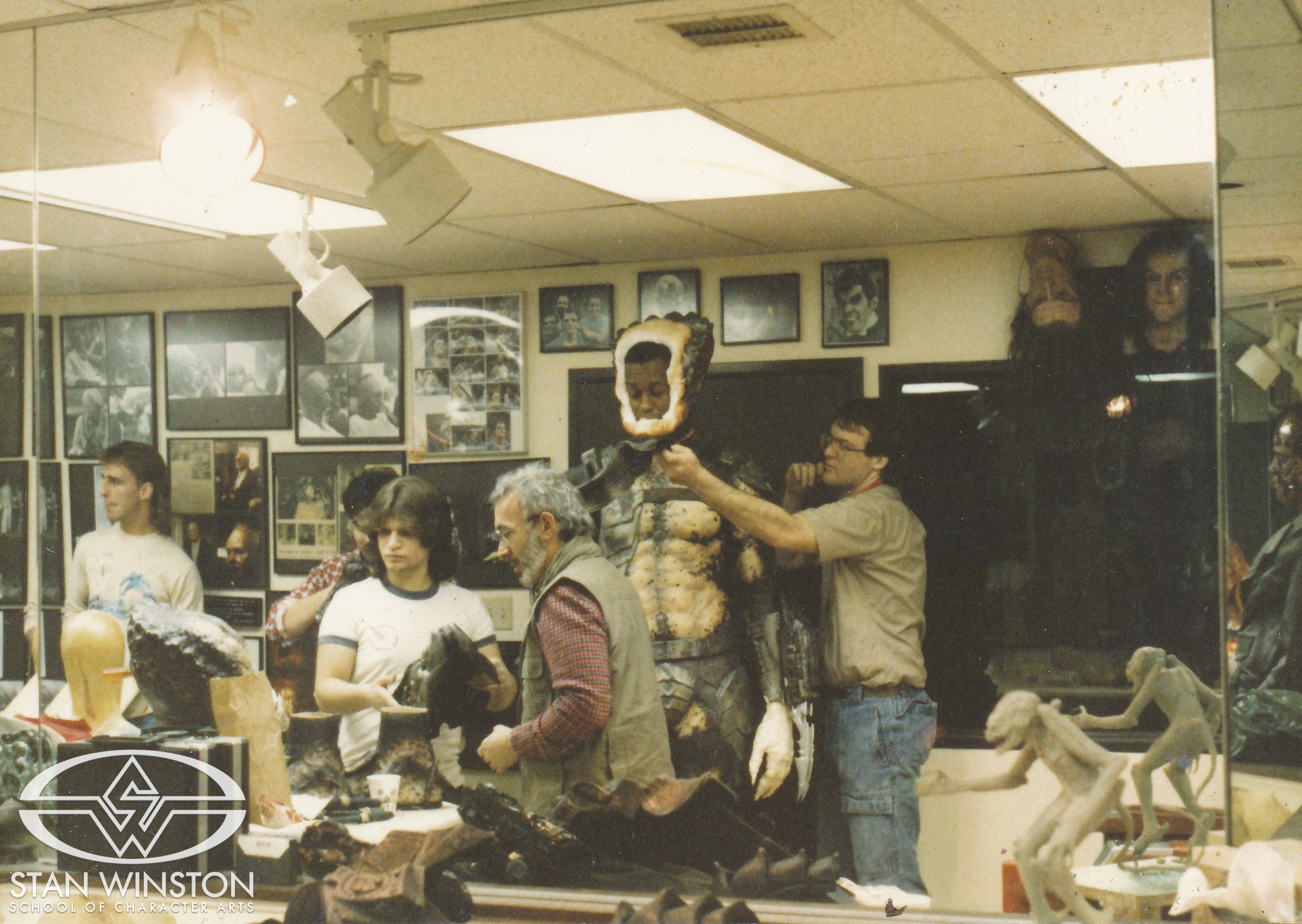 (Brian Simpson, Matt Rose, Shannon Shea, Stan Winston, and Richard Landon do a test fitting with Kevin Peter Hall at the Stan Winston Studio.)
 (Kevin Peter Hall in the Predator suit at the test fitting with Richard Landon in the background.)
Finally, when Richard Landon finished his touch-ups, everyone agreed it was the right way to go with the Predator, and Matt Rose glued down the skin.
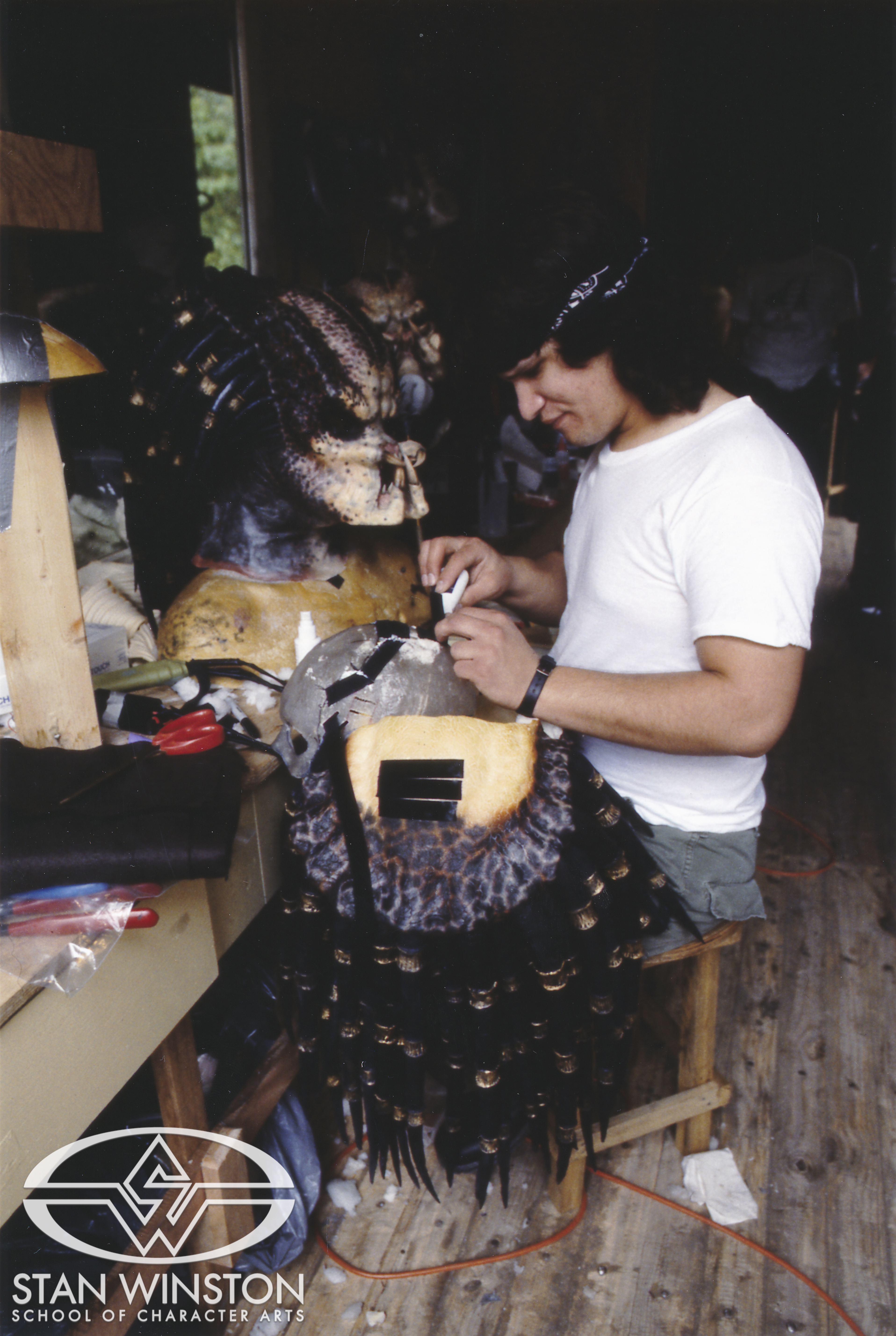 (Matt Rose glues down the skin to the finished head.)
Creating the Iconic Predator Mouth: Spreading Mandibles
One of the most iconic moments in Predator is when the Jungle Hunter removes his mask revealing the spreading mandibles. The facial articulation here is critical to the horror and authenticity of the moment.
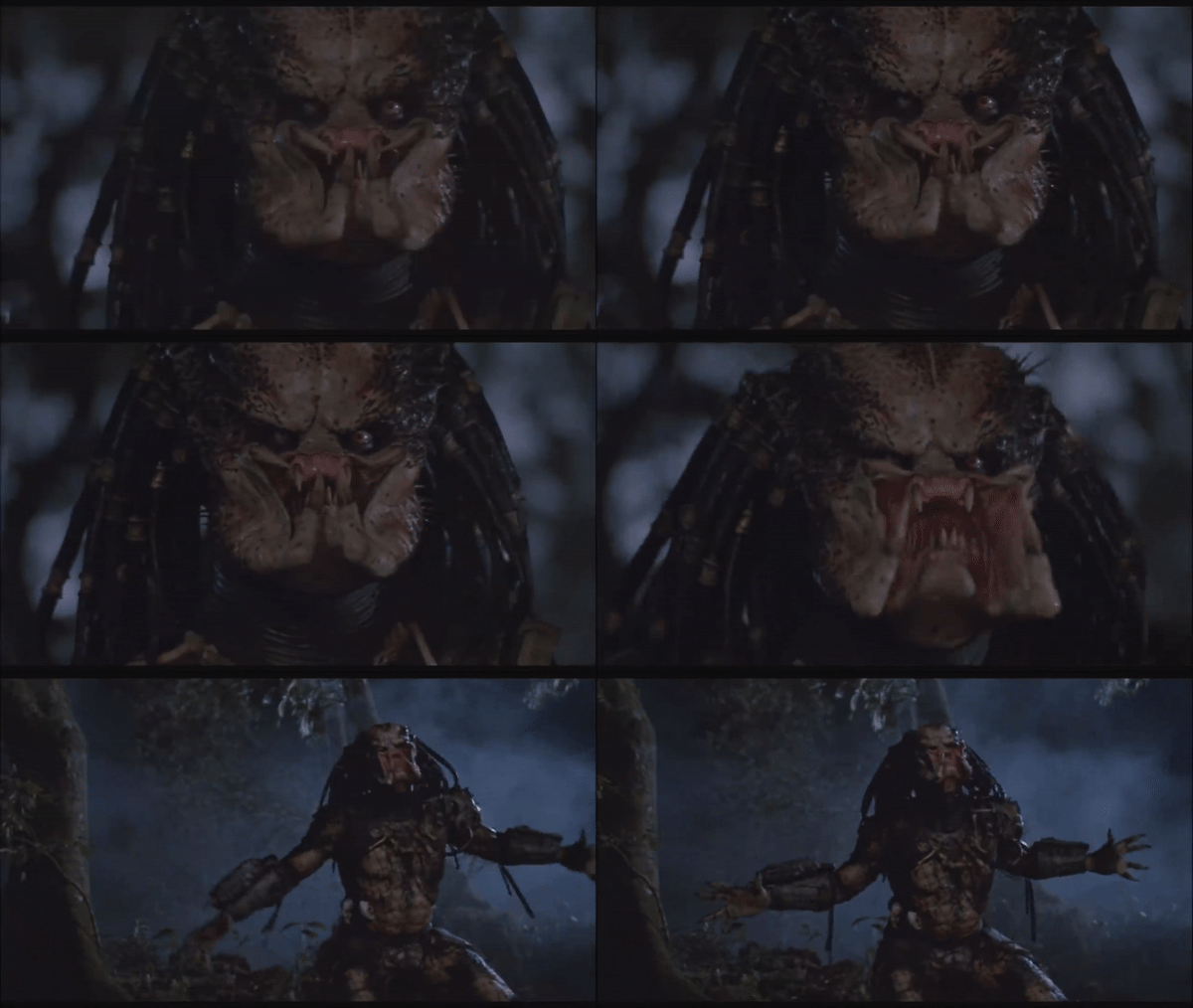 (The mechanical Predator head in action. Gif courtesy of 20th Century Fox.)
"The last layer added to the mandibles was the tips," said Landon. "The tips moved great. It was a three-jointed mandible, so all the tips moved, and they would swing out, but the bottom didn't spread" said Landon. "I had to do it with a linear pull, which is the worst mechanical advantage in the universe, pulling basically on center instead of pulling it open like a nice gate." Landon recalled the "huge, massive" Tonegawa-Seiko SSPS-102 servo motor. "That thing was so big it lived in the hump of the back."
 (Side view of the mechanical mandibles without skin on it.)
 (Kevin Peter Hall under the mechanical Predator head testing its articulated smile.)
Mouth Servo on the Jungle Hunter's Back
Landon was initially concerned about where to put the servo. But as it happened, the foam of the suit was so thick in the back that it shrank, creating a nice, wide, wedge-shaped opening that the fabrication crew was all panicking about. Landon stepped in to solve his problem, and theirs! "I was, like, okay, that's where my servo goes. So, a giant servo was in this guy's back. And then I don't know who else it was, but someone else was in, dressing him with all of the bones, armors, feathers, and stuff, then someone took that string of vertebrae, and it just dropped right over it. I was, like, 'okay.' That was perfect. It completed the costume."
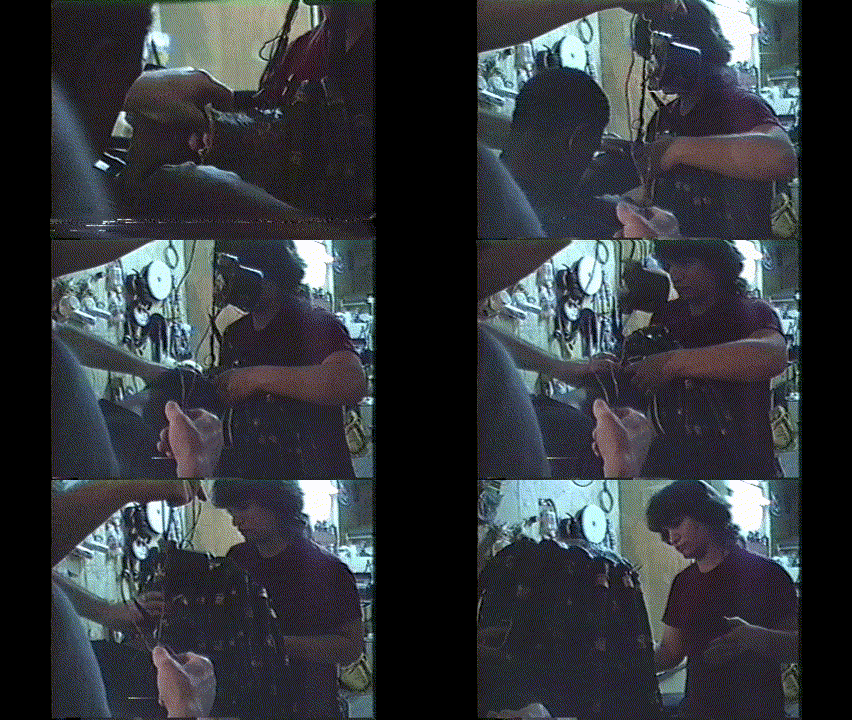 (SWS crew suit up actor Kevin Peter Hall to test the Predator head and mandibles.)
Watch the short video of testing the Predator head and mandibles HERE:
Happy 36th anniversary Predator!Happy 36th anniversary, Predator! The fall of 1986 through early winter of 1987 was a particularly busy period for Stan Winston Studio, which was consumed with not only designing and building the creature effects and makeups for The Monster Squad but was also in early preproduction for Pumpkinhead, which would be Stan Winston’s directorial debut. The workload became even heavier when Stan took on an emergency project, largely as a favor to a friend. It started with a call from Joel Silver, the producer of a film that was then in production, called Predator (1987). Video: Shane Mahan filming how the Stan Winston Studio members (Stan Winston, Matt Rose, Steve Wang, Richard Landon, Shannon Shea) suit up actor Kevin Peter Hall for his legendary role. #predator #stanwinstonstudio #stanwinston #practicaleffect #filmmaking #blockbuster
Posted by Stan Winston School of Character Arts on Monday, June 12, 2023
“The Predator is an iconic character,” Stan Winston said, “as well known and loved a character in science fiction film history as any character out there. And he’s basically a man in a suit. I think one of the reasons that the characters that have come out of this studio are so memorable is because they are not about the technology. We use higher technologies where they need to be used, but we don’t use them for their own sake. Predator was a perfect example of that philosophy. We could do it with a low-tech tool, so we used a low-tech tool. That doesn’t mean there wasn’t a great deal of technology that went into the Predator as well. But we combined all of the tricks — high-tech and low-tech — to create this organic Predator character.”
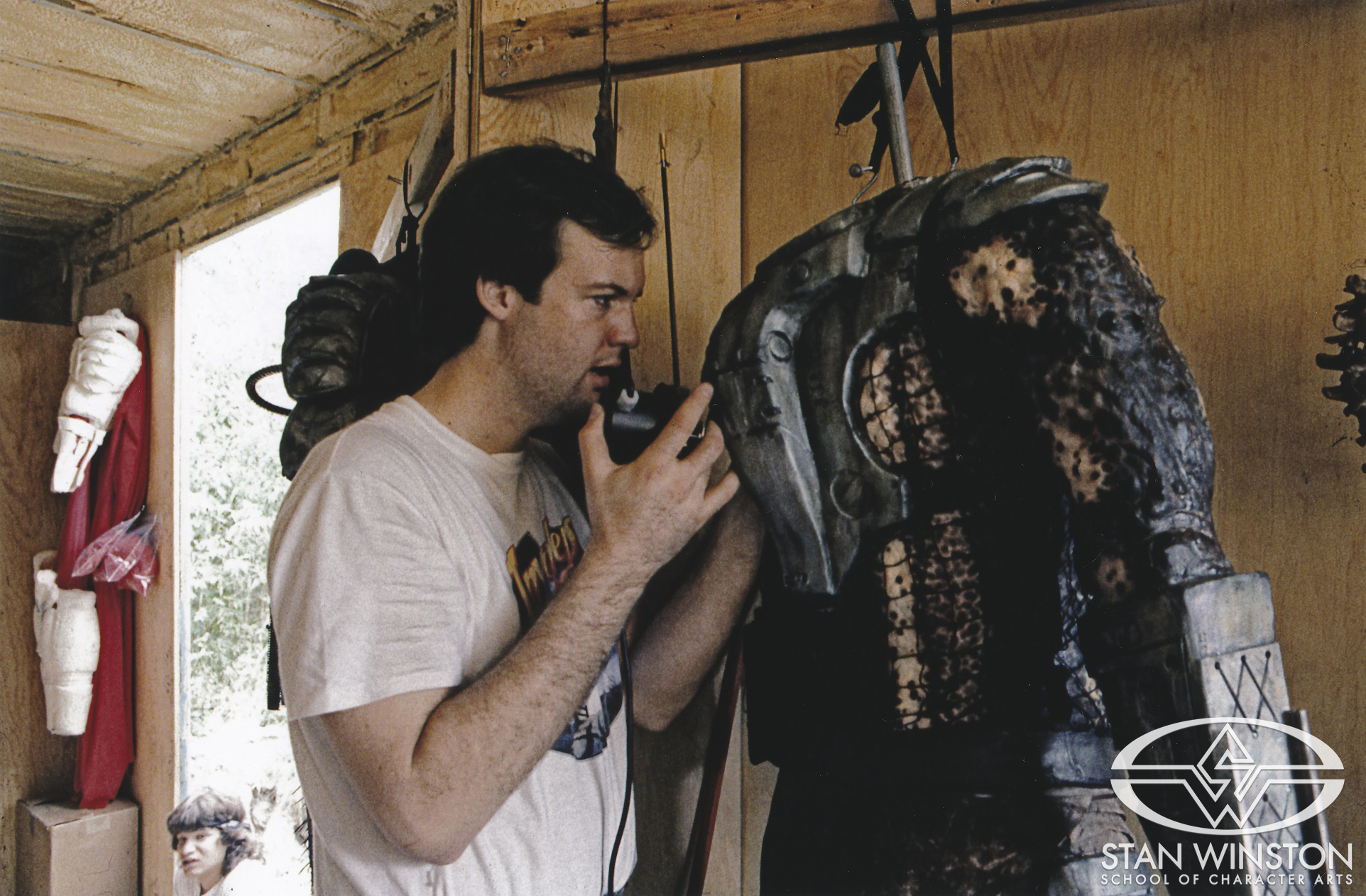 (Richard Landon holding his "huge" servo, checks the back of the Predator suit.)
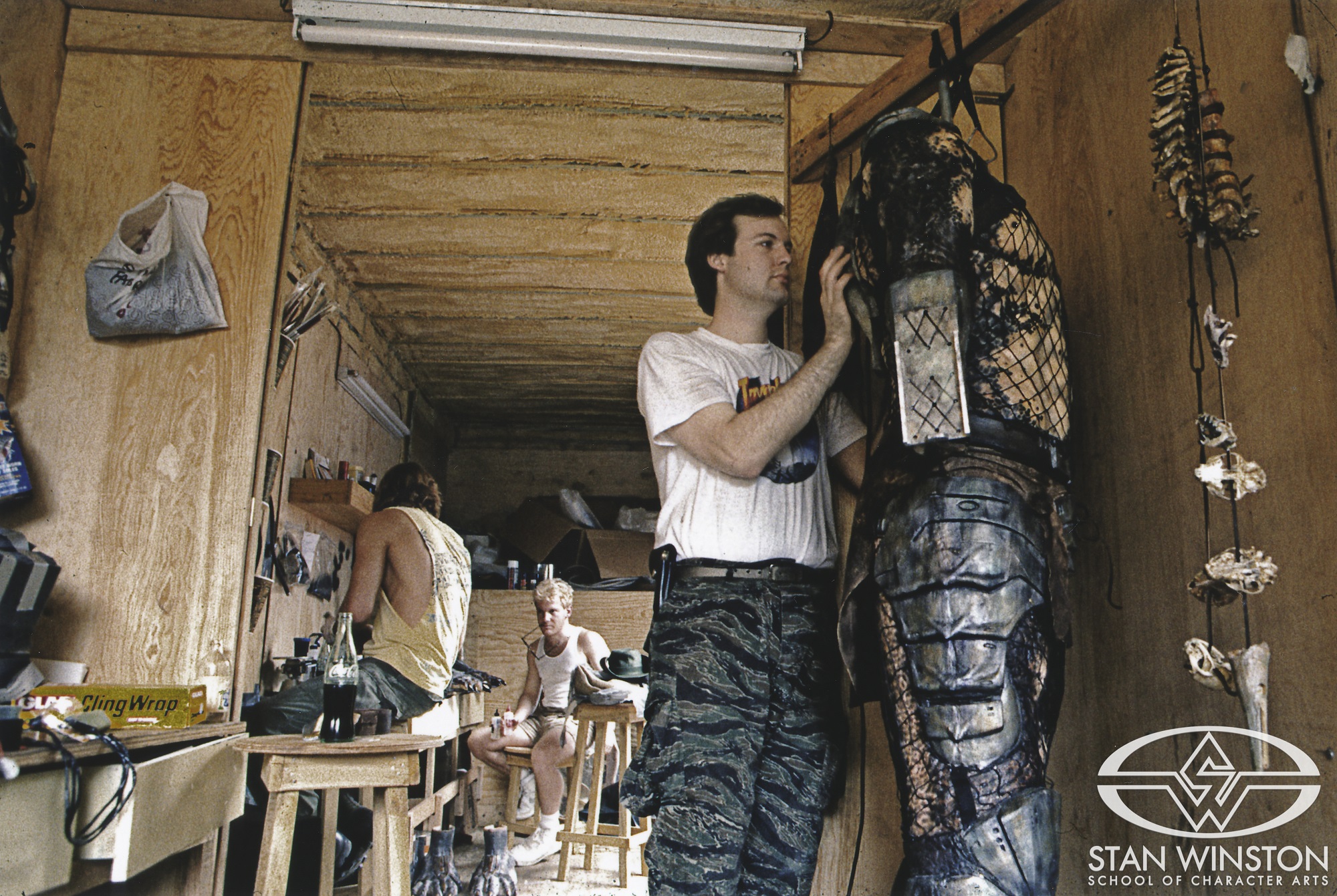 (Landon seals the back of the Predator suit.)
Watch the Predator 25-Year FX Crew Reunion video to learn more HERE:
- Blog assembled by Adrienn Lingurár with selections from The Winston Effect: The Art and History of Stan Winston Studio by Jody Duncan and the Predator 25-Year Reunion video.
Courses with the Creators of Predator
- Animatronics Design Basics with Richard Landon
- Cable Mechanism Basics - Tentacles with Richard Landon
- How To Paint A Monster Mask with Steve Wang
- Zombie Makeup - 3D Pros-Aide Transfer Application with Howard Berger
- Special Effects Sequence Design with Shane Mahan
- Hybrid Characters: Blending Practical & Digital FX with John Rosengrant
- Garage Monsters - How To Make Creature FX On A Budget with Shannon Shea
- The Business of Making Monsters with Shannon Shea
- Production Design: The Process Of Creating A World For Film with Eddie Yang
More Predator Stuff from Stan Winston School
- The "Original" Predator - Jean-Claude Van Dame
- Predator is Born
- Celebrate The Predator: Revisiting the Original Predator
- Predator 2 - Making the Predator Suits
- Predator 2 - New Weapons For A New Predator
- Predator 2 - How the Skinned Bodies Were Created
- Prey - Creating the Predator for Prey
- Aliens vs. Predator: Requiem's "Predalien" by ADI