
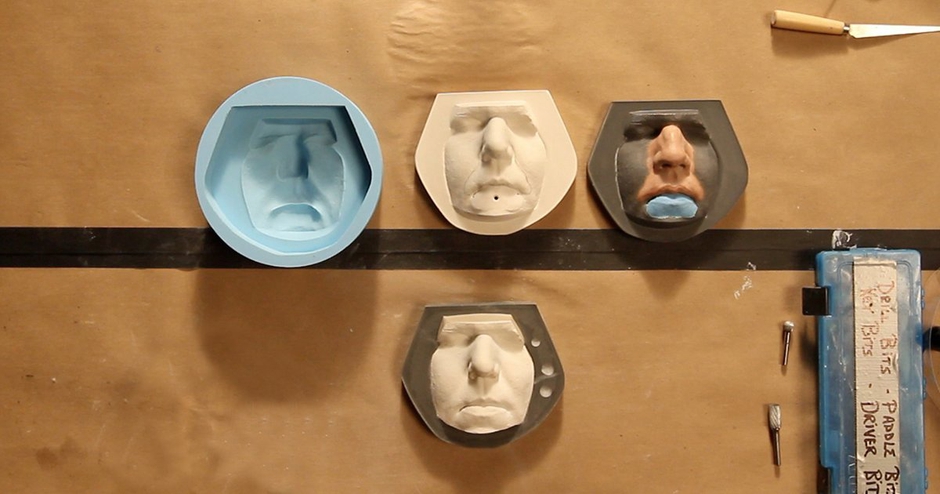
THIS WEEK'S RELEASE IS PART TWO IN A TWO PART SERIES! ALL SEVEN MINI-LESSONS ARE AVAILABLE NOW!
We shoot artists every day. We're in their shops. We're sitting across their work benches... and we're listening. As we visit the busiest shops of the effects world, a name we hear repeated by nearly EVERY master sculptor is the man who, at long last, leads this TWO PART series of invaluable Mini Lessons - How to Make a Mold - Avoiding Mold Making Disasters.
Jump To Section
How to Make a Mold With Rob Freitas
Master Mold Maker, Rob Freitas, has been entrusted by a good handful of the world's most important sculptors - he's a lead mold maker at Rick Baker's Cinovation Studios to start things off. He's responsible for preserving forever the sculptures of Kazuhiro Tsuji, Jose Fernandez of Ironhead Studio, Rick Baker, of course, and countless others. A few moments with the guy and you know he has a true, deep, heartfelt respect for the history and the artistry of the craft.
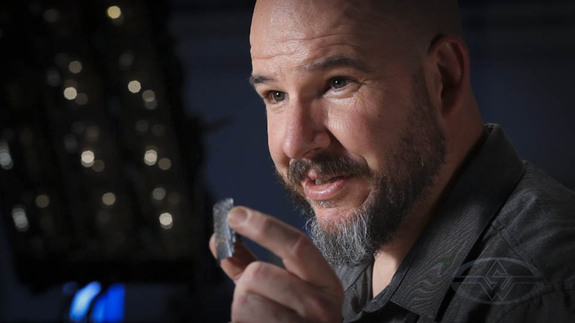
So, believe me when I tell you we have a mold-making lesson from Rob Freitas you'll want to pay attention to.
If you're a beginner or an expert, you're sure to find value in this detailed look at how to avoid the pitfalls one is sure to experience at some point when prosthetic molds get the better of them. There is no one better at defining these little dangers. Using common sense and 22 years experience in makeup effects' top shops, Rob Freitas will guide you through these SEVEN mini lessons and soon become YOUR trusted mentor in the mold shop.
This week, ALL SEVEN ARE AVAILABLE. Here they are:
Tips for When Alginate Goes Wrong is a simple study in 'snaps' - the alginate brush-up for prosthetic molding that will be cozied into a rigid shell and then backed with yet another hard material... usually a stone or other pourable hardening substance. Everyone who's ever tried it knows there are a few things to look out for. But when Rob gets to manhandling this seaweed derivative, it's like putty in his hands. And once you've watched him, it won't be long before you drop any concern you ever had about it and jump right into your first perfect snap mold.

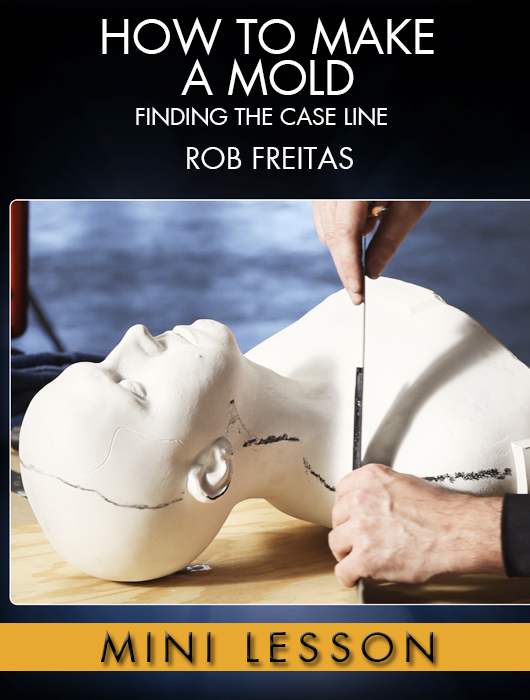
Finding the Case Line is a master class in just that. Honing your ability to imagine the line that divides your mold into parts that will ensure there are no undercuts is probably the most important practice a great mold maker has. Rob's techniques for accomplishing this are killer. And you learn it all here.
Tips for Corrected Positive Molding - Your sculptor needs to get to the upper lip to do some serious detailing, but that pesky LOWER lip is in the way. How do you hand that sculptor back a piece with a missing lip to give him room to work? This lesson demonstrates how important thinking of the artist - or YOU if you're molding your own piece - FIRST.

The Cutting Edge & Flashing - Mr. Freitas gets right to it. In silicone appliance mold making, there are SO many steps and so much refining and perfecting, there really is no room for this last step to get messed up. You are the doorway to the makeup appliance, making it onto the actor looking flawless. Well, that takes prep. Encapsulated silicone needs a place to GO once you get it into the mold. That runoff space is created in the final phase of the mold-making process... and it's called FLASHING. Without it, the run will fail.
And while Rob's giving you a career's worth of knowledge on that subject, he shows you how to work as absolutely clean as you can to make the 'Cutting Edges' perfect. The sculptor's last pass on prosthetic appliances is a painstaking stretch where they blend down every piece so the final edge is paper thin. ANY residual clay left along those lines can contaminate the piece. Rob's process is absolutely worth studying and memorizing. He's one of the very best there is.

Handling Molds With Rob Freitas
Tips for Handling Prosthetic Molds - Okay. Now, you got that apprenticeship in the mold shop by lying your way through the foreman. The things you told her you can do... well... they're simply not true. And when she starts telling you to grab some C Clamps and mold straps and clean and prep that new syntactic over there on the bench for a run... we all know you're just gonna nod. And sweat. But when she leaves the room, you better find out what she means.
That's why Rob is here. Once you've watched this lesson in HANDLING MOLDS, you may actually show your new boss a few things she's never seen before, thereby, keeping your new job.
Facial appliance molds? Creating and using built-in handles. Creating feet and other leveling techniques. INVALUABLE tips on mold-making materials just fall out every couple minutes. Crucial tips like rounding edges on the flashing to avoid chipping later in the mold's life. How to make the core and the mold work together for longer-lasting life. Contact points? How and why? More tips on corrected positive mold designs.
Mold makers! Watch. Listen. Take notes. This series will give you months worth of advice to make your journey into mold-making not only functional... But artful, too.

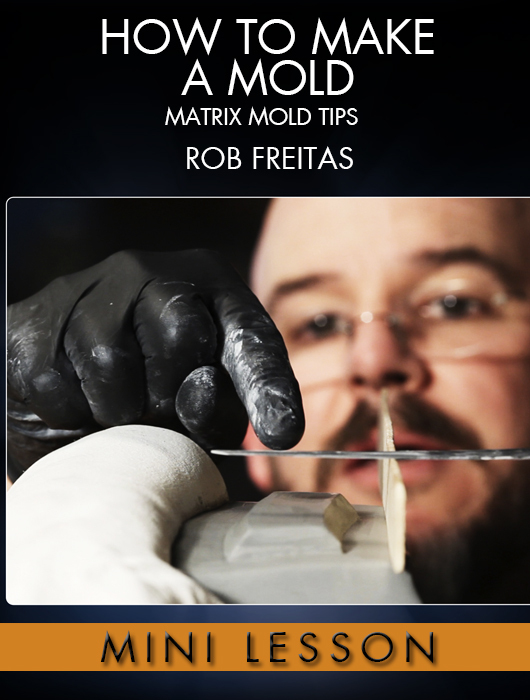
Matrix Mold Tips - Making a two-piece matrix mold is an art. Plain and simple. In this lesson, you'll learn the basics AND a few mind-blowing pro tips for matrix mold-making from one of the best alive.
Rob will construct a slice of a SAMPLE MATRIX that can be scaled and magnified as big as any mold you'll have to make. Using kidneys, rubber tools, and shims, you'll learn what pitfalls to look out for and how to lay the best plan of attack. How to build and refine a wall. Placing keys. Avoiding undercuts. Releasing & sealing. A COMPLETE matrix slice at the hands of "The Freit Train." Look out. This one is a MUST-watch.
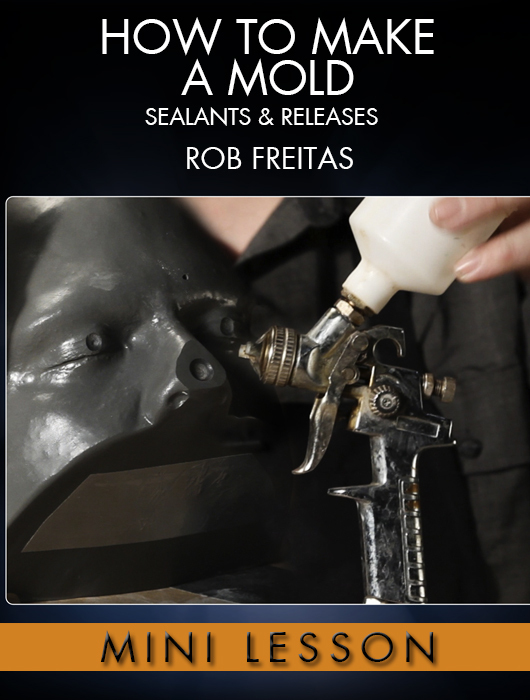
Sealants & Releases - Have you ever seen a silicone brushup stick to your fiber core? Ever want to throw an epoxycal buck across the room? Is it because you didn't know which friggin TREATMENTS TO SPRAY ON YOUR SCULPTURE as you encased it forever in STONE?? Then this lesson is for you.
Whenever an artist sets off to mold an important piece on his or her own and isn't sure how a material is going to react, the FIRST thing they do is call someone who actually knows what they're doing to ask what they would use in the FINAL STEPS.
Rob Freitas generously guides you through every possible material combination you'll need to make sure that piece comes out clean and leaves the mold in prime condition to prep it for an encapsulated silicone run.
You might as well start with this one. This is one step you can't afford to guess on.
Welcome to the Mold Shop.
- John Ales