

The Mill at Calder’s End
by Stan Winston Studio Alumni: Kevin McTurk
Hi fellow Stan Winston School artists,
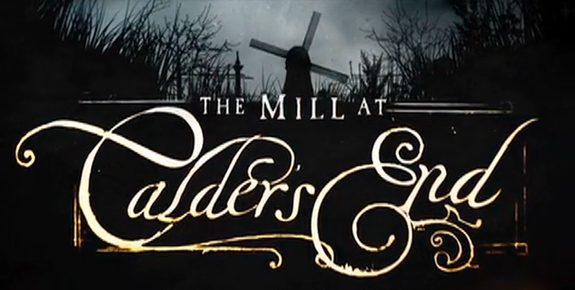
My name is Kevin McTurk, and I'm a creature effects artist and puppeteer. I'm thrilled to tell you about my new project, The Mill at Calder’s End - A Victorian Ghost Story Puppet Film.
Jump To Section
- Stan Winston Studio and Beyond
- The Creature Adventure Continues
- Weta Workshop and the Weresheep
- Making a Puppet Film
- Working on a New Puppet Film
- Inspiration and Influences for The Mill at Calder’s End
- Celebrating Practical Effects
- Making the Puppets
- The Star of the Film
- Conveying Emotion With Light
- Making the Bramblegor Creature
- Join the Team
- Final Note
Stan Winston Studio and Beyond
Before I tell you more about the process of bringing this puppet project to life, I would like to personally thank Matt Winston, his family and the Stan Winston School team for giving me the opportunity to spread the word about my new film and the Kickstarter campaign that's funding it. I first met Matt in the Fall of 1991 when I arrived in Los Angeles and began my career in special makeup effects at Stan Winston Studio. I had the great fortune to work on many incredible iconic films at Stan Winston Studio including Batman Returns, Interview with the Vampire, and the Jurassic Park trilogy.
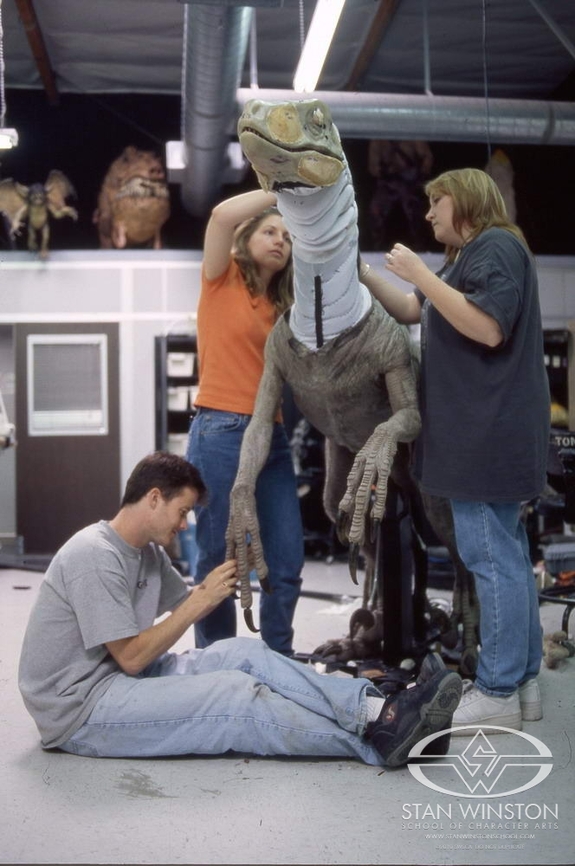 (Kevin McTurk, Amy Whetsel & TaMara Carlson Woodard assemble a Jurassic Park III raptor at SWS.)
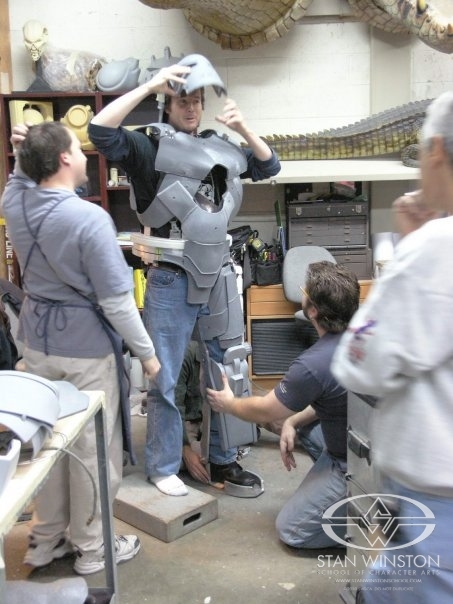 (John Eric Tucker, Kevin McTurk & Mike Manzel test fit the Iron Man Mark I suit at SWS.)
The Creature Adventure Continues
In the years that followed, I worked for many other effects studios, including the Jim Henson Creature Shop, Amalgamated Dynamics, and Spectral Motion. I also worked at New Deal Studios, where I was involved in the miniature effects shots for the Martin Scorsese films The Aviator, Shutter Island, and Hugo.
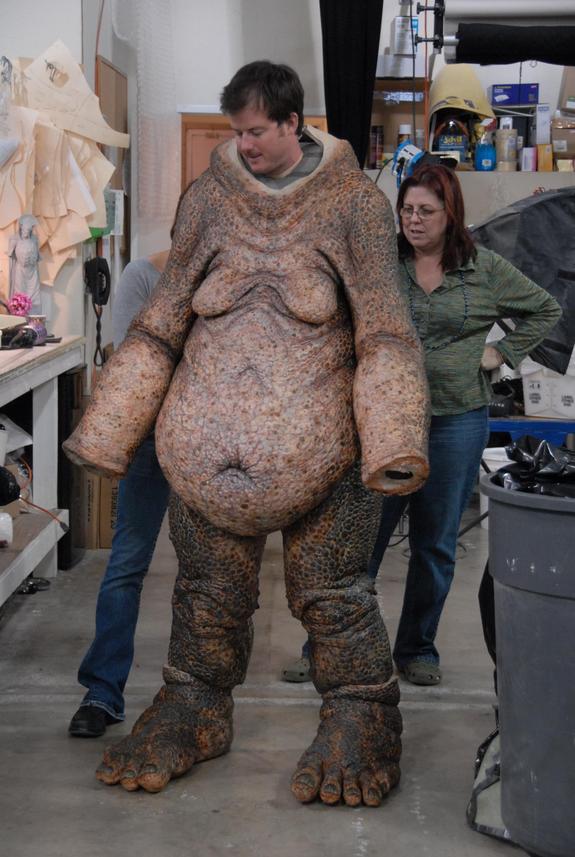 (Kevin McTurk volunteers to test fit Spectral Motion's "Crone" suit from Hellboy 2.)
Weta Workshop and the Weresheep
In 2004, I was contacted by Weta Workshop in New Zealand and moved to Wellington to work on the films King Kong, The Chronicles of Narnia: The Lion, the Witch and the Wardrobe, and the gory comedy Black Sheep (in which I also played the Weresheep creature).
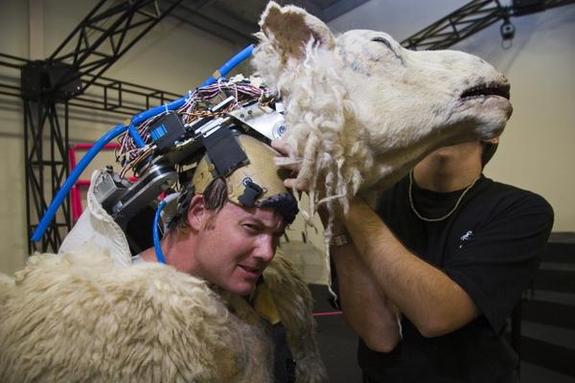 (Kevin McTurk suits up for his role as "The Weresheep" in Black Sheep.)
Making a Puppet Film
In 2011, I returned to my film school roots and conceived the idea to make a puppet film. I received a Project Grant from The Jim Henson Foundation and a Filmmaker's Grant from Handmade Puppet Dreams (a short film series curated by Heather Henson, Jim Henson's youngest daughter) to make my first puppet short film, The Narrative of Victor Karloch. The film was a great success, playing in over twenty international festivals and winning the "2012 Best Animated Film" at the DragonCon Film Festival.
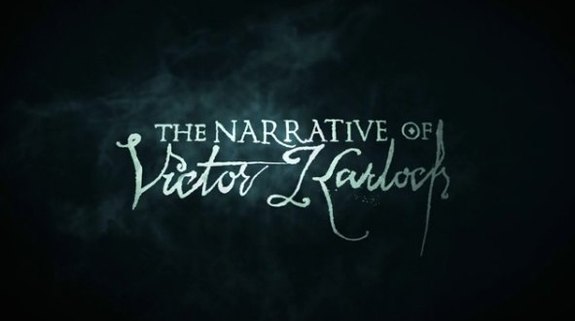 (Title card for Kevin McTurk's 1st puppet Film, The Narrative of Victor Karloch.)
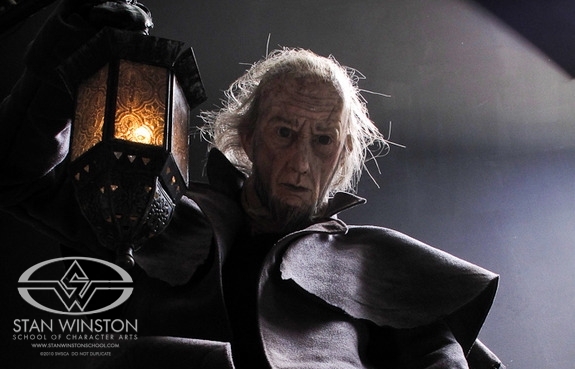 (Christopher Lloyd voices the title character in The Narrative of Victor Karloch.)
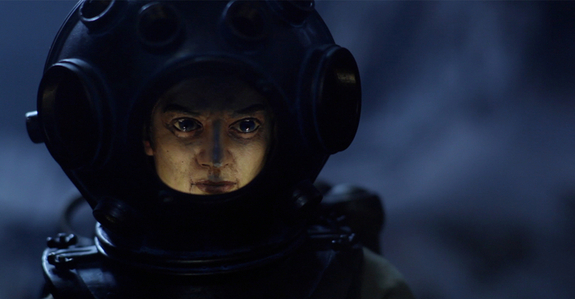 (William Merriwether (Elijah Wood) investigates the watery depths in "Karloch.")
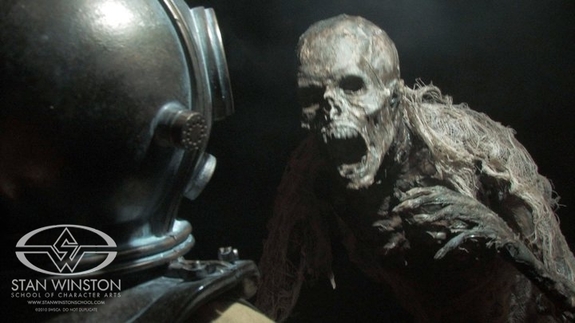 (Merriwether encounters a ghost of the deep in The Narrative of Victor Karloch.)
Working on a New Puppet Film
When I completed the festival tour for the first film, I immediately started thinking of the follow-up puppet film. Whereas my first film was reminiscent of a Jules Verne tale, my new film, The Mill at Calder’s End, is inspired by the gothic haunted worlds of Edgar Allan Poe and H.P. Lovecraft. It is also heavily influenced by the classic Hammer horror films of the 1960s and the films of Mario Bava (most notably, his gothic masterpiece Black Sunday).
Inspiration and Influences for The Mill at Calder’s End
In the making of this second film, I will again be focusing on the art of puppetry. The work of Jim Henson (The Dark Crystal, Labyrinth, and his Storyteller television series) is a great inspiration to me. I hope to bring his sense of wonderment and artistry to The Mill at Calder’s End. Both “Karloch” and “Calder’s End” are told with the traditional Japanese theater puppetry technique known as Bunraku. Each puppet figure is controlled by three (or more) puppeteers dressed in black and hidden behind each character.
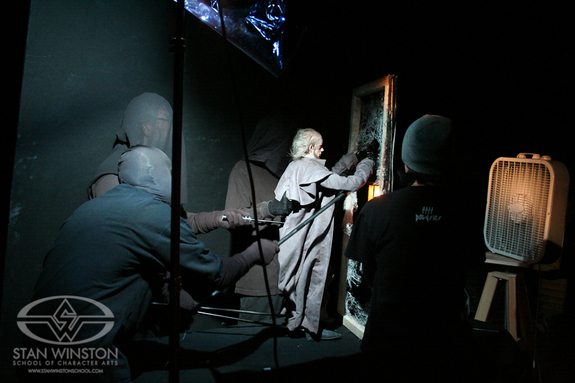 (3 puppeteers perform the Victor Karloch puppet on the set of Kevin McTurk's film debut.)
Celebrating Practical Effects
It is also my goal to make a film that celebrates practical effects, and therefore, there will be almost no computer-generated imagery in the final film. In my first film, I utilized several silent film era camera techniques, such as a shot of a miniature ship on a storm-swept ocean (which, in fact, was made up of painted flowing garbage bags). I plan to continue to use many more of these techniques to give a handcrafted look to The Mill at Calder’s End.
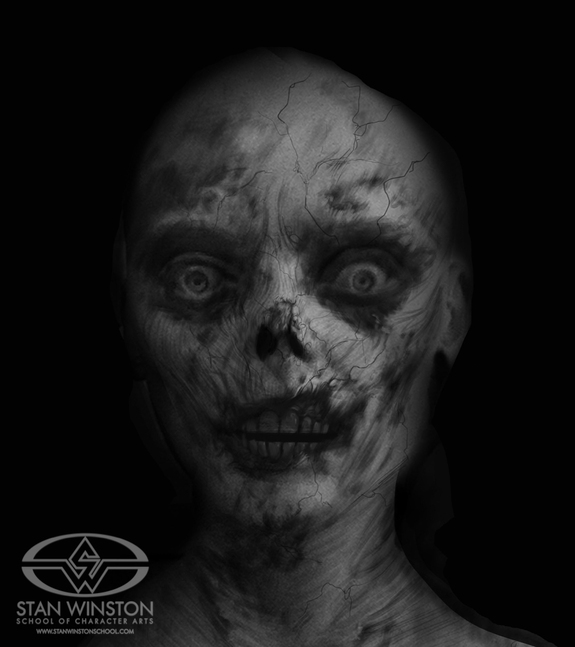 (Witch concept design for The Mill at Calder’s End.)
Making the Puppets
For "Calder’s End," sculptor Mitch Devane has created a 1/2 scale Barbara Steele likeness and a 1/2 scale Peter Cushing likeness. Both sculptures have been molded in basic foam core box molds that are filled with silicone. The molds are carefully split open and the clay sculptures are salvaged so that they can be resculpted in more extreme, horrific expressions (which will be revealed in the film!). These new expression heads are once again molded in foam core boxes and poured as solid block molds.
The Star of the Film
Sculptor Arjen Tuiten has been responsible for creating a 1/2 scale puppet head of the lead character "Nicholas Grimshaw". I made the decision not to base the character on any particular actor, but rather a composite of several English actors who would work well for the tone of the story.
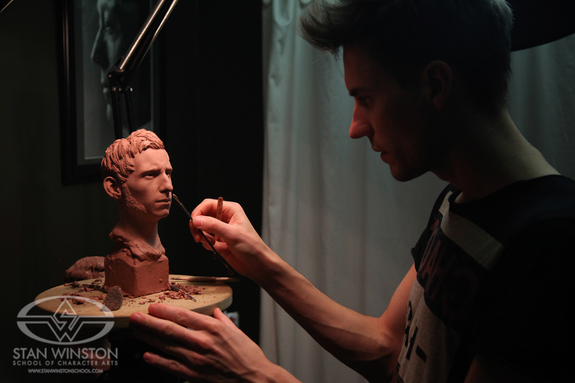 (Arjen sculpts "Nicholas Grimshaw", protagonist of The Mill at Calder’s End.)
Conveying Emotion With Light
As evidenced in the photos, Arjen sculpted an expression on the puppet character that can convey different emotions depending on the lighting. The high-angle lighting presents Grimshaw as focused and determined, whereas the “underlit” look (similar to the light from a lantern) presents him as fearful and doubting.
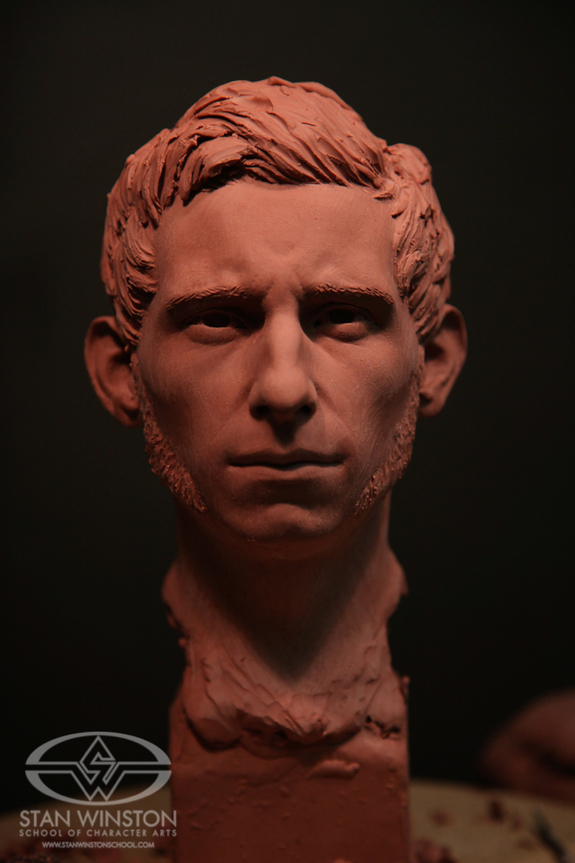 (Lit from above - Grimshaw is "focused and determined.")
 (Lit from below - the same sculpture of Grimshaw appears "fearful and doubting.")
Making the Bramblegor Creature
In the last act of the film, Grimshaw will have a harrowing encounter with a giant troll-like demon known as "The Bramblegor."
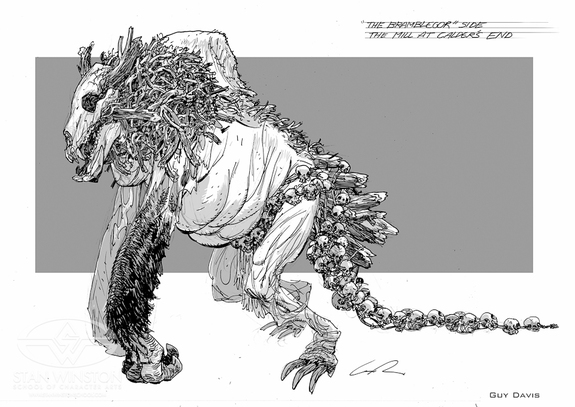 (Bramblegor creature design sketch by Guy Davis.)
This creature will appear to be at least 15 to 20 ft. tall compared to the size of Grimshaw. This beast will charge at the hero in a terrifying quadruped (i.e., “running on all fours”) manner. In reality, this will be achieved with veteran gorilla suit performer John Alexander charging the puppet character on a miniature cavern set.
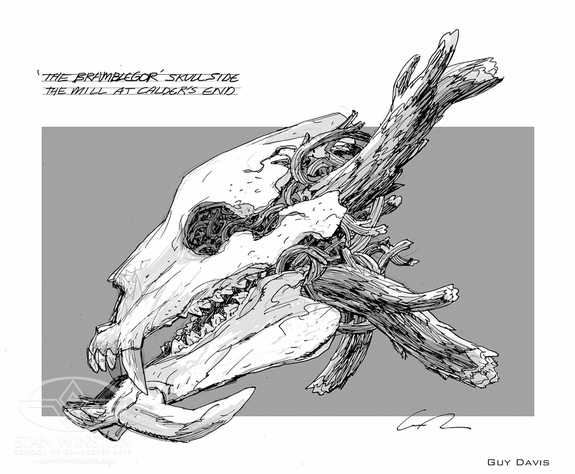 (Bramblegor creature head design by Guy Davis.)
By using forced perspective, a mechanical struggling puppet of Grimshaw (achieved with two servo-driven gears that rotate the arms in circles that are a bit off-set from each other), and an insert snapping jaw hand puppet version of the Bramblegor, this sequence will be carefully and seamlessly edited to take advantage of all of these in-camera effects.
Join the Team
Although I've reached my initial budget goal of 32k on Kickstarter, I'm determined to make this puppet film amazing, so I'm going for a "stretch goal" of 50k. If you're interested in supporting the film and the art of puppetry & practical effects, please consider contributing to this project through our Kickstarter campaign page.
Final Note
My advice to the SWSCA artists and students is from a wonderful Polish saying about creativity that I learned from a film festival interviewer from Warsaw. The saying is “ Everybody hold one`s fate in one`s hands [and can] shape it as a blacksmith shapes hot iron with his hands."
So, I say to you, stay focused, my friends, keep creating art, and shape that iron...
-Kevin McTurk
To check out The Mill at Calder’s End Kickstarter Campaign, just click HERE.