
By Lexi Stewart
"...I think a lot of people will appreciate this movie. A lot of it is practical, like puppets and electronics. And that's hugely important." - Finn Wolfhard.
In the early Spring of 2019, a team of talented artists and technicians joined forces to embark on a special project that would consume their summer: Ghostbusters: Afterlife. Ivan Reitman's son Jason took on the helm of directing a sequel that seemed almost controversial and unwise, given the reception of the 2016 reboot. However, after receiving rave reviews, it seems the world still hasn't seen the last of the Ghostbusters franchise.
Ghostbusters: Afterlife is a direct sequel and continuation of the original story, with fun connecting plots and returning characters. Jason Reitman endeavored to bring back the feel of the classic we all know and love while also introducing fresh faces. It's about the next generation of Ghostbusters.
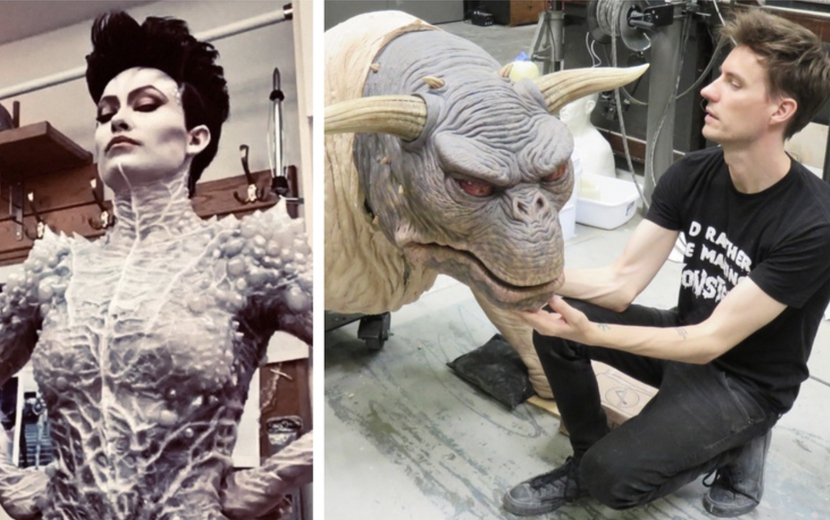
Special makeup and live-action creature effects designer, Arjen (one of our favorite artists from the Stan Winston Studio family) was the one to tackle the dream project of a lifetime. The producers of the 2016 reboot Ghostbusters: Answer the Call had approached Arjen about the job, but it never came to fruition. A few years later, after hearing of Jason Reitman's new sequel, Arjen became involved with the project very quickly. "I saw that Jason Reitman was planning this one, and I thought, wow, this is really cool. I should see if I can talk to him. We instantly got along and immediately started bouncing ideas off each other. I knew this was going to be something special."
When Arjen initially sat down and read the script at Sony, he was smiling from ear to ear. "It had the feel and the aesthetic of the first film, but it was also a new story that would lead into other things."
The world of practical effects was all new to director Jason Reitman, so Arjen felt a responsibility to be his guide in the arena of makeup and puppets. "I was a Ghostbusters fan, and I wanted to make sure that that it was [handled correctly]. He appreciated that," Arjen explains.
Jump To Section
- The Effects Behind the Armchair Scene in Ghostbusters: Afterlife
- Designing the Returning Character of Ivo Shandor
- Updating Gozer With a Unique, New Look
- Bringing Back the Terror Dogs With Practical Effects
- Referencing the Original Ghostbusters’ Zombie Taxi Driver
- A Full Circle Moment for Stan Winston Studio Special Makeup Effects Artist, Arjen
Expecting much more digital work, new and old cast members were amazed at the amount of practical work implemented. Consequently, they were able to immerse themselves in the sets, makeups and puppets. Newcomer actress Celeste O'Connor gushed, "I came right from my first indie movie onto this huge Ghostbusters set, and there were puppets, things were built...there were just so many practical sets and props, and it was just incredible to see."
Note: Major Spoilers Below
The Effects Behind the Armchair Scene in Ghostbusters: Afterlife
In its first of many nods to the ghosts and ghouls of the original, the Ghostbusters: Afterlife prologue sees Egon Spengler meet his end at the clawed hands of the same armchair demons who attacked Sigourney Weaver in Ghostbusters.
![Director Jason Reitman surrounded by [left to right] Arjen, Ron Binion, and Geoff Redknap while shooting the Egon 'demon armchair' sequence. Image courtesy Arjen/Sony Pictures.](https://swsca-production.s3.amazonaws.com/ckeditor_assets/2021/12/16/unnamed-copy-2.jpg) (Director Jason Reitman surrounded by [left to right] Arjen, Ron Binion, and Geoff Redknap while shooting the Egon 'demon armchair' sequence. Image courtesy Arjen/Sony Pictures.)
(Director Jason Reitman surrounded by [left to right] Arjen, Ron Binion, and Geoff Redknap while shooting the Egon 'demon armchair' sequence. Image courtesy Arjen/Sony Pictures.)
The practical effect was achieved as simply as it was handled in the first film, with performers just off-screen wearing 'monster gloves' and violently grabbing at the actor -- just a small taste of the practical magic in store throughout the rest of the movie.
Designing the Returning Character of Ivo Shandor
 (Mold maker Steven Adkins working on J.K. Simmons' lifecast. Image courtesy Arjen/Sony Pictures.)
One of the more iconic characters of the franchise to return to Ghostbusters: Afterlife was Ivo Shandor, the leader of the Cult of Gozer. The classic antagonist was another big project for Arjen and his team to tackle. Once they found out J.K. Simmons had been cast, Arjen found images of the actor and started designing. "I thought back to the 1920s. It was effortless because J.K. Simmons has such a great face with so much character," says Arjen. "I did one design, and Jason just immediately signed off on it. Then costume designer Danny Glicker did the costume, which was amazing."
 (The mechanical 'split' dummy of Ivo ready to be shot on-set. Image courtesy Arjen/Sony Pictures.)
"We did two dummies, one that was lying in the coffin and one [that gets split apart] in the mine shaft." Mitch Devane was the primary sculptor for the Ivor dummy while Tim Gore took the lead on painting the heads and hands. For the splitting dummy, Arjen's team, led by mold supervisor Brian Rae, had to create a mechanical device that would split open on cue. Thankfully on the shoot day the gag went off smoothly. Arjen recalls, "We dressed [Ivor's splitting body] with slime, shot it twice, and that was it. We had it. It was a success, and they loved it."
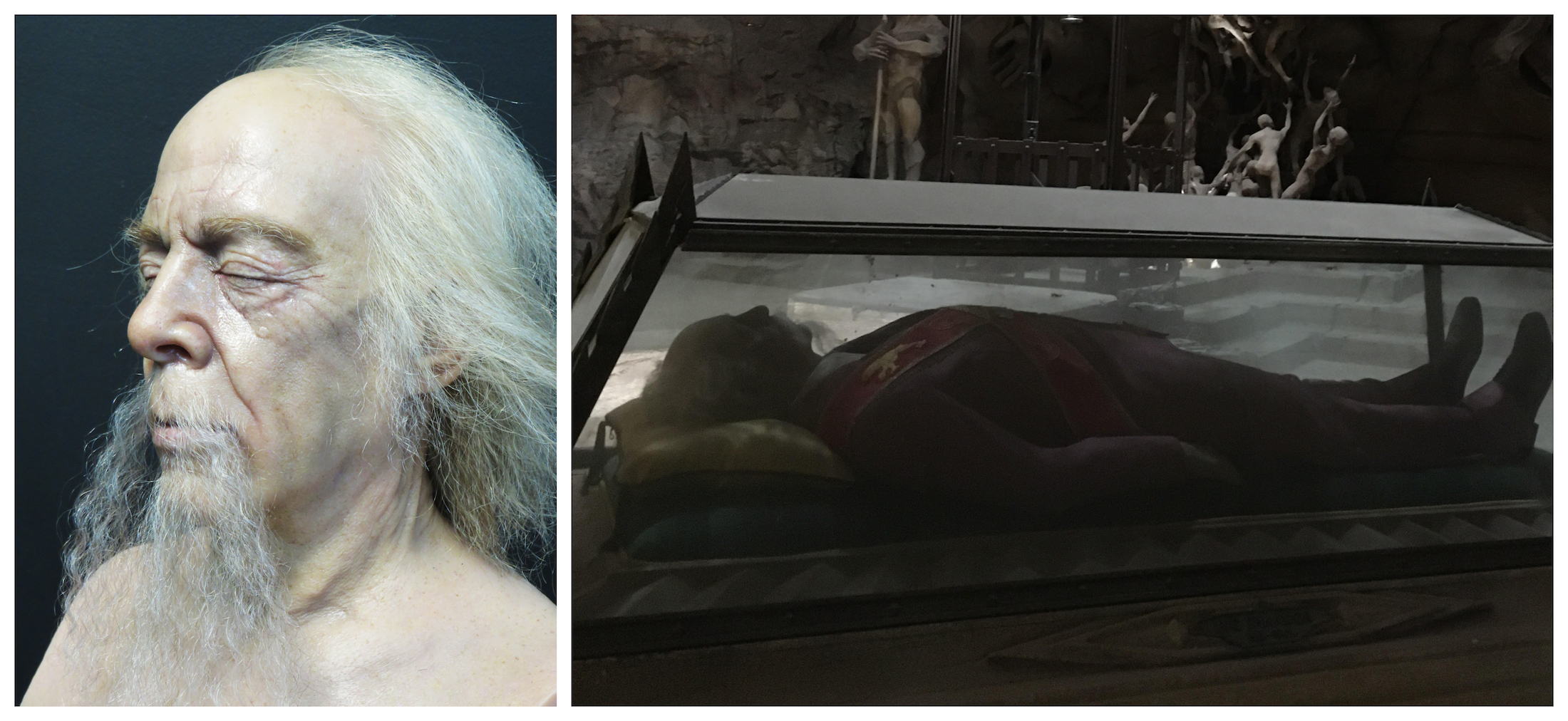 (Left: completed head of the Ivo coffin dummy. Right: the Ivo Shandor dummy in the coffin on the mine set. Images courtesy Arjen/Sony Pictures.)
The non-splitting dummy was made of silicone with an armature to ensure that the weight and positioning would be correct when it was laid into the coffin. It was created for the sole purpose of combatting scheduling and timing issues so that J.K. Simmons would not have to be in scenes unnecessarily. "J.K. was only there for like a day and a half or two days," explains Arjen, "and I doubt he would want to lay in a coffin for ten days simply to be a dummy!"
Updating Gozer With a Unique, New Look
 (Arjen's 'Gozer' design for Ghostbusters: Afterlife. Image courtesy Arjen/Sony Pictures.)
A Ghostbusters film wouldn't be complete without legendary antagonist Gozer! Returning to the franchise in the body of actress Olivia Wilde, Arjen wanted to give a nod to the original character but still make it unique and new. Getting Gozer right was a priority for director Jason Reitman.
Arjen tells SWSCA, "It's one of the first things Jason asked me about. I always loved the original [Gozer] design, but I thought I could update it for today's standards. I always kept her image in my mind. Sometimes simple is better. I always loved everything about her. When Jason brought up Olivia Wilde, I thought, 'YES. She's fantastic and has an amazing face.'"
 (The Gozer sculpt partway through the process, next to Arjen's digital concept design. Image courtesy Arjen/Sony Pictures.)
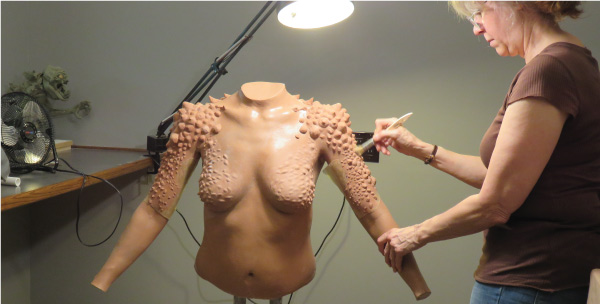 (Sculptor Carol Koch adding texture to the Gozer body sculpt. Image courtesy Arjen/Sony Pictures.)
Olivia Wilde was 100% committed to the idea and concept. "It was about a five-and-a-half-hour makeup. Quite intense. Unfortunately, [Wilde] was never available for any testing, and we needed at least two full tests." The team had to figure it out the morning of shooting which was a massive challenge.
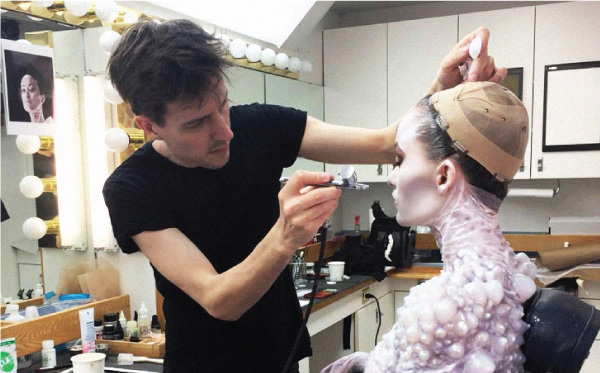 (Arjen airbrushing the Gozer look on Olivia Wilde during application. Image courtesy Arjen/Sony Pictures.)
 (Arjen and Pamela Goldammer continue Olivia Wilde's transformation into Gozer. Image courtesy Arjen/Sony Pictures.)
"I had Pamela Goldammer, Geoff Redknap, Mike Fields, and Patrick Baxter, and we all just jumped on her and had to figure it out." On the day of this first application, Arjen and his team came up against many obstacles, making it one of the tougher challenges for this job.
"Lou Elsey and Beth Hathaway fabricated the Gozer bodysuit. I sculpted the neck," says Arjen. "The wig was done by Michelle Nyree and styled by Aimee Macabeo, and Jessica Nelson painted the lenses." Asymmetry is always Arjen's preference when designing. "I kept the original in mind the whole time. I didn't want anything symmetrical. I didn't want anything perfectly sculpted. I wanted asymmetry because that's your original Gozer."
 (Olivia Wilde in the finished Gozer makeup and bodysuit. Images courtesy Arjen/Sony Pictures.)
 (Olivia Wilde on-set in full Gozer makeup, wig and bodysuit. Image courtesy Arjen/Sony Pictures.)
 (Olivia Wilde in full Gozer makeup as she appears in the film. Image courtesy Sony Pictures.)
Bringing Back the Terror Dogs With Practical Effects
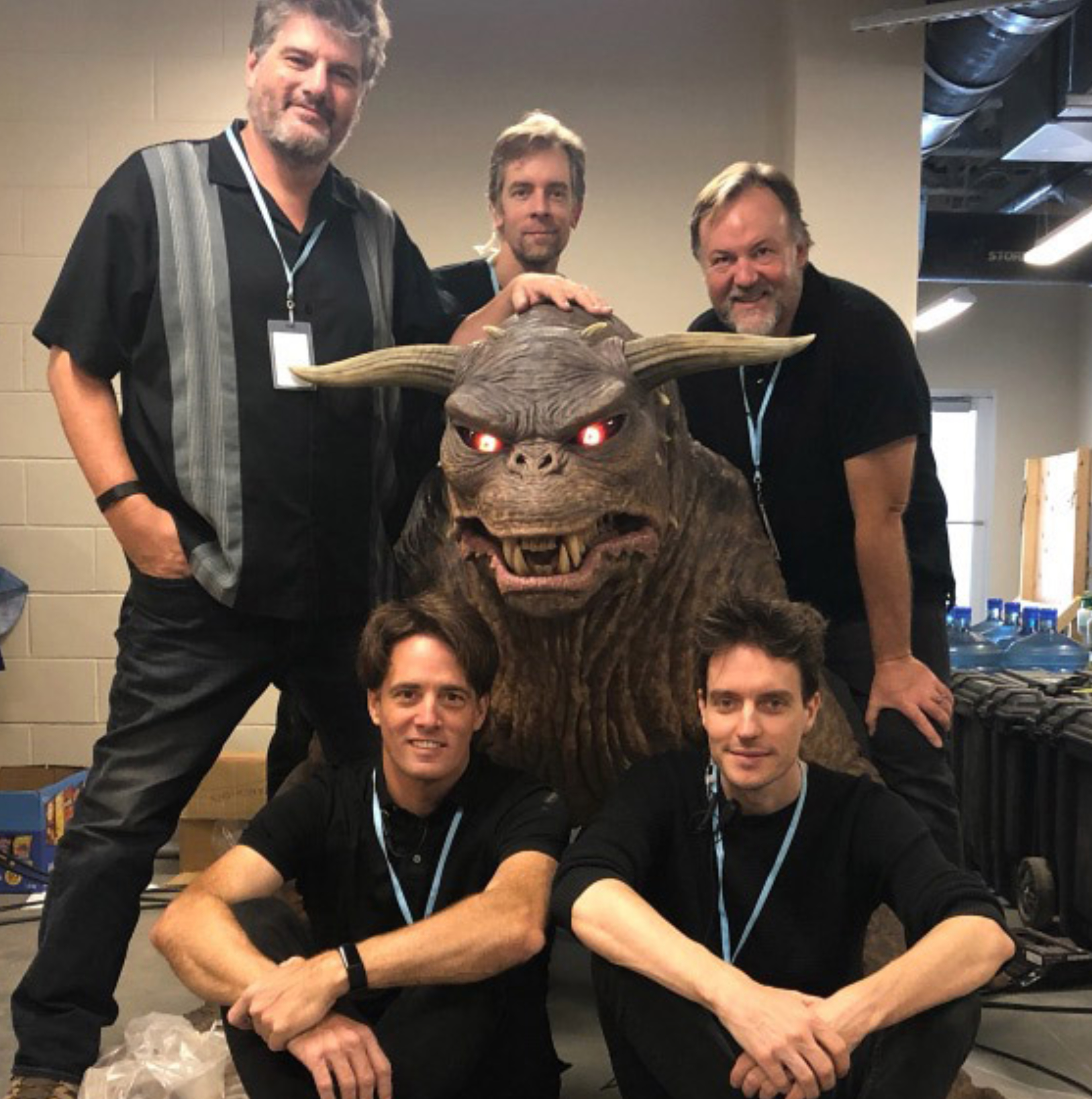 (Members of Arjen's Terror Dog team on location. Clockwise from top left: Bill Sturgeon, Geoff Redknap, Richard Landon, Arjen, and Ron Binion. Image courtesy Arjen/Sony Pictures.)
It was crucial to Reitman that many elements in the film be practically built, including the infamous 'Terror Dogs.' He told Playstation Blog (https://blog.playstation.com/2021/11/05/ghostbusters-afterlife-breathing-new-life-into-the-beloved-series/), "We basically had a real Terror Dog on set that was operated by the greatest puppeteers alive. It's that kind of filmmaking that gives the movie its feel and tone. It's that grounded camera work. It's being on real sets instead of green screen stages."
Arjen was a fan from the very beginning. "I always loved the Terror Dogs. They scared me when I was a kid, and I always loved Randy Cook's design." Initially, another workshop had been tasked with the Terror Dogs. However, this soon changed. "They called about two weeks in and said, can you also do the Terror Dogs? And I thought of Stan Winston at that moment. I really did. And I knew he would have done it in that situation, you know? So I'm like, yeah, of course, we can do it."
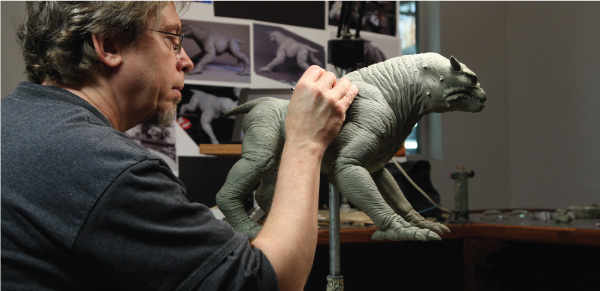 (Steve Koch sculpting the Terror Dog maquette. Image courtesy Arjen/Sony Pictures.)
During the process, production came in and wanted to change aspects of the design. But Arjen stood firm in his opinion that the Terror Dogs were already perfect. He explains, "I'm all for updating things, but you have to be careful at times. As a Ghostbusters fan, I always felt that certain characters should not change. The Terror Dogs are set in stone and beautifully designed. They don't need to change." Arjen eventually convinced them to agree to stick to the original design.
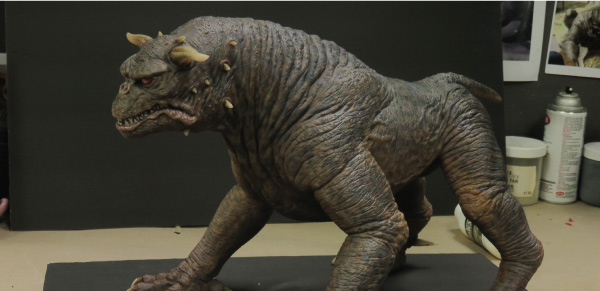 (The completed Terror Dog maquette at Arjen's studio. Image courtesy Arjen/Sony Pictures.)
Arjen assembled the Terror Dog team intending to have the best summer creating the creature. "I knew this was going to be something great. And I said to the crew, let's just have fun with it." Despite having more 'high tech' options available, including digitally scanning the maquette and milling it in full-size out of foam, Arjen wanted to do it 'old school.' He said to his team, "What if we build an armature based on the maquette and just sculpt it out of clay and have two or three weeks of fun? This will be a summer you will remember for the rest of your lives."
"We took about 600 pounds of WED clay, and Norman Cabrera, Tanner White, Danny Wagner, Brian Rae and I sculpted it."
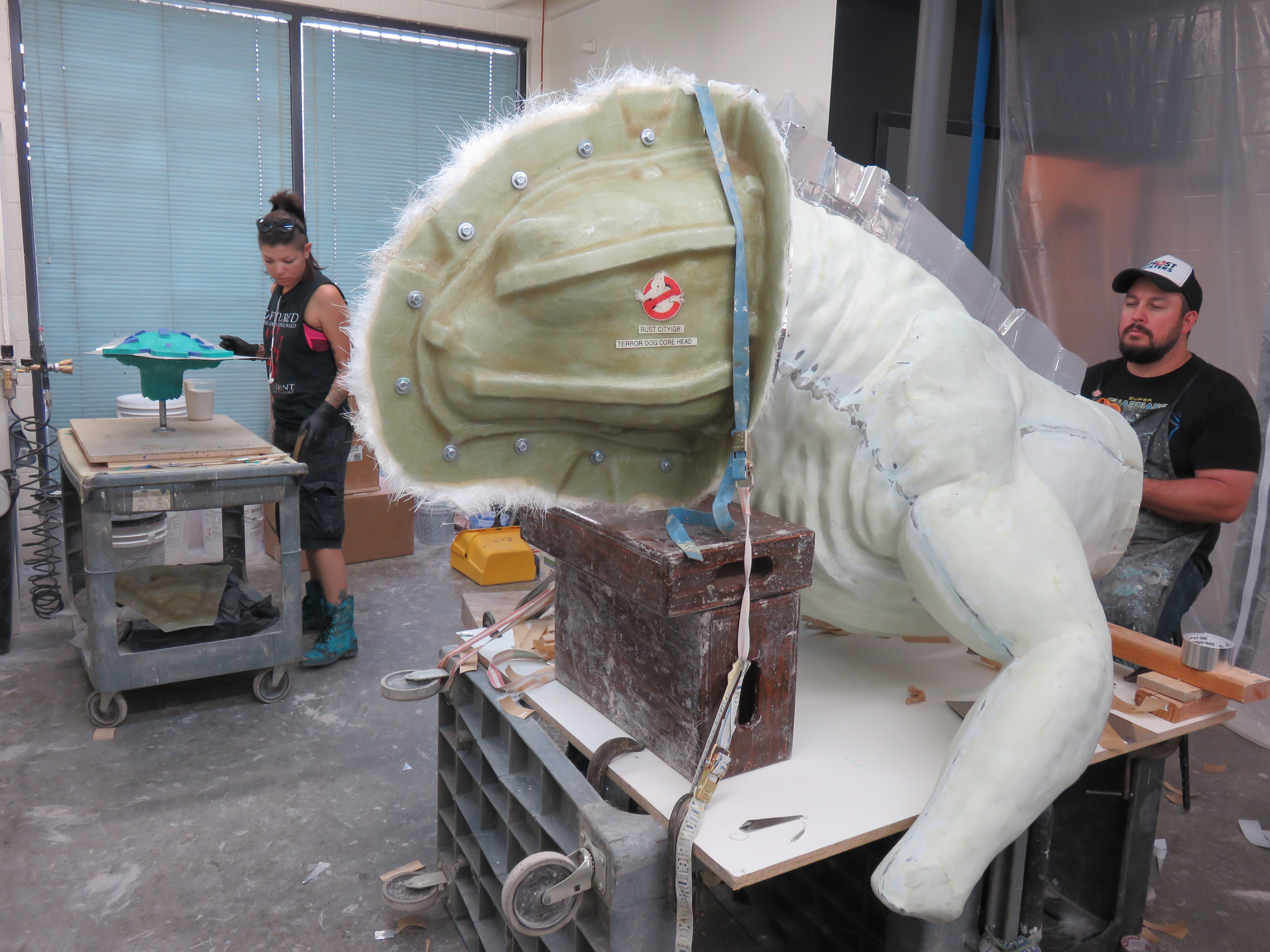 (Mold makers Steven Adkins and Regina Jiganti create the Gozer core mold. Image courtesy Arjen/Sony Pictures.)
After molding the Terror Dog sculpture, there was the coring process. There was a discussion that perhaps they should run the skin out of silicone, but Arjen felt it would be far too heavy. "Coming back to the aesthetic of the first one, I felt the foam was just the right thing to do."
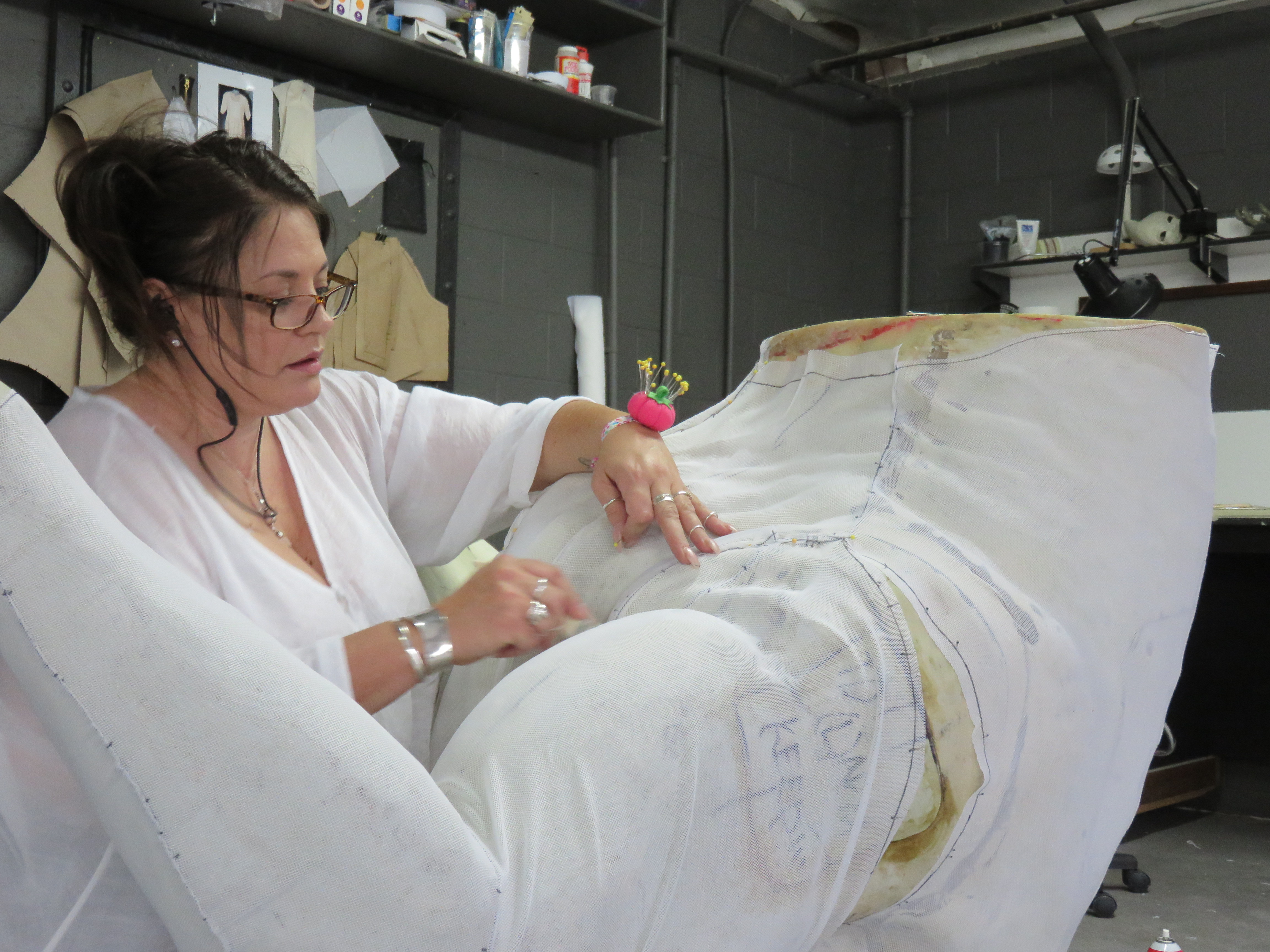 (Fabricator Beth Hathaway glues mesh fabric onto the Terror Dog body core. When the skins are run, the durable mesh becomes a part of the foam latex, reinforcing it. Image courtesy Arjen/Sony Pictures.)
The Terror Dog's body skin was run by Spectral Motion foam technician Bill Fesh, while the head foam skins and other cosmetic elements were created at Arjen, LLC.
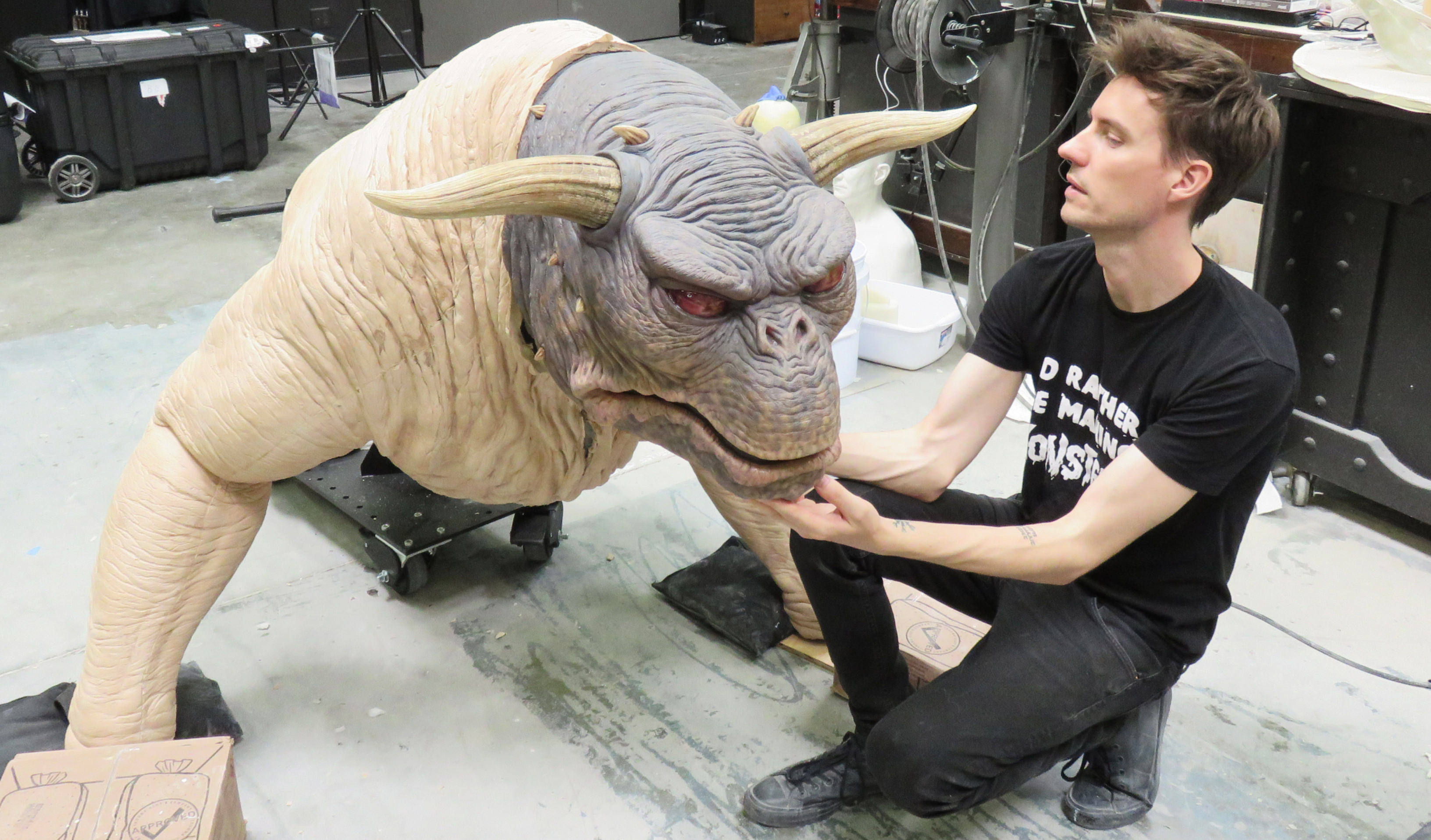 (Arjen temporarily attaches a painted Terror Dog head to the unpainted body to see how it's all going to work together. Image courtesy Arjen/Sony Pictures.)
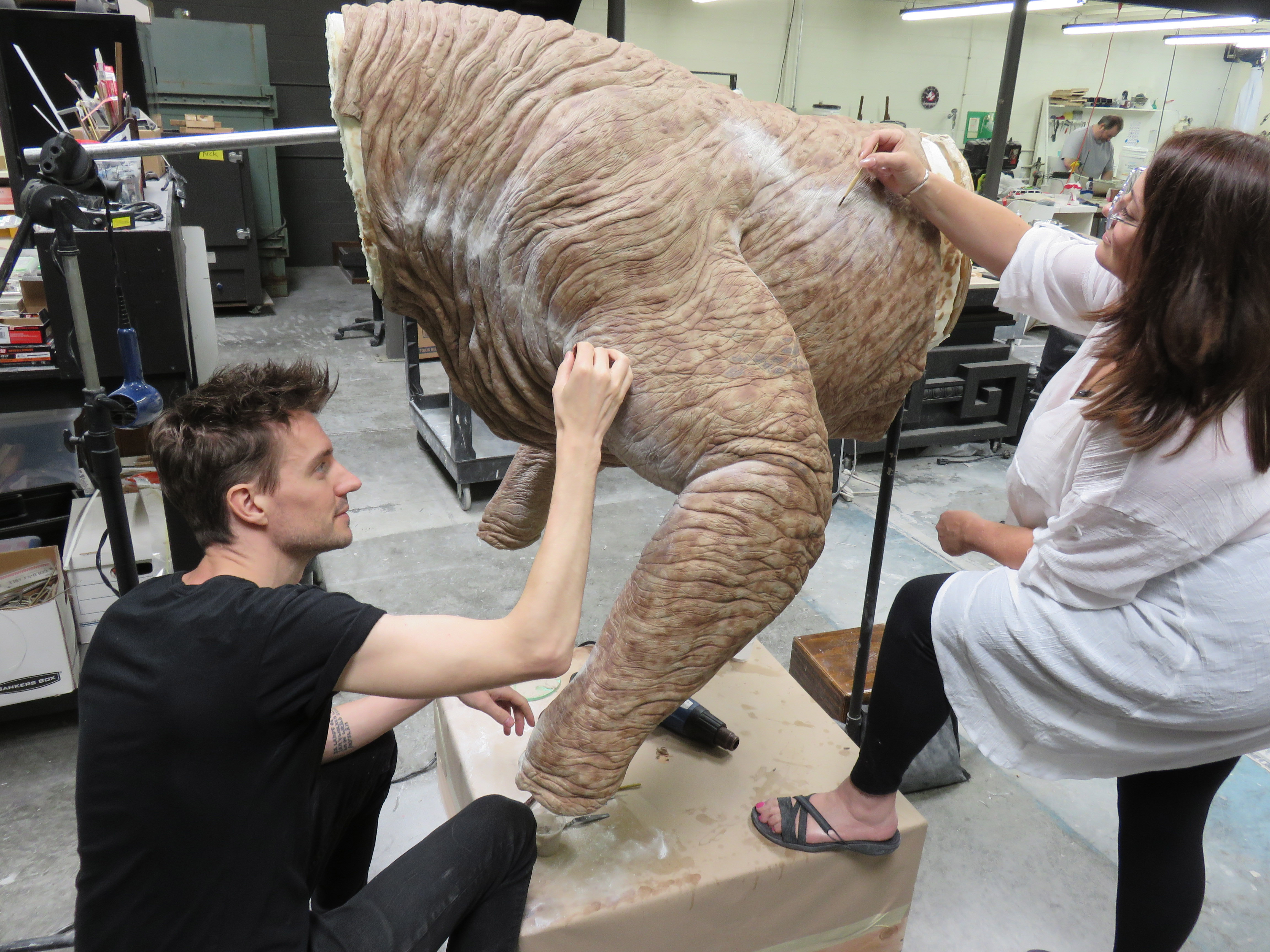 (Arjen and fabricator Beth Hathaway patch the seams on the Terror Dog foam latex skin. Image courtesy Arjen/Sony Pictures.)
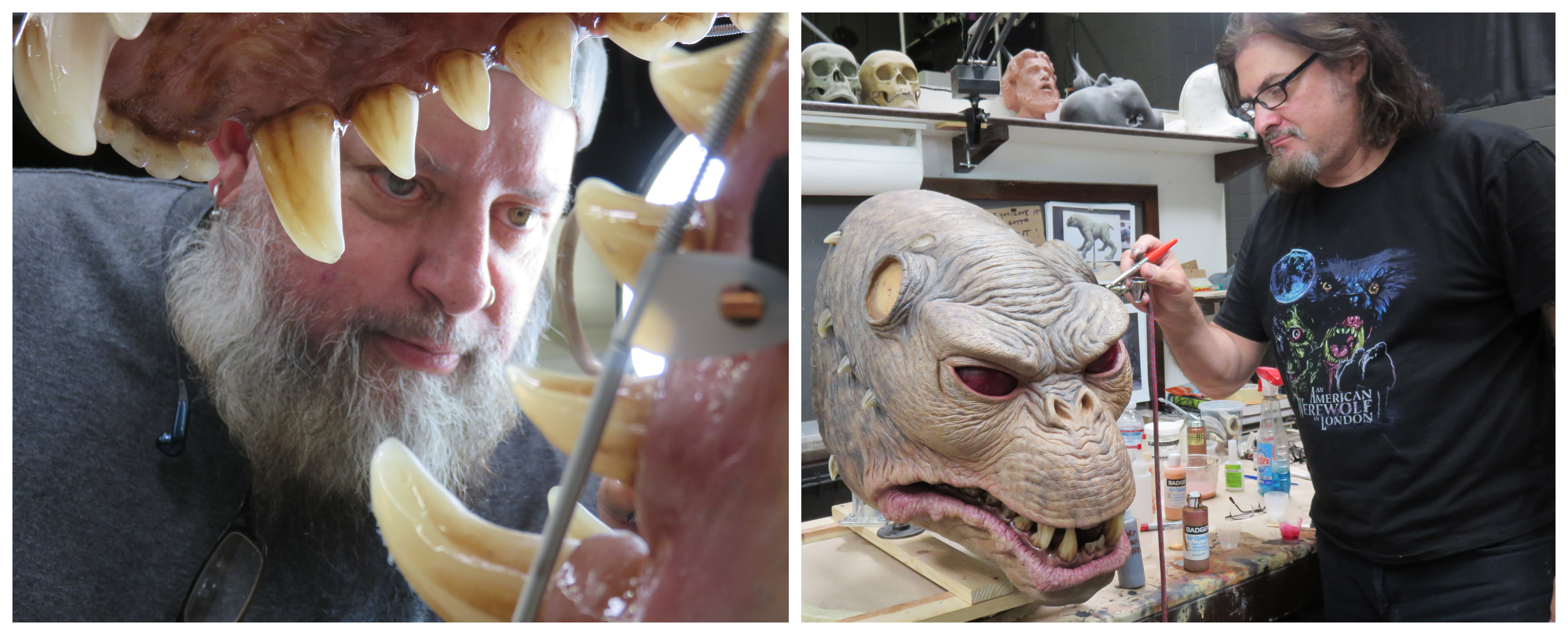 (Left: Tim Gore paints the inside of the Terror Dog's mouth. Right: Norman Cabrera airbrushes the Terror Dog's head. Images courtesy Arjen/Sony Pictures.)
With the cosmetic work underway, Spectral Motion's Bill Sturgeon scanned the core and designed all the internal head and body mechanisms. Spectral's Jurgen Heimann would be tasked with building the head mechanism based on Sturgeon's design.
 (Left: the completed Terror Dog mechanical head, designed by Bill Sturgeon and built by Jurgen Heimann. Right: a close look at the Terror Dog's glowing red eyeball. Images courtesy Arjen/Sony Pictures.)
Seeing the finished puppet on-set was a treat for the entire crew. Arjen smiles, "I remember the crew jumping up and down seeing a practical Terror Dog. I think it's the only show that I got applause."
Even the VFX department and the actors were in awe. "I remember Paul Rudd being ecstatic about it being an actual [Terror Dog] puppet on his car. When I looked at the video village to my left on set, I just saw everybody smiling. The visual effects supervisor Alessandro Ongaro came up to me, and he said, 'you know, if [practical effects] are done right, there's something about it. You can't predict it. It's beautiful. We are going to leave it just the way it is.'"
 (Arjen's Terror Dog puppet makes its first appearance at a Walmart in Ghostbusters: Afterlife. Image courtesy Sony Pictures.)
CGI complemented the practical effects as elegantly as possible when it was required. Arjen elaborates, "The farm sequences are all visual effects. However, Jason [Reitman] was adamant about visual effects using our Terror Dog model, not the other way around. So they scanned our sculptures and used that as their model. They all looked handcrafted and not too symmetrical."
 (Gozer flanked by the CGI Terror Dogs based on Arjen's practical puppets. Image courtesy Sony Pictures.)
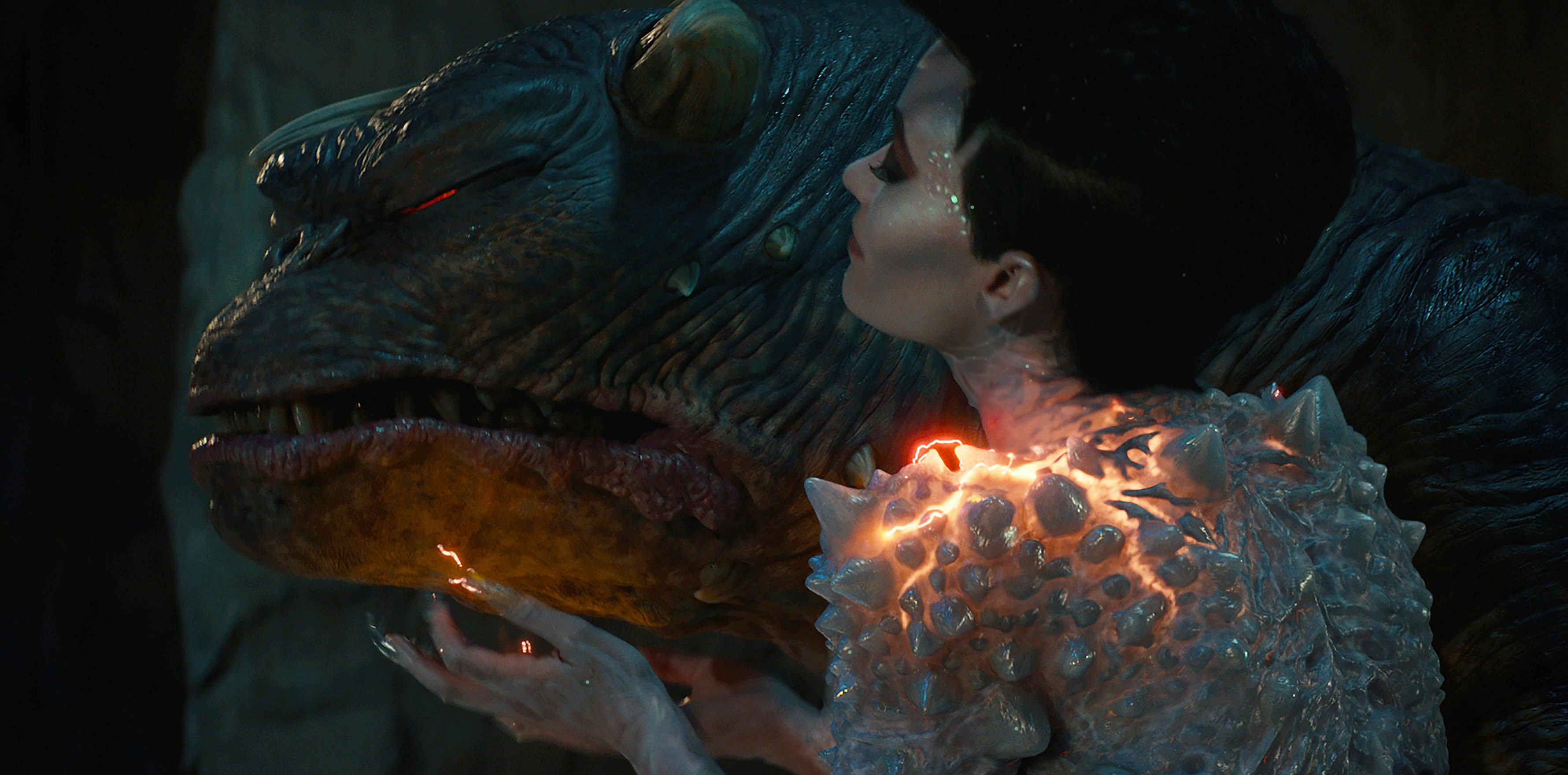 (Gozer caresses one of the practical Terror Dog puppets built by Arjen's team. Image courtesy Sony Pictures.)
Referencing the Original Ghostbusters’ Zombie Taxi Driver
The ghost miner who appears in Spinner's Diner as all hell starts to break loose in Summerville was not originally in the script. "Once we started working on the show, I thought, you know, I really miss the ghost cabbie moment from the original," recalls Arjen. Jason was like, 'you're right, what can we do?' I'm like, well, let's find a spot where he could be. I think at one point he was in the school bus as a driver and then Jason said he had it: he would be an old miner from Ivo Shandor's mining company. I said, 'that's perfect!'"
Arjen decided to build the character in very much the same way as Steve Johnson had created the ghost cabbie for Ghostbusters. "He's basically just a plastic skeleton that we dressed up with foam latex sections of skin that we baked," explains Arjen. "I gave him a bit of a 1920s haircut and hand-laid some hair on his face, little sideburns.
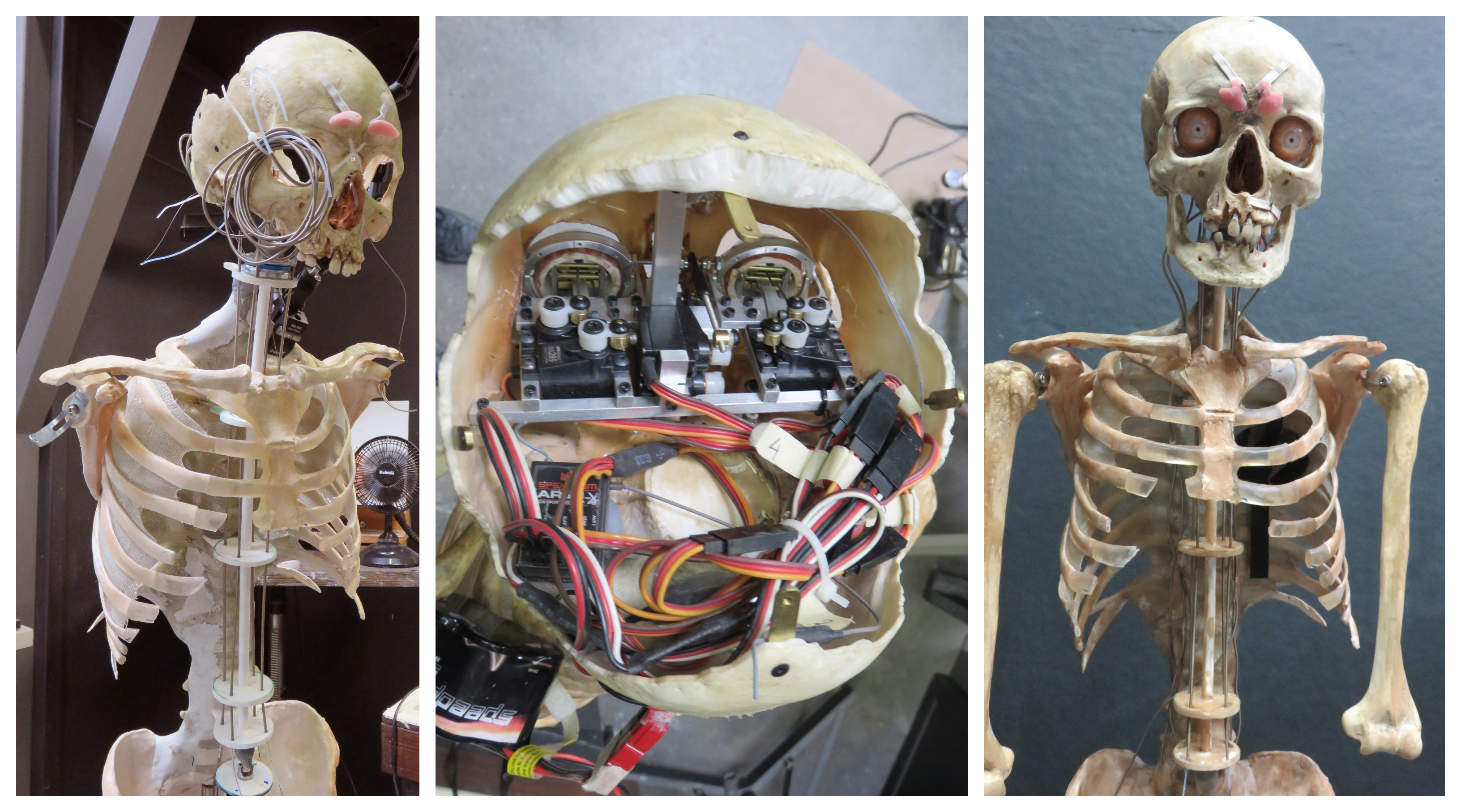
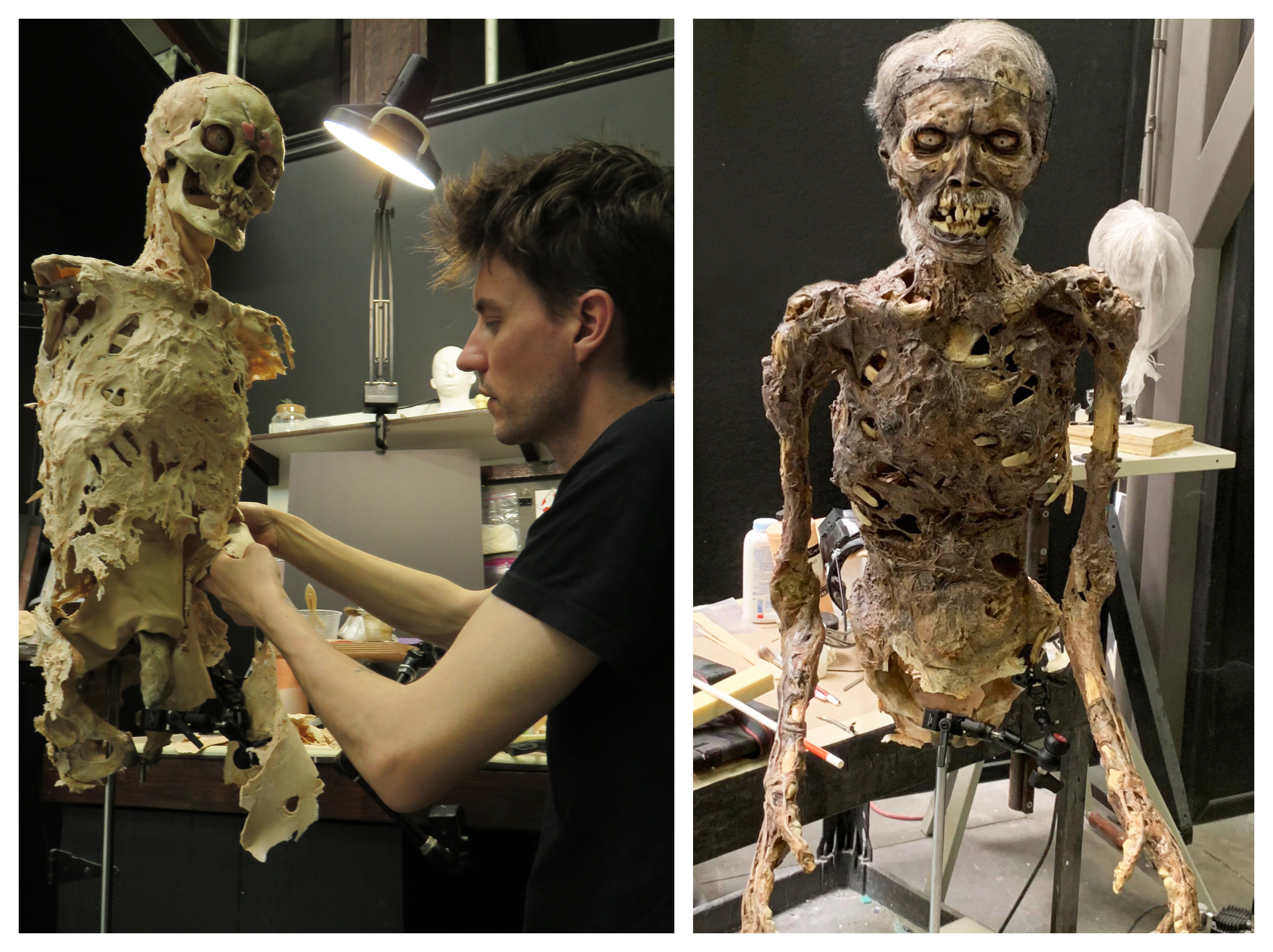 (Top and bottom: build process highlights of the 'Diner Ghost'. Images courtesy Arjen/Sony Pictures.)
"He has a cable-controlled head that moves up and down and sideways. Bill Sturgeon built the RC eyes," says Arjen. "There are also cable-controlled brows, lips, and jaw. Tanner White built the arms and moving fingers and wrists. Again, Danny Glicker did the beautiful costume for him and we shot him in the diner. It took three puppeteers, me, Ron Binion, and Richard Landon."
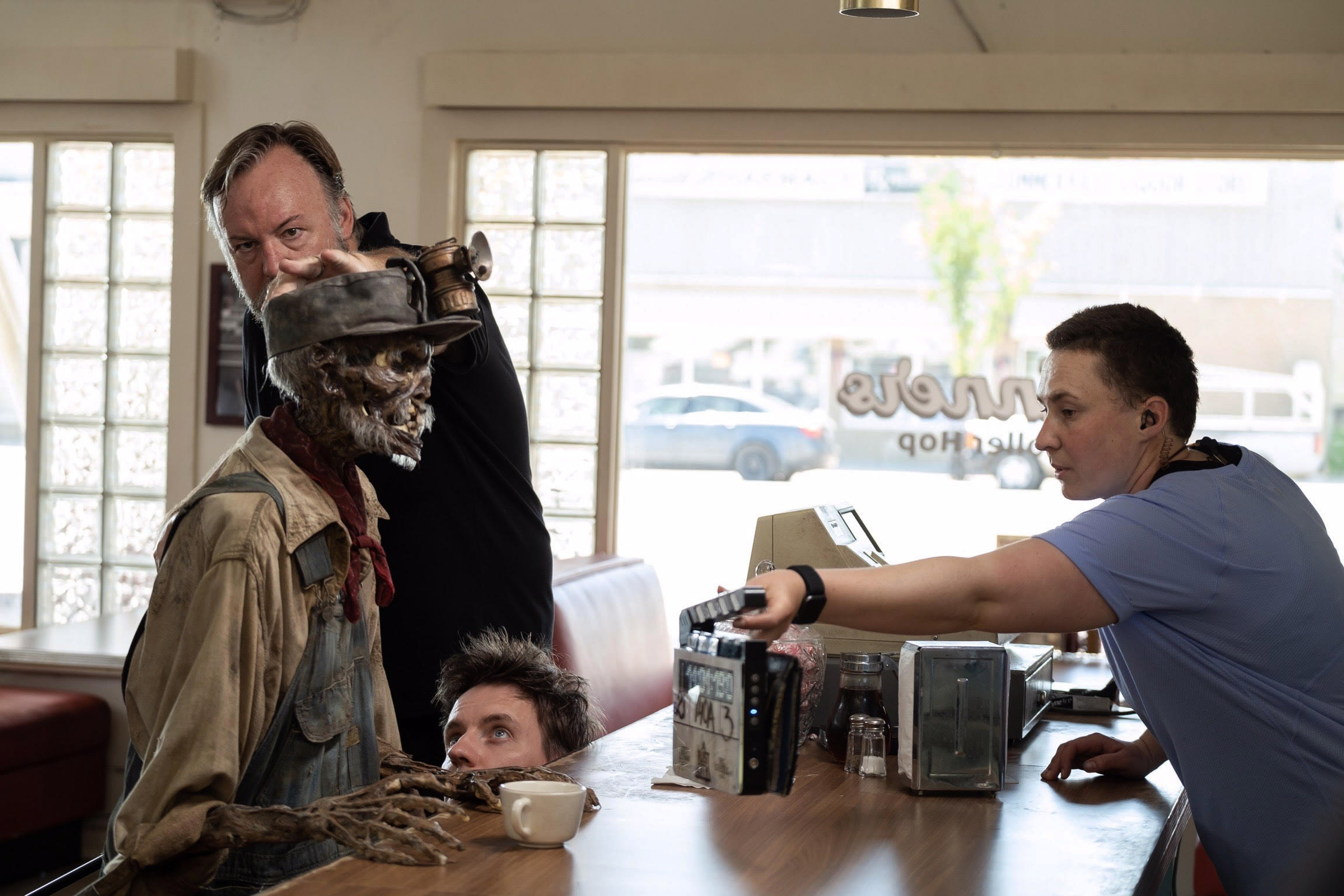 (Arjen, Richard Landon and Ron Binion [hidden] puppeteer the Ghost Miner on the diner set. Image courtesy Sony Pictures.)
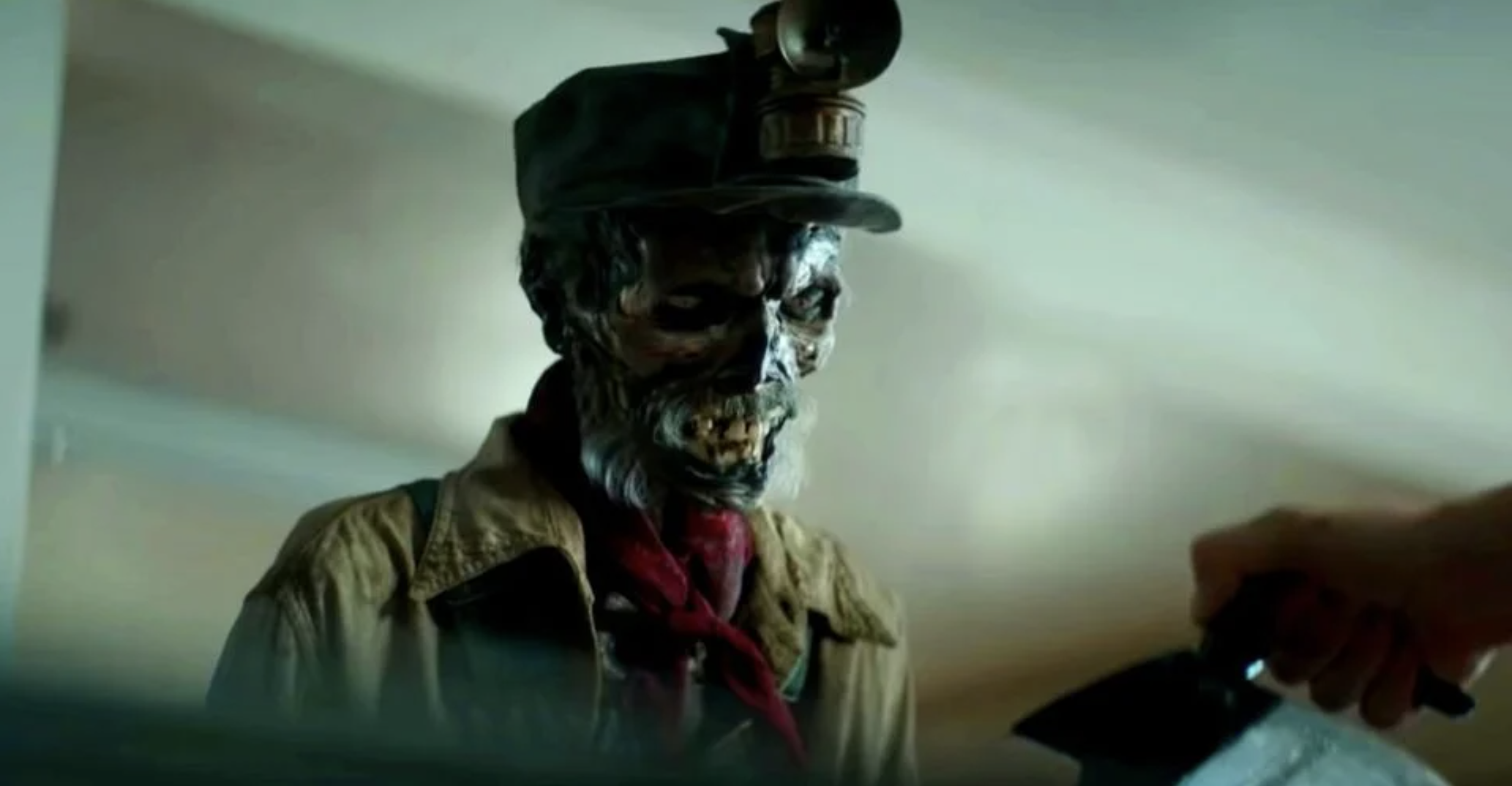 (The Ghost Miner as he appears in Ghostbusters: Afterlife. Image courtesy Sony Pictures.)
A Full Circle Moment for Stan Winston Studio Special Makeup Effects Artist, Arjen
Released in November of 2021, critics praised the film. The Ghostbusters storyline continues for a whole new generation while staying faithful to the original. Meanwhile, things have come full circle for Arjen, who looks back fondly on watching Ghostbusters as a kid. "If I had anything to say to the readers, it would be to follow your passion. I had a Kenner Ghostbusters Firehouse when I was eight. Little did I know what was to come growing up. It does come full circle in life, and that can be kind of cool."
Follow Arjen and Arjen, LLC
Instagram - https://www.instagram.com/_a_r_j_e_n_
