
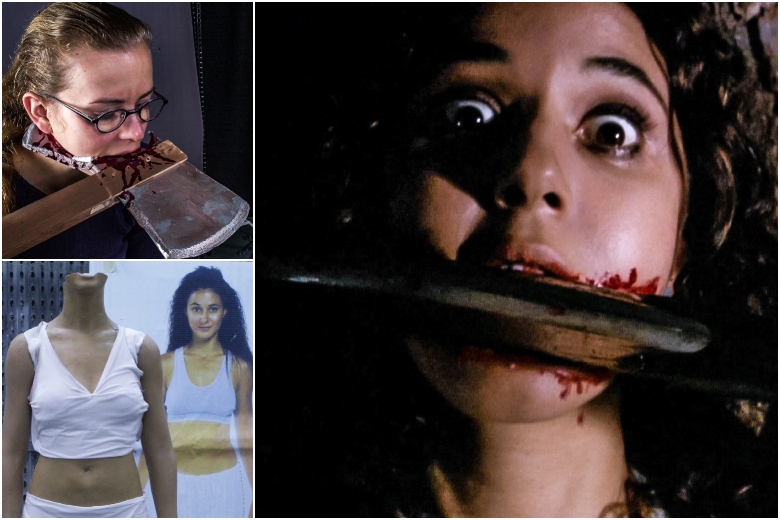
Breaking Down the Decapitation Sequence in Wrong Turn with Shane Mahan
In this FREE excerpt from the Stan Winston School of Character Arts course, Special Effects Sequence Design, Academy Award-nominated makeup effects artist, master monster maker, and co-founder of Legacy Effects, Shane Mahan dives into script effects breakdown for the 2003 slasher film, Wrong Turn (2003). The film follows a group of friends who experience car trouble in the woods while traveling and wind up stranded. As if they weren't unlucky enough, these West Virginian woods are home to a cannibal family of mountain men.
Wrong Turn was directed by Rob Schmidt with Stan Winston designing the creature effects and serving as a producer. Stan Winston Studio brought the film's chilling practical effects to life. In this lesson, Mahan explains how the team achieved a realistic and cost-effective effect for Wrong Turn's unforgettable decapitation sequence.
Jump To Section
- Three Finger Decapitates Carly
- Planning Out the Horrific Decapitation Sequence
- Using Movie Magic to Create a Killer Effect for Wrong Turn
- Proof of Concept
To watch the complete video, click the player above!
Mahan considers this particular scene to be a great educational sample that conveys the importance of filmmakers, actors, and artists all working together on the written page to make a film. He compares a script to a cookbook where you have all the ingredients and have to assemble the pieces into a satisfying result. This sequence, he says, took about three months of planning to get the complicated effects gags just right and ultimately, achieve a sequence that flows.
Three Finger Decapitates Carly
In this survival-horror film, Mahan describes a scene where one of the characters, Carly (played by Emmanuelle Chriqui), tries to hide from the group of three cannibalistic mountain men. One of the mountain men, known as Three Finger (played by Julian Richings), takes an ax and chases her up a tree.
Mahan describes the written scene where Carly doesn't see her attacker, she meets her demise when he chops through her face, right through her mouth. Her eyes open wide in shock. And as the camera moves, her body falls, while the top of her head stays on the ax. It's an especially gruesome description.
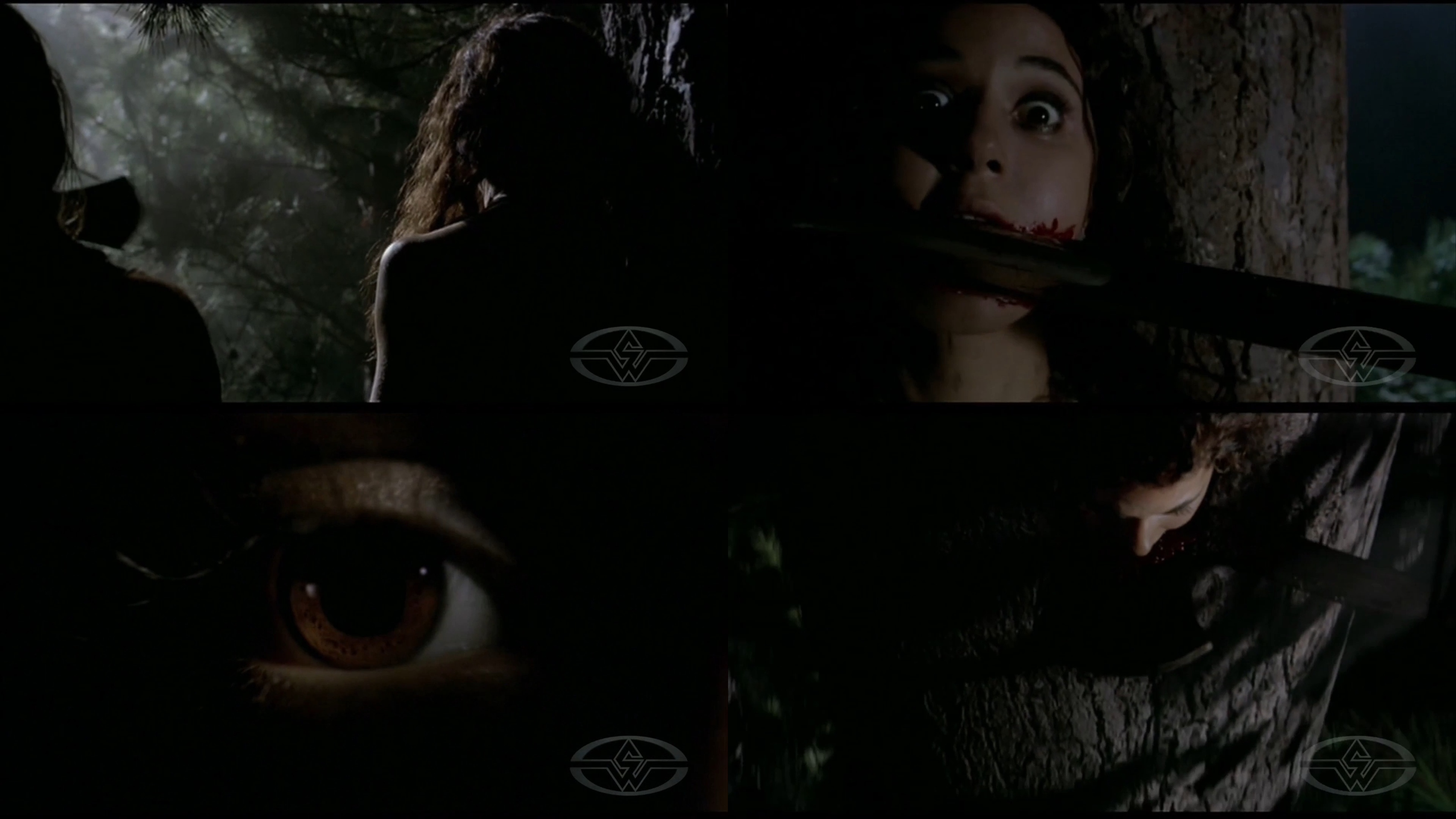 (Three Finger (Julian Richings) sneaks up on Carly (Emmanuelle Chriqui) and delivers a forceful ax swing for an especially gruesome death scene.)
“Remember, this is a horror movie,” he says. “You want to break that down and say, ‘Okay, how do we kill this beautiful girl, and what’s the method we’re going to do?’”
Planning Out the Horrific Decapitation Sequence
As Mahan was first working with Stan on the scene, they both had initially envisioned making an animatronic version of the actor.
Each component of the effect was written as a line item: a full body mold, scan, resculpt, casting of the skin very realistically, making internal mechanisms, and mechanical head.
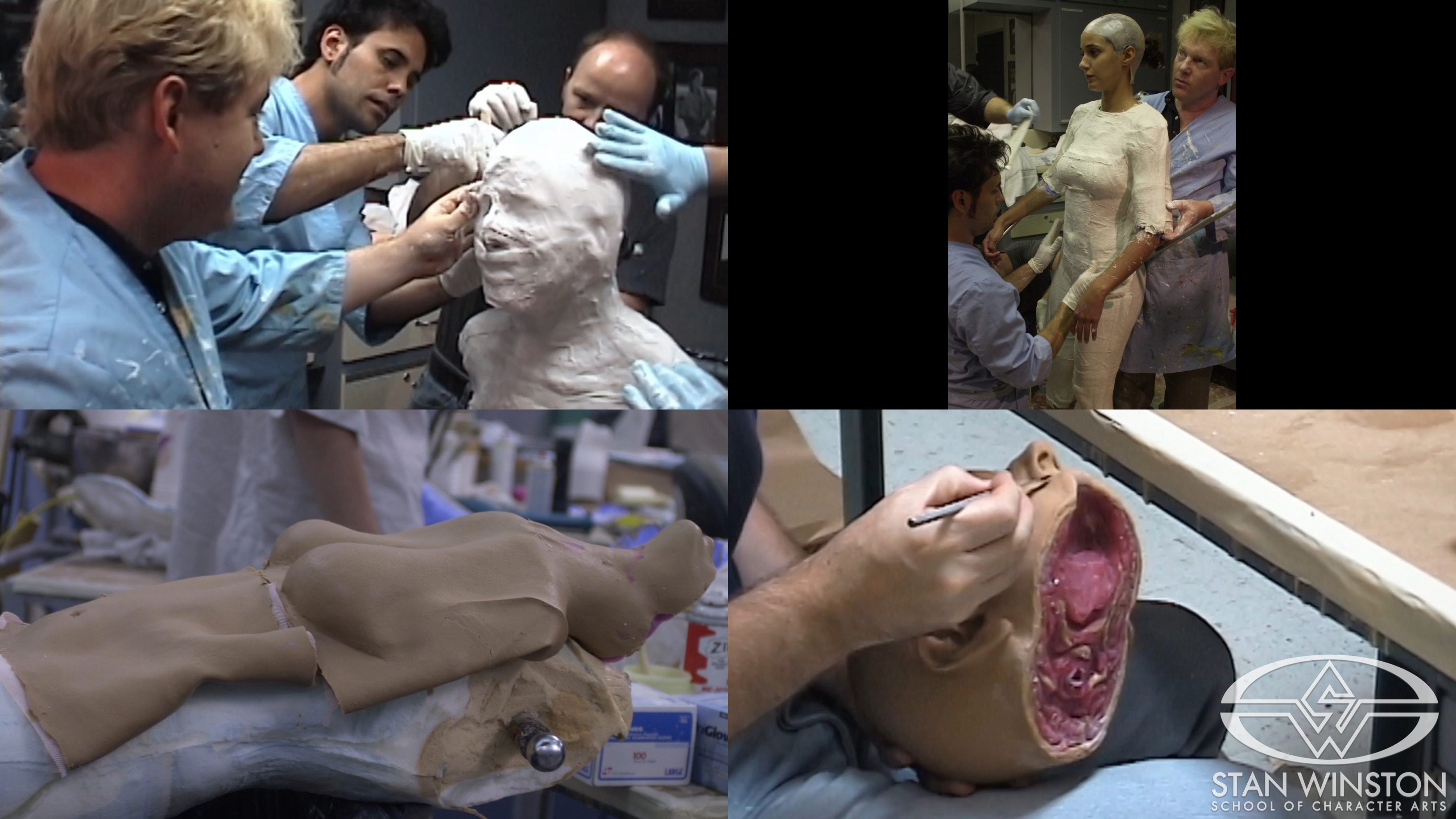 (Shane Mahan and artists at Stan Winston Studio take a life-cast of actress Emmanuelle Chriqui to create fake head and body parts.)
Additionally, Mahan relates, it had to be resettable, resulting in what would have been a very complicated rig on a track, either embedded in the tree or maybe on a blue screen pole.
This full animatronic replica head would be mounted to something that had a mechanical device of the ax that would swing into place and it would be rigged with a mechanism to allow the artificial body to fall.
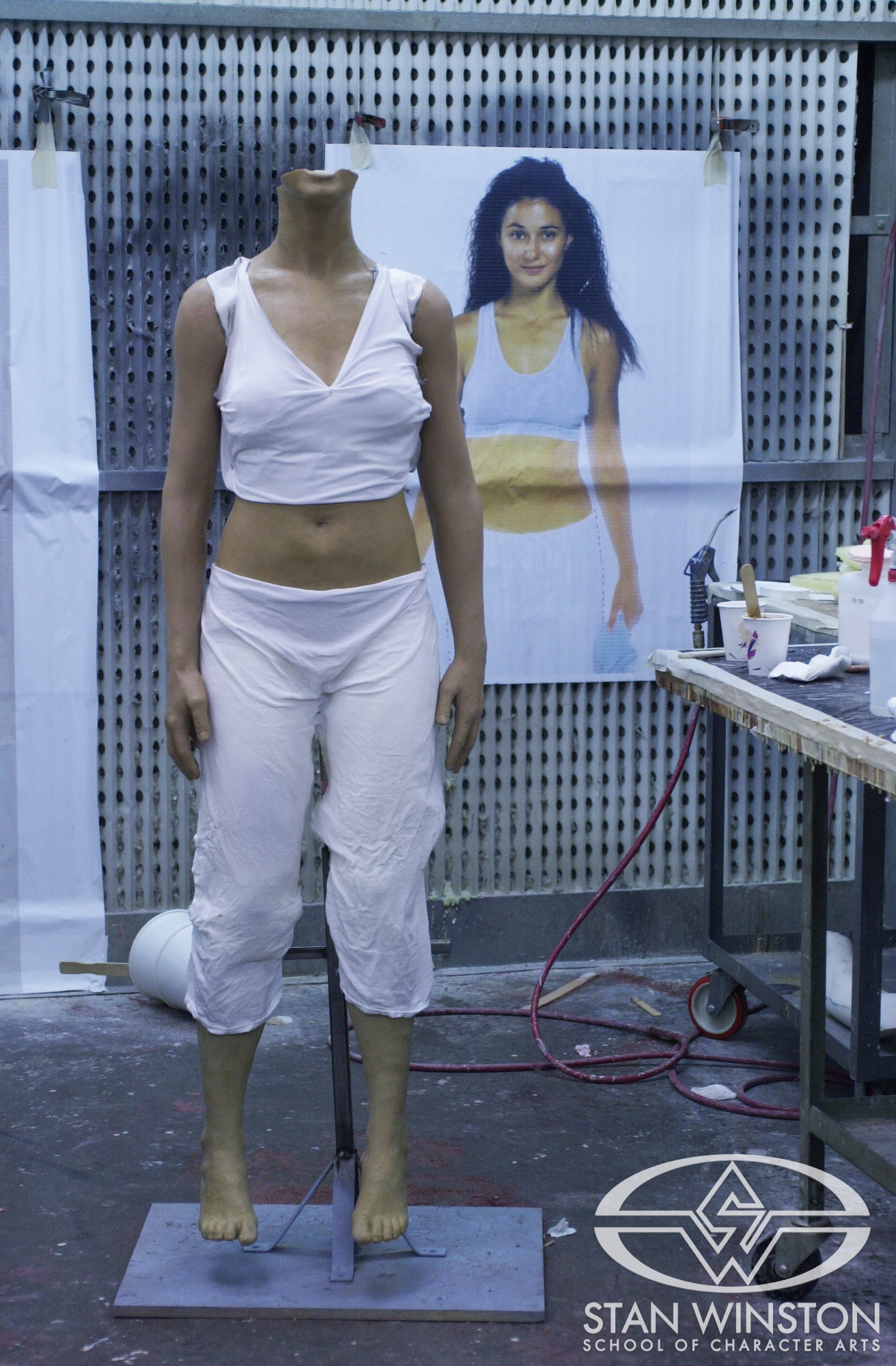 (A replica of Emmanuelle Chriqui's body.)
It was a clever solution; however, the cost of the effect was prohibitive for the budget. The producers simply couldn't afford such a complex approach, but they didn’t want to cut the effect from the film. There had to be another way to create the effect.
“What’s fun about these movies is you get to know these people; you get to like them, and then, all of a sudden, they’re killed in a horrible way,” Mahan says. “That’s the sensation. That’s the horror of it. You have to have—in a horror movie like this—a gruesome death. That’s what makes it fun.”
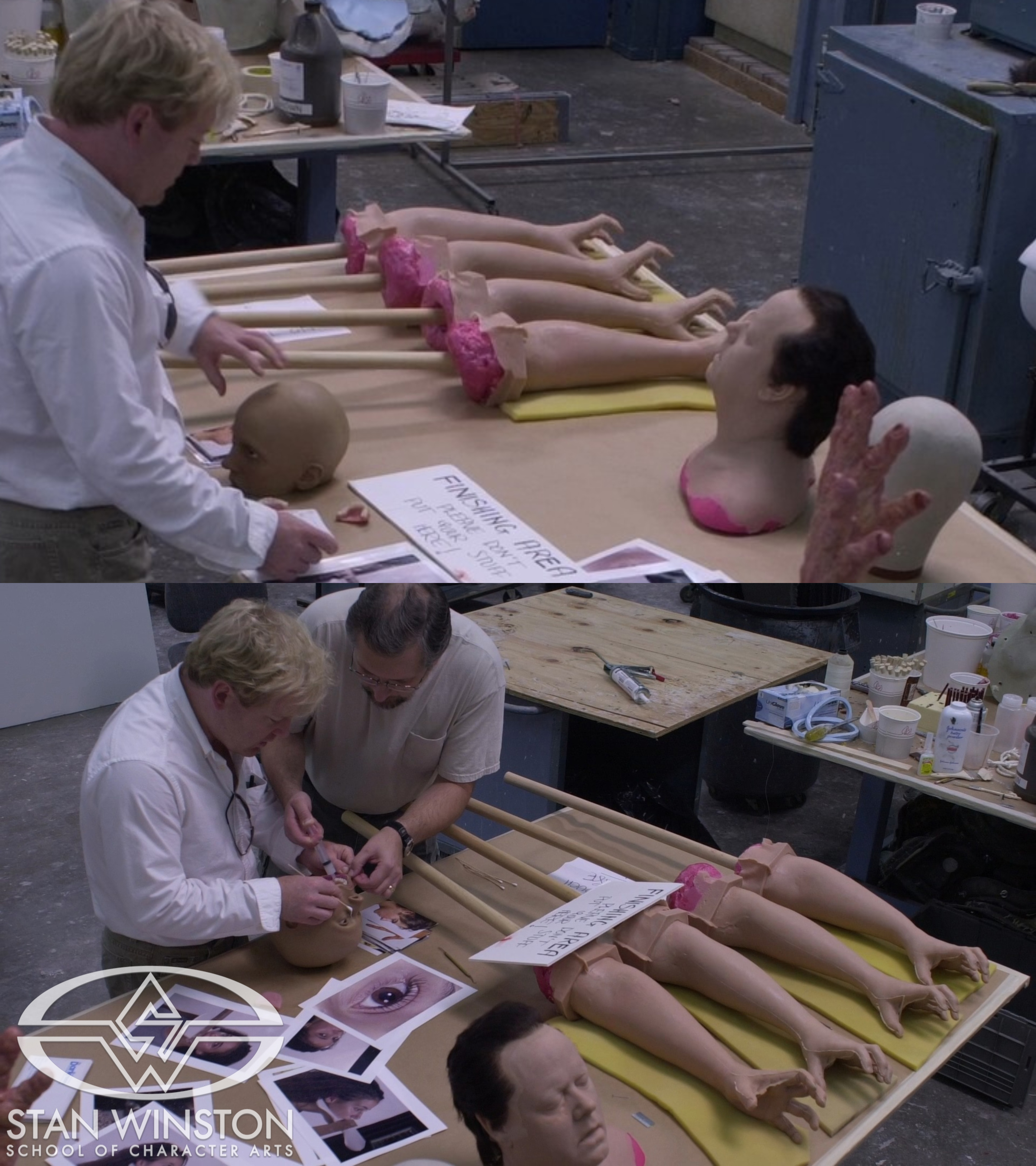 (Various body parts for Wrong Turn being assembled by Stan Winston Studio.)
With such a shocking and disturbing death planned for Carly, the producers knew they couldn’t cut the scene.
Mahan worked closely with director Rob Schmidt to learn what was important to him about this particular moment so they could brainstorm a way to achieve the effect more inexpensively.
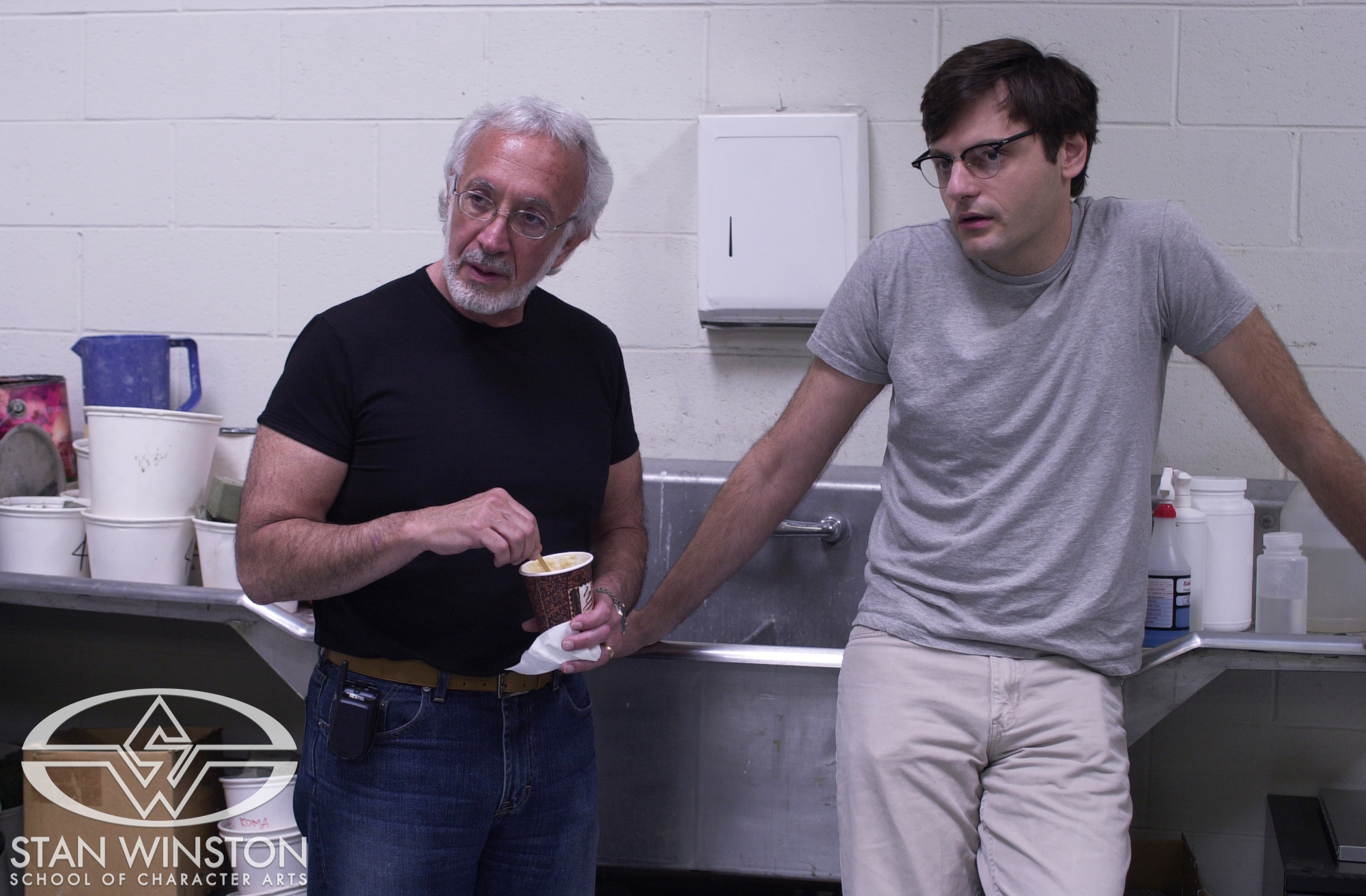 (Stan Winston and director Rob Schmidt.)
Using Movie Magic to Create a Killer Effect for Wrong Turn
Winston, Mahan and Schmidt decided they would use a trick they learned from James Cameron on Terminator 2: Judgment Day—a camera technique known as a whip pan, or swish pan effect.
At the top of the shot, the camera would be on the crazy cannibal character's ax and then, as Three Fingers swings it, the camera would whip pan, with the actual prop ax passing under the camera lens during the whip. The end of the shot would continue the whip--effectively hiding the cut--stopping to land on Chriqui, with a cutaway ax in her mouth pre-set into the tree with elements of blood dressed on it showing that it has cut through her beautiful face.
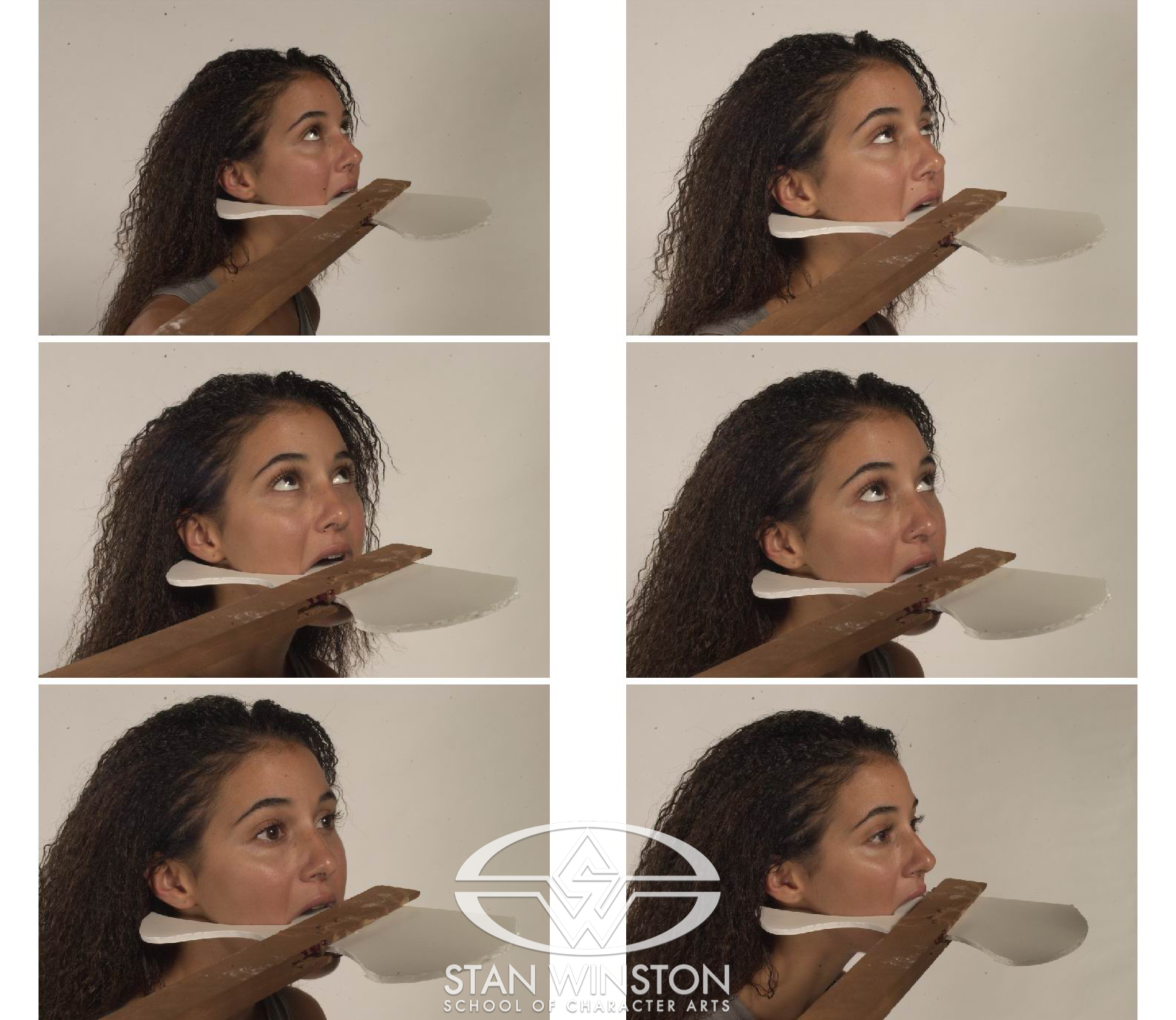 (Emmanuelle Chriqui poses with a demo version of the prop ax to show how the effect will be achieved.)
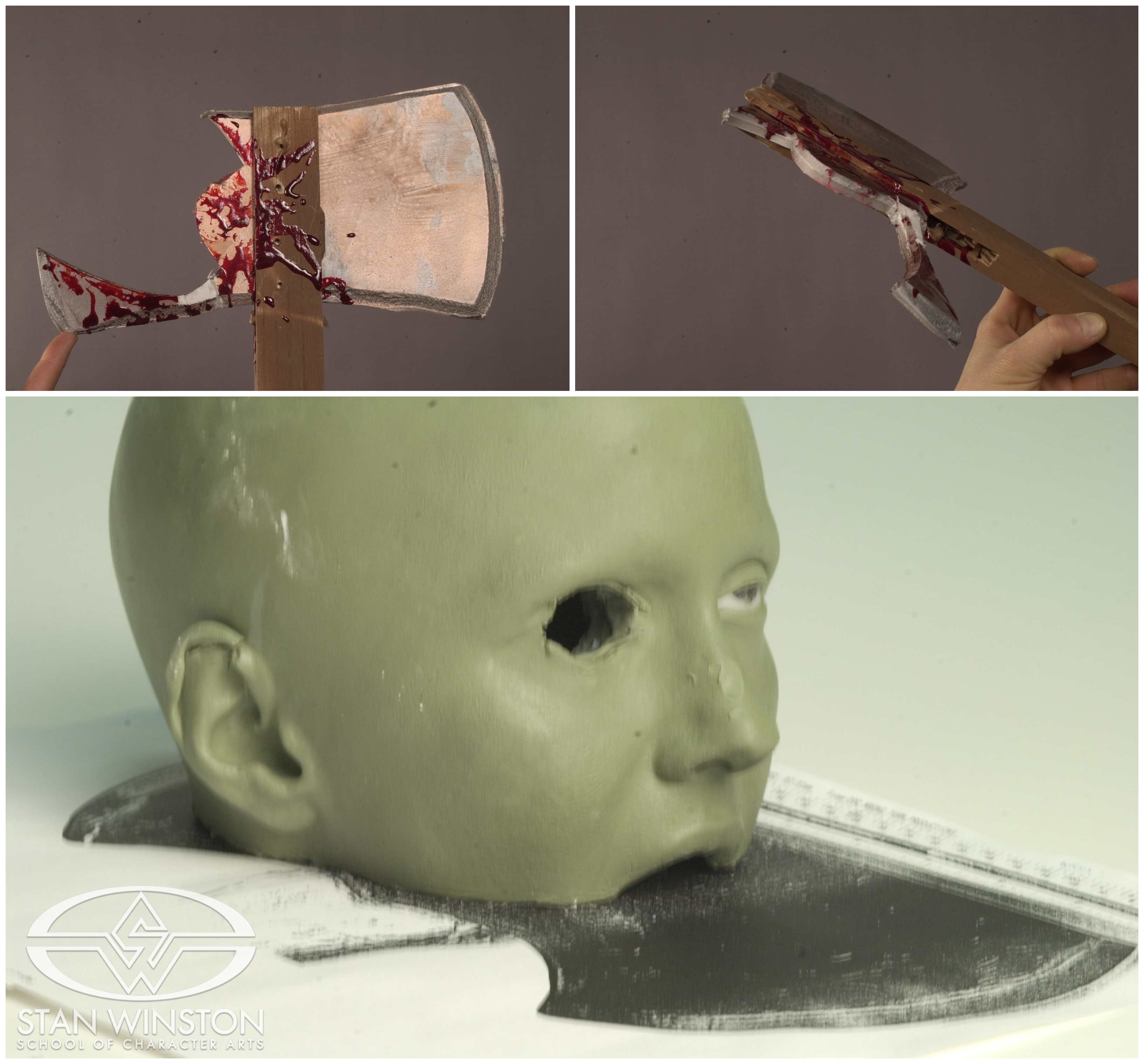 (Various elements used to plan the decapitation sequence.)
Sound effects and the energy of the cut help sell the illusion so the audience hears the woosh and chop, and as soon as the camera lands on Carly's eye, they know she has suffered a cruel fate.
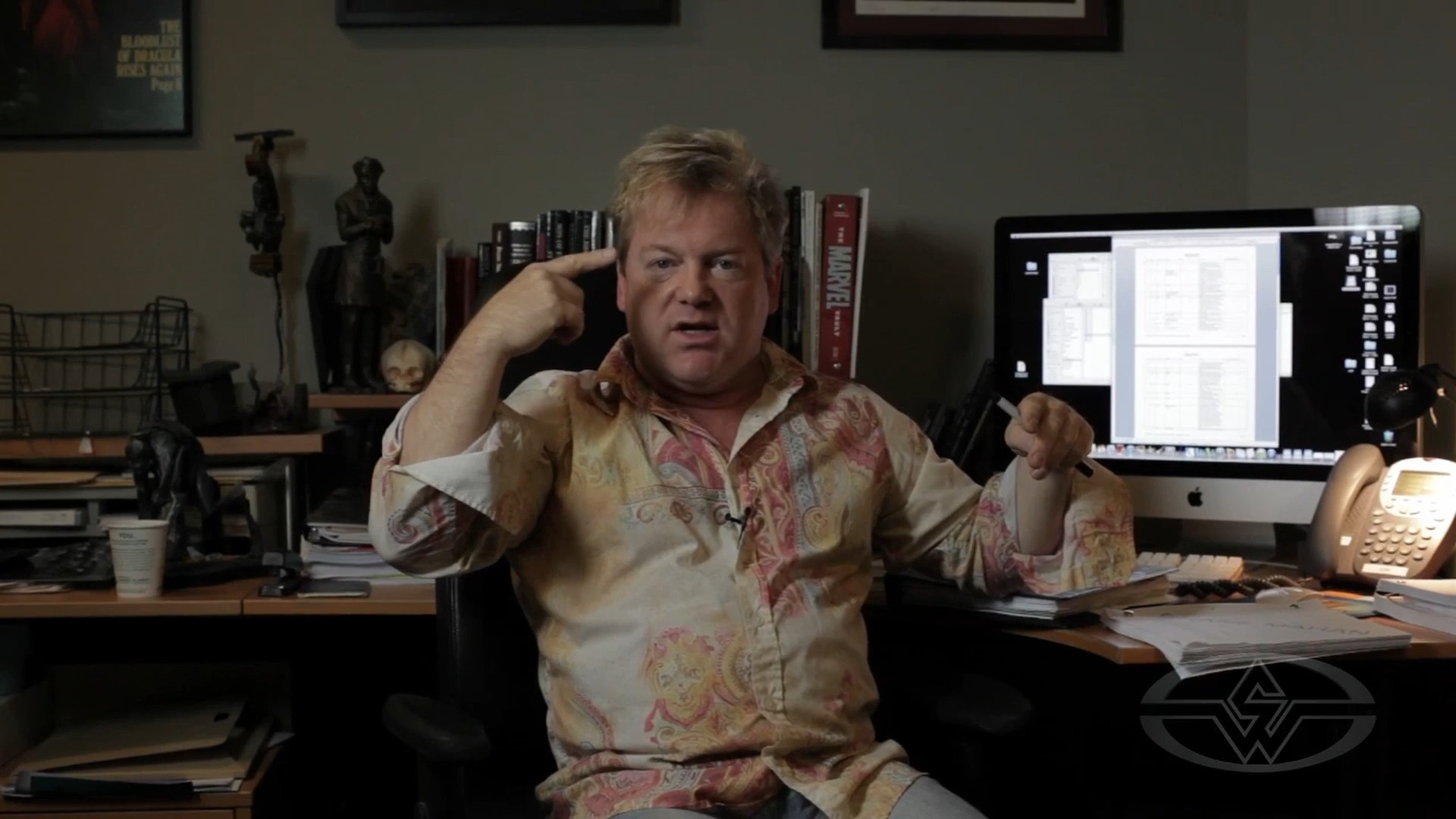 (Shane Mahan describes the whip pan technique.)
One advantage of doing the effect this way, as opposed to using an animatronic, is that they could use the actor's real face for the shot, her expression could be directed accomplishing more realism than even an expensive animatronic could.
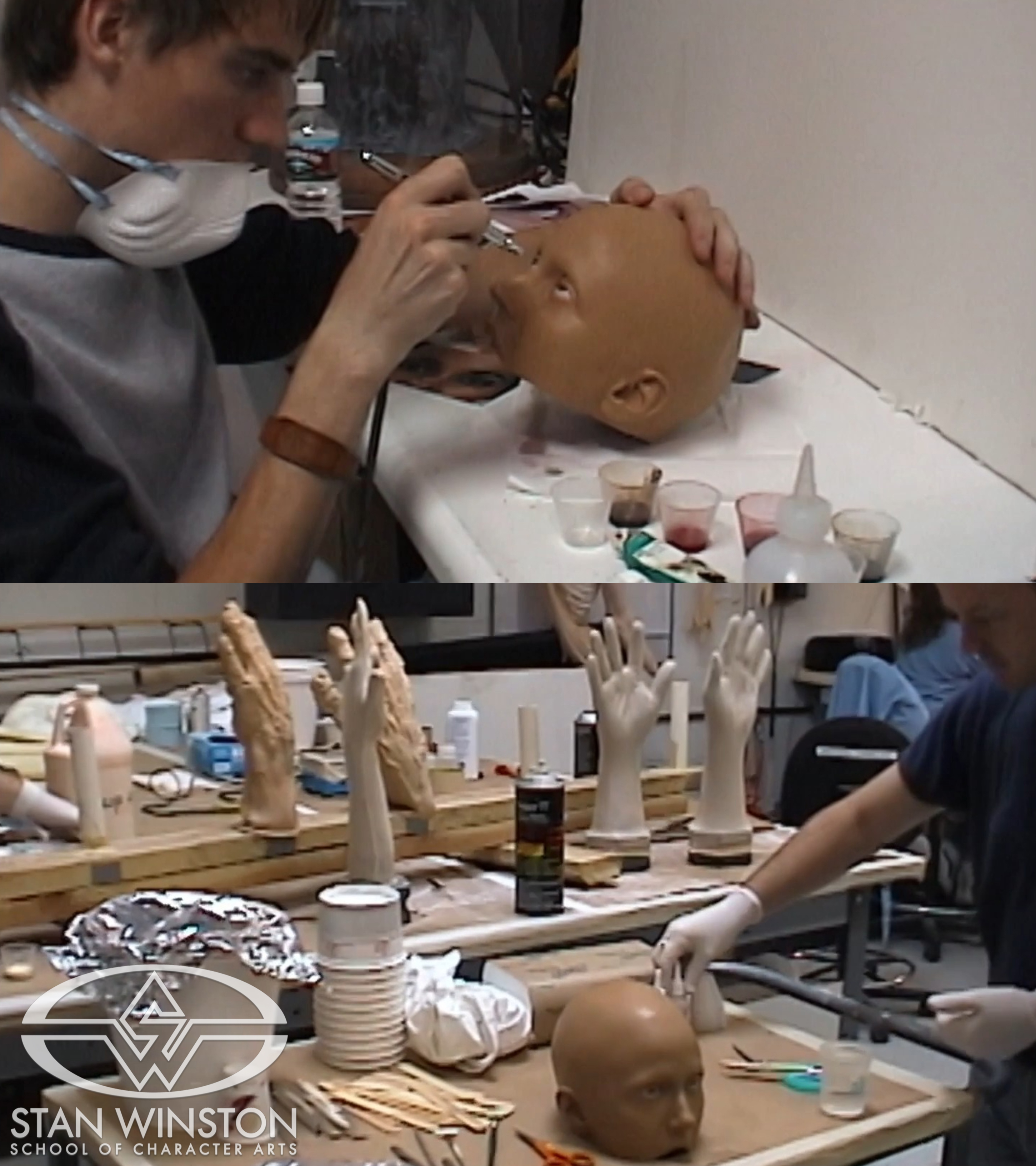 (Benches of body parts for Wrong Turn in various stages of paint at Stan Winston Studio.)
Proof of Concept
Mahan and Schmidt tested the technique to prove it would work. Mahan relates that he actually went out to the woods using a video camera and a volunteer as the actor and “chopped” her in the mouth for about an hour.
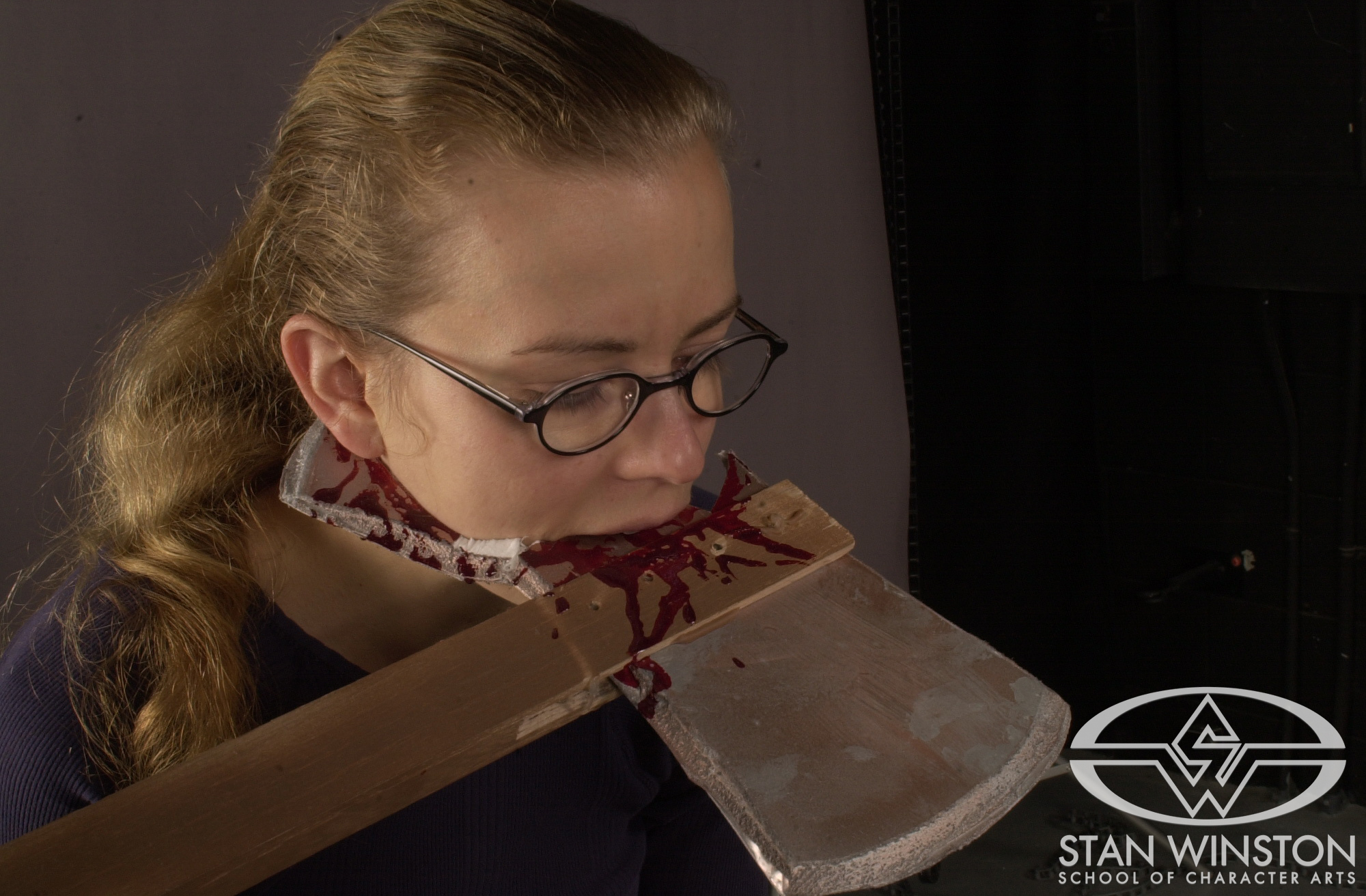 (A willing volunteer demonstrates the cut out ax used to prove Mahan's technique will work.)
“We got what we needed to do,” he says. “That gave a comfort level to the director, and it gave a comfort level to me because I could say, ‘Okay, this is going to work.’”
Once they had the chop figured out, they planned on how they were going to have Carly’s body fall away following the chop to the mouth. The solution required a fake hollow tree, built on a set, that the actor could put her body through with only her head sticking out, and the ax prop in her mouth.
The audience would see only the top of her sticking on top of the ax that was stuck in a tree and no body underneath.
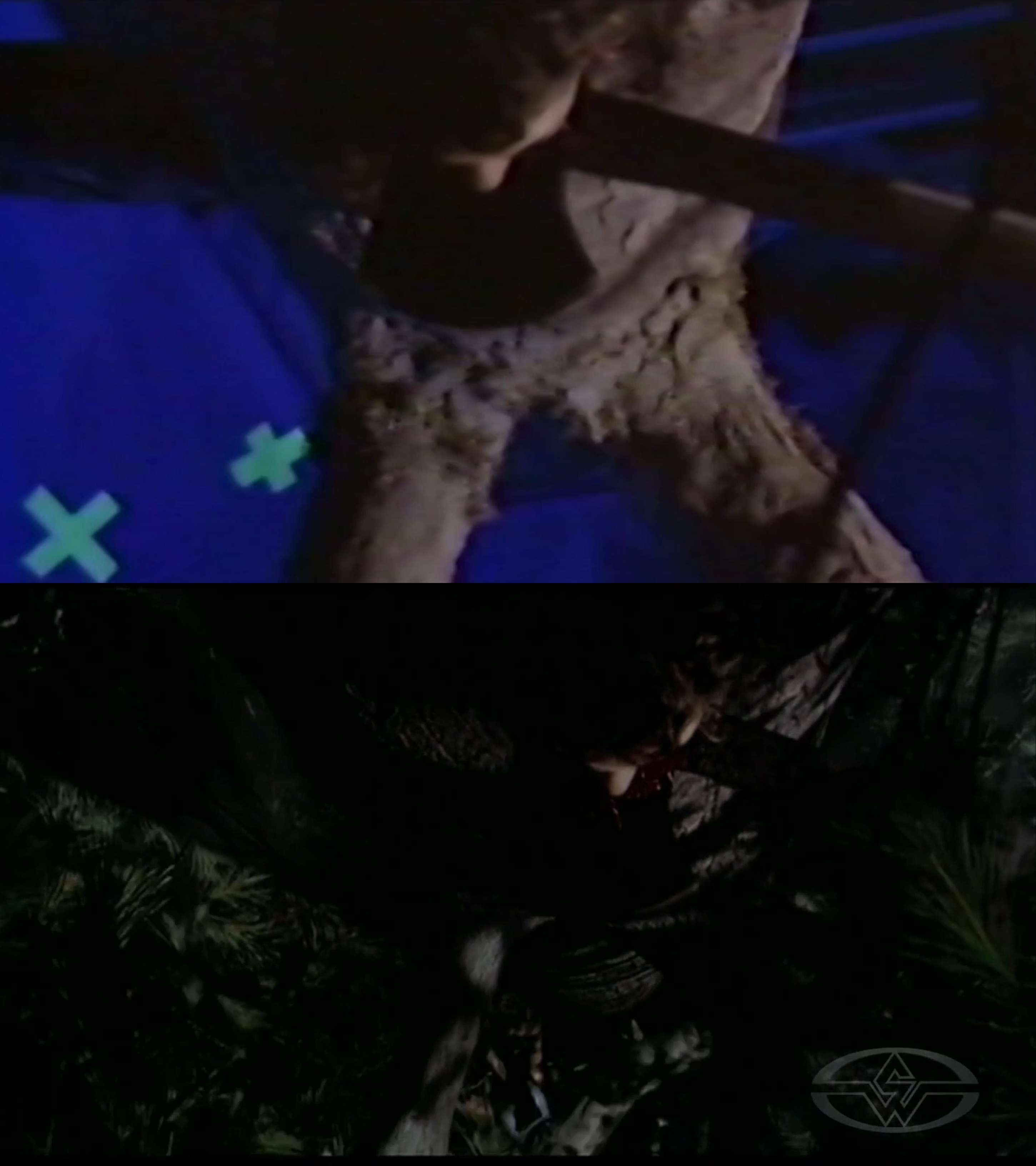 (Bluescreen element of the head-chop effect from Wrong Turn compared against the final composited result.)
The makeup artists painted Chriqui’s chin black so the camera wouldn't see that part of her head. They also made a low-cost floppy rubber molded body that they could drop.
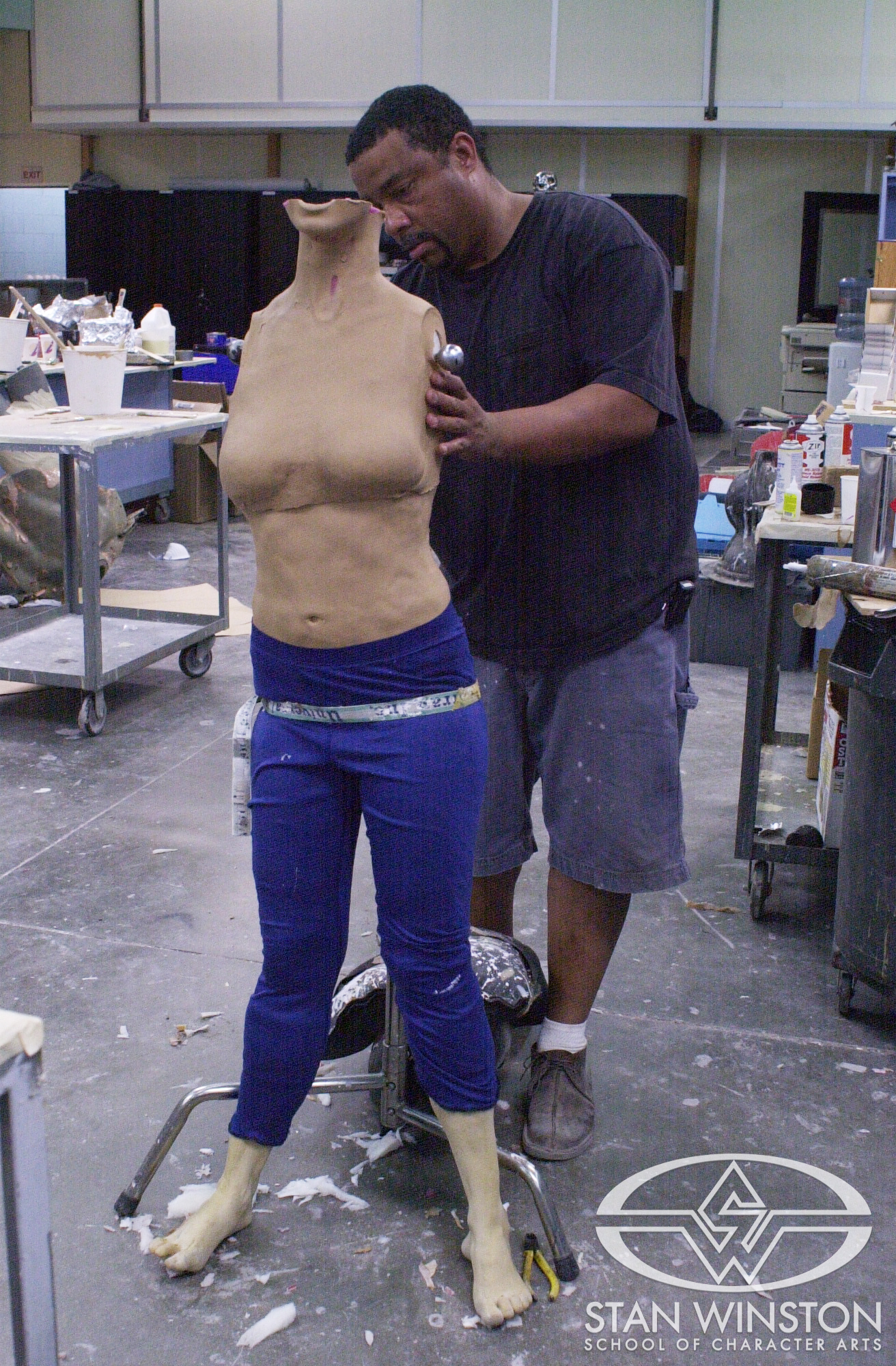 (The fallaway rubber body replica for Wrong Turn used for Carly's death scene.)
When the camera zooms to Carly’s eye, the pupil dilates, this was a digital effect on top of the actor’s actual eye. Then, as the camera tilts up, the body falls. The falling body was actually enhanced and animated for control as a digital effect falling through a virtually constructed environment of trees, though the digital body was based on the rubber reblica Stan Winston Studio created.
“The lesson there was we did that for a third of the cost of what the initial budget was,” Mahan says. “It was probably a better effect because sometimes, having less makes you do more interesting work.”
WATCH THE “SPECIAL EFFECTS SEQUENCE DESIGN” COURSE WITH SHANE MAHAN: