

In this FREE excerpt from the Stan Winston School of Character Arts course, Modern Miniature Effects Part 1: Project Planning & Acquiring 3D Models, renowned FX artist and creative director Fon Davis (Star Wars franchise, Guardians of the Galaxy, Interstellar) shares his tried and true advice on how to plan an SFX project from start to finish with clients—a must for anyone wanting to work in the film industry!
Jump To Section
- Getting SFX Clients and Building Relationships
- Understanding Client Requirements
- Client Communication and Etiquette
- Overcoming Project Challenges
- Managing Client Expectations
To watch the complete instructional video, click the player above!
In this lesson, Fon Davis discusses how to build and grow your client base, communicate project requirements, manage client expectations, and more. Once you and your client have a mutual understanding of what the project will entail, you can move forward with executing the plan!
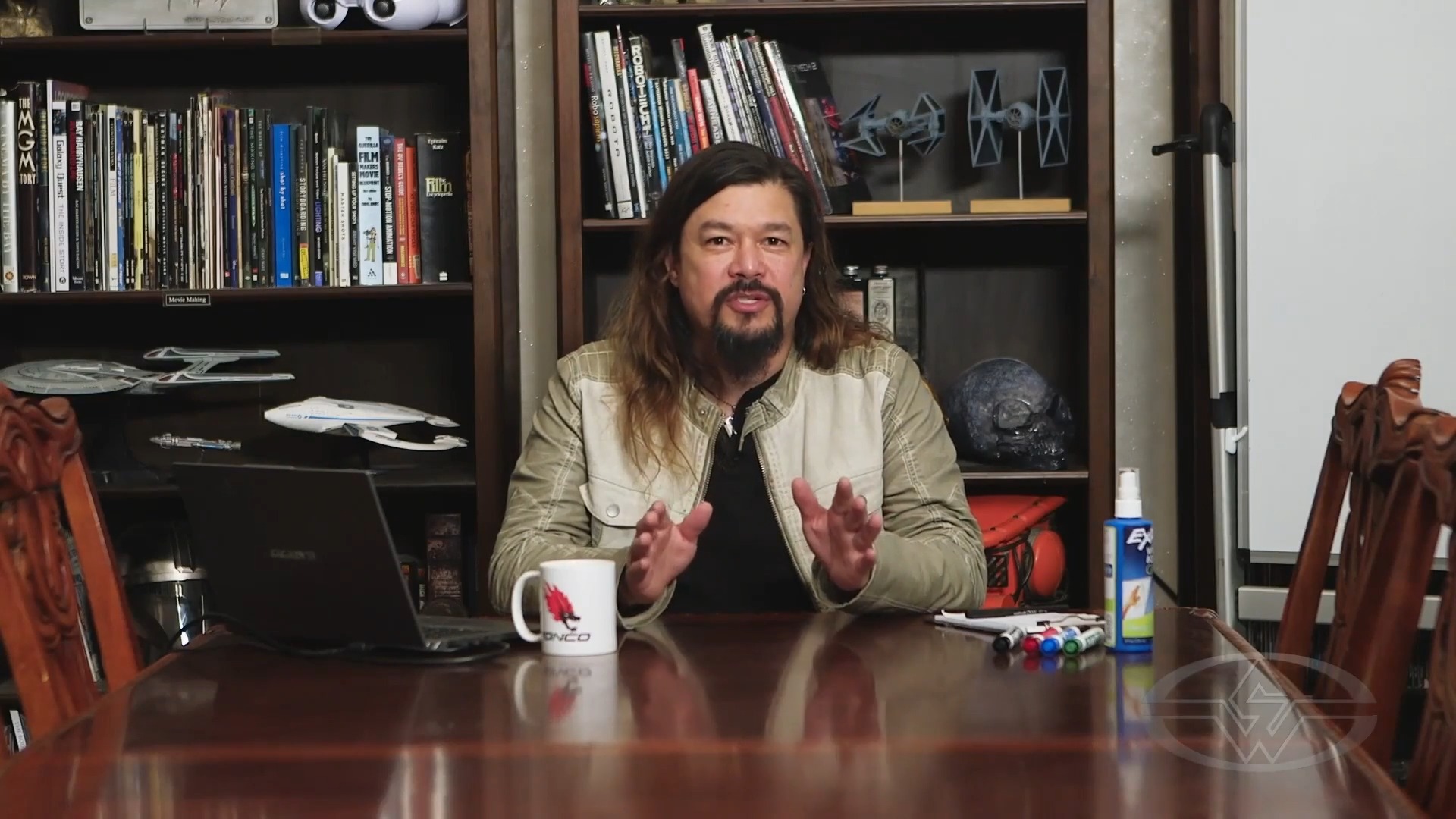 (Fon Davis breaks down the must-knows about how to plan a project with a client.)
Getting SFX Clients and Building Relationships
The term “networking” can be daunting to some. For Davis, he likes to make friends who could be potential clients and then work with them to keep the relationship at a personal and social level.
“If you have that connection with clients, have empathy, and you treat them as you would your friends, that relationship is going to be a lot more enriching,” he explains. “It’s going to be better for both of you, and it’s going to be a much, much longer relationship through the years.”
 (Fon Davis explains how forming enriching relationships and having empathy are crucial for your career.)
This approach sets you up for a fulfilling, long-term working relationship, which is essential for career longevity. The goal is to do this for the rest of your life.
As you begin to deliver on jobs and share your work with everyone in your circle, your clients will see what you make, whether it be robots, creatures, or costumes, and reach out to you regarding what they need for their project. This marks the very beginning of the planning process with a client.
Understanding Client Requirements
When your prospective client calls, the top priority should be to ask questions: the who, what, when, where, why (and how many for good measure!). Sometimes you can get that information from a description in a script or board, but often it's just talking to the client.
With that information, you can begin planning with your team and figure out what approaches you’ll use to fabricate the items your client wants and when they want it.
For this lesson, Davis uses the example of a scene in a movie where a container ship is attacked by an octopus.
After you determine the type of shot envisioned and methods you're likely to use--in this case, we are assuming a model miniature--ask about the pertinent dates, like when they’re going to start shooting. Often, production crews will want to start lighting and testing first, which means your delivery will need to be well before the shooting is scheduled. As a result, your delivery date may be sooner.
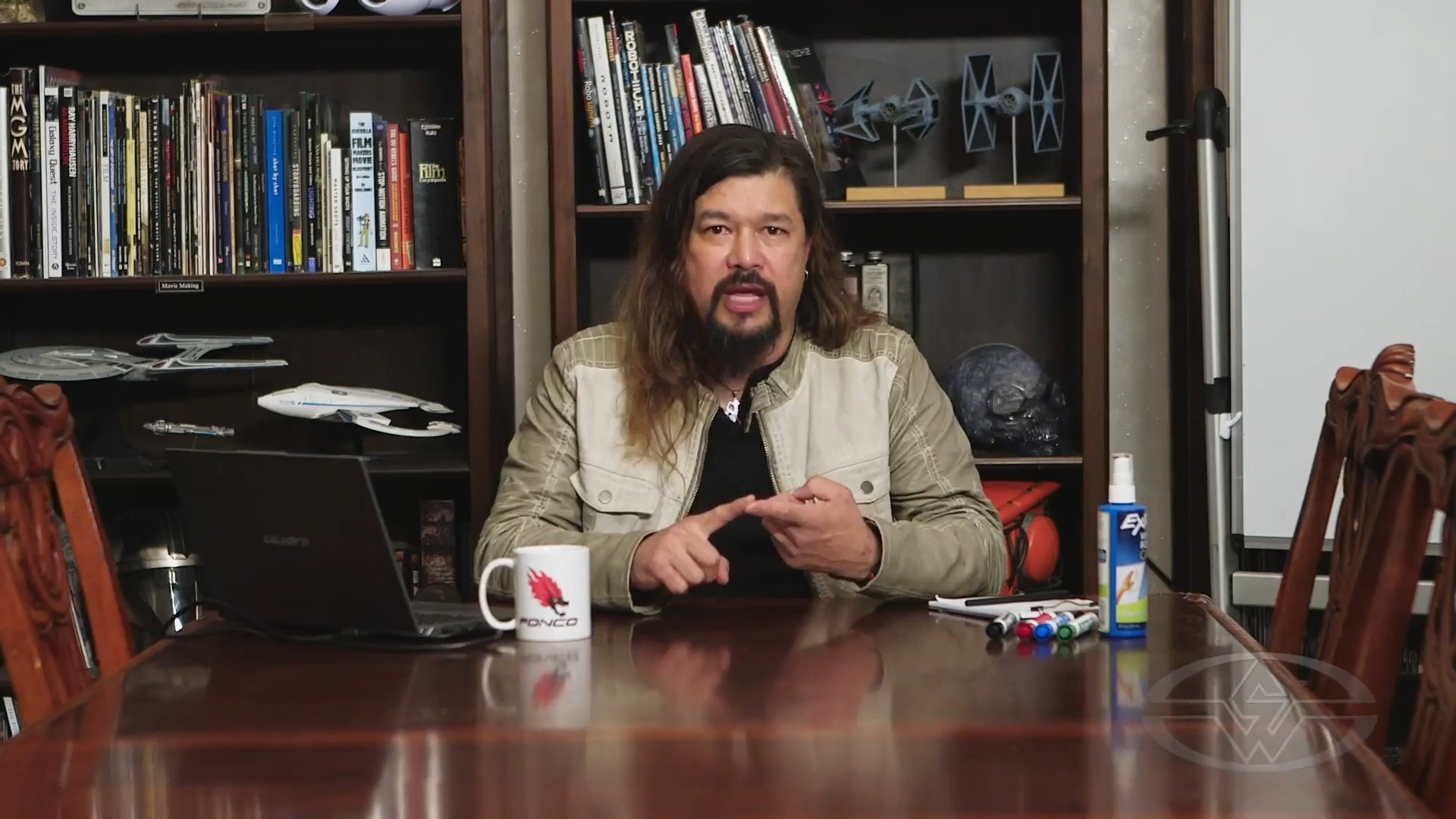 (The who, what, when, where, why, and how many are critical questions to ask when planning a project with a client.)
Find out how many ships your client wants. They could want three ships and two octopi, for instance. In this case, you’re going to make one ship and one octopus.
It’s also important to make sure to ask what's expected out of the shot. How long will the shot, or shots, be on screen? How much movement is necessary? What is the relative position of the elements in the scene?
For this lesson, the imagined clients want an animatronic octopus located on top of the ship, flailing and gripping the ship tightly while knocking containers off. This helps determine the approach for the build.
Once that’s been established, ask about the environment--the weather, if it's night or day, and any colors envisioned by the filmmakers. Does the ship and/or the octopus have to match any other art or props or footage that can be shared?
Next, you can discuss the aesthetics of the film. Even using miniatures, there is a broad range of styles between, for example, stop-motion effects, which tend to appear stylized if charming, whereas with visual effects movies, miniature effects are meant to play as real. If the movie is going to be photorealistic, as in the case of this project, it's still good to know the tone. If the movie is a modern thriller, verisimilitude will be key, but since this imagined movie is meant as a sort of tribute to old serials of the 1930s - 1950s like Flash Gordon, the visual approach can be a smidge on the cheesy side.
You can ask an art director and/or production designer about their specific ideas of design they want to use, key colors, any overall design for the story, and what kind of mood they’re trying to achieve.
When asked, try to always focus on the story when it comes to offering your ideas for designs, color, size, and shape. Each of these components help tell a certain story.
Client Communication and Etiquette
After you talk with your client and get the details of the project worked out, it’s time for you to come up with your plan. When it comes to client etiquette and how to treat clients, Davis says that his best advice is to treat them the way you would treat your friends and the way you’d like to be treated as a client somewhere.
Davis shares his favorite analogy, "If you go to an auto mechanic and you leave your car—you care about your car, depend on your car to survive, to get to work, to get to the store…the longer you go without your car, the more difficult your life is going to be. That interaction with that mechanic is what you need to imagine you’re giving to your clients. You’re the mechanic."
 (Fon Davis discusses the importance of positioning yourself as the expert by being communicative, empathetic, and helpful when interacting with your clients.)
Keep in mind that some collaborators rely too heavily on the clients to tell them exactly what they want, and that can set up frustrating expectations on both sides. Sometimes, clients can't tell you exactly what they want. As the expert, be prepared to give them a few options and break down how much everything is going to cost and how much time it will take before doing the work.
One of the most common mistakes Davis personally sees with artists is when they quote a client a certain price and then charge for notes after delivery without running the additional costs by the client first.
You have to have that transactional conversation before billing for anything additional, and before you do any work that will be billed for, Davis says. “I know that everyone is uncomfortable talking about money, but you have to get used to talking about money—or get an agent to talk money for you—but the conversation has to happen before,” he adds.
Having these kinds of difficult—albeit necessary—discussions will lead to clearer expectations and prevent any potential miscommunication between you and your client.
Overcoming Project Challenges
Communication is crucial throughout every point of your project—especially when you encounter obstacles. This goes back to empathy and what you would want in a situation if your own project was beset by unforeseen difficulties.
He shares an example of when he and his team were working on a project in Texas during an unexpected winter storm. Due to the extreme cold, literally all the urethane in the state was rendered unusable, and urethane was a key component for 500 different elements critical to this project. Because no urethane had been ordered prior to arrival, assuming the resource would be plentiful, Davis had to let the client know that the project was in jeopardy since the team couldn’t acquire the necessary materials.
As uncomfortable as the situation was, Davis and the team thought about solutions first before contacting the client. From there, they contacted the client and looped them into what was going on.
“You can’t just spiral in your own little private world and not fill the client in on something that could potentially derail the schedule,” Davis says. “Everyone thinks, ‘Well, I don’t want to give the client bad news, but the truth is, the clients want to hear the bad news, just like you would want to hear the bad news.”
 (Fon Davis emphasizes why good communication with your client, even when things aren't going as planned, is necessary for a successful project.)
With the client aware of the schedule impact, Davis and his team worked out a solution. The urethane would be sourced from other places outside Texas. Though it would take more time, working closely with the client, they determined that they could deliver the build in phases, prioritizing what was needed in the schedule as each set of assets was completed, instead of delivering everything at once before filming began. The project was a success.
“That was all because we contacted them as soon as there was a problem that we knew could affect the schedule—clients want to know this,” Davis says. “Don’t be afraid to tell your clients you need more time, especially at the beginning.”
Managing Client Expectations
You may be familiar with the project management "Iron Triangle" or "triple constraint," which suggests that given the ideal qualities of “good,” “fast,” and “cheap,” you can only pick two. When working with clients, however, your job is to figure out and troubleshoot how to best deliver SOME or MOST of all three elements, rather than focusing on giving them two out of three.
 (A pro-tip from Fon Davis: Have a checklist of details you want to discuss ready before meeting with your client to gather all the information you need to come up with a more accurate project estimate.)
It’s always a good idea to ask your client a lot of questions. Not only does it help you establish everything that they want, but it also makes them feel like you're listening to them, and they’re in good hands. “The more specific you get, the better,” Davis says. “Talk about lighting, color, all those things, every single thing that you could possibly think about.”
It’s helpful to have a checklist of topics you want to cover before meeting with your client. After you’ve discussed the details of the project, you can then start to come up with a working plan for how you'd achieve what's required, and that plan will lead to building a cost estimate for your client. Once your estimate is approved, the job can really begin.
WATCH THE “MODERN MINIATURE EFFECTS” COURSE WITH FON DAVIS:
Modern Miniature Effects Part 1: Project Planning & Acquiring 3D Models
Modern Miniature Effects Part 2: 3D Printing, Laser Cutting & Fiberglass Lay-Up
Modern Miniature Effects Part 3: Ship Assembly, Paint & Weathering
Modern Miniature Effects Part 4: Octopus Assembly & Final Shoot