
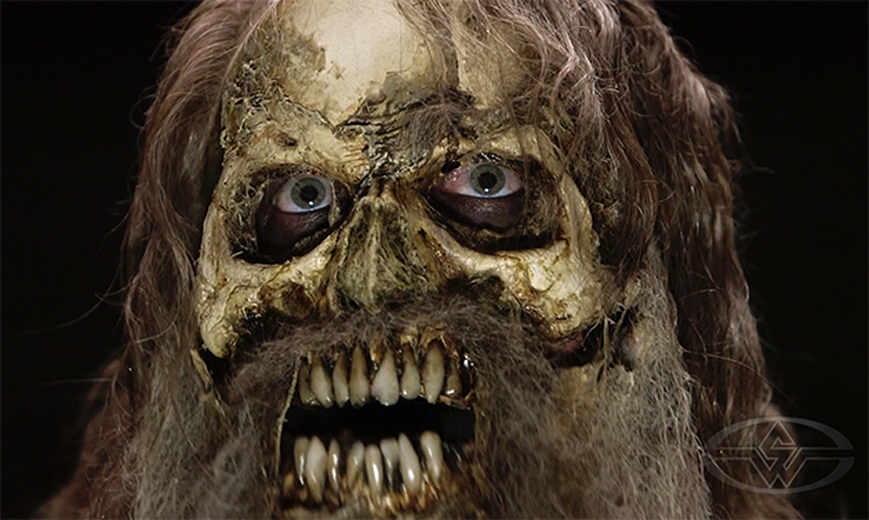
A SINISTER SMILE
Patrick Magee, (MEN IN BLACK 3, JURASSIC PARK III), the owner of Magee FX, director and writer of PRIMAL RAGE: LEGEND OF KONGA, and lead supervisor of Universal Studios' Halloween Horror Nights, shows you his preferred method for making scary teeth in this FREE excerpt from his Stan Winston School of Character Arts lesson, Articulated Mask Making on a Budget, Part 1: Lifecasting, Sculpting & Teeth.
Jump To Section
- Making Fake Teeth for Your Mask
- Using Friendly Plastic for Teeth
- Having References to Create Realistic Teeth
To watch the complete video, click the PLAYER ABOVE!
Making Fake Teeth for Your Mask
Visible teeth are a good way to accentuate the articulation in your mask. As you think about creating your mask, think about how teeth can play into the action. A fearsome bite can add some fright to a design. But as you work, you want to have your teeth built ahead of time.
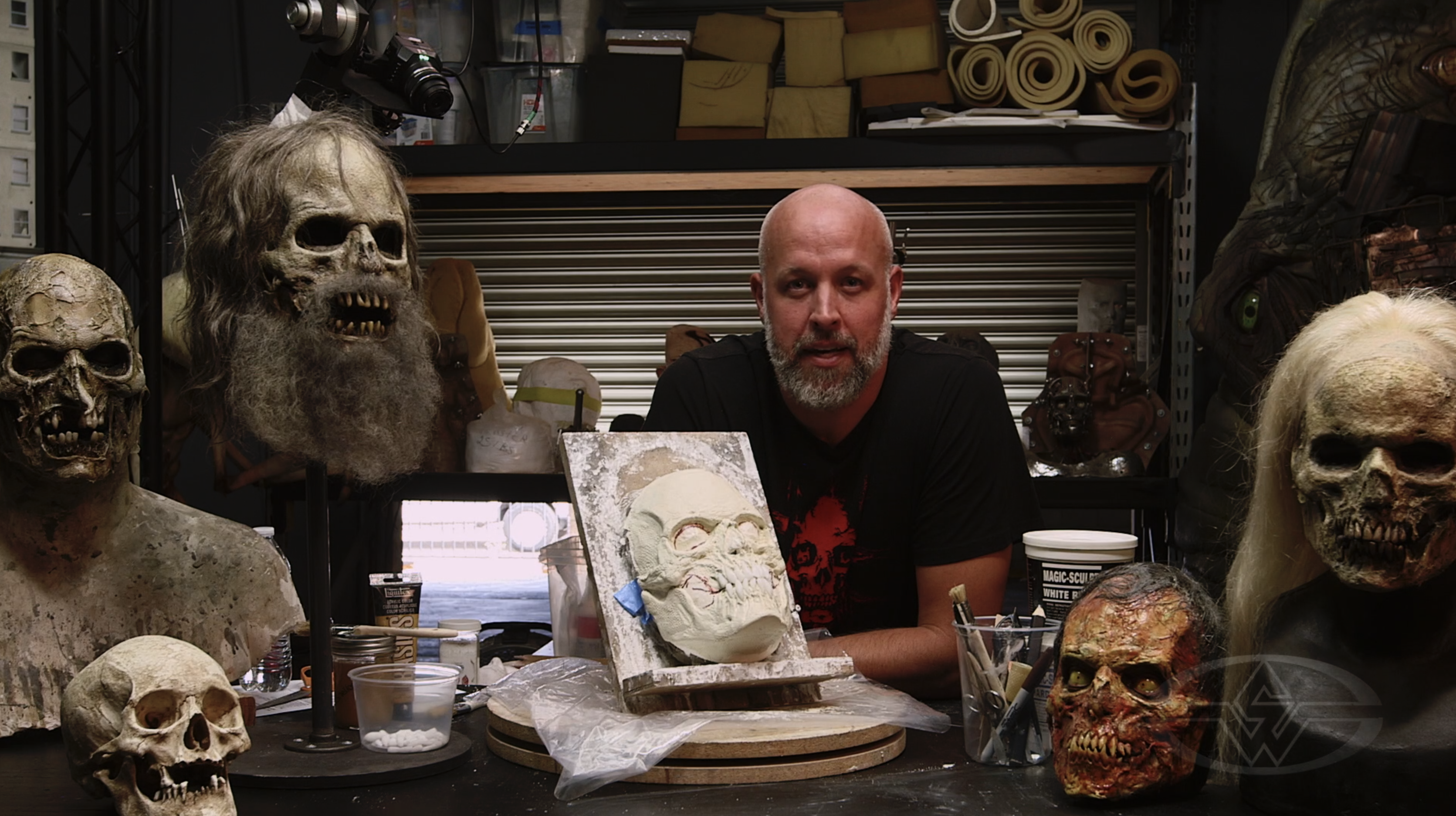 (Patrick Magee with his finished ready to paint articulated mask featuring some chilling new chompers.)
There are a LOT of different materials you can use to create teeth. Patrick Magee provides an impressive list of possibilities: dental acrylic, epoxy putty, carved wood, almonds, Chicklets, even repurposed animal teeth.
Though you need to consider the stress on the teeth as they come together, and the weight of the teeth in the overall mask, pretty much anything you can think of that provides the desired tooth-shape is fair game.
Using Friendly Plastic for Teeth
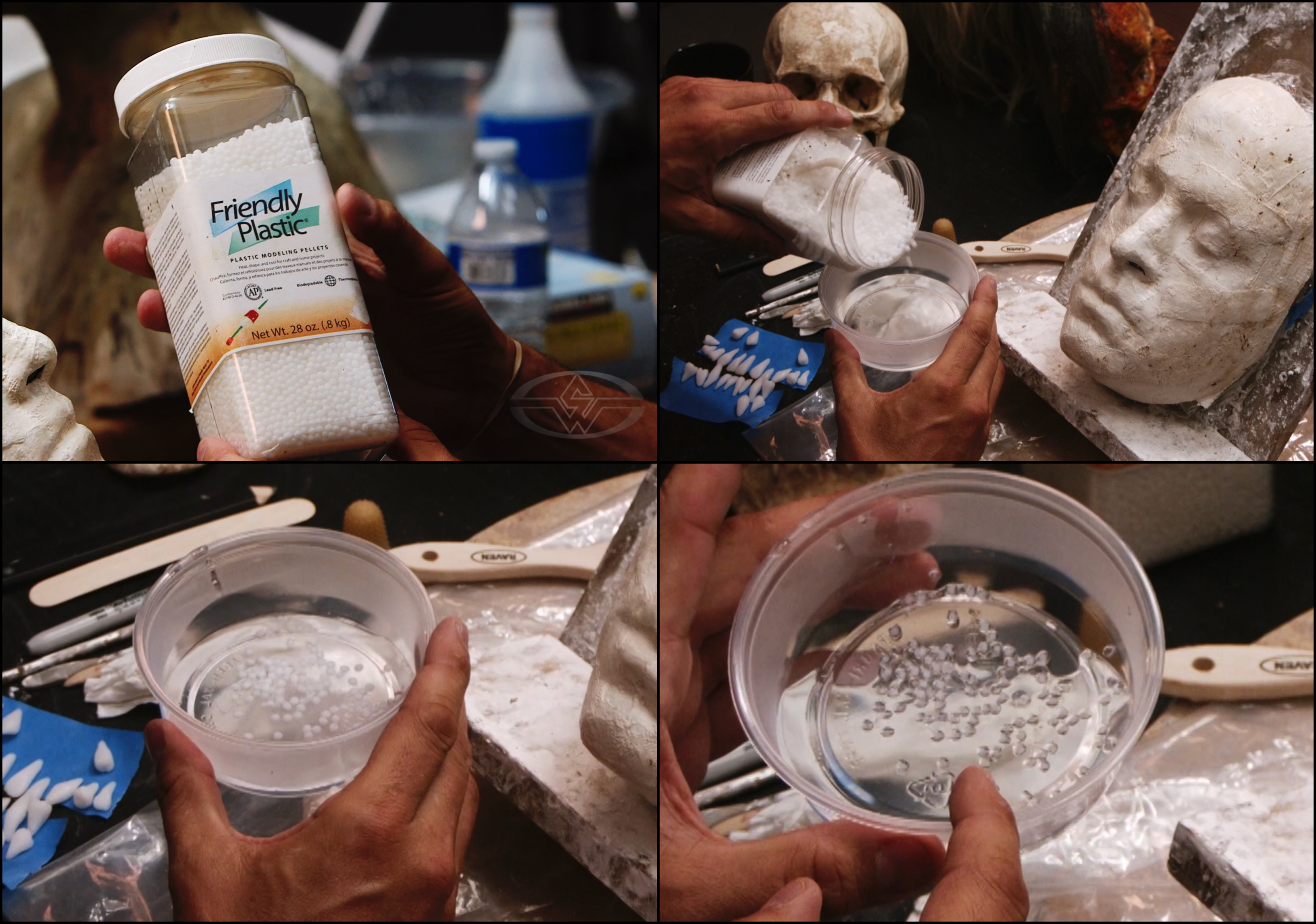 (Friendly Plastic, a low temperature, non-toxic plastic that comes in pellets you can heat and mold by hand.)
Patrick Magee's favorite inexpensive, quick, and effective material for teeth is using moldable thermal plastic beads known by the brand name Friendly Plastic.
Pouring the white beads into heated water turns them clear and sticky.
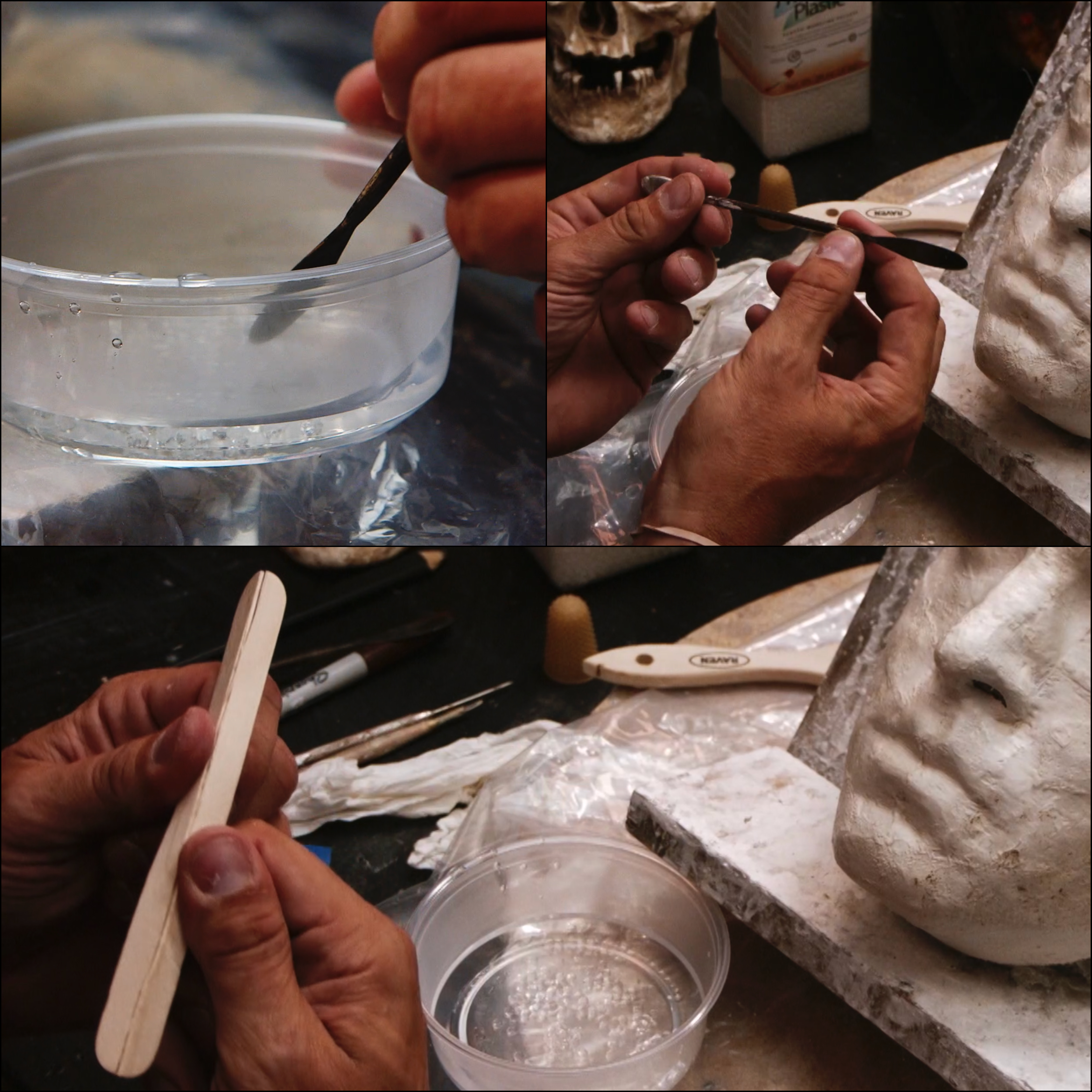 (Patrick stirs the beads with his modelling tool as they begin to stick together.)
Once the beads have turned translucent, that means that they're ready to be shaped.
Pro-tip for modelers on a budget: Patrick Magee splits his popsicle sticks in order to have two clean tools for the price of one.
Friendly Plastic is safe, affordable, easy-to-use, lightweight, and even re-usable! No wonder, Patrick extolls its virtues for the budget creature creator.
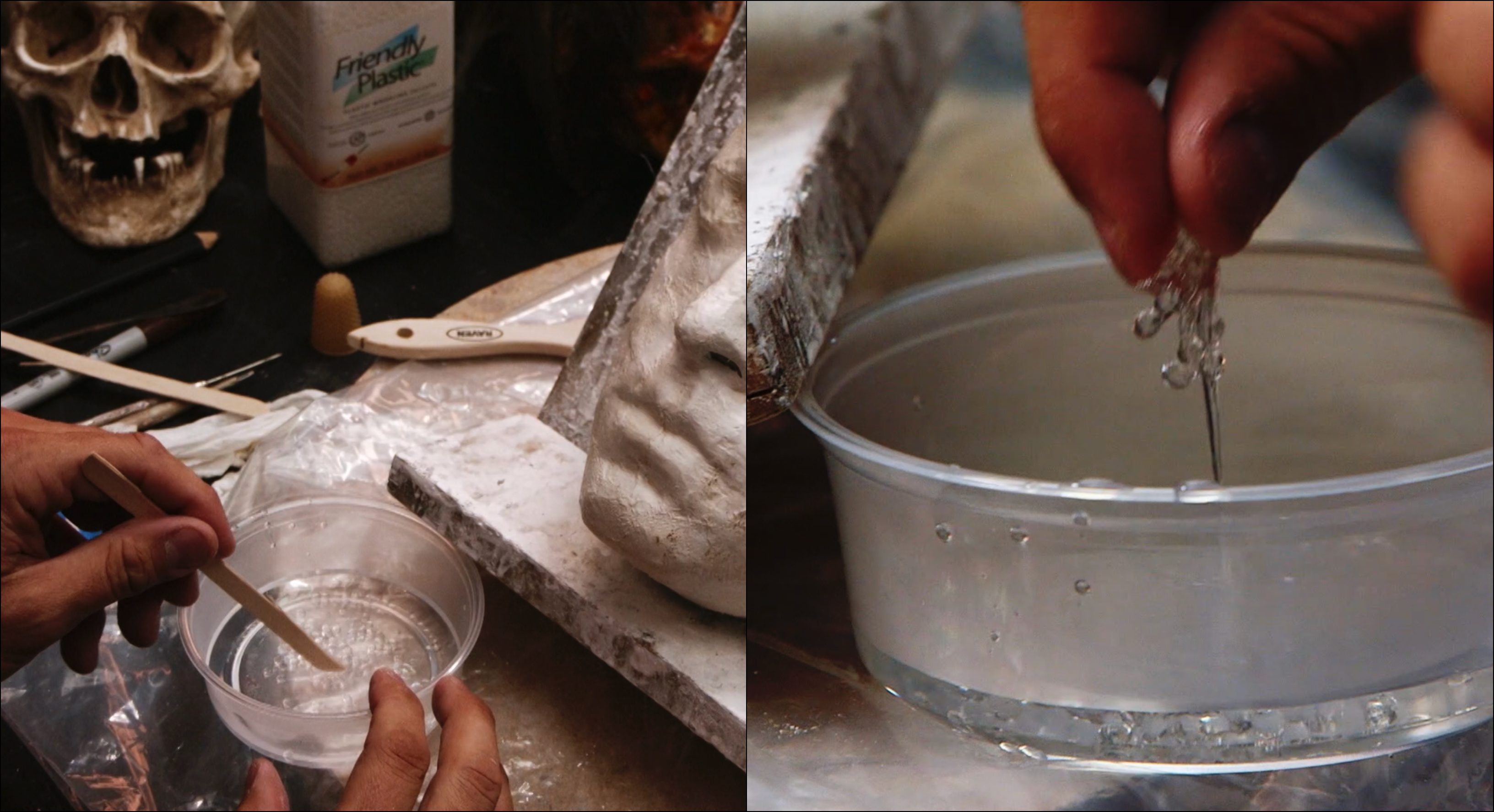 (The Friendly Plastic, is removed from the hot bath and ready to take shape.)
Gathering a pinch of the, now conglomerated beads, Patrick begins to shape a tooth.
The material forces you to move quickly. Instead of belaboring the sculpting process and obsessing over every crease and divot, the relatively brief workability time of the thermal plastic forces you to get things done. Since it's so easy to make more, if a certain piece didn't turn out the way you want it, you can even pop it back in the hot water, and re-shape it.
It's a very forgiving material, and versatile. Though Patrick doesn't demonstrate the technique, he allows that you could even press the melted thermal plastic into rubber molds to create shapes if you cared to.
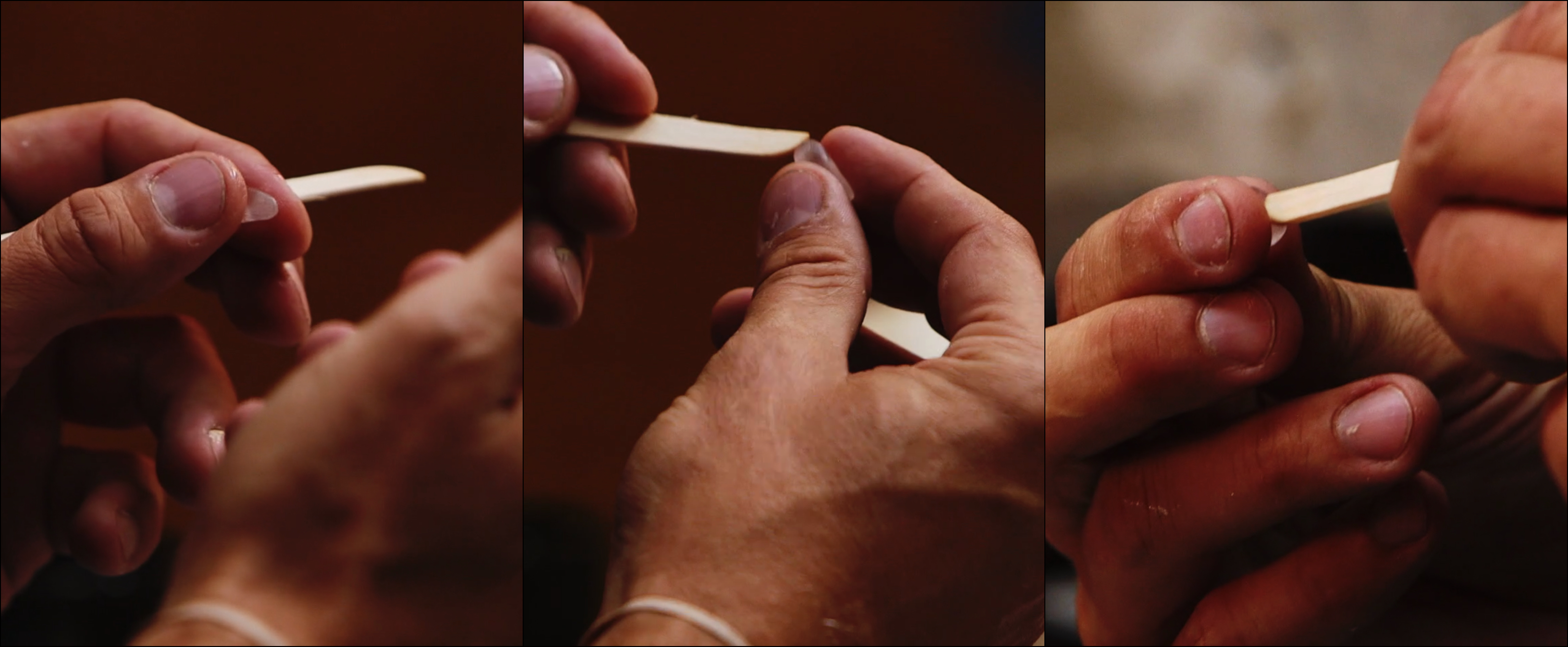 (Patrick Magee shapes a tooth.)
Sculpting is all about practice. You can get good at sculpting teeth by doing lots of them. Here, Patrick cuts an X-pattern into the base of the tooth, simulating a molar.
If you want to have super pointy teeth, you might even wait for the plastic to harden and then apply a Dremel tool to shape it to a point; however, keep in mind that the drill will heat the plastic and if you apply that friction for too long, the plastic will begin to soften again.
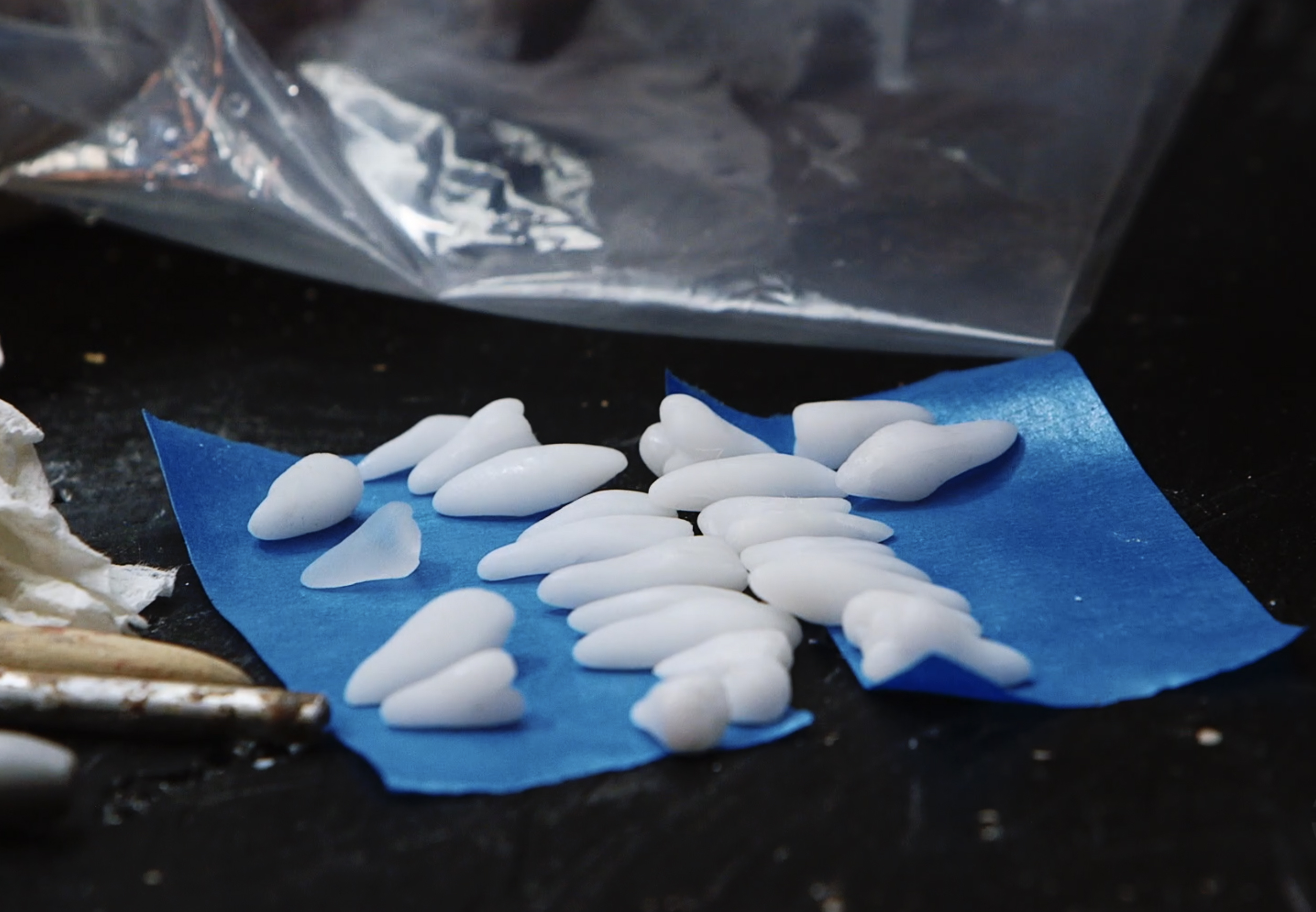 (Patrick Magee ads his newest tooth to his pile of pre-made teeth.)
The Friendly Plastic has the added advantage of being lightweight, and drying white, with just a hint of translucency, so when your teeth are complete, you don't even necessarily have to paint them.
Patrick advises making more teeth than you'll need. Once you start inserting the teeth, you'll want to make the most of your time while the materials are still malleable and the glue is at optimal adhesiveness. Over-prepping your accessories will make sure that you don't get stuck short when you start to assemble. In this case, Patrick has gone ahead and created more than a full set of upper teeth and lower teeth for placement into the jaws of the mask.
Having References to Create Realistic Teeth
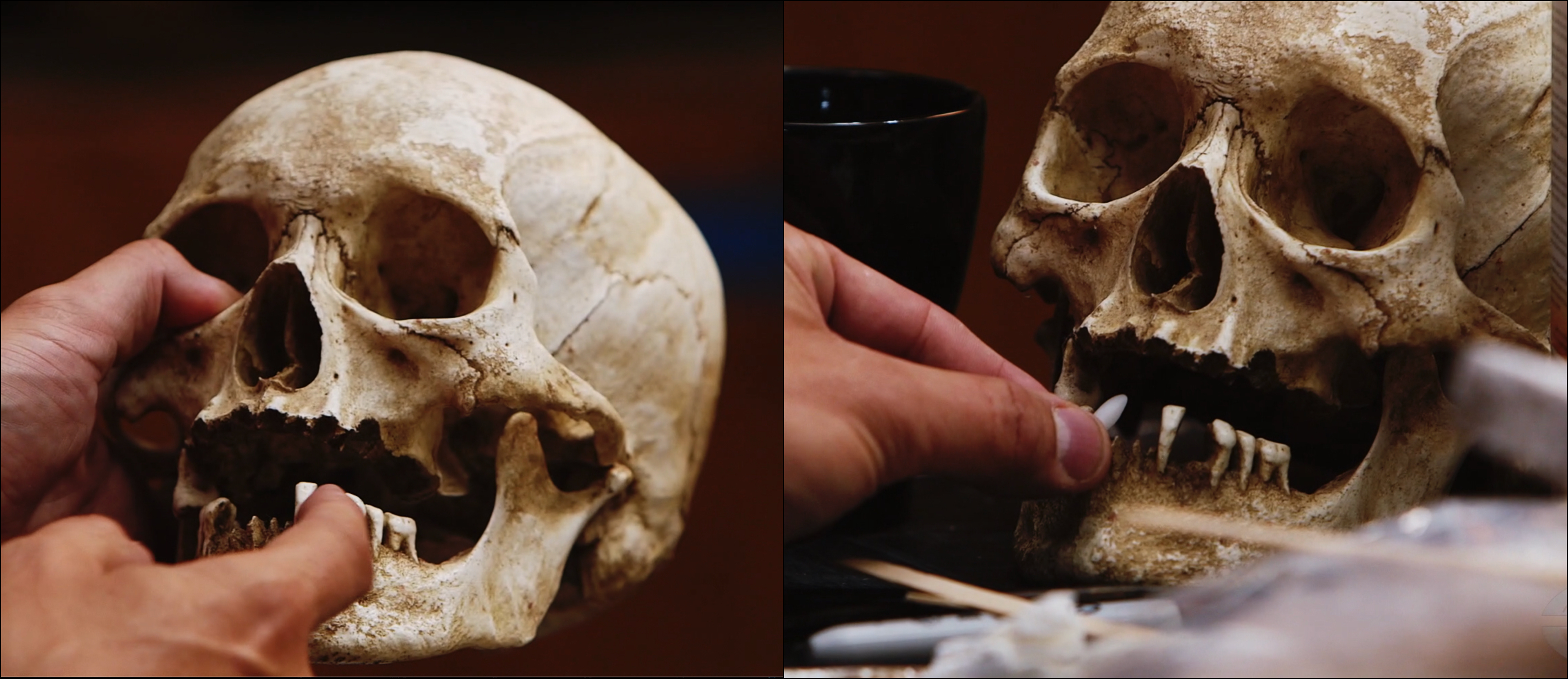 (A cast replica of a human skull features several teeth protruding from the lower jaw.)
Having a good reference, such as the skull replica Patrick Magee references is essential for anyone designing something to look authentic and spooky. For a sculptor starting out, having reference becomes critical to anything you're trying to achieve whether it's from photographs, drawings, or ideally three-dimensional, physical reference.
The better reference you have, the better are likely to be your results!
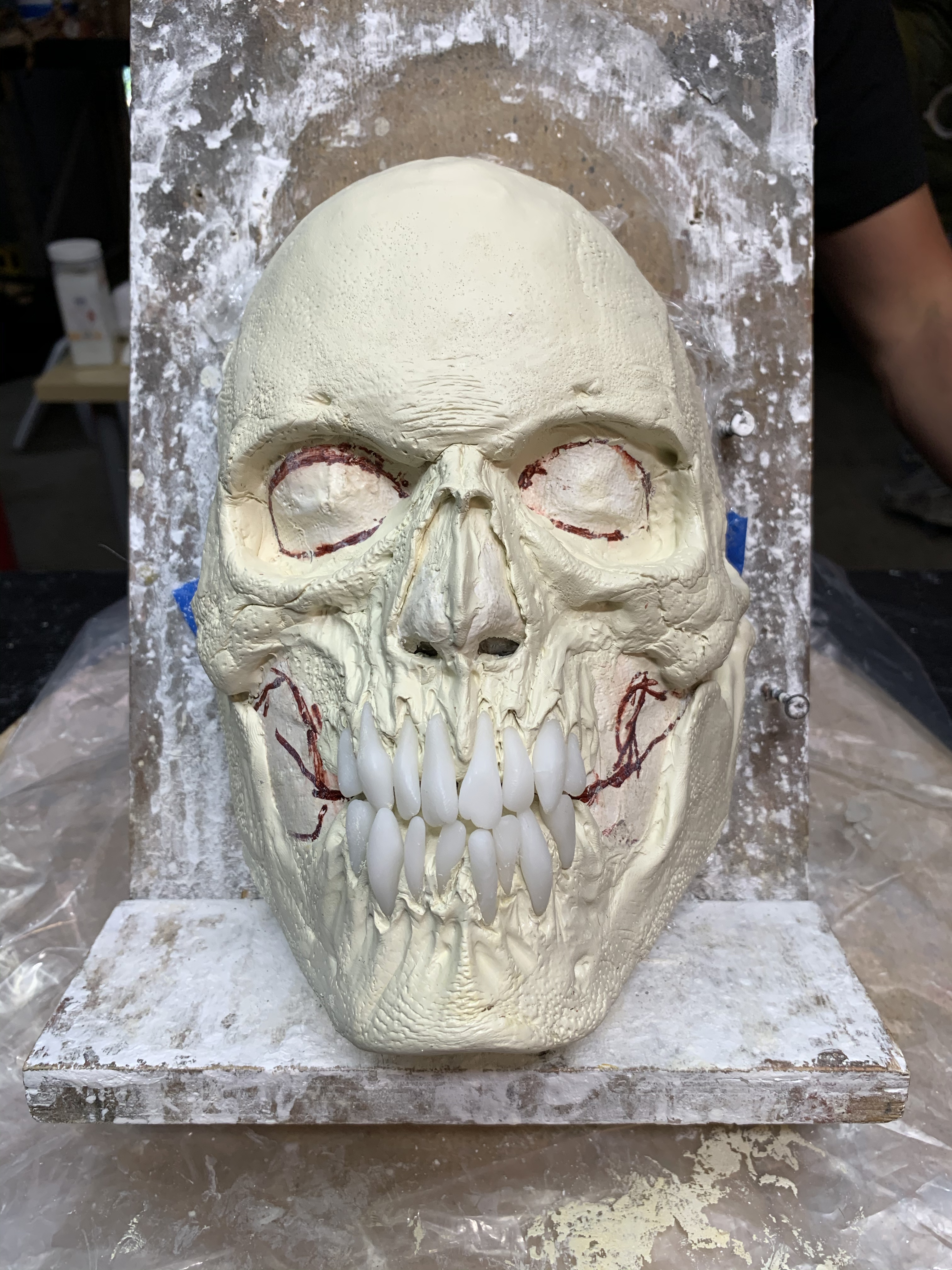 (Ready for paint after adding translucent thermoplastic teeth to the epoxy clay sculpture.)
WATCH PATRICK MAGEE'S' "HOW TO MAKE A MASK" COURSE SERIES:
Articulated Mask Making On A Budget Part 1: Lifecasting, Sculpting & Teeth
Articulated Mask Making On A Budget Part 2: Fabricating Flesh, Painting & Hair Work