

How To Draw a Werewolf With Jessie Fohrman
When you think of art, what is it that you imagine? Sculpture? Paintings? Installations? Often, the foundation for many forms of great art, including creature design, is pencil drawing.
But beyond being just the groundwork, a great drawing in and of itself can be a captivating piece of art. Case in point, the beautiful werewolf sketch that is the result of our latest training video.
Jump To Section
- Understanding a Creature’s Anatomy
- Using the Right Drawing Tools for Your Monster Sketch
- Sketching a Werewolf Outline
- Refining and Adding Details to Your Werewolf Drawing
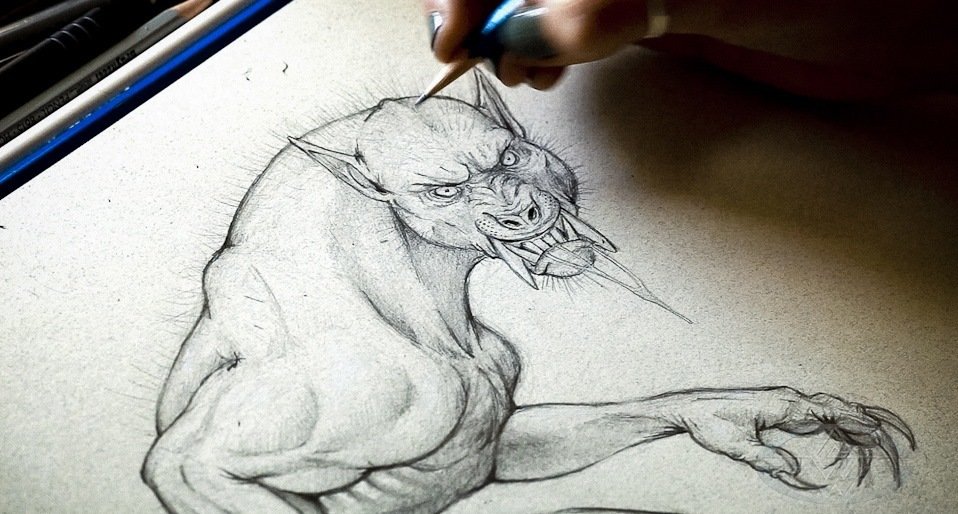 (Special effects sculptor and creature designer Jessie Fohrman uses monster drawing techniques to produce a hair-raising werewolf sketch.)
If you’ve ever dreamt of learning to draw monsters if you’re searching for new techniques and ideas, or if you’re simply fascinated by the anatomy of werewolves, the newest in our series of training videos will appeal to you. It’s almost hypnotizing to watch as Jessie Fohrman sketches a werewolf, creating what looks to be a living, breathing, terrifying creature out of only a blank page and a couple of pencils.
Understanding a Creature’s Anatomy
The foundation for any sketch of a living creature, real or fictional, is the creature’s anatomy. Through an understanding of its anatomy, you can see how a monster might move and, therefore, be able to insert an element of motion in your drawing. With a werewolf, for example, it may lope the way a wolf does but might balance on two feet like a human. Understanding anatomy helps the artist interpret that movement onto the page, lending an element of life and action to the drawing.
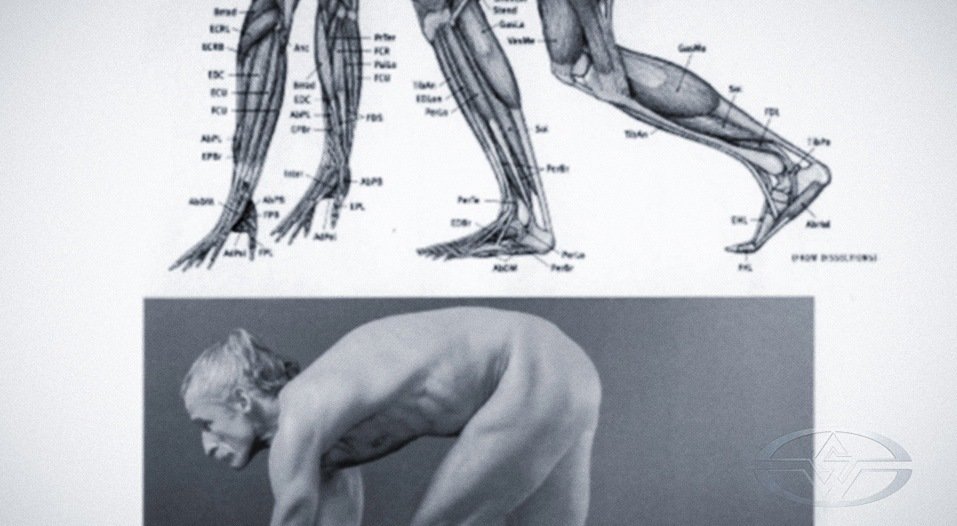 (Comparing human and animal anatomy helps highlight the similarities and differences so you can begin roughing out forms.)
In order to give you some insight into using human and animal anatomy in drawing, Jessie, who is an experienced medical illustrator, starts off with a lesson on human and wolf form, highlighting the lines of a human skull versus those of a wolf. Interestingly, she shows that a baboon skull clearly illustrates a link between the two, with a cranium similar to a human but a jaw more similar to a wolf. She’s not wrong—it’s apparent that a baboon skull is a perfect choice upon which to model a werewolf’s anatomy.
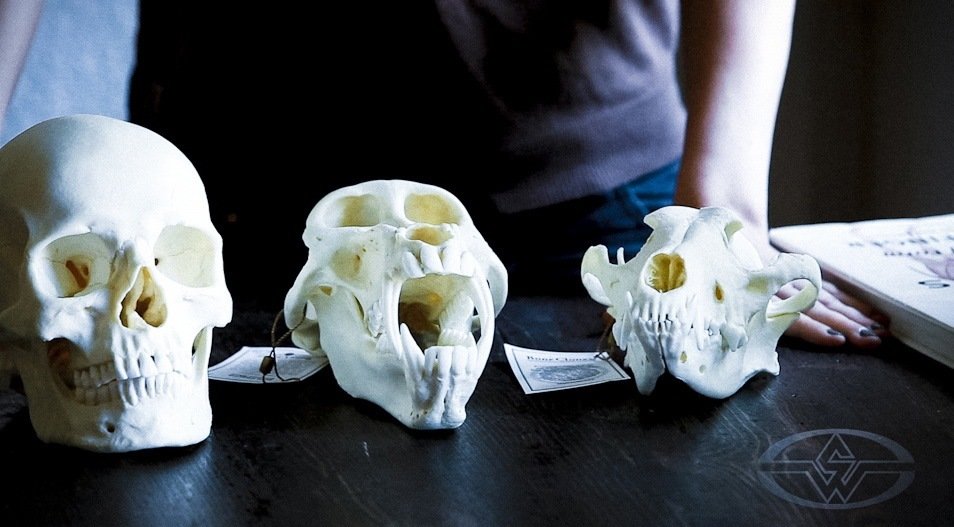 (Jessie Fohrman displays the differences in the cranial anatomy of a human and a wolf.)
The skull is, of course, only a fraction of a werewolf’s form. From there, Jessie takes you through the differences between humans and wolves in stature and posture, most notably in their legs and shoulders. Explaining how each species’ joints work, she illustrates how you might draw inspiration from both in your sketch.
Using the Right Drawing Tools for Your Monster Sketch
From a practical perspective, you have to have the correct drawing tools to master monster sketching, and Jessie does a great job of explaining why each pencil is necessary to achieve certain effects. Because she takes the time to go over the various lead types, you’ll notice her choice of pencil at each stage of the drawing process, which is incredibly helpful when learning how to draw.
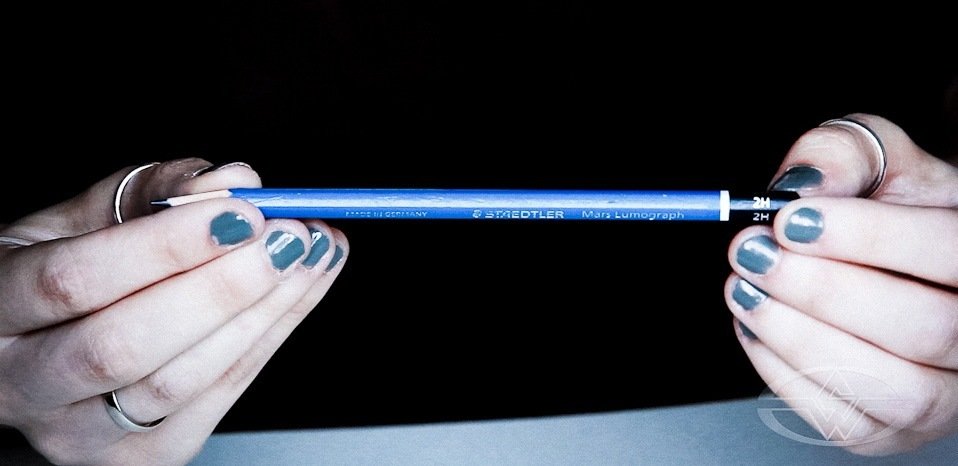 (Choosing the right drawing pencils can come in handy. Jessie Fohrman uses a 2H pencil in particular so she can loosely sketch the outline of the werewolf.)
Sketching a Werewolf Outline
Once she’s covered the basics of anatomy and drawing tools, Jessie begins to loosely sketch the outline of what will become her werewolf. It’s incredible to see how deftly she works and how quickly you can see the monster start to appear. It’s inspiring! Watching her work will make you want to draw along with her, line by line.
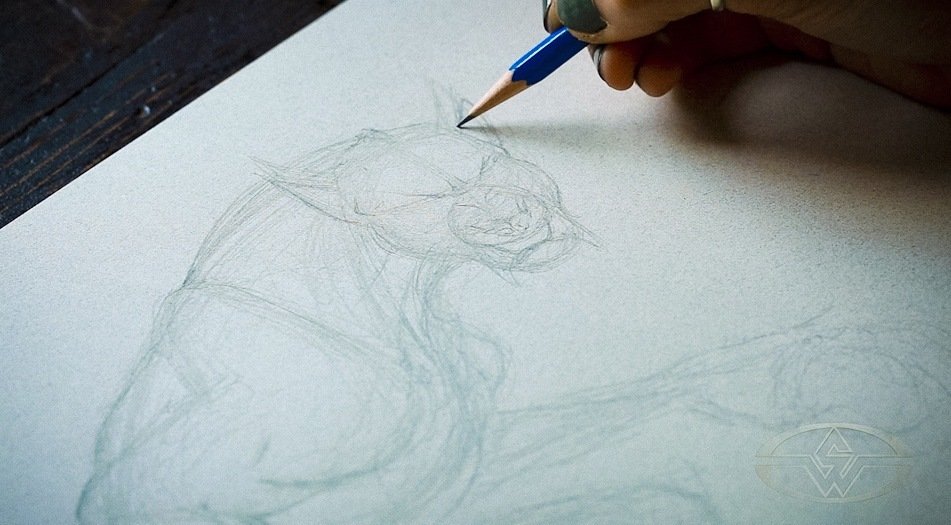 (Jessie Forhman incorporates wrinkles and convolutions of the human ear and pairs it with the shape of a wolf head to create her werewolf head.)
Refining and Adding Details to Your Werewolf Drawing
As her werewolf takes shape, Jessie offers tips and techniques on shading, using an eraser to clean up your work and edit as you go, and, perhaps most importantly, what kind of details to add to play up to your audience. By the end, not only does her werewolf turn out to be a life-like, terrifying beast, but her tips and tricks are immensely helpful in allowing you to understand how she drew it that way.
It’s mesmerizing to watch Jessie Fohrman create such a menacing monster, from blank page to big bad wolf to the incredibly detailed hair on his chinny-chin-chin. Check it out!
-Leslie Kolb
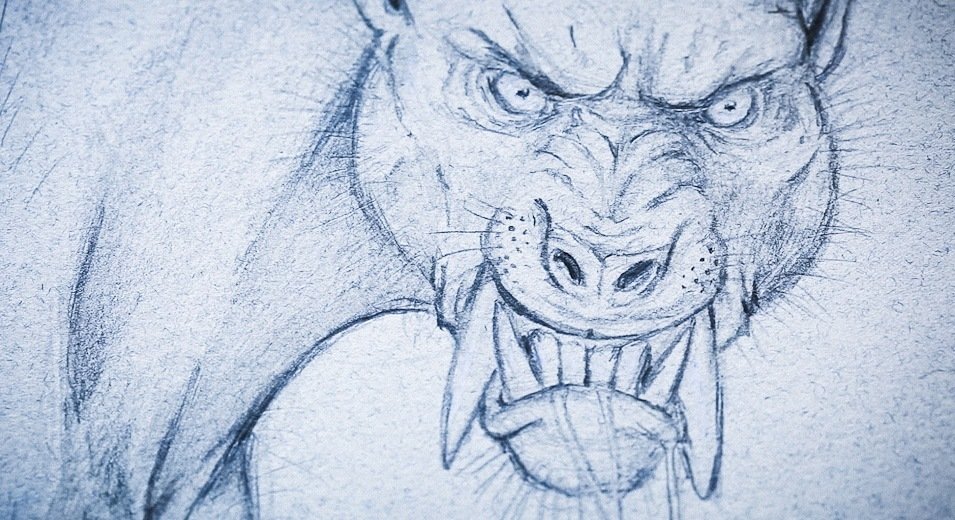 (A final look at Jessie Forhman’s nightmare-inducing werewolf drawing.)