

How to Find Anatomical References to Sculpt Masks

In this FREE excerpt from his Stan Winston School of Character Arts course, How To Sculpt A Mask: Sculpting Monsters In Clay Part 1, master creature FX artist Norman Cabrera (The Walking Dead, Hellboy II: The Golden Army, Planet of the Apes) emphasizes the importance of anatomical reference and shares his collection of the reference material he’s used for decades.
Jump To Section
- Why Anatomical Reference is Essential for Sculpting
- First Recommendation for Anatomical Reference: Atlas of Human Anatomy for the Artist
- Second Recommendation for Anatomical Reference: Dynamic Anatomy
- Third Recommendation for Anatomical Reference: An Atlas of Animal Anatomy for Artists
- How to Sculpt Powerful Female Characters
To watch the complete video, click the player above!
In this lesson, Norman discusses the significance of knowing anatomy, where to find inspirational reference material, and how to apply it to ultimately make remarkable mask sculptures.
Having this kind of foundation to your work gives it the realistic elements needed to make your monster mask not only anatomically correct, but also visually and aesthetically correct.
Why Anatomical Reference is Essential for Sculpting
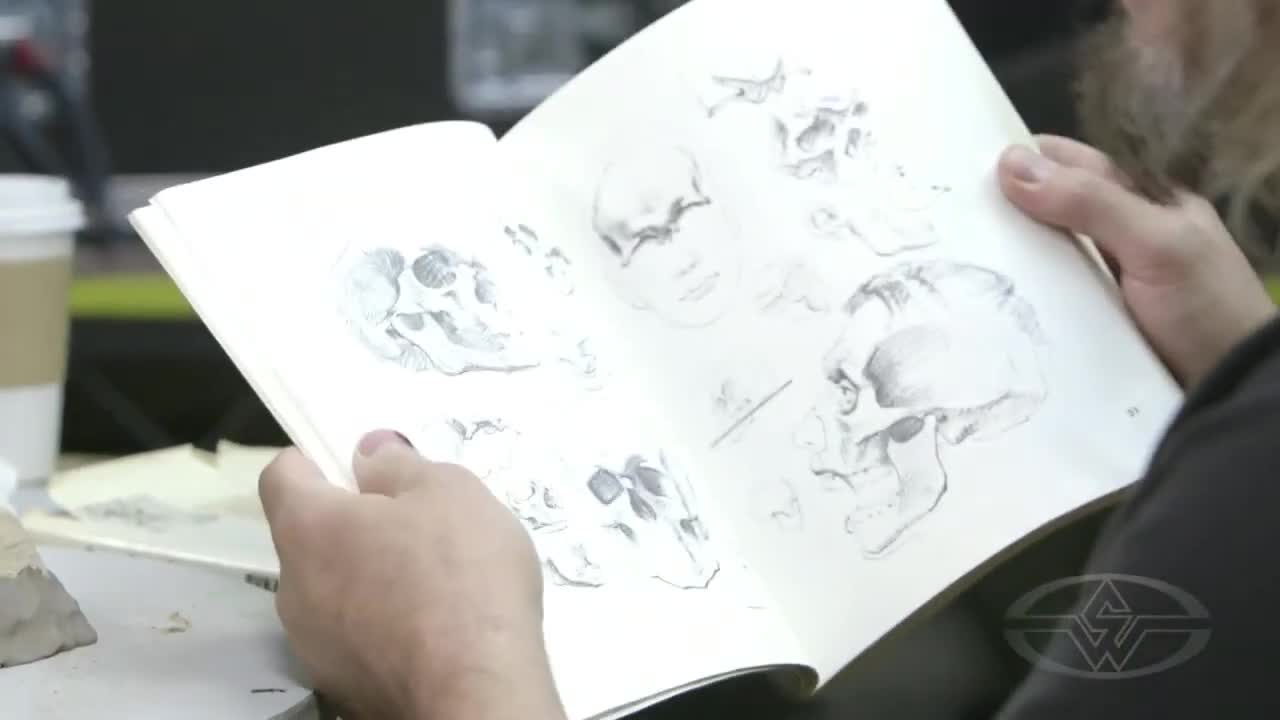 (Norman Cabrera flips through Atlas of Human Anatomy for the Artist to show the useful information found inside.)
Whether you're sculpting a human mask or monster mask, Norman stresses the importance of starting with the basics, and with any living creature, that's anatomy.
Anatomical references are a must-have, whether you're painting, drawing or sculpting, but it's especially crucial for mask-making. Norman has been using the same three reference books that he shares here since the 1980s, and while the internet age has made such reference far more readily available to any artist anywhere, the need to constantly refer to such reference has not diminished.
“I have a lot of the anatomy in my head," says Norman, "but I still like to reference this stuff because it’s completely essential.”
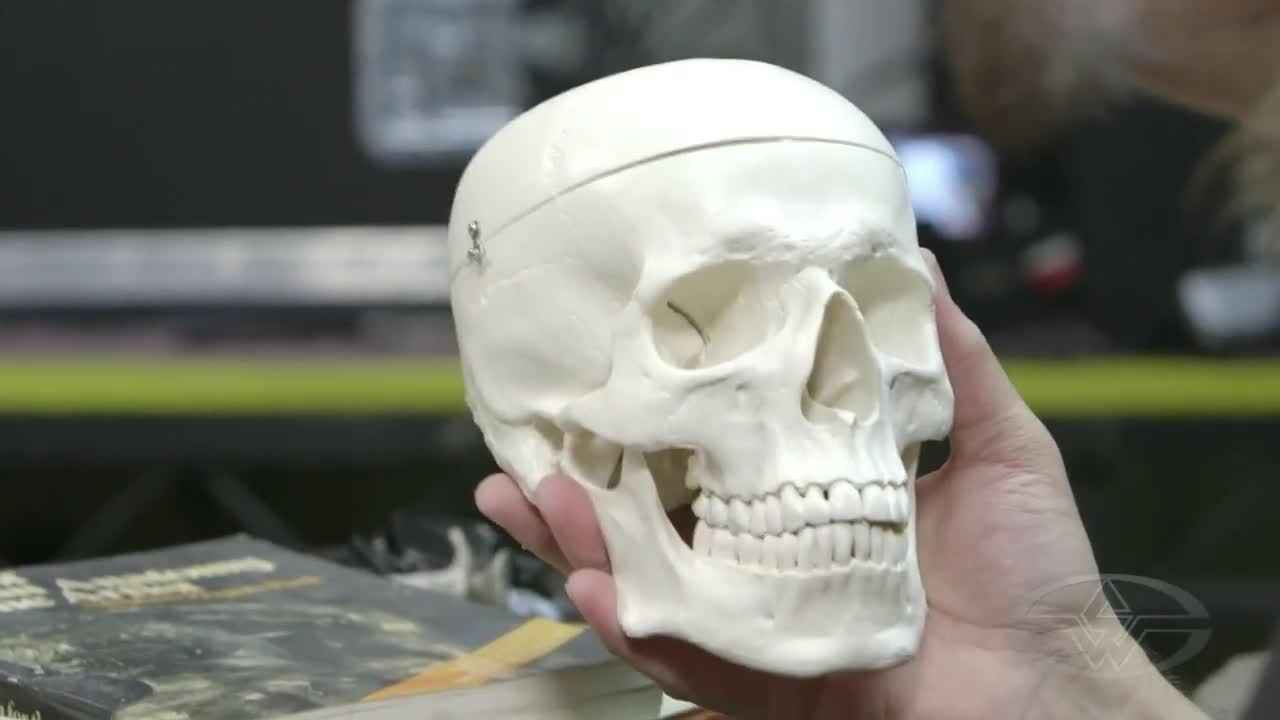 (A skull model used as reference by Norman Cabrera.)
In addition to the picture books, Norman keeps a skull near him while sculpting. (Pro-tip: Use a medical anatomical skull model or a plastic Lindberg model.) This helps with knowing how to structure a face so you can capture the tiniest details of every feature, from the cheekbones to the eye sockets.
By observing, learning and understanding bones, muscles and other tissue beneath the surface, you get a lot of information about the face and what needs to be there on the outside.
No matter where you’re at in your monster making journey, it’s imperative that you study anatomy and keep your references close by as you work.
As Norman says, “It doesn't matter whether you're sculpting a werewolf or an outlandish monster of some sort, you still want it to be tied into something that's living. You still want to have the anatomy there. That's so key.”
First Recommendation for Anatomical Reference: Atlas of Human Anatomy for the Artist
 (Norman Cabrera shows his copy of Atlas of Human Anatomy for the Artist.)
Norman's first go-to reference is Stephen Rogers Peck’s Atlas of Human Anatomy for the Artist. It’s filled with illustrations of skull, muscle, and body references that will undoubtedly be helpful while you sculpt your mask.
Study the way muscle and tissue connects to bones and layers to build up shapes in all areas of the body. Then, while working, use this reference to refresh your memory. "How does the jaw muscle fit beneath the ear?" Go look at it.
Don't just make it up. As Norman says, "You want to know what you're doing."
 (Just one sample of the illustrations and information in Atlas of Human Anatomy for the Artist.)
If you're using a computer to source your reference, make a folder on your desktop and keep it organized like the book does so you can easily go back to specific reference: heads, arms, legs, bodies, hands, feet, and the many details of the face from noses to ears.
Is your project a fantasy creature? Anatomy still applies! Use a real-life reference, dog or wolf anatomy might apply to a werewolf. Whatever you create, if the forms are based in anatomy, as Norman says, "You'll have a much better looking creature."
But just be careful. Norman shows the clay smudges that decorate the pages of his book from years of use while sculpting clay. If using a computer, try not to get clay in your keyboard.
Second Recommendation for Anatomical Reference: Dynamic Anatomy
 (Pages showing Burne Hogarth's angled and exaggerated style in Dynamic Anatomy.)
Another one of Norman’s go-to anatomy books is Dynamic Anatomy by Burne Hogarth, a comic book artist best known for his Tarzan comics.
Burne Hogarth takes anatomy, and then he makes it really angular, almost as though the forms are machined. According to Norman, this is a great way to understand (for example) how a head should be shaped. Hogarth's drawings break it down to really broad, clear shapes you can follow.
As you look through Hogarth's book, in an actual copy or from reference online, you'll see how the planes work off of each other.
Hogarth’s angular and exaggerated style comes through whether it’s the top of the head or fingernails. Studying the way these planes form and come together, especially in these exaggerated shapes, can help you to develop a greater understanding of the human body.
Third Recommendation for Anatomical Reference: An Atlas of Animal Anatomy for Artists
 (A creature skeleton adorns the cover of An Atlas of Animal Anatomy.)
The final tome in Norman's treasure chest is An Atlas of Animal Anatomy for Artists by W. Ellenberger, H. Dittrich & H. Baum. If you’re looking to create monsters or combine human and animal anatomy, this book is a great source to reference! Understanding animal anatomy is vital when creating any kind of fantasy creature.
Browsing through the illustrations here, you'll learn all about the positioning and details that make up an animal’s anatomy. The book contains nearly 300 life-like drawings of animals shown in three ways: external full views of the animal with complete details, beneath-the-skin drawings of musculature, and skeleton drawings of the animal’s bone structure.
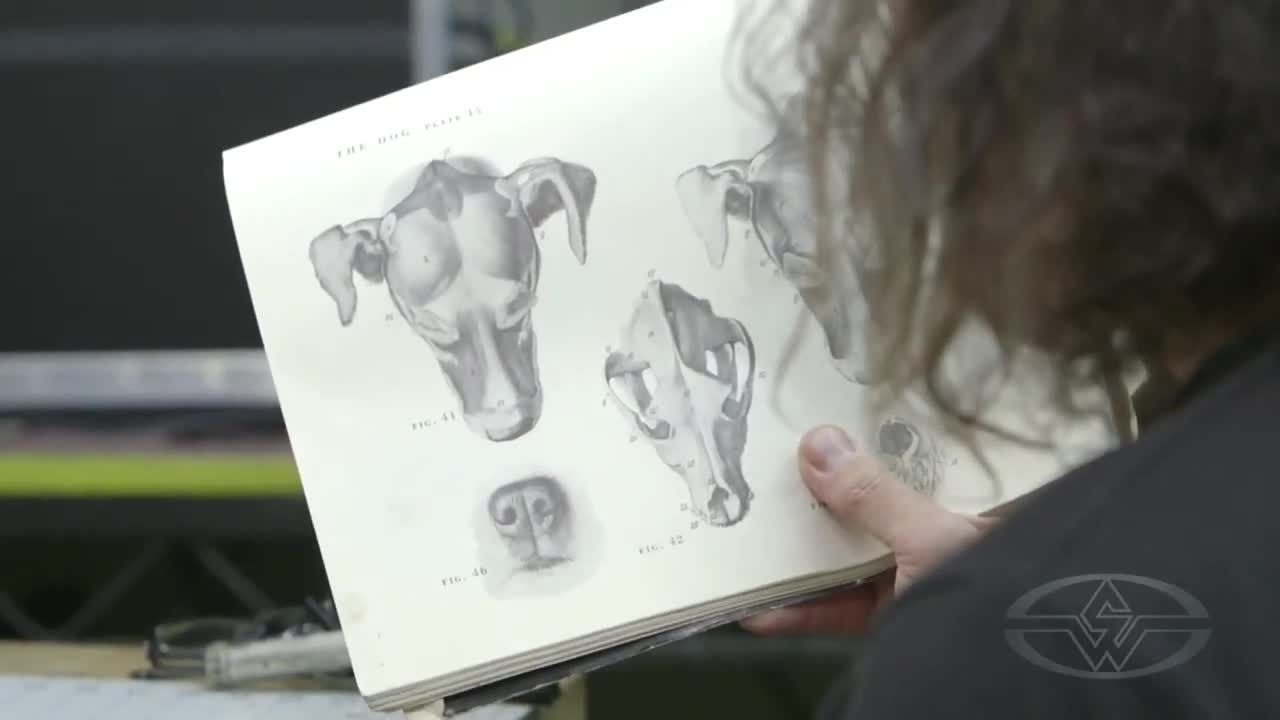 (Some of roughly 300 drawings in An Atlas of Animal Anatomy for Artists.)
Norman uses the example of the werewolf again and urges that an artist study the anatomy of a dog; cheekbones, forehead, nose, etc., for inspiration. Really internalizing the way these parts work in real life is key to making a realistic-looking monster.
Norman re-emphasizes his key point, “Don’t think you could just pluck it out of your head. Look at something that’s living and real, and I think you’ll do a better creature in the end.”
How to Sculpt Powerful Female Characters
 (Norman Cabrera discusses anatomical gender differences.)
SWSCA student Paul Jones asks Cabrera how to make female characters look powerful without making them masculine.
Norman concedes that the female form is difficult to sculpt and paint. Depicting dynamic, strong characters with the soft, streamlined forms characteristic of female gendered figures requires even more of the careful reference that's grounded the study of the lesson so far.
Again, the best suggestion is to go to the books and other reference that can show you the real forms you're looking to copy or be inspired by, images of female musculature or plastic urethane models of the male and female forms as a comparison.
Norman notes that when you look at women’s skulls, bones, and muscles, they work the same as men’s as to design and purpose; but you'll find that they are shaped differently.
If you find yourself stuck, always go back to the anatomy. Find real-life reference for the thing you want to imagine. "You look at it, you study it, and you try to copy it."
And there you have it!
With the knowledge of anatomy applied, you'll find that, your drawings, your sculptures and especially your masks, will improve massively.
For a list of reference books and magazines, check out Norman Cabrera’s recommendations:
- An Atlas of Animal Anatomy for Artists by W. Ellenberger, H. Dittrich, H. Baum
- Atlas of Human Anatomy for the Artist by Stephen Rogers Peck
- Cinefantastique
- Cinefex
- Dynamic Anatomy by Burne Hogarth
- Fantastic Films Magazine
- Famous Monsters of Filmland Magazine
- Making a Monster by Al Taylor and Sue Roy
Happy sculpting!
WATCH THE “HOW TO SCULPT A MASK” COURSE:
How To Sculpt A Mask: Sculpting Monsters In Clay Part 1