

By Lexi Stewart (SPOILERS AHEAD!)
(All behind-the-scenes images courtesy of Dave & Lou Elsey)
"It's a bloodstained love letter to a classic, beautifully and delicately scented with just the faintest hint of ham gothic yarns need; a homage to all the great Counts who have gone before, but still entirely its own thing." - The Guardian
It's been done before, but audiences are still pining for classic Vampire adaptations, including BBC One's new Dracula. The 3-part series adapted by Sherlock overlords Steven Moffat and Mark Gatiss brings back warm and fuzzy feelings for the 70's-era vampire while adding a touch of Moffat/Gatiss elegance.
Warning that the show is 'not for kids,' the duo set out to recruit someone who would take on the challenge of special makeup effects. As a result, they brought in another fearless pair: Academy Award-winning makeup artists Dave and Lou Elsey of Igor Studios.
The Dracula mega-fans did not take much to convince. "Lou and I have been watching Dracula movies since the 70s," said Dave. "We both had an extreme fondness for Christopher Lee because he was our Dracula growing up. It's challenging to follow in his footsteps. I thought Gary Oldman was very iconic, but there's an awful lot of people who played Dracula over the years that sort of fell by the wayside. Knowing that this was going to be done by Mark Gatiss (a walking encyclopedia of horror!) and Steven Moffat, who's an incredible writer, we felt this had the right pedigree and potential to become a classic Dracula all of its own."
Jump To Section
- Designing Makeups for Claes Bang as Dracula
- Testing Translucence in Dracula’s Makeup
- Creating Dracula's Transformations
- Giving a Nod to Nosferatu with Harker’s Look
- Practical Effects Used for Claes’ Transformation From Werewolf to Vampire
- Creating Makeups for Dracula's Modern-Day Muse, Lucy Westenra aka Lydia West
- Bringing Life to the Dead Little Boy in Dracula
- Practical Makeup FX in Dracula
- Dracula Makeup Crew
 (One of the inspirations for the series: Christopher Lee)
Early discussions with the show creators were slightly unproductive, as most of the time was spent chatting about their shared love of the character. Dave remembered fondly, "We didn't really know each other, but it became apparent very early on into the meetings, I'm talking within a few minutes, it was as if we'd all grown up together. We were all into this in the same way. Unfortunately, a lot of the early meetings degenerated into fanboy enjoyment of the genre and weren't really that specific."
One thing they did discuss was how they could incorporate elements from their favorite Counts of the past, including Christopher Lee and Louis Jordan. "Dracula has been a work in progress since the moment it was written, because the character is always a reflection of the culture around him. So, the cloak, the way he dresses, him being afraid of daylight, all that stuff evolved. It wasn't there originally in Bram Stoker's book," said Dave. "One of the things that we were on the same page with is that we felt that one of the great forgotten iterations of Dracula that really worked was this BBC Dracula that was done in the 70s, which we all saw when it first came on. It had Louis Jourdan as Dracula. He was spectacular in it." One of their favorite aspects of Jourdan's Dracula was his long pointed fingernails. The couple knew they wanted to create their own version of those nails, and they took it even further by designing Cleas' fingernails to look like fangs.
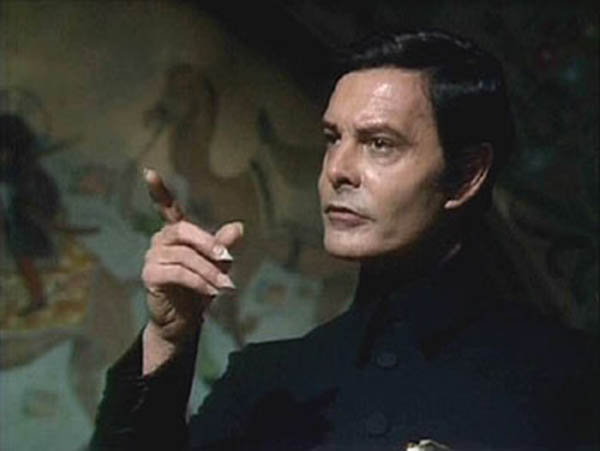 (Louis Jourdan portrays one of several Draculas that would inspire the makeups for the new series.)
Designing Makeups for Claes Bang as Dracula
The next piece in the creative jigsaw puzzle was to begin designing the makeups for Danish actor Claes Bang, the 'chosen one' for the titular character. Dave and Lou loved him for the role immediately.
 (Claes Bang as the titular character in BBC's new Dracula.)
"One of the things that we always loved about Christopher Lee is his beautiful 1970's teeth. They're not straight, they are more like tombstones, and it really gives a ferocity to his mouth," said Dave "When we met Claes, the first thing we noticed was that he doesn't have a Hollywood smile. His teeth overlapped and did all sorts of weird little things that we ended up making part of the design of his fangs. Claes became an essential part of our design. Just meeting him and seeing him helped us start thinking about what we were going to do and how we were going to do it. If Bela Lugosi and Christopher Lee had a baby, it would be Claes Bang!"
 (Claes Bang wearing the Dracula fangs designed by Dave and Lou Elsey.)
Testing Translucence in Dracula’s Makeup
"We did some very early tests where we wanted the [Dracula] makeup to be very translucent so you could see muscles and things under the skin.
They were interesting. But we didn't end up going that way because we realized that once you go with a translucent look for the appliances, you can't see the detail anymore. It was a fascinating design period of the project because we tried a lot of different stuff, some of which didn't make it into the final cut."
Creating Dracula's Transformations
There were three stages to Dracula's transformation. The oldest look, youngest look, and then a stage in the middle where, after feeding on Jonathan, the color starts to come back to his face, and his hair darkens.
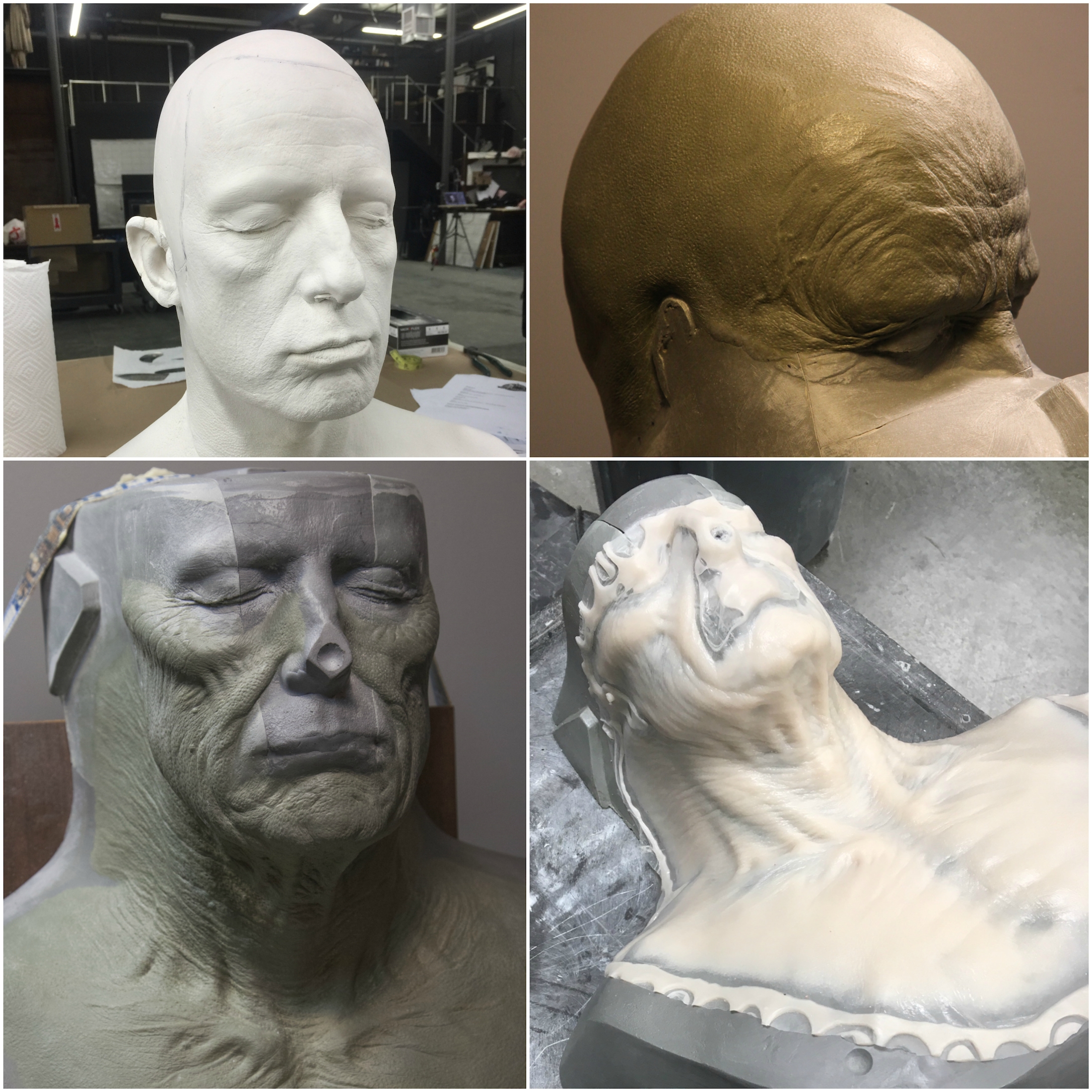 (Creating the "Old Dracula" prosthetics from lifecast to sculpture to silicone appliances.)
The Elseys knew in the first stage that Dracula was going to look drained of blood and very pale. "He's not just old. He's also not surviving very well," explained Dave. "The skin is kind of sucked onto his skull." They also made sure that the wrinkles weren't the standard kind you would see on an older person. "Especially around the forehead, there was a lot of that," Lou added.
 (Claes Bang in an "Old Dracula" makeup test, drained of blood and deeply wrinkled.)
 (From sculpture to finished Old Dracula hands.)
While designing the transitioning stages of hair, the team gave a nod to Christopher Lee and one other real-life person. For the older version, since Dracula was drained of blood, it was a no-brainer to do long white hair. "We were looking around for inspiration," recalled Dave, "and we just looked slightly to one side and went, 'well, that's Rick Baker, isn't it? It's Rick Baker's hair!' And I said to Rick, 'do you mind if we do this?' And Rick was like, 'no, do it, that's really cool.' So we had a wig made, and it was perfect. The great widow's peak, everything we were looking for."
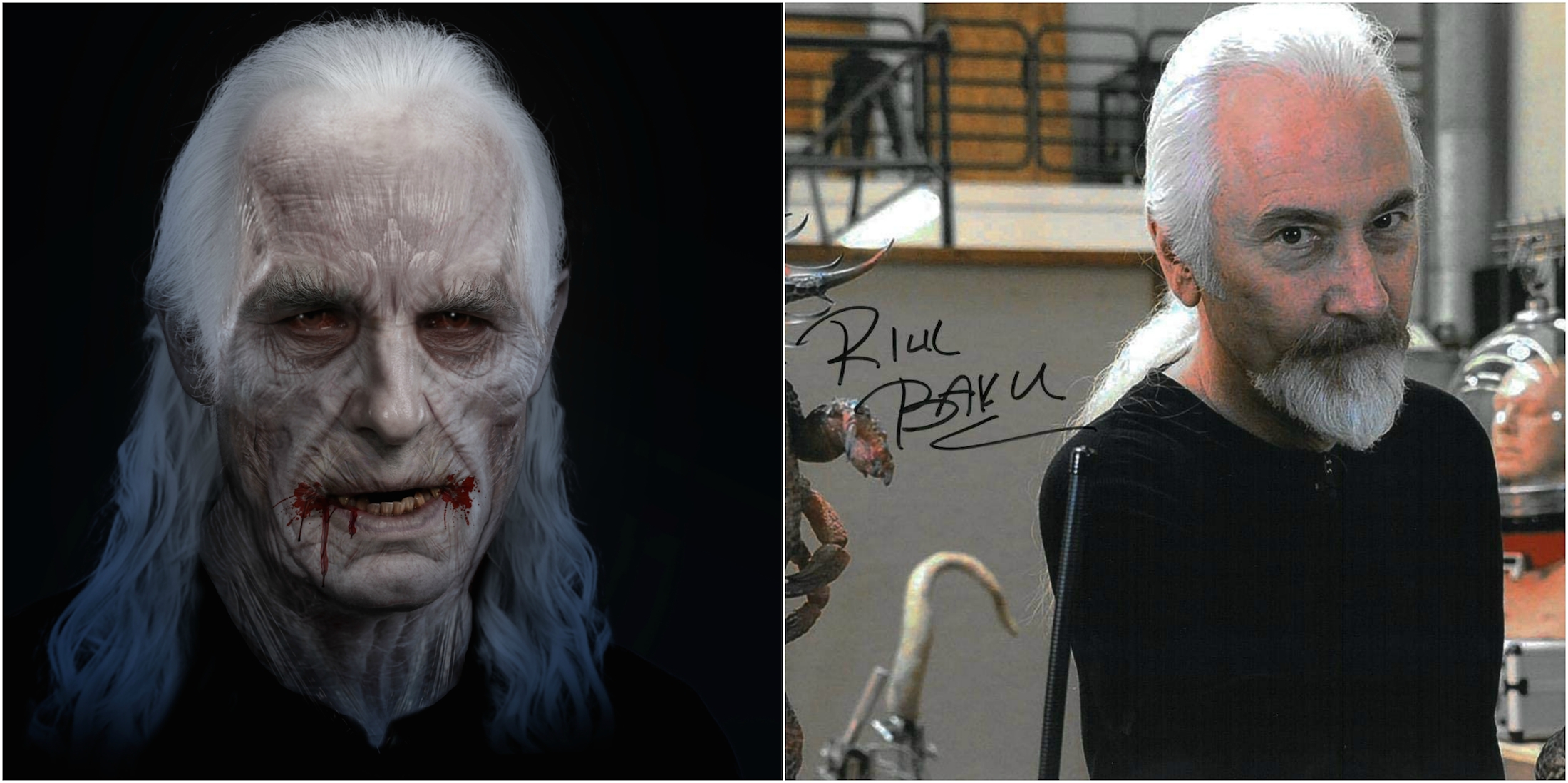 (Design for Old Dracula's hairstyle, inspired by Dave and Lou Elsey's legendary colleague, makeup effects artist Rick Baker.)
 (As Dracula gets 'younger', Dave & Lou Elsey paid homage to the hairstyle of Christopher Lee's Dracula.)
To transition to the middle stage, "we had a nose piece we took away, we took off his earpieces with these long lobes, and, of course, the whole paint job was changed," said Dave. "But it was the same makeup re-used because it was just far more economical to design it that way. It was amazing how different the two stages looked just by doing those subtle things."
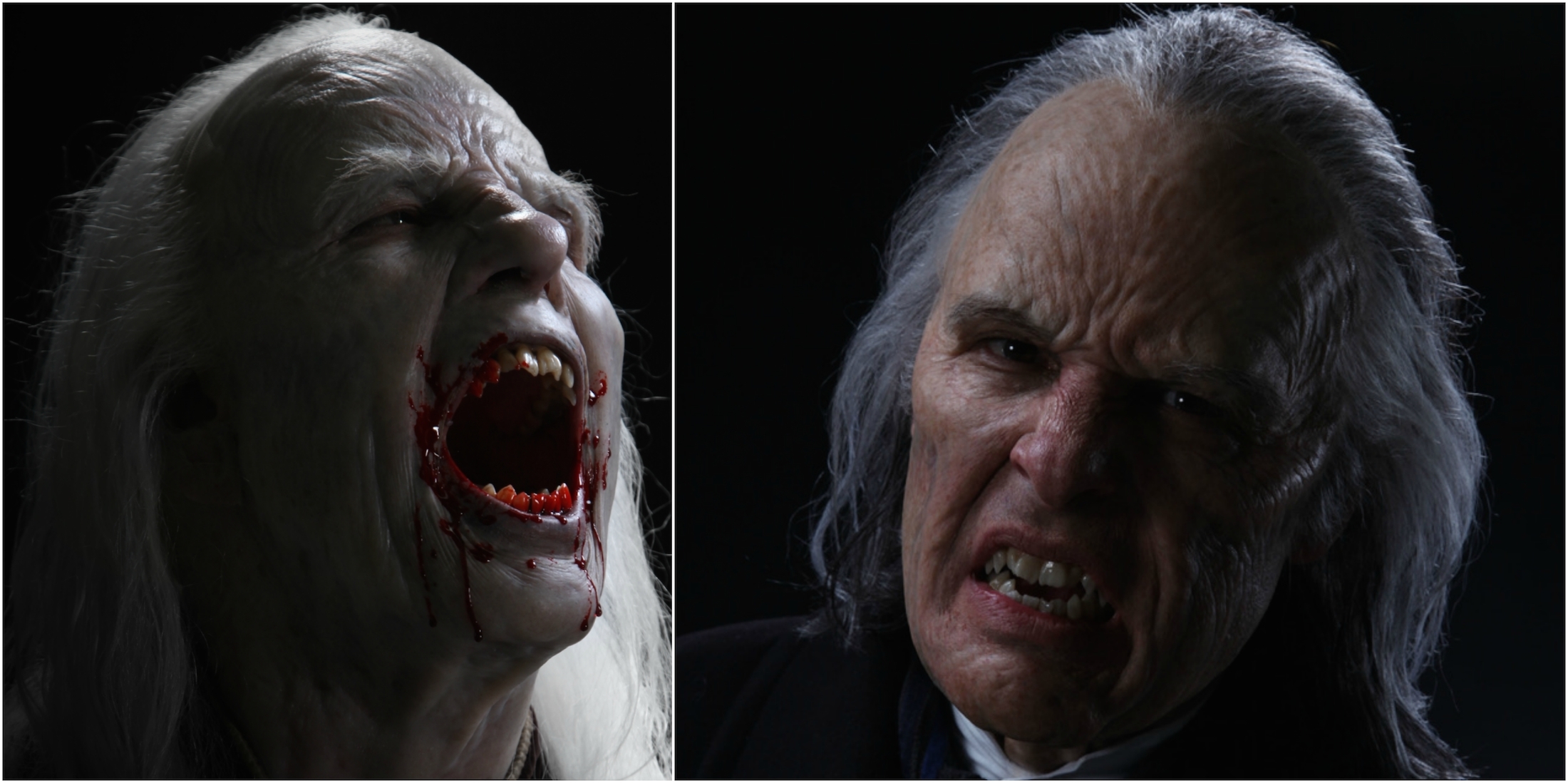 (Old Dracula stage [left] and middle Dracula stage [right])
Giving a Nod to Nosferatu with Harker’s Look
Although the Elseys had created initial designs for the character of Jonathan Harker, they didn't know who was going to play the part for quite a long time. As a result, the concepts fell into the background while everything else was happening.
 (Early designs for Harker's final look, inspired by Count Orlok in F.W. Murnau's Nosferatu.)
"When we found out that they had cast John Heffernan, we looked at his face, and we thought, he's perfect for the design that we've done," said Dave. "There's almost a Peter Cushing quality to him."
 (Old Dracula invades the personal space of his houseguest and soon-to-be blood donor, Jonathan Harker, portrayed by John Heffernan.)
Shooting the Dracula's castle sequences in Slovakia, in the same castle used initially for Nosferatu, cemented the idea that Harker's final look would have a Count Orlok feel to it.
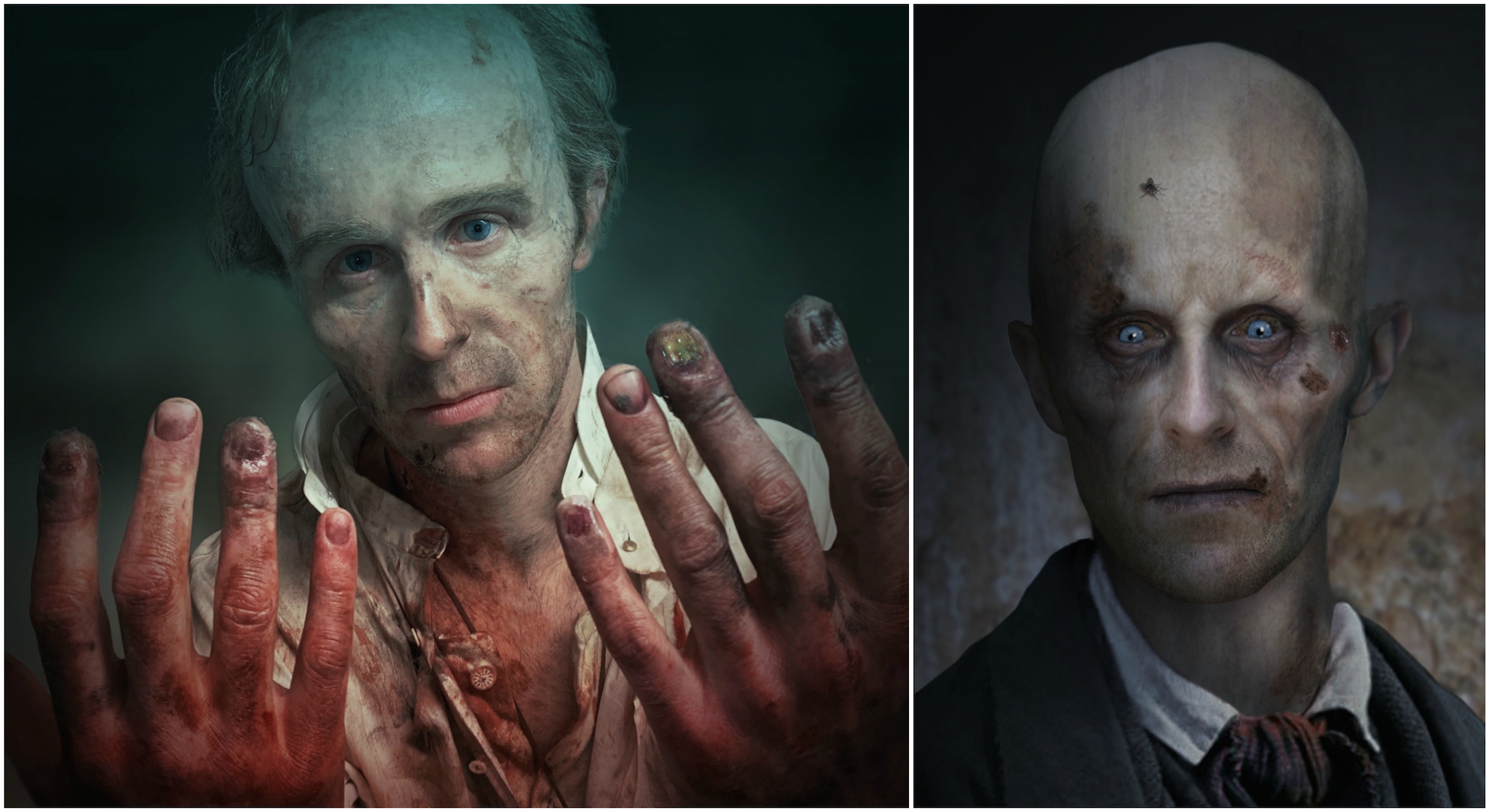 (Design concepts for Johnathan Harker's transformation from decaying human to Nosferatu-inspired vampire.)
In the end, there were three Harker prosthetic looks by Elsey's department, and five looks put together by makeup department head Marcus Whitney. These different looks helped show Harker's decline as he starts becoming a monster.
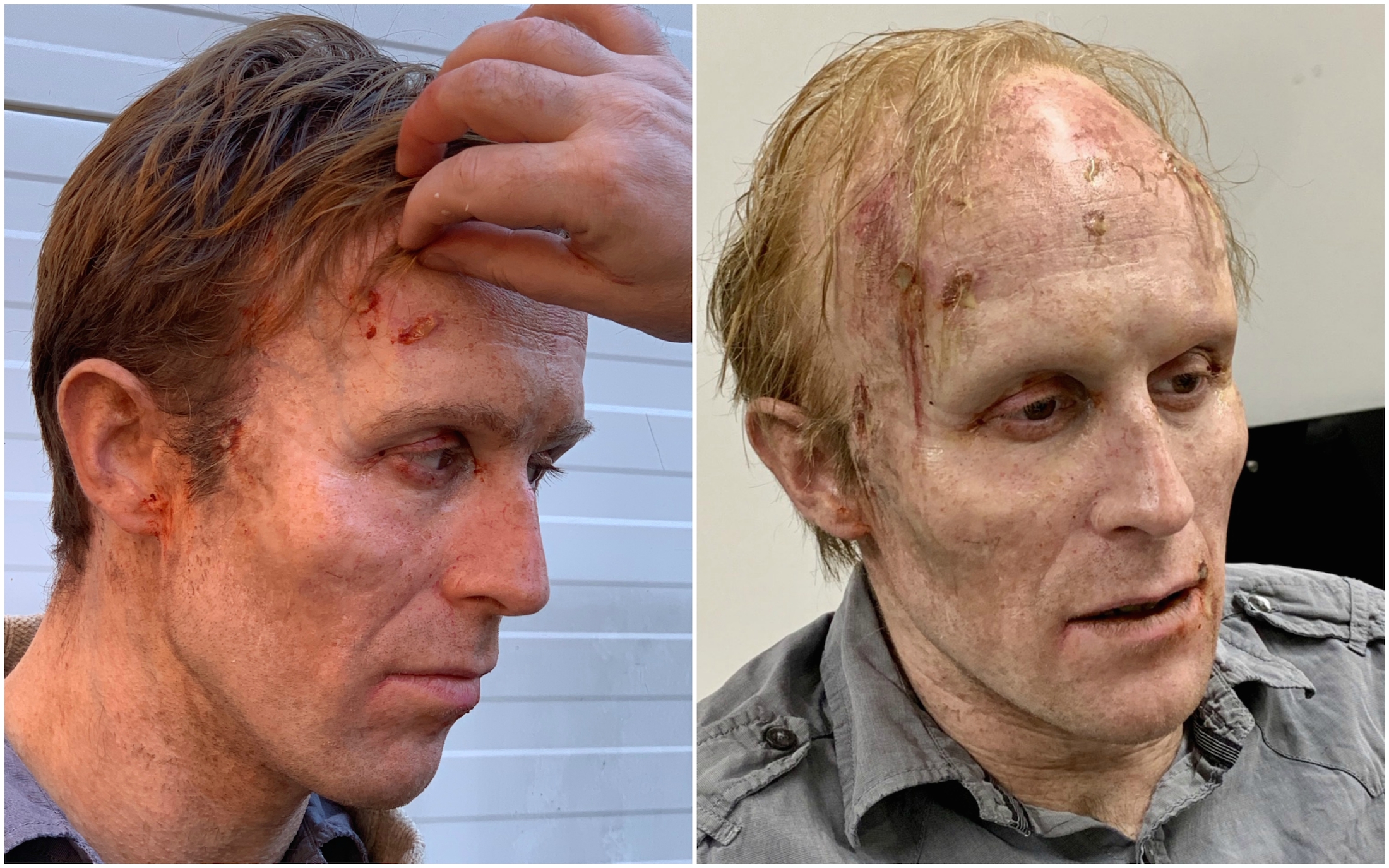 (The makeup team used subtle wound and facial prosthetics, a sickly paint job, and bald cap with patchy hair to depict the life draining out of Jonathan Harker.)
Dave explained the subtle approach they took to the prosthetics, "We made silicone pieces. The pieces were actually very thin, and it was a little highlight and shadow that we could do to kind of help it. But we were very lucky that [Heffernan's] face was very well suited to that. You could put a very small amount on his cheekbone, and suddenly his cheeks go right in."
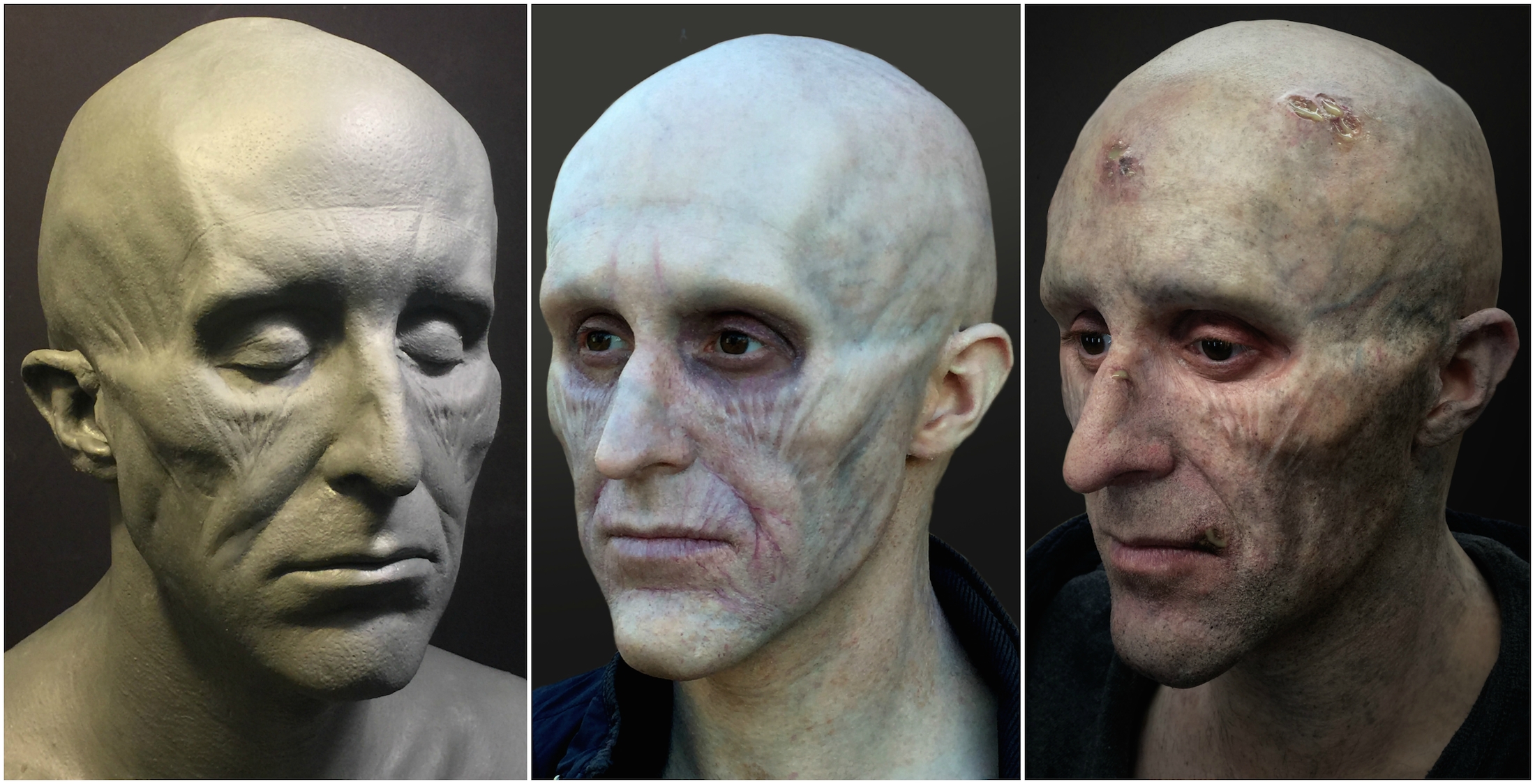 (The prosthetic sculpture and a test application of Heffernan's final Harker makeup.)
"I think it really helps us that John was playing the part, because he's such an amazing actor," said Lou. "He knew that he was going to be going through a lot in this episode, and that we were going to be putting a lot of makeup on him. But he was completely up for it. He wanted to immerse himself in the whole thing." Dave added, "It's one thing to design a makeup, but usually we're trying to design a makeup that speaks to who the actor is, that works with the actor and doesn't work against him."
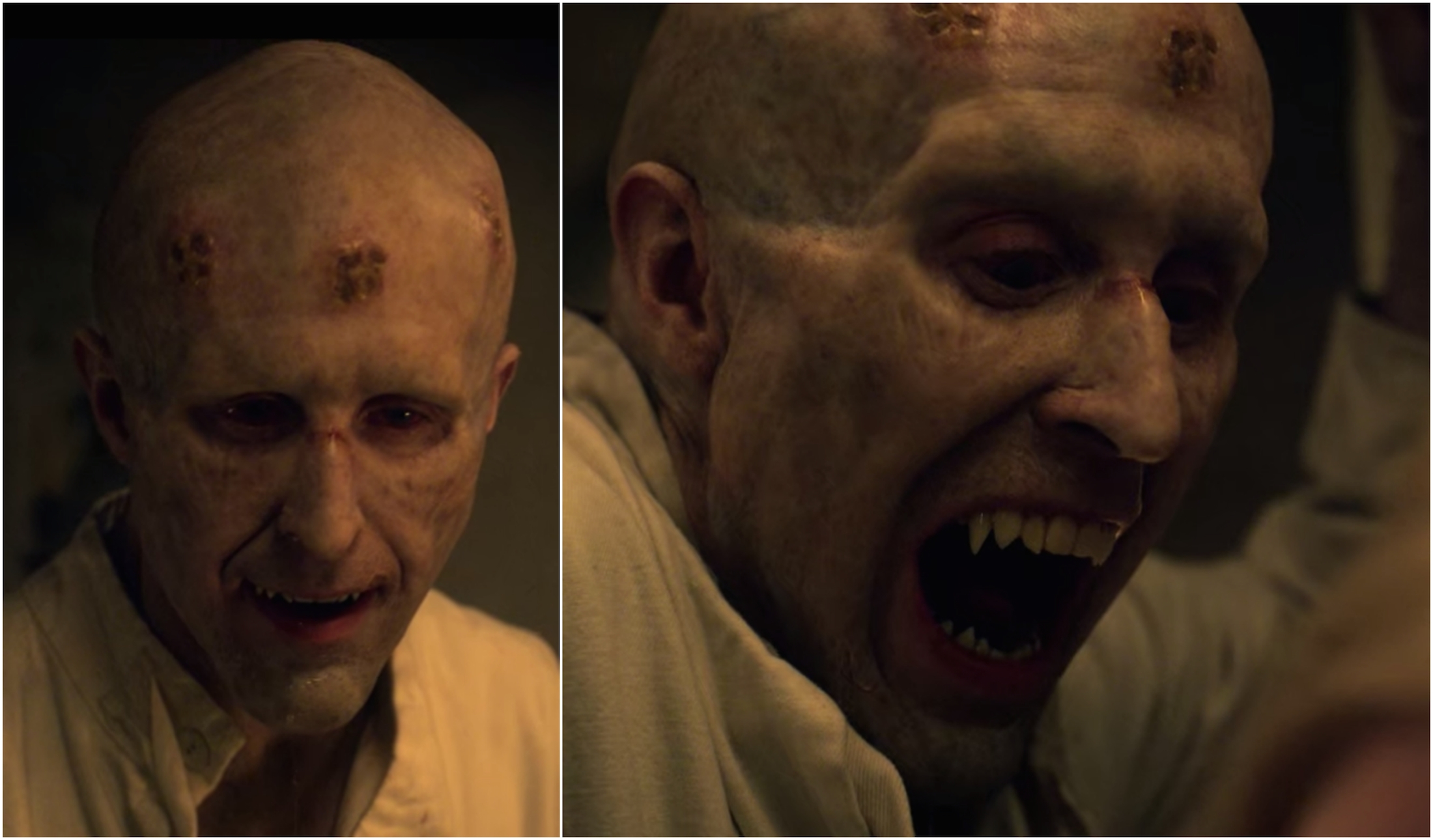 (The final Harker makeup as it appeared on set.)
Practical Effects Used for Claes’ Transformation From Werewolf to Vampire
 (Count Dracula confronts Agatha Van Helsing after emerging naked from a wolf.)
One of the most impressive effects in the series happens in episode one, with Dracula ripping his way out of his wolf form. "For this version, we thought it would be fun for Dracula to literally rip his way out of a Wolf's body," Dave recalled. "So we talked about how we were going to do it, and we needed an elaborate set up for it. We needed to build the whole thing on a raised stage so that we could get everybody underneath the set to puppeteer the various bits of the Wolf, but also to get the performers to come through."
The Elseys had to decide how Dracula would look during the transformation. The result is a fantastic and complex concept. "We made a mask out of Claes' lifecast, but we made it so that the lips haven't formed around his teeth yet, so he's like an unborn shark," explained Dave. "We then had a membrane that went over the top. It was very tricky to get this thing to cast up perfectly with no air bubbles and be perfectly clear silicone."
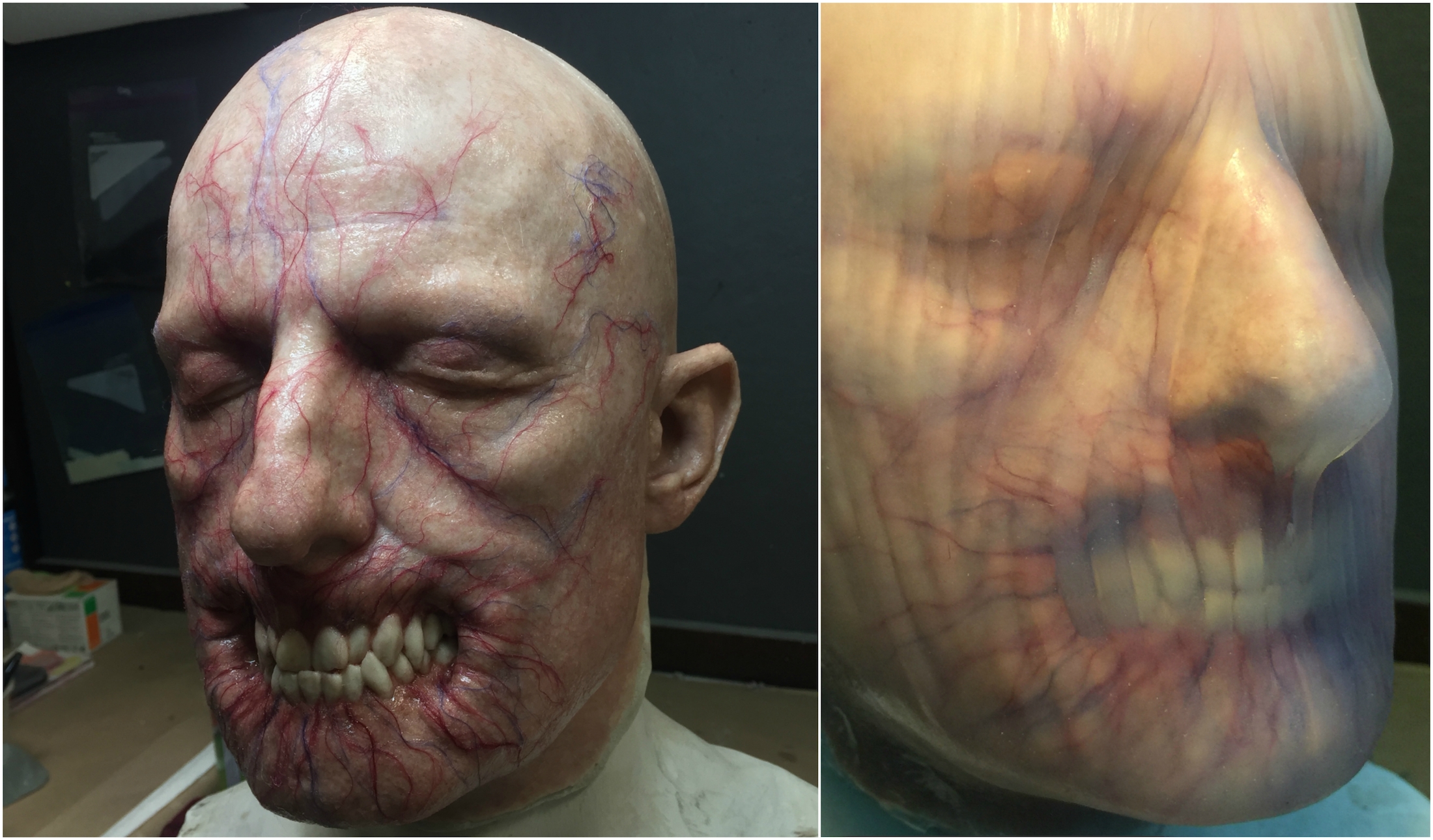 (The silicone mask with and without the clear silicone membrane, which would be worn by a contortionist as they emerged from the wolf.)
Dave, Lou, and the team then had to construct a wolf puppet with moving mouth, legs, and tail, with an open mid-section so the performers could push through.
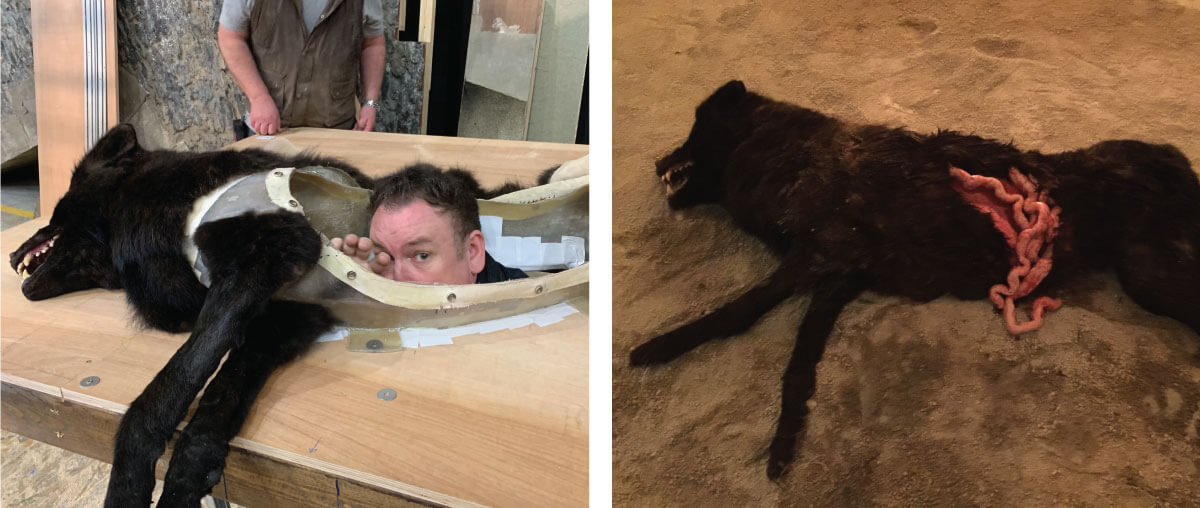 (Dave Elsey checks clearance for the performers to crawl out of the wolf. On the right, the wolf puppet ready on set.)
"The idea was that as he comes through, Dracula's not fully formed," said Dave. "So we got some contortionists who are very thin and can do unbelievable stuff with their bodies. We got a woman and a man for this, so we could have two stages of this transformation." To make sure the woman didn't look female, "she had a chest piece and wore the mask of Dracula not quite formed yet," explained Lou.
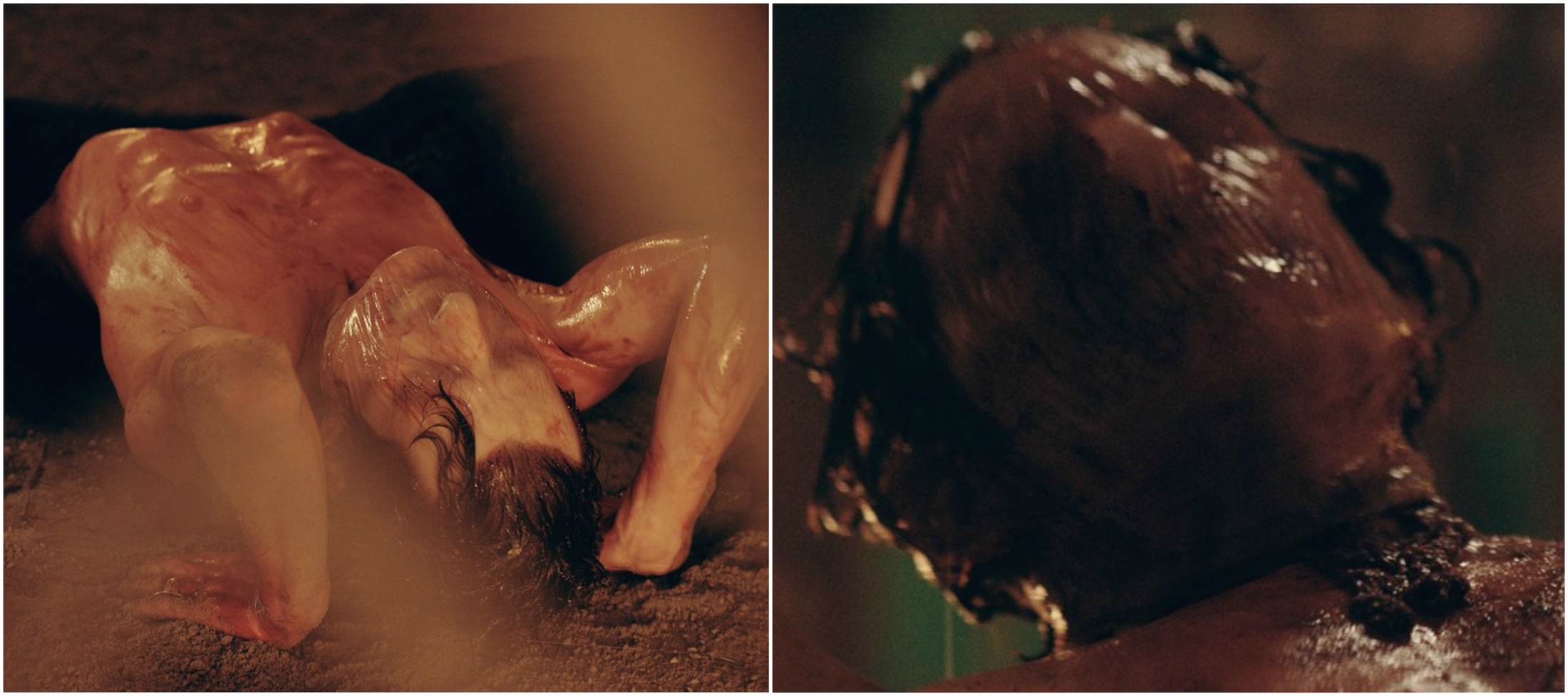 (Shots captured on set as a contortionist climbs up through the Wolf.)
To add to the effect of the performers coming through the Wolf, wet and bloody, the Elseys decided to add a membrane layer they could rip through. "We thought maybe we could use latex or lycra. Then we decided to see if we could get something super stretchy so that the performers could do really strange stuff as they came through," said Dave. "We found this vinyl that you could use. But the trouble was that you could only buy a gigantic drum of this stuff, more than we'd ever need for the rest of our lives, and we just couldn't justify spending that money. Then our moldmaker Brian Rae said, 'ya know, they use [the same material] for these sex toys for these things called Fleshlights, we could take out the piece you need, melt it down and we could use that, and then you won't have to buy so much.'" The Elseys thought Rae's plan was brilliant. "He even went and bought them for us," laughed Lou. "We were so impressed."
On the shoot day, Claes Bang also insisted on doing the stunt himself, which made for an even better result in the final sequence. "The director was like, ok, let's go for it. [Claes] pretty much stripped down," remembered Lou. "We slimed him up, and he did the whole thing and came through [the wolf]. I'm so glad they did because it made it so good."
Creating Makeups for Dracula's Modern-Day Muse, Lucy Westenra aka Lydia West
 (Lucy Westenra, played by Lydia West.)
Episode 3 reveals probably one of the most horrifying makeups of the series, applied to actress Lydia West for her role as Lucy Westenra, who becomes Dracula's new obsession. Dave and Lou didn't have the luxury of time, but it forced them to develop some pretty successful and unconventional methods for executing the hideous full-body burn makeup. They required a hero version (for Lydia West), a stunt version, AND a dummy version. This meant the Elseys couldn't go about it the usual way, as it involved making different sizes to fit various actresses under tight time constraints.
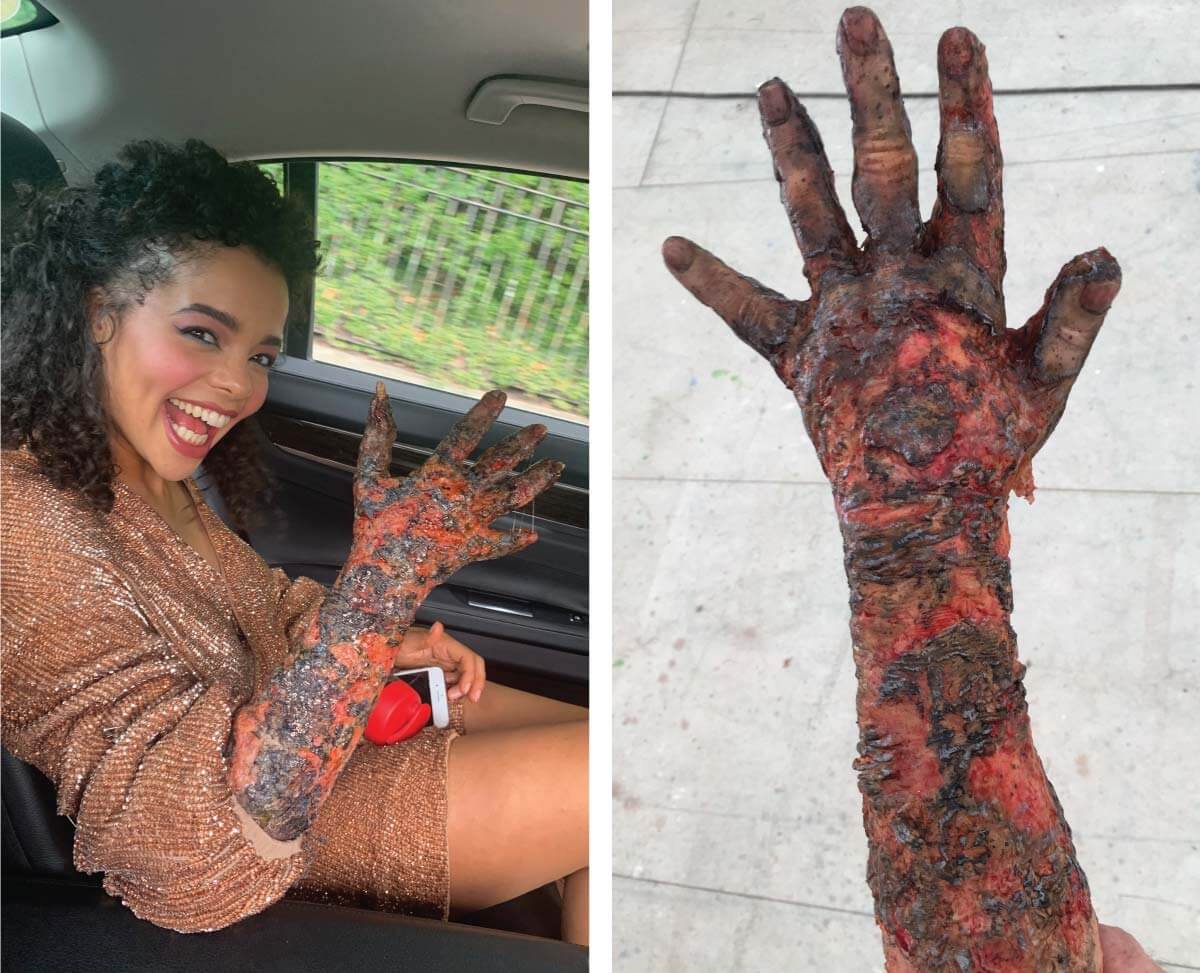 (Lydia West enjoying her freshly burned arm appliance.)
For Lucy's face, the team used a neckpiece and two facepieces. They also made custom lenses for actress Lydia West, based on real-life reference imagery of burnt eyeballs. "They do all kinds of weird things," said Dave. "They bubble up and mist over, kind of like you see with boiled fish." There were also tiny wig pieces placed sporadically on the makeup to simulate burnt hair.
 (Undead Lucy after being burned alive.)
To prepare Lucy's full-body prosthetic suit, "we took a bunch of very accurate pictures of Lydia," said Dave. "Then we took all these measurements, and Lou made patterns off of her body that could be drawn out flat." Lou explained the reasoning behind the process: the patterns "were like a giant map of where the muscles were on her body, because when it's sculpted flat it's hard to tell, especially the way we broke it up so you couldn't see any seams. Then Dave would sculpt the texture, so by the time we put it all together, everything interlocked."
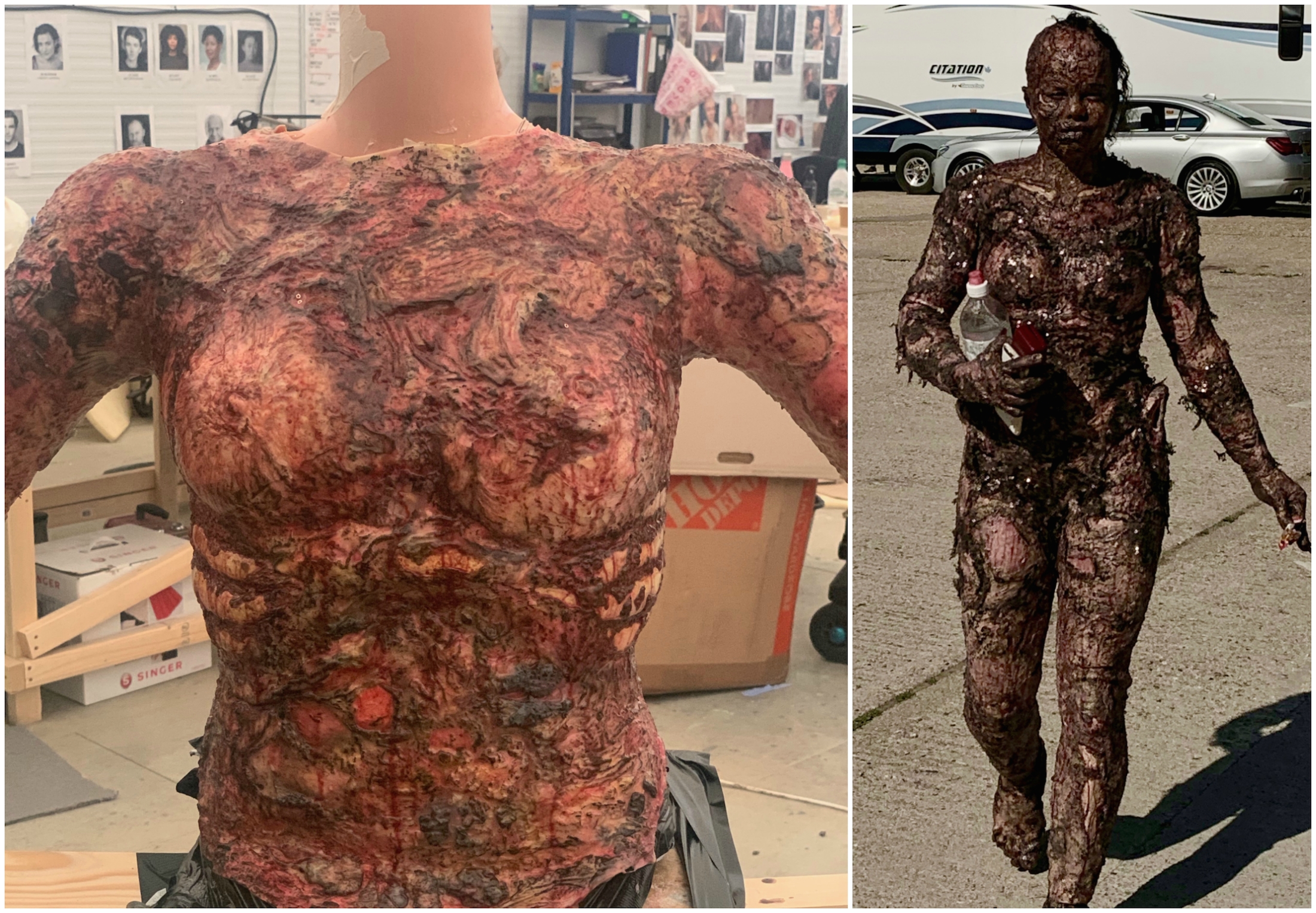 (The burned Lucy bodysuit [left] with melted skin and exposed ribs. Lydia West [right] on her way to set after going through her burned Lucy transformation.)
"One of the things that happens when people get burned, one of the nastier aspects, is the clothes. If they're made of artificial fibers, they will heat up and shrink wrap themselves onto the burns, and they fuse with the skin," explained Dave. "We thought that was kind of cool, particularly because all of Lucy's wardrobe was very sparkly and had lots of sequins and things. We thought how cool to have the sequins become part of her skin." Lou elaborated, "We embraced that. We burned and aged the fabric, and painted it, and then laid it into the silicone skin."
Lou spoke highly of the actress. "We lucked out in that Lydia was just so up to do anything. She'd never worn prosthetics or a full suit before. It was all new to her, but she just went for it. And her performance is wonderful, too. I mean, it's so emotional."
Bringing Life to the Dead Little Boy in Dracula
Here at Stan Winston School, we feel there's nothing scarier than monster children, so we loved the dead little boy from the cemetery who follows Lucy around in the final episode. Dave and Lou evolved the concept into a kind of 1970s look. "Initially we thought, it's going to be hard for a kid to put up with all this stuff," said Dave. So instead they approached little person and stunt man Kiran Shah, who they had worked with on many projects. "Boy, can he wear suits. He can work blind. He's just brilliant at doing this sort of stuff, and he's perfectly proportioned. We wanted his eyes to be completely gone, and we wanted to be able to see his teeth and everything. It's a little bit like the 'Jack' puppet from American Werewolf in London, except this is a child." The Elseys also created large dentures and gloves with little bones sticking through the ends of his fingers.
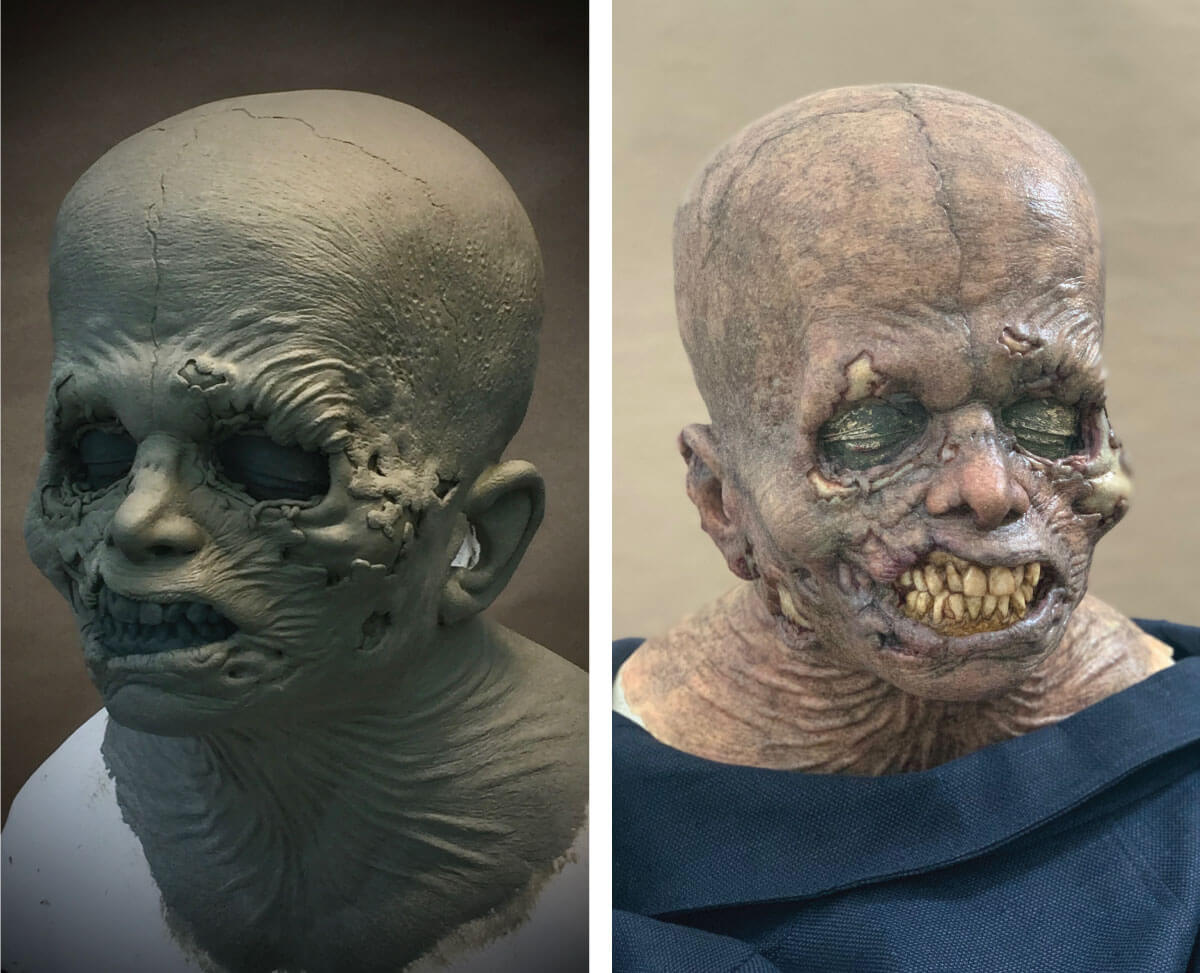 (The dead boy sculpture and final mask before the wig has been applied.)
 (Kiran Shah in the final makeup and costume for the dead boy.)
Practical Makeup FX in Dracula
As demonstrated throughout the series, Dave and Lou Elsey believe that practical makeup effects aren't effective solely as a visual element of the show. "Practical effects aren't just for the show, but also for the actors," said Dave. "It's an integral part of their process. So many actors have told us that it is the process of them getting into character that helps them become the character. [The makeup] affects actors in lots of different ways."
Lou echoes the sentiment, "It helps the actors, it helps the director, and it helps the whole creative team when they're working on a show. Everything's there. You can touch it. It's tangible."
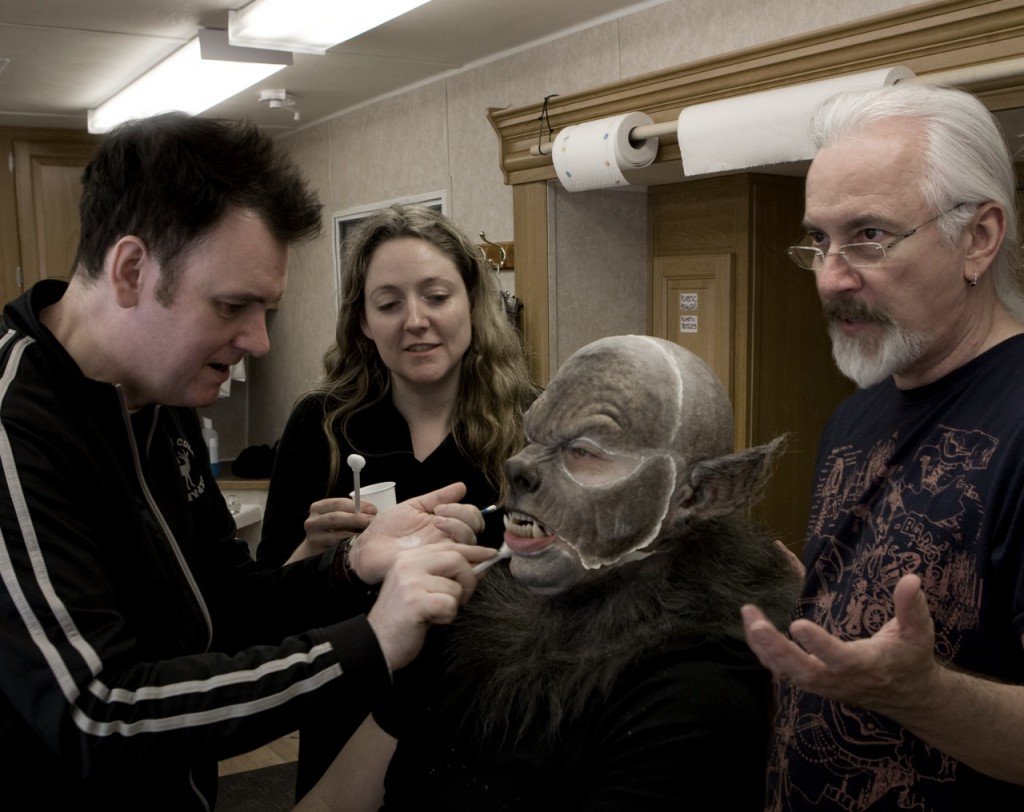 (Throwback photo of Dave and Lou Elsey with Rick Baker onThe Wolfman which won the Makeup Oscar in 2010.)
"We think the smaller arena of television is a place where imagination flourishes and people do smart things. You get forced to think in a non-linear way and not have something to fall back on," continued Dave. "The wolf transformation is a perfect example of that. It would have been very easy to imagine that being a digital effect. But we did it, it was all there in front of us; naked people, blood, slime, a puppet wolf, nuns with stakes, all while we were in a real castle!"
Dracula Makeup Crew
- Dave Elsey - Special Makeup Effects Designer & Creator
- Lou Elsey - Special Makeup Effects Designer & Creator
- Marcus Whitney - Makeup Designer
(in alphabetical order)
- Stuart Bray - Prosthetics
- Melanie Eichner - Silicone Technician
- Ursula Hawks - Wig Maker
- Carol Koch - Sculptor
- Steve Koch - Workshop Supervisor/sculptor
- Chris Lyons - Special Effects Teeth
- Richard Martin - Special Makeup Effects Artist
- Manuela Nellie Moctezuma - Wig Maker
- Emma Procter - Prosthetic Assistant
- Brian Rae - Mold Shop Supervisor
- Yoichi Art Sakamoto - Character Dental Prosthetic Designer
- John Schoonraad - Life Casting Supervisor
- Annie Tagge - Wig Maker