
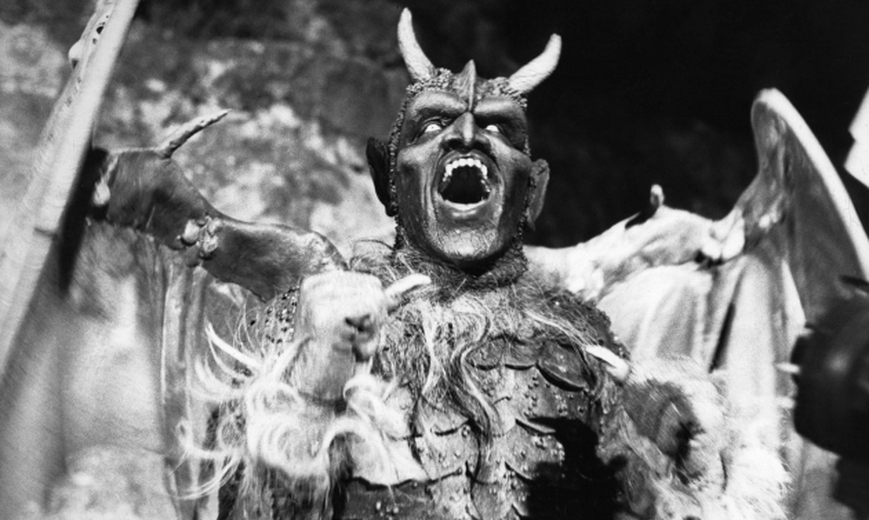
The Making of Gargoyles, Stan Winston’s Career-Launching TV Movie
Stan Winston emerged from the three-year long Walt Disney Studios makeup apprenticeship program in February 1972 trained and possessing a marketable skill, but only marginally better off than when he’d first arrived in Hollywood to ‘make it’ as an actor. Joining the ranks of makeup artists working in the entertainment industry was somewhat less competitive a feat than establishing an acting career, but, even so, as a novice, Winston did not have the experience, the contacts, or the résumé to attract jobs. Finding work would require guts and chutzpah - and he had limitless supplies of both. Even before completing his apprenticeship, he had made the rounds of the three major television networks, introducing himself to the heads of the makeup departments there and picking up whatever small makeup assignments he could to supplement the money he made working in the mailroom at Disney. “I did beauty makeups for game shows, variety shows, and things like that,” Winston said. “All of this was just freelancing, but, through that freelance work, I got to know a lot of the makeup artists in television, which helped me get work once I had finished my apprenticeship. I never sat around and waited for work to come to me. I was always proactive about things.”
Jump To Section
- Creating the Gargoyles for Gargoyles (1972)
- Stan Winston’s Fight for Respect and Screen Credit
- Winning the Emmy Award for Outstanding Achievement in Makeup
 (During his apprenticeship, Stan Winston worked, uncredited, in the Walt Disney Studios makeup department on Bedknobs and Broomsticks (1971).)
That proactive attitude landed Stan Winston his first real professional job. Having learned of an upcoming television movie called Gargoyles (1972), a horror-thriller about a colony of gargoyles come to life in the American Southwest, Winston called Bob Schiffer, his Disney mentor, and asked that he recommend him to Del Armstrong, the makeup supervisor who was running the show. Hired by Armstrong to produce a number of one-piece, slip-rubber masks for background gargoyles, Winston had only two weeks to sculpt the gargoyle heads and produce the masks before delivering them to the Gargoyles set. To make the tight deadline, he enlisted his wife’s help, and the two of them worked long hours at their dining room table, Karen rolling up individual balls of clay, and Winston laying them down on the sculpture to create gargoyle scales.
 (Gargoyles concept art by Wes Cook.)
Creating the Gargoyles for Gargoyles (1972)
As the maker of masks for background gargoyles, Stan Winston’s role in the show’s makeup effects would have been tertiary, at best, if not for friction that had developed between Bernie Casey, the lead gargoyle performer, and Ellis ‘Sonny’ Burman Jr., the makeup artist who had been assigned the hero work, including the design and application of the lead gargoyle. “Sonny was a wonderful artist,” Winston commented, “and he had done a beautiful job sculpting the lead gargoyle. But because of this tension with Bernie Casey, it was decided that I would apply the lead gargoyle makeup on the set.”
 (Background gargoyle masks. Stan Winston sculpted the background characters at his dining room table, enlisting the help of his wife, Karen.)
Even with this minor promotion, Winston was a low man in the show’s makeup effects hierarchy and, as such, he was the last person one would expect to raise the issue of screen credit. One would be wrong. While working with Burman on the set one day, Winston inquired as to whether they would be credited for creating the gargoyle effects. Surprised by the newcomer’s cheek, Burman said he wouldn’t count on it. Winston argued that since there could be no movie without the gargoyles, they should get recognition for their work. “Sonny just shrugged me off and told me to talk to the producers about it. And so I went to them and said that I thought we should get screen credit for creating the gargoyles. Their response was, ‘I don’t think we can do that.’ And I said, ‘Well, then, I’m leaving. If I’m not getting screen credit, I’m not doing the work.’” That ultimatum - an especially bold one, coming as it did from a wet-behind-the-ears makeup artist fresh out of an apprenticeship program - reflected Stan Winston’s passionate regard for the contribution makeup artists made to the film industry, a position he held from the earliest days of his career. “I always had a lot of pride in my work,” he explained. “I knew it was important to the process of making movies, to the process of an actor creating a character, and I wanted the credits to reflect that. I saw it as an art form, and I felt it should be given its due as such.”
 (Background gargoyles on the set of Gargoyles. Stan Winston and his wife, Karen, gave each one individual characteristics.)
Stan Winston’s Fight for Respect and Screen Credit
Winston’s attitude toward the makeup work went against the prevaling industry norms at the time. Throughout the history of films, makeup artists and creature creators had been underpaid and under-credited, regarded by the film industry as craftsmen and technicians - not artists. Some had gained stature in the 1930s and 1940s, the ‘golden age’ of horror films, but that had waned by the 1950s, along with the stature of horror movies themselves. Whereas many earlier horror films had featured major stars, screenplays by important writing talents, and lavish sets, in the 1950s, the genre began a long slide into B-movie status. Horror movies, even slip-shod ones, made the studios a lot of money, and the faster they could crank them out, the better. That factory mentality led to a decline in the quality of the movies, in the quality of the creatures, and in the reputations of those who created them.
 (Gargoyle costumes by Ross Wheat. The gargoyle bodies were neoprene wetsuits covered in fishnet and small pieces of rubber.)
Makeup artistry enjoyed a revival in the late 1960s and early 1970s, due to the remarkable achievements of Dick Smith, a legend within the field who counted among his many credits the horrific makeup effects for The Exorcist (1973), and the equally respected John Chambers, who had won a special Academy Award for Planet of the Apes. “The more sophisticated creature work being done around that time was an enormous boost to the film industry,” Dick Smith asserted, “because screenwriters began to realize that we could do whatever they could imagine. Planet of the Apes and The Exorcist proved that there were no limits. Makeup artists were, in effect, saying, ‘Don’t hold back! Challenge us. We’ll meet the challenge.’” Though the work of both men had put makeup effects in the spotlight, the outspoken and street-tough Chambers had been more aggressive than the gentlemanly, well-mannered Smith in promoting himself and his work. Immediately upon entering the profession, Winston took the baton from Chambers and ran with it, demanding that the makeup effects discipline be given its due. As early as 1974, when he created makeups for a low-budget feature called The Bat People, Winston asked for and received, full-screen title card credit. “The Bat People depended on my bat makeups to transform the actors,” Winston said. “Again, like on Gargoyles, without the bat people, there was no Bat People! I heard later that the director was upset that I got a title card for creating the makeup. His attitude was, ‘No makeup artist should ever be given a credit as big as mine.’ But they were the stars of the show, and, as their creator, I believed I deserved this full-screen title credit."
 (A close-up of one of the background gargoyles from the set of Gargoyles.)
“Of course, part of it was my ego, my desire to be a star. I’d failed as an actor. I’d given up the respect I would have been afforded as a doctor or lawyer. It was very important to me that people respect what I was doing. I had a lot of arrogance, I admit it, and my demands for respect for the craft made me unpopular with some people. But I believe my arrogance helped to elevate this work and give it the status it has today.”
 (Stan Winston applies dark camouflage makeup to a background actor in Gargoyles.)
A number of Stan's makeup and creature effects colleagues shared his opinion that his stubborn demands led to greater recognition of the work and for the artists who made it. “Stan legitimized the entire industry,” noted Howard Berger, a former member of the Stan Winston Studio crew, and co-founder of KNB EFX Group, which has provided practical creature and makeup effects for television and movies for the past 30+ years. “Years ago, it was nothing more than this weird, nebulous department within the film industry. But, through the years, Stan kept raising the level of quality and expectation, making it a legitimate, respectable business, in the process. People who did this work began to be rewarded financially, to be credited and respected for that work. Stan made everyone aware that this is an art form. He pushed that envelope. He said: ‘We’re artists, not technicians. This isn’t about manual labor, it is about art.’ He was the first guy to establish that this was something important to the film industry, that it was valuable. If it wasn’t for Stan, all of us would be still working out of our garages, making $300 a week.”
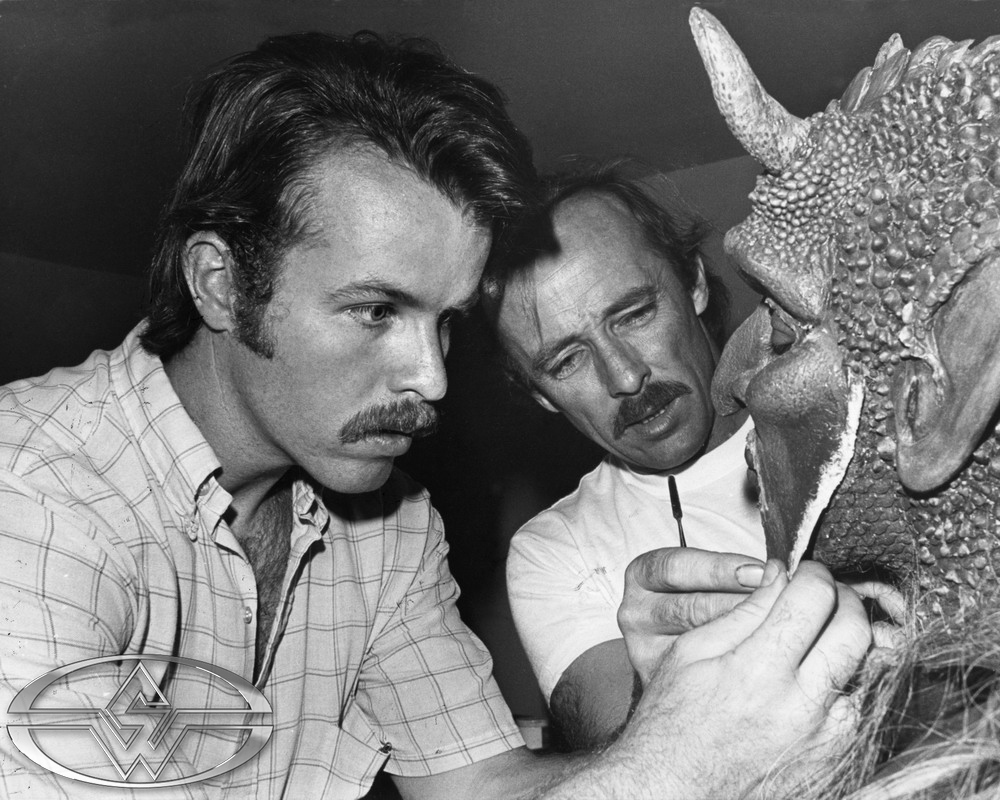 (Jim Phillips [left] & Ellis "Sonny" Burman Jr. [right] do an early makeup application of the lead gargoyle played by Bernie Casey.)
“Stan boosted all of our reputations through his promotional abilities,” Dick Smith affirmed. “By promoting himself, he promoted us all. He achieved recognition and fame, and that was one of the leading factors in the respect makeup artistry enjoys today. It not only increased respect from directors and producers and others in the film industry, but it gave makeup artists more respect for themselves. We are currently enjoying a second great era for makeup artists, and Stan is one of the key people who made that possible. For that achievement alone, I can say that he is one of the great makeup artists of his time.”
Winning the Emmy Award for Outstanding Achievement in Makeup
Back in 1971, however, he was a pain-in-the-neck upstart and an irritation to Gargoyles’ producers Rick Rosenberg and Bob Christiansen. Nonetheless, the day after Winston’s threatened walk-out, Rosenberg assured him that the credit issue had been resolved and that his and Burman’s names would be listed in the credits, along with Del Armstrong’s. Winston’s insistence on on-screen credit brought significant and unforeseen rewards. Only those with screen credit could be nominated for an Emmy, the annual award bestowed by the Academy of Television Arts and Sciences. Consequently, when Gargoyles was nominated and then won in the category of makeup, Stan Winston - the kid fresh out of apprenticeship, who had made background gargoyle masks with his wife at his dining room table - took home a statuette, right along with Sonny Burman and Del Armstrong.
 (Bernie Casey as the lead gargoyle on the set of Gargoyles.)
Given how hard he had fought to receive credit on the film, there is some irony in the fact that when Gargoyles was released on DVD thirty years later, Winston’s name was the one most prominently displayed on the cover. “When I see ‘With special effects by Stan Winston’ on the packaging, a large part of me is embarrassed,” Winston admitted. “Sonny isn’t being given the credit he deserves as the guy who designed and built the lead gargoyle, and Del Armstrong, who ran the whole show, isn’t being given the credit he deserves. I was the third man on the totem pole on that show, and all I did was make background critters and apply the foreground lead gargoyle. I’m proud of what I did on Gargoyles, but it isn’t really accurate to say that they are ‘Stan Winston’ makeup effects.”
- Blog assembled by Adrienn Lingurár with selections from The Winston Effect: The Art and History of Stan Winston Studio by Jody Duncan
Recommended Learning Pathways to Create Your Own Character
- RECOMMENDED FOR DESIGNERS: Design Basics
- RECOMMENDED FOR ALL MONSTER MAKERS: Eye & Teeth Basics
- RECOMMENDED FOR FABRICATORS: Fabrication Basics
- RECOMMENDED FOR FILMMAKERS: Filmmaking
- RECOMMENDED FOR HAIR MAKERS: Hair Work
- RECOMMENDED FOR MAKEUP ARTISTS: Makeup Effects Basics
- RECOMMENDED FOR MECHANICS: Mechanical & Animatronic FX Basics
- RECOMMENDED FOR MODEL MAKERS: Model Making
- RECOMMENDED FOR MOLD MAKERS: Molding & Casting Basics
- RECOMMENDED FOR PAINTERS: Painting Basics
- RECOMMENDED FOR PUPPET MAKERS: Puppet Making Basics
- RECOMMENDED FOR SCULPTORS: Sculpture Basics