
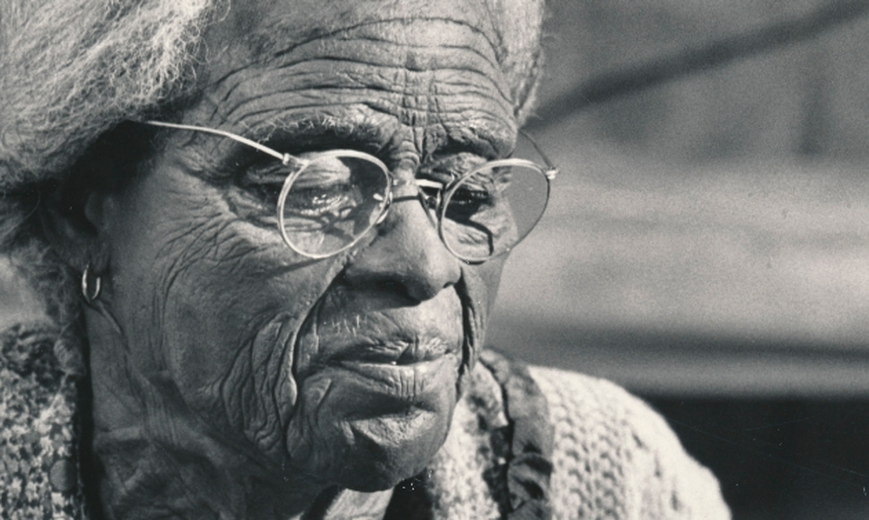
Creating the Emmy Winning Prosthetic Makeup for The Autobiography of Miss Jane Pittman
Whatever ire producers Rick Rosenberg and Bob Christiansen had toward Stan Winston after his 1971 ultimatum on Gargoyles, it did not prevent them from hiring him for The Autobiography of Miss Jane Pittman, a prestigious 1974 CBS television production about a former slave who lives to witness and take part in the 1960s civil rights movement. Requiring makeups that would age star Cicely Tyson from young womanhood to 110 years old, the project teamed Winston with another young, extraordinarily talented makeup artist, Rick Baker, who had been mentored since his teens by Dick Smith.1
Jump To Section
- Dick Smith's Little Big Man Prosthetics
- Doing an Entire Face in Partial Makeup Appliances
- The Old-Age Makeup of Miss Jane Pittman
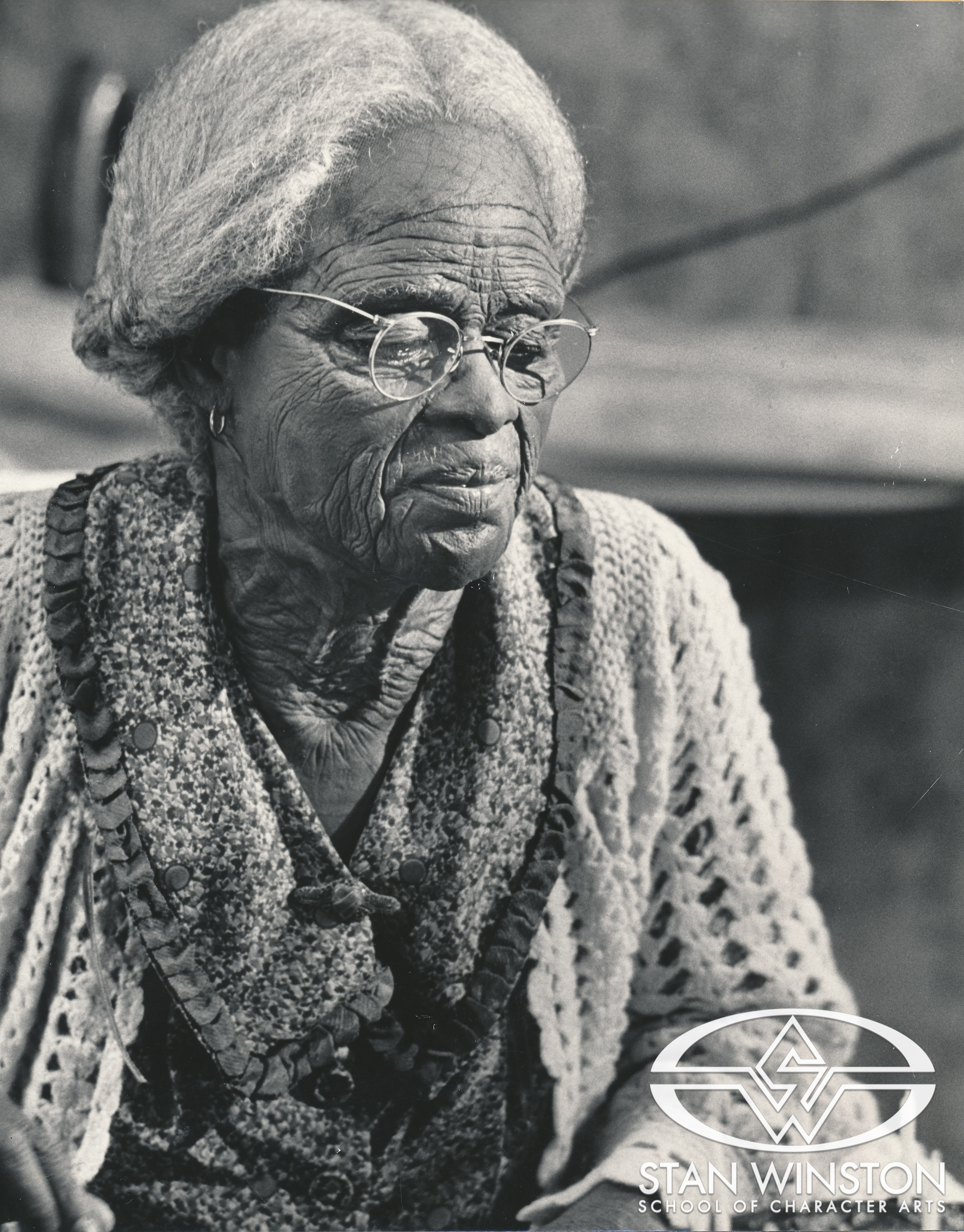 (Stan Winston’s Emmy-winning old-age makeup for Cicely Tyson in The Autobiography of Miss Jane Pittman.)
Dick Smith's Little Big Man Prosthetics
Four years earlier, Dick Smith had created a remarkable old-age makeup for Dustin Hoffman’s 121-year-old character in Little Big Man (1970). “I was in complete awe of that makeup when I saw it,” Stan Winston commented. “So when they asked if I would mind working with this young guy, Rick Baker, who I knew had studied under Dick Smith, I said: ‘I’d love to. I think I’ll learn a lot from him.’ And I did; I learned a lot of Dick Smith’s prosthetic methods from Rick Baker on The Autobiography of Miss Jane Pittman.”1
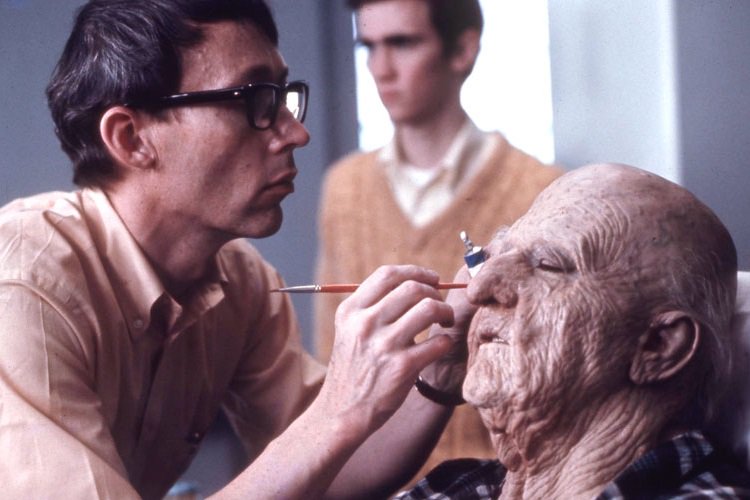 (Dick Smith applies his groundbreaking age makeup to Dustin Hoffman for 1970’s Little Big Man. Image source: dicksmithmake-up.com)
While studying for her role in The Autobiography of Miss Jane Pittman, Cicely Tyson spent time with Mrs. Pearl Williams, an actual centenarian. For one such visit, Stan Winston, Rick Baker, and the producers joined to talk with Mrs. Williams and take pictures for reference in order to create the 110-year-old look.
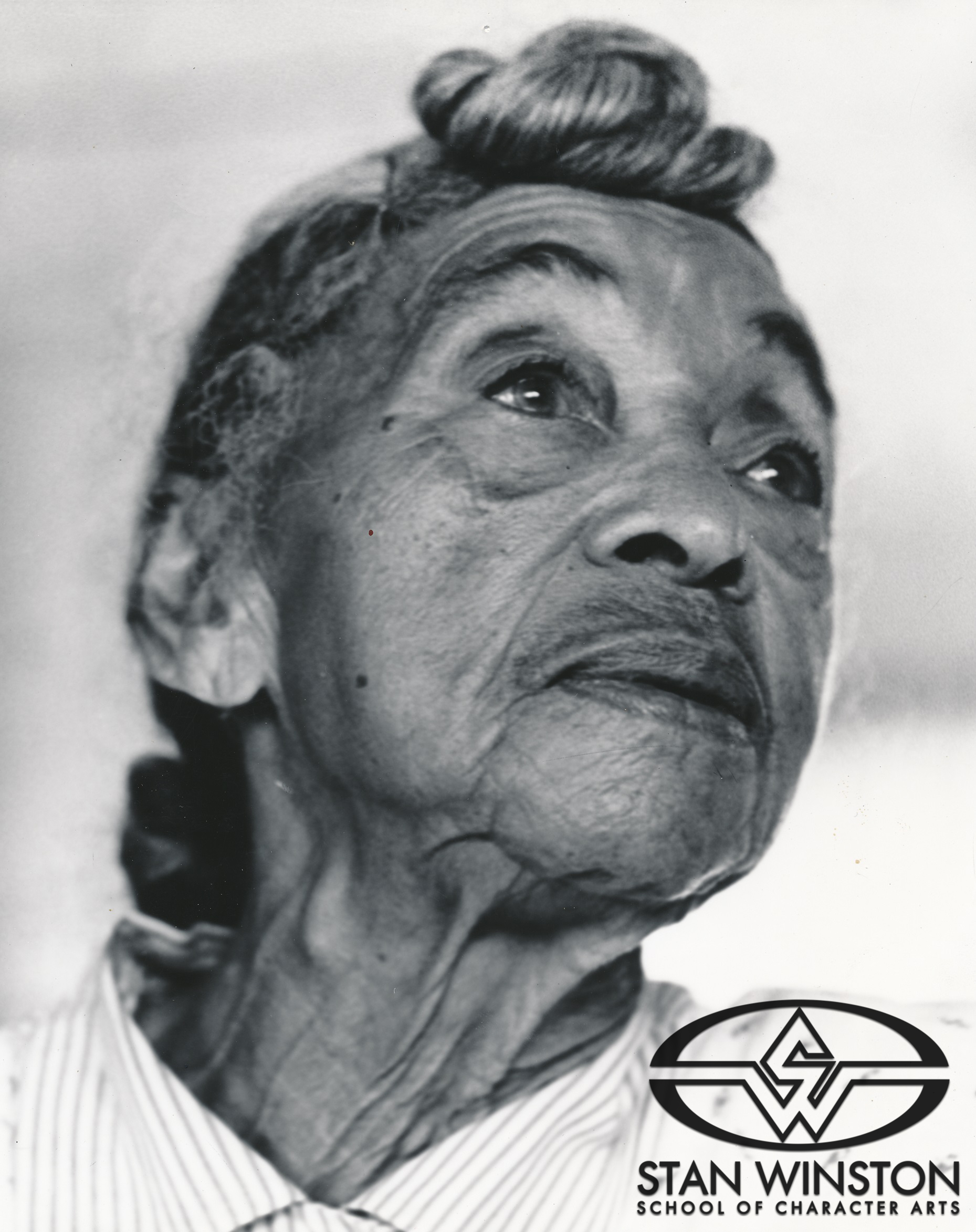 (Mrs. Pearl Williams, 105 years old at the time, who was a reference for the performer as well as the makeup artists on The Autobiography of Miss Jane Pittman.)
Doing an Entire Face in Partial Makeup Appliances
Smith’s prosthetic techniques, now standard in the makeup industry, had been controversial at the time. Rather than create one-piece masks to affect a complete facial transformation, Smith had begun to experiment with overlapping smaller, individual prosthetic pieces, an approach he had refined for Little Big Man.1
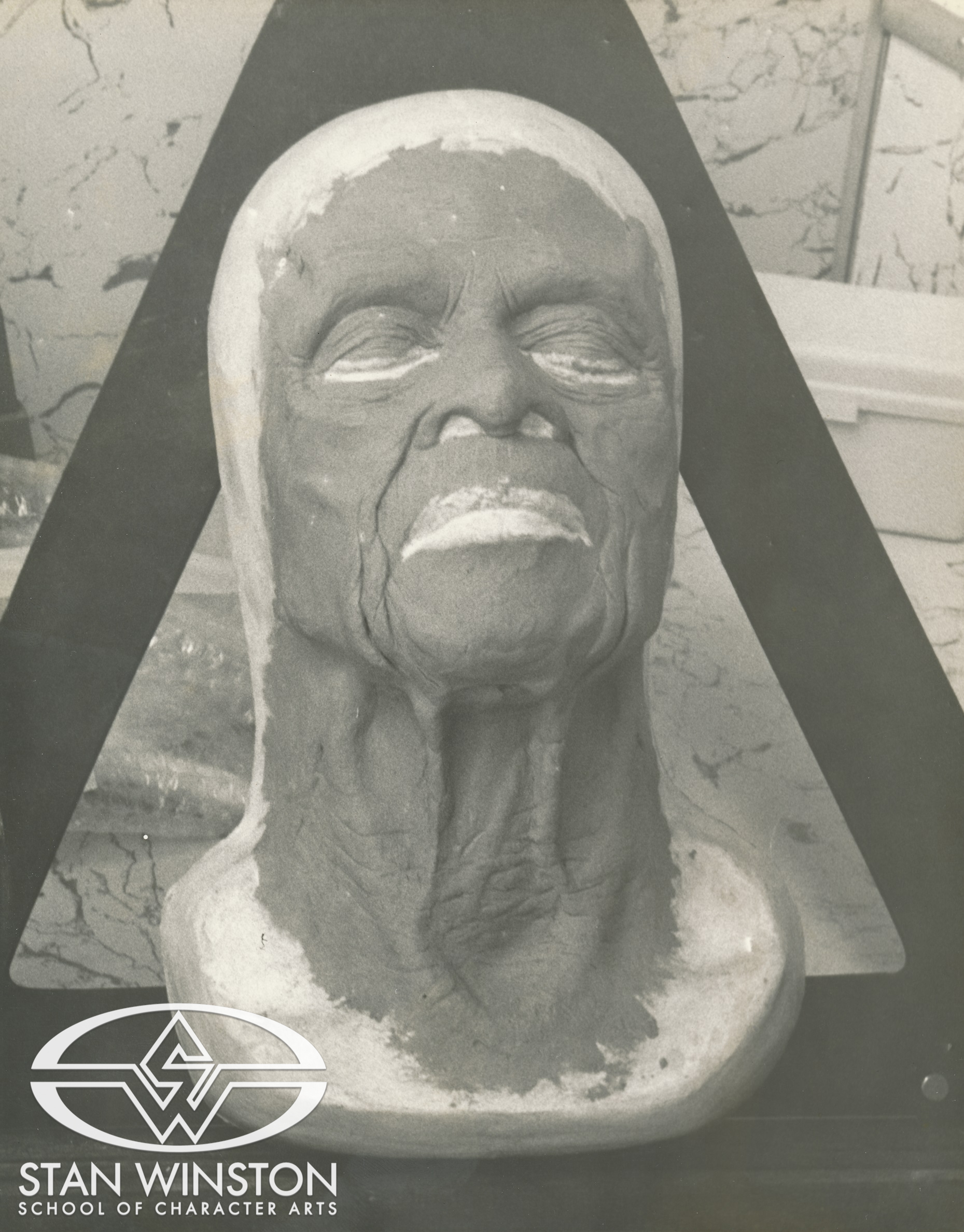 (Winston's clay sculpture of the 110-year-old Miss Jane Pittman.)
“The movie makeup world had a tendency to be set in its ways,” Smith remarked. “So when I did Little Big Man with these separate prosthetics, my techniques were generally pooh-poohed by a lot of makeup artists. They insisted that it was unnecessary and too labor-intensive to do it all in separate pieces. But, gradually, both the old-timers and the newcomers began to see that this was an improvement. And now, of course, that’s how everyone does it.”1
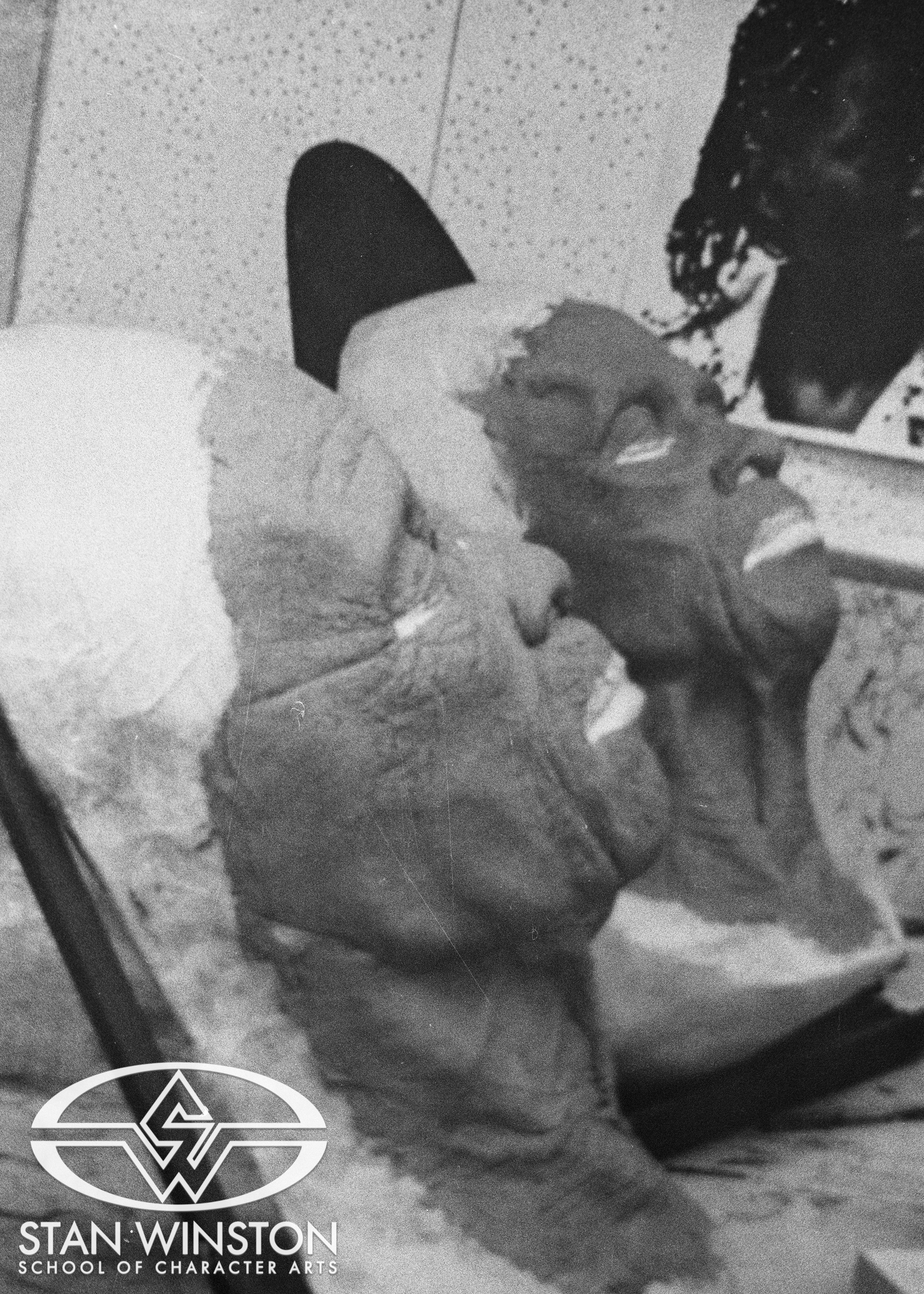 (The old-age makeup, sculpted by Stan Winston on the face cast of Cicely Tyson for The Autobiography of Miss Jane Pittman.)
The Old-Age Makeup of Miss Jane Pittman
Winston and Baker divided the age makeups for The Autobiography of Miss Jane Pittman between them, Winston designing and building individual foam latex appliances for the final 110-year-old stage, and Baker creating makeups for the character as she would appear in middle age.1
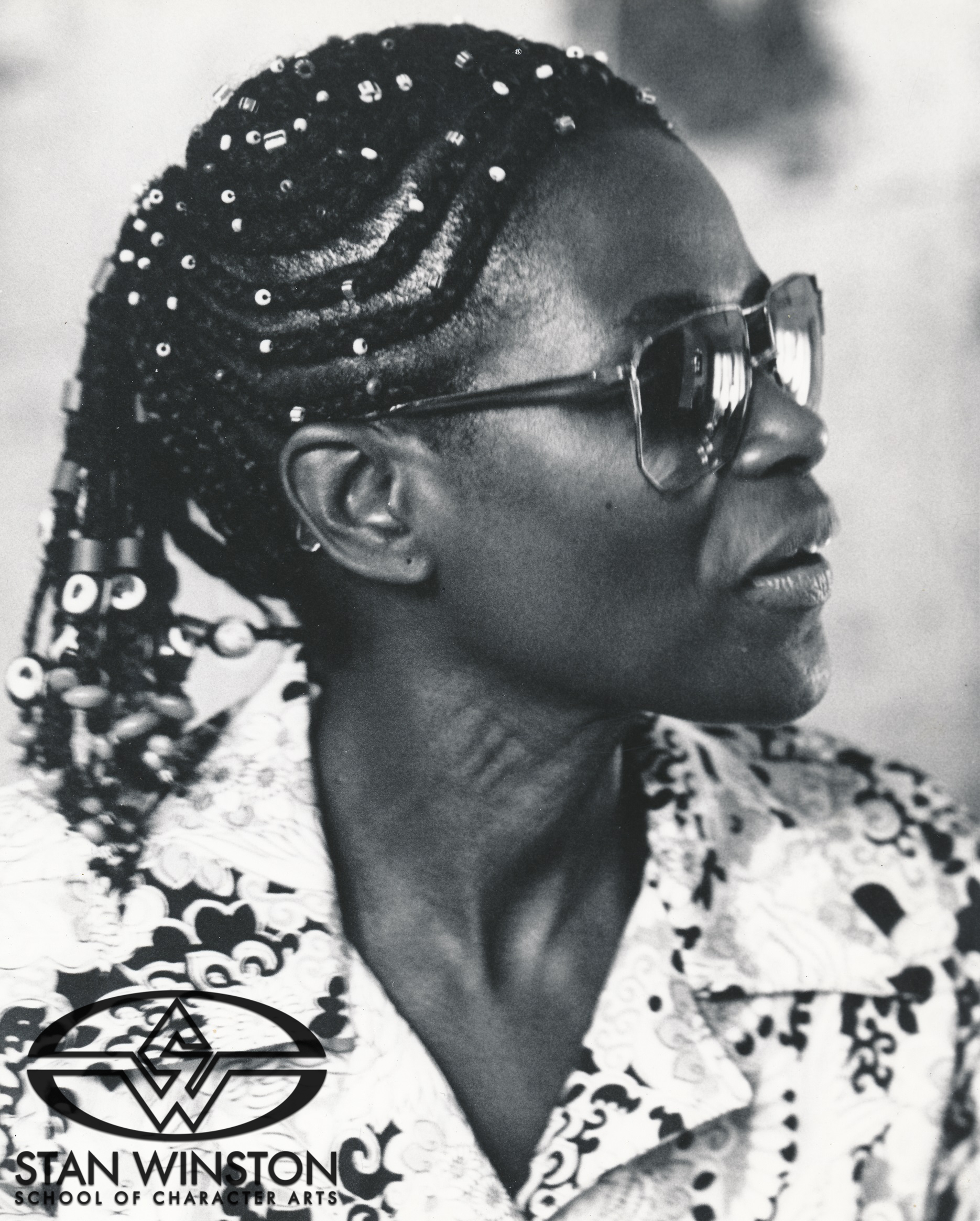 (Image of Cicely Tyson before one of the makeup applications.)
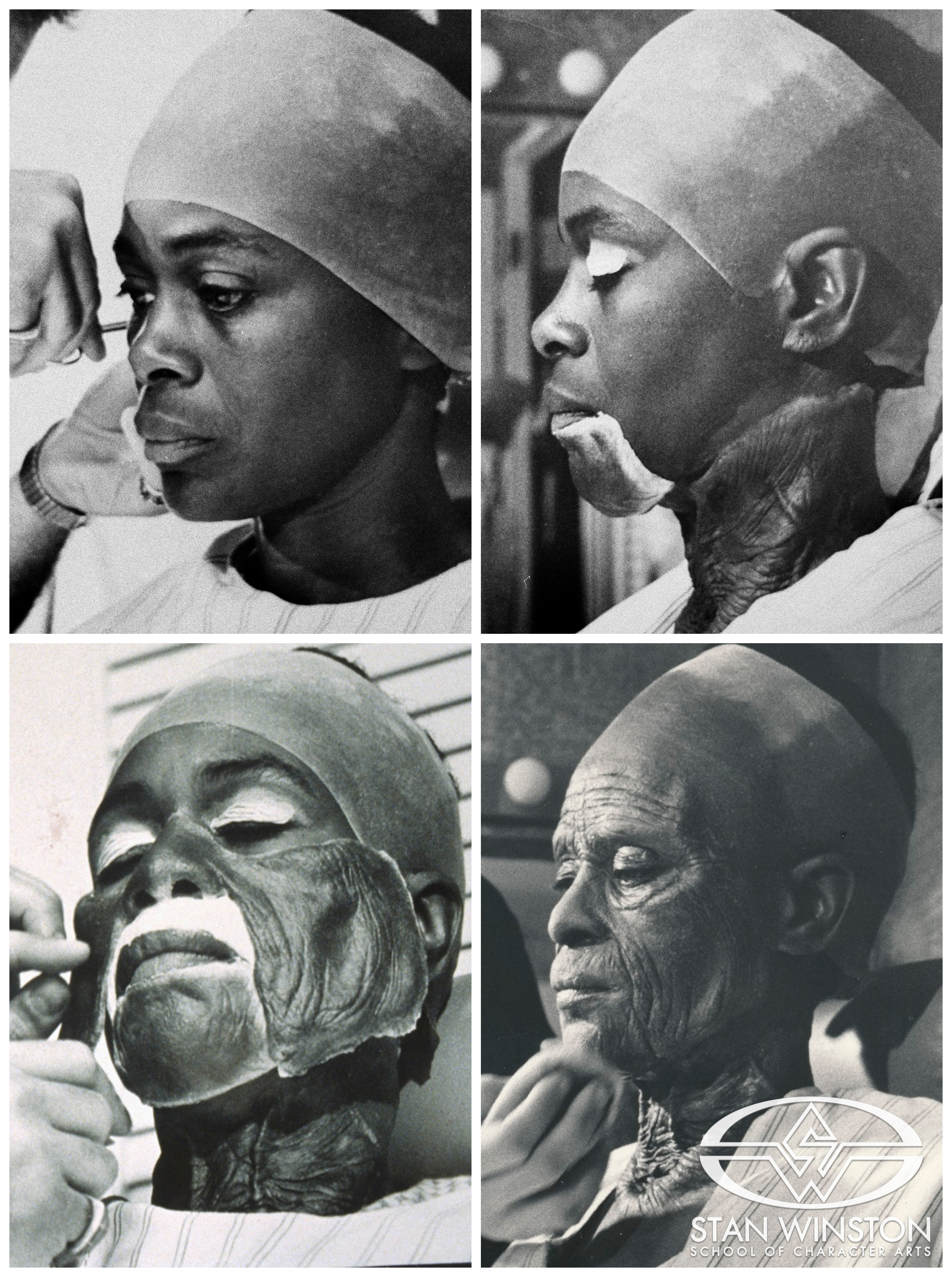 (The makeup application process. From top left to bottom right: 1. A band of plastic cap material was first attached to cover the edge of the hairline. 2. Chin and eyelid pieces were attached with eyelash adhesive and the edges stippled. Ear and neck foam latex pieces were then attached. 3. Next, the nose, cheekpieces, and the upper lip were applied. 4. Finally, an additional foundation was employed to complete the skin coloration.)2
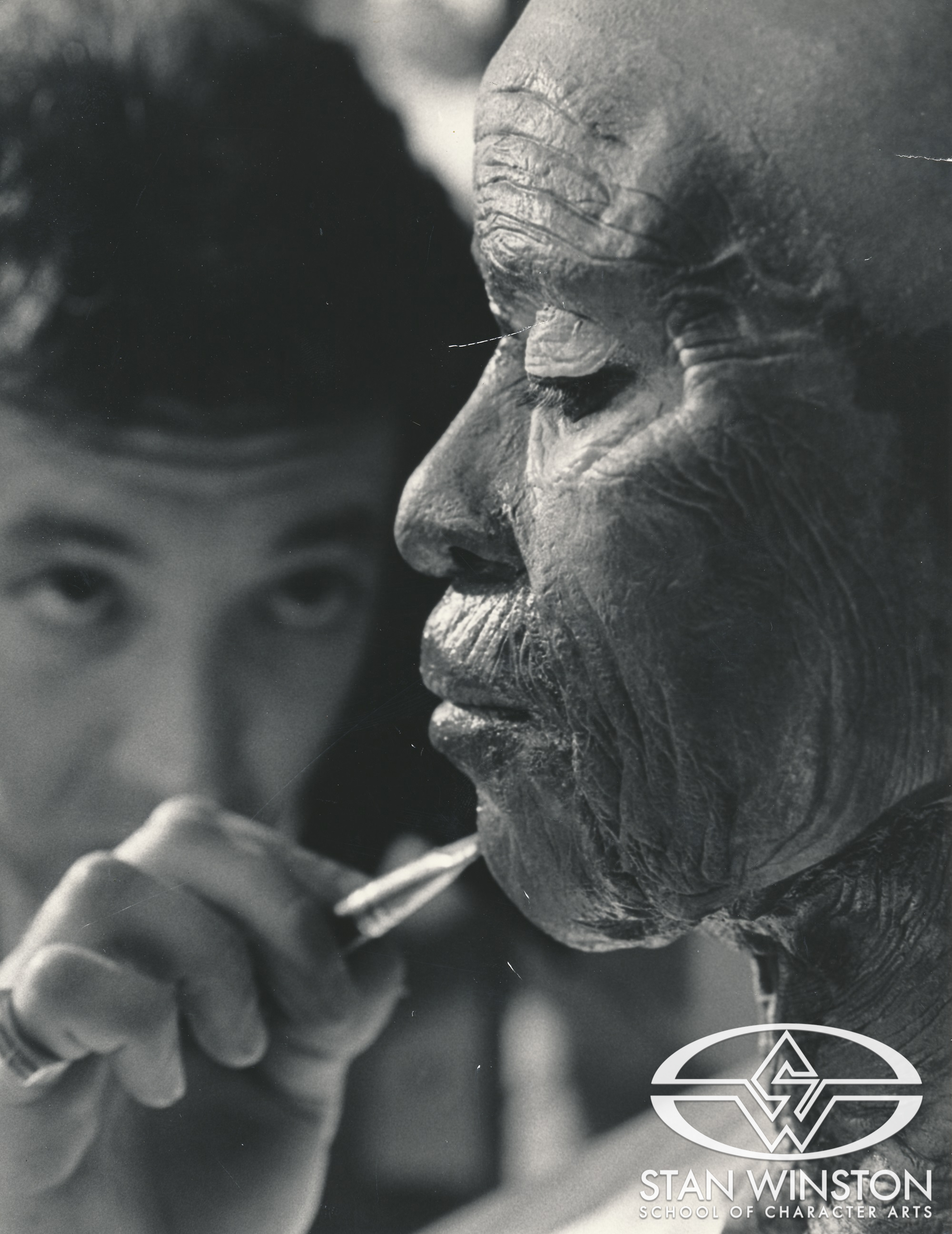 (Winston paints the prosthetic makeup joints that were applied to the face.)
The application of this makeup took some six hours; and an additional one hour was required to carefully remove it. Although the basic clay sculpture over the life mask of the actress gave them some idea of what the completed makeup would look like, the final result was far more spectacular on the human face, where it was transformed into life by Tyson's performance enhancing the makeup.1
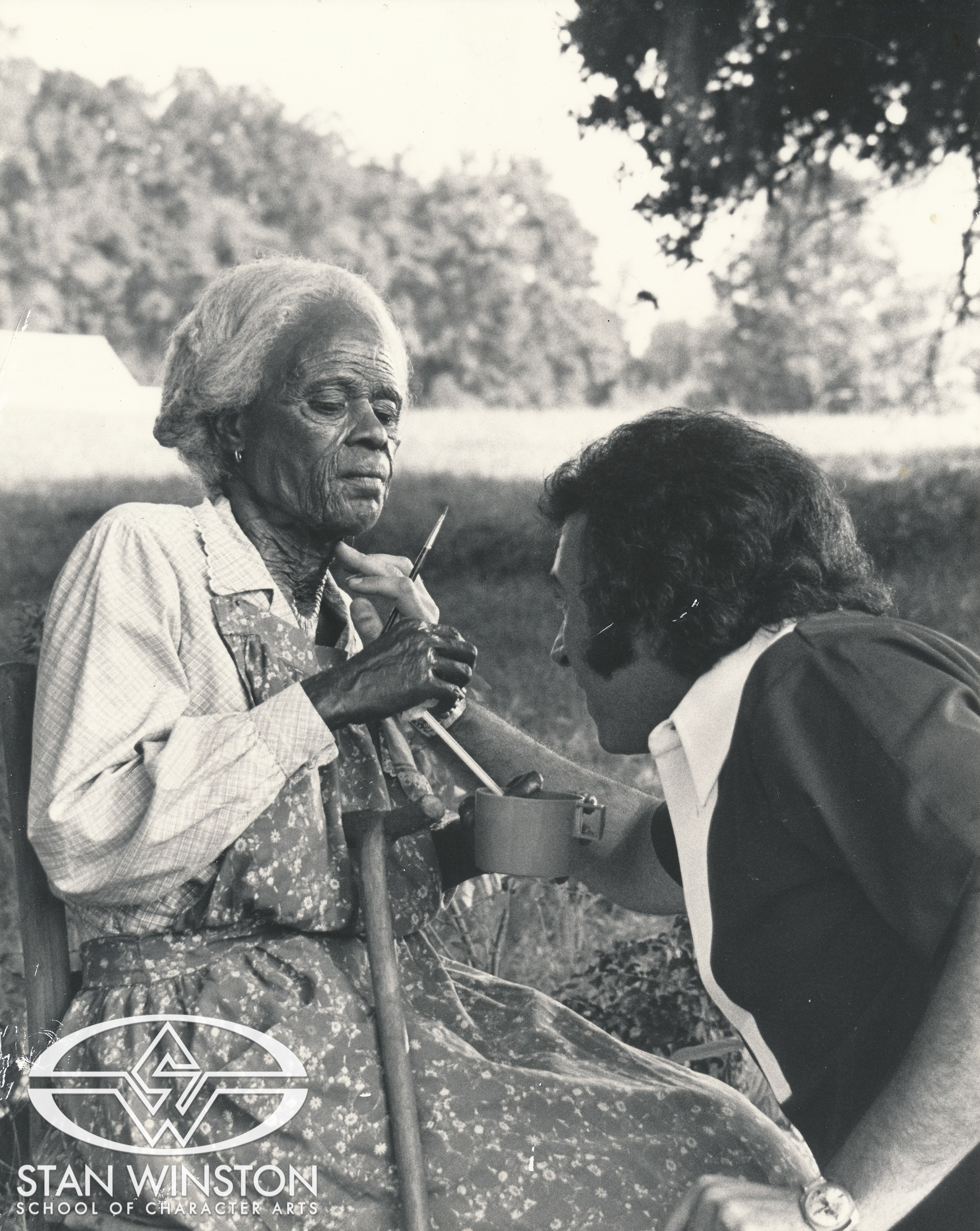 (Stan Winston prepares the Miss Jane Pittman makeup for shooting. Cicely Tyson was in the makeup for two and a half weeks straight out of the five-week shooting schedule.)
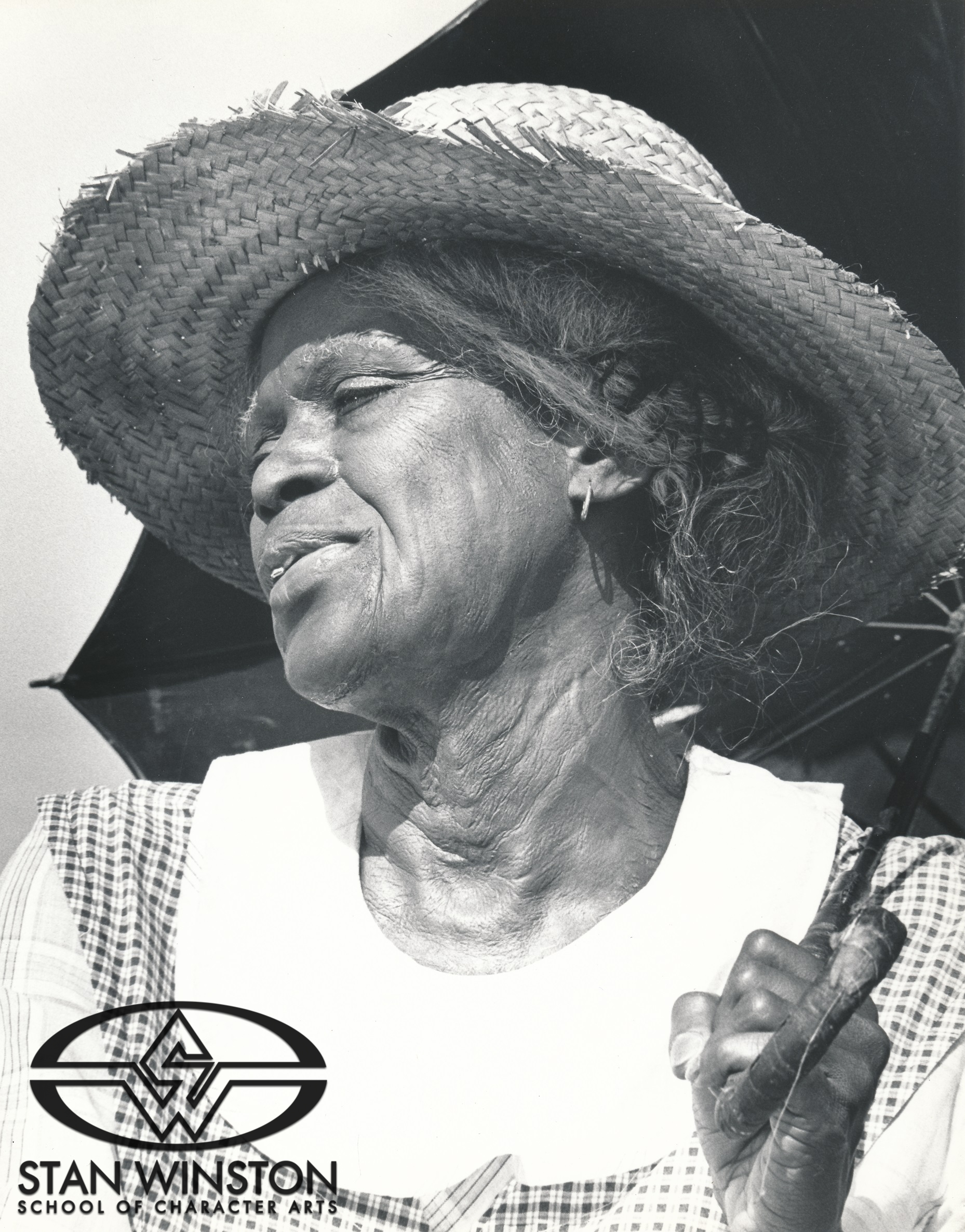 (Cicely Tyson in the finished Miss Jane Pittman makeup.)
The duo, who would work together one more time in their respective distinguished careers, on John Carpenter’s Starman, both won Emmys for their work on the production — Winston’s second, Baker’s first.1
- Blog assembled by Adrienn Lingurár with selections from:
1. The Winston Effect: The Art and History of Stan Winston Studio by Jody Duncan
2. The Technique of the Professional Make-Up Artist by Vincent J-R Kehoe
Recommended Learning Pathways to Create Your Own Prosthetic Makeup
- RECOMMENDED FOR DESIGNERS: Design Basics
- RECOMMENDED FOR MOLD MAKERS: Molding & Casting Basics
- RECOMMENDED FOR SCULPTORS: Sculpture Basics
- RECOMMENDED FOR MAKEUP ARTISTS: Makeup Effects Basics
- RECOMMENDED FOR HAIR MAKERS: Hair Work
- RECOMMENDED FOR ALL MONSTER MAKERS: Eye & Teeth Basics
- RECOMMENDED FOR PAINTERS: Painting Basics