
Child’s Play: Creating a Fear of Evil Dolls
By Michael Martin
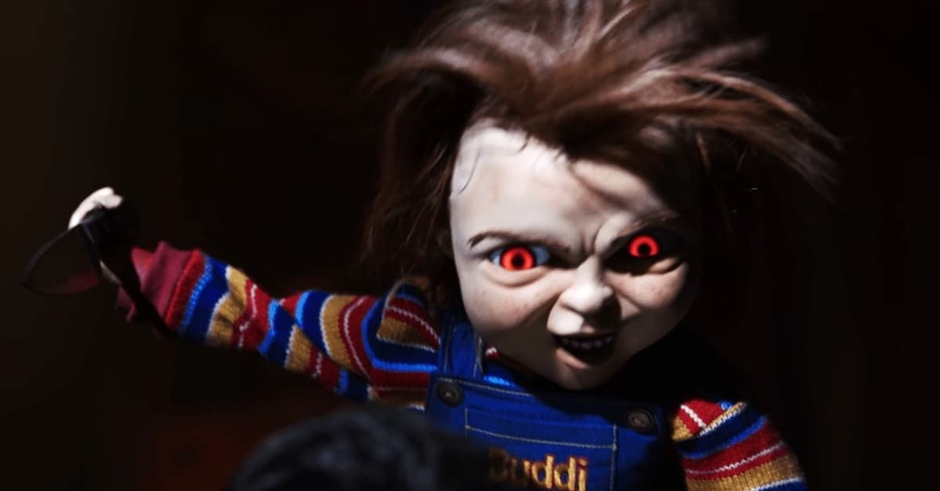
There is nothing scarier than an evil doll come to life. Come on, you know when you hear those little feet racing down the hall behind you and… Aaaahhh! In 1988, director Tom Holland (Fright Night) tapped into this deep-seated fear of living toys with Child’s Play, the story of a little boy whose possessed doll comes to life and does what evil toys always do, it starts killing people. Child’s Play would spawn several sequels including one where Chucky even gets married! In the eighties the murderous doll was originally built by Kevin Yagher and voiced by character actor Brad Dourif. Now, Chucky bears the magical voice of none other than Mark Hamill!
Jump To Section
- Resurrecting Chucky
- A Doll Is Born
- Designing New Chucky Dolls
- Creating an Army of Chuckies
- The Chucky Eyes That Almost Were
- Robo-Chucky
- Building the ‘Buddi’ Dolls
- Working a Tight Schedule
- Living the Mad Scientist Dream
- MastersFX Child's Play 'Chucky' Effects Crew
Resurrecting Chucky
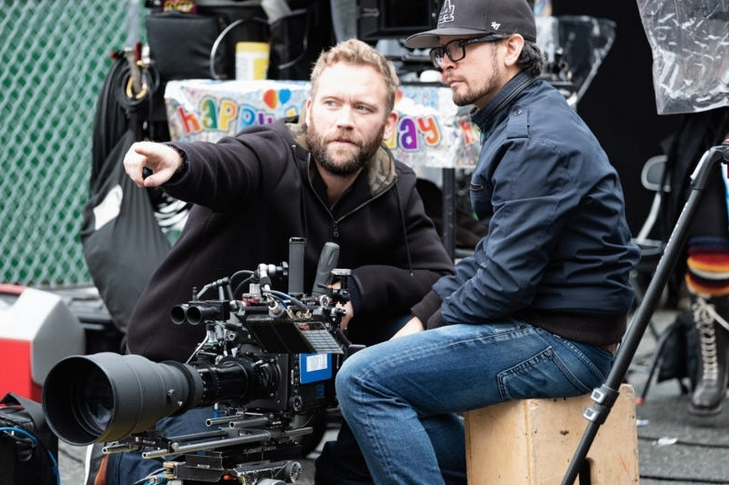 (Director Lars Klevberg and Cinematographer Brendan Uegama on the set of Child’s Play. Photo by Eric Milner. Image courtesy Orion Pictures.)
When it came time to resurrect Child’s Play, David Katzenberg and Seth Grahame-Smith, the producers of It, and director Lars Klevberg (Polaroid) looked to Todd Masters to create the new Chucky.
 (Special effects artist Todd Masters and one of his "Oh Lantern Family" foam rubber pumpkin toys.)
With over thirty years of experience in the industry, Todd Masters and MastersFX sport a diverse resume of film and television projects that include Tales from the Crypt, Slither, The Twilight Saga: New Moon, True Blood, Fringe, Elysium, and A Handmaid’s Tale. Todd spoke with SWSCA about the trials and tribulations of bringing Chucky back to life.
A Doll Is Born
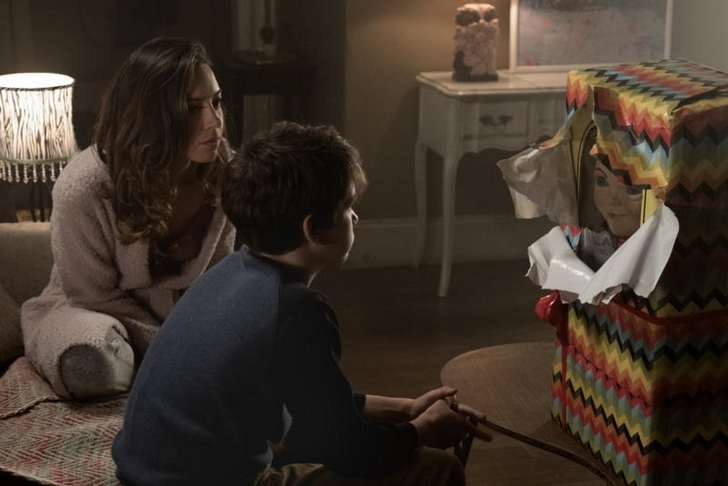 (Aubrey Plaza and Gabriel Bateman star in Child’s Play. Chucky’s voice is performed by Mark Hamill. Photo by Eric Milner. Image courtesy Orion Pictures.)
Todd loved the script for Child’s Play and knew that to make the actions called for in the story happen, he would have to build a number of different dolls. To get started, Masters studied what Kevin Yagher had done with the original Chucky movies. Like those films, “we really wanted it to be a practical, physical, touch the doll kind of movie,” Todd says. “The benefit to using practical effects was obvious.” So an army of Chucky dolls and puppets would be built.
Designing New Chucky Dolls
Early on, the artists at MastersFX would create some of the initial designs for the new Chucky. Once director Lars Klevberg came onboard the production, however, he would bring new doll designs by artist Einar Martinsen.
 (Various Chucky concept designs.)
The Martinsen designs would be a big influence on the Chucky look, recalls Masters, “He was sending us concepts that were beautiful.” Because of the 3D design program that Martinsen was using, Master's team was able to immediately take that data, drop it into the MastersFX studio pipeline, and begin making puppets. “…it was hardcore puppet building just like in the 80s, but with some assistance from modern tech," including the digital sculptures, some 3D printed animatronic parts to go with traditional mechanical parts, and even some 3D printed molds.
Creating an Army of Chuckies
MastersFX would build seven animatronic puppets with interchangeable arms, legs, and heads so that they could mix and match as the scene called for. Several of the puppets would be "heroes" capable of multiple fuctions.
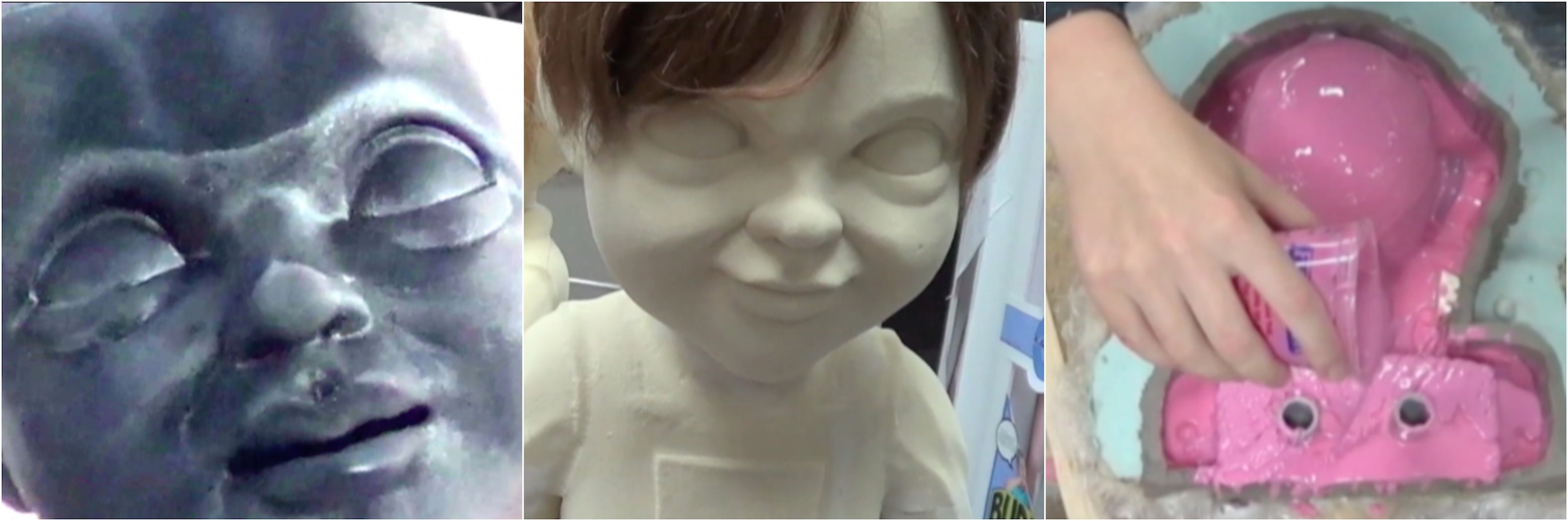
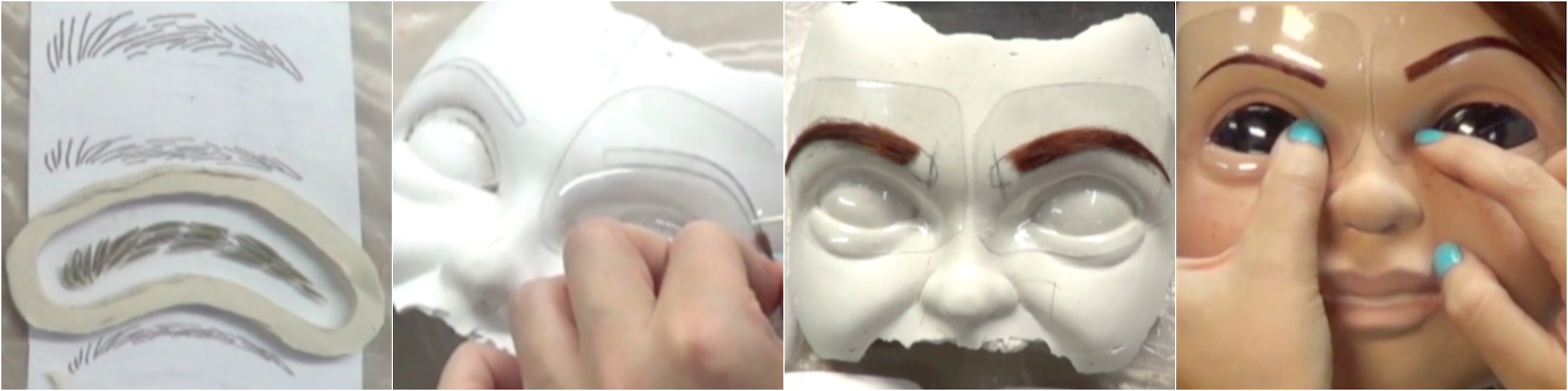
 (The process of building the devious doll from the 3-D printed head to the hair.)
They would also construct a few replacement heads, so that if one head went down, it was easy to make a quick swap so production wouldn't be held up while repairs were being made. The interchangeable features also paid off when the puppets would be configured for different continuities and need to be switched out quickly.

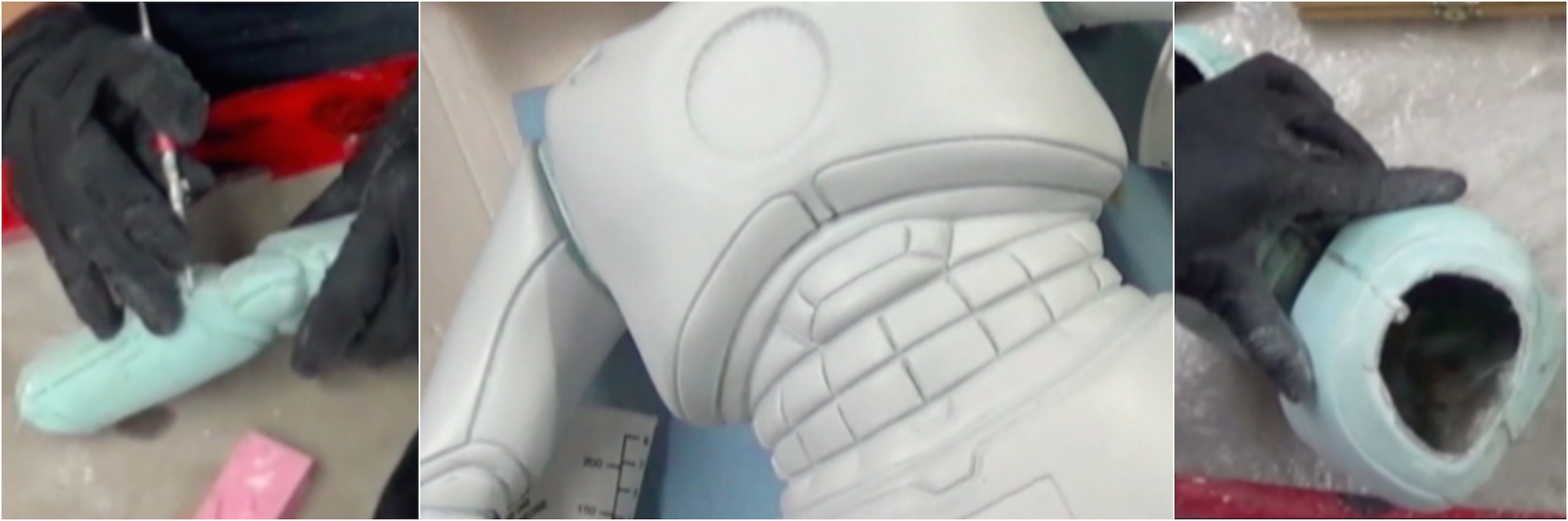 (The Chucky building process continued with 3-D design and model-making.)
Chucky's facial features were radio-controlled, with arms, legs and body puppeteered by rods.
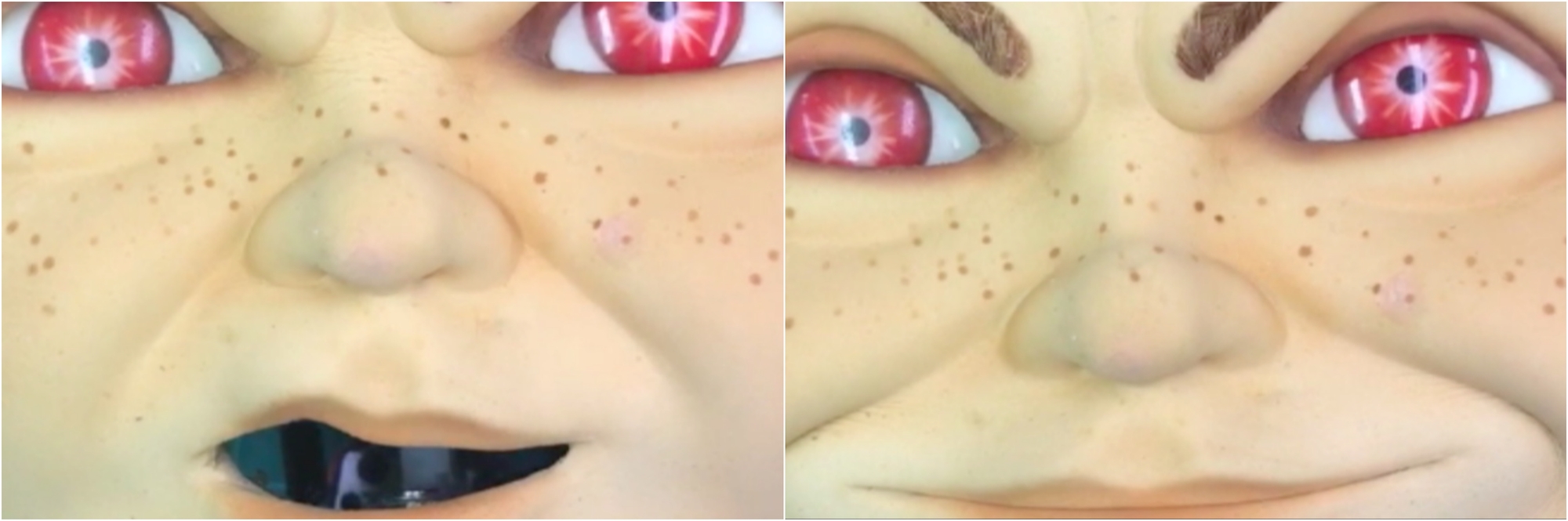 (Giving Chucky a sinister smile with a mechanical mouth. If looks could kill…)
To bring life to his fully articulated hands, Chucky’s little fingers were threaded with tiny cables that would lead back through a rod and out the elbow to a finger control mechanism operated by the puppeteers. MastersFX mechanics would also create self-contained radio-controlled hands that were capable of a bit less articulation for wider shots that didn't require as much finger movement.
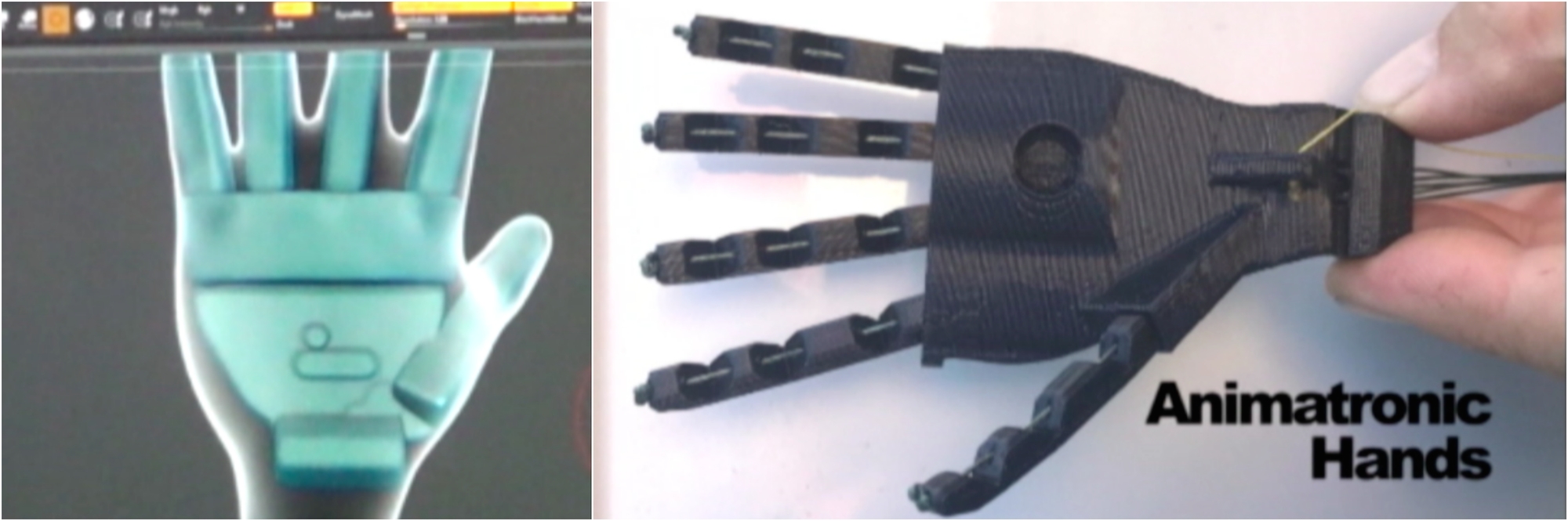 (The mechanical hands of Chucky.)
For the gross body movements or for taking a step or two, the Chucky dolls were simply Bunraku rod puppets. The bodies of the hero puppets all had multiple mounting points for the control rods.
 (Puppeteer Jason Ward helps Chucky walk.)
Puppeteer Jason Ward would wear a shoulder and waist harness that would support the doll and then guide it as needed. Usually, the legs of the puppets could be left loose or the joints could be locked down when being controlled by rods.
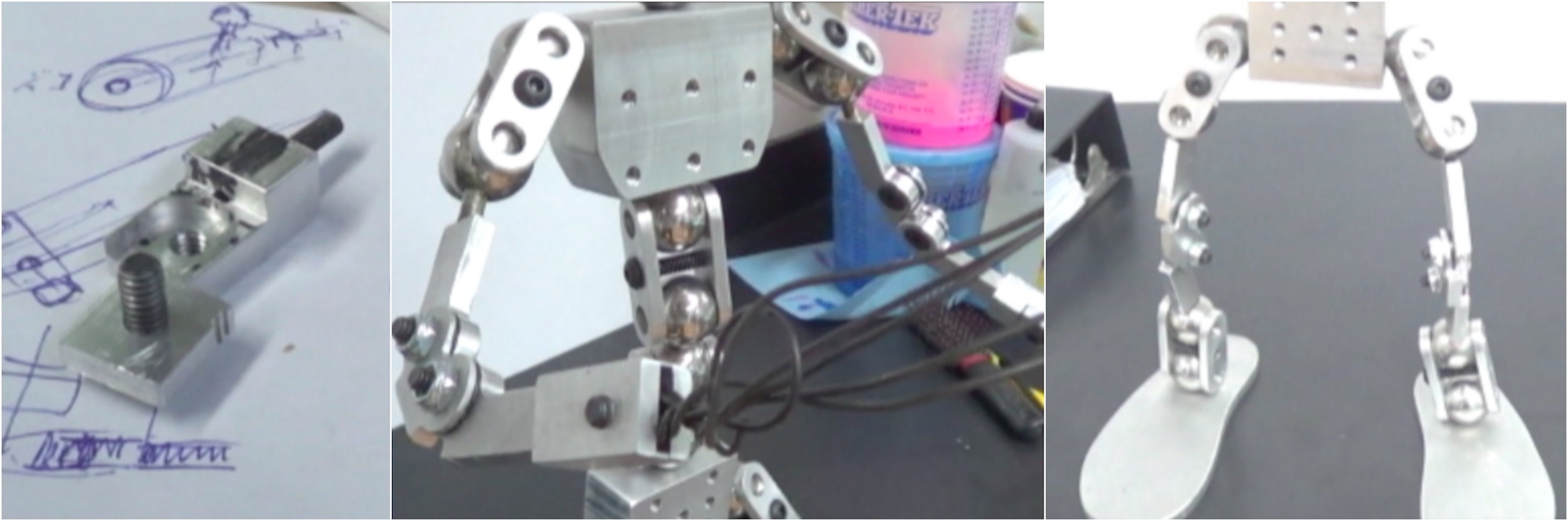 (The Chucky armature.)
Major walking or running scenes would be achieved with CG, as would some of the eye movements and color changes.
The Chucky Eyes That Almost Were
At one point, there was a plan for the Chucky dolls to have digital monitors built into their eyes. The little monitors would be programmed with animation and would have been able to look left, look right, change colors, and dilate.
 (A look at how Chucky’s eyes were digitally animated.)
However, as they would have to be puppeteered on set, the monitor eyes would have added another puppeteer and potentially more shooting time to an already short production schedule, so the producers decided to animate Chucky's eyes digitally. Still, Masters was excited about the potential for incorporating monitor eyes into an otherwise fully mechanical puppet and would love to use the technology for another character in the future.
Robo-Chucky
One version of the Chucky puppet, which was referred to as ‘Robo-Chucky,’ was entirely self-contained.
 (A terrifying sight—Robo-Chucky.)
The body was filled with servos to control the various body parts and the head was also completely remote controlled. Two of the ‘Robo-Chucky’ puppets were built. They, too, had the interchangeable features of the other puppets.
In one sequence, an interior of Chucky’s chest was built for a chest-opening scene, which Todd remembers as, “…really cool.” MastersFX would also contribute gore and other makeup effects to the production.
 (The power cell of Chucky’s chest.)
Building the ‘Buddi’ Dolls
MastersFX would also build a large amount of the 'Buddi' line of dolls, the product that would appear on the store shelves.
 (Roughly over a dozen Buddi doll heads with countless others not pictured.)
However, the dolls inside the boxes were simply empty shells that were not required to do anything. Master's team would also construct the boxes and packaging for the dolls. They built "a zillion of those things,” recalls Masters.
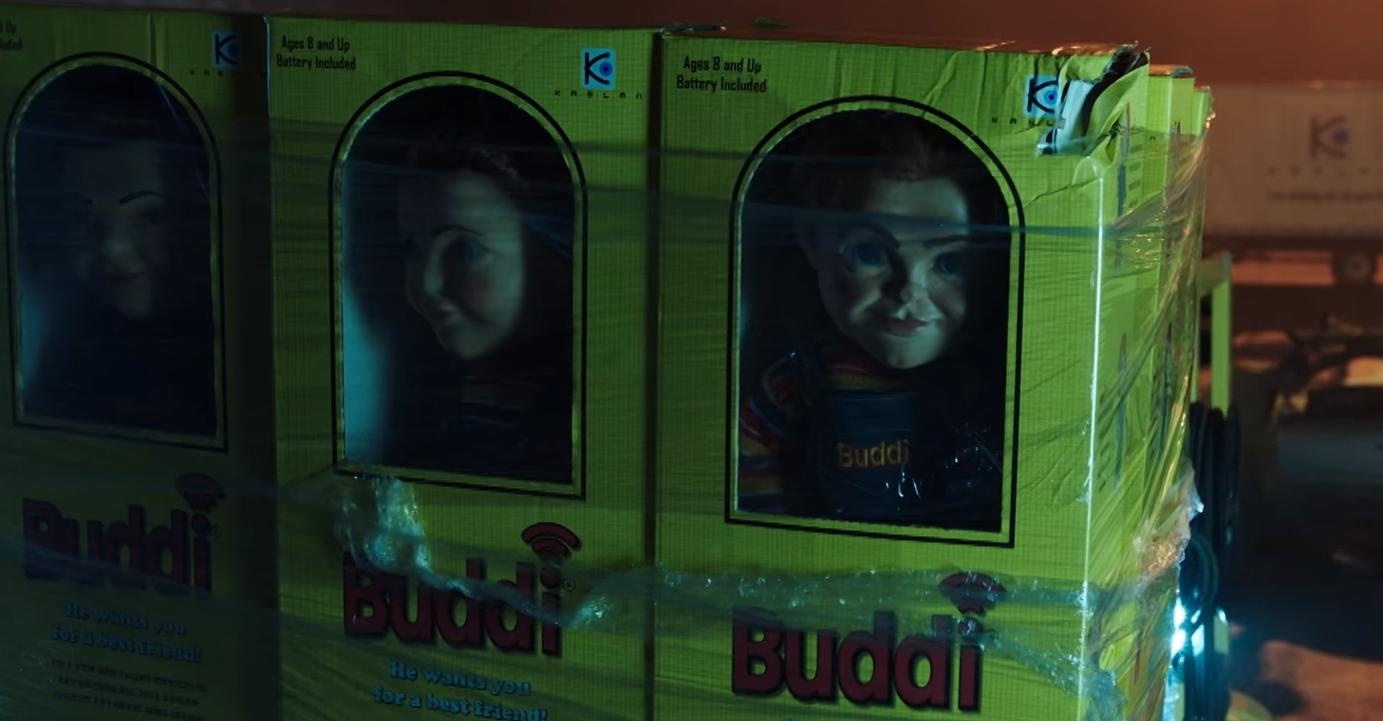 (The Buddi dolls on the shelf in the packaging MastersFX produced for Child’s Play. Image courtesy Orion Pictures.)
Working a Tight Schedule
Another difference between the 1980’s and today was the build schedule. “They don't give you the time that we used to have in the 80’s…they want it almost like a TV schedule,” Todd would say. While Kevin Yagher and his team had almost a year to build the Chucky dolls for the original film, the crew at MastersFX would have only nine weeks! In order to meet this tight schedule, Todd would have all three of his shops, (Vancouver, Toronto and Los Angeles) working on the show. “We knew it was going to be quite the overwhelming onslaught.” By rotating crews and working weekend shifts, Todd and crew were able to meet the tight schedule. “It was quite crazy.”
Living the Mad Scientist Dream
Todd Masters clearly enjoyed his time with Chucky. When the original Child’s Play was made, digital effects were just beginning. Now, they are a regular filmmaking tool. Masters likes that filmmakers are learning to use all of the tools available to them. Or, as he says, “…practical for what it’s best for and digital for what it’s best for.”
 (Chucky in action.)
Masters would say that artists in the makeup effects field are fortunate to, “…kind of be these mad scientists, [and] inventors.” And about practical effects, he would say it’s about, “reinventing and reinventing, reinventing and continuing to develop the art form.” It is clear that practical effects will not be going away anytime soon, and neither will Todd Masters. So, keep an eye out for those killer dolls coming up behind you!
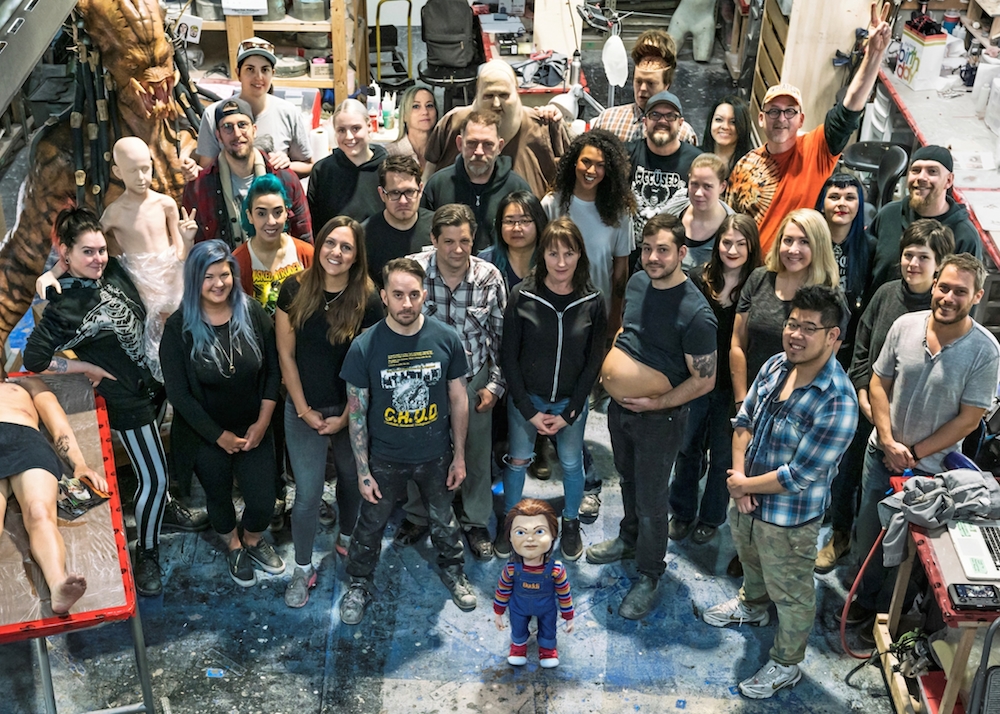
Chucky, Designed by Einar Martinsen
MastersFX Child's Play 'Chucky' Effects Crew
Keith Arbuthnot
Bonnie Bahry
Rob Bannister
Jon Berezan
Caitlin Carmichael
Frank DeMartini
Chris Devitt
Amanda Duff
Mariana Fernandez
Tito Ferradans
Mike Fields
Brie Guerin
Christine Hackman
Arwen Hargreaves
Quinn Heinrichs
Clarissa Jorquera
Brian Kim
Jennifer Latour
Todd Masters
Eric Napier
Yukiyo Okajima
Sarah Pickersgill
Brad Proctor
Harry Productions Robot
Josh Raymond
Alex Roseberry
Harriet Sales
Lori Sandnes
Jeannie Satterthwaite
Mike Scanlan
Stacy Scofield
James Skuse
Luke Stalker-Switzer
Jason Ward
Natlie Warnke
Vic Weins
Paige Yeoman