
By Lexi Stewart
Best Makeup and Hairstyling Oscar Nominees for 2019
In 1981, The Academy Awards added a new category of 'Best Makeup' to their repertoire after backlash occurred over The Elephant Man receiving no recognition despite Christopher Tucker’s remarkable job transforming John Hurt into the title character—a man with a hideously deformed face due to a rare disease. Rick Baker was the first winner of the award for An American Werewolf in London, beating out fellow nominee Stan Winston for his work on Heartbeeps. In 1993, the award was modified to include hair as well, and since then 'The Academy Award for Best Makeup and Hairstyling' has endured.
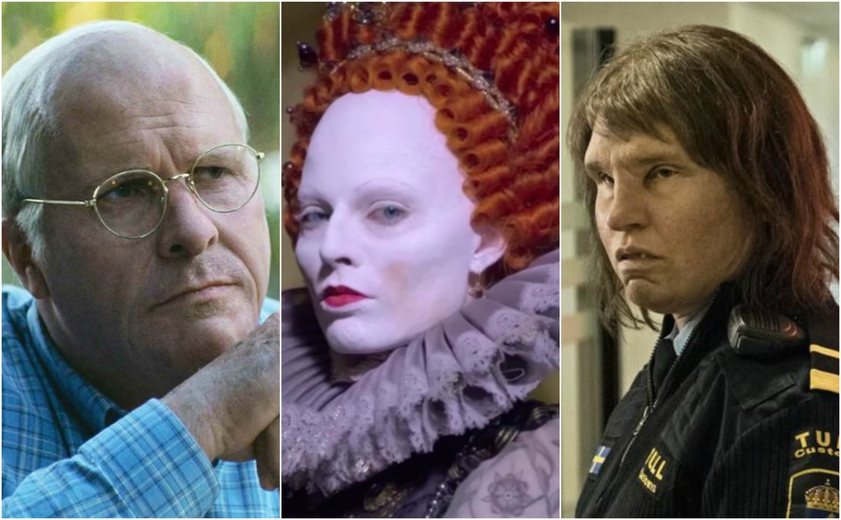
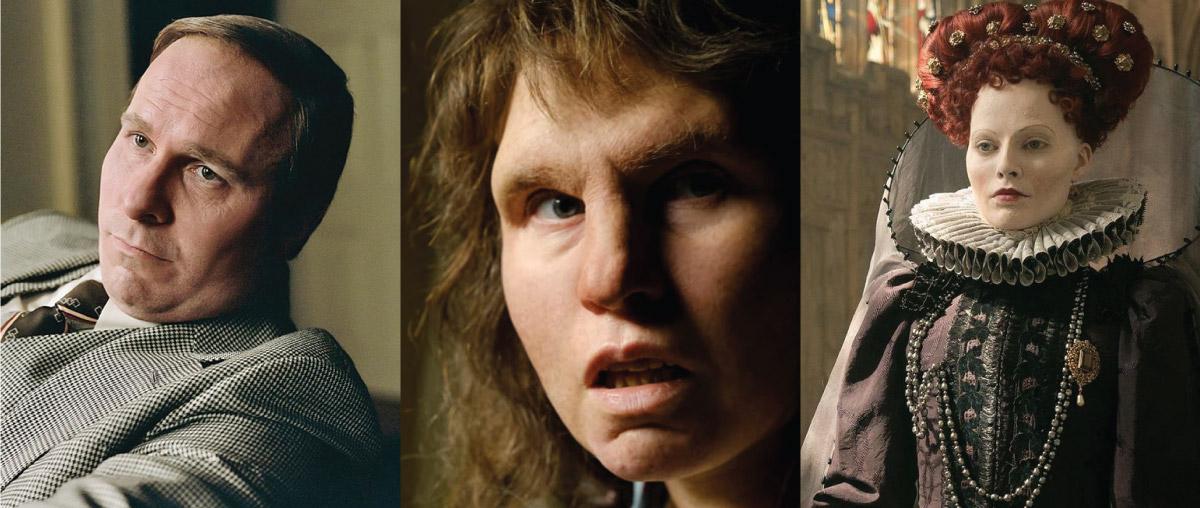
This year's nominated films are Border, Vice and Mary Queen of Scots. Among the shortlisted films, a very strong list of candidates which just missed the cut included Stan & Ollie, Bohemian Rhapsody, Suspiria and Black Panther. Prosthetic transformations were the prevailing theme this year, with some fantastic makeups and wigs reaffirming just how important practical makeup still is to the world of filmmaking. We take a closer look at the artists and concepts for this years' nominees.
Border
Directed by: Ali Abbasi
Nominated for Best Makeup & Hairstyling:
Göran Lundström - Makeup Designer: Tina & Vore
Pamela Goldammer - SFX Key Makeup Artist & Prosthetics Supervisor
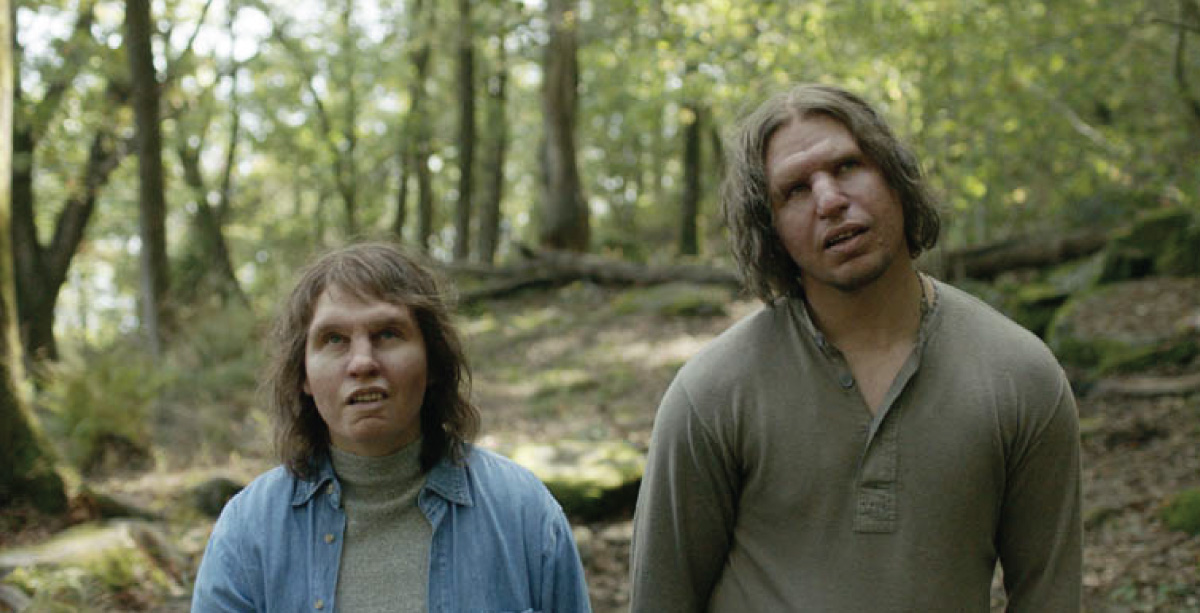 (Tina & Vore. Following photos: Ali Abbasi/Still 21, Niklas Hermansson, Göran Lundström and Morten Jacobsen; © 2018 Meta Film, Spark Film & TV, Kärnfilm)
Ali Abbasi's Border turns the fairytale genre on its head with a Nordic noir that features two trolls as the romantic leads. Though anchored in folklore, the film is executed in a realistic style. The Swedish tale focuses on female troll Tina, a customs officer in the midst of investigating a crime. By chance, she meets a mysterious traveler who happens to share her physical peculiarities, and as a result, she begins a journey of self-discovery.
Göran Lundström teamed up with Pamela Goldammer to realize Abbasi's vision. With almost five decades of experience between them, they were able to give plenty of guidance to a director who had never worked with prosthetics before.
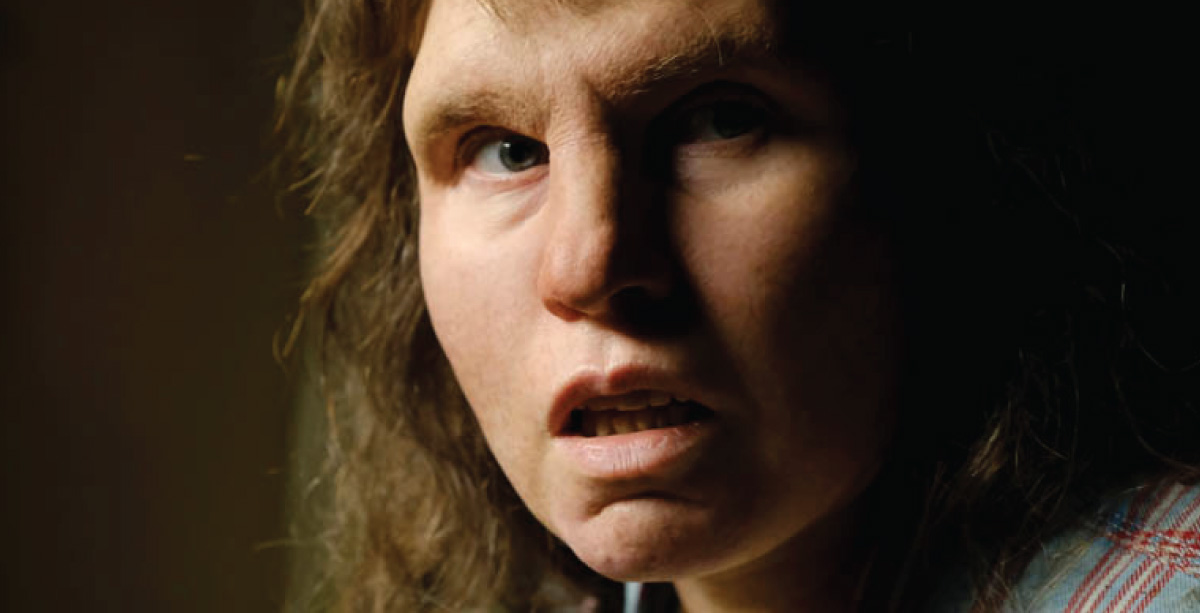 (Eva Melander as customs officer Tina.)
Lundström made it his mission to create something unexpected, different from the creatures people were used to seeing on film. The veteran artist explained to The Hollywood Reporter, "When you're asked to do a troll, you immediately have The Hobbit in the back of your head, but I didn't want to end up in that realm. I wanted to create something that looked odd but was real enough that you'd believe these trolls could be human."
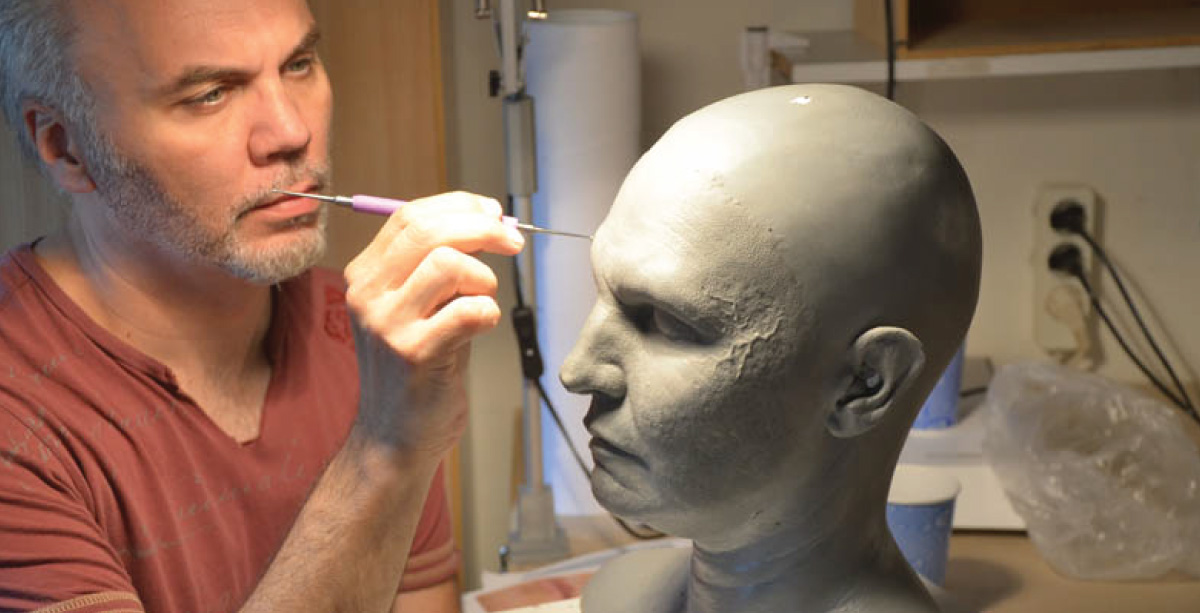 (Göran Lundström working on Tina’s sculpt.)
As the concepts evolved, Lundström used the face of British actor Eddie Marsan as the base inspiration for the trolls' design. "He has a very cool, interesting face that for me has a kind of fairytale feel to it. I took some of his features and adapted them for Tina because there is sort of a gender swap thing in the story, where Tina is a bit masculine and Vero is a bit feminine."
When it came to manufacturing the prosthetics, the original intention was to use encapsulated silicone pieces (the most commonly used material today), but Lundström had issues with how the chin piece moved and wrinkled on actress Eva Melander.
 (Pamela Goldammer applying prosthetics to Eva Melander.)
He talked in depth about the process to Makeup Artist Magazine, elaborating that “When it’s an isolated piece and the skin compresses, you can get crinkles, and it really annoyed me because everything else looked really nice with the silicone." Consequently, gelatin was brought into the mix. “Melander liked the way it felt because it had fewer restrictions. It gets really soft from the body heat. So we ended up doing the cheeks and chins on both characters in gelatin.”
The technical challenges and grueling daily rigors on the project proved difficult but rewarding for both the makeup/hair team and the talent. Border is a clever yet gritty fantasy that gives mythical creatures a fresh take while also delivering an original, yet grounded story.
Additional Team Credits: Inga Ross, Åsa Sjölin, Robin Alderskans, Anders Bratås, Cristina Malilos, Thomas Foldberg, Floris Schuller, Natalia Aguilar, Oskar Wallroth, Hara Vasiliadi, Morten Jacobsen, Daniel Carrasco, Sara Lycke and Johanna Ruben
Mary Queen of Scots
Directed by: Josie Rourke
Nominated for Best Makeup & Hairstyling:
Jenny Shircore - Makeup & Hair Designer
Marc Pilcher - Makeup Artist
Jessica Brooks - Special Effects Makeup Artist
 (Margot Robbie as Queen Elizabeth I. Photo: Liam Daniel/Focus Features)
Alongside other period contenders such as The Favourite, this nominated film looks at a sophisticated (and at times alternatively factual) 16th-century retelling of a critical juncture in English history. Mary Queen of Scots follows the power struggle between cousins Mary Stuart (Saoirse Ronan) and Elizabeth (Margot Robbie) as the widowed Mary returns to Scotland to claim the throne.
Hair and Makeup designer Jenny Shircore was tasked with creating looks for both monarchs that could show evolution and change as the film went on. Saoirse Ronan's Mary had simpler fresh-faced looks throughout, with only small modifications to show her maturing as her environment changed. The hairstyles, however, were complicated and added two hours to the application time.
As Shircore explained to MPAA, “We gave a European glow to her skin, a European hairstyle, and left her skin looking young and fresh. Then as time went on she becomes more forceful, more determined. Although I never wanted makeup to show on her, I wanted the makeup we used to give her a more determined, more mature look.”
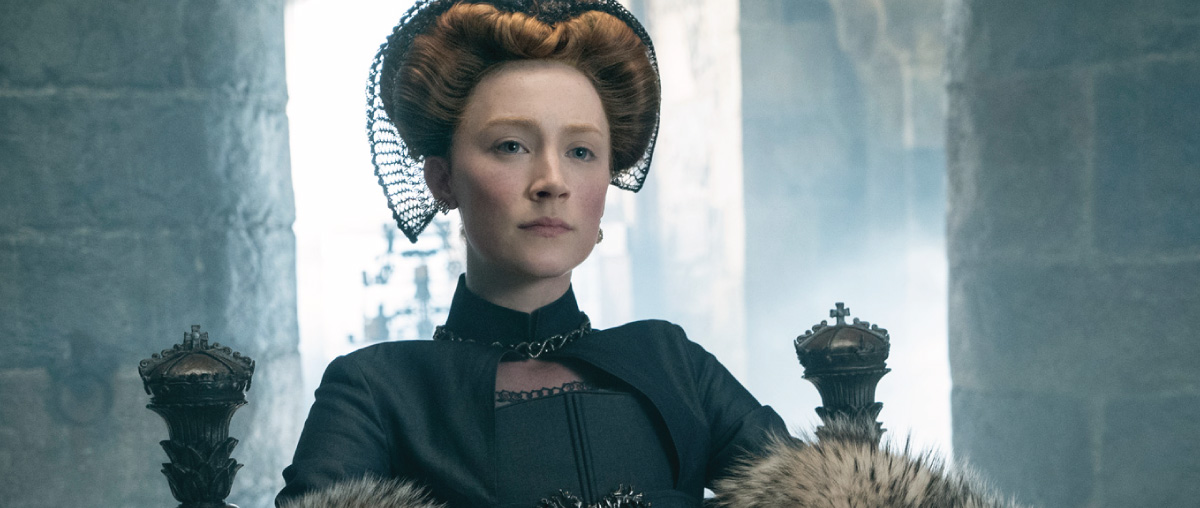 (Saoirse Ronan as Mary Stuart. Photo: Liam Daniel/Focus Features)
Margot Robbie required a lot of elements to transform into Elizabeth, some of which meant having to disguise the modernity of her natural features. A prosthetic nose helped the transformation immensely. "To give her a nose like Elizabeth’s nose, we had to take away the very beautiful modern look Margot has. The new nose gave her a sense of regalness, it added to the strength and personality in her face."
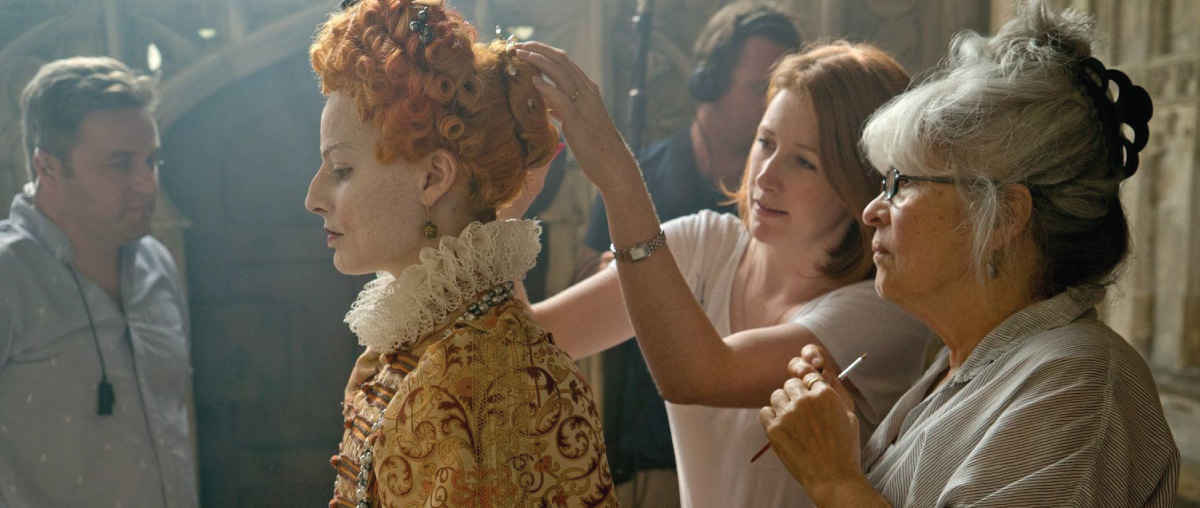 (Jenny Shircore overseeing touchups on Margot Robbie. Photo: Liam Daniel/Focus Features)
What is most fascinating to see is how Shircore designed Robbie's makeup to show her rise in power and physical deterioration over time. On heavy makeup days, Robbie had to spend approximately three hours in the chair. She remarked that the final look made her feel alienated from the crew, however it might have been this feeling which helped impact her performance.
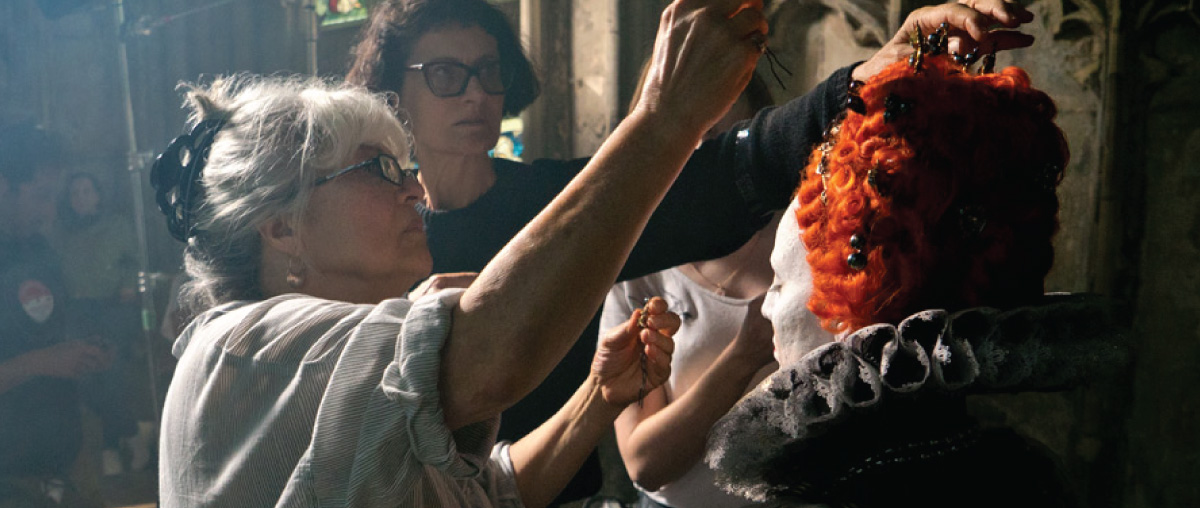 (Jenny Shircore doing touchups on Margot Robbie. Photo: Liam Daniel/Focus Features)
The makeup of the time was unsophisticated and poisonous, and so Jenny Shircore wanted to show the heavy makeup as authentically as possible. Samantha Sasso at Refinery 29 best explains, "As the movie progresses, the Queen's white, pasty makeup grows heavier and heavier (a signature trait most people will recognize from Elizabeth's portraits) — as does her power."
Vice
Directed by: Adam McKay
Nominated for Best Makeup & Hairstyling:
Kate Biscoe - Department Head Makeup
Greg Cannom - Special Age Makeup Design & Creation
Patricia DeHaney - Department Head Hair
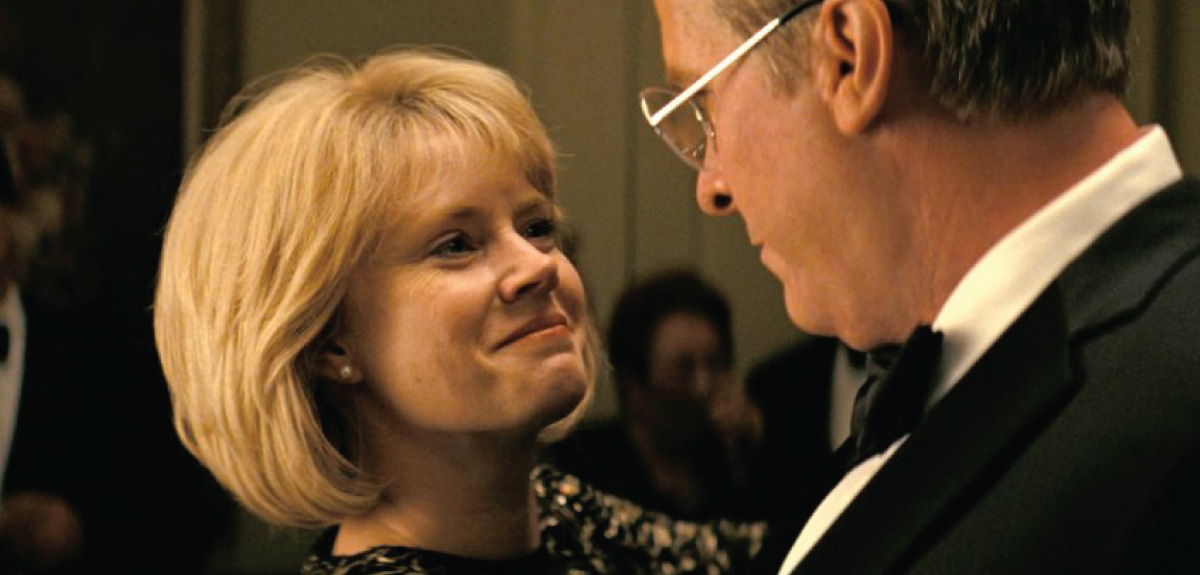 (Amy Adams as Lynne Cheney with Christian Bale. Photo: Annapurna Pictures)
Final nominee Vice is one of the other big biopic contenders, and follows the life and rise to power of former US Vice President Dick Cheney. Three-time Oscar-winning Makeup Artist Greg Cannom took the helm on designing the prosthetic makeups that would transform Christian Bale into Cheney, with Kate Biscoe heading the Makeup department, and Patricia DeHaney in charge of Hair.
To help him achieve the multiple prosthetic makeups required for the film, Cannom brought on Vice's Department Head of Special Make-up Effects, Chris Gallaher, and ran the show out of Gallaher's shop. There, a group of talented artists and technicians, including key sculptor Brian Wade, produced the prosthetics that would be applied on set by Cannom, Gallaher, Erik Porn and Kenny Myers, with hair department head Patricia DeHaney and key hair stylist Karen Asano-Myers finishing the look with expert styling of a variety of lace front wigs created by wig makers Justin Stafford and Stacey Butterworth.
One of the biggest challenges faced by the team was that Bale's facial anatomy was completely different from Cheney's. Although Cannom had originally decided to design a subtle makeup, keeping the prosthetics to a minimum, Bale, upon seeing the potential, was enthusiastic to keep pushing for a more accurate look, meaning a lot more prosthetic pieces. Six months before shooting, the team life-cast Bale, and got to work sculpting and molding. All of the final pieces were molded and run in silicone by lab technicians Aaron Globerman and Dalton Kutch.
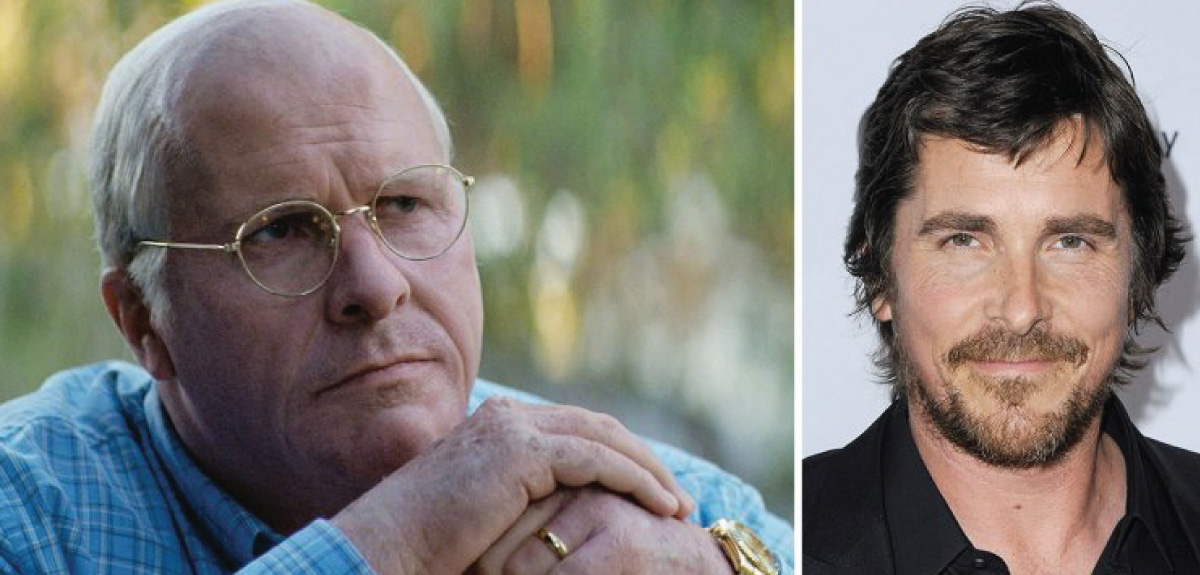 (Christian Bale after makeup next to Bale before makeup. Photo: Annapurna Pictures)
Back in December, The Hollywood Reporter talked to Cannom about the process of applying the makeup over the prosthetics. "I used a special rubber-mask grease makeup that you could use on rubber and appliances. It holds up really well and gives a translucency that looks very real. I'd use different colors of bases, and the very last thing I'd do is go in with reds to pop the reds in his face to look really natural."
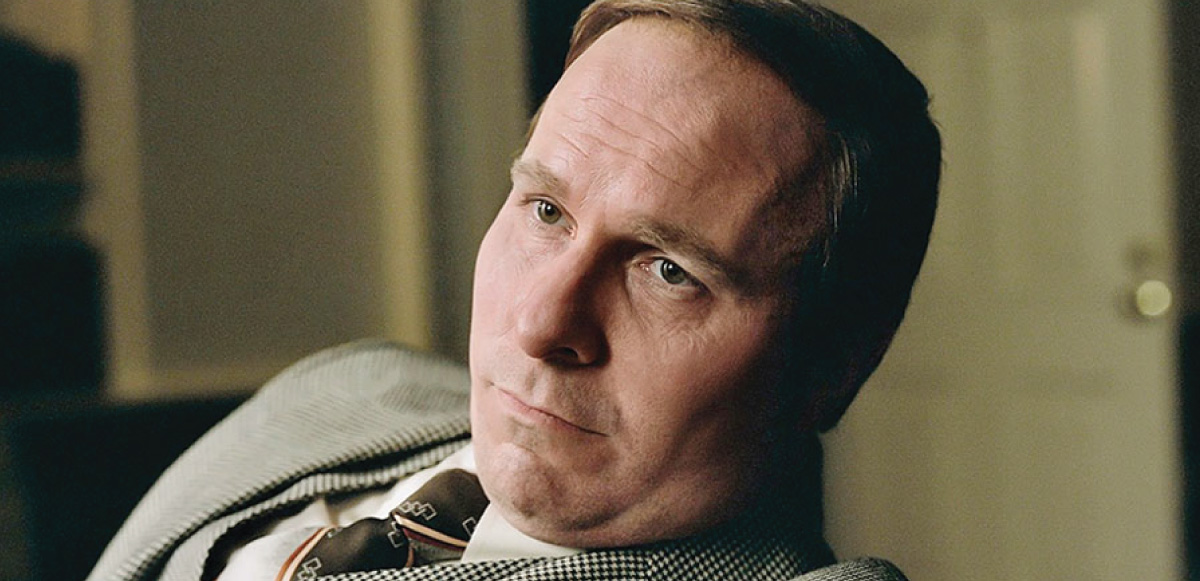 (Christian Bale in younger Cheney makeup. Photo: Annapurna Pictures)
Bale did his part alongside the prosthetics by shaving his head, bleaching his brows and gaining weight. Greg Cannom's initial worries about the actor's comfort soon diminished as he saw how passionately Bale wanted to portray the character. "I was very concerned with Christian sitting that long for the makeup, but he never had a problem with it. While we were doing his makeup, he'd be researching Cheney photos and videos and everything."
In addition to the Cheney makeup, Vice boasts a variety of equally impressive makeups for the film's supporting characters. Veteran makeup artist Wesley Wofford designed and applied Tyler Perry's Colin Powell makeup, Jamie Kelman transformed Sam Rockwell into President George W. Bush, and Adrien Morot helped Steve Carrell morph into Don Rumsfeld.
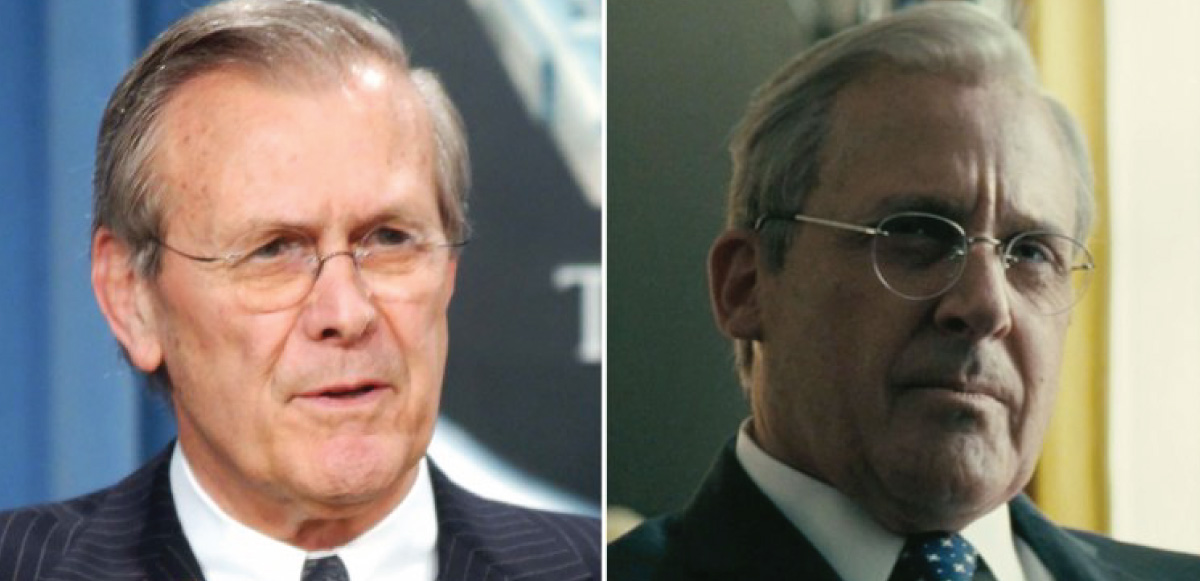 (Donald Rumsfeld next to Steve Carell in makeup.)
Additional Team Credits:
Co-Key Makeup Artist - Ann Pala Williams
Co-Key Makeup Artist/Prosthetics for Sam Rockwell - Jamie Kelman
Tyler Perry's Makeup Artist - Wesley Wofford
Prosthetic Makeup Department Head - Chris Gallaher
Prosthetic & Makeup Effects Sculptor - Brian Wade
Makeup Effects Key Artists - Erik Porn, Kenny Meyers
Moldmakers/Silicone Appliance Runners - Aaron Globerman, Dalton Kutch
Makeup for Steve Carell - Adrien Morot
Co-Key Hair - Cheryl Daniels, Karen Myers
Tyler Perry's Hairstylist - Charles Gregory
Hairstylist - Laurel Kelly
Hair Assistant - Melissa Oliveira
Background Makeup Supervisor - Cristina Waltz
CONGRATULATIONS TO ALL
Every year during award season, audiences and industry folk alike are exposed to some amazing talent and filmmaking. The Makeup and Hairstyling category this year is no different and features a truly wide and diverse collection of looks and concepts. From mythical creatures grounded in reality to historical precision for the depiction of characters rich in culture to simulating actual living people from the recent past, the bar has been set high yet again. All the nominees (and many of the shortlisted contenders from films that narrowly missed out) deserve appreciation and recognition for their work.
"There are a lot of great movies that have won the Academy Award, and a lot of great movies that haven't. You just do the best you can."
- Clint Eastwood