
Jump To Section
- Beware of “Breadwich,” the Sinister Sandwich
- The Bread Monster Strikes!
- Using Traditional Animation and Digital Compositing
- Combining Digital and Practical Animation
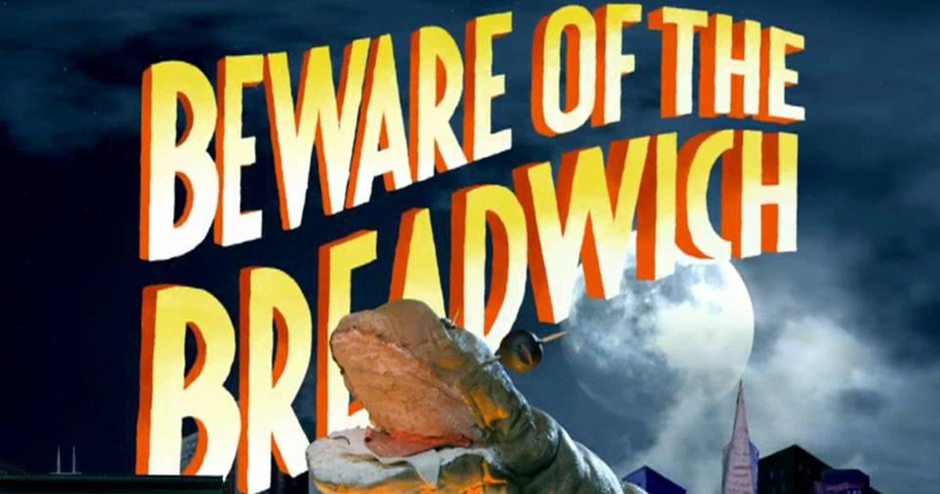
Beware of “Breadwich,” the Sinister Sandwich
By Mark Sawicki
In the midst of all the cool things shared by the fine artists at SWSCA about the creation of the most awe-inspiring, realistic creatures on the planet, I have something a bit different to offer from the world of television advertising. A Looney leviathan, if you will, made with humble techniques and materials to create a goofy menace in a childlike world of buildings made of boxes, all for the sole purpose of promoting better sandwiches.
During my SWSCA stop motion lesson shoot, I had the pleasure of meeting a very talented young artist named Sara Gerstel. I was very impressed by her dedication to model making and animation, and we had loads of fun talking shop. As luck would have it, Sara put me in touch with Matt Olmon of Elastic, who was producing a TV commercial that needed a DP. I took the job immediately and was, in a short time, transported back to the MTV days I experienced in the 1980s.
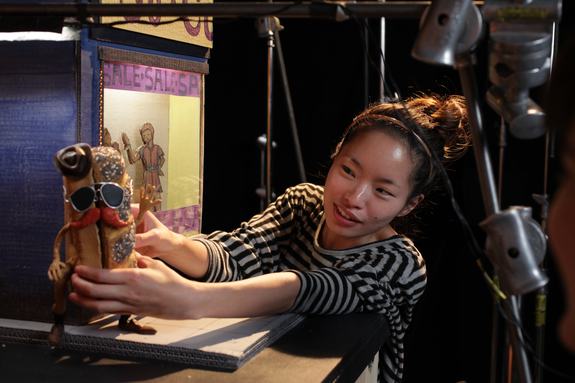 (Director Lisha Tan positioning one of the delightful characters she designed.)
The Bread Monster Strikes!
The spot for Togos was directed by Lisha Tan, who came up with the concept of a giant bread monster terrorizing a childlike cardboard town populated with puppets. This “Breadwich” creature embodied the horror of a sandwich with little or no meat. It was all to be done in stop motion, and the models and art were fabricated using the collage method. No ball and socket armatures here, just bare bones wire and epoxy covered with… “stuff.”
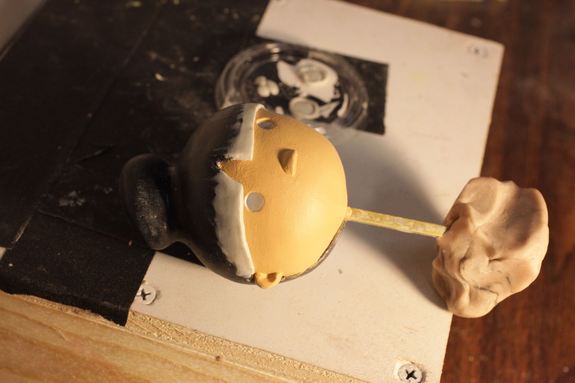 (A puppet head in progress. The eyes were small spheres held in place by clay eyelids.)
This was real Gonzo-style animation production as practiced by bohemian rock video artists of old. They used doll parts, toy parts, Sculpey clay, fabric, foam rubber, and glue to pasteiche the characters into shape. Sculpture was used sparingly, and most puppets were built up from the final raw materials of rubber and paint. It wasn’t slick and perfect, but ingenious and clever,r using selective crudeness to elicit innocence and charm with grace and polish.
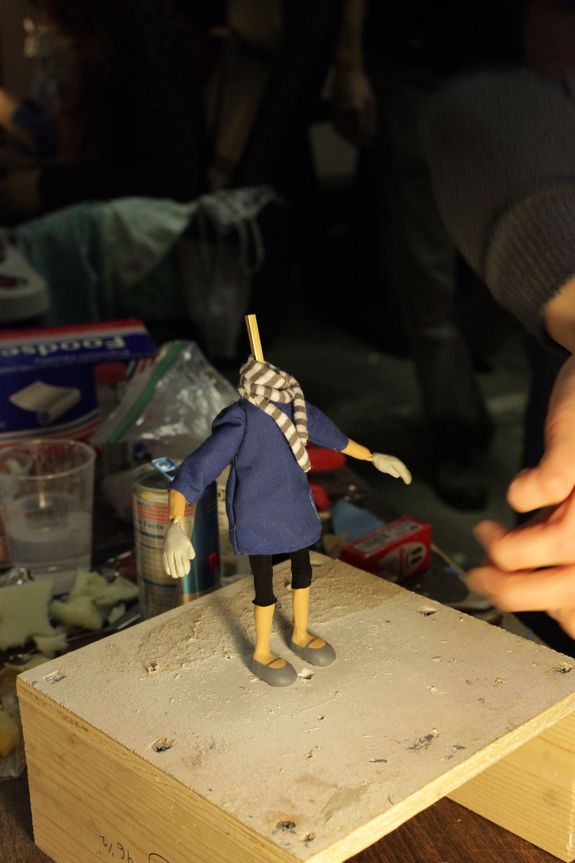 (A puppet body. The figures were bolted from underneath to be able to stand on one foot without falling over.)
Our “Ace” crew was comprised of Director Lisha Tan, Producer Matt Olmon, Lead animator Nicole Emmons, Lead fabricator Sara Gerstel, Production designer Jeff White, fabricators Caroline Kastelic and DanRae Wilson, Production artist Jon Forsman, and me, “Pop” Sawicki, as Director of Photography.
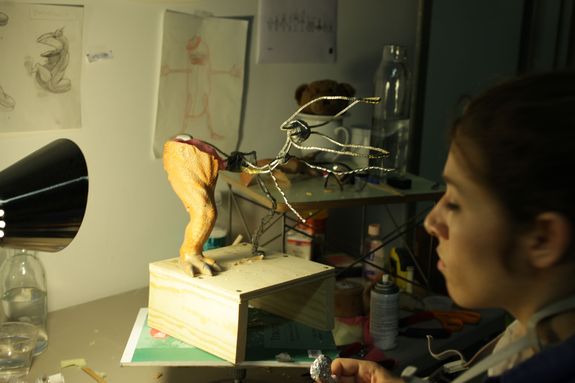 (Lead fabricator Sara Gerstel fashions a toy Dinosaur leg around the simple wire and epoxy armature.)
Jeff White did a brilliant job creating the sets and buildings using nothing more than corrugated cardboard boxes, crumpled paper, and paint. Jeff was most accommodating in creating spaces for me to mount tiny fluorescent bulbs to illuminate the miniature sets.
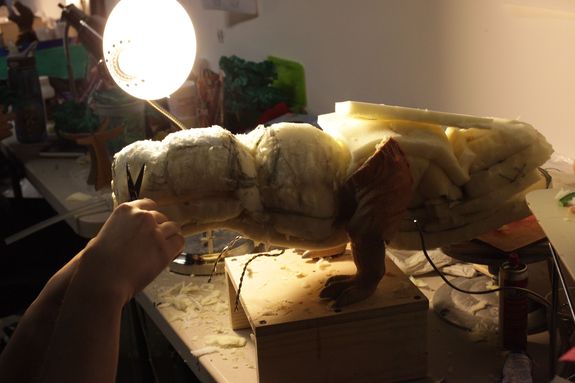 (The building up of the hero puppet required a LOT of scissor snipping.)
Using Traditional Animation and Digital Compositing
The figures averaged about 12 inches in height, and I remember having a bit of fun with one of the artists who asked how big the 5-story buildings would be. I said, “Well, since you are working at an inch to the foot for the figures, the buildings should be 5 to 8 feet tall.” The artist's eyes got very wide at this point, but I calmed the fear by saying: “Hey, we’ve got a green screen we can shoot the puppets against, so we’ll be able to size and composite them into much tinier sets.” This is exactly what we did, and since we had the luxury of using compositing, we also saved tons of animation time as well using a hybrid animation process.
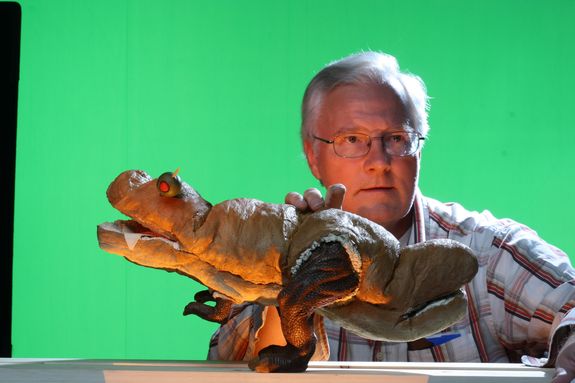 (The author, Mark Sawicki, with the final Breadwich, ensures the lighting is just right. The green screen was 15 feet away to make sure there was no green spill light on the monster.)
Combining Digital and Practical Animation
One shot demanded that we show a platoon of puppets running away from the giant breadwich monster. Trying to animate 10 puppets running down the street all at the same time would be a bit too Gonzo for even the craziest animation team and would be sure to lead to frustration and cost overruns. The solution was to animate each puppet against green for one run cycle and an exit, amounting to only 12 to 20 frames of animation per character. Lisha, who was not only directing the spot but executed the compositing in AfterEffects, found that it was a simple matter for her to cycle the puppets running while making them grow larger in the frame using software to create the illusion that they were running forward while compositing them within the much smaller scale street miniature. When they got close to the camera, she merely switched to the animation of the character running off one side of the screen or the other to exit. This made the big production shot of mass destruction a snap. The technique also gave us the ability to change elements later at the agency's request quickly.
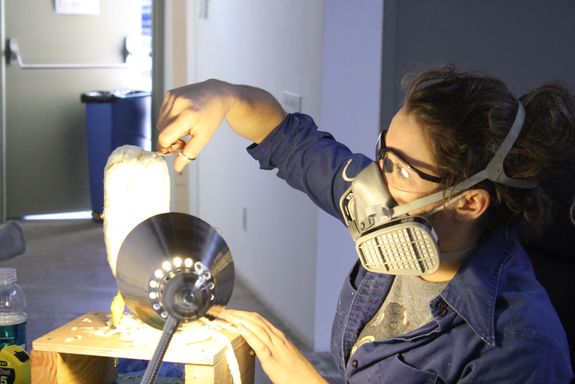 (Sara shaping the Breadwich puppet while wearing the appropriate goggles and mask for protection.)
We finished two spots in record time and on budget. The commercials were a big hit with the client, and I had loads of fun working on this freewheeling, crazy, goney project that is also a part of the legacy and magic of creature creation. Here’s the spot, enjoy!
- Mark Sawicki
Mark Sawicki is the author of “Filming the Fantastic” and “Animating with Stop Motion Pro” published by Focal Press.
He is proud to be a lesson creator for the Stan Winston School of Character Arts. CLICK here to see Mark's lesson on Stop-Motion Character Performance and Rear Projection.