
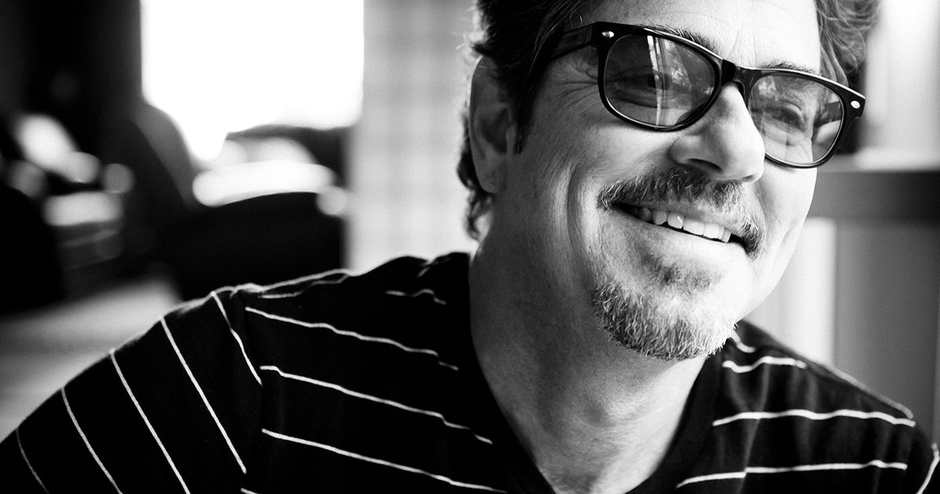
Meet Steve Johnson, the Mad Scientist of Creature Effects
By David Sanger
CLICK on the video above to watch the FULL INTERVIEW.
Today’s monster maker interview features the iconoclastic, legendary effects creator and creature designer Steve Johnson. In our exclusive interview, Steve discusses his earliest inspirations in the art of makeup effects. He describes working with his idols, Oscar-winning makeup artists Rick Baker, Greg Cannom, and Rob Bottin, and ultimately forging his own path with his famed shop, XFX. Along the way, you’ll hear fascinating, unfiltered stories from the trenches as Steve shares his perspective on how to keep the wonder and bring the art to the business of Creature Effects.
Jump To Section
- Creating Three Decades’ Worth of Makeup Effects
- Steve Johnson’s Earliest Inspirations
- An Innate Problem-Solving Mentality as an Artist
- Creating and Running Boss Films With Randall William Cook
- Opening Steve Johnson’s XFX
- The Most Challenging Show
- The Importance of Having Heart In Art
 (Veteran creature effects designer and now author Steve Johnson looks ahead to new fiction and new characters as a source of his boundless creativity.)
Creating Three Decades’ Worth of Makeup Effects
For three decades, Emmy-Award-winning Steve Johnson has been transforming raw elements, cutting-edge technology, and pure thought into mind-boggling creations. The company he founded, XFX, was, in its time, responsible for the makeup effects in over two hundred films, countless television shows, commercials, and music videos. He’s blown the doors off the audience’s expectations with unbelievable characters and FX in some of the most astounding and beloved films of our time. From the beauty and grace of the aliens from The Abyss to the zany antics of the ghosts from Ghostbusters.
 (A very young Steve Johnson touches up a demon.)
Steve Johnson’s Earliest Inspirations
Though many of his contemporaries point to the Planet of the Apes films as their first inspirations, Steve’s passion had a different source. “When I went to the movie theater and saw Little Big Man it was a transformative experience for me,” said Steve, “and I just could not believe that was Dustin Hoffman. First of all, someone was capable of crafting such perfection… secondly, I thought, ‘Why didn’t they just hire a real old man?’ It was really Little Big Man and Dick Smith that got me started.”
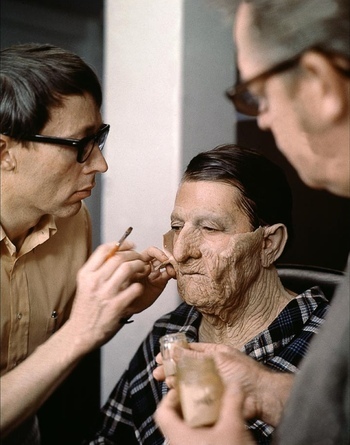 (Dick Smith applies his groundbreaking age makeup to Dustin Hoffman for 1970’s Little Big Man.)
An Innate Problem-Solving Mentality as an Artist
“As a kid,” says Steve, “I was very creative and always wanted to make things, but I lived in Texas, very far from New York, very far from California, so I had to teach myself…there was no one then to ask. If I had a problem, if I was running foam rubber and it collapsed, I had no one to ask. I would just have to do it again and again until I figured it out myself.”
In high school, Steve met his idol, Rick Baker, who looked at his portfolio and told him, frankly, “You’re not very good…yet.” But Rick went on, “What you’ve got is you’ve got the problem-solving mentality, and that’s what creates a great artist. You can learn how to make molds, you can get better at sculpture, you can get better at painting, but what you have to be born with is this innate desire and technique of learning how to solve problems.”
It was ultimately Rick Baker who recommended Steve for his first jobs with Rob Bottin and Greg Cannom and, once he’d gotten some experience, hired Steve for An American Werewolf in London.
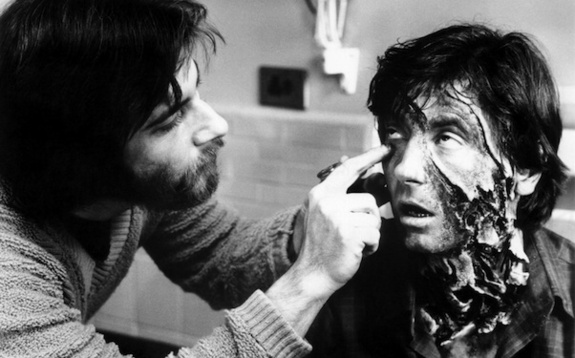 (Rick Baker touches up some rotting flesh on Jack (Griffin Dunne) for An American Werewolf in London, the film that gave Steve Johnson the opportunity to work side-by-side with his idol.)
“Working with Rick Baker on An American Werewolf in London is still one of my favorite memories; I couldn’t believe that I was really in Los Angeles, working with my idol. I would go to work early, and let me tell you something, standing at a work table with Rick Baker standing next to me, no matter what kind of grunt work I was doing, my whole body tingled, and it was unbelievable. I’ve never had that kind of feeling since.”
Creating and Running Boss Films With Randall William Cook
Though Steve was nervous, Ghostbusters provided the opportunity for him to join Richard Edlund’s Boss Films as head of the creature shop along with Randy Cook. Steve was responsible for “Slimer” and many of the other iconic ghosts and effects in that groundbreaking film.
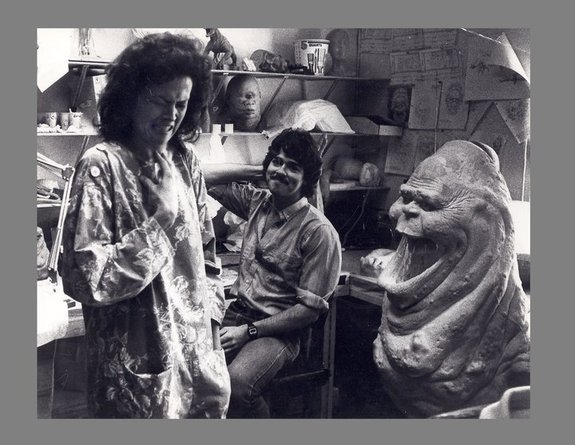 (Sigourney Weaver reacts to Steve Johnson’s “Slimer” behind the scenes during the making of Ghostbusters.)
Opening Steve Johnson’s XFX
After Boss Films closed, Steve opened his own company, Steve Johnson’s XFX. Their first project was the low-budget Zombie/Cop film Dead Heat for which Steve helped turn Treat Williams and Joe Piscopo into zombies.
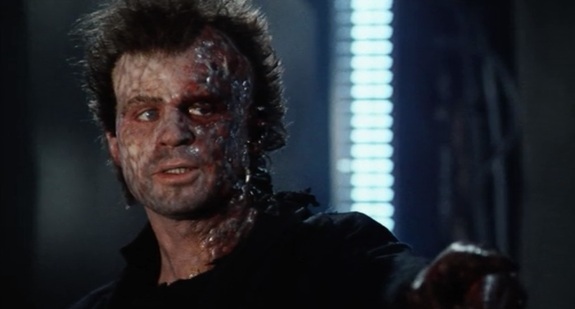 (Treat Williams as a zombie in makeup designed by Steve Johnson for the film Dead Heat.)
Even though the budgets were sometimes low, Steve says there was more trust and respect for the artist and less attempt by production to micromanage every step of the concept process. Steve says, “In those days, it was like Candyland. I just went in, and they said, 'How much will it cost?' and then they’d say, 'Okay, who do we make the check out to?” In the old days, they’d hire an artist, and they would trust that artist.
The projects and movies got bigger and bigger, with a steady dose of horror and many television projects, including Lord of Illusions, Species, Men in Black, Bicentennial Man, Star Trek: Nemesis, and Spider-Man 2.
The Most Challenging Show
Undoubtedly the hardest show of Steve's career was James Cameron’s The Abyss. Steve confesses that his experience with The Abyss was "the only time I’ve ever cried on set.” Cameron wanted his aliens to be glass-clear, self-illuminated, color-changing, and shot entirely underwater. Steve was up for the challenge. But at the end of the project, with the show running out of money, Cameron decided he wanted a full-size alien to interact with Bud (Ed Harris) rather than the half-puppet that had been agreed upon and built. As Steve tells the story, “When it came to shooting, James got more and more frustrated. He finally turned to me and said, ‘Steve, do yourself a favor; next time you make half an alien…make a whole one!’”
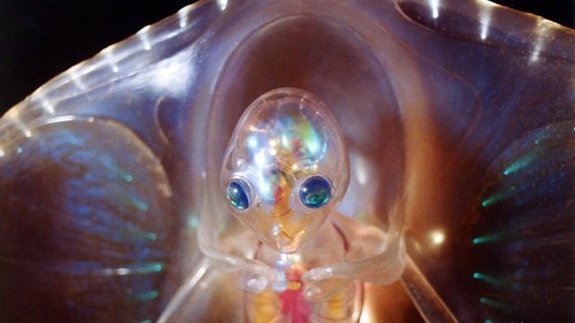 (One of the “glass-clear, self-illuminated, color-changing and shot entirely underwater” aliens from James Cameron’s The Abyss.)
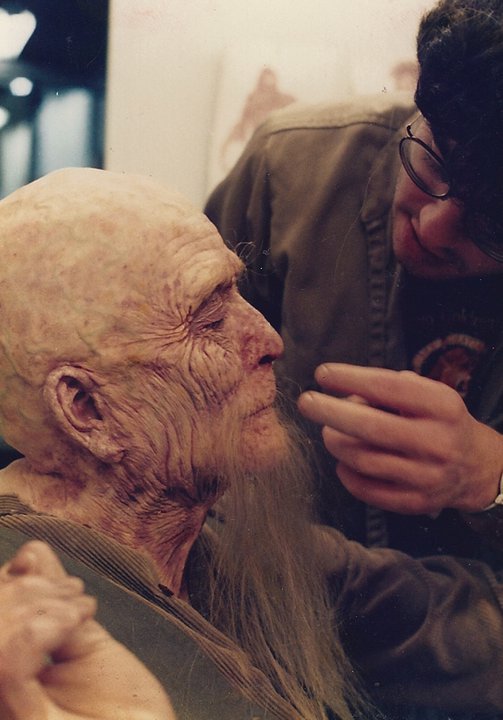 (Coming full circle from his first major inspiration, Dick Smith's makeup work in Little Big Man, Steve Johnson applies his own age makeup to actor James Hong as “Lo Pan” from Big Trouble in Little China.)
The Importance of Having Heart In Art
“I find that pain and suffering do make me a better artist. ‘I’ll show the world’ thing… If you’re doing it for money, you’re going to do a bad job ‘cause your heart won’t be in it. If I got a budget for ten thousand dollars, I’d spend ten thousand dollars on it ‘cause I want it to be the best. You can’t always count on money in the arts. It has to come from your heart. The best art comes from learning how to step out of the way, not to try to control the process, but to open your heart and let it use your body as a tool.”
Regarding his transition to developing his skills as an author after taking time away from the Creature FX business, Steve says, “You can develop any kind of art; it takes practice…years sometimes…taking a raw script and a bunch of people…and getting that and saying, ‘How can I make this better? How can I show the audience something they’ve never dared to imagine themselves?’ For Steve Johnson, the heart is the conceptual process, “the only art left in the business.”
-David Sanger
Check out Steve Johnson and Bill Bryan's Stan Winston School lesson here: MAKE A MONSTER: PLASTIC BAG TECHNOLOGY