
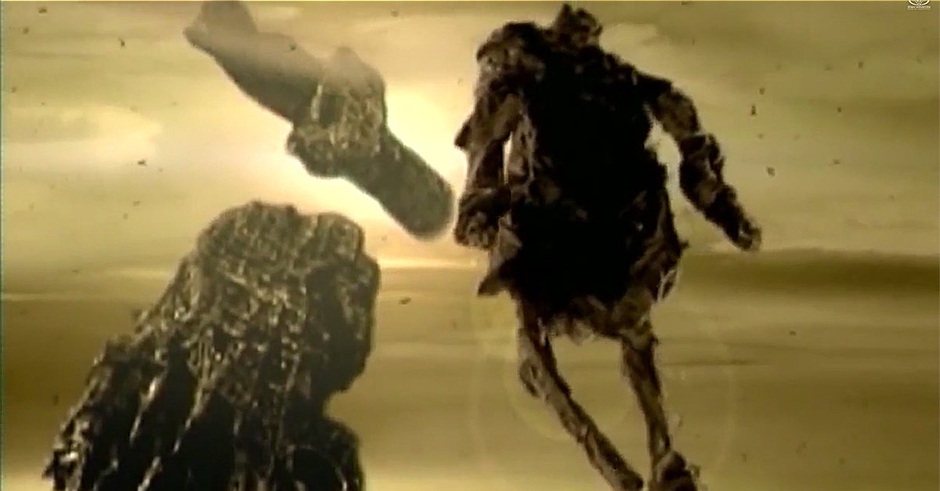
The Making of Steve Johnson’s Everloving Short Film
In 2005 I decided to mount an impossible task. Having grown weary of seeing my budgets cut more and more often in recent years and handed over in great chunks to digital studios, I determined to fight back.
I wanted to conceptualize, then produce and direct a short film that would be virtually impossible to create with practical puppetry, but…
…I would figure out a way. I would fight fire with fire. There was no real reason to create this challenge other than to prove something to myself and, in doing so, perhaps utilize it as a tool to shove down producers’ and visual FX supervisors’ throats. “See?” I would be able to tell them, rubbing my hands together as the lights came up after screening my short, “It’s still possible to create the impossible physically.”
Jump To Section
- The Inspirations: Moby and Zdzislaw
- Wreaking Havoc With Human Perception
- Real Puppets. Real Environment.
- Working in Half-scale
- A Digital Concession
- Reflecting on Everloving
The Inspirations: Moby and Zdzislaw
First, I had to come up with the concept. As a drooling Moby fanatic, I had long been amazed by an instrumental composition entitled, Everloving from his album, PLAY. This would be my soundtrack – a longing and forlorn ode to melancholia.
At the same time, I had become fascinated by the work of Zdzislaw Beksinski, a Polish painter and sculptor -- a supreme master of the surreal. I studied his paintings and determined to bring a third dimension to his two-dimensional work utilizing a type of underwater, slow-motion ballet with half-scale puppets, models, and full-scale animatronics created in an extremely non-traditional way--thin foam latex skins, mostly animated by water.
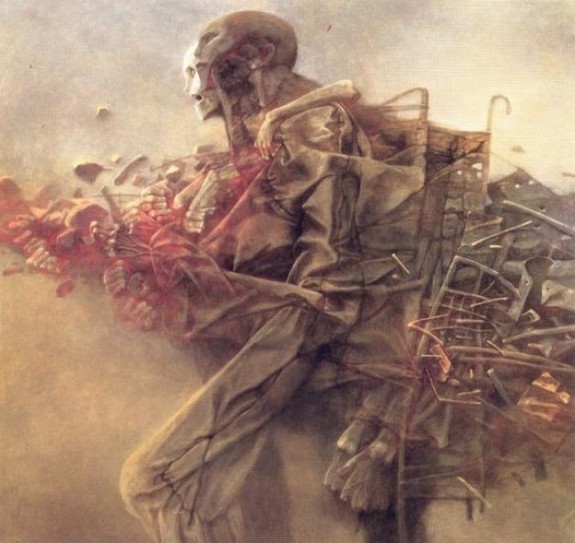
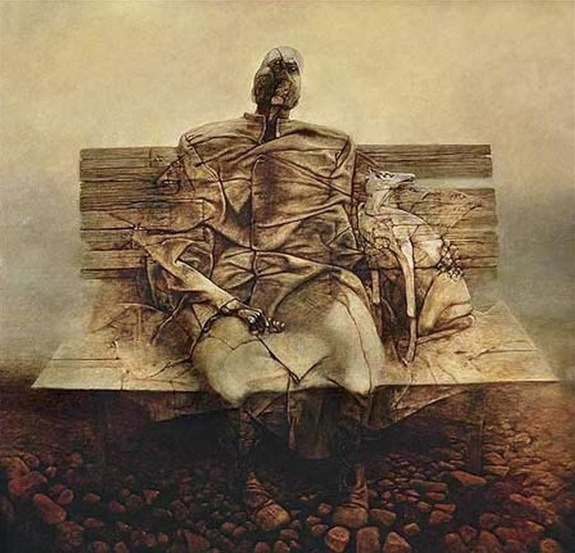 (Two paintings by Polish painter Zdzislaw Beksinski, whose fantasy art inspired the Everloving visuals.)
Wreaking Havoc With Human Perception
After a few weeks of testing, then storyboarding the sequence and timing it to Moby’s composition, we were ready to start. But this wouldn’t be easy -- in order to impart a dream-like sensibility to the piece, I wanted to go even further – I wanted to absolutely wreak havoc with the way the human mind perceives images. To achieve this, I filmed the puppets underwater against a green screen in a custom tank.
In reverse.
In slow-motion.
Upside down.
Then, we reversed the reversed footage to bring the motion forward, flipped the images to right them, and composited the underwater images in a dry environment. Holy Hell – just getting the figure’s arm to move was more complex than landing the Mars Curiosity Rover on the surface of the Red Planet.
 (Steve Johnson, Tim Jarvis - cloud tank FX & the digital FX supervisor, discuss background plate testing.)
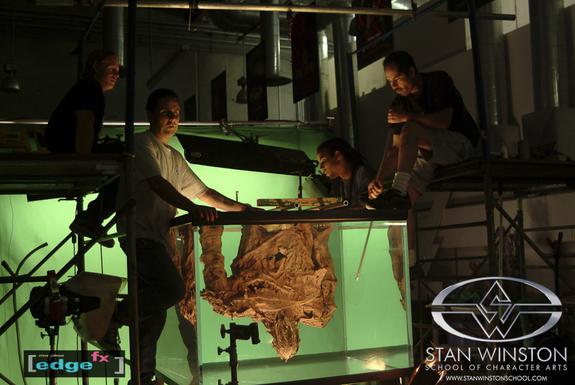 (Full-scale upper animatronic puppet shoot, underwater.)
Real Puppets. Real Environment.
The green screen background was replaced with "cloud tank" stormy skies created in an aquarium with dye and an inversion layer of salt water and fresh water, strobed with intermittent light flashes from behind. Smoke elements were photographed and composited in for every shot. The alien, cracked dry lakebed the figures drift upon was created by heating thin iridescent plastic almost to the point of melting.
 (Steve Johnson created the cloudy, dreamlike atmosphere using practical effects techniques, including a cloud tank, strobe lights, and composited smoke elements.)
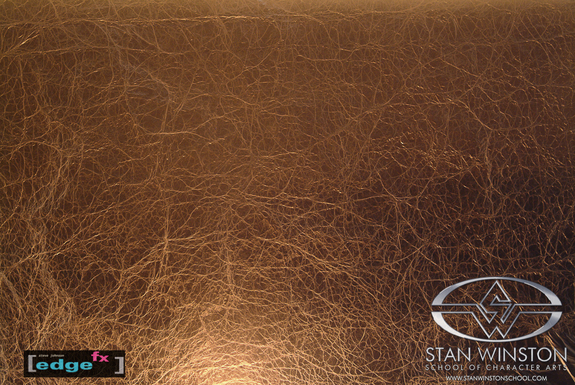 (The surface of the alien world. Created by heating iridescent plastic almost to the point of melting.)
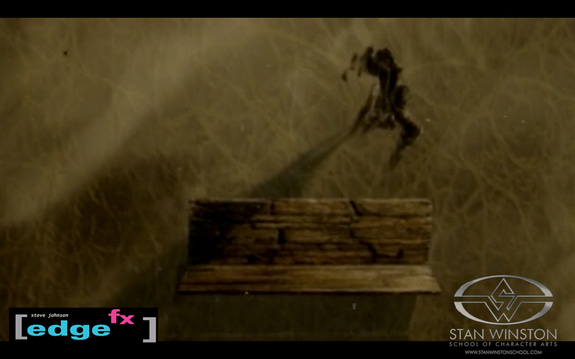 (An overhead shot from the "Everloving" featuring a clear view of the cracked "dry lakebed" terrain.)
Working in Half-scale
For the full-body images of the main character, we constructed a half-scale rod puppet and digitally removed the rods. For the close-ups, a full-scale animatronic hand and upper body were created. We also built a small park bench and a four-foot section of a deteriorating cross as physical models.
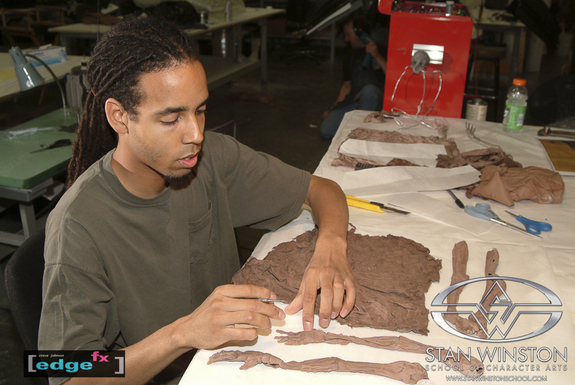 (Fred Fraleigh assembles the half-scale puppet.)
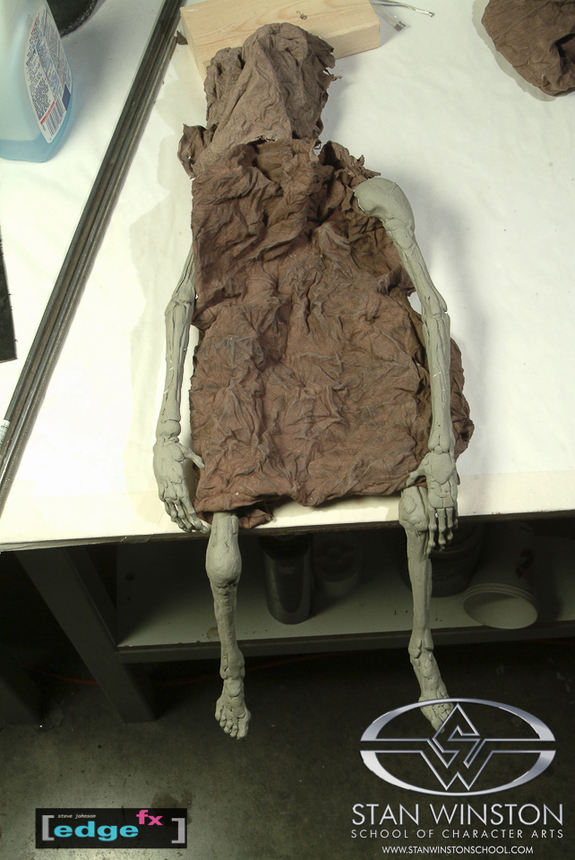 (Half-scale puppet in progress.)
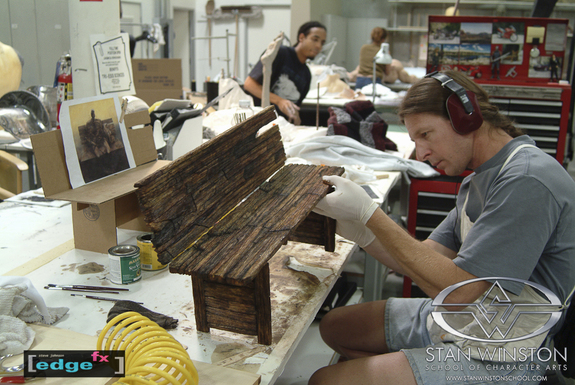 (The bench was created practically as well, along with all the other elements that went into the making of the film.)
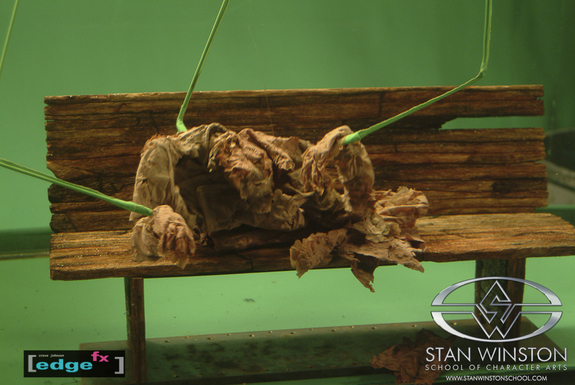 (The half-scale rod puppet underwater on the park bench prop.)
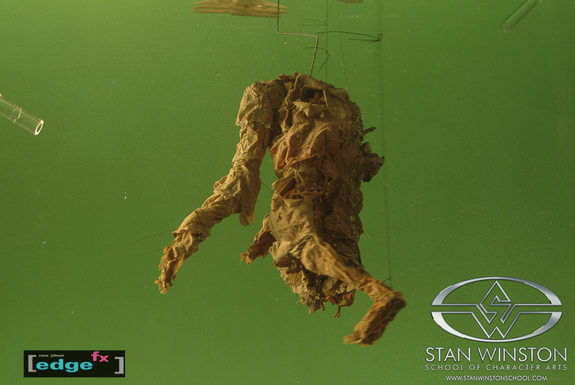 (The half-scale puppet was also performed using underwater marionetting techniques.)
A Digital Concession
Once the components of each shot were composited together and color-corrected to match Beksinski’s palette, I still felt something was missing. So besides the color-timing, compositing, and rod-removal, we utilized computers for a final digital aspect–the floating particulate matter you see drifting in the atmosphere.
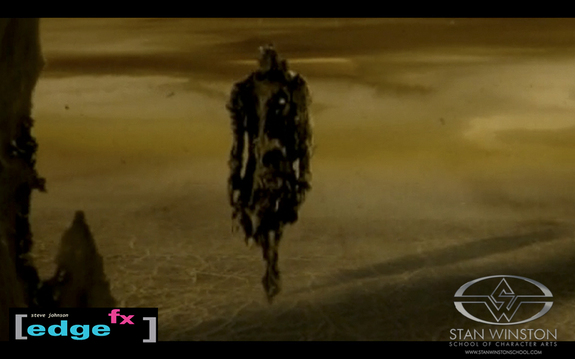 (The finished creature glides through the melancholic underwater landscape.)
Reflecting on Everloving
Did creating this short film help me prove my point to producers and visual FX supervisors?
Not really.
This short was an absolute bitch to create. After two months of testing and creating the puppets, another two months photographing the elements, and a final month compositing and burning through lord only knows how much money…the only point I truly proved was to myself: some things, indeed, are best created digitally.
Did I make a mistake? Did I go too far in a megalomaniacal fit of self-importance? Absolutely not. Following one’s own heart in pursuit of art for the sake of art is its own reward and the truest way to blaze new trails in any discipline–sculpture, painting, even writing, and film-making. As Mozart said, “I pay no attention whatever to anyone’s praise or blame. I simply follow my own feelings.”
And I feel great about this film. I think you will, as well
And be sure to check out Steve and Bill Bryan's lesson: "Plastic Bag Monsters" to learn how to create your own plastic bag creatures.