
By Samuel Lee
Meet Samuel Lee, Leathercraft Master
My name is Samuel Lee. I am an artisan, and my focus is on creating original custom creations for my clients. I like working with various mediums, but I am most known for my leather armor creations.
I became interested in making armor during my high school days of live-action role-play and visiting Renaissance Festivals. I created Prince Armory in 2007 to do this full-time as a craft, but I’ve certainly always had a fascination with armor, knights, and fantasy realm,s and I’ve always liked being creative and making interesting things, so it feels natural for me to be creating fantasy creations like armor and such for a living at this point.
Jump To Section
- Using Leather as an Art Medium
- Versatility and Durability Advantages
- Basic Techniques of Leatherworking
- Getting Started With Leather
- Making Medieval Superheroes
- Lee’s Ultimate Goal


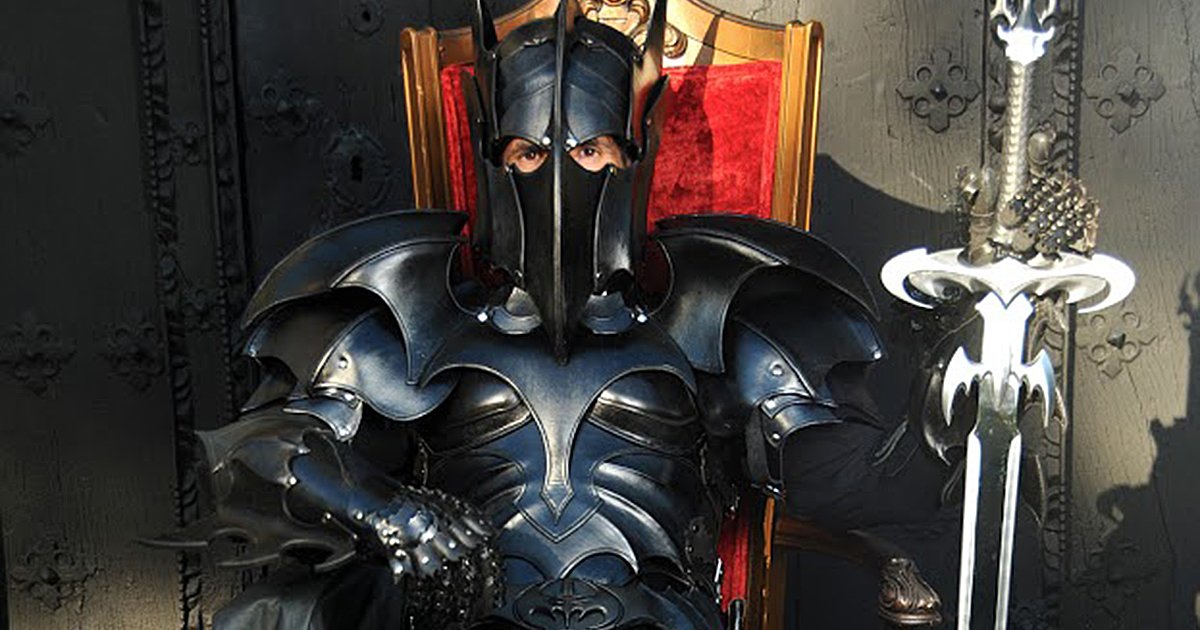
 (Custom leather armor created by Samuel Lee.)
Using Leather as an Art Medium
I love using leather as my primary medium because it is universally recognized as a premium material and is amazingly versatile. I’ve used leather to create everything from a giant koi fish wall art set to belts, pouches, wallets, hats, and, of course, my leather suits of armor.
Versatility and Durability Advantages
When working with leather, it starts out two-dimensional, but with its great wet-forming capabilities, you can create works that rival sculpted projects in shape and form. And one more great thing about leather is that it does not break. If you use good leather at a reasonable thickness, your metal hardware will break far before the leather is damaged. Leather can droop, bend, and deform if abused, but if you design with its limitations in mind, you can produce some amazing things that will last a lifetime.
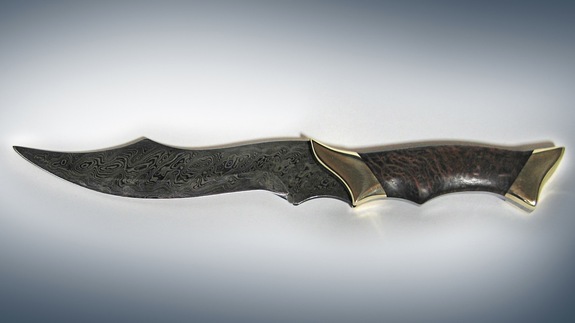
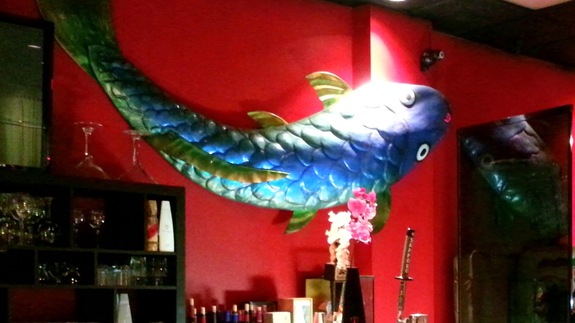 (Samuel Lee applies his versatile leathercraft to custom weapons and sculptures.)
Basic Techniques of Leatherworking
Leatherworking has a few basic techniques you can use to blend together to create more and more elaborate and complex works. Taken to the most fundamental process, after the design, you could say most of my leather works are done in the following ways: cutting, tooling, shaping, hardening, dyeing, and assembly.
1. Cutting
Any construction starts with a pattern. Once you have the pattern you want, you trace it onto the leather and cut it out. This can be done with knives, razors, shears, or laser cutters. I usually use heavy leather sheers I custom re-grind myself for clean easy cuts.
The next step is to transfer the design details to the leather. You can use a stylus or ballpoint pen to trace your lines. You only have to put enough pressure to get a light mark and the leather needs to be damp. I'm generally not too precise with this since I clean up the flow and shapes during the carving process.

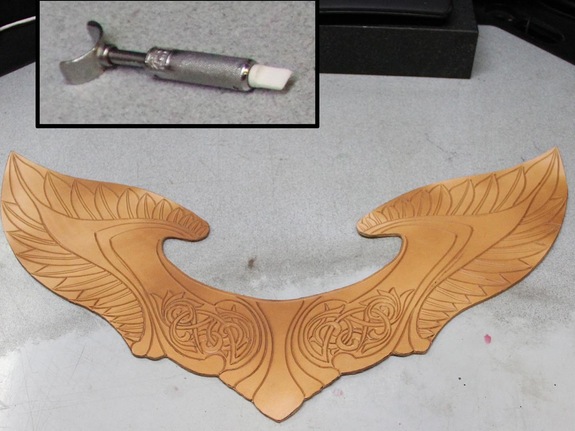 (Starting with a pattern, leather can be cut to shape and then carved, embossed or filigreed.)
2. Tooling
Tooling has the most expansive range of technique possibilities. Leather can be carved with a tool called a swivel knife, which can serve as a stand-alone decoration or a starting point for more advanced designs. I try to make sure all the lines flow well, meaning they need to look clean and consistent and not have jagged or wavy lines.
You can also tool leather with a repetitive stamp tool, and you can emboss it and shape it with tools almost like clay. There are many ways to emboss leather, but the most common is simply using hammer and beveling tools.


 (Leather can be detailed with a variety of tools, including swivel knives, repetitive stamp tools, razors, and more.)
3. Shaping
You can wet form/mold it into 3D shapes, though this requires more effort as the leather doesn’t behave as placidly as, say, thermal plastic or creating a shape with clay - especially with armor-grade leather thicknesses. Achieving more depth in your shapes with thick leather involves some manipulation with geometry, layering, and various assembly techniques. You’ll notice that many of my works have a lot of shape and depth, so quite a lot is possible.
4. Hardening (optional)
And, of course, you can harden the leather. I harden most of my pieces, but only to an extent. You can make leather as hard as you want, but the harder you make it, the more you run the risk of it developing fatigue cracking. Most hardening techniques will eventually break back down to the leather’s natural consistency.
5. Dyeing
You can then dye it, stain it, or even paint or airbrush it to whatever color and texture you want. I use a lot of color and metallic effects in my own works, but you can do whatever suits your preference.
6. Assembly
You can rivet leather together with any number of rivet hardware types. You can sew it by hand or machine, and you can lace it up with leather or cord. Certain glues can work, but a permanent bond on something that will see some use and abuse really calls for some additional measures.
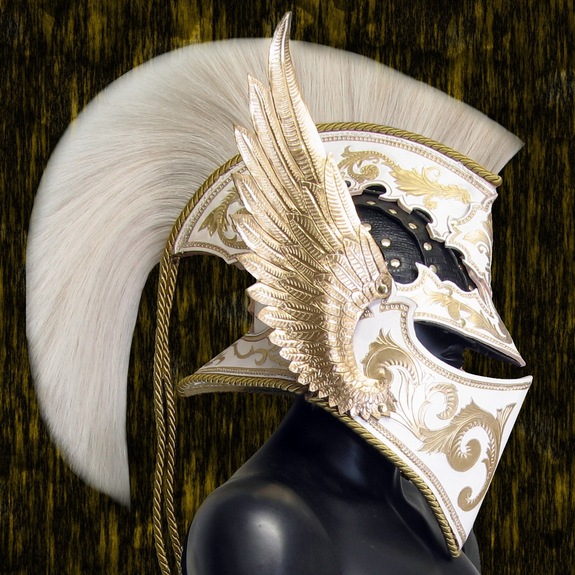
 (Dyes, stains, and paints can transform leather into an endless variety of colors and finishes. Construction and hardening techniques guarantee that the art will function not only but also last.)
Getting Started With Leather
If you’ve never put your hands on leather to make something, I suggest you find your nearest Tandy Leather Factory Store or local leather shop and buy a hide to play with. In some ways, you could almost think of leather as 2D clay, though perhaps less forgiving. Leatherworking as a craft reminds me a lot of playing a guitar; It’s really easy for anyone to pick up and play,y but you can spend a lifetime perfecting your skills and techniques.
You can spend a fortune on leatherworking tools and machines, but it’s also something you can easily start out with minimal investment. I believe when I made my first venture into leatherworking, my full leatherworking toolset totaled less than $100. But it’s addictive, so watch out; your tool and hardware wish lists will quickly skyrocket! Also, one thing I’ve noticed about leather shops is that the staff is almost universally experienced with leatherworking and eager to help get you started. They will happily answer your questions to get you underway with your first projects.
Making Medieval Superheroes
Currently, I’m most excited about my “Medieval Legends” series of works, where I take iconic superheroes and villains and reimagine their outfits mostly from the standpoint of "What if this character was a knight in a medieval high-fantasy universe?"
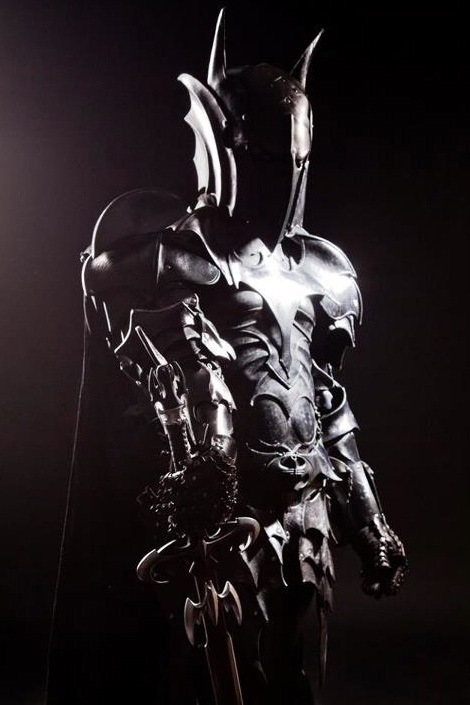

 (Samuel Lee's "Medieval Batman" custom leather armor.)
The first creation within this realm was “Medieval Batman,” followed by “Medieval Aquaman” and “Medieval Loki.” Incarnations lined up for the future: Spawn, Iron Man, Darth Vader, Boba Fett, Man of Steel-style original Krypton armor, Green Lantern, Deadpool, and more.

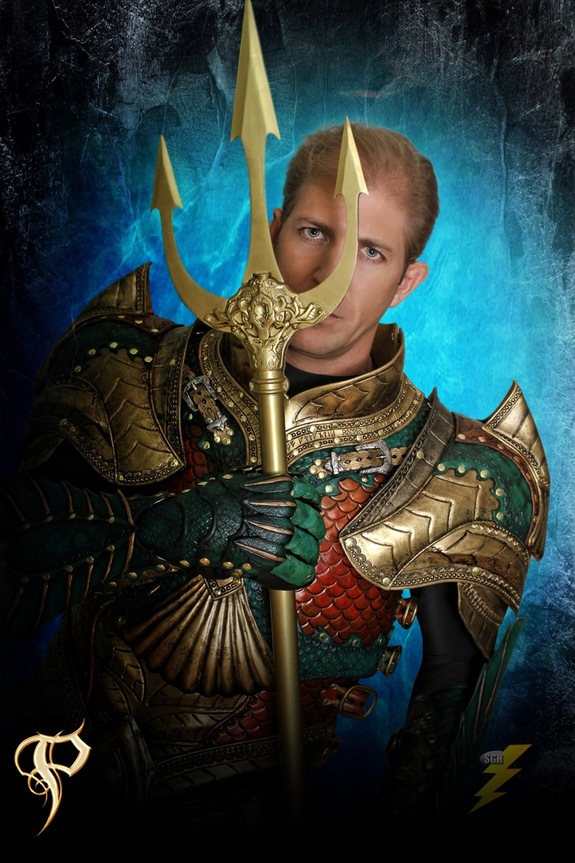
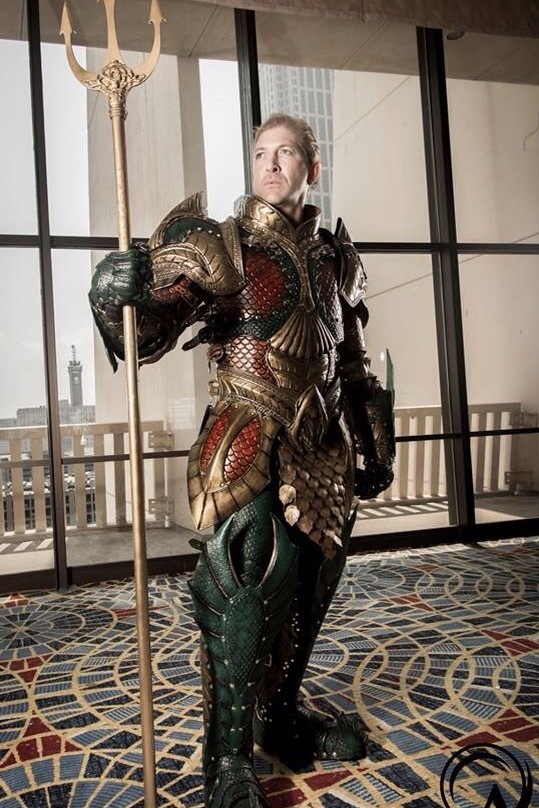 (Samuel Lee's "Medieval Aquaman" custom leather armor.)
Lee’s Ultimate Goal
One of my ultimate goals is to produce work for fantasy film productions. It's too late for the LOTR and The Hobbit, but I definitely have my fingers crossed for the Wheel of Time movies whenever they come around!
- Samuel Lee
Follow Samuel Lee and Prince Armory:
Prince Armory Website - www.PrinceArmory.com
Prince Armory on Facebook