
The Making of Instinct
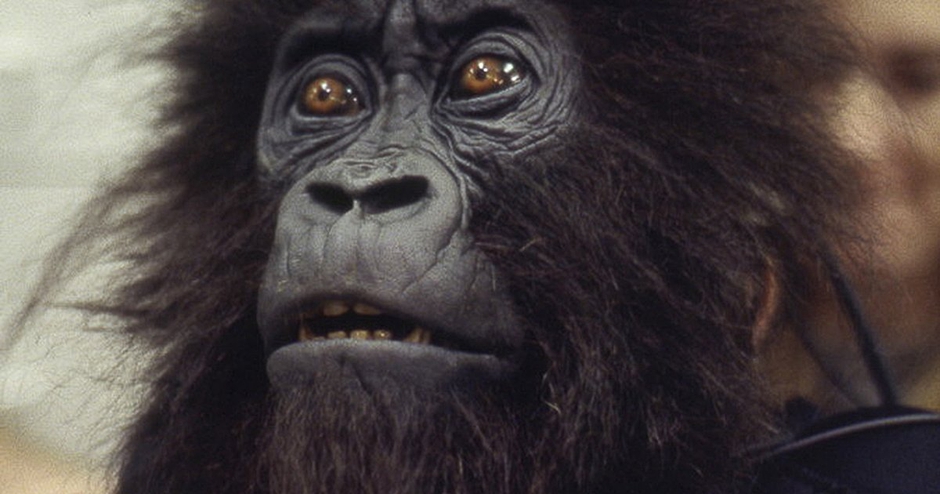
For Stan Winston Studio, John Turteltaub’s Instinct (1999), starring Anthony Hopkins as a renowned anthropologist who lives among a family of gorillas, was more than just another creature effects assignment… it was a chance to prove, once and for all, that the studio’s artists took a back seat to no one in their ability to create utterly believable gorillas.
Jump To Section
- Creating a Family of Mountain Gorillas
- Verne Troyer as a Toddler Gorilla
- Watching Real Gorillas in Uganda
- Committing to Realism With Gorilla Performances
- The Magic of Practical Effects and Performance on Instinct

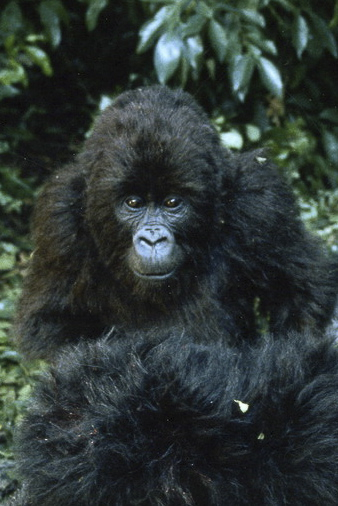
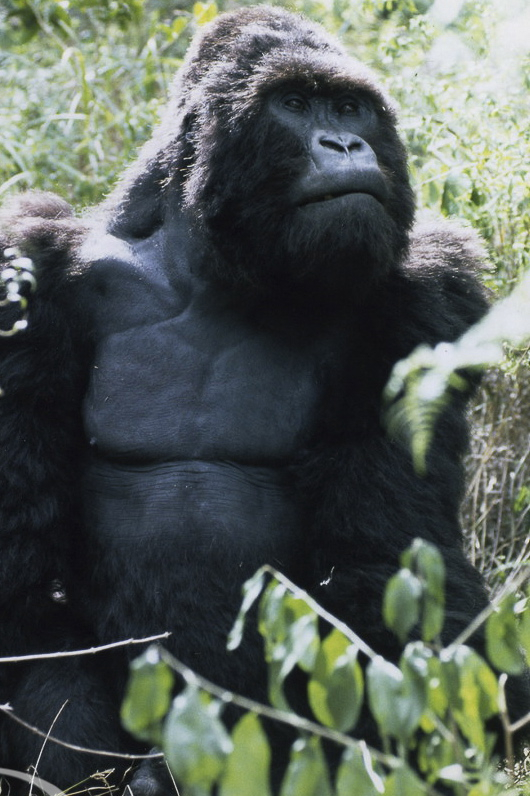 (A trio of Stan Winston Studio mountain gorillas created for Instinct.)
Creating a Family of Mountain Gorillas
The gorilla family originally included a silverback, a young black-back male and three females — all of which would be realized by performers in suits and animatronic heads — as well as an infant, which would be built as a puppet.
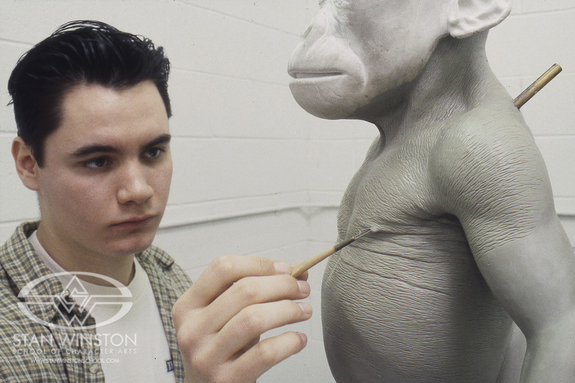 (Jason Matthews sculpts the toddler mountain gorilla.)
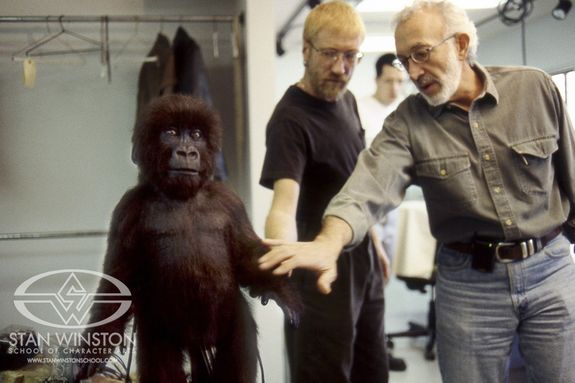 (Stan Winston & gorilla hair department supervisor Stuart Artingstall discuss the toddler gorilla hair work.)
Verne Troyer as a Toddler Gorilla
As shooting neared, the filmmakers decided to add a toddler to the gorilla family, to be performed by diminutive actor Verne Troyer, a relative unknown at the time, who would later gain celebrity as ‘Mini-Me’ in Mike Myers’ Austin Powers: The Spy Who Shagged Me (1999). “Because Verne was so small,” recalled lead toddler gorilla artist Jason Matthews, “I would actually carry him on my shoulders through the jungle where we were shooting. We could just step over a ten-inch root on the ground, but that was a big deal for Verne. I spent most of my time on that shoot taking care of Verne and puppeteering the toddler gorilla head.”
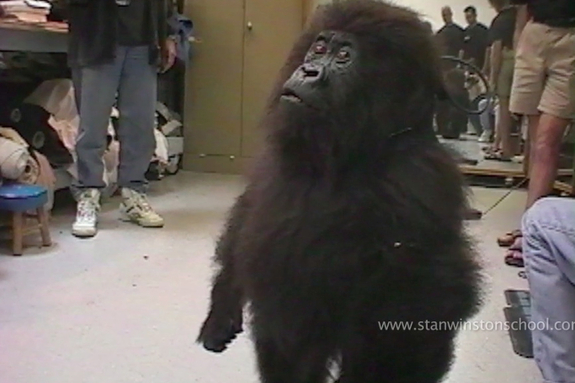
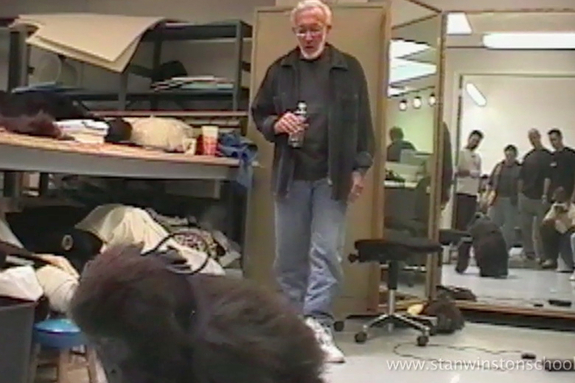 (Stan Winston and crew watch Verne Troyer put their gorilla suit through its paces.)
Watching Real Gorillas in Uganda
Prior to starting the design and build for Instinct, Stan Winston joined Turteltaub and the film’s producers on a trip to Uganda to see real mountain gorillas in their natural habitat. Winston returned with videotaped footage of the gorillas, which his artists and technicians used as a bible in creating their characters. “This was going to be art replicating life,” said Winston. “It was very important to me to pick up on every subtle nuance of the mountain gorillas as I saw them in Uganda.”
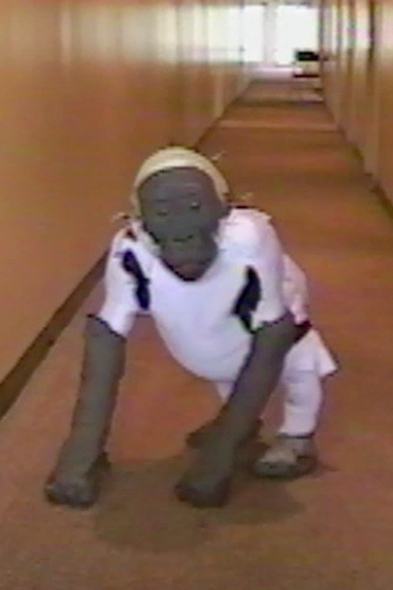
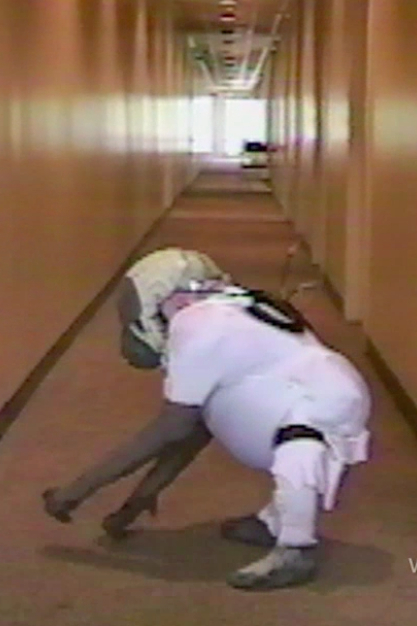 (Actor Verne Troyer tests out the toddler gorilla arm extensions and muscle suit.)
Committing to Realism With Gorilla Performances
Winston’s commitment to verisimilitude extended to gorilla performance, as well. When performers were cast, Winston and gorilla choreographer Peter Elliott had them carefully study and re-create the gorilla behaviors exhibited in the video footage.
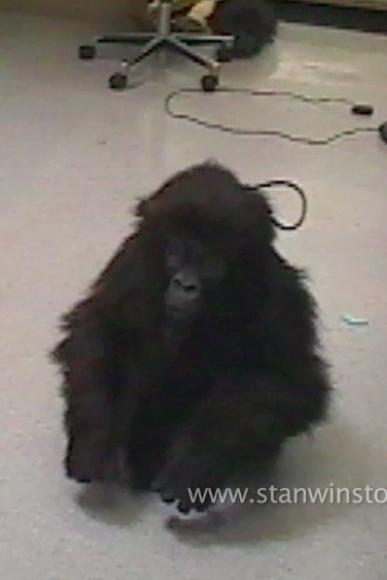
 (Verne Troyer in the near-complete gorilla suit during a test fitting at SWS.)
The Magic of Practical Effects and Performance on Instinct
The Winston gorillas in Instinct were so authentic that few people viewing the film ever realized that the animals were not real. “One of the greatest compliments I got from a friend,” said SWS gorilla artist Paul Mejias, “was when he said: ‘I saw Instinct. Which were the real gorillas, and which were yours?’ That said it all.”
-Jody Duncan
Excerpted from THE WINSTON EFFECT: THE ART AND HISTORY OF STAN WINSTON STUDIO
Courses with the Creators of Instinct
- Creature Screenwriting: How To Write Memorable Monsters with Juliet Snowden & Stiles White
- Special Effects Sequence Design with Shane Mahan
- Hybrid Characters: Blending Practical & Digital FX with John Rosengrant
- How to Make an Eye Mech - Design, 3D Print & Assembly with David Covarrubias
- Arduino Programming Basics with David Covarrubias
More Gorilla and Ape Stuff at Stan Winston School:
- Instinct - Making the Mountain Gorillas
- Creating the Gorillas of CONGO: Behind the Scenes at Stan Winston Studio
- Congo Behind the Scenes: Amy the Gorilla's Animatronic Head Innovations
- From Return of the Apes to Planet of the Apes: Transforming Actors Into Believable Ape Characters
- Remote Makeup Application Part 1: Prosthetic & Kit Preparation
- Remote Makeup Application Part 2: Applying Prosthetics & Hairpieces