
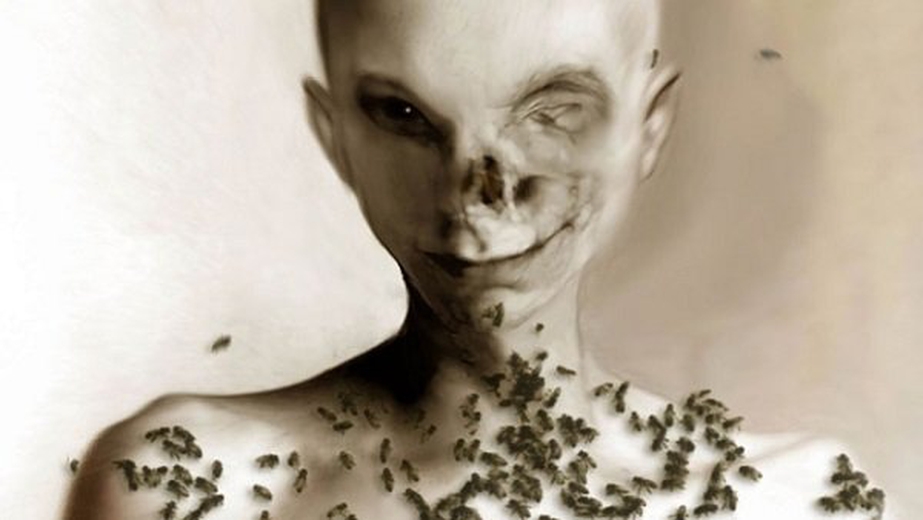
Making the Demons and Angels for Constantine
Stan Winston Studio created a variety of demonic (and heavenly) characters for Constantine (2005), directed by Francis Lawrence and adapted from the 1985 DC and Vertigo horror comic, Hellblazer, including demons, victims possessed by demons, and a winged angel.
Jump To Section
- Creating the Scavenger and the Seplavite demons
- Building Vermin Man
- Using Prosthetic Makeups for Constantine’s Characters
- Creating Balthazar, the Half-Breed Demon
- The Making of Mammon
- Building Dark, Mechanical Wings for Tilda Swinton’s “Gabriel”
The main character, John Constantine (Keanu Reeves), interacts with many different types of Hell’s inhabitants. To achieve the desired visual style, these demons had to seem to exist for real. The inspiration for the design of many of these characters, including the scavenger and seplavite demons, came from the art world and real-life autopsy photographs instead of relying on typical medieval-era depictions of demons.
Creating the Scavenger and the Seplavite demons
Stan Winston Studio concept artist Aaron Sims designed both the scavenger and the seplavite demons in the computer. The designs were then realized in the real world as computer-milled sculptures.
 (Left: In-progress seplavite. Right: Finished silicone seplavite by Jason Matthews, Rob Ramsdell, and Trevor Hensley. This physical creature provided real-world lighting and texture reference for the CGI modelers and animators.)
Although the flying seplavite would be brought to life via CGI, the scavenger demon was a fully articulated puppet with a radio-controlled face, jaw mechanisms, and cable-controlled fingers, operated on set by six puppeteers.
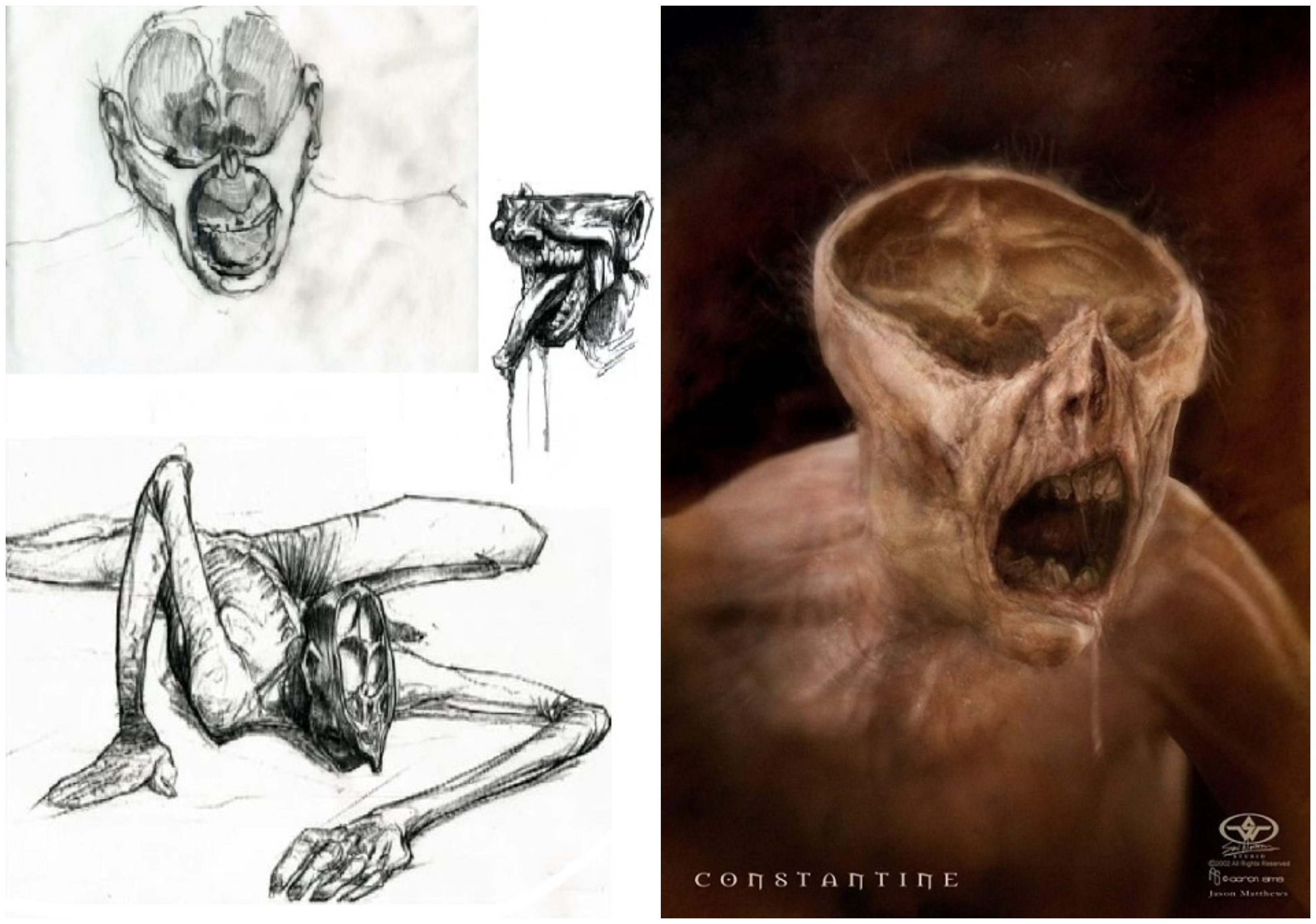 (Left: Scavenger sketches. Right: Aaron Sims design for scavenger.)
 (John Rosengrant rehearses with an animatronic scavenger demon puppet on the set of Constantine.)
Building Vermin Man
Another demon appearing in the film is ‘Vermin Man.' Although this creature would eventually be animated digitally, the filmmakers wanted to shoot a physical character on set, which Stan Winston’s crew realized as a Vermin Man mask and suit.
 (Aaron Sims' designs for Vermin Man.)
Surreal paintings by 16th century artist Giuseppe Arcimboldo inspired the look of 'Vermin Man.' Arcimboldo's work depicted characters formed entirely out of fruits, vegetables, flowers, fish and books; 'Vermin Man' was made up of snakes, rats, crabs and about 20 different types of insects. Real bugs, worms and snakes were molded, cast in clay and then added to the sculpture.
 (Left: SWS key artist Trevor Hensley's 'Vermin Man' sculpture. Right: Trevor Hensley adds final touches to 'Vermin Man' (Larry Cedar) before cameras roll.)
Using Prosthetic Makeups for Constantine’s Characters
A number of prosthetic makeups were created for the film. In the prologue, the drifter who finds an ancient relic (portrayed by Jesse Ramirez), wears a subtle transformation makeup. The possessed young girl (Jhoanna Trias) wore a gelatin prosthetic.
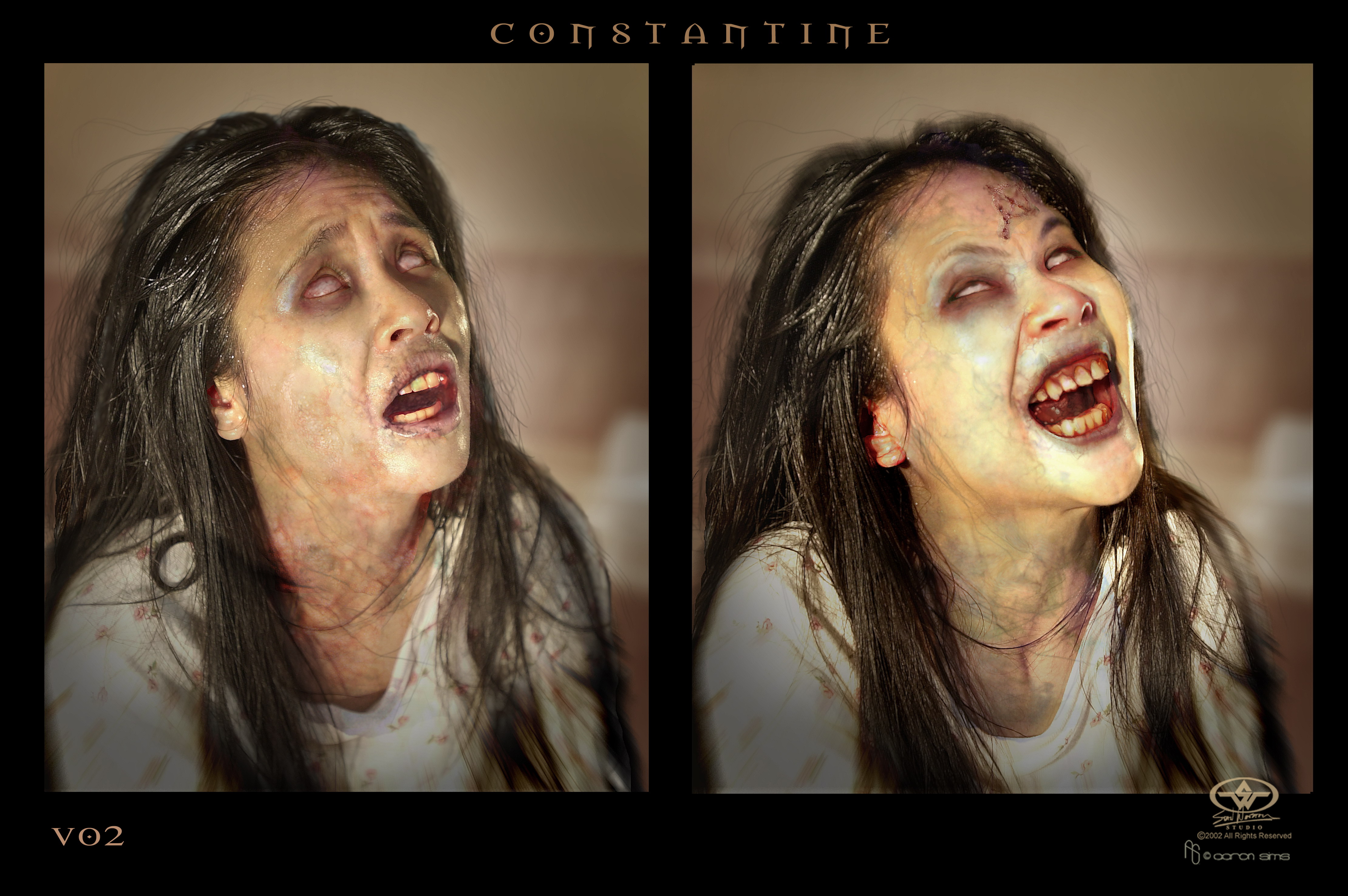 (Concept art for the possessed girl.)
In collaboration with Constantine's makeup department head, Ve Neill, the Stan Winston crew provided dentures, contact lenses and full-body airbrush painting. The crew also built an articulated head-and-shoulders dummy of the unconscious girl for a brief cut in which the scavenger demon within pushes through her skin. SWS mechanics gave the puppet nostril movement, an internal 'breathing' device, and mechanical eye twitching beneath her closed eyelids.
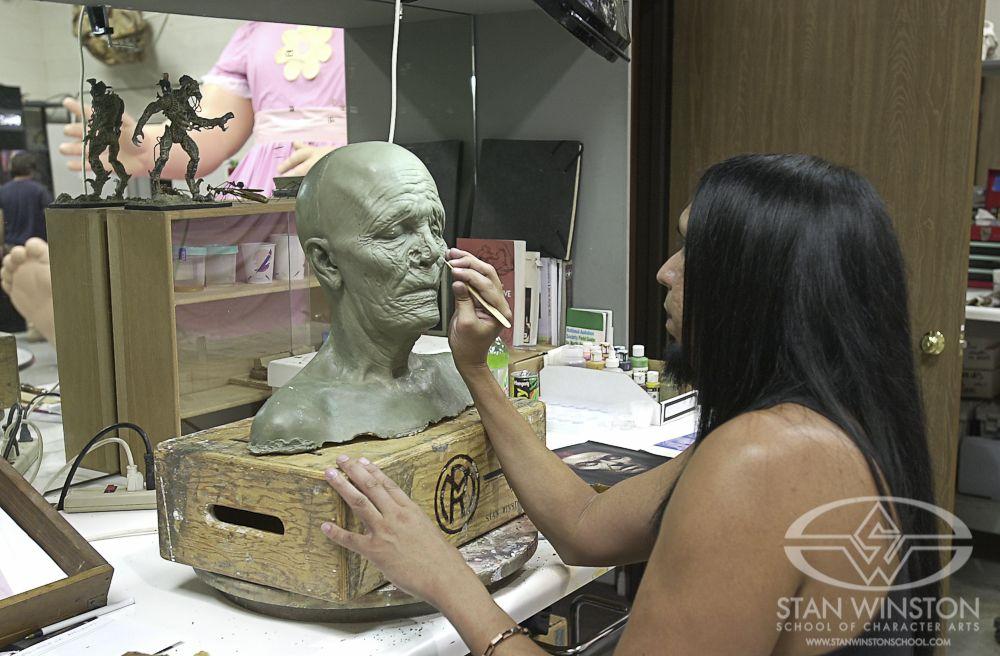 (SWS artist Joey Orosco sculpts a prosthetic makeup for actress Barbara Pilavin. Forensic photos of a three-week-old corpse were used for reference.)
Stan Winston Studio artists also collaborated with Ve Neill, Joel Harlow and a team of fifteen assisting makeup artists to create prosthetic effects for a subsequent scene in a hydrotherapy room, where nearly eighty 'half-breed' characters are destroyed by holy water pumped through a sprinkler system.
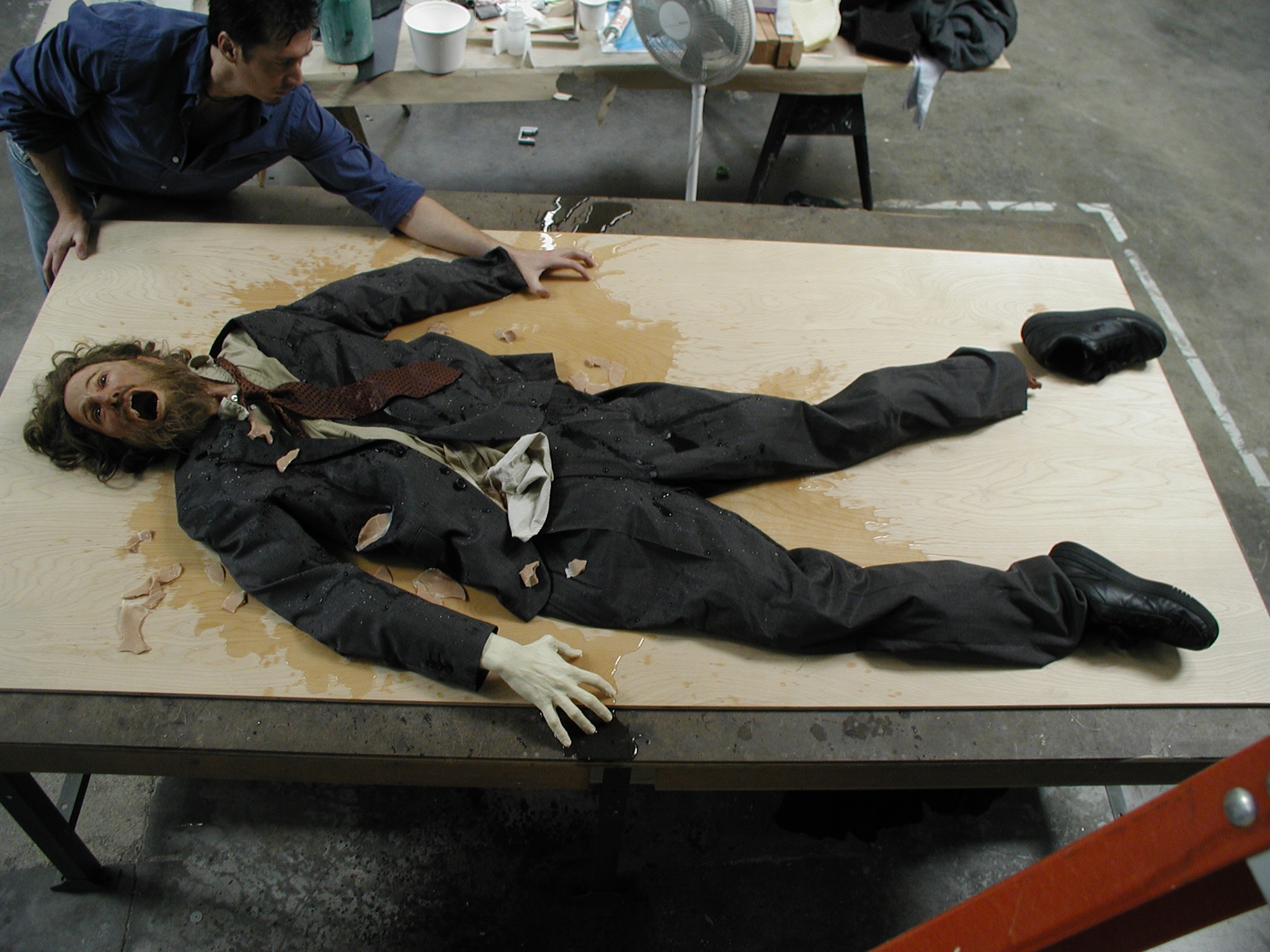 (Dummy for the demon Amin (Tanoai Reed) who disintegrates after being hit with a shotgun blast of holy water.)
Shane Mahan and Chris Swift designed the disintegration as a physical effect, sculpting Tanoai Reed’s body from a cyberscan and casting a replica in plaster. The plaster body was hollowed out, painted and filled with a skeleton, internal organs and ten gallons of black goo. The loaded dummy was raised thirteen feet above the studio floor, and then released to explode upon impact.
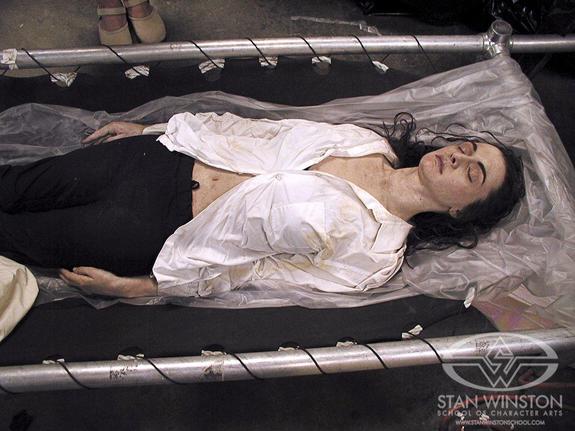 (A silicone replica of actress Rachel Weisz, constructed by Dave Grasso & Nick Marra and painted by Trevor Hensley & John Cherevka. In addition to the 'possessed' scene, this figure was used for the deceased twin scenes as well.)
 (Rachel Weisz wears prosthetic makeup in her possessed state, which included a forehead piece without eyebrows, demonic teeth, black contact lenses and veined, pallid body makeup.)
Creating Balthazar, the Half-Breed Demon
The Stan Winston crew created a two-stage silicone prosthetic makeup for the scene in which the face of the half-breed demon, Balthazar (Gavin Rossdale) dissolves upon contact with holy water.
 (Left: Shane Mahan sculpted Aaron Sim’s design onto a lifecast of Gavin Rossdale. Right: Gavin Rossdale wears the prosthetic makeup on set.)
Stage one included torn skin revealing underlying areas of demon flesh; stage two was a more extensive makeup with overlapping teeth and a shriveled left eye.
The Making of Mammon
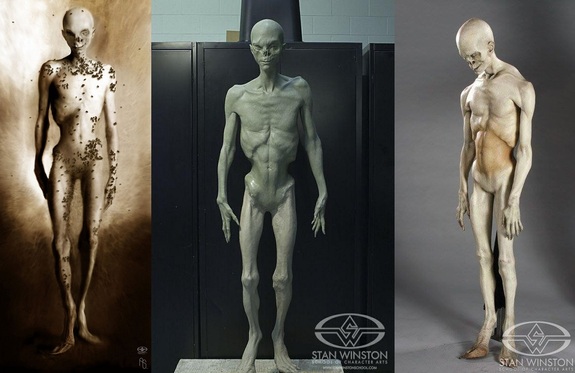 (Stan Winston Studio created Mammon as an articulated silicone puppet based on an Aaron Sims design, sculpted and painted by Joey Orosco.)
A full-scale (five-foot-ten-inch) Mammon puppet was fitted with a smile mechanism and an articulated rod-puppet armature. Tippett Studio used photographs and cyberscans of the puppet to create a digital version of the character.
Building Dark, Mechanical Wings for Tilda Swinton’s “Gabriel”
Director Francis Lawrence didn't want the wings to look like typical white angel wings but rather dark bird wings. Stan Winston Studio created feathered mechanical wings, and ESC generated the wings in CGI.
 (Tilda Swinton is fitted with feathered, mechanical angel wings for her role.)
“What was enjoyable about working with Francis Lawrence on Constantine was that his thinking was counter to the way most people think about these types of demonic creatures. They weren’t the usual creatures with big fangs and all of that. They were horrifying but also pathetic. I really liked that.” – SWS Supervisor, co-owner Legacy Effects, John Rosengrant
- Blog assembled by Balázs Földesi with selections from The Winston Effect: The Art and History of Stan Winston Studio by Jody Duncan
Courses with the Creators of Constantine
- Special Effects Sequence Design with Shane Mahan
- Hybrid Characters: Blending Practical & Digital FX with John Rosengrant
- Hybrid Character Design: Practical To Digital with Christopher Swift
- Maquette Painting Techniques with Trevor L. Hensley
- Metallic Painting Techniques - Robot Finishes (Terminator) with Rob Ramsdell
- Creature Makeup - Multi-Piece Silicone Prosthetic Application with Joel Harlow
- Out of the Kit Makeup Effects with Joel Harlow
- Making Creature Eyes with John Cherevka
- Advanced Creature Teeth: Prosthetic Dental Appliances with John Cherevka
- Animatronics Design Basics with Richard Landon
- Cable Mechanism Basics - Tentacles with Richard Landon
- Animatronics Design Basics with Richard Landon
- Cable Mechanism Basics - Tentacles with Richard Landon
- Character Makeup - Running Foam Appliances with Cory Czekaj
- Lab Work for Animatronic Characters Part 1: Making a Mechanical Core with Cory Czekaj