
Making Organic Animatronic Mechanisms With Rick Lazzarini
Prepare yourself, my friends. This week’s video lesson, ANIMATRONIC CHARACTER CREATION- ORGANIC MECHANICS Part One, is a biggie. In fact, it’s so chock full of amazing info that it had to be separated into two parts. For this reason, I guess I should say that this week’s video is actually Part 1 of a biggie. Part 2 releases in a few weeks, but trust me, Part 1 more than stands on its own. It has more knowledge contained within it than most brains can even handle. But you, dear Stan Winston School of the Character Arts reader, can not only handle it, you will relish it. This is the type of unique material made exactly for you. This is an odyssey through the world of animatronics.
Jump To Section
- A Lesson With Rick Lazzarini, Founder of the Character Shop
- Creating Animatronic Characters
- Developing Animatronic Characters and Their Personalities
- Finding a Balance in Animatronic Expressions
- Building Your Animatronic
- Getting Started on Your Own Journey
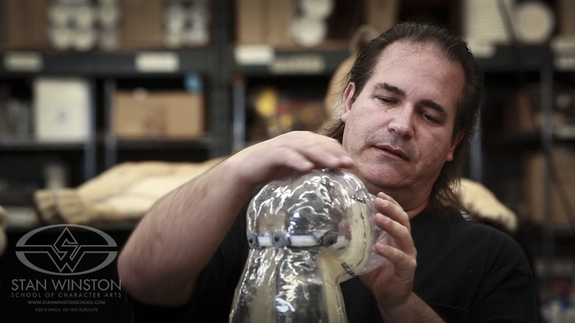 (Rick Lazzarini and what will become an expressive animatronic creature puppet.)
A Lesson With Rick Lazzarini, Founder of the Character Shop
The subject of our journey is the creation of a lifelike puma. This week's lesson will take you from initial construction all the way up to organic movement and expression. It’s truly a sight to behold. And what better instructor could there be to take us through this process than Rick Lazzarini himself, the Animatronic Designer and Head of The Character Shop. This is the man that, among his countless accomplishments, helped bring us the opening egg, the running facehugger, and the Alien Queen from the film, Aliens. Need I say more about his qualifications?
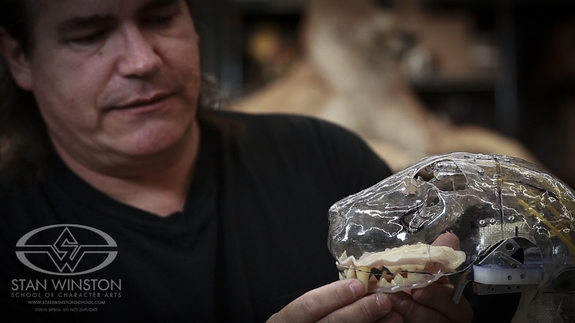 (Rick Lazzarini takes a look at the jaw mechanism and how it’ll look on his animatronic puma.)
Creating Animatronic Characters
Let’s start by talking about animatronics in general. Lately when you think of movie monsters and creations, most people’s brains usually go to CGI. But animatronics has had its place in this world for a very long time, and some form of it will be here forever. The art of building something from an idea, bringing it into three dimensions, and giving it natural and organic movement will always be an awe-inspiring art form. Think about the countless films you’ve seen with this kind of puppetry, the countless commercials that have some kind of humanistic talking animal, or even the latest theme park attractions with lifelike humanoid or animal creatures. And while Animatronics may seem like something that is utterly daunting, this week’s lesson will change your mind. With Rick’s incredible step-by-step instructions, you will not only understand how it works, but quite possibly give you enough courage to go out and build an animatronic creation of your own.
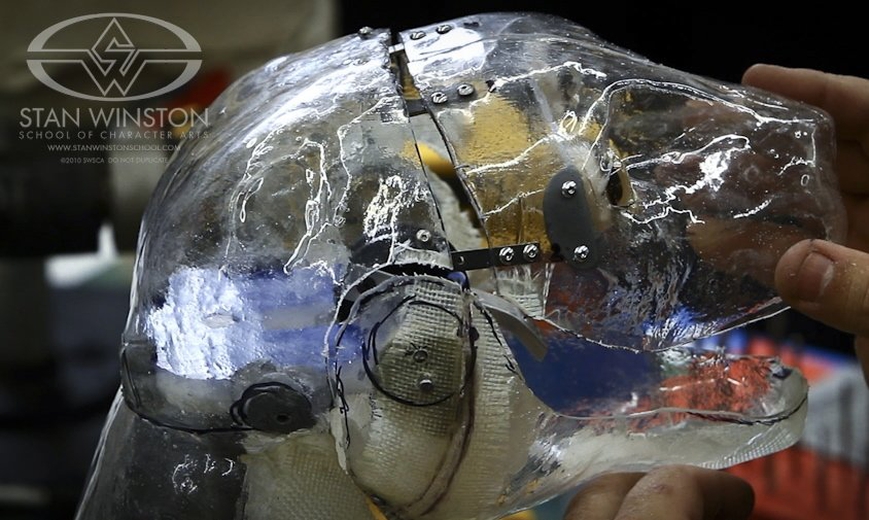
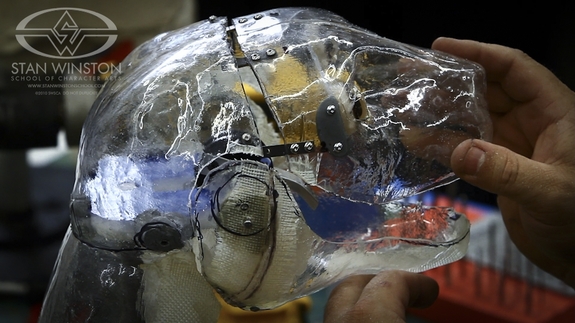 (Rick Lazzarini teaches you how to create a vacuform underskull for the puma.)
Developing Animatronic Characters and Their Personalities
ORGANIC MECHANICS Part One begins with Rick’s overview of organic expression and movement in an animatronic creation. It’s his comments about the more anthropomorphic qualities of these creations that really puts your mind in the right place to start the journey. It’s not something you normally think about, but because people are always relating animals to humans, giving these animals humanistic expressions and reactions are of the utmost importance.
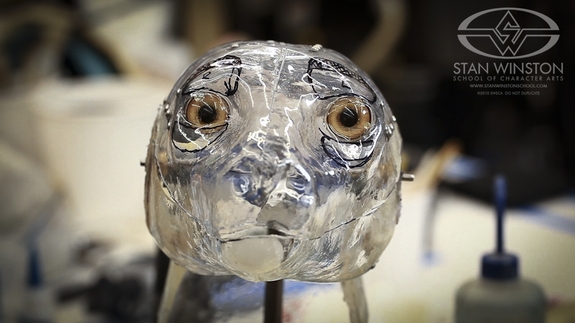 (The eyes are windows to the soul—or in this case, an animatronic soul.)
Finding a Balance in Animatronic Expressions
Deep down people don’t want something that looks and acts exactly like the actual animal, they want something that’s more of a combination of that animal, but with more relatable human reactions. Think about it. Pumas don’t normally show surprise, or anger, or worry. Humans do. So, in an animatronic creation, you need to keep a realistic-looking puma but add these humanistic qualities. It’s something you can’t push too far, but definitely need enough of to make it work. It’s a delicate balance, but Rick helps you find it.
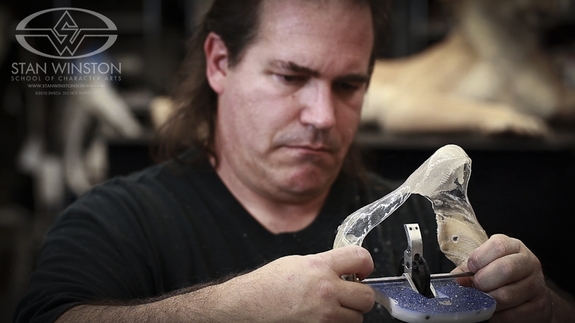 (Rick Lazzarini works away on the jaw of his animatronic character.)
Building Your Animatronic
Continuing through this journey, Rick builds on these modes of thought, giving a good foundation of basic theory, but then he moves on to the actual construction. It’s here that you can just lose yourself in the process. From creating the vacuum form underskull to working on the jaw and eyes to creating and working with the cables connected to the brows, to finally actually putting on the temp skin to test these eyebrow mechanisms (complete with working servos and transmitters), it really is quite an amazing journey.
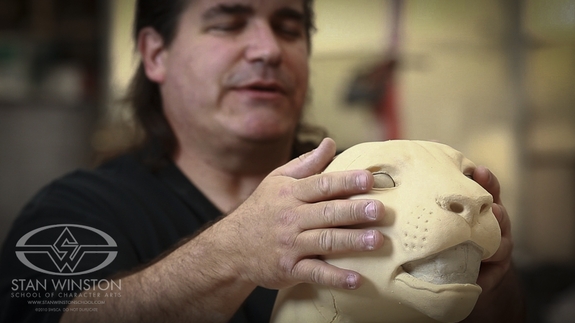 (Rick Lazzarini applies the skin to his organic animatronic creature puppet.)
Getting Started on Your Own Journey
It’s liberating to tackle something outside your comfort zone. Animatronic Character Creation may seem daunting at first, but as you watch, I guarantee you’ll feel more and more comfortable with it, and eventually come to understand it completely. Join the journey and watch this Puma come to life. Part 1 is amazing, and will definitely excite you for Part 2, coming soon.
Check out ANIMATRONIC CHARACTER CREATON - ORGANIC MECHANICS Part 1 now.
-Jeff Dixon